
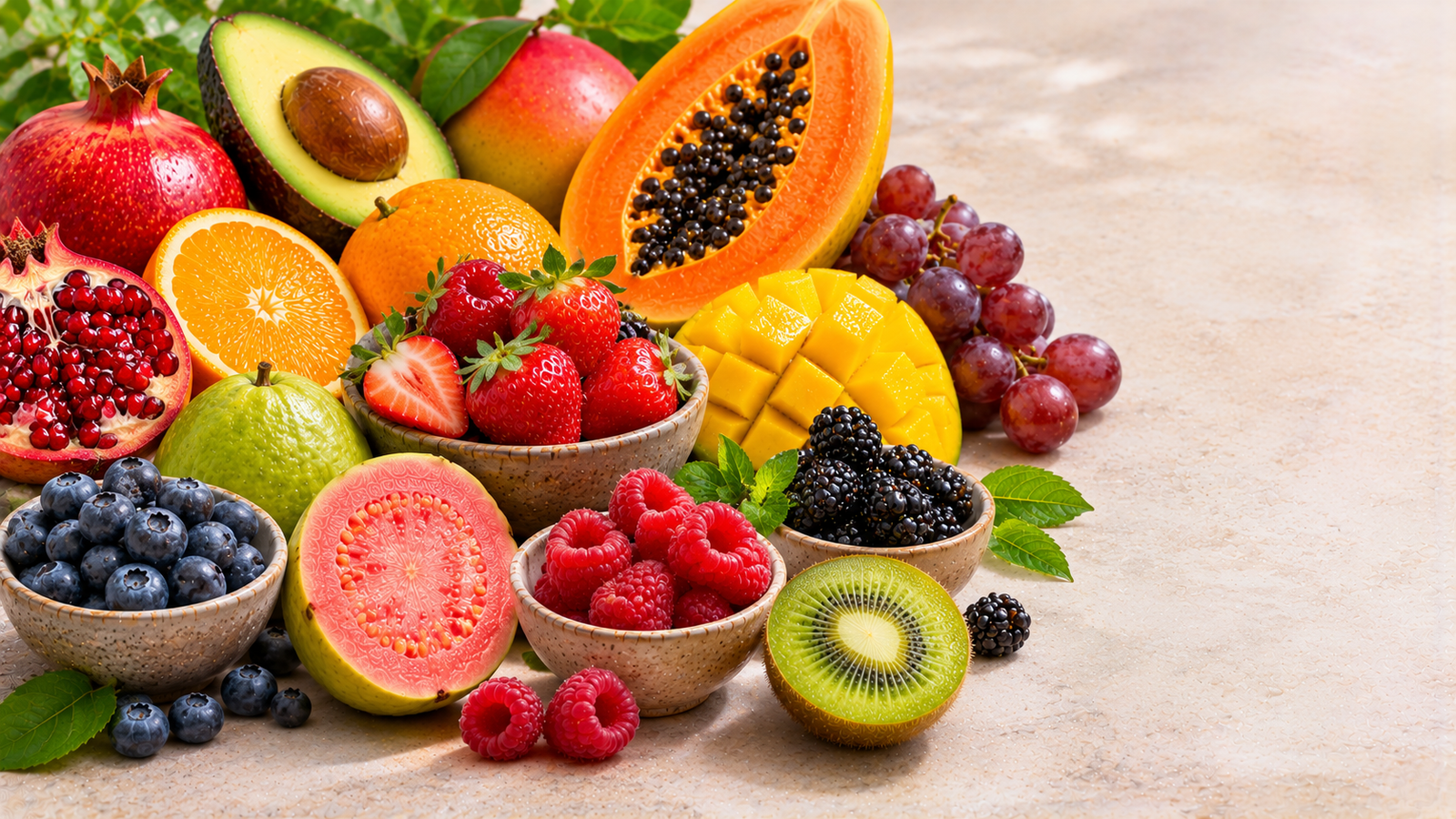
Fruit is one of the easiest ways to add vitamins, minerals, fiber, antioxidants, and natural plant compounds to your daily diet. However, not all fruits provide the same nutritional profile. Some are particularly rich in vitamin C, while others supply potassium, folate, fiber, vitamin K, or beneficial plant pigments.
The most nutrient-dense fruits provide a variety of valuable nutrients relative to their calorie content. They can support a balanced eating pattern, contribute to normal immune function, help maintain digestive health, and provide nutrients needed for everyday body functions.
From antioxidant-rich berries to potassium-containing bananas and vitamin C-rich guava, there are many nutritious options to choose from.
This guide explores 25 nutrient-rich fruits, their key nutrients, potential health benefits, and practical ways to enjoy them.
Key Takeaways
- Nutrient-dense fruits provide vitamins, minerals, fiber, and beneficial plant compounds.
- Berries are particularly rich in fiber and colorful antioxidant compounds.
- Guava, kiwi, oranges, and strawberries are excellent sources of vitamin C.
- Bananas, avocados, and cantaloupe contribute potassium.
- Apples, pears, raspberries, and blackberries provide useful amounts of dietary fiber.
- Eating a variety of whole fruits is generally more beneficial than relying on only one fruit.
- Fresh, frozen, and unsweetened canned fruits can all contribute to a healthy diet.
What Makes a Fruit Nutrient-Dense?
Nutrient density describes how many beneficial nutrients a food provides in relation to its calorie content.
A nutrient-dense fruit may supply several important nutrients without contributing excessive calories. These nutrients include:
- Vitamins: Such as vitamin C, vitamin A, vitamin K, folate, and certain B vitamins.
- Minerals: Including potassium, magnesium, and small amounts of other essential minerals.
- Dietary fiber: Important for digestive health and normal bowel function.
- Antioxidant compounds: Including anthocyanins, carotenoids, flavonoids, and polyphenols.
- Water: Many fruits contain substantial water, helping contribute to daily hydration.
There is no single official ranking that identifies the most nutrient-dense fruits for everyone. Nutrient content depends on serving size, variety, ripeness, and preparation. The best approach is to eat a broad selection of fruits with different nutritional strengths.
25 Most Nutrient-Dense Fruits to Add to Your Diet
The following fruits offer different combinations of vitamins, minerals, fiber, and plant compounds. The list is intended as a practical guide, not a strict scientific ranking.
1. Blueberries
Blueberries are widely appreciated for their colorful skin and high concentration of plant compounds. Their deep blue-purple color comes largely from anthocyanins, a group of flavonoid pigments.
Key nutrients:
- Vitamin C
- Vitamin K
- Manganese
- Dietary fiber
- Anthocyanins
Potential benefits:
Blueberries provide antioxidant compounds that help protect cells from oxidative damage. They also contribute fiber, which supports digestive health.
How to eat them: Add fresh or frozen blueberries to oatmeal, yogurt, smoothies, or whole-grain breakfast bowls.
2. Guava
Guava is one of the most vitamin C-rich commonly eaten fruits. It also provides fiber, potassium, and several antioxidant plant compounds.
Key nutrients:
- Vitamin C
- Dietary fiber
- Potassium
- Folate
- Carotenoids
Potential benefits:
Vitamin C supports normal immune function, collagen formation, and iron absorption from plant foods. Guava’s fiber also contributes to digestive health.
How to eat it: Enjoy ripe guava as a snack, add it to fruit salads, or blend it into smoothies.
3. Kiwi
Fresh Kiwi Slices and Whole Fruits on Cutting Board with Kitchen Knife
Kiwi is a small fruit with an impressive nutrient profile. It supplies vitamin C, vitamin K, fiber, and potassium.
Key nutrients:
- Vitamin C
- Vitamin K
- Potassium
- Dietary fiber
- Folate
Potential benefits:
Kiwi provides nutrients involved in normal immune function and collagen production. Its fiber can help support regular digestion.
How to eat it: Slice kiwi into breakfast bowls, add it to fruit salads, or eat it with the skin after washing if you enjoy its texture.
4. Avocado
Avocado is technically a fruit, although many people use it like a vegetable. Unlike most fruits, it contains substantial amounts of unsaturated fat.
Key nutrients:
- Monounsaturated fats
- Potassium
- Folate
- Vitamin K
- Vitamin E
- Dietary fiber
Potential benefits:
Avocado provides unsaturated fats and fiber. These nutrients can contribute to a balanced eating pattern and help make meals satisfying.
How to eat it: Add avocado to whole-grain toast, salads, sandwiches, or smoothies.
5. Strawberries
Strawberries are naturally sweet, relatively low in calories, and rich in vitamin C.
Key nutrients:
- Vitamin C
- Manganese
- Folate
- Dietary fiber
- Anthocyanins and other polyphenols
Potential benefits:
Strawberries provide vitamin C for normal collagen formation and immune function. Their fiber and plant compounds make them a valuable addition to a varied diet.
How to eat them: Add sliced strawberries to oatmeal, yogurt, fruit salads, or homemade smoothies.
6. Pomegranate
Pomegranate contains juicy red arils that provide fiber, potassium, vitamin K, and polyphenols.
Key nutrients:
- Fiber
- Potassium
- Vitamin K
- Folate
- Polyphenols
Potential benefits:
Pomegranate contains several antioxidant plant compounds. Eating the whole arils also provides fiber that is largely absent from strained juice.
How to eat it: Sprinkle the arils over salads, yogurt, porridge, or grain bowls.
7. Oranges
Oranges are a familiar citrus fruit and an excellent source of vitamin C. They also contain water, fiber, folate, and potassium.
Key nutrients:
- Vitamin C
- Folate
- Potassium
- Dietary fiber
- Citrus flavonoids
Potential benefits:
Vitamin C supports collagen formation and helps the body absorb non-heme iron from plant foods. Whole oranges also provide fiber and water.
How to eat them: Eat a whole orange, add segments to salads, or combine them with other fruits.
8. Raspberries
Raspberries are among the more fiber-rich commonly available berries. Their sweet-tart flavor makes them useful in breakfast dishes and snacks.
Key nutrients:
- Dietary fiber
- Vitamin C
- Manganese
- Vitamin K
- Anthocyanins and ellagitannins
Potential benefits:
Raspberries provide fiber for digestive health and plant compounds that contribute to their antioxidant activity.
How to eat them: Add raspberries to oatmeal, yogurt, chia pudding, or smoothies.
9. Blackberries
Blackberries provide a combination of fiber, vitamin C, vitamin K, and dark-colored plant compounds.
Key nutrients:
- Dietary fiber
- Vitamin C
- Vitamin K
- Manganese
- Anthocyanins
Potential benefits:
Their fiber supports digestive health, while their anthocyanins contribute to the fruit’s deep purple-black color.
How to eat them: Enjoy fresh blackberries as a snack or add them to salads and breakfast bowls.
10. Papaya
Papaya is a tropical fruit with soft orange flesh and a naturally sweet flavor. It is particularly useful for adding vitamin C and carotenoids to meals.
Key nutrients:
- Vitamin C
- Vitamin A precursors, including beta-carotene
- Folate
- Potassium
- Dietary fiber
Potential benefits:
Papaya provides vitamin C and carotenoids. The body can convert beta-carotene into vitamin A, which supports normal vision and immune function.
How to eat it: Serve ripe papaya with lime juice, add it to smoothies, or combine it with yogurt.
11. Apples
Apples are convenient, widely available fruits that provide fiber and beneficial plant compounds, especially when eaten with their skin.
Key nutrients:
- Dietary fiber
- Vitamin C
- Potassium
- Quercetin and other polyphenols
Potential benefits:
Apples contain soluble fiber, including pectin, which contributes to digestive health. Their skin also contains many of their plant compounds.
How to eat them: Eat apples whole, slice them into oatmeal, or pair them with unsweetened nut butter.
12. Bananas
Bananas are convenient sources of carbohydrates and potassium. Their ripeness influences their texture, sweetness, and carbohydrate composition.
Key nutrients:
- Potassium
- Vitamin B6
- Vitamin C
- Manganese
- Dietary fiber
Potential benefits:
Potassium supports normal muscle contraction, nerve signaling, and fluid balance. Bananas also provide carbohydrates that can be useful before or after physical activity.
How to eat them: Add bananas to oatmeal, smoothies, whole-grain toast, or yogurt.
13. Mango
Mango is a tropical fruit with a sweet flavor and a rich orange-yellow color.
Key nutrients:
- Vitamin C
- Vitamin A precursors
- Folate
- Vitamin E
- Dietary fiber
Potential benefits:
Mango provides vitamin C and carotenoids, including beta-carotene, which the body can use to produce vitamin A.
How to eat it: Enjoy fresh mango, add it to fruit salads, or blend it into smoothies without added sugar.
14. Papaya’s Tropical Relative: Pineapple
Pineapple offers vitamin C, manganese, water, and several plant compounds. It also contains bromelain, a group of enzymes naturally present in the fruit.
Key nutrients:
- Vitamin C
- Manganese
- Dietary fiber
- Potassium
- Bromelain
Potential benefits:
Pineapple contributes vitamin C and manganese, which play roles in normal body functions. Its bromelain content is of research interest, but eating pineapple should not be treated as a medical treatment.
How to eat it: Add fresh pineapple to fruit salads, yogurt, or savory meals.
15. Grapefruit
Grapefruit provides vitamin C, water, and several citrus plant compounds.
Key nutrients:
- Vitamin C
- Vitamin A precursors
- Potassium
- Fiber
- Flavonoids
Potential benefits:
Grapefruit contributes vitamin C and hydration. Pink and red varieties also contain carotenoids such as lycopene.
How to eat it: Enjoy grapefruit segments as part of breakfast or add them to salads.
Important: Grapefruit and grapefruit juice can interact with certain prescription medicines. Check with a pharmacist or healthcare professional before consuming it regularly if you take medication.
16. Cherries
Cherries are known for their red color and naturally occurring polyphenols, including anthocyanins.
Key nutrients:
- Potassium
- Vitamin C
- Fiber
- Anthocyanins
- Other polyphenols
Potential benefits:
Cherries contribute antioxidant plant compounds and potassium. They can add variety to a diet rich in fruits and vegetables.
How to eat them: Enjoy fresh cherries, add pitted cherries to yogurt, or use unsweetened frozen cherries in smoothies.
17. Red Grapes
Red grapes contain water, natural carbohydrates, vitamin K, and plant compounds in their skins.
Key nutrients:
- Vitamin K
- Potassium
- Copper
- Vitamin C
- Polyphenols, including resveratrol
Potential benefits:
Grapes provide hydration and plant compounds. Their skin contains several of the polyphenols associated with their color.
How to eat them: Eat whole grapes as a snack or freeze them for a refreshing treat.
18. Pears
Pears are a useful source of dietary fiber, particularly when eaten with their skin.
Key nutrients:
- Dietary fiber
- Vitamin C
- Potassium
- Copper
- Plant polyphenols
Potential benefits:
Pears contribute fiber that supports digestive health. Their naturally sweet flavor can also help make fruit a satisfying snack.
How to eat them: Eat pears whole, add slices to salads, or combine them with oats and yogurt.
19. Cantaloupe
Cantaloupe is a refreshing melon with a high water content and a valuable supply of beta-carotene.
Key nutrients:
- Vitamin A precursors
- Vitamin C
- Potassium
- Folate
- Water
Potential benefits:
Cantaloupe contributes nutrients involved in normal vision, immune function, and fluid balance.
How to eat it: Serve chilled melon slices, add cubes to fruit salads, or blend them into smoothies.
20. Passion Fruit
Passion fruit has a distinctive aroma, tangy flavor, and edible seeds. It provides fiber and several micronutrients.
Key nutrients:
- Dietary fiber
- Vitamin C
- Vitamin A precursors
- Potassium
- Iron in modest amounts
Potential benefits:
Passion fruit is particularly useful for adding fiber to the diet. Its seeds contribute to its fiber content.
How to eat it: Scoop the pulp over yogurt, oatmeal, or fruit bowls.
21. Apricots
Fresh apricots are small stone fruits with orange flesh and a naturally sweet-tart flavor.
Key nutrients:
- Vitamin A precursors
- Vitamin C
- Potassium
- Dietary fiber
- Polyphenols
Potential benefits:
Apricots contain carotenoids that can be converted into vitamin A. They also contribute potassium and fiber.
How to eat them: Enjoy fresh apricots as a snack or add chopped fruit to salads.
22. Plums
Plums provide fiber, vitamin C, potassium, and colorful plant compounds.
Key nutrients:
- Vitamin C
- Potassium
- Dietary fiber
- Vitamin K
- Polyphenols
Potential benefits:
Plums contribute fiber and plant compounds. Their natural sweetness makes them a useful alternative to desserts with added sugar.
How to eat them: Eat fresh plums, slice them into yogurt, or bake them with oats.
23. Figs
Figs are a distinctive fruit that can be eaten fresh or dried. They provide fiber and minerals, although dried figs are more concentrated in calories and natural sugars.
Key nutrients:
- Dietary fiber
- Potassium
- Calcium
- Magnesium
- Copper
Potential benefits:
Figs provide fiber and several minerals. Their dried form can be a convenient source of energy, but portion size matters.
How to eat them: Add fresh figs to salads or enjoy a small portion of dried figs with nuts.
24. Cranberries
Cranberries have a naturally tart flavor and contain several polyphenols, including proanthocyanidins.
Key nutrients:
- Vitamin C
- Vitamin E
- Dietary fiber
- Manganese
- Polyphenols
Potential benefits:
Cranberries contain plant compounds that have been studied for their possible role in urinary tract health. However, cranberry foods are not a substitute for medical treatment of a urinary tract infection.
How to eat them: Choose fresh or frozen cranberries for sauces and smoothies, or use unsweetened dried cranberries in modest portions.
25. Dates
Dates are naturally sweet fruits that provide energy, fiber, and minerals.
Key nutrients:
- Potassium
- Copper
- Magnesium
- Dietary fiber
- Vitamin B6 in smaller amounts
Potential benefits:
Dates provide fiber and minerals, making them a useful ingredient in snacks and meals. Because dried dates are energy-dense, moderate portions are practical.
How to eat them: Combine dates with nuts, chop them into oatmeal, or use them to naturally sweeten homemade recipes.
Nutrient Comparison: Which Fruits Provide the Most?
Different fruits excel in different nutritional categories. The following table gives approximate values for selected nutrients and typical portions.
| Fruit | Serving | Nutritional Highlight |
|---|---|---|
| Guava | 100g | About 200–230mg vitamin C |
| Kiwi | 100g | About 90–100mg vitamin C |
| Strawberries | 1 cup | About 85–90mg vitamin C |
| Orange | 1 medium | About 70mg vitamin C |
| Raspberries | 1 cup | About 8g fiber |
| Blackberries | 1 cup | About 7.6g fiber |
| Avocado | ½ fruit | About 5g fiber, depending on size |
| Pomegranate arils | ½ cup | About 3.5g fiber |
| Banana | 1 medium | About 420mg potassium |
| Cantaloupe | 1 cup | About 470mg potassium |
| Dried apricots | 100g | About 1,100–1,200mg potassium |
| Blueberries | 1 cup | Vitamin K and anthocyanins |
Values are approximate and vary by variety, serving size, ripeness, and food database. They are intended for general comparison, not medical or dietary prescription.
Which Fruits Are Highest in Specific Nutrients?
Instead of looking for one fruit that contains everything, choose fruits according to the nutrients you want to include in your meals.
Best Fruits for Vitamin C
Vitamin C supports collagen formation, normal immune function, and iron absorption.
Good choices include:
- Guava
- Kiwi
- Strawberries
- Oranges
- Papaya
- Blackcurrants
- Pineapple
Helpful tip: Pair vitamin C-rich fruits with plant-based iron sources such as lentils, beans, or spinach.
Best Fruits for Dietary Fiber
Fiber supports normal digestion and contributes to bowel regularity.
Good choices include:
- Raspberries
- Blackberries
- Passion fruit
- Avocado
- Pears
- Apples
- Guava
Helpful tip: Eat whole fruit rather than drinking strained fruit juice to retain more fiber.
[Internal Link: Insert relevant internal URL here with anchor text: Fruits High in Fiber]
Best Fruits for Potassium
Potassium is an essential mineral involved in muscle contraction, nerve function, and fluid balance.
Good choices include:
- Dried apricots
- Dates
- Avocado
- Bananas
- Guava
- Cantaloupe
- Kiwi
Helpful tip: Dried fruit is more concentrated than fresh fruit, so compare portions rather than assuming the same serving size.
Best Fruits for Antioxidants
Many fruits contain polyphenols, carotenoids, and other plant compounds that contribute to antioxidant activity.
Good choices include:
- Blueberries
- Blackberries
- Raspberries
- Strawberries
- Pomegranate
- Cherries
- Red grapes
- Cranberries
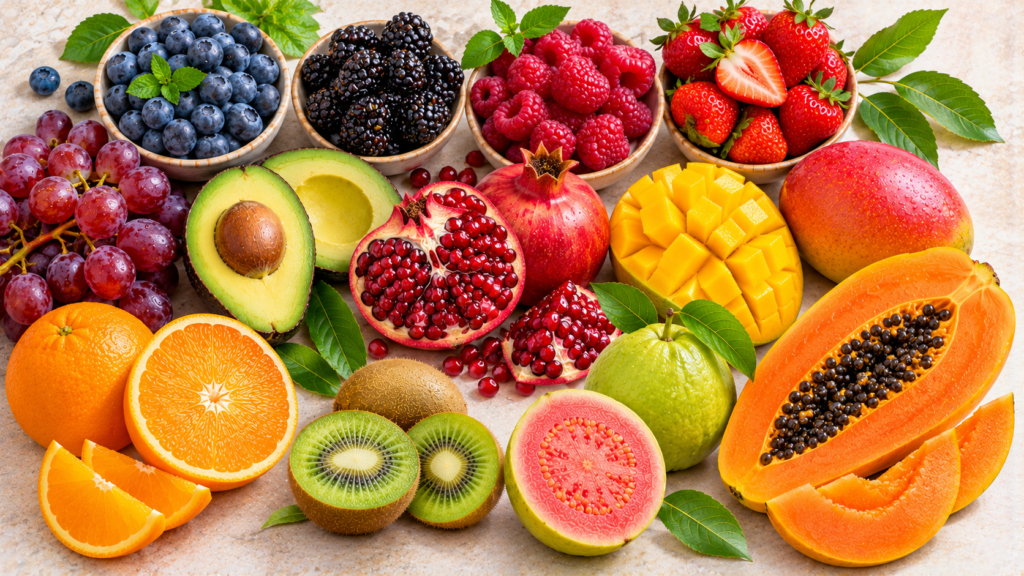
Different antioxidant compounds have different properties. Eating a variety of colorful fruits is more practical than focusing on one supposedly superior antioxidant food.
Health Benefits of Eating Nutrient-Dense Fruits
Including a variety of whole fruits in your diet can contribute to several aspects of health.
1. Supports Normal Immune Function
Many fruits contain vitamin C, vitamin A precursors, and other nutrients involved in normal immune-system function.
Examples include:
- Guava
- Kiwi
- Oranges
- Strawberries
- Papaya
These nutrients help the body carry out normal physiological processes. Eating fruit does not guarantee protection from infections, but it can help meet nutritional needs.
2. Supports Digestive Health
Fiber is one of the main reasons whole fruits are valuable in a balanced diet.
Fiber can help:
- Support regular bowel movements.
- Contribute to normal digestive function.
- Feed beneficial gut bacteria, depending on the type of fiber.
- Increase meal satisfaction.
Raspberries, blackberries, pears, apples, passion fruit, and guava are useful options.
3. Contributes to Heart-Healthy Eating Patterns
Fruits provide potassium, fiber, and plant compounds that can contribute to an overall heart-healthy dietary pattern.
For example:
- Bananas and avocados provide potassium.
- Apples and pears provide fiber.
- Berries provide polyphenols.
- Oranges provide vitamin C and flavonoids.
The benefits of fruit are best understood as part of an overall eating pattern that also includes vegetables, whole grains, legumes, nuts, and appropriate protein sources.
4. Helps Meet Daily Vitamin and Mineral Needs
Different fruits supply different nutrients. Eating a variety helps reduce the chance of relying on one food for your entire nutritional intake.
Examples include:
- Vitamin C from guava and kiwi.
- Potassium from bananas and avocados.
- Vitamin K from blueberries and grapes.
- Folate from oranges and papaya.
- Carotenoids from mango, papaya, and cantaloupe.
5. Supports Hydration
Many fruits contain a high percentage of water.
Water-rich fruits include:
- Watermelon
- Cantaloupe
- Oranges
- Strawberries
- Grapefruit
- Pineapple
They can contribute to daily fluid intake, although drinking water remains important.
6. Provides Antioxidant Plant Compounds
Fruits contain a wide range of naturally occurring compounds, including anthocyanins, flavonoids, carotenoids, and polyphenols.
These compounds contribute to the colors, flavors, and biological properties of fruits. Berries, grapes, citrus fruits, and pomegranate are especially well known for their diverse plant compounds.
How Many Servings of Fruit Should You Eat Daily?
Fruit needs vary according to age, activity level, energy requirements, and overall dietary patterns.
For many adults, a practical target is approximately 1½–2 cups of fruit per day, based on commonly used U.S. dietary guidance. Individual needs may differ.
Examples of approximately one cup-equivalent include:
- One small apple.
- One large banana.
- One cup of chopped mango.
- One cup of strawberries.
- One cup of fresh pineapple chunks.
- One cup of blueberries.
You do not need to eat all your fruit in one meal. Spread portions across breakfast, snacks, and meals.
Important: If you have a medical condition requiring potassium, carbohydrate, or fluid restrictions, follow individualized advice from your healthcare professional or dietitian.
How to Add More Nutrient-Dense Fruits to Your Daily Diet
You can enjoy more fruits without making complicated recipes. A few simple combinations can add variety and important nutrients.
Healthy Breakfast Ideas
- Oatmeal topped with blueberries, strawberries, and chia seeds.
- Plain yogurt with kiwi and chopped walnuts.
- Whole-grain toast with avocado and sliced tomato.
- Smoothie made with banana, berries, and unsweetened milk.
Healthy Snack Ideas
- Apple slices with unsweetened peanut butter.
- Guava with a small handful of nuts.
- Fresh orange with roasted chickpeas.
- A small portion of dates with almonds.
- Kiwi with plain yogurt.
Healthy Lunch Ideas
- Spinach salad with orange segments and avocado.
- Whole-grain wrap with chicken, vegetables, and sliced apple.
- Quinoa bowl with pomegranate arils and fresh herbs.
- Mixed fruit salad alongside a balanced lunch.
Healthy Dessert Ideas
- Fresh strawberries with plain yogurt.
- Baked apples with cinnamon.
- Frozen banana blended into a creamy dessert.
- Chilled papaya with lime juice.
- Fresh mango with a small serving of unsweetened yogurt.

Whole Fruits vs. Fruit Juice: Which Is Better?
Whole fruits are generally the better everyday choice because they retain their natural fiber and require chewing. Juicing often removes much of the fiber, while making it easier to consume several fruits’ worth of natural sugars in one sitting.
| Feature | Whole Fruit | Fruit Juice |
|---|---|---|
| Dietary fiber | Usually higher | Often much lower |
| Chewing | Requires chewing | Usually does not |
| Portion control | Often easier | Can be harder |
| Natural sugars | Present | Present, often concentrated |
| Satiety | Often more filling | Usually less filling |
| Best everyday choice | Generally preferred | Best in moderate portions |
For example, eating a whole orange provides fiber from its flesh and membranes. Drinking orange juice can provide vitamin C, but usually contains less fiber.
Choose whole fruit most often. If you drink juice, prefer 100% juice without added sugar and keep portions moderate.
Fresh, Frozen, or Dried: Which Fruit Is More Nutritious?
All three forms can contribute to a balanced diet.
| Fruit Form | Advantages | What to Consider |
|---|---|---|
| Fresh | Convenient, naturally hydrating, often eaten whole | Seasonal availability and storage |
| Frozen | Convenient, often frozen soon after harvest | Choose varieties without added sugar |
| Dried | Concentrated fiber and minerals, easy to store | More calorie-dense per serving |
| Canned | Convenient and widely available | Choose fruit in water or its own juice when possible |
Are Frozen Fruits Healthy?
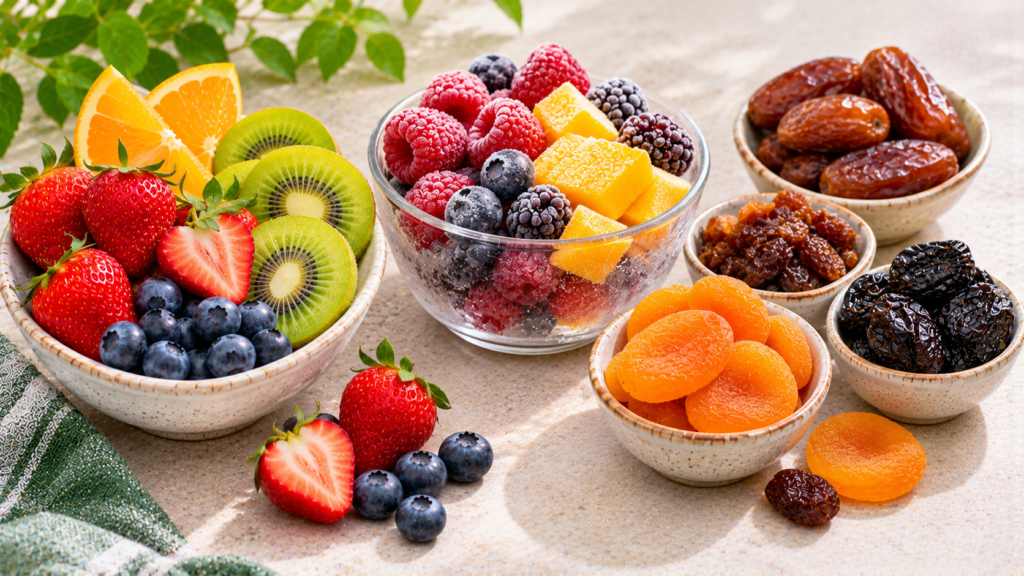
Yes. Frozen fruits can retain many of their vitamins, minerals, and plant compounds. They are especially useful when fresh options are expensive or unavailable.
Are Dried Fruits Nutrient-Dense?
Dried fruits such as dates, raisins, prunes, and dried apricots provide fiber and minerals. However, removing water concentrates their natural sugars and calories into a smaller portion.
A small handful is often a more practical serving than eating large amounts directly from the packet.
Tips for Choosing the Healthiest Fruits
A few practical habits can help you get more nutritional variety from fruit.
1. Choose Different Colors
Different fruit colors often indicate different plant compounds.
- Red: strawberries, cherries, raspberries.
- Blue and purple: blueberries, blackberries, grapes.
- Orange and yellow: mango, papaya, oranges, cantaloupe.
- Green: kiwi, avocado, green grapes.
- White and pale: pears and apples.
Color is not a perfect measure of nutritional value, but it is a useful way to encourage variety.
2. Prefer Whole Fruits Most Often
Whole fruits usually contain more fiber than strained juice. Eat the edible skin when appropriate and after washing, such as with apples, pears, and many berries.
3. Buy Seasonal Fruits
Seasonal fruit can be more affordable and easier to find. In Pakistan, options such as guava, citrus fruits, mangoes, bananas, papaya, and pomegranates can be included according to availability and season.
4. Read Labels on Packaged Fruit
When buying canned or packaged fruit:
- Check for added sugar.
- Prefer fruit packed in water or its own juice.
- Compare serving sizes.
- Choose unsweetened frozen fruit when possible.
5. Combine Fruits With Other Food Groups
Fruit can be paired with protein, healthy fats, or whole grains to make balanced snacks and meals.
Examples include:
- Apple with peanut butter.
- Berries with plain yogurt.
- Banana with oats and nuts.
- Orange with a handful of almonds.
Common Mistakes to Avoid When Eating Fruit
Even nutritious foods can be less useful when consumed without considering portion size or preparation.
Eating Only One Type of Fruit
Bananas are nutritious, but they do not provide the same combination of nutrients as berries, citrus fruits, or guava. Rotate different fruits throughout the week.
Drinking Fruit Juice Instead of Eating Whole Fruit
Juice can contribute nutrients, but it generally contains less fiber and may be easier to consume in large amounts.
Assuming Dried Fruit Has the Same Portion Size as Fresh Fruit
Dried fruit contains less water, making its calories and natural sugars more concentrated. Keep servings moderate.
Choosing Fruit Products With Added Sugar
Fruit-flavored drinks, sweetened fruit cups, and some packaged smoothies can contain added sugars. Check ingredient lists and nutrition labels.
Ignoring Individual Dietary Needs
People with chronic kidney disease or certain medication-related restrictions may need to monitor potassium intake. People managing diabetes may also benefit from individualized guidance about fruit portions and meal composition.
What Does the Research Say About Fruit and Nutrition?
Public health guidance consistently encourages eating a variety of fruits and vegetables as part of a healthy dietary pattern. Different fruits provide different combinations of fiber, vitamins, minerals, and plant compounds.
For reliable nutrition information, use established sources rather than relying on viral food rankings.
Recommended resources:
- Insert high-authority external URL here with anchor text: USDA FoodData Central – Nutrient Information for Foods
- Insert high-authority external URL here with anchor text: Harvard T.H. Chan School of Public Health – The Nutrition Source
- Insert high-authority external URL here with anchor text: World Health Organization – Healthy Diet
These resources can help readers understand food composition and how fruit fits into an overall healthy eating pattern.
Frequently Asked Questions About the Most Nutrient-Dense Fruits
1. What are the most nutrient-dense fruits?
Some particularly nutrient-rich choices include guava, kiwi, blueberries, strawberries, raspberries, blackberries, oranges, papaya, avocado, and pomegranate. Each provides a different combination of vitamins, minerals, fiber, and plant compounds.
2. Which fruit has the most nutrients?
There is no single fruit that provides the highest amount of every nutrient. Guava is especially rich in vitamin C, raspberries provide substantial fiber, avocado supplies unsaturated fats and potassium, and blueberries contain anthocyanins.
3. What is the healthiest fruit to eat every day?
There is no universally healthiest fruit. Eating a variety of whole fruits, such as berries, apples, oranges, bananas, kiwi, and seasonal options, helps provide a wider range of nutrients.
4. Which fruits are highest in antioxidants?
Blueberries, blackberries, raspberries, strawberries, pomegranate, cherries, cranberries, and red grapes contain various antioxidant plant compounds.
5. Which fruits are best for vitamin C?
Guava, kiwi, strawberries, oranges, papaya, and blackcurrants are useful vitamin C sources. Guava is particularly rich in vitamin C.
6. Which fruits are best for fiber?
Raspberries, blackberries, passion fruit, pears, apples, avocado, and guava are good choices for increasing dietary fiber.
7. Are frozen fruits as healthy as fresh fruits?
Yes. Frozen fruits can retain many of their nutrients and are a convenient option. Choose unsweetened varieties when possible.
8. Is it better to eat fruit in the morning or at night?
There is no general requirement to eat fruit at a particular time. You can enjoy fruit at breakfast, as a snack, or alongside lunch or dinner. Total dietary quality matters more than the time of day.
9. Can I eat fruit every day?
Most people can include fruit every day as part of a balanced diet. The amount and types should reflect individual nutritional needs and any medical dietary restrictions.
10. Are dried fruits as nutritious as fresh fruits?
Dried fruits retain fiber and several minerals, but their natural sugars and calories are more concentrated because water has been removed. Fresh and dried fruit can both fit into a balanced diet when portions are appropriate.
Conclusion: Choose a Variety of the Most Nutrient-Dense Fruits
The most nutrient-dense fruits offer different combinations of vitamins, minerals, fiber, water, and beneficial plant compounds. Guava and kiwi are excellent vitamin C choices, berries provide fiber and colorful antioxidants, bananas contribute potassium, and avocado supplies fiber and unsaturated fats.
Rather than searching for one perfect fruit, include different varieties throughout your week. Choose whole fruits when possible, enjoy seasonal options, and combine fruit with other nutritious foods such as yogurt, nuts, oats, and whole grains.
Small, consistent choices can help make a balanced diet more enjoyable and sustainable. Start by adding one or two different fruits to your daily meals and gradually build a colorful variety.