
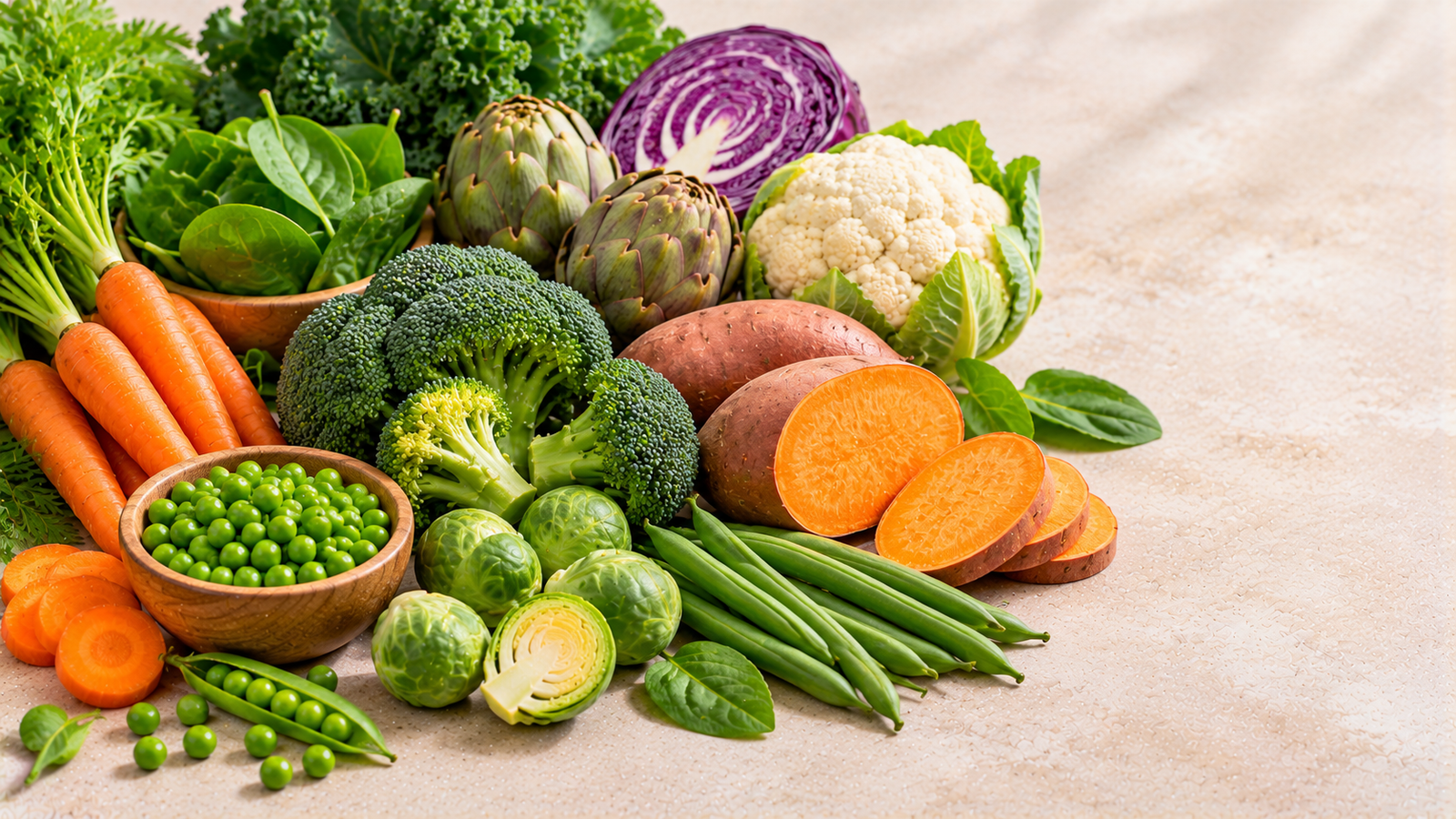
The best high fiber vegetables are an important part of a balanced diet because they provide dietary fiber along with vitamins, minerals, antioxidants, and other beneficial plant compounds. From green peas and broccoli to Brussels sprouts, artichokes, carrots, and sweet potatoes, many everyday vegetables can help you increase your daily fiber intake naturally.
Dietary fiber supports digestive health, helps maintain regular bowel movements, and can contribute to healthy cholesterol and blood glucose levels. However, many people do not eat enough vegetables or other fiber-rich foods.
Adding more vegetables to lunch, dinner, soups, salads, and snacks is a practical way to improve your overall diet. This guide explores 25 high fiber vegetables, their approximate fiber amounts, nutritional benefits, and simple ways to include them in everyday meals.
Key Takeaways
- Green peas, artichokes, Brussels sprouts, and broccoli are excellent vegetable sources of fiber.
- Beans and peas are especially fiber-rich, although their fiber content varies by type.
- Eating vegetables with edible skins can help retain more dietary fiber.
- Both raw and cooked vegetables can contribute to daily fiber intake.
- Different vegetables provide different combinations of soluble and insoluble fiber.
- Increase fiber gradually and drink adequate fluids to help prevent digestive discomfort.
What Makes a Vegetable High in Fiber?
Dietary fiber is a type of carbohydrate found in plant foods that the body does not fully digest. It passes through the digestive system and contributes to several important functions.
Vegetables contain different amounts of fiber depending on their type, variety, serving size, and preparation method.
There are two commonly discussed types of dietary fiber.
Soluble Fiber
Soluble fiber dissolves in water and forms a gel-like substance during digestion. It can help:
- Support healthy cholesterol levels.
- Slow the absorption of carbohydrates.
- Promote feelings of fullness.
- Support a healthy gut environment.
Vegetables such as carrots, Brussels sprouts, and sweet potatoes provide soluble fiber alongside other fiber types.
Insoluble Fiber
Insoluble fiber does not dissolve in water. It helps add bulk to stool and supports normal bowel movements.
Vegetable skins, stems, leaves, and other fibrous structures contribute insoluble fiber.
Important: Most vegetables contain a mixture of soluble and insoluble fiber. Eating a variety of vegetables is a practical way to get both.
25 Best High Fiber Vegetables to Add to Your Diet
The following vegetables can help you increase your fiber intake. The amounts below are approximate and can vary with variety, preparation, cooking method, and serving size.
High Fiber Vegetables Chart
| No. | Vegetable | Approximate Fiber |
|---|---|---|
| 1 | Green peas, cooked | 8.8 g per cup |
| 2 | Artichoke, cooked | 7 g per medium artichoke |
| 3 | Brussels sprouts, cooked | 4 g per cup |
| 4 | Broccoli, cooked | 5.1 g per cup |
| 5 | Sweet potato with skin, baked | 4 g per medium potato |
| 6 | Carrots, raw | 3.6 g per cup |
| 7 | Beetroot, cooked | 3.4 g per cup |
| 8 | Parsnips, cooked | 5.6 g per cup |
| 9 | Kale, cooked | 2.6 g per cup |
| 10 | Spinach, cooked | 4.3 g per cup |
| 11 | Collard greens, cooked | 5.3 g per cup |
| 12 | Turnip greens, cooked | 5 g per cup |
| 13 | Okra, cooked | 4 g per cup |
| 14 | Cauliflower, cooked | 2.9 g per cup |
| 15 | Cabbage, cooked | 2.8 g per cup |
| 16 | Green beans, cooked | 4 g per cup |
| 17 | Acorn squash, cooked | 9 g per cup |
| 18 | Butternut squash, cooked | 6.6 g per cup |
| 19 | Pumpkin, cooked | 2.7 g per cup |
| 20 | Eggplant, cooked | 2.5 g per cup |
| 21 | Swiss chard, cooked | 3.7 g per cup |
| 22 | Asparagus, cooked | 2.8 g per cup |
| 23 | Red bell pepper, raw | 2.5 g per cup |
| 24 | Turnips, cooked | 3.1 g per cup |
| 25 | Potato with skin, baked | 3.8 g per medium potato |
Values are approximate food-composition estimates. Cup weights and vegetable sizes differ, so actual fiber amounts may vary. Legumes such as lentils and beans are also excellent fiber sources, but are covered separately in the legumes category.
1. Green Peas
How To Cook Peas – Daring Kitchen
Green peas are one of the best high fiber vegetables. One cup of cooked green peas provides approximately 8.8 grams of fiber, making them a convenient choice for people who want to increase their daily fiber intake.
They also provide plant-based protein, vitamin C, vitamin K, folate, and other nutrients.
Why include green peas in your diet?
- Provide a substantial amount of dietary fiber.
- Supply plant-based protein.
- Contain vitamin C and vitamin K.
- Add natural sweetness and color to meals.
Easy ways to eat green peas:
- Mix them into vegetable rice.
- Add them to soups and stews.
- Combine them with carrots and potatoes.
- Serve them as a side dish with lunch or dinner.
2. Artichokes
Artichokes are among the most fiber-rich vegetables. One medium cooked artichoke provides approximately 7 grams of dietary fiber.
They also contain folate, vitamin C, and beneficial plant compounds. Both the edible leaves and heart contribute to their nutritional value.
Easy ways to eat artichokes:
- Steam them and serve with a simple yogurt dip.
- Add cooked artichoke hearts to salads.
- Mix them into vegetable pasta.
- Include them in homemade soups.
3. Brussels Sprouts
Brussels sprouts are small green vegetables that provide approximately 4 grams of fiber per cooked cup.
They also contain vitamin C, vitamin K, and plant compounds called glucosinolates.
Why eat Brussels sprouts?
- Contribute dietary fiber.
- Provide vitamin C and vitamin K.
- Add variety to vegetable-based meals.
- Work well in roasted and steamed dishes.
Easy ways to eat them:
- Roast them with olive oil and black pepper.
- Add them to warm grain bowls.
- Steam them as a dinner side.
- Mix them with carrots and sweet potatoes.
4. Broccoli
Broccoli is a widely available vegetable and a useful source of fiber. One cup of cooked broccoli provides approximately 5.1 grams.
It also supplies vitamin C, vitamin K, folate, and several plant compounds.
Benefits of broccoli:
- Helps contribute to daily fiber intake.
- Provides vitamin C for normal immune function.
- Contains vitamin K for normal blood clotting.
- Adds texture and nutrients to balanced meals.
Easy ways to eat broccoli:
- Steam it as a side dish.
- Add it to vegetable stir-fries.
- Mix it into soups.
- Serve it with whole grains and a protein source.
5. Sweet Potatoes
A medium baked sweet potato with its skin provides approximately 4 grams of fiber.
Sweet potatoes also contain beta-carotene, which the body can convert into vitamin A, as well as potassium and vitamin C.
Easy ways to eat sweet potatoes:
- Bake them and serve with beans.
- Roast cubes with herbs.
- Mash them as a side dish.
- Add them to vegetable bowls.
6. Carrots
Carrots are easy to find, affordable, and versatile. One cup of raw chopped carrots provides approximately 3.6 grams of fiber.
They are also known for their beta-carotene content and provide vitamin K1 and potassium.
Easy ways to eat carrots:
- Enjoy them raw as a snack.
- Add grated carrots to salads.
- Mix them into vegetable soups.
- Roast them with other vegetables.
7. Beetroot
Beetroot provides approximately 3.4 grams of fiber per cup when cooked. It also contains folate, potassium, and naturally occurring plant pigments called betalains.
Easy ways to eat beetroot:
- Add cooked beetroot to salads.
- Roast it with carrots.
- Blend it into a vegetable dip.
- Serve it alongside whole grains.
8. Parsnips
Parsnips are root vegetables with a naturally sweet, earthy flavor. One cooked cup provides approximately 5.6 grams of fiber.
They also contain vitamin C, folate, and potassium.
Easy ways to eat parsnips:
- Roast them with carrots.
- Add them to vegetable soup.
- Mash them as a side dish.
- Include them in homemade vegetable stews.
9. Kale
Kale is a leafy green vegetable that provides approximately 2.6 grams of fiber per cooked cup.
It also contains vitamins A, C, and K, as well as several plant compounds.
Easy ways to eat kale:
- Add it to soups.
- Mix it into salads.
- Sauté it with garlic.
- Blend a small amount into smoothies.
10. Spinach
Cooked spinach provides approximately 4.3 grams of fiber per cup. It is also a source of folate, vitamin K, and carotenoids.
Cooking reduces the volume of spinach considerably, which is why a cup of cooked spinach can contain more fiber than a cup of raw leaves.
Easy ways to eat spinach:
- Add it to omelets.
- Mix it into lentil dishes.
- Include it in vegetable soups.
- Sauté it with garlic and olive oil.
11. Collard Greens
Collard greens are leafy vegetables that provide approximately 5.3 grams of fiber per cooked cup.
They also supply vitamin K, vitamin A-related carotenoids, and vitamin C.
Easy ways to eat collard greens:
- Cook them with onions and garlic.
- Add chopped leaves to soups.
- Serve them with beans.
- Use large leaves as wraps.
12. Turnip Greens
Turnip greens are nutrient-rich leafy vegetables. A cooked cup can provide approximately 5 grams of fiber.
They also contain vitamin K, vitamin C, calcium, and carotenoids.
Easy ways to eat turnip greens:
- Sauté them with garlic.
- Add them to vegetable curries.
- Mix them into lentil soup.
- Serve them alongside whole grains.
13. Okra
Okra is a useful source of dietary fiber, providing approximately 4 grams per cooked cup. It contains a naturally thick, mucilaginous substance that contributes to its distinctive texture.
Okra also supplies vitamin C, vitamin K, and folate.
Easy ways to eat okra:
- Cook it in a vegetable curry.
- Roast it with spices.
- Add it to soups and stews.
- Stir-fry it with tomatoes and onions.
14. Cauliflower
One cup of cooked cauliflower provides approximately 2.9 grams of fiber. It is also a source of vitamin C, folate, and other nutrients.
Its mild flavor makes it easy to combine with many ingredients.
Easy ways to eat cauliflower:
- Roast florets with herbs.
- Add them to vegetable soup.
- Steam and mash them.
- Combine them with broccoli and carrots.
15. Cabbage
Cabbage provides approximately 2.8 grams of fiber per cooked cup. It also contains vitamin C and vitamin K.
Both green and red cabbage can add crunch, color, and variety to meals.
Easy ways to eat cabbage:
- Add shredded cabbage to salads.
- Cook it in vegetable curry.
- Mix it into soups.
- Use it in homemade wraps.
16. Green Beans
Cooked green beans provide approximately 4 grams of fiber per cup. They also contain vitamin C, vitamin K, and folate.
Easy ways to eat green beans:
- Steam them as a side dish.
- Stir-fry them with garlic.
- Add them to vegetable rice.
- Mix them with carrots and peas.
17. Acorn Squash
Acorn squash is a winter squash that provides approximately 9 grams of fiber per cooked cup. The exact amount depends on the preparation and edible portion.
It also supplies potassium and carotenoids.
Easy ways to eat acorn squash:
- Roast it in halves.
- Add cooked cubes to salads.
- Mash it as a side dish.
- Use it in vegetable soups.
18. Butternut Squash
Butternut squash provides approximately 6.6 grams of fiber per cooked cup. It is also a source of beta-carotene, potassium, and vitamin C.
Easy ways to eat butternut squash:
- Roast it with herbs.
- Blend it into soup.
- Add cubes to grain bowls.
- Combine it with chickpeas and greens.
19. Pumpkin
Cooked pumpkin provides approximately 2.7 grams of fiber per cup. It also contains beta-carotene and potassium.
Pumpkin can be used in both savory and sweet dishes.
Easy ways to eat pumpkin:
- Add it to vegetable soup.
- Roast it with spices.
- Mix it into whole-grain dishes.
- Prepare a pumpkin and lentil curry.
20. Eggplant
Cooked eggplant provides approximately 2.5 grams of fiber per cup. Its soft texture makes it useful in many vegetable-based recipes.
It also contains manganese and plant compounds, particularly in its skin.
Easy ways to eat eggplant:
- Roast it with olive oil.
- Add it to vegetable curry.
- Grill slices as a side dish.
- Use it in homemade vegetable sauces.
21. Swiss Chard
Swiss chard is a leafy vegetable that provides approximately 3.7 grams of fiber per cooked cup.
It also supplies vitamin K, vitamin A-related carotenoids, magnesium, and potassium.
Easy ways to eat Swiss chard:
- Sauté the leaves with garlic.
- Add them to soups.
- Mix chopped chard into omelets.
- Serve it with beans or lentils.
22. Asparagus
Cooked asparagus provides approximately 2.8 grams of fiber per cup. It also contains folate, vitamin K, and vitamin C.
Easy ways to eat asparagus:
- Roast it with olive oil.
- Steam it as a side dish.
- Add it to whole-grain pasta.
- Mix chopped asparagus into salads.
23. Red Bell Peppers
Red bell peppers provide approximately 2.5 grams of fiber per cup when chopped. They are particularly well known for their vitamin C content.
Easy ways to eat red bell peppers:
- Add them to salads.
- Use strips as a snack.
- Include them in vegetable stir-fries.
- Stuff them with beans and whole grains.
24. Turnips
Cooked turnips provide approximately 3.1 grams of fiber per cup. They also contain vitamin C and potassium.
Easy ways to eat turnips:
- Add them to soups.
- Roast them with carrots.
- Mash them as a side dish.
- Include them in vegetable stews.
25. Potatoes With Skin
A medium baked potato with its skin provides approximately 3.8 grams of fiber. Potatoes also contain potassium and vitamin C.
The skin contributes to the potato’s fiber content, so washing it thoroughly and eating it with the skin can help you get more fiber.
Easy ways to eat potatoes:
- Bake them and serve with beans.
- Roast potato wedges with herbs.
- Add cooked potato to vegetable salads.
- Serve them with leafy greens and a protein source.
Which High Fiber Vegetables Have the Most Fiber?
Some vegetables provide considerably more fiber per serving than others. If you want to increase your fiber intake, these are useful choices to include regularly.
| Vegetable | Approximate fiber | Serving |
|---|---|---|
| Acorn squash | 9 g | 1 cup cooked |
| Green peas | 8.8 g | 1 cup cooked |
| Artichoke | 7 g | 1 medium cooked |
| Butternut squash | 6.6 g | 1 cup cooked |
| Parsnips | 5.6 g | 1 cup cooked |
| Collard greens | 5.3 g | 1 cup cooked |
| Broccoli | 5.1 g | 1 cup cooked |
| Turnip greens | 5 g | 1 cup cooked |
| Spinach | 4.3 g | 1 cup cooked |
| Brussels sprouts | 4 g | 1 cup cooked |
A useful distinction: These figures compare typical portions, not equal weights. For an accurate comparison, always consider the serving size and whether the vegetable is raw or cooked.
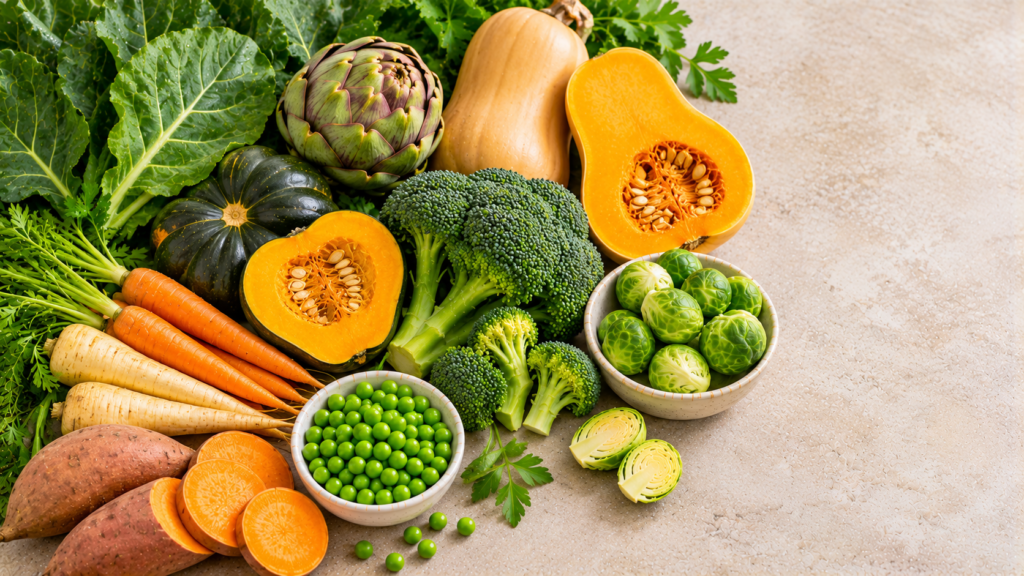
Health Benefits of Eating High Fiber Vegetables
Eating a variety of vegetables can support overall health because they provide fiber alongside vitamins, minerals, water, and beneficial plant compounds.
1. Supports Digestive Health
Dietary fiber helps support normal digestion and bowel movements. Insoluble fiber adds bulk to stool, while soluble fiber absorbs water and forms a gel-like substance.
Vegetables such as peas, broccoli, carrots, Brussels sprouts, and sweet potatoes can contribute to daily fiber intake.
Fiber is one part of digestive health. Adequate fluids, regular physical activity, and an overall balanced diet also matter.
2. Helps Maintain Regular Bowel Movements
Fiber helps support stool consistency and regularity. Vegetables with a mixture of soluble and insoluble fiber can be useful additions to a varied eating pattern.
To support digestive regularity:
- Include vegetables at meals.
- Increase fiber gradually.
- Drink adequate fluids.
- Eat fruits, beans, and whole grains as well.
- Stay physically active.
If constipation is persistent, painful, or accompanied by concerning symptoms, seek medical advice rather than relying only on dietary changes.
3. Supports Heart Health
Some types of soluble fiber can help reduce the absorption of cholesterol in the digestive tract. Fiber-rich vegetables can contribute to an overall eating pattern that supports heart health.
Combine vegetables with other nutritious foods, such as oats, beans, lentils, fruit, nuts, and seeds.
4. Helps You Feel Satisfied After Meals
Fiber adds bulk to food and can slow digestion. Many vegetables also contain substantial water, making them useful ingredients in satisfying meals.
For example, a meal containing broccoli, sweet potato, and beans provides fiber, volume, and a variety of nutrients.
5. Supports Healthy Blood Glucose Management
Fiber can slow the digestion and absorption of carbohydrates, particularly when it is part of a balanced meal.
Non-starchy vegetables such as broccoli, leafy greens, cauliflower, and green beans are useful choices because they provide fiber and relatively little carbohydrate per serving.
People managing diabetes can generally include a wide range of vegetables in their eating plan, while considering total meal composition and individual needs.
6. Provides Vitamins, Minerals, and Antioxidants
Fiber-rich vegetables are also valuable sources of micronutrients and plant compounds.
| Nutrient | Vegetable examples | Role in the body |
|---|---|---|
| Vitamin C | Broccoli, red bell peppers, Brussels sprouts | Supports normal immune function and collagen formation |
| Vitamin K | Kale, spinach, collard greens | Supports normal blood clotting |
| Beta-carotene | Carrots, sweet potatoes, pumpkin | Can be converted into vitamin A |
| Folate | Spinach, asparagus, green peas | Supports normal cell division |
| Potassium | Potatoes, sweet potatoes, beetroot | Helps maintain fluid balance and normal muscle function |
| Magnesium | Spinach, Swiss chard | Supports normal muscle and nerve function |
Eating different colored vegetables helps provide a wider range of nutrients and plant compounds.
How Much Fiber Do You Need Every Day?
Daily fiber needs depend on age, sex, and life stage. Common reference recommendations for adults aged 19–50 are approximately 25 grams per day for women and 38 grams per day for men.
| Group | General daily fiber recommendation |
|---|---|
| Women aged 19–50 | 25 g |
| Men aged 19–50 | 38 g |
| Women aged 51 and older | 21 g |
| Men aged 51 and older | 30 g |
| Pregnancy | 28 g |
| Breastfeeding | 29 g |
These are general reference values. Individual needs can differ according to age, health conditions, and dietary circumstances.
Vegetables can supply a substantial part of your daily fiber, but you do not need to get all of it from vegetables. Fruits, legumes, whole grains, nuts, and seeds are also important sources.
National Academies – Dietary Reference Intakes for Fiber
How to Add More High Fiber Vegetables to Your Daily Diet
You do not need complicated recipes to eat more vegetables. Small changes to familiar meals can help you increase your fiber intake.
At Breakfast
- Add spinach to an omelet.
- Serve baked beans with whole-grain toast.
- Include grated carrots in a savory breakfast wrap.
- Add leftover roasted vegetables to a breakfast bowl.
At Lunch
- Add broccoli and green peas to rice dishes.
- Make a salad with cabbage, carrots, and leafy greens.
- Include cooked sweet potato in a grain bowl.
- Add artichoke hearts to a vegetable sandwich.
At Dinner
- Serve roasted Brussels sprouts with your main meal.
- Prepare a vegetable curry with peas, carrots, and cauliflower.
- Add spinach or kale to lentil soup.
- Roast butternut squash as a side dish.
For Snacks
- Enjoy carrot and cucumber sticks with hummus.
- Try roasted green peas.
- Prepare a small serving of vegetable soup.
- Use bell pepper strips with a yogurt-based dip.
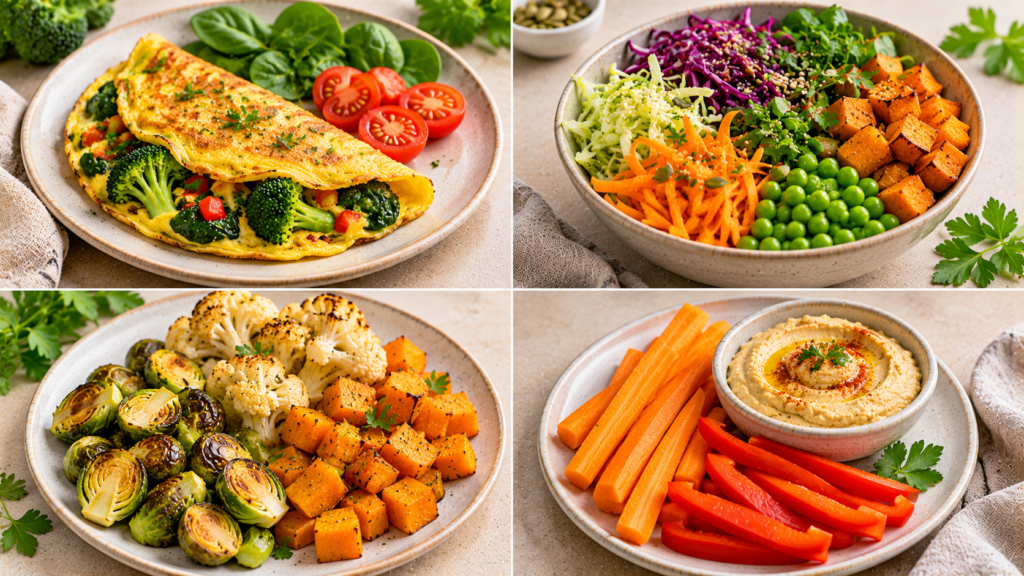
A Simple One-Day High Fiber Vegetable Meal Plan
Here is an example of how vegetables can be included in meals throughout the day. The fiber figures are estimates for the listed vegetable portions only; other foods in each meal will contribute additional fiber.
| Meal | Food idea | Approximate vegetable fiber |
|---|---|---|
| Breakfast | ½ cup cooked spinach with eggs | 2.2 g |
| Morning snack | 1 cup raw carrot sticks | 3.6 g |
| Lunch | 1 cup cooked broccoli | 5.1 g |
| Afternoon snack | ½ cup cooked green peas | 4.4 g |
| Dinner | ½ cup cooked Brussels sprouts and ½ cup cooked sweet potato | About 4 g |
| Total from listed vegetables | About 19.3 g |
This example shows how vegetables can contribute substantially to daily fiber intake. Add fruit, whole grains, legumes, nuts, and seeds to create a balanced diet that meets your individual needs.
Raw vs. Cooked Vegetables: Which Is Better for Fiber?
Both raw and cooked vegetables can be nutritious. Cooking changes the volume, texture, and sometimes the measured fiber per cup, but it does not automatically make a vegetable a poor source of fiber.
| Feature | Raw vegetables | Cooked vegetables |
|---|---|---|
| Texture | Often crisp | Usually softer |
| Serving volume | Can be bulky | Often reduced after cooking |
| Fiber | Retains natural fiber | Generally retains much of its fiber |
| Nutrient changes | Some nutrients remain sensitive to storage | Heat can reduce some vitamins but improve availability of others |
| Meal uses | Salads and snacks | Soups, curries, sides, and stir-fries |
Does Cooking Destroy Fiber?
Normal cooking does not destroy all dietary fiber. Boiling, steaming, roasting, and sautéing can change the vegetable’s texture and water content, which affects how much fits into a cup.
For example, cooked spinach is much more compact than raw spinach. A cup of cooked spinach therefore contains more spinach by weight than a cup of raw leaves.
Which Cooking Method Should You Choose?
- Steaming: A practical way to cook vegetables while limiting nutrient loss into cooking water.
- Roasting: Adds flavor and works well for carrots, Brussels sprouts, squash, and sweet potatoes.
- Stir-frying: Makes it easy to combine several vegetables in one meal.
- Boiling: Useful for soups and some root vegetables; using the cooking liquid in a dish can retain nutrients that move into the water.
Choose the method that makes vegetables enjoyable and easy to eat regularly.
High Fiber Vegetables vs. High Fiber Legumes
Vegetables and legumes are both important plant-food groups, but their fiber content can differ considerably.
| Food | Approximate fiber | Serving |
|---|---|---|
| Green peas | 8.8 g | 1 cup cooked |
| Artichoke | 7 g | 1 medium cooked |
| Broccoli | 5.1 g | 1 cup cooked |
| Lentils | 15.6 g | 1 cup cooked |
| Black beans | 15 g | 1 cup cooked |
| Chickpeas | 12.5 g | 1 cup cooked |
Legumes such as lentils, beans, and chickpeas are especially concentrated sources of fiber. Green peas are also legumes botanically, although they are commonly used and discussed as vegetables in everyday meals.
For a broader list of fiber-rich foods, include both vegetable servings and legumes in your diet.
Common Mistakes to Avoid When Eating High Fiber Vegetables
1. Increasing Fiber Too Quickly
A sudden increase in fiber may cause gas, bloating, or abdominal discomfort. Increase your intake gradually so your digestive system has time to adjust.
2. Not Drinking Enough Fluids
Fiber works best as part of an eating pattern that includes adequate fluids. Increase your water intake as you increase fiber, unless a healthcare professional has advised you to restrict fluids.
3. Overcooking Every Vegetable
Very soft vegetables may be less appealing to some people. Try steaming or roasting vegetables to preserve a texture you enjoy. Cooking does not automatically remove all fiber.
4. Removing Every Edible Skin
The skins of potatoes, carrots, and other edible vegetables can contribute fiber. Wash vegetables thoroughly and keep suitable skins when preparing them.
5. Eating Only One Type of Vegetable
Different vegetables provide different nutrients and types of fiber. Rotate leafy greens, root vegetables, cruciferous vegetables, squash, and peas.
6. Relying Only on Vegetables for Fiber
Vegetables are important, but a varied diet can provide fiber from fruit, whole grains, legumes, nuts, and seeds as well.
How to Choose and Store Fiber-Rich Vegetables
Good storage habits make it easier to keep vegetables available and reduce food waste.
- Choose vegetables that are firm and fresh, without extensive bruising or decay.
- Store leafy greens in the refrigerator and keep them dry until use.
- Refrigerate fresh broccoli, carrots, peas, and green beans appropriately.
- Store potatoes and sweet potatoes in a cool, dry, dark place rather than in direct sunlight.
- Wash vegetables under clean running water before preparing them.
- Frozen vegetables can be convenient and nutritious; choose plain varieties without added sauces when you want more control over ingredients.
Fresh, frozen, and appropriately stored vegetables can all contribute to a fiber-rich eating pattern.
High Fiber Foods: Complete Food Guide
This related guide can help readers compare vegetables with fiber-rich fruits, legumes, whole grains, nuts, and seeds.
Frequently Asked Questions About the Best High Fiber Vegetables
1. What are the best high fiber vegetables?
Green peas, artichokes, broccoli, Brussels sprouts, acorn squash, and parsnips are excellent choices. They provide useful amounts of dietary fiber and can be included in many everyday meals.
2. Which vegetable has the most fiber?
Acorn squash and green peas are among the highest-fiber choices in the serving comparisons in this guide. Acorn squash can provide approximately 9 grams per cooked cup, while green peas provide around 8.8 grams per cooked cup.
3. Are carrots high in fiber?
Yes. One cup of raw chopped carrots provides approximately 3.6 grams of fiber. Carrots also contain beta-carotene, which the body can convert into vitamin A.
4. Is broccoli a good source of fiber?
Yes. One cup of cooked broccoli provides approximately 5.1 grams of fiber. It also supplies vitamin C, vitamin K, and folate.
5. Are leafy green vegetables high in fiber?
Some leafy greens provide meaningful amounts of fiber. Cooked collard greens, turnip greens, and spinach are useful options. Their fiber amounts vary depending on the serving and preparation method.
6. Are raw or cooked vegetables better for fiber?
Both can contribute fiber. Cooking changes the volume and texture of vegetables, so a cooked cup may contain more vegetable by weight than a raw cup. Choose a combination of raw and cooked vegetables.
7. Do high fiber vegetables help with constipation?
Dietary fiber helps support normal bowel movements and stool consistency. Vegetables can contribute to fiber intake, but adequate fluids and overall dietary habits also matter. Persistent constipation should be discussed with a healthcare professional.
8. Can I eat high fiber vegetables every day?
Most people can enjoy a variety of vegetables daily as part of a balanced diet. If your current fiber intake is low, increase it gradually to reduce the chance of gas or bloating.
9. Which high fiber vegetables are best for everyday meals?
Broccoli, carrots, green peas, spinach, sweet potatoes, cabbage, and green beans are practical choices because they are versatile and can be added to soups, salads, curries, and side dishes.
10. How can I get more fiber from vegetables?
Eat a variety of vegetables, include edible skins when appropriate, add peas and leafy greens to meals, and choose whole vegetables rather than relying on strained vegetable juices.
Conclusion: Make High Fiber Vegetables Part of Your Daily Diet
The best high fiber vegetables can make a valuable contribution to digestive health and overall nutrition. Green peas, artichokes, broccoli, Brussels sprouts, carrots, sweet potatoes, and leafy greens are practical choices that provide fiber along with important vitamins, minerals, and plant compounds.
You do not need to eat every vegetable on this list. Start with the options you enjoy, include different colors and varieties throughout the week, and add vegetables to familiar meals.
Remember to increase fiber gradually and drink adequate fluids. Combine vegetables with fruits, legumes, whole grains, nuts, and seeds to build a balanced, fiber-rich eating pattern.
Small, consistent food choices can help you make vegetables an enjoyable part of your everyday routine.
3 thoughts on “Best High Fiber Vegetables”