
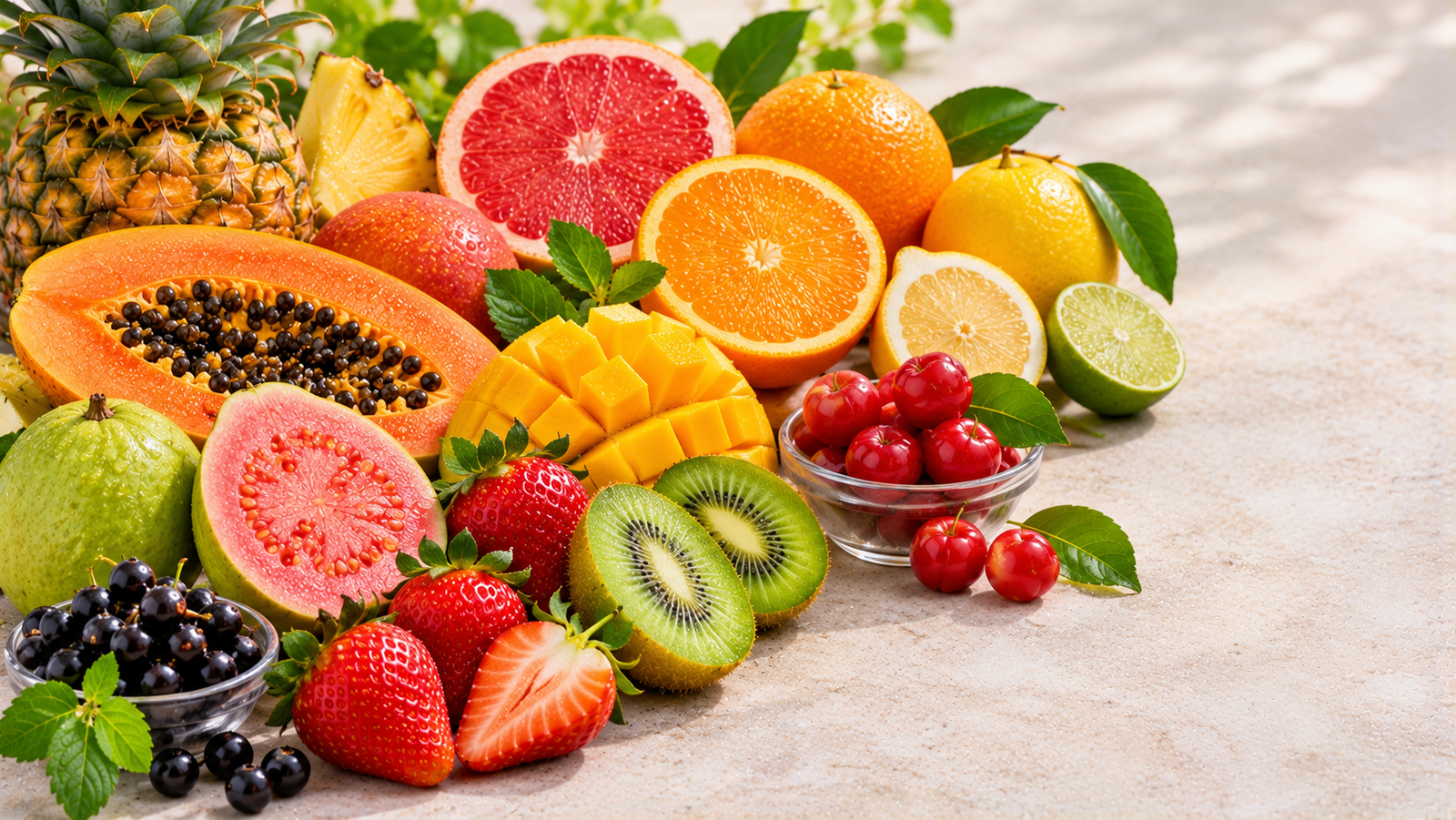
Eating fruits high in vitamin C is a simple way to add an important nutrient to your daily diet. Vitamin C, also known as ascorbic acid, is an essential water-soluble vitamin that supports normal immune function, collagen formation, wound healing, and the absorption of iron from plant-based foods.
Although oranges are famous for their vitamin C content, they are not the only fruit worth choosing. Guava, kiwi, blackcurrants, strawberries, papaya, and several other fruits can provide substantial amounts of this nutrient. Some even contain more vitamin C per 100 grams than oranges.
Including different vitamin C-rich fruits in your meals can help you meet your nutritional needs while adding fiber, water, antioxidants, and other beneficial plant compounds.
In this guide, you will discover 25 fruits high in vitamin C, compare their approximate vitamin C content, understand their nutritional benefits, and learn practical ways to enjoy them.
Key Takeaways
- Guava, acerola cherries, blackcurrants, kiwi, and strawberries are among the fruits particularly rich in vitamin C.
- Vitamin C supports collagen production, normal immune function, and iron absorption.
- Eating whole fruits provides fiber alongside vitamin C.
- Vitamin C content varies with fruit variety, ripeness, storage, and preparation.
- You do not need supplements to obtain vitamin C if your diet provides enough, although some people may need individualized advice.
- Eating a variety of fruits is more useful than relying on only one source.
What Is Vitamin C and Why Does Your Body Need It?
Vitamin C is an essential nutrient that the human body cannot produce on its own. It must come from food or, when appropriate, supplements.
It performs several important functions in the body.
1. Supports Normal Immune Function
Vitamin C contributes to the normal functioning of the immune system. It supports several cellular processes involved in the body’s natural defense mechanisms.
Fruits such as guava, kiwi, oranges, strawberries, and papaya can help provide vitamin C through everyday meals.
2. Helps Produce Collagen
Collagen is a structural protein found in skin, blood vessels, bones, cartilage, and connective tissues.
Vitamin C is necessary for normal collagen formation. This is why an adequate intake is important for maintaining healthy tissues and supporting wound healing.
3. Improves Iron Absorption
Vitamin C helps the body absorb non-heme iron, the form of iron found in plant foods such as lentils, beans, spinach, and fortified cereals.
For example, adding orange segments, kiwi, or strawberries to a meal containing lentils may improve the absorption of iron from that meal.
4. Acts as an Antioxidant
Vitamin C is an antioxidant that helps protect cells from damage caused by free radicals.
It also works alongside other antioxidant systems in the body. Fruits often provide vitamin C together with polyphenols, carotenoids, and other plant compounds.
5. Supports Normal Tissue Repair
Vitamin C is involved in collagen production and other processes needed for tissue maintenance and repair.
Adequate intake is important for normal wound healing.
25 Fruits High in Vitamin C You Should Know
The following list includes fruits that can contribute vitamin C to your diet. Amounts are approximate and generally refer to raw fruit per 100 grams unless another serving is specified.
1. Guava
Guava is one of the most vitamin C-rich commonly available fruits. Depending on the variety, it can provide several times more vitamin C per 100 grams than an orange.
Approximate vitamin C: 200–230 mg per 100 g.
Other nutritional highlights:
- Provides dietary fiber.
- Contains potassium.
- Supplies folate.
- Contains carotenoids, especially in pink-fleshed varieties.
Why eat guava?
Guava is a convenient way to increase vitamin C intake while also providing fiber. Its edible seeds and skin contribute to its overall nutritional value.
Easy ways to eat guava:
- Wash and eat it fresh.
- Slice it into a fruit bowl.
- Add it to smoothies.
- Combine it with lime juice for a refreshing snack.
2. Acerola Cherries
Acerola cherries, also known as Barbados cherries, are small tropical fruits with exceptionally high vitamin C concentrations.
Approximate vitamin C: Around 1,000–1,700 mg per 100 g in some fresh varieties; values vary widely.
Other nutritional highlights:
- Provide carotenoids.
- Contain polyphenols.
- Supply small amounts of vitamin A-related compounds.
Why eat acerola cherries?
Acerola is one of the most concentrated natural fruit sources of vitamin C. However, its availability and vitamin C content vary considerably depending on the cultivar and whether the fruit is fresh or processed.
Easy ways to eat acerola cherries:
- Enjoy fresh when available.
- Add the pulp to smoothies.
- Mix it into homemade fruit bowls.
- Use unsweetened acerola puree in recipes.
3. Blackcurrants
Blackcurrants are dark purple berries with a distinctive tart flavor. They are especially rich in vitamin C and naturally occurring anthocyanins.
Approximate vitamin C: Around 180 mg per 100 g.
Other nutritional highlights:
- Provide fiber.
- Contain anthocyanins.
- Supply potassium.
- Provide other polyphenols.
Why eat blackcurrants?
Blackcurrants offer a substantial amount of vitamin C along with colorful plant compounds. Their strong flavor makes them useful in smoothies and fruit mixtures.
Easy ways to eat blackcurrants:
- Add them to plain yogurt.
- Blend them into smoothies.
- Mix them with other berries.
- Add fresh berries to oatmeal.
4. Kiwi
Kiwi is a small fruit with a bright green or golden interior. It is an excellent source of vitamin C and also provides dietary fiber.
Approximate vitamin C: Around 90–100 mg per 100 g for green kiwi; golden kiwi can contain more.
Other nutritional highlights:
- Provides vitamin K.
- Contains potassium.
- Supplies folate.
- Provides dietary fiber.
Why eat kiwi?
Kiwi is a practical way to add vitamin C to breakfast or snacks. It also provides fiber and other nutrients that contribute to a balanced diet.
Easy ways to eat kiwi:
- Cut it in half and scoop out the flesh.
- Slice it over oatmeal.
- Add it to yogurt.
- Blend it into a fruit smoothie.
5. Strawberries
Strawberries are popular for their sweet flavor, bright red color, and vitamin C content.
Approximate vitamin C: Around 59 mg per 100 g.
Other nutritional highlights:
- Provide manganese.
- Contain folate.
- Supply dietary fiber.
- Contain anthocyanins and other polyphenols.
Why eat strawberries?
Strawberries provide vitamin C alongside fiber and naturally occurring plant compounds. They are easy to include in breakfast bowls, snacks, and desserts.
Easy ways to eat strawberries:
- Eat them fresh.
- Add them to plain yogurt.
- Blend them into smoothies.
- Mix them with oatmeal.
6. Kakadu Plum
Kakadu plum is an Australian native fruit known for its exceptionally high vitamin C concentration.
Approximate vitamin C: Can exceed 2,000 mg per 100 g in some reported analyses, but amounts vary significantly.
Other nutritional highlights:
- Contains polyphenols.
- Provides other plant compounds.
- Has a naturally tart flavor.
Why eat Kakadu plum?
Kakadu plum is notable for its vitamin C concentration, but it is not widely available as a fresh everyday fruit in many countries. It is more commonly encountered in specialty products.
Easy ways to use it:
- Try fresh fruit where locally available.
- Use a small amount of unsweetened puree in recipes.
- Add suitable fruit preparations to smoothies.
7. Oranges
Oranges are among the best-known vitamin C fruits. They are widely available and provide a convenient combination of vitamin C, water, and fiber.
Approximate vitamin C: Around 53 mg per 100 g.
Other nutritional highlights:
- Provide folate.
- Contain potassium.
- Supply dietary fiber.
- Contain citrus flavonoids.
Why eat oranges?
Oranges are a practical everyday source of vitamin C. Eating the whole fruit also provides fiber that is largely lost when the fruit is processed into juice.
Easy ways to eat oranges:
- Peel and eat them fresh.
- Add segments to salads.
- Mix them into fruit bowls.
- Pair them with breakfast.
8. Papaya
Papaya is a tropical fruit with soft orange flesh and a sweet flavor. It provides vitamin C, carotenoids, and fiber.
Approximate vitamin C: Around 60 mg per 100 g.
Other nutritional highlights:
- Contains beta-carotene.
- Provides folate.
- Supplies dietary fiber.
- Contains the enzyme papain.
Why eat papaya?
Papaya is a useful vitamin C source and contributes nutrients involved in normal immune function and tissue maintenance.
Easy ways to eat papaya:
- Eat ripe papaya fresh.
- Add it to fruit salads.
- Blend it with yogurt.
- Combine it with lime juice.
9. Lychee
Lychee is a fragrant tropical fruit with translucent flesh and a sweet flavor.
Approximate vitamin C: Around 71 mg per 100 g.
Other nutritional highlights:
- Provides copper.
- Contains potassium.
- Supplies natural carbohydrates.
- Contains polyphenols.
Why eat lychee?
Lychee provides vitamin C and can add variety to a fruit-based diet. Its naturally sweet flavor makes it a refreshing snack.
Easy ways to eat lychee:
- Peel and remove the seed before eating.
- Add the flesh to fruit salads.
- Chill it before serving.
- Mix it with kiwi or berries.
10. Pineapple
Pineapple is a tropical fruit with a juicy texture and naturally sweet-tart flavor.
Approximate vitamin C: Around 48 mg per 100 g.
Other nutritional highlights:
- Provides manganese.
- Contains dietary fiber.
- Supplies bromelain enzymes.
- Provides natural carbohydrates.
Why eat pineapple?
Pineapple provides vitamin C and manganese. It is also an easy fruit to add to meals and snacks.
Easy ways to eat pineapple:
- Eat fresh pineapple chunks.
- Add it to fruit salads.
- Blend it into smoothies.
- Grill slices as a dessert.
11. Mango
Mango is a popular tropical fruit with sweet orange-yellow flesh.
Approximate vitamin C: Around 36 mg per 100 g.
Other nutritional highlights:
- Provides beta-carotene.
- Contains folate.
- Supplies dietary fiber.
- Provides natural carbohydrates.
Why eat mango?
Mango contributes vitamin C and carotenoids, including beta-carotene, which the body can convert into vitamin A.
Easy ways to eat mango:
- Eat fresh slices.
- Add it to yogurt.
- Blend it into smoothies.
- Mix it into fruit salads.
12. Grapefruit
Grapefruit is a citrus fruit with pink, red, or pale yellow flesh and a refreshing sweet-tart taste.
Approximate vitamin C: Around 31–34 mg per 100 g.
Other nutritional highlights:
- Provides potassium.
- Contains water and fiber.
- Pink and red varieties contain lycopene.
- Supplies citrus flavonoids.
Why eat grapefruit?
Grapefruit contributes vitamin C and hydration. It can be a refreshing addition to breakfast and salads.
Important medication warning: Grapefruit can interact with certain prescription medicines and change how they work. Check with a pharmacist or healthcare professional before eating grapefruit or drinking its juice if you take medication.
Easy ways to eat grapefruit:
- Eat fresh segments.
- Add it to fruit salads.
- Combine it with berries.
- Serve it alongside breakfast.
13. Lemon
Lemons are citrus fruits with a sharp, acidic taste. They are often used in small amounts to flavor food and drinks.
Approximate vitamin C: Around 53 mg per 100 g of raw lemon flesh.
Other nutritional highlights:
- Contains citrus flavonoids.
- Provides potassium.
- Supplies small amounts of folate.
- Adds flavor without added sugar.
Why eat lemon?
Lemon juice provides vitamin C and can improve the absorption of non-heme iron when added to meals containing plant foods such as lentils, beans, and spinach.
Easy ways to use lemon:
- Squeeze it over salads.
- Add it to water.
- Use it in homemade dressings.
- Add zest to recipes.
14. Lime
Lime is another citrus fruit that provides vitamin C and a refreshing acidic flavor.
Approximate vitamin C: Around 29 mg per 100 g.
Other nutritional highlights:
- Contains citrus flavonoids.
- Provides small amounts of potassium.
- Supplies natural plant compounds.
Why eat lime?
Lime adds vitamin C and flavor to everyday meals. Its juice can help make vegetables, salads, and water more enjoyable.
Easy ways to use lime:
- Add fresh lime juice to water.
- Squeeze it over fruit salads.
- Use it in salad dressings.
- Add it to homemade salsa.
15. Cantaloupe
Cantaloupe is an orange-fleshed melon that provides vitamin C, beta-carotene, and water.
Approximate vitamin C: Around 37 mg per 100 g.
Other nutritional highlights:
- Provides beta-carotene.
- Contains potassium.
- Supplies water.
- Provides natural carbohydrates.
Why eat cantaloupe?
Cantaloupe contributes vitamin C and carotenoids. Its high water content makes it a refreshing fruit choice in warm weather.
Easy ways to eat cantaloupe:
- Serve chilled cubes.
- Add it to fruit bowls.
- Blend it into smoothies.
- Pair it with plain yogurt.
16. Persimmon
Persimmons are sweet fruits with orange-colored flesh. Their vitamin C content varies by variety and ripeness.
Approximate vitamin C: Around 7–16 mg per 100 g, depending on variety.
Other nutritional highlights:
- Provides beta-carotene.
- Contains dietary fiber.
- Supplies manganese.
- Contains polyphenols.
Why eat persimmon?
Persimmons contribute fiber and carotenoids alongside some vitamin C. Their sweetness makes them suitable for fruit bowls and snacks.
Easy ways to eat persimmon:
- Eat ripe persimmon fresh.
- Slice it into salads.
- Add it to oatmeal.
- Blend it into smoothies.
17. Melon (Honeydew)
Honeydew melon is a mild, sweet fruit that provides vitamin C and water.
Approximate vitamin C: Around 18 mg per 100 g.
Other nutritional highlights:
- Contains potassium.
- Provides water.
- Supplies folate.
- Contains natural carbohydrates.
Why eat honeydew?
Honeydew adds hydration and vitamin C to your meals. Its mild flavor combines well with other fruits.
Easy ways to eat honeydew:
- Serve chilled slices.
- Add cubes to fruit salads.
- Blend it into smoothies.
- Combine it with strawberries.
18. Passion Fruit
Passion fruit has aromatic pulp and edible seeds. It provides fiber and vitamin C.
Approximate vitamin C: Around 30 mg per 100 g, although varieties vary.
Other nutritional highlights:
- Provides dietary fiber.
- Contains vitamin A precursors.
- Supplies potassium.
- Contains plant polyphenols.
Why eat passion fruit?
Passion fruit contributes vitamin C and fiber. Its seeds also add texture and help increase the fiber content of meals.
Easy ways to eat passion fruit:
- Scoop out the pulp.
- Add it to plain yogurt.
- Mix it into smoothies.
- Use it as a fruit bowl topping.
19. Cherries
Cherries are small stone fruits with a sweet or tart taste. They contain vitamin C as well as colorful plant compounds.
Approximate vitamin C: Around 7 mg per 100 g for sweet cherries.
Other nutritional highlights:
- Contain anthocyanins.
- Provide potassium.
- Supply dietary fiber.
- Contain other polyphenols.
Why eat cherries?
Cherries contribute antioxidants and several nutrients to a varied diet. They are a useful addition to fruit snacks and breakfast bowls.
Easy ways to eat cherries:
- Eat fresh pitted cherries.
- Add them to oatmeal.
- Mix them with yogurt.
- Blend them into smoothies.
20. Raspberries
Raspberries are especially useful for their dietary fiber, and they also provide vitamin C.
Approximate vitamin C: Around 26 mg per 100 g.
Other nutritional highlights:
- Provide approximately 6.5 grams of fiber per 100 g.
- Contain manganese.
- Supply anthocyanins.
- Provide other polyphenols.
Why eat raspberries?
Raspberries combine vitamin C with a substantial amount of fiber. They are an excellent option for people who want to improve the nutritional quality of breakfast and snacks.
Easy ways to eat raspberries:
- Add them to oatmeal.
- Mix them with yogurt.
- Blend them into smoothies.
- Eat them fresh as a snack.
21. Blackberries
Blackberries provide vitamin C, vitamin K, fiber, and anthocyanins.
Approximate vitamin C: Around 21 mg per 100 g.
Other nutritional highlights:
- Provide dietary fiber.
- Contain vitamin K.
- Supply manganese.
- Contain anthocyanins.
Why eat blackberries?
Blackberries add fiber and plant compounds to meals. Their tart-sweet taste works well with other berries and breakfast foods.
Easy ways to eat blackberries:
- Add them to cereal.
- Mix them into yogurt.
- Use them in smoothies.
- Combine them with strawberries.
22. Red Currants
Red currants are small, bright berries with a tart flavor. They contain vitamin C and other naturally occurring plant compounds.
Approximate vitamin C: Around 40 mg per 100 g.
Other nutritional highlights:
- Provide dietary fiber.
- Contain potassium.
- Supply polyphenols.
- Add natural color and flavor.
Why eat red currants?
Red currants contribute vitamin C and fiber. They can be mixed with sweeter fruits to create a balanced flavor.
Easy ways to eat red currants:
- Add them to fruit salads.
- Mix them into yogurt.
- Use them in homemade sauces.
- Blend them with other berries.
23. Cranberries
Cranberries are tart berries that contain vitamin C and several polyphenols.
Approximate vitamin C: Around 14 mg per 100 g for raw cranberries.
Other nutritional highlights:
- Provide dietary fiber.
- Contain proanthocyanidins.
- Supply manganese.
- Provide other polyphenols.
Why eat cranberries?
Cranberries add variety to a fruit-rich diet. Fresh cranberries are naturally tart, so they are often combined with sweeter fruits.
Easy ways to eat cranberries:
- Mix fresh cranberries into smoothies.
- Add them to homemade fruit sauces.
- Combine them with oranges.
- Use unsweetened cranberries in recipes.
24. Dragon Fruit
Dragon fruit, also known as pitaya, has a striking appearance and mild, refreshing taste. Its vitamin C content varies by variety.
Approximate vitamin C: Around 4–10 mg per 100 g for many common varieties.
Other nutritional highlights:
- Provides dietary fiber.
- Contains magnesium.
- Supplies natural plant pigments.
- Provides water.
Why eat dragon fruit?
Dragon fruit contributes fiber and variety to a balanced diet. It is not among the most concentrated vitamin C sources, but it can still form part of a nutritious fruit selection.
Easy ways to eat dragon fruit:
- Cut it in half and scoop out the flesh.
- Add cubes to fruit bowls.
- Mix it into smoothies.
- Combine it with kiwi and berries.
25. Star Fruit
Star fruit, also known as carambola, is a tropical fruit with a distinctive star-shaped cross-section.
Approximate vitamin C: Around 34 mg per 100 g.
Other nutritional highlights:
- Provides dietary fiber.
- Contains potassium.
- Supplies water.
- Contains naturally occurring plant compounds.
Why eat star fruit?
Star fruit contributes vitamin C and adds variety to fruit salads. However, people with kidney disease should avoid star fruit because it contains compounds that can cause serious toxicity in people with impaired kidney function.
Easy ways to eat star fruit:
- Wash and slice it crosswise.
- Add slices to fruit bowls.
- Use it as a garnish.
- Combine it with other tropical fruits.
Vitamin C Content of 25 Fruits: Comparison Chart
The table below makes it easier to compare fruits high in vitamin C. Values are approximate amounts per 100 grams of raw fruit, not per whole fruit. Actual amounts can differ by variety, growing conditions, ripeness, storage, and preparation.
| Fruit | Approx. vitamin C per 100 g |
|---|---|
| Kakadu plum | Can exceed 2,000 mg |
| Acerola cherries | Around 1,000–1,700 mg |
| Guava | Around 200–230 mg |
| Blackcurrants | Around 180 mg |
| Kiwi | Around 90–100 mg |
| Lychee | Around 71 mg |
| Papaya | Around 60 mg |
| Strawberries | Around 59 mg |
| Orange | Around 53 mg |
| Lemon | Around 53 mg |
| Pineapple | Around 48 mg |
| Red currants | Around 40 mg |
| Cantaloupe | Around 37 mg |
| Mango | Around 36 mg |
| Star fruit | Around 34 mg |
| Grapefruit | Around 31–34 mg |
| Passion fruit | Around 30 mg |
| Lime | Around 29 mg |
| Raspberries | Around 26 mg |
| Blackberries | Around 21 mg |
| Honeydew melon | Around 18 mg |
| Cranberries | Around 14 mg |
| Persimmon | Around 7–16 mg |
| Cherries | Around 7 mg |
| Dragon fruit | Around 4–10 mg |
These figures are rounded estimates for general comparison. Especially for Kakadu plum and acerola, reported values vary considerably between varieties and analyses. Check the specific food entry in USDA FoodData Central or another reliable food-composition database before publishing exact nutrient claims.
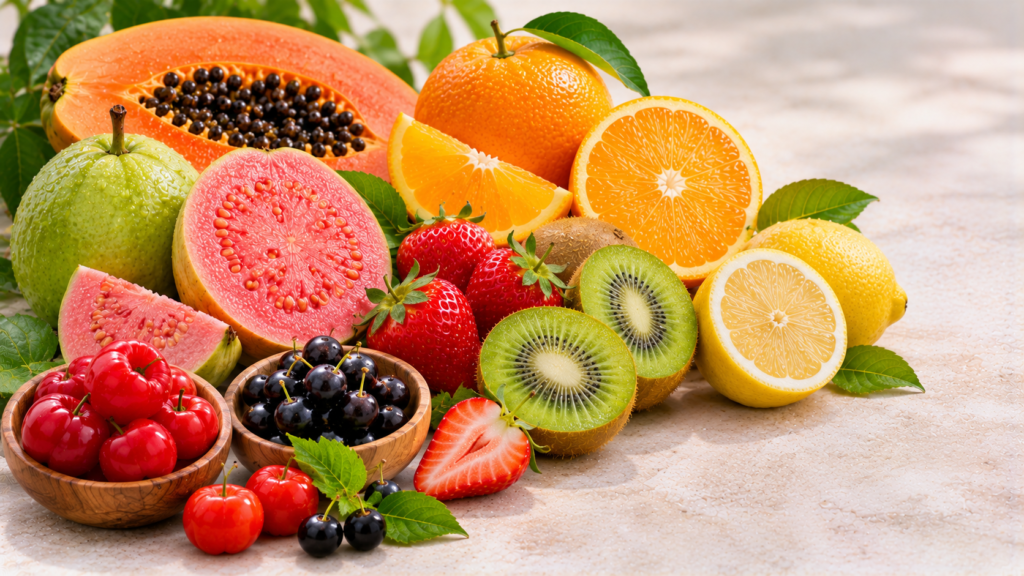
Which Fruits Have More Vitamin C Than Oranges?
Oranges are a familiar vitamin C source, but several other fruits can provide more vitamin C per 100 grams.
Examples include:
- Guava: Often provides several times the vitamin C found in the same weight of orange.
- Blackcurrants: Naturally rich in vitamin C.
- Kiwi: A concentrated everyday source.
- Strawberries: Provide a useful amount in a convenient serving.
- Papaya: Offers vitamin C along with carotenoids.
- Acerola cherries: Can contain exceptionally high concentrations.
- Kakadu plum: Known for very high reported vitamin C levels.
This comparison does not mean oranges are less nutritious. Oranges also provide fiber, water, folate, potassium, and citrus plant compounds. The best approach is to enjoy a variety of fruits rather than choosing foods based on one nutrient alone.
How Much Vitamin C Do You Need Every Day?
Your daily vitamin C requirement depends on your age, sex, life stage, and certain lifestyle factors.
The following are commonly used U.S. recommended dietary allowances (RDAs) for vitamin C:
| Group | Recommended daily amount |
|---|---|
| Adult men | 90 mg |
| Adult women | 75 mg |
| Pregnant adults | 85 mg |
| Breastfeeding adults | 120 mg |
| People who smoke | 35 mg more than the relevant RDA |
These are general reference values, not individual medical prescriptions. Requirements for children and teenagers differ by age.
For most healthy adults, eating a range of vitamin C-rich fruits and vegetables can help meet daily needs. You do not need to consume unusually large quantities of very concentrated fruits to get enough vitamin C.
Read the NIH Office of Dietary Supplements’ Vitamin C Fact Sheet.
Can One Fruit Meet Your Daily Vitamin C Requirement?
Sometimes, a single serving of a particularly vitamin C-rich fruit can provide most or even more than the daily requirement for an adult.
For example, a serving of guava may provide substantially more vitamin C than a medium orange. However, nutrient content varies, so it is better to use food-composition data rather than assume every fruit has the same amount.
Eating different fruits also provides nutrients that vitamin C alone cannot supply.
Health Benefits of Eating Fruits High in Vitamin C
Vitamin C-rich fruits can contribute to a balanced diet in several important ways. Their benefits come from vitamin C as well as the fiber, water, minerals, and plant compounds found in whole fruit.
1. They Help Maintain Normal Immune Function
Vitamin C supports normal immune-system activity and contributes to the function of several types of immune cells.
Guava, kiwi, oranges, strawberries, and papaya are practical food sources. Eating these fruits regularly can help you obtain vitamin C, but no individual fruit prevents every infection or replaces medical care.
2. They Support Collagen Formation and Skin Structure
Your body needs vitamin C to produce collagen, a protein that helps provide structure to skin, cartilage, bones, and blood vessels.
Fruits such as guava, kiwi, oranges, and strawberries can contribute to adequate vitamin C intake, which is important for normal collagen formation.
3. They Improve Absorption of Plant-Based Iron
Iron from plant foods is called non-heme iron. It is generally less readily absorbed than the iron found in meat and seafood.
Vitamin C can improve non-heme iron absorption when consumed as part of the same meal.
Try these combinations:
- Lentils with lemon juice.
- Chickpea salad with orange segments.
- Spinach with strawberries.
- Beans with chopped tomatoes and lime.
- Vegetable curry with a side of guava.
These combinations are especially useful for people who eat mostly plant-based meals.
4. They Provide Antioxidant Compounds
Many vitamin C-rich fruits contain other antioxidant compounds.
For example:
- Strawberries contain anthocyanins and other polyphenols.
- Papaya provides beta-carotene.
- Blackcurrants contain anthocyanins.
- Citrus fruits provide flavonoids.
- Guava contains carotenoids, depending on the variety.
Eating a variety of colorful fruits provides a broader range of plant compounds than relying on one fruit.
5. They Contribute to Digestive Health
Whole fruits provide dietary fiber, which supports normal bowel function and digestive health.
Some useful choices include:
- Guava
- Raspberries
- Blackberries
- Kiwi
- Strawberries
- Passion fruit
Remember that fruit juice usually contains less fiber than the whole fruit. Choose whole fruit regularly to benefit from its natural fiber.
6. They Add Nutrients and Variety Without Much Preparation
Many fruits can be eaten with little preparation. Oranges, bananas, kiwi, strawberries, and guava are easy options for snacks, lunch boxes, and breakfast.
This convenience can make it easier to build a balanced eating pattern.
Best Ways to Add Vitamin C-Rich Fruits to Your Daily Diet
You do not need complicated recipes to eat more vitamin C-rich fruits. Small changes to familiar meals can make a difference.
1. Add Fruit to Breakfast
Breakfast is an easy opportunity to include vitamin C.
Try:
- Oatmeal topped with kiwi and strawberries.
- Plain yogurt with blackcurrants.
- Whole-grain toast with a side of orange slices.
- A fruit bowl with papaya, guava, and pineapple.
2. Choose Fruit for Snacks
Keep convenient fruit available when you want a quick snack.
Good options include:
- Fresh guava.
- Kiwi.
- Oranges.
- Strawberries.
- Papaya cubes.
- Blackcurrants when available.
For a more filling snack, pair fruit with plain yogurt, nuts, or seeds.
3. Make a Vitamin C-Rich Smoothie
A homemade smoothie can combine several fruit sources.
Simple strawberry-kiwi smoothie
Ingredients:
- 1 kiwi, peeled.
- ½ cup strawberries.
- ½ banana.
- ½ cup plain yogurt or milk.
- A little water, if needed.
Method:
- Wash the fruit and prepare the ingredients.
- Add everything to a blender.
- Blend until smooth.
- Serve immediately.
Avoid adding large amounts of sugar or sweetened syrups. Keep in mind that blending does not remove all fiber, but smoothies can be easy to consume quickly and may contain several servings of fruit.
4. Add Citrus to Savory Meals
Lemon and lime juice can make everyday meals more flavorful.
Try:
- Lemon juice over cooked vegetables.
- Lime dressing for chickpea salad.
- Orange segments in a green salad.
- Lemon juice with lentils or beans.
5. Use Frozen Fruits
Frozen strawberries, kiwi pieces, mango, and mixed berries can be useful when fresh fruit is expensive or unavailable.
Choose unsweetened frozen fruit when possible. Frozen fruit is convenient for smoothies, oatmeal, and yogurt bowls.
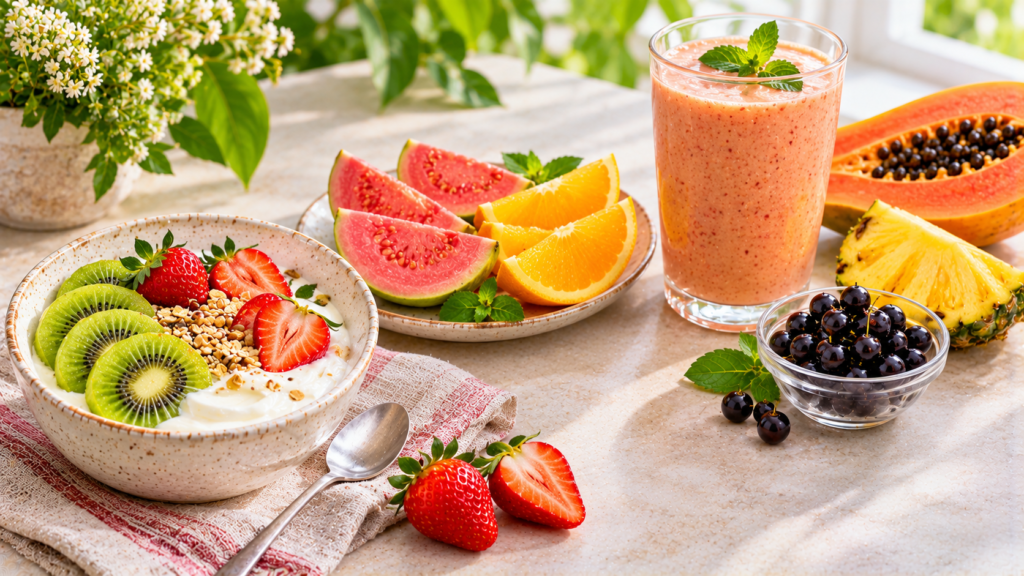
Whole Fruits vs. Fruit Juice: Which Provides More Benefits?
Whole fruits are generally the better everyday choice because they provide fiber along with their natural vitamins, minerals, and plant compounds.
| Feature | Whole fruit | Fruit juice |
|---|---|---|
| Vitamin C | Varies by fruit | Varies by fruit and processing |
| Fiber | Usually provides fiber | Usually much less fiber |
| Fullness | Often more satisfying | May be less filling |
| Eating speed | Requires chewing | Easy to drink quickly |
| Added sugar | Usually none | Some products contain added sugar |
| Everyday choice | Generally preferred | Best in moderate portions |
Does Juicing Remove Vitamin C?
Juicing does not automatically remove all vitamin C. However, the amount retained depends on the fruit, juicing method, exposure to air, heat, light, and storage time.
Vitamin C is sensitive to heat and oxidation. Freshly prepared juice may retain more vitamin C than juice that has been stored for a long time, but the exact amount varies.
Practical advice: Choose whole fruit most often. If you drink juice, choose 100% fruit juice without added sugar and keep portions moderate.
[Internal Link: Insert relevant internal URL here with anchor text: Whole Fruits vs. Fruit Juice: Which Is Better for Your Health?]
Does Cooking or Storing Fruit Reduce Vitamin C?
Vitamin C is sensitive to heat, oxygen, and prolonged storage. Some preparation methods can reduce the amount present in fruit.
Tips to Preserve Vitamin C
- Eat fruit fresh when practical: Freshly cut fruit is a simple way to enjoy its nutrients.
- Avoid unnecessary prolonged storage: Store cut fruit in a covered container in the refrigerator.
- Cut fruit shortly before eating: This can limit the time it is exposed to air.
- Avoid excessive heating: Heat can reduce vitamin C content.
- Use fresh fruit in smoothies: Prepare smoothies shortly before serving.
- Do not discard edible fruit flesh: The pulp and edible skin of many fruits contribute fiber and other nutrients.
You do not need to avoid cooked fruit altogether. Cooking can still be part of a nutritious diet, even if some vitamin C is lost.
Fresh, Frozen, and Canned Fruits: Which Should You Choose?
All three forms can fit into a balanced eating pattern.
| Fruit form | Advantages | What to consider |
|---|---|---|
| Fresh | Convenient and versatile | Choose ripe, undamaged fruit |
| Frozen | Easy to store and use in smoothies | Choose unsweetened options |
| Canned | Affordable and available year-round | Choose fruit packed in water or juice |
| Dried | Portable and convenient | Smaller portions; vitamin C may be reduced during processing |
Frozen fruit can retain much of its nutritional value, although vitamin C retention depends on processing and storage. Dried fruit is more concentrated in calories and natural sugars per gram and may contain less vitamin C than fresh fruit.
Common Mistakes to Avoid When Eating Fruits High in Vitamin C
1. Assuming Oranges Are the Only Good Source
Guava, kiwi, blackcurrants, strawberries, papaya, and other fruits can provide substantial vitamin C.
2. Choosing Juice Instead of Whole Fruit Every Time
Juice can provide vitamin C, but it generally contains much less fiber than whole fruit.
3. Ignoring Serving Sizes
Vitamin C content is often listed per 100 grams. A fruit’s actual vitamin C contribution depends on how much you eat.
4. Storing Cut Fruit for Too Long
Prolonged exposure to air and heat can reduce vitamin C. Refrigerate cut fruit in a covered container and enjoy it promptly.
5. Assuming More Vitamin C Is Always Better
Vitamin C is essential, but consuming extremely large amounts is not necessary for most people. High-dose supplements can cause side effects, including digestive discomfort.
6. Forgetting Fruit Variety
Different fruits provide different nutrients. Eating a mixture of berries, citrus fruits, tropical fruits, and other varieties helps create a more balanced diet.
Can You Get Enough Vitamin C From Food?
Many people can meet their vitamin C requirements through a varied diet that includes fruits and vegetables.
For example, an adult could include:
- Kiwi or strawberries at breakfast.
- An orange as a snack.
- Guava or papaya later in the day.
- Vegetables such as broccoli or bell peppers with meals.
Vitamin C is also found in vegetables, including red bell peppers, broccoli, Brussels sprouts, and cabbage. You do not have to rely on fruit alone.
Supplements may be appropriate in certain circumstances, but they are not automatically necessary for everyone. If you are concerned about deficiency, have a restricted diet, smoke, or have a medical condition affecting nutrient absorption, ask a qualified healthcare professional for advice.
Who May Need to Pay Particular Attention to Vitamin C Intake?
Some people may have a higher risk of inadequate vitamin C intake.
These include:
- People who eat very few fruits and vegetables.
- People with highly restricted diets.
- People who smoke.
- Individuals with certain medical conditions affecting nutrient absorption.
- People experiencing food insecurity or limited access to fresh produce.
Severe vitamin C deficiency can cause scurvy, a condition associated with symptoms such as fatigue, swollen or bleeding gums, joint pain, and poor wound healing. Anyone experiencing concerning symptoms should seek medical assessment rather than attempting to self-diagnose.
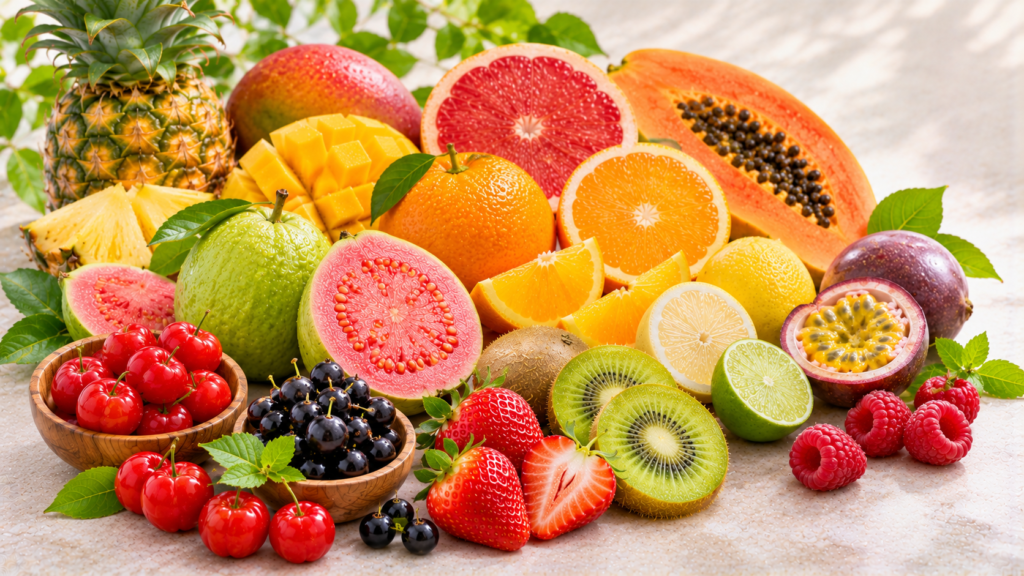
Frequently Asked Questions About Fruits High in Vitamin C
1. Which fruit has the highest vitamin C content?
Kakadu plum and acerola cherries are known for exceptionally high vitamin C concentrations. Among more commonly available fruits, guava and blackcurrants are particularly rich sources.
2. Which everyday fruit is highest in vitamin C?
Guava is one of the richest vitamin C sources among commonly available fruits. Kiwi, strawberries, oranges, and papaya are also useful choices.
3. Do strawberries contain more vitamin C than oranges?
Per 100 grams, strawberries contain slightly more vitamin C than oranges in commonly reported food-composition data. Exact amounts vary by variety and growing conditions.
4. Can I eat fruits high in vitamin C every day?
Yes. Most people can enjoy vitamin C-rich fruits daily as part of a balanced diet. Include different fruits to obtain a wider range of nutrients.
5. Which vitamin C fruits are best for breakfast?
Kiwi, strawberries, oranges, papaya, guava, and blackcurrants are convenient breakfast options. Add them to oatmeal, yogurt, or whole-grain meals.
6. Does frozen fruit contain vitamin C?
Yes. Frozen fruits can retain much of their vitamin C, although the amount varies with processing and storage. Choose unsweetened frozen fruit when possible.
7. Does cooking fruit destroy vitamin C?
Cooking can reduce vitamin C because it is sensitive to heat. The amount lost depends on cooking temperature, time, and method.
8. Are vitamin C fruits better than vitamin C supplements?
Whole fruits provide vitamin C together with fiber and other nutrients. Supplements can be useful in specific circumstances, but most people should prioritize a varied diet.
9. Which fruits contain vitamin C and fiber?
Guava, kiwi, strawberries, raspberries, blackberries, and passion fruit provide both vitamin C and dietary fiber.
10. Can vitamin C from fruit help the body absorb iron?
Yes. Vitamin C improves the absorption of non-heme iron from plant foods. Eating citrus fruit, kiwi, or strawberries with meals containing lentils or beans can help.
Conclusion: Make Fruits High in Vitamin C Part of Your Daily Diet
Including fruits high in vitamin C in your everyday meals is a practical way to support normal immune function, collagen production, iron absorption, and overall nutrition.
Although oranges are a familiar source, fruits such as guava, blackcurrants, kiwi, strawberries, papaya, and acerola cherries offer excellent alternatives. Each fruit also provides a different combination of fiber, minerals, water, and beneficial plant compounds.
You do not need to eat every fruit on this list. Start with the options you enjoy, add seasonal varieties, and combine different fruits throughout the week. Eating whole fruits regularly is a simple habit that can contribute to a balanced, nutrient-rich diet.
For more practical nutrition guidance, explore these related articles:
1 thought on “Fruits High in Vitamin C”