
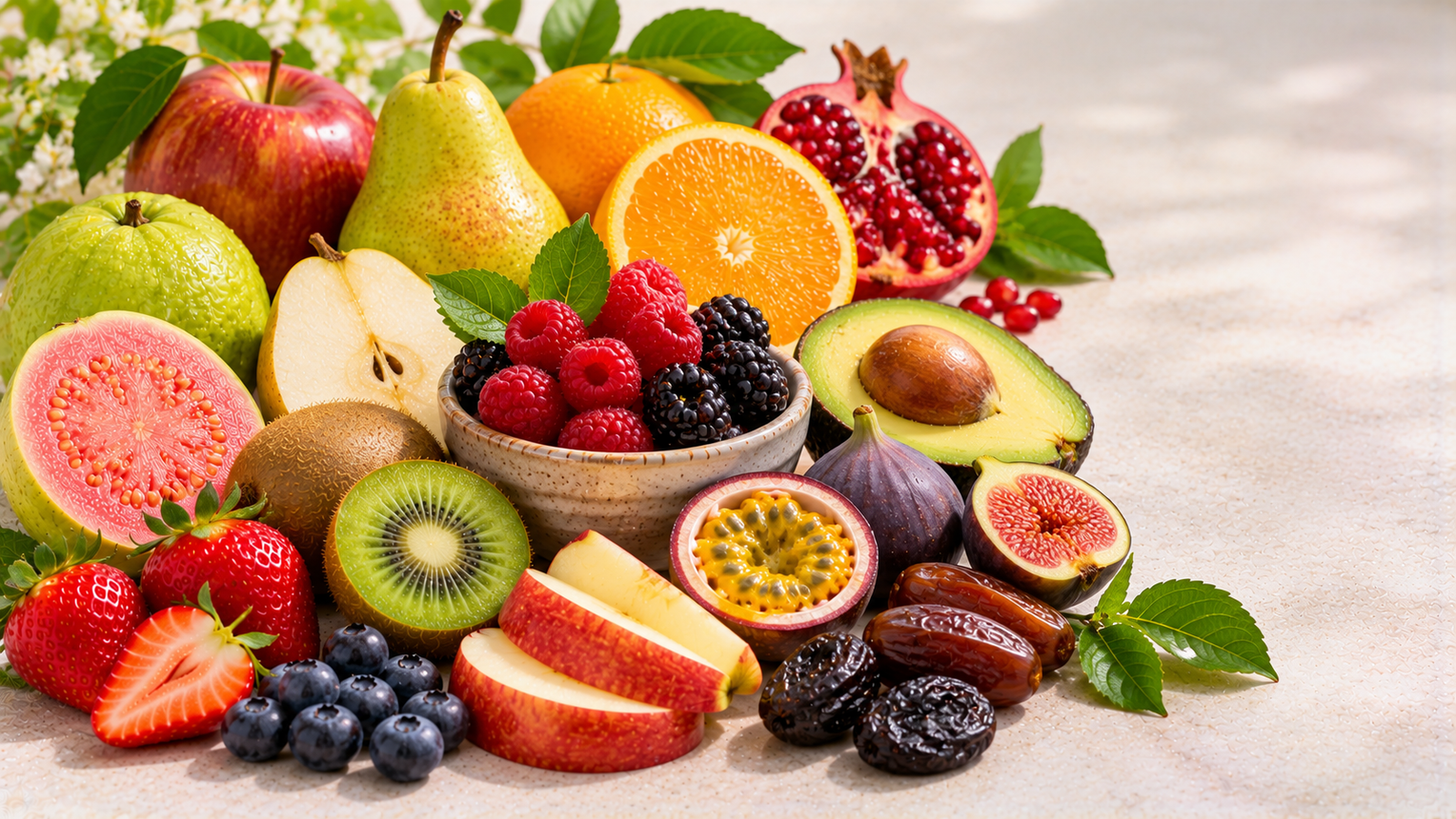
Adding fruits high in fiber to your daily meals is a simple way to improve your overall diet and support digestive health. Dietary fiber is an important part of a balanced eating pattern because it helps maintain regular bowel movements, supports beneficial gut bacteria, and can make meals more satisfying.
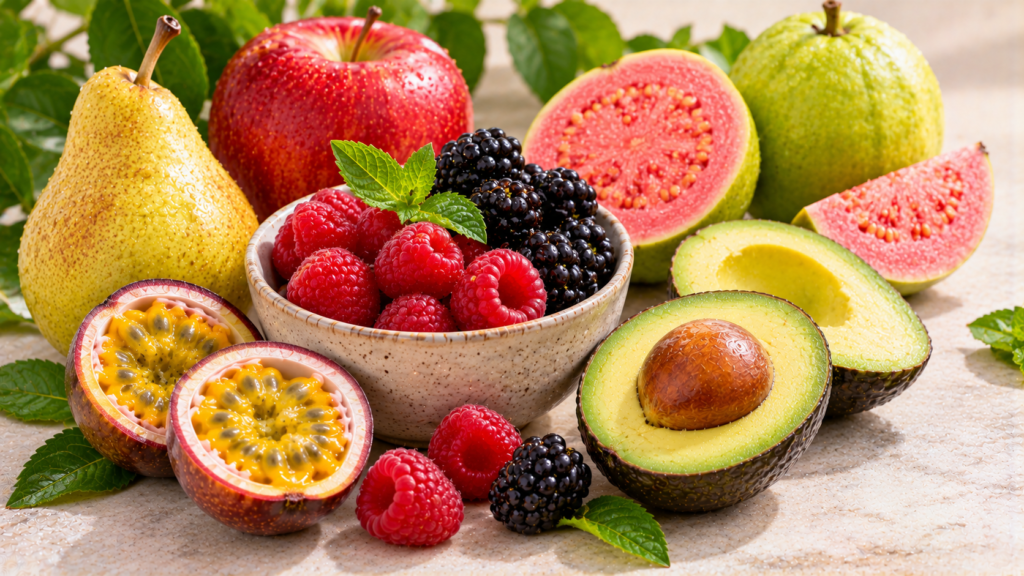
Although many people think of vegetables, beans, and whole grains as the main sources of fiber, fruits can make a valuable contribution too. Raspberries, blackberries, pears, apples, passion fruit, guava, and avocado are particularly useful choices.
Different fruits provide different amounts and types of fiber. Some contain more soluble fiber, while others provide a mixture of soluble and insoluble fiber. Eating a variety of whole fruits helps you obtain fiber alongside vitamins, minerals, water, and beneficial plant compounds.
In this guide, you will discover 25 fiber-rich fruits, compare their approximate fiber content, learn how they support digestive health, and find practical ways to add them to your daily diet.
Key Takeaways
- Raspberries, blackberries, passion fruit, pears, and avocado are among the higher-fiber fruit choices.
- Whole fruits generally provide more fiber than fruit juice.
- Eating fruit with its edible skin can increase fiber intake.
- Fiber supports bowel regularity and beneficial gut bacteria.
- Dried fruits provide concentrated fiber but are also more concentrated in natural sugars and calories.
- Increase fiber gradually and drink enough fluids.
- A variety of fruits, vegetables, legumes, and whole grains is the best way to build a fiber-rich eating pattern.
What Is Dietary Fiber?
Dietary fiber is the part of plant foods that the body does not fully digest. It is found in fruits, vegetables, legumes, nuts, seeds, and whole grains.
Fiber is commonly described in two broad categories.
1. Soluble Fiber
Soluble fiber dissolves in water and can form a gel-like substance in the digestive tract.
It may help:
- Support healthy blood cholesterol levels.
- Slow the absorption of some nutrients, including carbohydrates.
- Promote fullness after meals.
- Feed beneficial gut bacteria when it is fermentable.
Fruits containing soluble fiber include:
- Apples
- Pears
- Citrus fruits
- Berries
- Bananas
2. Insoluble Fiber
Insoluble fiber does not dissolve in water. It helps add bulk to stool and supports regular bowel movements.
Useful fruit sources include:
- Raspberries
- Blackberries
- Pears with skin
- Apples with skin
- Figs
- Passion fruit
Many whole fruits contain both soluble and insoluble fiber, so you do not need to separate them perfectly when planning meals.
25 Fruits High in Fiber You Should Add to Your Diet
The following list includes fruits that can contribute meaningful amounts of dietary fiber. Values are approximate and depend on variety, size, ripeness, and preparation.
1. Raspberries
Fresh Raspberries In White Bowl
Raspberries are among the best commonly available fruits for increasing dietary fiber. Their small edible seeds and soft flesh contribute to their fiber content.
Approximate fiber: 8 grams per cup (about 123 g).
Other nutritional highlights:
- Provide vitamin C.
- Contain manganese.
- Supply anthocyanins and other polyphenols.
- Offer relatively few calories per serving.
Why eat raspberries?
Raspberries are an excellent choice for people who want to increase fiber intake without relying only on grains or legumes. Their fiber supports normal bowel function and contributes to fullness.
Easy ways to eat raspberries:
- Add them to oatmeal.
- Mix them into plain yogurt.
- Blend them into smoothies.
- Use them as a topping for whole-grain pancakes.
2. Blackberries
Blackberries are dark-colored berries with a sweet-tart flavor. Their seeds and edible skin help make them a useful source of fiber.
Approximate fiber: 7.6 grams per cup (about 144 g).
Other nutritional highlights:
- Provide vitamin C.
- Contain vitamin K.
- Supply manganese.
- Provide anthocyanins.
Why eat blackberries?
Blackberries contribute fiber and naturally occurring plant compounds. They are easy to add to breakfast, snacks, and homemade fruit bowls.
Easy ways to eat blackberries:
- Eat them fresh.
- Add them to breakfast cereal.
- Mix them into yogurt.
- Combine them with strawberries and blueberries.
3. Passion Fruit
Passion fruit has a fragrant aroma, tangy flavor, and edible seeds surrounded by juicy pulp. The seeds contribute a substantial amount of its fiber.
Approximate fiber: Around 10–12 grams per cup of pulp and seeds; serving size and variety affect the value.
Other nutritional highlights:
- Provides vitamin C.
- Contains vitamin A precursors.
- Supplies potassium.
- Provides natural plant compounds.
Why eat passion fruit?
Passion fruit is a particularly fiber-rich tropical fruit. Eating the pulp with its seeds helps you benefit from its full fiber content.
Easy ways to eat passion fruit:
- Scoop the pulp into plain yogurt.
- Add it to smoothies.
- Use it as a topping for oatmeal.
- Mix it into a tropical fruit bowl.
4. Avocado
Avocado is botanically a fruit, although it is commonly used in savory meals. Unlike most fruits, it is rich in unsaturated fats.
Approximate fiber: 6.7 grams per half medium avocado.
Other nutritional highlights:
- Provides monounsaturated fats.
- Contains potassium.
- Supplies folate.
- Provides vitamin K.
Why eat avocado?
Avocado is a valuable source of fiber and unsaturated fats. It can make meals more satisfying and can replace some foods high in saturated fat.
Easy ways to eat avocado:
- Spread it on whole-grain toast.
- Add it to salads.
- Mash it into sandwiches.
- Blend a small amount into smoothies.
5. Pears
Pears are naturally sweet fruits that provide fiber, especially when eaten with their skin.
Approximate fiber: 5.5 grams per medium pear with skin.
Other nutritional highlights:
- Provide vitamin C.
- Contain potassium.
- Supply water.
- Contain natural plant compounds.
Why eat pears?
Pears are a convenient source of fiber and can help support regular bowel movements. Their mild flavor makes them easy to include in breakfast and snacks.
Easy ways to eat pears:
- Eat them fresh with the skin.
- Slice them into oatmeal.
- Pair them with nuts.
- Add them to salads.
6. Guava
Guava is a tropical fruit with white or pink flesh. It is especially rich in vitamin C and also provides dietary fiber.
Approximate fiber: Around 3–5 grams per 100 g, depending on variety.
Other nutritional highlights:
- Rich in vitamin C.
- Contains potassium.
- Provides folate.
- Supplies carotenoids, particularly in pink varieties.
Why eat guava?
Guava is a useful fruit for people who want both fiber and vitamin C. Its edible skin and seeds contribute to its overall nutritional value.
Easy ways to eat guava:
- Wash and eat it fresh.
- Slice it into fruit salads.
- Add it to smoothies.
- Pair it with other tropical fruits.
7. Apples
Apples are convenient, affordable, and widely available. Eating them with the skin provides more fiber than peeling them.
Approximate fiber: 4.4 grams per medium apple with skin.
Other nutritional highlights:
- Contain pectin, a soluble fiber.
- Provide vitamin C.
- Supply polyphenols.
- Contain natural carbohydrates.
Why eat apples?
Apple fiber, including pectin, contributes to digestive health. The combination of water and fiber can also make apples a satisfying snack.
Easy ways to eat apples:
- Eat them whole.
- Slice them with peanut butter.
- Add chopped apple to oatmeal.
- Mix them into salads.
8. Pomegranate
Pomegranate contains juicy edible seeds called arils. These provide fiber as well as colorful plant compounds.
Approximate fiber: Around 3.5–4 grams per 100 g of arils.
Other nutritional highlights:
- Provides vitamin C.
- Contains vitamin K.
- Supplies potassium.
- Contains polyphenols.
Why eat pomegranate?
Pomegranate arils add fiber, texture, and natural sweetness to meals. They are a practical way to add variety to salads and breakfast bowls.
Easy ways to eat pomegranate:
- Sprinkle arils over yogurt.
- Add them to salads.
- Mix them into oatmeal.
- Eat them as a snack.
9. Kiwi
Kiwi is a small fruit with green or golden flesh and edible seeds. It provides fiber alongside vitamin C and other nutrients.
Approximate fiber: Around 2–3 grams per medium fruit.
Other nutritional highlights:
- Provides vitamin C.
- Contains vitamin K.
- Supplies potassium.
- Provides folate.
Why eat kiwi?
Kiwi contributes fiber and vitamin C. Some research has also examined its role in bowel regularity and digestive comfort.
Easy ways to eat kiwi:
- Cut it in half and scoop out the flesh.
- Eat it with the skin after washing if preferred.
- Add slices to yogurt.
- Blend it into smoothies.
10. Oranges
Oranges are known for their vitamin C content, but they also provide dietary fiber when eaten whole.
Approximate fiber: 3.1 grams per medium orange.
Other nutritional highlights:
- Provide vitamin C.
- Contain folate.
- Supply potassium.
- Contain citrus flavonoids.
Why eat oranges?
The fiber in whole oranges makes them a better everyday choice than relying only on orange juice. Their vitamin C also helps the body absorb iron from plant-based foods.
Easy ways to eat oranges:
- Peel and eat them fresh.
- Add segments to salads.
- Mix them into fruit bowls.
- Pair them with breakfast.
11. Bananas
Bananas are easy to carry, naturally sweet, and provide a useful amount of fiber.
Approximate fiber: 3.1 grams per medium banana.
Other nutritional highlights:
- Provide potassium.
- Contain vitamin B6.
- Supply vitamin C.
- Provide natural carbohydrates.
Why eat bananas?
Bananas offer fiber and potassium, which supports normal muscle function and fluid balance. Their soft texture also makes them easy to add to meals.
Easy ways to eat bananas:
- Add them to oatmeal.
- Blend them into smoothies.
- Serve them with whole-grain toast.
- Combine them with yogurt and seeds.
12. Strawberries
Strawberries are naturally sweet and provide fiber, vitamin C, and plant compounds.
Approximate fiber: 3 grams per cup of sliced strawberries.
Other nutritional highlights:
- Provide vitamin C.
- Contain manganese.
- Supply folate.
- Contain anthocyanins.
Why eat strawberries?
Strawberries add fiber and vitamin C to snacks and meals. Their flavor makes them a convenient ingredient in fruit bowls and breakfast recipes.
Easy ways to eat strawberries:
- Add them to plain yogurt.
- Mix them into oatmeal.
- Blend them into smoothies.
- Eat them fresh.
13. Figs
Figs are naturally sweet fruits that can be eaten fresh or dried. They provide dietary fiber and minerals.
Approximate fiber:
- Two medium fresh figs: around 2 grams.
- Dried figs, 40 g: around 3.7 grams.
Other nutritional highlights:
- Provide potassium.
- Contain calcium in modest amounts.
- Supply polyphenols.
- Provide natural carbohydrates.
Why eat figs?
Figs contribute fiber and are easy to include in snacks. Dried figs provide more fiber per gram than fresh figs because their water content is lower, but their calories and natural sugars are also more concentrated.
Easy ways to eat figs:
- Eat fresh figs as a snack.
- Add chopped figs to oatmeal.
- Mix dried figs with nuts.
- Serve them with plain yogurt.
14. Prunes
Prunes are dried plums and are well known for their fiber content. They also contain naturally occurring sorbitol, which can affect bowel movements.
Approximate fiber: Around 3 grams per 40 g serving.
Other nutritional highlights:
- Provide potassium.
- Contain vitamin K.
- Supply polyphenols.
- Contain natural carbohydrates.
Why eat prunes?
Prunes can support bowel regularity because they contain fiber and sorbitol. However, eating large amounts may cause gas, bloating, or loose stools in some people.
Easy ways to eat prunes:
- Eat a small portion as a snack.
- Chop them into oatmeal.
- Mix them into homemade trail mix.
- Add them to yogurt.
15. Dates
Dates are naturally sweet fruits commonly eaten fresh or dried. They provide fiber and minerals.
Approximate fiber: Around 1.6 grams per 40 g serving, depending on variety.
Other nutritional highlights:
- Provide potassium.
- Contain copper.
- Supply magnesium.
- Provide natural carbohydrates.
Why eat dates?
Dates are convenient sources of energy and fiber. Because they are concentrated in natural sugars and calories, portion size is important.
Easy ways to eat dates:
- Enjoy one or two with nuts.
- Chop them into oatmeal.
- Add them to homemade energy bites.
- Blend them into smoothies as a natural sweetener.
16. Raspberries’ Close Relative: Gooseberries
Gooseberries are tart berries that can be eaten fresh when ripe or used in cooking.
Approximate fiber: Around 4–5 grams per 100 g, depending on variety.
Other nutritional highlights:
- Provide vitamin C.
- Contain potassium.
- Supply polyphenols.
- Provide natural carbohydrates.
Why eat gooseberries?
Gooseberries add fiber and vitamin C to a varied fruit diet. Their tart flavor works well in fruit salads and homemade sauces.
Easy ways to eat gooseberries:
- Eat ripe berries fresh.
- Add them to yogurt.
- Mix them into smoothies.
- Cook them lightly into unsweetened fruit compote.
17. Persimmons
Persimmons are orange-colored fruits with a sweet flavor when ripe. They provide fiber and carotenoids.
Approximate fiber: Around 3–6 grams per medium fruit, depending on size and variety.
Other nutritional highlights:
- Provide beta-carotene.
- Contain vitamin C.
- Supply manganese.
- Contain polyphenols.
Why eat persimmons?
Persimmons add fiber and natural sweetness to meals. Their texture varies by variety, so some should be eaten only when fully ripe.
Easy ways to eat persimmons:
- Eat ripe persimmon fresh.
- Slice it into salads.
- Add it to oatmeal.
- Blend it into smoothies.
18. Peaches
Peaches are soft, juicy fruits that provide water, fiber, and vitamins.
Approximate fiber: Around 2 grams per medium peach.
Other nutritional highlights:
- Provide vitamin C.
- Contain potassium.
- Supply carotenoids.
- Provide natural carbohydrates.
Why eat peaches?
Peaches contribute fiber and variety to a balanced diet. Their natural sweetness makes them useful for snacks and fruit-based desserts.
Easy ways to eat peaches:
- Eat them fresh.
- Add slices to oatmeal.
- Mix them into yogurt.
- Grill peach halves for dessert.
19. Plums
Plums are juicy stone fruits available in several colors. They contain dietary fiber and plant compounds.
Approximate fiber: Around 1 gram per medium plum.
Other nutritional highlights:
- Provide vitamin C.
- Contain vitamin K.
- Supply polyphenols.
- Provide potassium.
Why eat plums?
Plums contribute fiber and natural plant compounds. They are easy to include in snacks and fruit salads.
Easy ways to eat plums:
- Eat them fresh.
- Add sliced plums to salads.
- Mix them into breakfast bowls.
- Pair them with nuts.
20. Blueberries
Blueberries are popular for their deep blue color and naturally occurring anthocyanins.
Approximate fiber: Around 3.6 grams per cup.
Other nutritional highlights:
- Provide vitamin C.
- Contain vitamin K.
- Supply manganese.
- Contain polyphenols.
Why eat blueberries?
Blueberries contribute fiber and plant compounds that add variety to a balanced diet. They are also easy to combine with other high-fiber foods.
Easy ways to eat blueberries:
- Add them to oatmeal.
- Mix them into yogurt.
- Blend them into smoothies.
- Sprinkle them over whole-grain cereal.
21. Grapefruit
Grapefruit is a citrus fruit with a refreshing sweet-tart flavor.
Approximate fiber: Around 2 grams per half medium grapefruit.
Other nutritional highlights:
- Provides vitamin C.
- Contains potassium.
- Supplies water.
- Pink varieties provide lycopene.
Why eat grapefruit?
Grapefruit contributes fiber and vitamin C. However, it can interact with certain medicines, so check with a pharmacist or healthcare professional before consuming it if you take prescription medication.
Easy ways to eat grapefruit:
- Eat fresh segments.
- Add it to fruit salads.
- Combine it with berries.
- Serve it alongside breakfast.
22. Apricots
Apricots are small stone fruits with orange flesh and a sweet-tart flavor. They can be eaten fresh or dried.
Approximate fiber:
- Two fresh apricots: around 1.5–2 grams.
- Dried apricots, 40 g: around 3 grams.
Other nutritional highlights:
- Provide beta-carotene.
- Contain potassium.
- Supply vitamin E in small amounts.
- Provide natural carbohydrates.
Why eat apricots?
Apricots provide fiber and carotenoids. Dried apricots are more concentrated in nutrients per gram but also in calories and natural sugars.
Easy ways to eat apricots:
- Eat fresh apricots.
- Add chopped dried apricots to oatmeal.
- Mix them with nuts.
- Serve them with plain yogurt.
23. Mango
Mango is a tropical fruit with sweet orange-yellow flesh. It provides fiber alongside vitamin C and carotenoids.
Approximate fiber: Around 2.6 grams per cup of sliced mango.
Other nutritional highlights:
- Provides vitamin C.
- Contains beta-carotene.
- Supplies folate.
- Provides natural carbohydrates.
Why eat mango?
Mango adds fiber, vitamin C, and beta-carotene to your diet. It is easy to combine with other fruits and breakfast foods.
Easy ways to eat mango:
- Eat fresh mango slices.
- Add them to smoothies.
- Mix them into yogurt.
- Combine them with avocado in salads.
24. Pineapple
Pineapple is a juicy tropical fruit with a sweet-tart taste.
Approximate fiber: Around 2.3 grams per cup of chunks.
Other nutritional highlights:
- Provides vitamin C.
- Contains manganese.
- Supplies bromelain enzymes.
- Provides natural carbohydrates.
Why eat pineapple?
Pineapple contributes fiber and vitamin C. Its flavor makes it a convenient ingredient in snacks and fruit bowls.
Easy ways to eat pineapple:
- Eat fresh chunks.
- Add them to fruit salads.
- Blend them into smoothies.
- Grill slices as a dessert.
25. Watermelon
Watermelon is a refreshing fruit with a high water content. Although it is not among the highest-fiber fruits, it can contribute to your overall fruit intake.
Approximate fiber: Around 0.6 grams per cup of diced watermelon.
Other nutritional highlights:
- Provides water.
- Contains vitamin C.
- Supplies lycopene.
- Provides beta-carotene.
Why eat watermelon?
Watermelon contributes fluids and nutrients. It is not a concentrated fiber source, but it can add variety and help make a balanced fruit selection more enjoyable.
Easy ways to eat watermelon:
- Serve chilled slices.
- Add cubes to fruit salads.
- Blend it into smoothies.
- Combine it with mint and lime.
Fiber Content of 25 Fruits: Comparison Chart
Use this chart to compare approximate fiber amounts in practical servings.
| Fruit | Serving size | Approx. fiber |
|---|---|---|
| Raspberries | 1 cup | 8 g |
| Blackberries | 1 cup | 7.6 g |
| Passion fruit | 1 cup pulp and seeds | 10–12 g |
| Avocado | ½ medium | 6.7 g |
| Pear | 1 medium | 5.5 g |
| Guava | 100 g | 3–5 g |
| Apple with skin | 1 medium | 4.4 g |
| Pomegranate arils | 100 g | 3.5–4 g |
| Blueberries | 1 cup | 3.6 g |
| Kiwi | 1 medium | 2–3 g |
| Orange | 1 medium | 3.1 g |
| Banana | 1 medium | 3.1 g |
| Strawberries | 1 cup | 3 g |
| Fresh figs | 2 medium | Around 2 g |
| Dried figs | 40 g | Around 3.7 g |
| Prunes | 40 g | Around 3 g |
| Dates | 40 g | Around 1.6 g |
| Gooseberries | 100 g | Around 4–5 g |
| Persimmon | 1 medium | Around 3–6 g |
| Peach | 1 medium | Around 2 g |
| Plum | 1 medium | Around 1 g |
| Grapefruit | ½ medium | Around 2 g |
| Dried apricots | 40 g | Around 3 g |
| Mango | 1 cup | Around 2.6 g |
| Watermelon | 1 cup | Around 0.6 g |
Values are rounded estimates. Serving sizes and fruit varieties differ. Passion fruit values refer to edible pulp and seeds; dried-fruit values are for the stated portion. Check USDA FoodData Central before using figures as definitive nutritional data.
Which Fruits Are Highest in Fiber?
If your main goal is to increase your daily fiber intake, prioritize fruits that provide more fiber per serving.
Some of the strongest choices include:
- Passion fruit: Particularly rich in fiber when you eat the pulp and seeds.
- Raspberries: Provide approximately 8 grams per cup.
- Blackberries: Provide approximately 7.6 grams per cup.
- Avocado: Provides approximately 6.7 grams per half fruit.
- Pears: Provide approximately 5.5 grams per medium fruit.
- Apples: Provide approximately 4.4 grams per medium fruit with skin.
- Guava: Provides approximately 3–5 grams per 100 grams.
- Pomegranate: Provides approximately 3.5–4 grams per 100 grams of arils.
Practical tip: Choose whole fruits rather than juice whenever possible. The skin, pulp, and edible seeds contribute to the fiber content.
How Much Fiber Do You Need Every Day?
Your daily fiber requirement depends on your age, sex, and energy needs. The following are commonly used U.S. recommendations for adults.
| Group | Recommended daily fiber |
|---|---|
| Women aged 19–50 | 25 g |
| Men aged 19–50 | 38 g |
| Women aged 51 and older | 21 g |
| Men aged 51 and older | 30 g |
| Pregnancy | 28 g |
| Breastfeeding | 29 g |
These values are general reference amounts. Individual requirements can differ, and dietary guidance may vary by country.
Can Fruits Alone Meet Your Daily Fiber Needs?
Fruits can make a meaningful contribution, but most people benefit from getting fiber from several food groups.
Combine fruit with:
- Vegetables: Broccoli, peas, carrots, and Brussels sprouts.
- Legumes: Lentils, chickpeas, kidney beans, and black beans.
- Whole grains: Oats, barley, brown rice, and whole-wheat bread.
- Nuts and seeds: Chia seeds, flaxseeds, almonds, and pistachios.
For more food ideas, see [Internal Link: Insert relevant internal URL here with anchor text: High Fiber Foods Chart: 40 Fiber-Rich Foods and Their Fiber Amounts].
Health Benefits of Eating Fruits High in Fiber
Fiber-rich fruits contribute to several aspects of digestive and overall health. Their benefits are part of a balanced eating pattern rather than a result of one particular fruit.
1. Supports Regular Bowel Movements
Dietary fiber helps add bulk to stool and supports normal bowel movements. Some types of fiber also help retain water in the digestive tract.
Pears, raspberries, blackberries, apples, and passion fruit are useful options.
If you are increasing your fiber intake, do it gradually. A sudden increase can cause gas, bloating, and abdominal discomfort.
2. Helps Support a Healthy Gut Microbiome
Some fibers are fermented by bacteria in the large intestine. This process produces substances called short-chain fatty acids, which are involved in maintaining the gut environment.
Apples, berries, pears, and other plant foods provide fibers and plant compounds that contribute to a varied diet.
3. Helps You Feel Satisfied After Meals
Fiber-rich foods can make meals more satisfying. Whole fruits also contain water and require chewing, which can help make them more filling than many fruit drinks.
Try including a pear, apple, or bowl of raspberries as part of a snack.
4. Supports Heart-Healthy Eating Patterns
Certain types of soluble fiber, including pectin found in apples and pears, can help maintain healthy blood cholesterol levels when consumed as part of an appropriate diet.
Avocado also provides unsaturated fats, which can be useful when they replace some foods high in saturated fat.
5. Helps Support Healthy Blood Glucose Management
Fiber can slow the digestion and absorption of carbohydrates, depending on the type of food and the overall meal.
Whole fruits are generally a better choice than sweetened fruit drinks because they retain their natural fiber. People managing diabetes should consider portions and individual blood glucose responses rather than assuming all fruits affect everyone in the same way.
6. Contributes to a Nutrient-Rich Diet
Fiber-rich fruits also supply vitamins, minerals, water, and naturally occurring plant compounds.
For example:
- Guava provides vitamin C.
- Avocado supplies potassium and unsaturated fats.
- Berries contain anthocyanins.
- Oranges provide vitamin C and folate.
- Kiwi supplies vitamin C and vitamin K.
Best Ways to Add High-Fiber Fruits to Your Daily Diet
You do not need complicated recipes to eat more fiber-rich fruit. Small changes to familiar meals can make a meaningful difference.
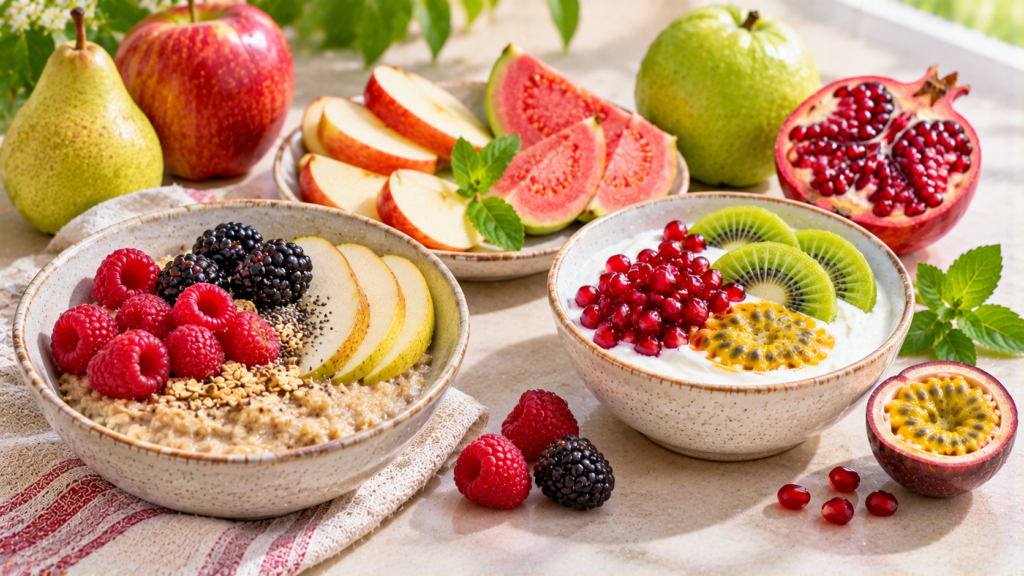
1. Add Berries to Breakfast
Berries are convenient, flavorful, and easy to combine with other fiber-rich foods.
Try:
- Oatmeal with raspberries and blueberries.
- Plain yogurt with blackberries.
- Whole-grain cereal with strawberries.
- Overnight oats with raspberries and chia seeds.
2. Choose Whole Fruit for Snacks
Keep washed fruit ready so it is easy to choose when you want something between meals.
Good options include:
- Apples with skin.
- Pears with skin.
- Guava.
- Kiwi.
- Oranges.
- Blackberries.
For a more filling snack, combine fruit with a small portion of nuts or plain yogurt.
3. Make a Fiber-Rich Smoothie
A smoothie can be a convenient way to combine fruit with other nutritious ingredients.
Simple berry and pear smoothie
Ingredients:
- ½ cup raspberries.
- ½ cup blackberries.
- ½ medium pear.
- ½ cup plain yogurt.
- A little water or milk, if needed.
Method:
- Wash the fruit thoroughly.
- Remove the pear core and chop the fruit.
- Add all ingredients to a blender.
- Blend until smooth.
- Serve shortly after preparation.
Blending whole fruit retains much of its fiber, unlike straining it into juice. However, smoothies can be consumed quickly and may contain several portions of fruit, so be mindful of serving size.
4. Add Fruit to Salads
Fruit can add natural sweetness, texture, and fiber to savory meals.
Try:
- Pear and walnut salad.
- Apple and spinach salad.
- Pomegranate and cucumber salad.
- Avocado and orange salad.
- Guava and leafy green salad.
5. Use Dried Fruits in Small Portions
Dried figs, prunes, and apricots are convenient sources of fiber.
Add a small portion to:
- Oatmeal.
- Homemade trail mix.
- Plain yogurt.
- Whole-grain breakfast bowls.
Remember that drying removes water, making dried fruit more concentrated in calories and natural sugars.
Whole Fruits vs. Fruit Juice: Which Is Better for Fiber?
Whole fruits are generally better sources of dietary fiber than fruit juice because the edible flesh, pulp, and sometimes skin remain intact.
| Feature | Whole fruit | Fruit juice |
|---|---|---|
| Fiber | Usually higher | Usually much lower |
| Natural sugars | Present | Present |
| Fullness | Often more satisfying | May be less filling |
| Chewing | Requires chewing | Usually does not |
| Portion control | Often easier | Easy to drink quickly |
| Everyday choice | Generally preferred | Best in moderate portions |
Why Does Whole Fruit Contain More Fiber?
When fruit is juiced and strained, much of its pulp and fiber may be removed. For example, eating a whole orange provides more fiber than drinking strained orange juice.
If you enjoy smoothies, blending whole fruit without straining it is generally a better way to retain fiber.
Fresh, Frozen, and Dried Fruits: Which Is Best for Fiber?
You can get fiber from fresh, frozen, and dried fruits. The main differences are convenience, water content, and serving size.
| Fruit form | Advantages | What to consider |
|---|---|---|
| Fresh fruit | Provides water and fiber; versatile | Choose ripe, undamaged fruit |
| Frozen fruit | Convenient and easy to store | Choose unsweetened options |
| Dried fruit | Concentrated fiber in a smaller portion | More concentrated in calories and natural sugars |
| Canned fruit | Affordable and convenient | Choose fruit without heavy added syrup |
Are Dried Fruits Higher in Fiber?
Dried fruits can provide more fiber per 100 grams than their fresh equivalents because water has been removed. However, this does not mean they are always a better choice.
For example, a small portion of dried figs can provide useful fiber, but a much larger amount of fresh fruit may be more filling because it contains more water.
Choose the form that fits your needs, preferences, and portion requirements.
How to Increase Fiber Without Causing Digestive Discomfort
Increasing fiber is helpful, but doing it too quickly may lead to bloating, gas, or abdominal discomfort.
Follow these practical steps:
- Increase gradually: Add one extra fiber-rich food at a time rather than changing your entire diet overnight.
- Drink enough fluids: Fiber works best when you maintain adequate hydration.
- Eat a variety of foods: Combine fruit with vegetables, legumes, whole grains, nuts, and seeds.
- Keep edible skins: When appropriate, eat apples and pears with their skins after washing them.
- Choose whole fruit: Use whole fruit more often than strained juice.
- Notice your tolerance: Some people experience discomfort with particular fruits or large servings.
People with certain digestive conditions, swallowing difficulties, or medical instructions to limit fiber should seek individualized dietary advice before substantially increasing their intake.
Common Mistakes to Avoid When Eating Fruits High in Fiber
1. Relying Only on Fruit Juice
Juice usually contains much less fiber than whole fruit. Eat whole fruit regularly to obtain its natural fiber.
2. Peeling Every Fruit
Removing edible skin from apples and pears can reduce the amount of fiber you consume.
3. Eating Too Much Dried Fruit at Once
Dried figs, prunes, dates, and apricots are concentrated foods. Large portions can add substantial calories and may cause digestive discomfort.
4. Increasing Fiber Too Quickly
A sudden increase can lead to bloating and gas. Increase portions gradually and allow your digestive system time to adjust.
5. Forgetting to Drink Enough Fluids
Adequate fluid intake is important when increasing fiber, although individual fluid needs vary.
6. Expecting Fruit Alone to Meet All Your Fiber Needs
Fruit is only one part of a high-fiber eating pattern. Include legumes, vegetables, whole grains, nuts, and seeds too.
7. Assuming All Fruits Are Equally High in Fiber
Watermelon, for example, provides hydration but has relatively little fiber per serving. Raspberries, blackberries, pears, and passion fruit are more concentrated sources.
A Simple One-Day High-Fiber Fruit Meal Plan
Here is an example of how you can include fiber-rich fruits throughout the day.
| Meal | Fruit choice | Suggested serving |
|---|---|---|
| Breakfast | Raspberries and pear with oatmeal | ½ cup raspberries + ½ pear |
| Morning snack | Apple with skin | 1 medium |
| Lunch | Guava | 1 medium, depending on size |
| Afternoon snack | Plain yogurt with blackberries | ½ cup berries |
| Dinner | Pomegranate arils | ¼–½ cup |
This is an illustrative fruit plan, not a complete meal plan or a personalized dietary prescription. Add vegetables, legumes, whole grains, protein sources, and healthy fats to meet your overall nutritional needs.
External Resources for Reliable Fiber Information
For accurate nutritional information and further reading, consult established health and food-composition resources:
- USDA FoodData Central – Check approximate fiber content in individual fruits and serving sizes.
- Harvard T.H. Chan School of Public Health – The Nutrition Source – Learn about dietary fiber and its role in a balanced diet.
- MedlinePlus – Dietary Fiber – Read about fiber sources and digestive health.
How to Choose and Store Fiber-Rich Fruits
Choosing good-quality fruit and storing it correctly can help you enjoy more fruit while reducing food waste.
Tips for Buying Fruits
- Choose seasonal options: Seasonal fruit may offer better flavor and value.
- Look for variety: Buy different colors and types rather than relying on one fruit.
- Check freshness: Avoid fruit with mold, extensive bruising, or damaged skin.
- Buy frozen berries: Unsweetened frozen raspberries and blackberries are convenient alternatives to fresh fruit.
- Choose whole fruit: Whole apples, pears, and oranges provide more fiber than their strained juices.
Tips for Storing Fruits
- Refrigerate berries and use them before they spoil.
- Store ripe pears and apples in the refrigerator to help maintain freshness.
- Keep bananas at room temperature until ripe.
- Store cut fruit in a covered container in the refrigerator.
- Wash fresh fruit under clean running water before eating or cutting it.
Frequently Asked Questions About Fruits High in Fiber
1. Which fruit has the highest fiber content?
Passion fruit is one of the highest-fiber fruits, particularly when you eat its pulp and seeds. Raspberries and blackberries are also excellent sources.
2. What are the 5 best fruits for fiber?
Raspberries, blackberries, passion fruit, avocado, and pears are particularly useful choices for increasing fiber intake.
3. Which fruits are good for digestion?
Pears, apples, kiwi, raspberries, blackberries, and prunes provide fiber that can support normal digestive function.
4. Are bananas high in fiber?
A medium banana provides approximately 3.1 grams of fiber. It is a convenient source, although berries, pears, and passion fruit provide more fiber per typical serving.
5. Are apples high in fiber?
Yes. A medium apple with its skin provides approximately 4.4 grams of fiber. Eating it unpeeled helps retain more of its natural fiber.
6. Are dried fruits higher in fiber than fresh fruits?
Dried fruits often contain more fiber per 100 grams because water has been removed. However, they are also more concentrated in calories and natural sugars, so portion size matters.
7. Can eating fiber-rich fruits help with constipation?
Fiber can help support regular bowel movements. Pears, prunes, kiwi, and berries are useful options. Adequate fluids are also important. Persistent or severe constipation should be discussed with a healthcare professional.
8. Is fruit juice a good source of fiber?
Most strained fruit juices contain little fiber compared with whole fruit. Eating whole fruit is generally a better way to increase fiber intake.
9. Can I eat high-fiber fruits every day?
Yes. Most people can include a variety of whole fruits every day as part of a balanced diet. Increase fiber gradually if your current intake is low.
10. Which high-fiber fruits are best for breakfast?
Raspberries, blackberries, pears, apples, kiwi, and passion fruit are convenient breakfast choices. Add them to oatmeal, plain yogurt, or whole-grain cereal.
Conclusion: Make Fruits High in Fiber Part of Your Daily Diet
Adding fruits high in fiber to your meals is a practical way to support digestive health and improve the nutritional quality of your diet.
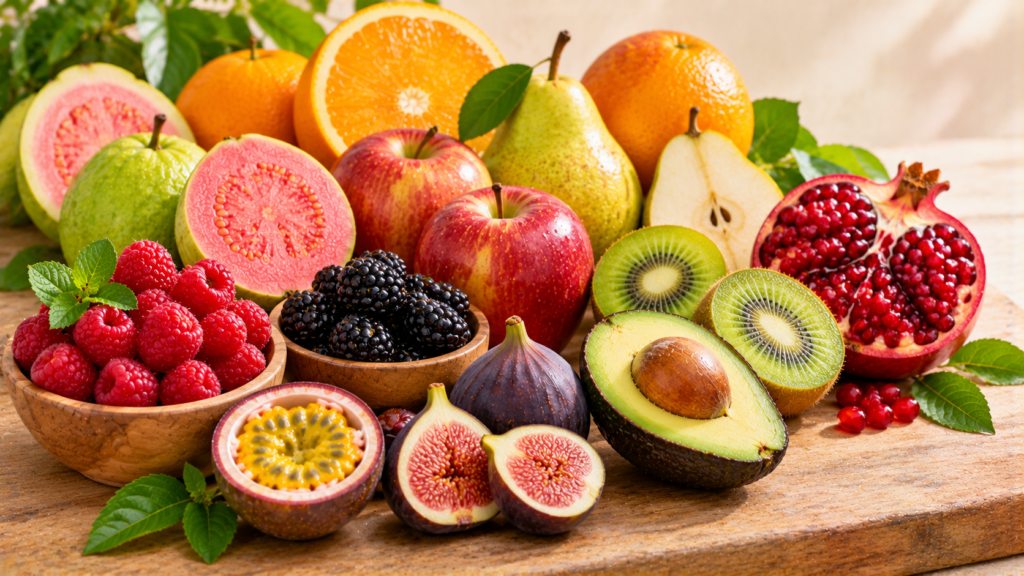
Raspberries, blackberries, passion fruit, avocado, pears, apples, and guava are particularly useful choices. They provide fiber alongside vitamins, minerals, water, and beneficial plant compounds.
You do not need to eat all 25 fruits every day. Start with fruits you enjoy, choose whole fruit more often than juice, and gradually introduce more fiber into your meals. Combine fruit with vegetables, legumes, whole grains, nuts, and seeds to build a varied, balanced eating pattern.
Small, consistent changes can make it easier to meet your daily fiber needs and enjoy a wider range of nutritious foods.
Explore more nutrition guides: