
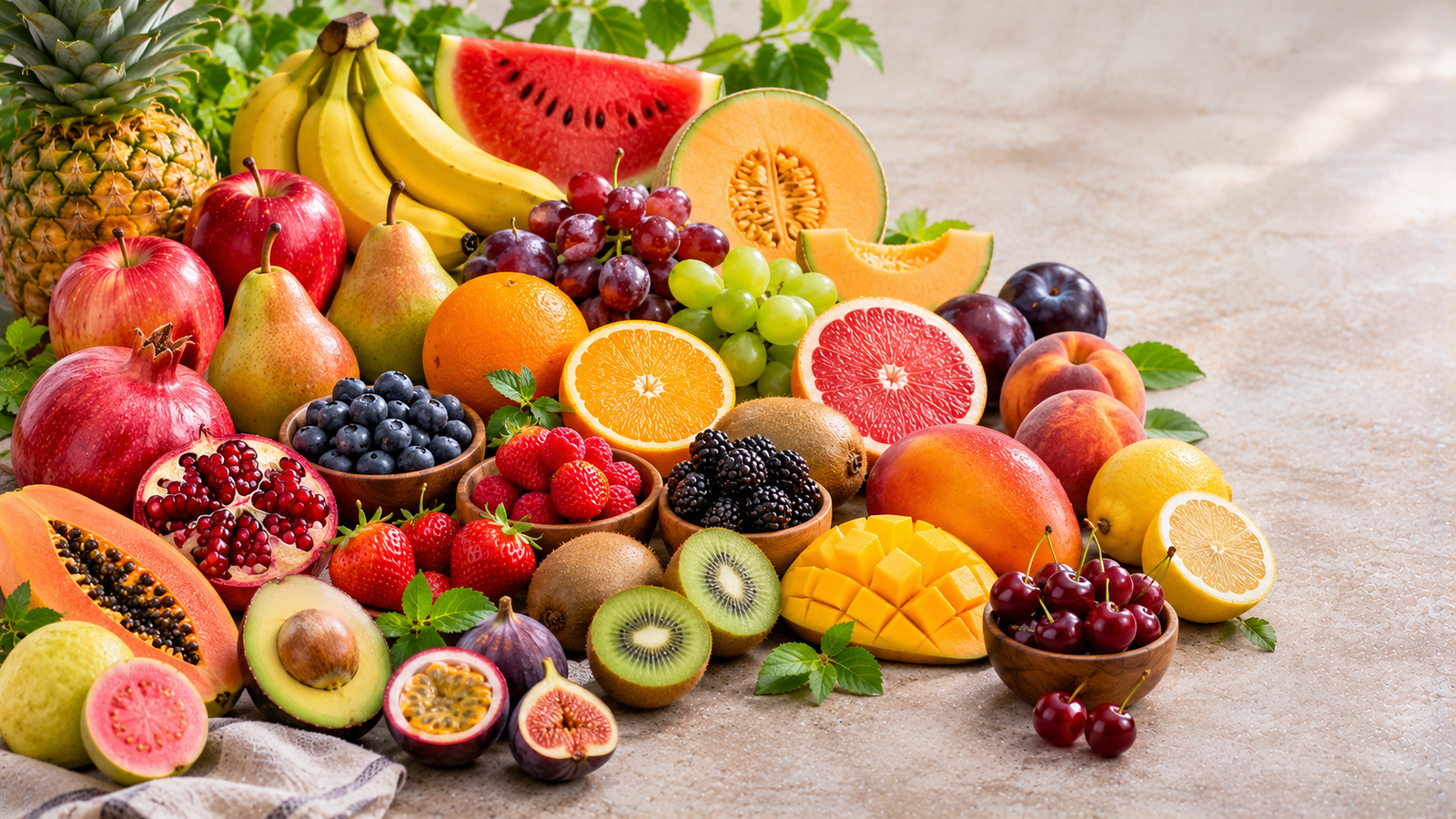
Adding more fruit to your meals is one of the simplest ways to improve your everyday eating habits. The healthy fruits to add to your diet offer a wide range of essential nutrients, including vitamins, minerals, dietary fiber, antioxidants, and natural plant compounds that support overall health.
From antioxidant-rich berries to potassium-containing bananas and vitamin C-rich citrus fruits, every fruit provides a different nutritional combination. Eating a variety of fruits can help you enjoy different flavors while supporting digestion, heart health, immune function, and a balanced diet.
However, no single fruit provides every nutrient your body needs. The best approach is to include different colors, textures, and varieties throughout the week.
In this guide, you will discover 25 nutritious fruits, their approximate nutritional benefits, easy ways to eat them, and practical tips for including more fruit in your daily meals.
Key Takeaways
- Eating a variety of fruits provides different vitamins, minerals, antioxidants, and dietary fiber.
- Berries are especially useful sources of fiber and colorful plant compounds.
- Citrus fruits, kiwi, guava, and strawberries provide vitamin C.
- Bananas, avocados, and melons contribute potassium.
- Whole fruits generally provide more fiber than fruit juice.
- Fresh, frozen, and unsweetened canned fruits can all fit into a balanced diet.
- Choose seasonal fruits and different colors to add variety to your meals.
What Makes a Fruit Healthy?
Healthy fruits contain nutrients and natural plant compounds that contribute to a balanced eating pattern. Their nutritional value depends on the variety, ripeness, serving size, and preparation method.
Here are some of the main nutrients found in fruit.
1. Dietary Fiber
Dietary fiber supports digestive health, helps maintain regular bowel movements, and can contribute to feeling full after meals.
Fruits such as raspberries, pears, apples, blackberries, guava, and passion fruit are useful sources of fiber.
2. Vitamins
Different fruits provide different vitamins:
- Vitamin C: Supports normal immune function and collagen formation.
- Vitamin A precursors: Found in fruits such as mango, papaya, and cantaloupe.
- Folate: Present in fruits such as oranges and avocado.
- Vitamin B6: Found in bananas and some other fruits.
3. Minerals
Fruits provide minerals that help the body perform important functions.
- Potassium supports normal muscle function and blood pressure regulation.
- Magnesium contributes to normal muscle and nerve function.
- Copper supports several processes involved in energy production and iron metabolism.
4. Antioxidants and Plant Compounds
Many colorful fruits contain naturally occurring compounds such as anthocyanins, carotenoids, flavonoids, and polyphenols.
These compounds help protect plant cells and are being studied for their potential contributions to human health.
Explore nutrient information using the USDA FoodData Central food database.
25 Healthy Fruits to Add to Your Diet
The following fruits offer a variety of nutrients and flavors. The nutritional highlights are approximate and depend on serving size and variety.
1. Blueberries
Fresh ripe blueberry berries in bowl
Blueberries are popular for their deep blue color and naturally occurring plant compounds. They contain anthocyanins, a type of flavonoid responsible for their color.
Nutritional highlights:
- Provide vitamin C and vitamin K.
- Contain dietary fiber.
- Supply anthocyanins and other polyphenols.
- Offer a naturally sweet flavor.
Health benefits:
Blueberries contribute antioxidants and fiber to a balanced diet. Their plant compounds have been studied for their potential role in supporting cardiovascular and cognitive health, although eating blueberries alone cannot prevent or treat disease.
Easy ways to eat blueberries:
- Add them to oatmeal.
- Mix them into plain yogurt.
- Blend them into smoothies.
- Sprinkle them over whole-grain cereal.
2. Strawberries
Strawberries are refreshing, naturally sweet, and rich in vitamin C. They are also relatively low in calories and provide useful amounts of fiber.
Nutritional highlights:
- Excellent source of vitamin C.
- Provide manganese and folate.
- Contain anthocyanins and other antioxidants.
- Supply dietary fiber.
Health benefits:
Vitamin C supports collagen formation, normal immune function, and the body’s ability to absorb iron from plant foods. Strawberries also add flavor and variety without requiring added sugar.
Easy ways to eat strawberries:
- Slice them into breakfast bowls.
- Add them to smoothies.
- Serve them with unsweetened yogurt.
- Mix them into fresh fruit salads.
3. Raspberries
Raspberries are among the most fiber-rich commonly eaten berries. Their delicate texture and slightly tart taste make them a nutritious addition to many meals.
Nutritional highlights:
- Approximately 8 grams of fiber per cup.
- Provide vitamin C and manganese.
- Contain anthocyanins and ellagitannins.
- Offer relatively few calories per serving.
Health benefits:
Their fiber supports digestive health and helps make meals more satisfying. Their naturally occurring plant compounds also contribute to the variety of antioxidants in a balanced diet.
Easy ways to eat raspberries:
- Add them to overnight oats.
- Mix them with Greek yogurt.
- Use them as a topping for whole-grain pancakes.
- Blend them into smoothies.
4. Blackberries
Blackberries have a deep purple-black color and provide fiber, vitamin C, vitamin K, and manganese.
Nutritional highlights:
- Around 7.6 grams of fiber per cup.
- Provide vitamin C and vitamin K.
- Contain anthocyanins.
- Supply manganese.
Health benefits:
Blackberries are a convenient way to increase fruit fiber intake. Their plant compounds add antioxidant variety to everyday meals.
Easy ways to eat blackberries:
- Eat them as a snack.
- Add them to oatmeal.
- Mix them with other berries.
- Use them in homemade fruit bowls.
5. Apples
Apples are convenient, widely available, and easy to include in meals. Eating them with the skin provides more fiber than peeling them.
Nutritional highlights:
- Approximately 4.4 grams of fiber in a medium apple with skin.
- Provide vitamin C.
- Contain polyphenols.
- Supply natural carbohydrates.
Health benefits:
Apples contain soluble fiber, including pectin, which contributes to digestive health. Their combination of water and fiber can also make them a satisfying snack.
Easy ways to eat apples:
- Eat them whole.
- Slice them with peanut butter.
- Add chopped apple to oatmeal.
- Mix them into salads.
6. Bananas
Bananas are a convenient source of carbohydrates and potassium. Their soft texture makes them easy to add to breakfast and snacks.
Nutritional highlights:
- Around 3.1 grams of fiber per medium banana.
- Provide potassium.
- Contain vitamin B6.
- Supply vitamin C.
Health benefits:
Potassium supports normal muscle contraction, nerve signaling, and fluid balance. Bananas also provide carbohydrates that can be useful before or after physical activity.
Easy ways to eat bananas:
- Add slices to oatmeal.
- Blend them into smoothies.
- Serve with whole-grain toast.
- Freeze them for a simple snack.
7. Oranges
Oranges are well known for their vitamin C content. They also provide water, fiber, and several other nutrients.
Nutritional highlights:
- Around 3.1 grams of fiber per medium orange.
- Excellent source of vitamin C.
- Provide folate and potassium.
- Contain flavonoids.
Health benefits:
Vitamin C helps support normal immune function and collagen production. Eating a whole orange also provides fiber that is reduced or removed when the fruit is turned into juice.
Easy ways to eat oranges:
- Peel and eat them fresh.
- Add orange segments to salads.
- Mix them into fruit bowls.
- Use fresh orange pieces in yogurt.
8. Pears
Pears are naturally sweet and provide a good amount of fiber, particularly when eaten with their skin.
Nutritional highlights:
- Approximately 5.5 grams of fiber per medium pear.
- Provide vitamin C.
- Contain potassium.
- Supply natural plant compounds.
Health benefits:
The fiber in pears contributes to digestive health and can help make snacks more filling. Their mild flavor also makes them easy to combine with nuts, yogurt, and whole grains.
Easy ways to eat pears:
- Eat them fresh with the skin.
- Add sliced pears to salads.
- Serve them with nuts.
- Chop them into oatmeal.
9. Kiwi
Kiwi is a small fruit with a bright green interior and a refreshing sweet-tart flavor. It is especially notable for its vitamin C content.
Nutritional highlights:
- Provides vitamin C.
- Contains vitamin K and potassium.
- Supplies dietary fiber.
- Contains carotenoids and polyphenols.
Health benefits:
Kiwi contributes vitamin C and fiber to the diet. Some research has also examined kiwi consumption in relation to bowel regularity and digestive comfort.
Easy ways to eat kiwi:
- Cut it in half and scoop out the flesh.
- Add slices to yogurt.
- Mix it into fruit salads.
- Blend it into smoothies.
10. Mango
Mango is a tropical fruit with a naturally sweet taste and a vibrant orange-yellow color.
Nutritional highlights:
- Provides vitamin C.
- Contains beta-carotene, which the body can convert into vitamin A.
- Supplies folate.
- Provides dietary fiber.
Health benefits:
Mango contributes nutrients involved in normal immune function, vision, and skin maintenance. Its natural sweetness makes it useful in place of desserts with added sugar.
Easy ways to eat mango:
- Eat fresh mango slices.
- Add mango to smoothies.
- Mix it into yogurt.
- Combine it with cucumber in a fresh salad.
11. Papaya
Papaya is a soft tropical fruit with orange flesh and a naturally sweet flavor. It provides vitamin C, carotenoids, and fiber.
Nutritional highlights:
- Rich in vitamin C.
- Contains beta-carotene.
- Provides folate.
- Supplies dietary fiber.
Health benefits:
Papaya contributes antioxidants and nutrients that support normal immune function and help maintain healthy tissues. It also contains the enzyme papain, which helps break down proteins.
Easy ways to eat papaya:
- Eat ripe papaya fresh.
- Add it to breakfast bowls.
- Blend it into smoothies.
- Combine it with lime juice.
12. Pineapple
Pineapple is a juicy tropical fruit with a sweet and slightly acidic flavor.
Nutritional highlights:
- Provides vitamin C.
- Contains manganese.
- Supplies dietary fiber.
- Contains bromelain, a group of protein-digesting enzymes.
Health benefits:
Pineapple contributes vitamin C and manganese to the diet. Bromelain has been studied for various potential effects, but eating pineapple should not be considered a treatment for inflammation or other medical conditions.
Easy ways to eat pineapple:
- Enjoy fresh pineapple chunks.
- Add it to fruit salads.
- Mix it into smoothies.
- Grill pineapple slices as a dessert.
13. Avocado
Avocado is technically a fruit, although it is often used like a vegetable. Unlike most fruits, it is rich in unsaturated fats.
Nutritional highlights:
- Approximately 6.7 grams of fiber per half avocado.
- Contains monounsaturated fats.
- Provides potassium.
- Supplies folate and vitamin K.
Health benefits:
Avocado provides unsaturated fats that can replace some saturated fats in a balanced eating pattern. Its fiber contributes to digestive health and fullness.
Easy ways to eat avocado:
- Spread it on whole-grain toast.
- Add it to salads.
- Mash it into sandwiches.
- Blend a small amount into a smoothie.
14. Pomegranate
Pomegranate contains small, juicy seeds called arils. Its ruby-red color comes partly from naturally occurring plant pigments.
Nutritional highlights:
- Provides fiber.
- Contains vitamin C and vitamin K.
- Supplies potassium.
- Contains polyphenols, including punicalagins.
Health benefits:
Pomegranate adds fiber and plant compounds to meals. Its arils are also a convenient way to add texture and natural sweetness to salads and breakfast bowls.
Easy ways to eat pomegranate:
- Sprinkle the arils over yogurt.
- Add them to salads.
- Mix them into oatmeal.
- Eat them as a snack.
15. Grapes
Grapes are easy to snack on and come in green, red, and purple varieties. Their skin contains several naturally occurring plant compounds.
Nutritional highlights:
- Provide vitamin K.
- Contain vitamin C.
- Supply natural carbohydrates.
- Red and purple grapes contain anthocyanins and other polyphenols.
Health benefits:
Grapes provide hydration and natural plant compounds. Their convenience makes them a practical alternative to many highly processed sweet snacks.
Easy ways to eat grapes:
- Wash and eat them fresh.
- Freeze them for a chilled snack.
- Add them to fruit salads.
- Mix them into chicken or chickpea salads.
16. Watermelon
Watermelon is a refreshing fruit with a high water content. It is particularly popular during hot weather.
Nutritional highlights:
- Contains a high proportion of water.
- Provides vitamin C.
- Supplies lycopene.
- Contains beta-carotene.
Health benefits:
Watermelon contributes fluids as well as vitamins and plant compounds. Its water content makes it a refreshing addition to meals, although it should not replace drinking water when hydration is needed.
Easy ways to eat watermelon:
- Serve chilled slices.
- Add cubes to fruit salads.
- Blend it into a fresh smoothie.
- Combine it with mint and lime.
17. Guava
Guava is a tropical fruit that is particularly rich in vitamin C. Depending on the variety, its flesh may be white, pink, or red.
Nutritional highlights:
- Excellent source of vitamin C.
- Provides dietary fiber.
- Contains potassium.
- Supplies carotenoids, especially in pink varieties.
Health benefits:
Guava contributes vitamin C, which supports normal immune function and collagen production. Its fiber also makes it a useful choice for people looking to increase their fruit fiber intake.
Easy ways to eat guava:
- Eat it fresh after washing.
- Slice it into fruit salads.
- Blend it into smoothies.
- Enjoy it with a small amount of lime juice.
18. Peaches
Peaches are soft, fragrant fruits with a naturally sweet flavor. They contain water, fiber, and several vitamins.
Nutritional highlights:
- Provide vitamin C.
- Contain vitamin A precursors.
- Supply potassium.
- Provide dietary fiber.
Health benefits:
Peaches add variety and hydration to a balanced diet. Their natural sweetness makes them suitable for snacks and desserts without requiring added sugar.
Easy ways to eat peaches:
- Eat them fresh.
- Add slices to oatmeal.
- Mix them into yogurt.
- Grill peach halves for dessert.
19. Plums
Plums are juicy stone fruits that come in several colors, including red, purple, and yellow.
Nutritional highlights:
- Provide vitamin C.
- Contain vitamin K.
- Supply dietary fiber.
- Include naturally occurring polyphenols.
Health benefits:
Plums contribute fiber and plant compounds. They are also a source of natural sweetness that can help add variety to fruit-based snacks.
Easy ways to eat plums:
- Eat them fresh.
- Add sliced plums to salads.
- Mix them into breakfast bowls.
- Serve them with nuts.
20. Cherries
Cherries are small stone fruits with a sweet or tart flavor. Their red color comes partly from anthocyanins.
Nutritional highlights:
- Provide vitamin C.
- Contain potassium.
- Supply dietary fiber.
- Contain anthocyanins and other polyphenols.
Health benefits:
Cherries contribute antioxidant plant compounds and nutrients to a varied diet. Tart cherries have been studied for their possible relationship with exercise recovery and sleep, but the evidence does not mean cherries are a medical treatment.
Easy ways to eat cherries:
- Enjoy fresh cherries.
- Add pitted cherries to yogurt.
- Mix them into oatmeal.
- Use them in homemade fruit bowls.
21. Figs
Figs are naturally sweet fruits with soft flesh and tiny edible seeds. They can be eaten fresh or dried.
Nutritional highlights:
- Provide dietary fiber.
- Contain potassium.
- Supply calcium in modest amounts.
- Provide naturally occurring plant compounds.
Health benefits:
Figs can help increase fiber intake, especially when eaten dried. However, dried figs are more concentrated in natural sugars and calories than fresh figs, so portion size matters.
Easy ways to eat figs:
- Eat fresh figs as a snack.
- Add chopped figs to oatmeal.
- Pair them with plain yogurt.
- Use dried figs in homemade trail mix.
22. Grapefruit
Grapefruit has a refreshing sweet-tart taste and is available in pink, red, and white varieties.
Nutritional highlights:
- Provides vitamin C.
- Contains water and fiber.
- Supplies potassium.
- Pink and red varieties contain lycopene.
Health benefits:
Grapefruit contributes vitamin C and hydration. Its naturally refreshing flavor makes it a useful addition to breakfast and fruit salads.
Important medication warning: Grapefruit and grapefruit juice can interact with certain medicines, changing how they work in the body. Check with a healthcare professional or pharmacist before eating grapefruit if you take prescription medication.
Easy ways to eat grapefruit:
- Eat fresh segments.
- Add them to fruit salads.
- Combine them with berries.
- Serve them alongside breakfast.
23. Cantaloupe
Cantaloupe is a sweet orange-fleshed melon that contains a substantial amount of water.
Nutritional highlights:
- Provides beta-carotene.
- Contains vitamin C.
- Supplies potassium.
- Contributes water to the diet.
Health benefits:
Cantaloupe provides nutrients involved in normal vision, immune function, and fluid balance. Its water content makes it a refreshing option in warm weather.
Easy ways to eat cantaloupe:
- Serve chilled cubes.
- Add it to fruit bowls.
- Blend it into smoothies.
- Pair it with plain yogurt.
24. Lemons
Lemons are citrus fruits with a sharp, acidic flavor. Although people usually consume them in smaller quantities than other fruits, they still contribute useful nutrients.
Nutritional highlights:
- Provide vitamin C.
- Contain flavonoids.
- Supply small amounts of potassium.
- Add flavor without significant added sugar.
Health benefits:
Lemons provide vitamin C and can make water, vegetables, and other foods more flavorful. Lemon juice also helps improve the absorption of non-heme iron when eaten alongside plant-based iron sources.
Easy ways to eat lemons:
- Add lemon juice to water.
- Use it in salad dressings.
- Squeeze it over cooked vegetables.
- Add zest to homemade meals.
25. Passion Fruit
Passion fruit has a fragrant aroma, a tangy flavor, and edible seeds surrounded by juicy pulp.
Nutritional highlights:
- Provides dietary fiber.
- Contains vitamin C.
- Supplies vitamin A precursors.
- Provides potassium.
Health benefits:
Passion fruit is a useful source of fiber and contributes a variety of plant compounds. Its seeds provide texture and additional dietary fiber.
Easy ways to eat passion fruit:
- Scoop out the pulp and eat it fresh.
- Add it to plain yogurt.
- Mix it into smoothies.
- Use it as a topping for fruit bowls.
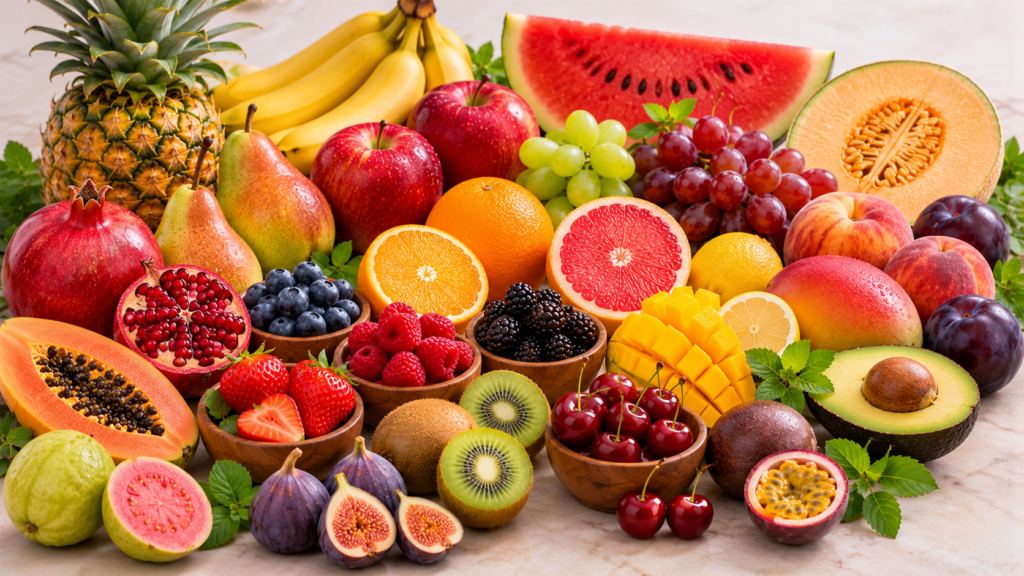
Nutritional Comparison: 25 Healthy Fruits at a Glance
The following table summarizes selected nutritional highlights. Fiber amounts are approximate and refer to the stated serving sizes; they are not exact values for every variety.
| Fruit | Typical serving | Approx. fiber | Main nutritional highlight |
|---|---|---|---|
| Blueberries | 1 cup | 3.6 g | Anthocyanins |
| Strawberries | 1 cup | 3 g | Vitamin C |
| Raspberries | 1 cup | 8 g | Fiber |
| Blackberries | 1 cup | 7.6 g | Vitamin C and fiber |
| Apple | 1 medium | 4.4 g | Pectin |
| Banana | 1 medium | 3.1 g | Potassium |
| Orange | 1 medium | 3.1 g | Vitamin C |
| Pear | 1 medium | 5.5 g | Fiber |
| Kiwi | 1 medium | 2–3 g | Vitamin C |
| Mango | 1 cup | 2.6 g | Beta-carotene |
| Papaya | 1 cup | 2.5 g | Vitamin C |
| Pineapple | 1 cup | 2.3 g | Vitamin C |
| Avocado | ½ fruit | 6.7 g | Unsaturated fats |
| Pomegranate | ½ cup arils | 3.5 g | Polyphenols |
| Grapes | 1 cup | 1.4 g | Polyphenols |
| Watermelon | 1 cup | 0.6 g | Water and lycopene |
| Guava | 100 g | 3–5 g | Vitamin C |
| Peaches | 1 medium | 2 g | Vitamin C |
| Plums | 1 medium | 1 g | Polyphenols |
| Cherries | 1 cup | 3 g | Anthocyanins |
| Figs, fresh | 2 medium | 2 g | Fiber |
| Grapefruit | ½ medium | 1.4 g | Vitamin C |
| Cantaloupe | 1 cup | 1.4 g | Beta-carotene |
| Lemon | 1 medium | 2.4 g | Vitamin C |
| Passion fruit | ½ cup pulp | 12 g | Fiber |
Values are rounded estimates. Food composition varies with variety, size, ripeness, and preparation. Verify final figures against USDA FoodData Central before publication.
Which Healthy Fruits Are Highest in Fiber?
If you want to increase your dietary fiber intake, some fruits provide considerably more fiber per serving than others.
Here are some particularly useful choices:
| Fruit | Approximate fiber |
|---|---|
| Passion fruit | 12 g per ½ cup pulp |
| Raspberries | 8 g per cup |
| Blackberries | 7.6 g per cup |
| Avocado | 6.7 g per half |
| Pear | 5.5 g per medium fruit |
| Apple with skin | 4.4 g per medium fruit |
| Guava | 3–5 g per 100 g |
| Pomegranate arils | 3.5–4 g per 100 g |
Practical tip: Increase fiber gradually and drink enough fluids. Suddenly increasing fiber can cause gas, bloating, or abdominal discomfort.

Best High Fiber Fruits to Improve Your Daily Fiber Intake
Health Benefits of Eating a Variety of Fruits
Including different fruits in your diet can contribute to several aspects of everyday health.
1. Supports Digestive Health
Many fruits contain dietary fiber, which helps support normal digestion and bowel regularity.
Apples, pears, berries, guava, and passion fruit are useful options when you want to add more fiber.
Fiber also supports beneficial gut bacteria, although individual digestive responses can vary.
2. Helps Support Heart Health
Fruits provide potassium, fiber, and plant compounds that can contribute to a heart-healthy eating pattern.
For example:
- Bananas provide potassium.
- Apples and pears contain soluble fiber.
- Berries supply polyphenols.
- Avocados provide unsaturated fats.
These foods are most beneficial as part of an overall balanced diet that includes vegetables, whole grains, legumes, nuts, and healthy fats.
3. Supports Normal Immune Function
Vitamin C is important for normal immune function. It also supports collagen production and helps the body absorb iron from plant foods.
Good fruit sources include:
- Guava
- Oranges
- Kiwi
- Strawberries
- Papaya
- Grapefruit
4. Contributes to Healthy Skin
Fruits provide nutrients that help maintain normal skin structure and function.
Vitamin C contributes to collagen formation, while carotenoids and other plant compounds add to the variety of nutrients in a balanced diet.
Mango, papaya, oranges, kiwi, and strawberries are useful choices.
5. Supports Hydration
Some fruits contain a high proportion of water.
Examples include:
- Watermelon
- Cantaloupe
- Oranges
- Strawberries
- Grapefruit
- Pineapple
These fruits contribute fluids, but drinking water remains important for everyday hydration.
6. Provides Nutrients for Healthy Aging
Fruits provide fiber, potassium, vitamin C, folate, and other nutrients that contribute to normal body functions throughout life.
A varied diet rich in fruits and vegetables is associated with better overall dietary quality.
How Many Fruits Should You Eat Every Day?
The amount of fruit you need depends on your age, energy requirements, activity level, and overall dietary pattern.
For many adults, a practical target is around 1½ to 2 cups of fruit per day, consistent with commonly used dietary guidance for a standard 2,000-calorie eating pattern.
One cup of fruit may look like:
- One cup of fresh berries.
- One medium apple.
- One medium orange.
- One cup of diced melon.
- One cup of chopped mango.
These are general examples, not personalized medical recommendations. People with specific dietary needs may require different portions.
A Simple Daily Fruit Plan
| Meal | Fruit choice | Approximate portion |
|---|---|---|
| Breakfast | Banana | 1 medium |
| Morning snack | Strawberries | ½ cup |
| Lunch | Orange | 1 medium |
| Afternoon snack | Apple | 1 medium |
| Dinner | Optional fruit portion | Based on daily needs |
You do not have to eat all these fruits every day. Rotate your choices throughout the week to enjoy a wider range of nutrients.
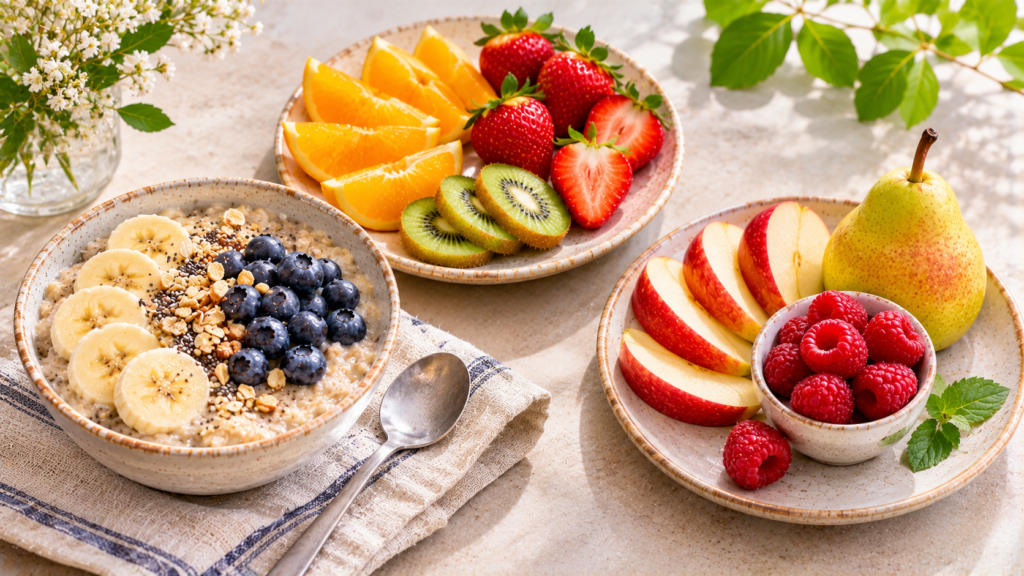
Best Ways to Add Healthy Fruits to Your Daily Diet
Eating fruit does not need to involve complicated recipes. A few simple habits can help you enjoy more variety.
1. Add Fruit to Breakfast
Breakfast is an easy opportunity to include fruit.
Try:
- Oatmeal with banana and blueberries.
- Plain yogurt with strawberries and kiwi.
- Whole-grain toast with sliced avocado.
- Overnight oats with raspberries and pear.
2. Choose Fruit for Snacks
Keep washed fruit where it is easy to reach.
Good options include:
- Apples
- Oranges
- Bananas
- Pears
- Grapes
- Guava
Pair fruit with nuts, seeds, or plain yogurt if you want a more filling snack.
3. Make Homemade Smoothies
Smoothies can be convenient, especially when fresh fruit is unavailable.
Try blending:
- Banana and strawberries.
- Mango and plain yogurt.
- Blueberries and milk.
- Papaya and kiwi.
Use whole fruit rather than relying on juice or sweetened smoothie mixes. Remember that smoothies can contain substantial calories depending on portion sizes and added ingredients.
4. Add Fruit to Salads
Fruit can make salads more flavorful and colorful.
Try:
- Orange and spinach salad.
- Apple and walnut salad.
- Pomegranate and cucumber salad.
- Mango and avocado salad.
5. Choose Fruit-Based Desserts
Fruit can be a simple alternative to desserts with large amounts of added sugar.
Try:
- Frozen banana slices.
- Fresh berries with plain yogurt.
- Grilled peaches.
- Chilled watermelon.
- Baked apples with cinnamon.
Whole Fruits vs. Fruit Juice: Which Is Better?
Whole fruits are generally a better everyday choice than fruit juice because they retain more of their natural fiber and usually take longer to eat.
| Feature | Whole fruit | Fruit juice |
|---|---|---|
| Fiber | Usually higher | Often low |
| Chewing | Requires chewing | Usually does not |
| Fullness | Often more filling | May be less filling |
| Natural sugars | Present | Present |
| Portion control | Often easier | Easy to consume quickly |
| Everyday choice | Generally preferred | Best consumed in moderate portions |
Even 100% fruit juice can contain a substantial amount of natural sugar and less fiber than the original fruit.
Best choice: Eat whole fruit most often. If you drink juice, choose 100% juice without added sugar and keep portions moderate.
Fresh, Frozen, Dried, or Canned Fruits: Which Should You Choose?
You do not need to buy fresh fruit every time. Different forms can fit into a balanced diet.
| Fruit type | Advantages | What to check |
|---|---|---|
| Fresh | Convenient and versatile | Choose fresh, undamaged fruit |
| Frozen | Convenient and often nutritious | Choose options without added sugar |
| Dried | Portable and concentrated | Watch portion sizes |
| Canned | Affordable and easy to store | Choose fruit packed in water or juice rather than heavy syrup |
Frozen fruit can be especially useful for smoothies, oatmeal, and yogurt bowls. Dried fruits such as figs and prunes provide fiber but are more concentrated in calories and natural sugars because much of their water has been removed.
How to Choose the Best Fruits at the Grocery Store
Choosing good-quality fruit can improve flavor, reduce waste, and make healthy eating more enjoyable.
Follow these simple tips:
- Choose seasonal fruits: Seasonal options may offer better flavor and value.
- Check freshness: Avoid fruit with extensive bruising, mold, or damaged skin.
- Mix different colors: Choose red, purple, orange, green, and yellow fruits.
- Buy frozen fruit: Keep unsweetened frozen berries and mango available for busy days.
- Store fruit correctly: Some fruits ripen at room temperature and should be refrigerated once ripe.
- Buy realistic quantities: Choose amounts you can comfortably eat before they spoil.
Why Fruit Variety Matters
Different fruits contain different combinations of nutrients. Eating only bananas or apples may provide some useful nutrients, but it limits the variety you get from other fruits.
A simple strategy is to rotate your choices:
- Monday: Berries and bananas.
- Tuesday: Apples and oranges.
- Wednesday: Kiwi and papaya.
- Thursday: Pears and grapes.
- Friday: Mango and pineapple.
- Saturday: Guava and watermelon.
- Sunday: Pomegranate and peaches.
Common Mistakes to Avoid When Eating Fruit
Fruit is nutritious, but a few habits can make it less beneficial as part of your overall diet.
1. Drinking Too Much Fruit Juice
Juice may contain less fiber than whole fruit. It is usually better to eat the fruit itself.
2. Ignoring Portion Sizes
Dried fruits and large smoothie portions can add more calories than expected. Pay attention to serving sizes, especially if you are monitoring your energy intake.
3. Adding Too Much Sugar
Fruit is naturally sweet. You usually do not need to add sugar, syrups, or sweetened toppings.
4. Eating Only One Type of Fruit
Variety helps you obtain a broader range of nutrients and plant compounds.
5. Forgetting to Wash Fresh Fruit
Wash fresh fruits under clean running water before cutting or eating them. Do not use soap or household cleaning products on produce.
6. Assuming All Fruit Products Are Equally Nutritious
Fruit-flavored drinks, sweetened fruit snacks, and fruit desserts are not nutritionally equivalent to whole fruit.
Frequently Asked Questions About Healthy Fruits to Add to Your Diet
1. What are the 5 healthiest fruits to eat daily?
Berries, apples, oranges, bananas, and kiwi are useful choices because they provide different combinations of fiber, vitamins, minerals, and plant compounds. However, there is no single official ranking of the healthiest fruits.
2. Which fruit is best for overall health?
No single fruit is best for everyone. Eating a variety of fruits provides a broader range of nutrients than relying on just one type.
3. Which fruits are highest in fiber?
Passion fruit, raspberries, blackberries, avocado, and pears are among the useful high-fiber fruit choices. Exact amounts depend on serving size.
4. Which fruits are rich in vitamin C?
Guava, oranges, kiwi, strawberries, papaya, and grapefruit are good vitamin C sources.
5. Can I eat fruit every day?
Yes. Whole fruit can be included in a balanced daily diet. The amount depends on your energy needs, age, health, and overall eating pattern.
6. Is it better to eat fruit in the morning or at night?
There is no universal best time to eat fruit. You can enjoy it at breakfast, as a snack, or alongside meals according to your preferences.
7. Are frozen fruits as healthy as fresh fruits?
Frozen fruits can retain much of their nutritional value and are a convenient option. Choose unsweetened varieties when possible.
8. Can I eat fruit while trying to lose weight?
Whole fruits can fit into a weight-management eating pattern because they provide water, fiber, and nutrients. Overall portions and total dietary intake still matter.
9. Are dried fruits healthy?
Dried fruits provide fiber and nutrients, but their calories and natural sugars are concentrated into smaller portions. Enjoy them in moderation.
10. Should I eat fruit with or without the skin?
When the skin is edible, such as with apples and pears, eating the fruit with its skin can provide additional fiber. Wash it thoroughly first.
Conclusion: Add More Healthy Fruits to Your Diet Every Day
The 25 healthy fruits to add to your diet in this guide offer a practical way to increase your intake of fiber, vitamins, minerals, antioxidants, and other beneficial plant compounds.
From blueberries and raspberries to bananas, oranges, guava, mango, and avocado, each fruit brings something different to your meals. The key is not to find one perfect fruit but to enjoy a variety of options throughout the week.
Start with fruits you already enjoy, try one new variety each week, and include whole fruit in breakfasts, snacks, salads, and desserts. Small, consistent choices can help build a more balanced and nutritious eating pattern.
For even more nutrition ideas, explore: