

Including fruits high in potassium in your daily diet is a simple way to obtain an essential mineral that supports normal muscle function, nerve signaling, fluid balance, and healthy blood pressure regulation.
Potassium is an electrolyte that helps your body maintain the right balance of fluids inside and outside cells. It also plays an important role in normal heart rhythm and muscle contraction.
Bananas are often the first fruit people think of when discussing potassium, but they are far from the only option. Avocados, cantaloupe, dried apricots, prunes, dates, oranges, and several other fruits can also contribute meaningful amounts.
In this guide, you will discover 25 potassium-rich fruits, compare their approximate potassium content, understand their nutritional benefits, and learn practical ways to add them to your meals.
Key Takeaways
- Avocados, bananas, dried apricots, prunes, and cantaloupe are useful potassium-rich fruit choices.
- Potassium supports normal muscle contraction, nerve signaling, and fluid balance.
- Whole fruits provide potassium alongside fiber, vitamins, water, and other nutrients.
- Dried fruits contain concentrated potassium, but also more calories and natural sugars per serving.
- Eating a variety of fruits is more beneficial than relying on bananas alone.
- People with kidney disease or certain medication-related restrictions may need to monitor potassium intake with professional guidance.
What Is Potassium and Why Does Your Body Need It?
Potassium is an essential mineral and electrolyte found in many plant and animal foods. Most of the potassium in the human body is located inside cells.
Your body uses potassium for several important functions.
1. Supports Normal Muscle Function
Potassium helps muscles contract and relax normally. This includes skeletal muscles used for movement and the heart muscle.
An appropriate potassium balance is necessary for normal muscle activity.
2. Helps Maintain Fluid Balance
Potassium works alongside sodium to regulate fluid balance inside and outside cells.
This balance supports normal cellular function and helps the body manage its fluid levels.
3. Supports Nerve Signaling
Nerves use electrical signals to communicate with muscles and other parts of the body.
Potassium helps maintain the electrical gradients required for normal nerve impulses.
4. Contributes to Healthy Blood Pressure
Potassium plays a role in blood pressure regulation. Adequate potassium intake, particularly as part of a diet that also limits excessive sodium, can support healthy blood pressure in many people.
However, potassium-rich foods are not a replacement for prescribed blood pressure treatment.
5. Supports Normal Heart Rhythm
Potassium helps regulate the electrical activity involved in the heartbeat. Both too little and too much potassium in the blood can be dangerous, so maintaining an appropriate balance matters.
25 Fruits High in Potassium You Should Add to Your Diet
The following fruits provide potassium alongside other nutrients. Amounts are approximate and depend on fruit variety, serving size, ripeness, and preparation.
1. Avocado
Avocado halbiert mit Kern auf hellem Hintergrund
Avocado is one of the most potassium-rich commonly eaten fresh fruits. Unlike most fruits, it also provides substantial amounts of unsaturated fat.
Approximate potassium: 485 mg per 100 g.
Other nutritional highlights:
- Provides monounsaturated fats.
- Contains dietary fiber.
- Supplies folate.
- Provides vitamin K and vitamin E.
Why eat avocado?
Avocado contributes potassium and fiber, while its unsaturated fats can help replace some foods high in saturated fat in a balanced diet.
Easy ways to eat avocado:
- Spread mashed avocado on whole-grain toast.
- Add slices to salads.
- Use it in sandwiches.
- Blend a small amount into smoothies.
2. Bananas
Bananas are among the most popular potassium-rich fruits. They are convenient, naturally sweet, and easy to eat without preparation.
Approximate potassium: 358 mg per 100 g, or around 420 mg in a medium banana.
Other nutritional highlights:
- Provide vitamin B6.
- Contain vitamin C.
- Supply dietary fiber.
- Provide natural carbohydrates.
Why eat bananas?
Bananas provide potassium, which contributes to normal muscle and nerve function. Their carbohydrates also make them a convenient snack before or after physical activity.
Easy ways to eat bananas:
- Add banana slices to oatmeal.
- Blend them into smoothies.
- Serve them with plain yogurt.
- Pair them with whole-grain toast.
3. Dried Apricots
Dried apricots are a concentrated source of potassium because much of their water has been removed.
Approximate potassium: Around 1,160 mg per 100 g.
Other nutritional highlights:
- Provide beta-carotene.
- Contain dietary fiber.
- Supply iron in modest amounts.
- Provide natural carbohydrates.
Why eat dried apricots?
Dried apricots offer a substantial amount of potassium in a relatively small portion. However, they are more concentrated in calories and natural sugars than fresh apricots.
Easy ways to eat dried apricots:
- Add a small portion to oatmeal.
- Mix them into homemade trail mix.
- Chop them into yogurt.
- Pair them with unsalted nuts.
4. Prunes
Prunes are dried plums that provide potassium, fiber, and naturally occurring plant compounds.
Approximate potassium: Around 730 mg per 100 g.
Other nutritional highlights:
- Provide dietary fiber.
- Contain vitamin K.
- Supply polyphenols.
- Contain naturally occurring sorbitol.
Why eat prunes?
Prunes can contribute potassium and fiber. Their fiber and sorbitol content may also support bowel regularity, although large amounts can cause digestive discomfort.
Easy ways to eat prunes:
- Enjoy a small portion as a snack.
- Add chopped prunes to oatmeal.
- Mix them into plain yogurt.
- Combine them with nuts and seeds.
5. Cantaloupe
Cantaloupe is a sweet orange-fleshed melon that provides potassium, vitamin C, and beta-carotene.
Approximate potassium: Around 267 mg per 100 g.
Other nutritional highlights:
- Provides vitamin C.
- Contains beta-carotene.
- Supplies water.
- Provides natural carbohydrates.
Why eat cantaloupe?
Cantaloupe contributes potassium and fluids. Its high water content makes it a refreshing fruit, especially during warm weather.
Easy ways to eat cantaloupe:
- Serve chilled cubes.
- Add it to fruit bowls.
- Blend it into smoothies.
- Pair it with plain yogurt.
6. Dates
Dates are naturally sweet fruits commonly eaten fresh or dried. They contain potassium and dietary fiber.
Approximate potassium: Around 650–700 mg per 100 g for common dried dates; values vary by variety.
Other nutritional highlights:
- Provide dietary fiber.
- Contain copper.
- Supply magnesium.
- Provide natural carbohydrates.
Why eat dates?
Dates are a convenient source of energy and potassium. Since they are concentrated in calories and natural sugars, moderate portions are a practical choice.
Easy ways to eat dates:
- Enjoy one or two with nuts.
- Chop them into oatmeal.
- Blend them into smoothies.
- Use them in homemade energy bites.
7. Jackfruit
Jackfruit is a large tropical fruit with sweet, fibrous flesh. It provides potassium and several other nutrients.
Approximate potassium: Around 448 mg per 100 g of raw jackfruit.
Other nutritional highlights:
- Provides vitamin C.
- Contains dietary fiber.
- Supplies vitamin B6.
- Contains natural carbohydrates.
Why eat jackfruit?
Jackfruit contributes potassium and fiber. Its sweet flavor makes ripe jackfruit a useful addition to fruit bowls and smoothies.
Easy ways to eat jackfruit:
- Eat ripe jackfruit fresh.
- Add it to fruit salads.
- Blend it into smoothies.
- Mix it into plain yogurt.
8. Kiwi
Kiwi is a small fruit with green or golden flesh. It provides potassium, vitamin C, and dietary fiber.
Approximate potassium: Around 312 mg per 100 g for green kiwi.
Other nutritional highlights:
- Provides vitamin C.
- Contains vitamin K.
- Supplies folate.
- Provides dietary fiber.
Why eat kiwi?
Kiwi contributes potassium and vitamin C in a convenient serving. Its edible seeds and soft flesh make it easy to add to breakfast bowls.
Easy ways to eat kiwi:
- Cut it in half and scoop out the flesh.
- Slice it over oatmeal.
- Add it to yogurt.
- Blend it into smoothies.
9. Guava
Guava is a tropical fruit known for its vitamin C content. It also provides potassium and dietary fiber.
Approximate potassium: Around 417 mg per 100 g.
Other nutritional highlights:
- Rich in vitamin C.
- Contains dietary fiber.
- Provides folate.
- Supplies carotenoids, especially in pink varieties.
Why eat guava?
Guava offers potassium alongside fiber and vitamin C. Its edible skin and seeds contribute to its nutritional value.
Easy ways to eat guava:
- Wash and eat it fresh.
- Slice it into fruit bowls.
- Add it to smoothies.
- Combine it with lime juice.
10. Pomegranate
Pomegranate contains juicy edible seeds called arils. They provide potassium, fiber, and plant compounds.
Approximate potassium: Around 236 mg per 100 g of arils.
Other nutritional highlights:
- Provides vitamin C.
- Contains vitamin K.
- Supplies dietary fiber.
- Contains polyphenols.
Why eat pomegranate?
Pomegranate contributes potassium and fiber while adding a naturally sweet-tart flavor to meals.
Easy ways to eat pomegranate:
- Sprinkle arils over yogurt.
- Add them to salads.
- Mix them into oatmeal.
- Eat them as a snack.
11. Papaya
Papaya is a tropical fruit with soft orange flesh and a naturally sweet taste.
Approximate potassium: Around 182 mg per 100 g.
Other nutritional highlights:
- Provides vitamin C.
- Contains beta-carotene.
- Supplies folate.
- Provides dietary fiber.
Why eat papaya?
Papaya provides potassium and vitamin C. Its water content and soft texture make it a refreshing breakfast or snack option.
Easy ways to eat papaya:
- Eat ripe papaya fresh.
- Add it to fruit salads.
- Blend it with yogurt.
- Combine it with lime juice.
12. Oranges
Oranges are widely known for vitamin C, but they also contribute potassium and fiber.
Approximate potassium: Around 181 mg per 100 g.
Other nutritional highlights:
- Provide vitamin C.
- Contain folate.
- Supply dietary fiber.
- Contain citrus flavonoids.
Why eat oranges?
Whole oranges contribute potassium, vitamin C, and fiber. Eating the whole fruit is generally more beneficial for fiber intake than relying on strained orange juice.
Easy ways to eat oranges:
- Peel and eat them fresh.
- Add segments to salads.
- Mix them into fruit bowls.
- Pair them with breakfast.
13. Honeydew Melon
Honeydew is a mild, sweet melon with a high water content. It provides potassium and vitamin C.
Approximate potassium: Around 228 mg per 100 g.
Other nutritional highlights:
- Provides vitamin C.
- Contains water.
- Supplies folate.
- Provides natural carbohydrates.
Why eat honeydew?
Honeydew contributes fluids and potassium, making it a refreshing addition to meals and snacks.
Easy ways to eat honeydew:
- Serve chilled slices.
- Add cubes to fruit salads.
- Blend it into smoothies.
- Combine it with strawberries.
14. Passion Fruit
Passion fruit has fragrant pulp and edible seeds. It provides potassium, fiber, and vitamin C.
Approximate potassium: Around 348 mg per 100 g of edible pulp and seeds.
Other nutritional highlights:
- Provides dietary fiber.
- Contains vitamin C.
- Supplies vitamin A precursors.
- Contains plant polyphenols.
Why eat passion fruit?
Passion fruit provides potassium and fiber. Its seeds also contribute texture and make it a useful addition to fruit bowls.
Easy ways to eat passion fruit:
- Scoop out the pulp.
- Add it to plain yogurt.
- Mix it into smoothies.
- Use it as a topping for oatmeal.
15. Nectarines
Nectarines are closely related to peaches and have smooth skin with juicy flesh.
Approximate potassium: Around 201 mg per 100 g.
Other nutritional highlights:
- Provide vitamin C.
- Contain beta-carotene.
- Supply dietary fiber.
- Provide natural carbohydrates.
Why eat nectarines?
Nectarines contribute potassium, water, and plant compounds. They are easy to enjoy fresh or add to fruit salads.
Easy ways to eat nectarines:
- Eat them fresh.
- Add slices to oatmeal.
- Mix them into yogurt.
- Grill them for a simple dessert.
16. Peaches
Peaches are soft, juicy stone fruits that provide potassium, vitamin C, and fiber.
Approximate potassium: Around 190 mg per 100 g.
Other nutritional highlights:
- Provide vitamin C.
- Contain carotenoids.
- Supply dietary fiber.
- Provide natural carbohydrates.
Why eat peaches?
Peaches add potassium and variety to a balanced diet. Their natural sweetness makes them useful for snacks and fruit-based desserts.
Easy ways to eat peaches:
- Eat them fresh.
- Add slices to yogurt.
- Mix them into fruit salads.
- Grill peach halves.
17. Mango
Mango is a popular tropical fruit with sweet orange-yellow flesh.
Approximate potassium: Around 168 mg per 100 g.
Other nutritional highlights:
- Provides vitamin C.
- Contains beta-carotene.
- Supplies folate.
- Provides dietary fiber.
Why eat mango?
Mango provides potassium alongside vitamin C and carotenoids. Its natural sweetness makes it a convenient fruit for breakfast and snacks.
Easy ways to eat mango:
- Eat fresh mango slices.
- Add it to smoothies.
- Mix it into yogurt.
- Combine it with avocado in salads.
18. Apricots
Fresh apricots are small stone fruits with orange flesh. They provide potassium and beta-carotene.
Approximate potassium: Around 259 mg per 100 g of fresh apricots.
Other nutritional highlights:
- Provide vitamin A precursors.
- Contain vitamin C.
- Supply dietary fiber.
- Provide natural carbohydrates.
Why eat apricots?
Apricots contribute potassium and carotenoids. Fresh apricots are less concentrated in calories than dried apricots because they contain more water.
Easy ways to eat apricots:
- Eat them fresh.
- Add them to fruit bowls.
- Mix them into yogurt.
- Chop them into oatmeal.
19. Raisins
Raisins are dried grapes that provide concentrated potassium and natural carbohydrates.
Approximate potassium: Around 749 mg per 100 g.
Other nutritional highlights:
- Provide dietary fiber.
- Contain copper.
- Supply iron in small amounts.
- Provide natural plant compounds.
Why eat raisins?
Raisins are a convenient way to add potassium to meals. However, drying concentrates their calories and natural sugars, so moderate portions are sensible.
Easy ways to eat raisins:
- Add a small portion to oatmeal.
- Mix them into trail mix.
- Sprinkle them over plain yogurt.
- Add them to homemade whole-grain snacks.
20. Watermelon
Watermelon is a refreshing fruit with a high water content. It provides potassium and lycopene.
Approximate potassium: Around 112 mg per 100 g.
Other nutritional highlights:
- Provides water.
- Contains vitamin C.
- Supplies lycopene.
- Contains beta-carotene.
Why eat watermelon?
Watermelon contributes fluids and some potassium. Although it is not one of the most concentrated potassium sources, it is a refreshing addition to a varied fruit diet.
Easy ways to eat watermelon:
- Serve chilled slices.
- Add cubes to fruit salads.
- Blend it into smoothies.
- Combine it with mint and lime.
21. Coconuts
Coconut is a tropical fruit with several edible forms. Fresh coconut flesh and coconut water have different nutritional profiles.
Approximate potassium:
- Fresh coconut meat: around 356 mg per 100 g.
- Coconut water: often around 150–250 mg per 240 ml, depending on product and variety.
Other nutritional highlights:
- Coconut meat provides fiber and fat.
- Coconut water contains water and electrolytes.
- Coconut meat provides manganese.
- Coconut water usually contains fewer calories than coconut milk.
Why eat coconut?
Coconut meat provides potassium and fiber, while coconut water contributes fluid and electrolytes. Coconut water is not automatically a replacement for medical rehydration solutions.
Easy ways to enjoy coconut:
- Add fresh coconut pieces to fruit bowls.
- Use unsweetened coconut flakes in oatmeal.
- Drink plain coconut water in moderate portions.
- Add coconut meat to homemade smoothies.
22. Cherries
Cherries are small stone fruits with sweet or tart flavors. They contain potassium and naturally occurring plant compounds.
Approximate potassium: Around 222 mg per 100 g of sweet cherries.
Other nutritional highlights:
- Provide vitamin C.
- Contain anthocyanins.
- Supply dietary fiber.
- Provide natural carbohydrates.
Why eat cherries?
Cherries contribute potassium and polyphenols to a varied diet. Their naturally sweet flavor makes them a convenient snack.
Easy ways to eat cherries:
- Eat fresh pitted cherries.
- Add them to oatmeal.
- Mix them into yogurt.
- Blend them into smoothies.
23. Blackberries
Blackberries provide fiber, vitamin C, and several minerals, including potassium.
Approximate potassium: Around 162 mg per 100 g.
Other nutritional highlights:
- Provide dietary fiber.
- Contain vitamin K.
- Supply manganese.
- Contain anthocyanins.
Why eat blackberries?
Blackberries contribute fiber and potassium, making them a useful addition to breakfast and snacks.
Easy ways to eat blackberries:
- Add them to cereal.
- Mix them into yogurt.
- Blend them into smoothies.
- Combine them with strawberries.
24. Strawberries
Strawberries are naturally sweet berries that provide vitamin C, fiber, and potassium.
Approximate potassium: Around 153 mg per 100 g.
Other nutritional highlights:
- Provide vitamin C.
- Contain manganese.
- Supply folate.
- Contain anthocyanins.
Why eat strawberries?
Strawberries add potassium and other nutrients to a balanced diet. Their versatility makes them easy to include in breakfasts, snacks, and desserts.
Easy ways to eat strawberries:
- Eat them fresh.
- Add them to plain yogurt.
- Mix them into oatmeal.
- Blend them into smoothies.
25. Blueberries
Blueberries are known for their deep blue color and naturally occurring anthocyanins.
Approximate potassium: Around 77 mg per 100 g.
Other nutritional highlights:
- Provide vitamin C.
- Contain vitamin K.
- Supply manganese.
- Provide dietary fiber.
Why eat blueberries?
Blueberries provide plant compounds and fiber, even though they are not among the highest-potassium fruits. They are useful for adding nutritional variety.
Easy ways to eat blueberries:
- Add them to oatmeal.
- Mix them into yogurt.
- Blend them into smoothies.
- Sprinkle them over whole-grain cereal.
Potassium Content of 25 Fruits: Comparison Chart
Use this chart to compare the approximate potassium content of common fruits. Values are generally shown per 100 grams of edible fruit, making it easier to compare different varieties.
| Fruit | Approx. potassium per 100 g |
|---|---|
| Dried apricots | 1,160 mg |
| Raisins | 749 mg |
| Prunes | 730 mg |
| Dates | 650–700 mg |
| Jackfruit | 448 mg |
| Guava | 417 mg |
| Avocado | 485 mg |
| Passion fruit | 348 mg |
| Banana | 358 mg |
| Kiwi | 312 mg |
| Cantaloupe | 267 mg |
| Fresh apricots | 259 mg |
| Pomegranate | 236 mg |
| Honeydew melon | 228 mg |
| Cherries | 222 mg |
| Nectarines | 201 mg |
| Peaches | 190 mg |
| Papaya | 182 mg |
| Oranges | 181 mg |
| Mango | 168 mg |
| Blackberries | 162 mg |
| Strawberries | 153 mg |
| Watermelon | 112 mg |
| Blueberries | 77 mg |
Coconut is not included in this comparison because fresh coconut meat and coconut water are different foods with different serving sizes and nutrient profiles. Figures are rounded estimates; variety, ripeness, preparation, and food database entries can affect values. Verify exact figures against USDA FoodData Central before publication.
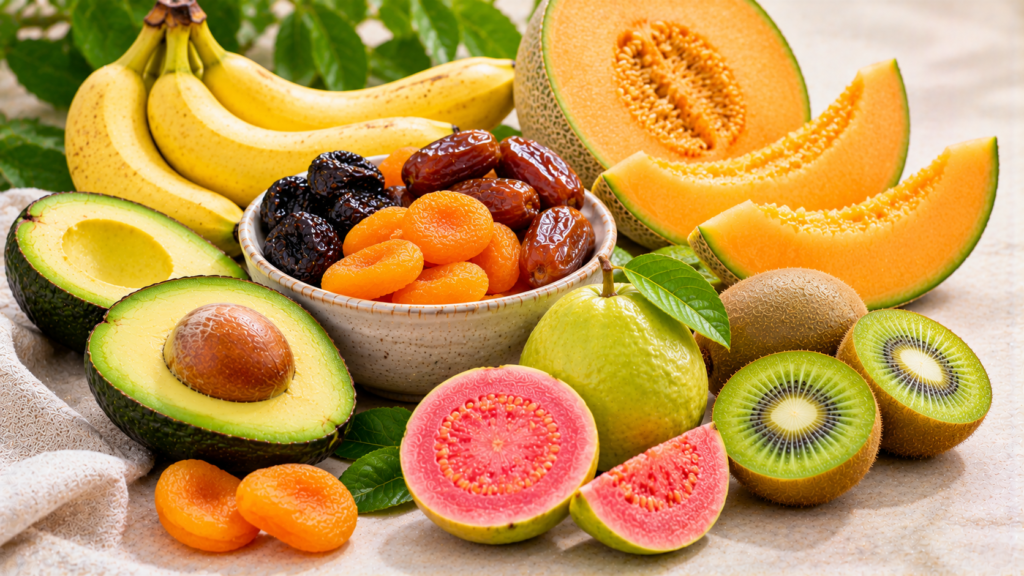
Which Fruits Have the Most Potassium?
If you want to increase potassium intake through food, some fruits provide considerably more potassium than others.
Here are useful options:
- Dried apricots: A concentrated source of potassium because water has been removed.
- Raisins: Provide potassium in a small, convenient portion.
- Prunes: Supply potassium along with fiber.
- Dates: Provide potassium and natural carbohydrates.
- Avocado: Offers potassium together with fiber and unsaturated fats.
- Guava: Provides potassium, vitamin C, and fiber.
- Bananas: An accessible everyday source of potassium.
- Jackfruit: A tropical option that contributes potassium and fiber.
Practical tip: Dried fruits are concentrated in nutrients, calories, and natural sugars. Compare realistic serving sizes rather than choosing foods only by their potassium content per 100 grams.
How Much Potassium Do You Need Every Day?
Potassium requirements depend on age, sex, life stage, and health status. The following are U.S. National Academies adequate intake (AI) values for adults.
| Group | Daily potassium AI |
|---|---|
| Adult men | 3,400 mg |
| Adult women | 2,600 mg |
| Pregnant adults | 2,900 mg |
| Breastfeeding adults | 2,800 mg |
These are adequate intake reference values, not individual prescriptions. Requirements for children and teenagers differ by age. Some countries use different dietary reference values.
Can Fruits Alone Meet Your Potassium Needs?
Fruits can make a meaningful contribution, but it is useful to obtain potassium from several food groups.
Other potassium-rich foods include:
- Vegetables: Potatoes, sweet potatoes, spinach, tomatoes, and squash.
- Legumes: Lentils, kidney beans, chickpeas, and white beans.
- Dairy foods: Milk and plain yogurt.
- Fish: Salmon and other fish.
- Nuts and seeds: Some varieties provide useful amounts.
- Read the NIH Office of Dietary Supplements Potassium Fact Sheet for recommended intake and health information.
For more food ideas, see [Internal Link: Insert relevant internal URL here with anchor text: High Potassium Foods: Best Natural Sources and Their Nutrition].
Health Benefits of Eating Fruits High in Potassium
Potassium-rich fruits contribute to a balanced diet and help provide a mineral needed for several normal body functions.
1. Supports Normal Muscle Function
Potassium helps regulate the electrical signals that allow muscles to contract and relax.
A varied diet containing bananas, avocado, dried apricots, and other potassium sources helps supply this essential mineral.
2. Helps Maintain Fluid Balance
Potassium works with sodium to maintain normal fluid distribution inside and outside cells.
This balance is important for normal cellular activity, nerve signaling, and muscle function.
3. Supports Healthy Blood Pressure
Potassium helps counter some of the effects of sodium on blood pressure. Eating potassium-rich foods as part of a balanced diet that does not contain excessive sodium may help support healthy blood pressure.
However, increasing potassium intake is not a substitute for prescribed treatment or medical advice.
4. Supports Normal Nerve Function
Nerve cells rely on potassium and sodium gradients to transmit electrical signals.
Adequate potassium intake supports the normal communication between nerves, muscles, and other tissues.
5. Contributes to a Heart-Healthy Eating Pattern
Potassium is important for normal electrical activity in the heart. Fruits also provide fiber, antioxidants, and other nutrients that contribute to overall dietary quality.
No single fruit can prevent heart disease, but a varied diet rich in fruits and vegetables can be part of a heart-healthy eating pattern.
6. Provides Fiber Alongside Potassium
Many potassium-rich fruits also contain dietary fiber.
Examples include:
- Avocado
- Guava
- Bananas
- Passion fruit
- Prunes
- Kiwi
Fiber contributes to digestive health and can help make meals more satisfying.
Best Ways to Add Potassium-Rich Fruits to Your Daily Diet
You do not need complicated recipes to include more potassium-rich fruits. Small changes to familiar meals can help.
1. Add Fruit to Breakfast
Breakfast is an easy opportunity to include potassium.
Try:
- Oatmeal with banana slices.
- Plain yogurt with kiwi and dates.
- Whole-grain toast with avocado.
- A fruit bowl with cantaloupe and papaya.
2. Choose Fruit for Snacks
Keep convenient fruit available when you want something between meals.
Good options include:
- Bananas.
- Oranges.
- Guava.
- Kiwi.
- Fresh apricots.
- A small portion of dried apricots or prunes.
For a more filling snack, combine fruit with plain yogurt or unsalted nuts.
3. Make a Potassium-Rich Smoothie
A homemade smoothie can combine several fruits and other nutritious ingredients.
Simple banana and avocado smoothie
Ingredients:
- ½ medium banana.
- ¼ avocado.
- ½ cup plain yogurt.
- ½ cup milk or water.
- A little cinnamon, if desired.
Method:
- Peel the banana and prepare the avocado.
- Add the ingredients to a blender.
- Blend until smooth.
- Serve shortly after preparation.
This smoothie provides potassium, fiber, and other nutrients. Its potassium content depends on the ingredients and portion sizes. People who have been advised to restrict potassium should check whether this combination is suitable for them.
4. Add Fruit to Salads
Fruit can add natural sweetness and texture to savory meals.
Try:
- Avocado and orange salad.
- Mango and spinach salad.
- Pomegranate and cucumber salad.
- Guava and leafy green salad.
- Cantaloupe and mint salad.
5. Use Dried Fruits in Moderate Portions
Dried apricots, prunes, dates, and raisins are convenient sources of potassium.
Add a small portion to:
- Oatmeal.
- Homemade trail mix.
- Plain yogurt.
- Whole-grain breakfast bowls.
Remember that dried fruit is more concentrated in calories and natural sugars than fresh fruit.
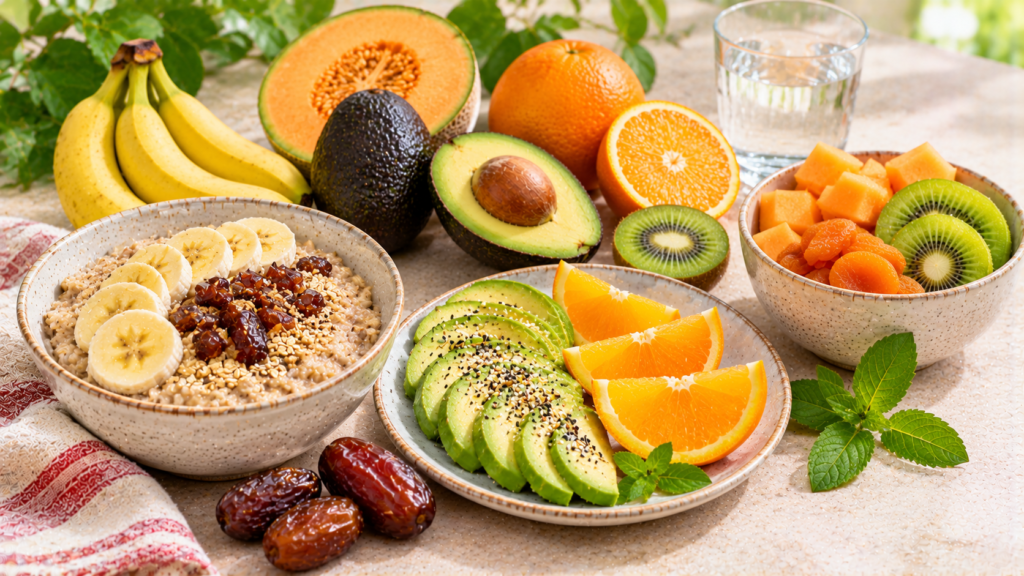
Fresh vs. Dried Fruits: Which Provides More Potassium?
Both fresh and dried fruits can contribute potassium. Drying removes much of the water, making nutrients more concentrated by weight.
| Fruit | Fresh form | Dried form |
|---|---|---|
| Apricots | Lower potassium per 100 g | More concentrated per 100 g |
| Plums | Fresh plums contain potassium | Prunes provide more per 100 g |
| Grapes | Fresh grapes contain potassium | Raisins are more concentrated |
| Dates | Fresh dates vary by variety | Dried dates provide concentrated potassium |
Are Dried Fruits Better Sources of Potassium?
Dried fruits often provide more potassium per 100 grams than fresh versions. However, the same water loss also concentrates calories and natural sugars.
A small portion can be useful, but fresh fruit may be more filling because it contains more water.
Choose the form that fits your preferences, dietary needs, and portion requirements.
Fresh Fruit vs. Fruit Juice: Which Is Better?
Whole fruits are generally a better everyday choice because they provide fiber alongside potassium and other nutrients.
| Feature | Whole fruit | Fruit juice |
|---|---|---|
| Potassium | Varies by fruit | Varies by fruit and processing |
| Fiber | Usually higher | Usually much lower |
| Fullness | Often more satisfying | May be less filling |
| Natural sugars | Present | Present |
| Portion control | Often easier | Easy to drink quickly |
| Everyday choice | Generally preferred | Best in moderate portions |
Juicing does not automatically remove all potassium, but strained juice often loses much of the fruit’s fiber.
Practical advice: Eat whole fruit most often. If you drink juice, choose 100% juice without added sugar and keep portions moderate.
Who Should Be Careful With High-Potassium Fruits?
Although potassium is essential, more is not always better for everyone.
People with healthy kidney function can generally regulate blood potassium effectively through the kidneys. However, some medical conditions and medicines can make it difficult to remove excess potassium.
People With Chronic Kidney Disease
When kidney function is reduced, potassium may build up in the blood. This can lead to hyperkalemia, a potentially serious condition.
People with chronic kidney disease may need individualized potassium guidance from their healthcare professional or renal dietitian.
People Taking Certain Medicines
Some medicines can increase blood potassium levels, including:
- Certain ACE inhibitors.
- Some angiotensin receptor blockers (ARBs).
- Potassium-sparing diuretics, such as spironolactone.
- Some other medicines that affect kidney function or potassium balance.
Do not stop or change prescribed medication yourself. Ask your healthcare professional whether you need to monitor your potassium intake.
People With a History of High Blood Potassium
Anyone who has been diagnosed with hyperkalemia should follow their clinician’s dietary advice. A high-potassium fruit list is not automatically suitable for someone who has been told to limit potassium.
Important: Do not use potassium supplements or potassium-based salt substitutes without medical guidance if you have kidney disease or take medicines that affect potassium levels.
Common Mistakes to Avoid When Eating Fruits High in Potassium
1. Relying Only on Bananas
Bananas are a convenient potassium source, but avocado, dried apricots, prunes, dates, guava, and cantaloupe also contribute potassium.
Eating a variety of fruits provides a broader range of nutrients.
2. Ignoring Serving Sizes
Potassium amounts are often listed per 100 grams, but people usually eat different quantities of each fruit.
Compare realistic portions rather than relying only on the highest number in a nutrition chart.
3. Eating Large Amounts of Dried Fruit
Dried apricots, raisins, dates, and prunes are concentrated sources of potassium, calories, and natural sugars.
Enjoy appropriate portions rather than treating dried fruit as an unlimited snack.
4. Assuming Fruit Juice Is Equivalent to Whole Fruit
Fruit juice can provide potassium, but it generally contains less fiber than whole fruit.
Choose whole fruit more often.
5. Taking Potassium Supplements Without Advice
Potassium supplements are not necessary for everyone and can be harmful when taken unnecessarily, particularly for people with impaired kidney function or certain medication use.
6. Ignoring Medical Dietary Restrictions
People with kidney disease or a history of high blood potassium may need to limit certain foods. Always follow individualized medical guidance.
A Simple One-Day Potassium-Rich Fruit Meal Plan
Here is an example of how you can include different potassium-containing fruits throughout the day.
| Meal | Fruit choice | Suggested serving |
|---|---|---|
| Breakfast | Banana | 1 medium |
| Morning snack | Kiwi | 1 medium |
| Lunch | Avocado | ¼–½ fruit |
| Afternoon snack | Cantaloupe | 1 cup |
| Dinner | Orange | 1 medium |
This is an illustrative fruit plan, not a complete meal plan or a personalized potassium prescription. Include vegetables, legumes, whole grains, and suitable protein sources to create balanced meals.
People who need to restrict potassium should not follow this plan without checking it against their individual dietary advice.
Frequently Asked Questions About Fruits High in Potassium
1. Which fruit has the highest potassium content?
Dried apricots, raisins, prunes, and dates are among the more concentrated potassium-rich fruits. Avocado is also a useful source among commonly eaten fresh fruits.
2. Are bananas high in potassium?
Yes. A medium banana provides approximately 420 mg of potassium, although the amount varies with its size.
3. Which fresh fruits are highest in potassium?
Avocado, guava, jackfruit, bananas, passion fruit, and cantaloupe are useful fresh fruit sources of potassium.
4. Are dried apricots high in potassium?
Yes. Dried apricots are concentrated in potassium because much of their water has been removed. They are also concentrated in calories and natural sugars, so portion size matters.
5. Do oranges contain potassium?
Yes. Oranges provide potassium along with vitamin C, folate, and dietary fiber.
6. Can I eat potassium-rich fruits every day?
Most people with healthy kidney function can include a variety of potassium-rich fruits in a balanced diet. People with kidney disease or certain medication restrictions may need individualized advice.
7. Which fruits are good sources of potassium and fiber?
Avocado, guava, bananas, passion fruit, prunes, and kiwi provide both potassium and dietary fiber.
8. Is avocado higher in potassium than bananas?
Per 100 grams, avocado generally contains more potassium than banana. However, the amount you obtain depends on the serving size.
9. Is coconut water a good source of potassium?
Coconut water provides potassium and fluid, although its potassium content varies by product and serving. It is not a replacement for prescribed oral rehydration solutions or medical treatment.
10. Should people with kidney disease eat high-potassium fruits?
Not necessarily. Some people with kidney disease need to limit potassium, while others may not. A healthcare professional or renal dietitian can recommend suitable fruits based on blood potassium levels and kidney function.
Conclusion: Add Fruits High in Potassium to a Balanced Diet
Including fruits high in potassium in your daily meals is a practical way to obtain an essential mineral that supports normal muscle function, nerve signaling, fluid balance, and healthy blood pressure regulation.
Avocados, bananas, dried apricots, prunes, dates, guava, cantaloupe, and other fruits offer different amounts of potassium alongside fiber, vitamins, and beneficial plant compounds.
You do not need to rely on bananas alone. Choose a variety of fresh and dried fruits, pay attention to serving sizes, and combine them with vegetables, legumes, whole grains, and other nutritious foods.
Most importantly, remember that potassium needs are individual. If you have kidney disease, high blood potassium, or take medication that affects potassium levels, ask a healthcare professional which fruits and portions are appropriate for you.
Explore more nutrition guides: