
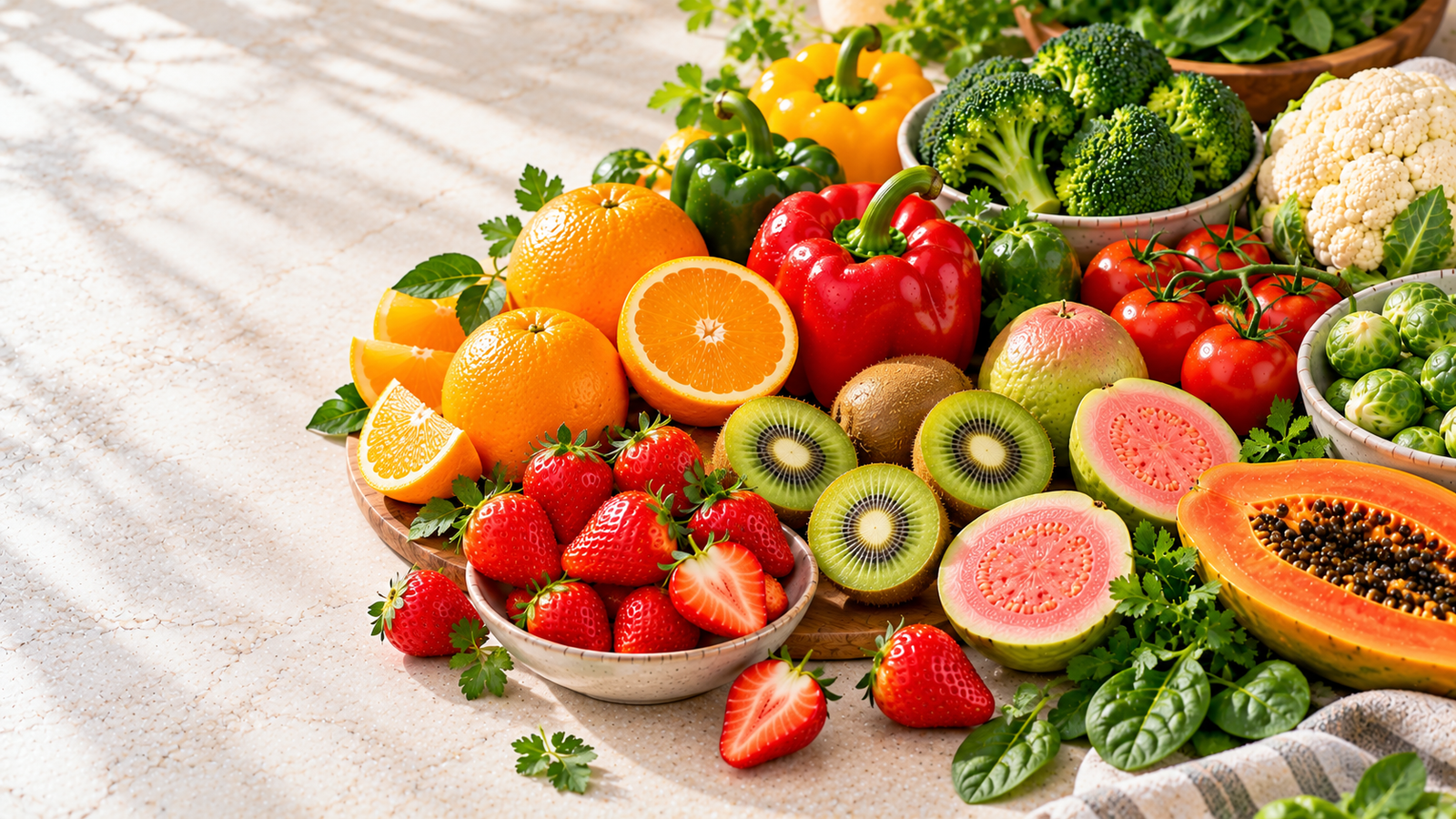
Natural sources of vitamin C are easy to incorporate into everyday meals. From juicy oranges and sweet strawberries to crunchy bell peppers and fresh broccoli, a wide variety of fruits and vegetables can help you meet your daily vitamin C needs.
Vitamin C, also known as ascorbic acid, is an essential water-soluble nutrient. Your body uses it to make collagen, support normal immune function, and improve the absorption of iron from plant-based foods. Because the body cannot produce vitamin C on its own, you need to obtain it regularly from your diet. NIH Office of Dietary Supplements.
The good news is that you do not need an expensive diet or complicated recipes. Choosing a variety of fresh, frozen, or appropriately prepared fruits and vegetables can help you obtain vitamin C naturally.
This practical guide explains the best food sources, approximate amounts per serving, daily recommendations, and simple ways to make vitamin C-rich foods part of your routine.
Key Takeaways
- Fruits and vegetables are the main natural sources of vitamin C.
- Red bell peppers, kiwi, oranges, strawberries, and broccoli are excellent options.
- Most adults need 75–90 mg of vitamin C daily, depending on sex.
- Pairing vitamin C-rich foods with beans, lentils, and other plant-based iron sources can improve iron absorption.
- Long storage and some cooking methods can reduce vitamin C content.
- A varied diet can meet the needs of many people without requiring vitamin C supplements.
What Are the Best Natural Sources of Vitamin C?
The best natural sources of vitamin C include citrus fruits, berries, kiwi, guava, papaya, bell peppers, broccoli, Brussels sprouts, and several other vegetables.
Although oranges are well known for their vitamin C content, they are not the only useful option. Some vegetables provide more vitamin C per typical serving than an orange.
Natural Vitamin C Foods Chart
The following table lists approximate amounts from commonly referenced food portions. Values can vary with variety, serving size, freshness, storage, and preparation. Most values are drawn from the NIH Office of Dietary Supplements’ food-source table. See the NIH vitamin C professional fact sheet.
| Natural food source | Typical serving | Approx. vitamin C |
|---|---|---|
| Red sweet bell pepper, raw | ½ cup | 95 mg |
| Orange | 1 medium | 70 mg |
| Kiwi | 1 medium | 64 mg |
| Green sweet bell pepper, raw | ½ cup | 60 mg |
| Broccoli, cooked | ½ cup | 51 mg |
| Strawberries, fresh and sliced | ½ cup | 49 mg |
| Brussels sprouts, cooked | ½ cup | 48 mg |
| Grapefruit | ½ medium | 39 mg |
| Broccoli, raw | ½ cup | 39 mg |
| Cantaloupe | ½ cup | 29 mg |
| Cabbage, cooked | ½ cup | 28 mg |
| Cauliflower, raw | ½ cup | 26 mg |
| Potato, baked | 1 medium | 17 mg |
| Tomato, raw | 1 medium | 17 mg |
| Spinach, cooked | ½ cup | 9 mg |
These values are estimates for the listed portions. They are not exact measurements for every variety or preparation method.
Why Serving Size Matters
A food’s vitamin C content is meaningful only when you consider how much you eat.
For example, half a cup of raw red bell pepper contains approximately 95 mg of vitamin C, while one medium orange provides around 70 mg. Both are useful sources, but the portions differ.
When comparing foods:
- Check whether the value refers to a whole fruit or a measured cup.
- Distinguish raw vegetables from cooked vegetables.
- Remember that juice may provide vitamin C without the fiber found in whole fruit.
- Use the chart as a practical guide rather than a precise laboratory measurement.
15 Natural Sources of Vitamin C to Add to Your Diet
You do not have to eat every food on this list. Choose the options that are affordable, available, enjoyable, and suitable for your dietary needs.
1. Red Bell Peppers
Red bell peppers are among the strongest natural vitamin C sources in the chart. A half cup of raw red sweet pepper provides approximately 95 mg.
They are easy to add to salads, sandwiches, wraps, and homemade salsa. You can also serve them with hummus or another dip for a quick snack.
Simple tip: Slice peppers in advance and refrigerate them in a suitable covered container for convenient meals.
2. Oranges
Oranges provide approximately 70 mg of vitamin C per medium fruit. They are portable, widely available, and easy to include in breakfast or snacks.
Enjoy a whole orange between meals, add segments to a salad, or pair the fruit with yogurt and oats.
Whole fruit also provides fiber, which is an important advantage over juice.
3. Kiwi
One medium kiwi contains around 64 mg of vitamin C. Its sweet-tart flavor works well in fruit bowls, breakfast dishes, and smoothies.
Try sliced kiwi with strawberries, or serve it alongside a meal containing beans or lentils to add a vitamin C source.
4. Green Bell Peppers
Green bell peppers provide approximately 60 mg of vitamin C per half cup when raw.
Add them to salads, sandwiches, vegetable platters, or quick stir-fries. They are particularly useful when you want a crunchy vegetable with a fresh, mildly bitter flavor.
5. Broccoli
Cooked broccoli provides approximately 51 mg of vitamin C per half cup, while half a cup of raw broccoli contains around 39 mg.
Steam broccoli until tender, add it to a grain bowl, or serve it with beans, tofu, fish, chicken, or eggs.
Broccoli also supplies fiber and other nutrients, making it a practical addition to a varied diet.
6. Strawberries
Half a cup of sliced fresh strawberries contains approximately 49 mg of vitamin C.
Add them to oatmeal, plain yogurt, fruit salads, or smoothies. Frozen strawberries without added sugar can also be convenient, although nutrient levels depend on processing and storage.
7. Brussels Sprouts
Half a cup of cooked Brussels sprouts contains approximately 48 mg of vitamin C.
Steam them, roast them, or sauté them briefly. Avoid cooking them longer than necessary if your goal is to limit vitamin C losses.
8. Grapefruit
Half a medium grapefruit provides approximately 39 mg of vitamin C.
Enjoy it as part of breakfast or add its segments to a salad. Grapefruit can interact with certain medicines, so check with a pharmacist or healthcare professional if you take prescription medication.
9. Cantaloupe
Half a cup of cantaloupe provides approximately 29 mg of vitamin C.
Its naturally sweet flavor makes it a convenient snack, especially in warmer weather. Combine it with other fruits for variety rather than relying on a single food.
10. Cauliflower
Raw cauliflower provides approximately 26 mg of vitamin C per half cup.
Serve it as crunchy florets, add it to salads, or cook it briefly in soups and curries. It can also be roasted as part of a balanced meal.
11. Cabbage
Cooked cabbage provides approximately 28 mg of vitamin C per half cup in the reference table.
Cabbage is versatile and can be used in salads, soups, vegetable dishes, and stir-fries. Red and green cabbage both contribute nutrients, although their exact vitamin C levels vary.
12. Tomatoes
One medium raw tomato contains approximately 17 mg of vitamin C.
Add tomatoes to salads, sandwiches, omelets, or homemade sauces. Tomato juice also contains vitamin C, but compare labels and serving sizes when choosing packaged options.
13. Potatoes
One medium baked potato provides approximately 17 mg of vitamin C in the reference table.
Potatoes are not usually the first food people think of for vitamin C, but they can contribute to total intake. Baking or microwaving may be practical preparation methods, depending on the recipe.
14. Papaya
Papaya is a useful natural source of vitamin C and can be enjoyed fresh, cubed, or blended into a smoothie. Its exact nutrient contribution depends on the portion and ripeness.
Serve papaya with other fruit or add it to a breakfast bowl for variety.
15. Guava
Guava is another fruit worth including in a vitamin C-rich diet. Depending on variety and serving size, it can provide a substantial amount of vitamin C.
Enjoy fresh guava on its own or add it to a fruit plate. If guava is readily available where you live, it can be a practical alternative to citrus fruit.
Papaya and guava amounts are not included in the numerical chart above because values vary with variety and portion size. For exact tracking, use a reliable food-composition database and the serving you actually eat.
Natural sources of vitamin C including bell peppers, oranges, kiwi, strawberries, guava, broccoli, and cabbage.
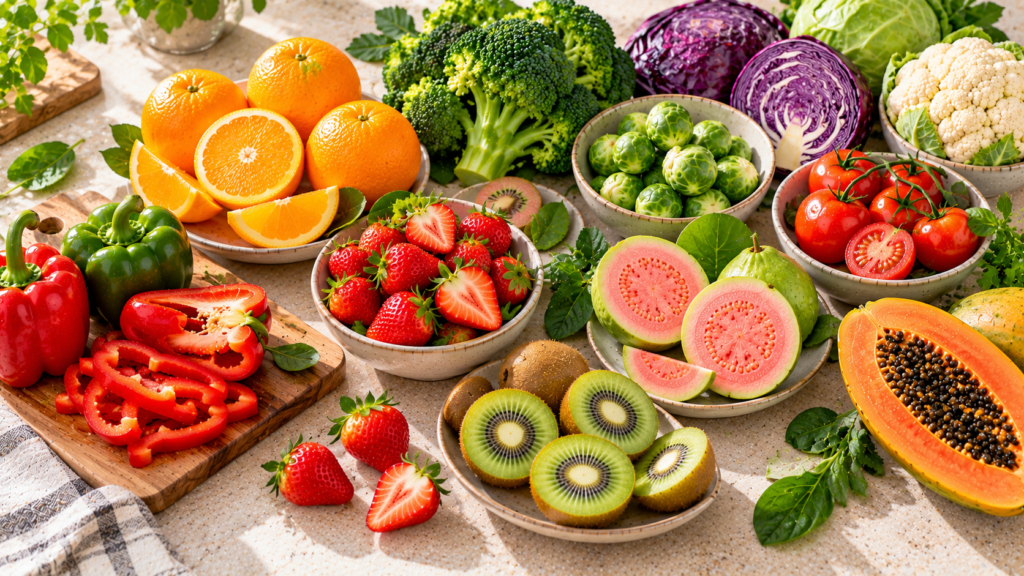
Natural Sources of Vitamin C: Fruits vs. Vegetables
Both fruits and vegetables can help you meet your daily vitamin C requirements. The best choice is not necessarily one category over the other; combining them makes it easier to vary your diet.
Vitamin C-Rich Fruits
Useful fruit choices include:
- Oranges and other citrus fruits
- Kiwi
- Strawberries
- Guava
- Papaya
- Grapefruit
- Cantaloupe
Fruit can be especially convenient for snacks, breakfast, and packed lunches.
Vitamin C-Rich Vegetables
Useful vegetable choices include:
- Red and green bell peppers
- Broccoli
- Brussels sprouts
- Cauliflower
- Cabbage
- Tomatoes
- Potatoes
- Leafy greens
Vegetables can contribute to lunch and dinner, making them easy to combine with protein sources, grains, and other nutrient-rich foods.
Which Is Better: Fruit or Vegetables?
Neither is universally better. Some fruits and vegetables provide high amounts of vitamin C per serving, while others offer smaller amounts alongside fiber and other nutrients.
A practical approach is to include both:
- Have fruit with breakfast or as a snack.
- Add vegetables to lunch and dinner.
- Rotate different colors and varieties throughout the week.
- Choose produce you enjoy and can afford consistently.
This approach is more flexible than relying on one supposedly perfect food.
How Much Vitamin C Do You Need Daily?
Your daily vitamin C requirement depends on age, sex, and life stage. Smoking also increases vitamin C needs.
The following recommendations are from the NIH Office of Dietary Supplements. Review the full vitamin C consumer fact sheet.
| Life stage | Recommended vitamin C per day |
|---|---|
| Children aged 1–3 | 15 mg |
| Children aged 4–8 | 25 mg |
| Children aged 9–13 | 45 mg |
| Teen boys aged 14–18 | 75 mg |
| Teen girls aged 14–18 | 65 mg |
| Adult men aged 19 and older | 90 mg |
| Adult women aged 19 and older | 75 mg |
| Pregnant teens | 80 mg |
| Pregnant adults | 85 mg |
| Breastfeeding teens | 115 mg |
| Breastfeeding adults | 120 mg |
People who smoke should add 35 mg to the recommendation for their age and life stage. Infants have separate reference values.
Can You Meet Your Daily Needs Naturally?
Many people can meet their vitamin C requirements through a varied diet.
For example, a medium orange provides approximately 70 mg, while half a cup of raw red bell pepper provides around 95 mg. These portions alone can meet or exceed the standard daily recommendation for many adults.
However, this does not mean that everyone should eat only one food or aim to consume as much vitamin C as possible. A balanced diet includes a range of fruits, vegetables, protein sources, whole grains, and other foods.
If you have a restricted diet, a condition affecting nutrient absorption, or concerns about deficiency, discuss your needs with a qualified healthcare professional.
How to Get More Vitamin C Naturally Every Day
You do not need an expensive meal plan to eat more vitamin C-rich foods. Small, repeatable changes can help.
At Breakfast
- Add sliced kiwi or strawberries to oatmeal.
- Eat an orange with your usual breakfast.
- Include chopped bell peppers in an egg dish.
At Lunch
- Add raw peppers and tomatoes to a salad or sandwich.
- Include broccoli in a grain bowl.
- Pair a lentil or chickpea dish with a vitamin C-rich vegetable.
At Dinner
- Serve lightly cooked broccoli or Brussels sprouts.
- Add tomatoes and cabbage to soups or curries.
- Include a side salad with bell peppers.
For Snacks
- Keep whole fruit available when practical.
- Serve sliced peppers with hummus.
- Combine kiwi and strawberries in a small fruit bowl.
A Simple Example of a Day
This is an illustrative meal pattern, not an individualized diet prescription.
| Meal | Example |
|---|---|
| Breakfast | Oatmeal with strawberries |
| Morning snack | One orange |
| Lunch | Chickpea salad with tomatoes and bell peppers |
| Afternoon snack | Kiwi |
| Dinner | Lentils with broccoli and other vegetables |
The exact vitamin C total depends on the portions and ingredients you use. The main idea is to spread a variety of natural sources across the day.
How Vitamin C Helps Your Body
Vitamin C has several important functions. Eating foods that contain it supports normal physiology, but no single food can guarantee immunity or prevent illness.
1. Supports Collagen Production
Your body needs vitamin C to make collagen, a protein that helps maintain skin, blood vessels, bones, cartilage, and connective tissue. Collagen is also important for wound healing.
2. Helps Absorb Iron
Vitamin C improves the absorption of non-heme iron, which is found in plant foods such as beans, lentils, chickpeas, and some leafy greens.
For a simple meal idea, add tomatoes or bell peppers to a lentil dish, or enjoy kiwi alongside a meal containing plant-based iron.
Vitamin C and Iron: Foods That Help You Get More Iron
3. Supports Normal Immune Function
Vitamin C contributes to normal immune system function. However, eating extra vitamin C does not guarantee that you will avoid infections, and vitamin C-rich foods are not a substitute for appropriate medical care.
4. Provides Antioxidant Activity
Vitamin C acts as an antioxidant, helping protect cells from oxidative damage. It is one part of the broader range of nutrients supplied by a varied diet.
NIH Office of Dietary Supplements — Vitamin C Consumer Fact Sheet
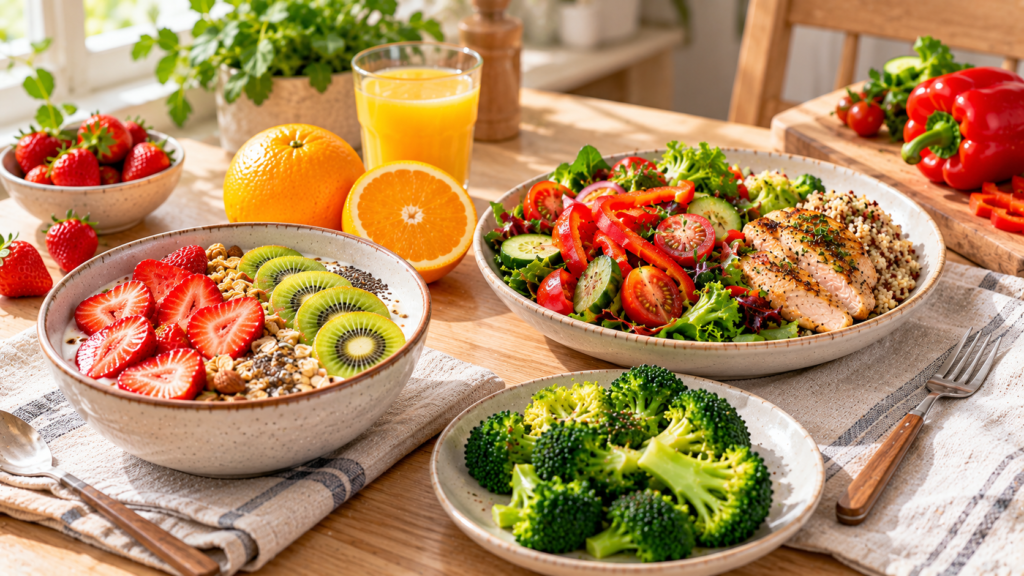
Everyday meals featuring natural sources of vitamin C, including strawberries, kiwi, oranges, bell peppers, tomatoes, and broccoli.
How Cooking and Storage Affect Vitamin C
Vitamin C is water-soluble and can be reduced by prolonged storage, exposure to unsuitable conditions, and some cooking methods. Heat and water can contribute to losses, although the amount varies by food and preparation. NIH vitamin C guidance.
You do not need to eat every vegetable raw. Instead, aim for practical preparation methods that help retain nutrients while keeping food enjoyable and safe.
Choose Shorter Cooking Times
Steam vegetables until just tender rather than boiling them for long periods. Microwaving with a small amount of water can also help limit losses in some foods.
Eat Some Fruits and Vegetables Raw
Many fruits are commonly eaten raw, making it easy to obtain vitamin C without a cooking step. Raw bell peppers, oranges, kiwi, and strawberries are convenient choices when suitable for your needs.
Store Produce Properly
Refrigerate perishable produce when appropriate and use it before it deteriorates. Avoid leaving cut fruit and vegetables exposed for extended periods.
Are Frozen Fruits and Vegetables Good Sources?
Frozen produce can be a convenient and nutritious option. Vitamin C retention varies with the food, processing, storage, and preparation method, so frozen produce should not automatically be considered inferior to fresh produce.
Choose plain frozen fruits and vegetables when possible, and check labels for added sugar or other ingredients if these matter to your diet.
Natural Vitamin C From Food vs. Supplements
For many people, food is the most practical starting point for meeting vitamin C requirements.
Benefits of Getting Vitamin C From Food
Natural food sources offer several advantages:
- They provide vitamin C along with other nutrients.
- Fruits and vegetables contribute dietary fiber.
- They offer variety in texture, flavor, and meal choices.
- They can be incorporated into everyday eating habits.
When Might Supplements Be Appropriate?
Supplements may be useful for people who cannot meet their needs through food or have specific medical or dietary requirements. The appropriate amount depends on individual circumstances.
High doses of vitamin C supplements can cause diarrhea, nausea, and abdominal cramps. For adults, the tolerable upper intake level is 2,000 mg per day from all sources; this is a safety limit, not a target to aim for. Different upper limits apply to children.
Speak with a healthcare professional before using high-dose supplements, particularly if you have a medical condition or take medicines that may affect your nutritional care.
Vitamin C Benefits: Why Your Body Needs This Essential Nutrient

Balanced meal featuring broccoli, red bell peppers, tomatoes, kiwi, strawberries, and other natural sources of vitamin C.
Common Mistakes to Avoid
Relying Only on Oranges
Oranges are a useful source of vitamin C, but peppers, kiwi, strawberries, broccoli, and other foods can contribute substantially. Variety makes meal planning more flexible.
Comparing Foods Without Checking Portions
A value for half a cup cannot be directly compared with a value for a whole fruit without considering the serving size.
Overcooking Vegetables
Prolonged cooking, especially in water, may reduce vitamin C content. Try shorter cooking times and methods such as steaming when appropriate.
Assuming Natural Means Unlimited
Vitamin C-rich foods are valuable parts of a balanced diet, but large quantities of one food do not replace dietary variety. People with allergies, medical conditions, or specific dietary restrictions may need individualized guidance.
Taking High-Dose Supplements Without a Clear Need
More vitamin C is not automatically better. Food-first approaches are practical for many people, while supplements should be chosen according to individual needs and professional guidance when appropriate.
Frequently Asked Questions About Natural Sources of Vitamin C
What are the best natural sources of vitamin C?
Red bell peppers, oranges, kiwi, strawberries, broccoli, and Brussels sprouts are excellent options. Guava and papaya are also useful vitamin C-rich fruits.
Which fruit has the most natural vitamin C?
Vitamin C content varies by fruit variety and serving size. Guava is a particularly rich source, while kiwi, oranges, and strawberries are convenient options. Compare specific varieties and portions when exact nutrient amounts matter.
Can I get enough vitamin C naturally without supplements?
Many people can meet their daily needs by eating a varied diet containing fruits and vegetables. Individual needs may differ because of age, pregnancy, smoking, dietary restrictions, and health conditions.
What vegetables are naturally high in vitamin C?
Red and green bell peppers, broccoli, and Brussels sprouts are among the strongest options in the reference chart. Cauliflower, cabbage, and tomatoes also contribute vitamin C.
Does cooking reduce vitamin C in food?
It can. Prolonged heating and boiling in water may reduce vitamin C content. Shorter cooking times, steaming, and appropriate storage can help limit losses.
Is natural vitamin C better than supplemental vitamin C?
Food provides vitamin C along with fiber and other nutrients, making it a useful first choice for most people. Supplements may be appropriate in specific circumstances, but high doses are not automatically beneficial.
How can I increase vitamin C intake on a budget?
Choose seasonal produce, compare prices, and use affordable options such as cabbage, tomatoes, bell peppers when economical, and frozen vegetables or fruit. You do not need expensive specialty products to build a vitamin C-rich diet.
What happens if I do not get enough vitamin C?
Very low vitamin C intake over time can cause deficiency, including scurvy. Possible signs include fatigue, swollen or bleeding gums, easy bruising, and poor wound healing. These symptoms can have other causes, so consult a healthcare professional for assessment rather than self-diagnosing.
Conclusion: Make Natural Sources of Vitamin C Part of Your Routine
Natural sources of vitamin C are available in a wide variety of fruits and vegetables, from oranges, kiwi, and strawberries to bell peppers, broccoli, and Brussels sprouts. You can use these everyday foods to support collagen formation, normal immune function, and iron absorption while adding variety to your meals.
The most practical strategy is to choose foods you enjoy, include different fruits and vegetables throughout the day, and use storage and cooking methods that help preserve nutrients. You do not need to rely on a single food or aim for excessive vitamin C intake.
Start with a simple change: add a fruit to breakfast, include peppers or tomatoes at lunch, or serve broccoli with dinner. Small, consistent choices can help you meet your nutritional needs as part of a balanced diet.