
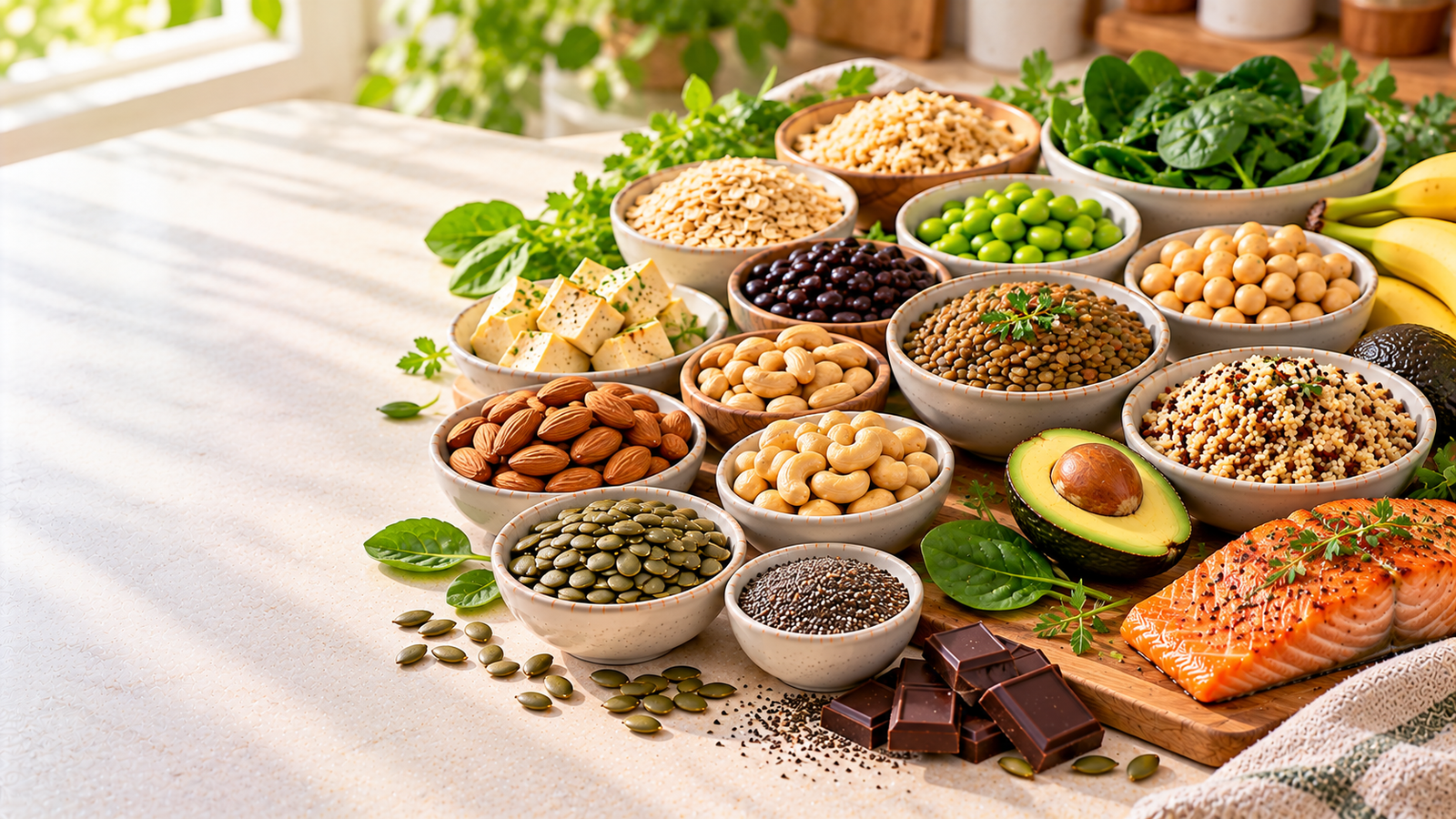
Magnesium is an essential mineral that helps your body perform hundreds of everyday functions. It supports normal muscle and nerve function, energy production, bone health, protein synthesis, and the regulation of blood glucose and blood pressure. Yet getting enough magnesium can be challenging when your diet lacks variety or relies heavily on highly refined foods.
The good news is that many everyday ingredients are natural sources of magnesium. Seeds, nuts, beans, lentils, leafy green vegetables, whole grains, soy foods, and some animal products can all contribute to your daily intake.
This magnesium rich foods complete food guide explains which foods provide magnesium, how their approximate nutritional values compare, how much you need each day, and how to add more magnesium to your meals without making your diet complicated.
Key Takeaways
- Pumpkin seeds, chia seeds, almonds, and cashews are concentrated sources of magnesium.
- Beans, lentils, leafy green vegetables, whole grains, and soy foods can help meet daily needs.
- Magnesium requirements vary by age, sex, and life stage.
- Eating a variety of magnesium-rich foods is a practical first step toward meeting your nutritional needs.
- Food sources provide additional nutrients that supplements may not contain.
- Supplements are not necessary for everyone and may interact with medicines.
- People with kidney disease should seek medical advice before using magnesium supplements.
What Is Magnesium?
Magnesium is a mineral that the body needs to maintain normal physiological functions. It participates in more than 300 enzyme systems involved in processes such as energy production, muscle movement, nerve signaling, and protein formation.
Your body does not produce magnesium, so you must obtain it from food or other dietary sources. Some magnesium is stored in bones and body tissues, while only a small proportion circulates in the blood.
A balanced diet that includes whole grains, legumes, nuts, seeds, and green vegetables can help provide magnesium alongside other important nutrients.
Why Is Magnesium Important for Your Body?
Magnesium supports several essential functions.
- Muscle and nerve function: Helps muscles contract and relax and supports normal nerve signaling.
- Energy metabolism: Participates in reactions that allow your body to use energy from food.
- Bone health: Works with calcium, vitamin D, and other nutrients to maintain normal bone structure.
- Protein synthesis: Helps the body make proteins needed for normal growth and maintenance.
- Blood glucose regulation: Contributes to processes involved in glucose metabolism.
- Normal heart rhythm: Helps maintain the electrical processes involved in normal cardiac function.
Getting enough magnesium supports these functions, but eating magnesium-rich foods should not be treated as a guaranteed way to prevent or cure a medical condition.:
NIH Office of Dietary Supplements — Magnesium.
Magnesium Rich Foods: Complete Food Chart
The following chart compares 25 foods that can contribute to your daily magnesium intake. It includes plant-based foods, whole grains, vegetables, fruits, dairy products, and fish.
Amounts are approximate and based on common serving sizes. They can vary depending on the variety, brand, preparation method, and cooking technique.
| No. | Food | Typical serving | Approx. magnesium |
|---|---|---|---|
| 1 | Pumpkin seeds | 1 oz (28 g) | 156 mg |
| 2 | Chia seeds | 1 oz (28 g) | 111 mg |
| 3 | Almonds | 1 oz (28 g) | 80 mg |
| 4 | Cashews | 1 oz (28 g) | 74 mg |
| 5 | Cooked spinach | ½ cup | 78 mg |
| 6 | Cooked quinoa | 1 cup | 118 mg |
| 7 | Dark chocolate, 70–85% cocoa | 1 oz (28 g) | 65 mg |
| 8 | Cooked black beans | ½ cup | 60 mg |
| 9 | Avocado | 1 medium | 58 mg |
| 10 | Firm tofu | 100 g | 30–60 mg |
| 11 | Peanut butter | 2 tablespoons | 49 mg |
| 12 | Cooked edamame | ½ cup | 50 mg |
| 13 | Cooked brown rice | ½ cup | 42 mg |
| 14 | Cooked kidney beans | ½ cup | 35 mg |
| 15 | Cooked oatmeal | 1 cup | 36 mg |
| 16 | Banana | 1 medium | 32 mg |
| 17 | Plain yogurt | 1 cup | 30–40 mg |
| 18 | Cooked salmon | 3 oz (85 g) | 25–30 mg |
| 19 | Milk | 1 cup | 24–27 mg |
| 20 | Whole-wheat bread | 1 slice | 20–25 mg |
| 21 | Cooked lentils | ½ cup | 35–40 mg |
| 22 | Cooked chickpeas | ½ cup | 35–40 mg |
| 23 | Cooked broccoli | ½ cup | 10–15 mg |
| 24 | Raisins | ¼ cup | 10–15 mg |
| 25 | Cooked potatoes with skin | 1 medium | 40–50 mg |
Nutrition note: These are rounded estimates for common food preparations, not exact values for every product. Some entries, particularly tofu, vary substantially with production methods. Check individual food records in USDA FoodData Central for more precise comparisons.
Which Foods Are Highest in Magnesium?
Among the foods in this chart, pumpkin seeds, chia seeds, quinoa, almonds, cashews, spinach, and dark chocolate are notable sources.
Seeds and nuts are particularly concentrated in magnesium relative to their serving size. Quinoa, beans, and leafy greens are useful options for people who want to build magnesium-rich meals around ordinary foods.
However, the best food for you depends on your dietary preferences, budget, allergies, portion sizes, and overall nutritional needs.
The Best Magnesium Rich Foods Explained
1. Pumpkin Seeds
Pumpkin seeds are one of the most concentrated everyday sources of magnesium. A one-ounce serving provides approximately 156 mg, although the exact amount depends on the product.
They also contain protein, unsaturated fats, and other minerals.
Easy ways to eat pumpkin seeds:
- Sprinkle them over oatmeal or yogurt.
- Add them to salads and vegetable bowls.
- Mix them into homemade granola.
- Use a small handful as a snack.
Choose unsalted pumpkin seeds if you want to limit sodium intake.
2. Chia Seeds
Chia seeds supply magnesium, fiber, and plant-based omega-3 fatty acids. They absorb liquid and develop a gel-like texture, making them suitable for breakfast foods and snacks.
How to include them:
- Prepare overnight chia pudding.
- Stir them into oatmeal.
- Add them to smoothies.
- Mix them with yogurt and fruit.
If you are not used to high-fiber foods, increase your intake gradually and drink enough fluids.
3. Almonds
Almonds provide magnesium, vitamin E, protein, fiber, and unsaturated fats. Their convenience makes them an easy addition to everyday eating.
Try these ideas:
- Pair almonds with a banana or apple.
- Add chopped almonds to breakfast cereal.
- Use almond butter on whole-grain toast.
- Sprinkle crushed almonds over cooked vegetables.
Because nuts are energy-dense, a small handful is often a practical snack portion.
4. Cashews
Cashews contain magnesium, copper, and unsaturated fats. They work well in both savory and sweet dishes.
Ways to eat cashews:
- Add them to vegetable stir-fries.
- Mix them into homemade trail mix.
- Blend them into a creamy sauce.
- Use cashew butter as a spread.
Choose unsalted varieties when possible.
5. Spinach
Spinach is a magnesium-containing leafy green vegetable that also supplies folate, vitamin K, and other nutrients.
Cooking reduces the volume of spinach, allowing you to eat a larger amount in one sitting. Its mineral content still varies with preparation and portion size.
Easy meal ideas:
- Add spinach to lentil curry.
- Stir it into eggs or tofu.
- Include it in soups.
- Sauté it with garlic as a side dish.
Spinach contains oxalates, which can reduce the absorption of certain minerals. Eating a variety of vegetables helps diversify your nutrient intake.
6. Quinoa
Quinoa is a seed commonly prepared and eaten like a grain. It provides magnesium, fiber, and plant protein, making it useful for balanced meals.
How to use quinoa:
- Serve it with black beans and vegetables.
- Use it as a base for a grain bowl.
- Prepare a breakfast bowl with milk and fruit.
- Pair it with tofu or fish.
Rinse quinoa according to package directions before cooking.
7. Dark Chocolate
Dark chocolate contains magnesium, with amounts influenced by its cocoa content and formulation. It also contains cocoa-derived plant compounds.
Enjoy it in moderation:
- Have a small square after a meal.
- Add a little grated chocolate to oatmeal.
- Pair it with almonds.
- Sprinkle small pieces over plain yogurt.
Dark chocolate can contain substantial calories and added sugar, so it is best treated as an optional food rather than your main magnesium source.
8. Black Beans
Black beans provide magnesium, fiber, plant protein, and other minerals. They are versatile, affordable, and easy to include in many cuisines.
Simple ideas:
- Add them to rice dishes.
- Use them in wraps.
- Mix them into vegetable soups.
- Prepare a bean salad.
If using canned beans, draining and rinsing them can reduce sodium.
9. Avocado
Avocado contains magnesium, fiber, potassium, and unsaturated fats. It adds a creamy texture to meals and works well with vegetables and whole grains.
How to eat avocado:
- Spread it on whole-grain toast.
- Add it to salads.
- Serve it with eggs.
- Pair it with beans in a grain bowl.
Avocado is nutrient-dense but relatively high in calories, so choose portions that suit your needs.
10. Tofu
Tofu is made from soybeans and provides protein and magnesium. Its magnesium and calcium content can vary according to the ingredients used to make it.
Meal ideas:
- Bake tofu with vegetables.
- Add it to soups.
- Prepare a tofu scramble.
- Stir-fry it with brown rice.
Check the product label if you want to compare different tofu varieties.
11. Peanut Butter
Peanut butter contributes magnesium, protein, and unsaturated fats. It can make a simple snack more substantial.
Try it with:
- Whole-grain toast.
- Oatmeal.
- Banana slices.
- Smoothies made with milk or fortified plant-based drinks.
Choose products with minimal added sugar and salt. Avoid peanuts if you have a peanut allergy.
12. Edamame
Edamame is made from young soybeans and provides magnesium, fiber, and plant protein.
Easy ways to use it:
- Serve steamed edamame as a snack.
- Add it to salads.
- Combine it with quinoa.
- Include it in vegetable bowls.
Plain edamame can be seasoned with herbs, lemon, or a small amount of salt.
13. Brown Rice
Brown rice retains more of the grain’s outer layers than white rice and generally provides more fiber and magnesium.
Practical uses:
- Serve it with lentils.
- Pair it with beans and vegetables.
- Use it as a base for tofu bowls.
- Add it to soups or stuffed vegetables.
Batch cooking can make brown rice easier to include in weekday meals.
14. Oats
Oats provide magnesium, fiber, and carbohydrates. They are especially useful at breakfast because they can be combined with several other magnesium-rich foods.
Make a magnesium-rich breakfast:
- Cook oats with milk.
- Add chia seeds and almonds.
- Top with banana.
- Use plain oats to control added sugar.
15. Lentils and Chickpeas
Lentils and chickpeas provide magnesium, plant protein, fiber, and other nutrients. They are particularly practical in vegetarian and plant-forward diets.
Ways to eat them:
- Prepare lentil soup.
- Add chickpeas to salads.
- Cook lentils with vegetables.
- Serve beans or chickpeas with whole grains.
Dried legumes should be prepared according to safe cooking instructions. Canned options can be convenient alternatives.
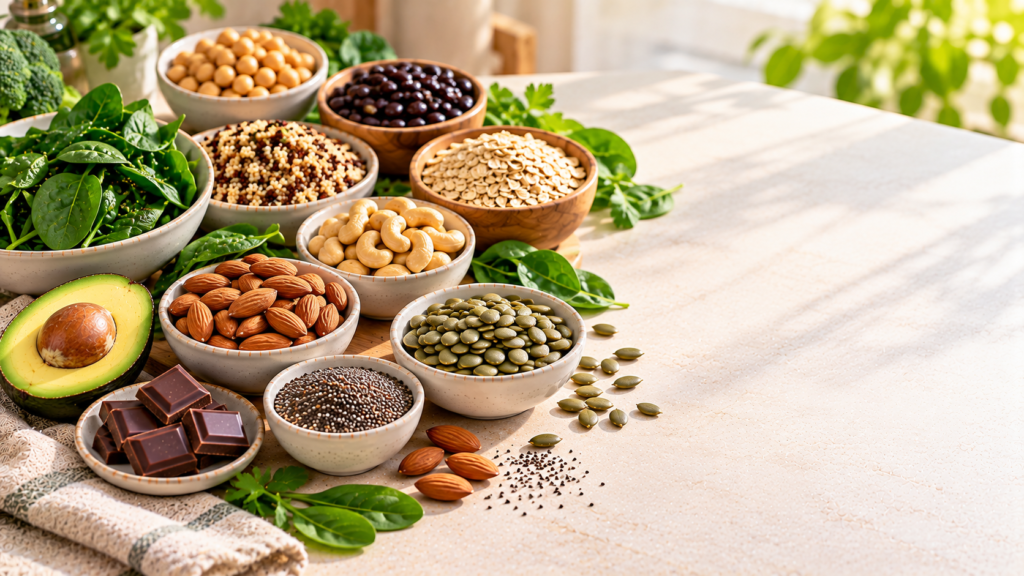
Magnesium Rich Foods by Food Group
You do not need to eat every food on the chart each day. A more practical approach is to choose foods from several groups throughout the week.
Magnesium-Rich Nuts and Seeds
Nuts and seeds are convenient sources because a small serving can supply a meaningful amount of magnesium.
Good options include:
- Pumpkin seeds
- Chia seeds
- Almonds
- Cashews
- Peanuts
Add seeds to breakfast, use nuts as a snack, or sprinkle them over salads and cooked vegetables.
Magnesium-Rich Vegetables
Green leafy vegetables contain magnesium because magnesium is part of chlorophyll, the pigment involved in photosynthesis.
Useful choices include:
- Spinach
- Swiss chard
- Kale
- Other dark leafy greens
Rotate different vegetables rather than relying on spinach alone.
Magnesium-Rich Fruits
Most fruits contain less magnesium per serving than seeds, nuts, and legumes. However, they can still contribute to your daily intake.
Options include:
- Avocado
- Banana
- Dried figs
- Papaya
Pair fruit with nuts, seeds, or yogurt for a balanced snack.
Magnesium-Rich Legumes
Legumes provide magnesium alongside fiber and plant protein.
Include:
- Lentils
- Chickpeas
- Black beans
- Kidney beans
- Edamame
These foods can be used in soups, curries, salads, stews, and grain bowls.
Magnesium-Rich Whole Grains
Whole grains can provide more magnesium than refined grains because processing often removes parts of the grain that contain minerals.
Choose:
- Oats
- Brown rice
- Quinoa
- Whole-wheat bread
- Whole-grain cereals
You can replace some refined-grain servings with whole-grain alternatives without changing your entire diet.
Magnesium From Animal Foods
Fish and dairy products provide some magnesium, although seeds and legumes are often more concentrated sources.
Examples include:
- Salmon
- Milk
- Yogurt
Animal foods are not required to obtain magnesium. A varied plant-based diet can also supply it.
How Much Magnesium Do You Need Every Day?
Magnesium requirements depend on age, sex, and life stage. The following values are the US recommended dietary allowances for adults from the National Institutes of Health.
| Adult group | Recommended daily intake |
|---|---|
| Men aged 19–30 | 400 mg |
| Men aged 31 and older | 420 mg |
| Women aged 19–30 | 310 mg |
| Women aged 31 and older | 320 mg |
| Pregnant adults aged 19–30 | 350 mg |
| Pregnant adults aged 31 and older | 360 mg |
| Breastfeeding adults aged 19–30 | 310 mg |
| Breastfeeding adults aged 31 and older | 320 mg |
These are US reference values; recommendations may differ by country. Children and teenagers have different requirements.
These figures refer to total recommended intake, not the amount that should come from supplements. For detailed age-specific guidance, consult the NIH magnesium fact sheet.
Can You Meet Your Magnesium Needs Through Food?
Many people can obtain enough magnesium through a varied diet that regularly includes legumes, whole grains, nuts, seeds, and leafy greens.
For example, adding pumpkin seeds to breakfast, eating beans at lunch, and choosing whole grains at dinner can increase magnesium intake across the day.
Your exact intake depends on portion sizes and food choices. If you need a precise estimate, use food labels or the USDA FoodData Central database.
USDA FoodData Central — Nutrient Database.
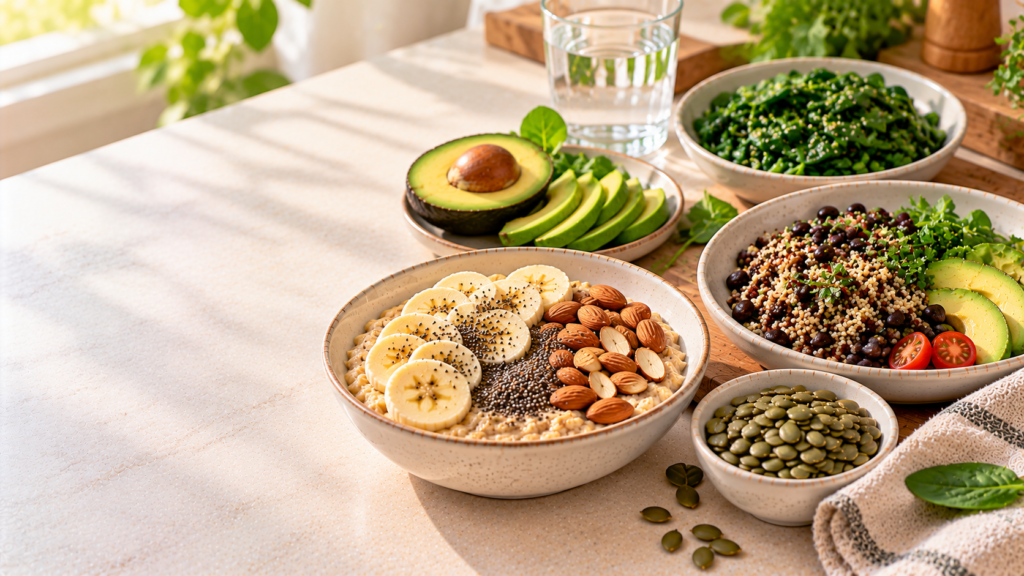
How to Add More Magnesium to Your Diet
Increasing magnesium intake does not require expensive ingredients or complicated recipes. Small, consistent changes can make a meaningful difference to the overall quality of your diet.
1. Improve Your Breakfast
Choose oatmeal or whole-grain cereal and add chia seeds, pumpkin seeds, or almonds. You can also add a banana for extra variety.
2. Include Legumes at Lunch
Add lentils, chickpeas, or beans to rice dishes, salads, wraps, or soups. They provide magnesium as well as fiber and plant protein.
3. Choose Nuts and Seeds for Snacks
A small portion of almonds, cashews, or pumpkin seeds can be a convenient alternative to some highly processed snacks.
4. Eat Whole Grains More Often
Use brown rice, oats, quinoa, or whole-wheat bread regularly. You can begin by replacing just one refined-grain serving a day.
5. Add Leafy Greens to Familiar Meals
Mix spinach into eggs, lentil curry, soups, or stir-fries. Adding greens to foods you already prepare can make the change easier to maintain.
6. Plan Balanced Meals
Aim to include a range of foods across the day instead of relying on one high-magnesium ingredient. For example:
- Breakfast: Oatmeal with chia seeds.
- Lunch: Lentils with brown rice and spinach.
- Snack: Almonds and fruit.
- Dinner: Tofu or fish with quinoa and vegetables.
Adjust these ideas to your appetite, preferences, budget, and health needs.
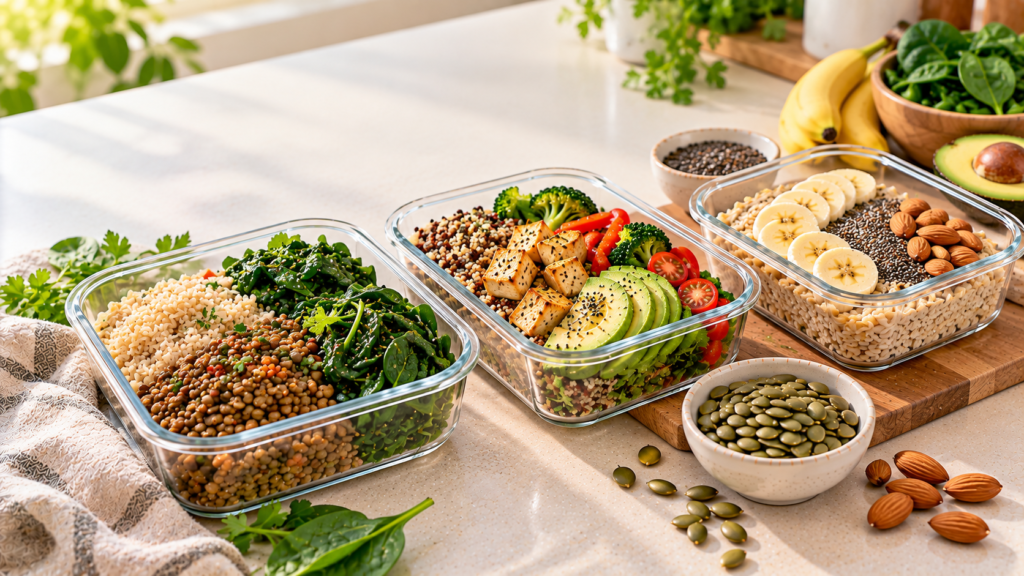
A Simple One-Day Magnesium-Rich Meal Plan
This sample plan shows how you can include several magnesium sources in everyday meals.
| Meal | Example | Main magnesium sources |
|---|---|---|
| Breakfast | Oatmeal with banana and chia seeds | Oats, chia seeds |
| Morning snack | A small handful of almonds | Almonds |
| Lunch | Lentils, brown rice, and spinach | Lentils, brown rice, spinach |
| Afternoon snack | Plain yogurt with pumpkin seeds | Pumpkin seeds |
| Dinner | Tofu, quinoa, and vegetables | Tofu, quinoa, vegetables |
This is an example, not an individualized dietary prescription. The total magnesium will depend on actual portions and ingredients.
Magnesium Deficiency: Signs and Risk Factors
Magnesium deficiency can occur when intake is very low, absorption is impaired, or the body loses too much magnesium. Severe deficiency is uncommon in otherwise healthy people, but some health conditions and medicines can increase risk.
Possible symptoms of significant deficiency include:
- Reduced appetite
- Nausea or vomiting
- Fatigue or weakness
- Muscle cramps
- Numbness or tingling
- Muscle contractions
- Abnormal heart rhythms in severe cases
These symptoms are not specific to magnesium deficiency. Other health problems can cause similar effects, so symptoms alone cannot establish a diagnosis.
Who May Be at Greater Risk?
People with certain gastrointestinal disorders, prolonged diarrhea, heavy alcohol use, or some medical conditions may be at increased risk. Some medicines can also affect magnesium levels.
If you have persistent symptoms or concerns about your intake, speak with a qualified healthcare professional. Do not use a food chart as a substitute for medical assessment.
Magnesium-Rich Foods vs. Supplements
Food and supplements can both supply magnesium, but they are not interchangeable in every situation.
| Feature | Food sources | Supplements |
|---|---|---|
| Additional nutrients | Often provide fiber, protein, vitamins, and other minerals | Usually provide magnesium without the same range of nutrients |
| Everyday use | Help meet dietary needs | May be used for a specific reason |
| Dose | Depends on food and portion size | Depends on the product and amount taken |
| Potential concerns | Generally safe for healthy people when eaten as part of a balanced diet | Excessive supplemental magnesium may cause diarrhea and other adverse effects |
| Best approach | Eat a variety of magnesium-rich foods | Use when appropriate, with professional guidance if needed |
In the United States, the tolerable upper intake level for adults is 350 mg per day of magnesium from supplements and medications, excluding magnesium naturally present in food. This is not a recommended supplement dose, and medically supervised uses may differ.
People with impaired kidney function may be more vulnerable to magnesium accumulation. Ask a healthcare professional before taking supplements if you have kidney disease or use medicines that may interact with magnesium.
Common Mistakes to Avoid
Relying on One Food
Pumpkin seeds are rich in magnesium, but no single food provides every nutrient you need. Variety matters more than repeatedly eating the same ingredient.
Ignoring Portion Sizes
Nutrient charts compare specific serving sizes. Eating a smaller portion will generally provide less magnesium, while larger portions may provide more.
Assuming Every Product Has the Same Nutrient Content
Different brands and preparation methods can produce different values. Check food labels and reliable nutrient databases when accuracy matters.
Taking Supplements Without Considering Safety
More magnesium is not always better. High supplemental doses can cause side effects and interact with some medicines. Consult a healthcare professional if you are unsure whether supplementation is appropriate.
Expecting Magnesium Foods to Cure Symptoms
Magnesium is essential for normal health, but eating magnesium-rich foods does not guarantee relief from cramps, sleep problems, or other symptoms. Persistent concerns deserve appropriate assessment.
Frequently Asked Questions
1. What are the best magnesium rich foods to eat daily?
Pumpkin seeds, chia seeds, almonds, cashews, spinach, beans, lentils, quinoa, and oats are practical options. You can rotate them throughout the week to improve variety.
2. Which food is highest in magnesium?
Pumpkin seeds are among the most concentrated common sources. A one-ounce serving provides approximately 156 mg of magnesium, although exact values vary by product.
3. What are the best plant-based sources of magnesium?
Pumpkin seeds, chia seeds, almonds, cashews, black beans, lentils, chickpeas, spinach, quinoa, oats, and tofu are useful plant-based choices.
4. Which fruits contain magnesium?
Avocados and bananas provide magnesium, as do some other fruits, including dried figs. Seeds, nuts, and legumes generally provide more magnesium per serving.
5. Are magnesium-rich foods good for vegetarians?
Yes. Vegetarians can obtain magnesium from seeds, nuts, beans, lentils, leafy greens, whole grains, and soy foods. A varied diet can provide magnesium without meat or fish.
6. Can I get enough magnesium without supplements?
Many people can meet their needs through a balanced diet. Whether supplements are needed depends on your intake, health conditions, medicines, and individual circumstances.
7. How can I increase magnesium naturally?
Add seeds to breakfast, include beans or lentils at lunch, choose whole grains more often, snack on nuts, and eat leafy green vegetables regularly.
8. Do magnesium-rich foods help prevent muscle cramps?
Magnesium supports normal muscle function, but cramps have many possible causes. Eating magnesium-rich foods supports nutritional adequacy, but it is not a guaranteed treatment for cramps.
9. Is dark chocolate a good source of magnesium?
Dark chocolate contains magnesium, with the amount depending on cocoa content and formulation. Because it can also contain sugar and calories, use it as one optional source rather than your main source.
10. Can you eat too much magnesium from food?
Magnesium naturally present in food is not generally considered harmful for healthy people with normal kidney function. Excessive magnesium from supplements or medications can cause adverse effects, and people with kidney disease should seek medical advice.
Conclusion
A balanced diet containing magnesium rich foods can help support your body’s normal muscle and nerve function, energy metabolism, bone health, and other essential processes. Seeds, nuts, leafy greens, beans, lentils, whole grains, and soy foods are particularly practical choices.
Start with manageable changes: add seeds to breakfast, include legumes in lunch, choose whole grains more often, and serve leafy vegetables with dinner. These simple habits can increase dietary variety while helping you obtain magnesium and other essential nutrients.
Use this complete food guide to compare sources and plan meals that suit your preferences. Focus on consistency rather than perfection, and seek professional advice if you suspect a deficiency or are considering supplements.
1 thought on “Magnesium Rich Foods: Complete Food Guide”