
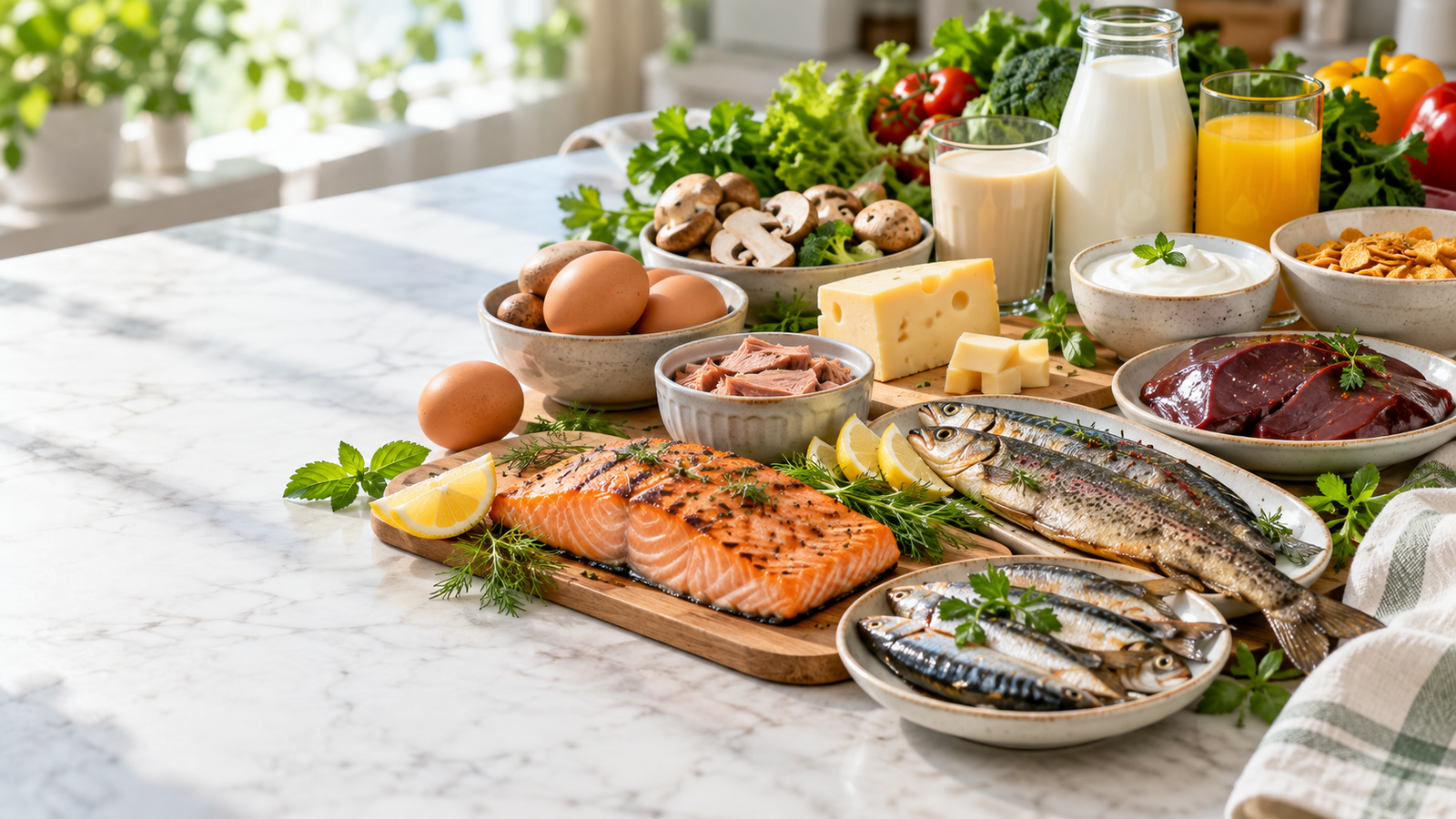
Vitamin D is an essential nutrient that plays an important role in calcium absorption, bone health, muscle function, nerve function, and normal immune function. However, unlike many other nutrients, relatively few foods naturally contain significant amounts of vitamin D. Office of Dietary Supplements
That makes knowing the best vitamin D rich foods especially useful. Fatty fish are among the strongest natural sources, while fortified foods such as milk and some plant-based beverages can make an important contribution to daily intake. Office of Dietary Supplements
This complete guide explains the main vitamin D food sources, the difference between natural and fortified foods, how much vitamin D adults need, and practical ways to include more vitamin D-containing foods in your diet.
Key Takeaways
- Fatty fish such as salmon, trout, tuna, and mackerel are among the best natural vitamin D rich foods.
- Very few foods naturally contain substantial amounts of vitamin D.
- Fortified milk and some plant-based beverages can provide useful amounts of vitamin D.
- Breakfast cereals, some orange juices, yogurts, and margarines may also be fortified.
- Egg yolks, beef liver, cheese, and mushrooms contain smaller amounts.
- UV-exposed mushrooms can contain more vitamin D than ordinary mushrooms.
- Adults ages 19–70 generally need 15 mcg (600 IU) of vitamin D daily, while adults 71 and older need 20 mcg (800 IU). Office of Dietary Supplements
- Fortified foods can vary by brand, so checking the Nutrition Facts label is important.
What Are Vitamin D Rich Foods?
Vitamin D rich foods are foods that provide meaningful amounts of vitamin D as part of a normal serving.
They can broadly be divided into two groups:
- Naturally occurring vitamin D sources
- Vitamin D-fortified foods
Naturally occurring sources include fatty fish, egg yolks, beef liver, cheese, and certain mushrooms. Fortified foods have vitamin D added during manufacturing and can include milk, plant-based beverages, breakfast cereals, orange juice, yogurt, and margarine. Office of Dietary Supplements
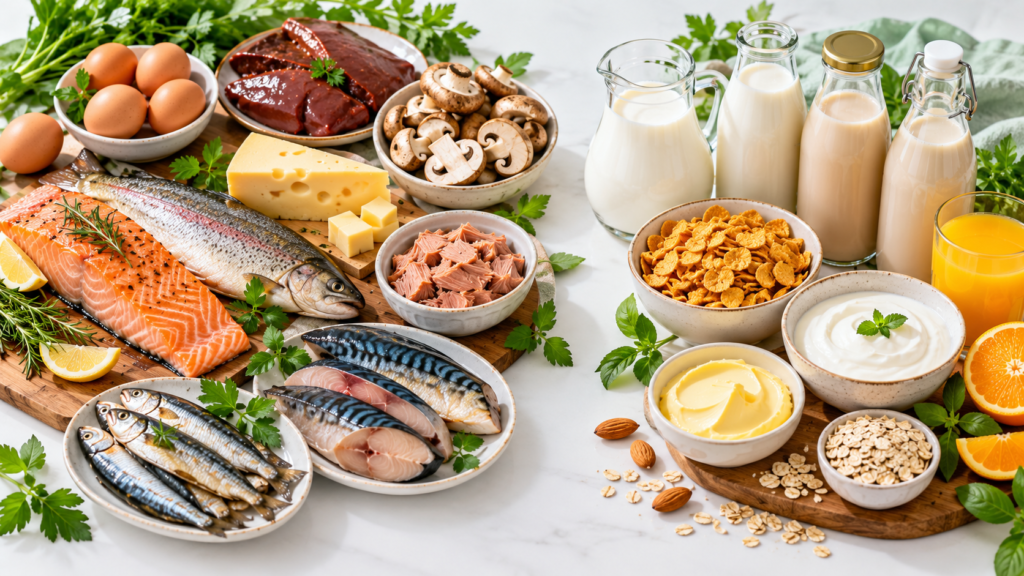
This distinction is important because many foods commonly described online as “vitamin D foods” do not naturally contain meaningful amounts of the vitamin.
Why Does Your Body Need Vitamin D?
Vitamin D has several important functions in the body.
Supports Calcium Absorption
Vitamin D helps your body absorb calcium, an essential mineral for maintaining strong bones. Vitamin D and calcium work together as part of normal bone health. Office of Dietary Supplements
Supports Bone Health
Adequate vitamin D is important throughout life because the body needs it to maintain healthy bones.
Supports Muscle Function
Vitamin D is also involved in normal muscle function. Office of Dietary Supplements
Supports Normal Immune Function
Vitamin D plays a role in normal immune-system function. However, this should not be interpreted as meaning that consuming large amounts of vitamin D prevents or treats infections. Office of Dietary Supplements
Vitamin D Benefits: Why Your Body Needs Vitamin D
The Best Vitamin D Rich Foods
Not every food on this list contains the same amount of vitamin D. Some are genuinely concentrated natural sources, while others provide smaller amounts or are useful because they are commonly fortified.
1. Salmon
Salmon is one of the best-known natural sources of vitamin D.
USDA-derived dietary data show that several varieties of salmon can provide substantial amounts of vitamin D per standard serving. For example, 3 ounces of canned sockeye salmon provides about 17.9 mcg, while cooked sockeye salmon provides about 11.1 mcg. Office of Dietary Supplements
Salmon is also a source of protein and omega-3 fatty acids, making it a nutrient-dense addition to meals.
2. Rainbow Trout
Rainbow trout is another excellent natural source.
USDA-derived data list 3 ounces of cooked farmed rainbow trout at approximately 16.2 mcg of vitamin D. Office of Dietary Supplements
Try baked or grilled trout with vegetables for a simple vitamin D-rich meal.
3. Swordfish
Swordfish is another fish that naturally provides vitamin D. USDA-derived data list approximately 14.1 mcg per 3-ounce cooked serving. Office of Dietary Supplements
Because mercury levels differ between fish species, pregnant people, breastfeeding people, and parents choosing fish for children should follow current seafood-safety guidance.
4. Mackerel
Mackerel is a fatty fish and a recognized natural source of vitamin D. The NIH includes mackerel among fatty fish that can provide vitamin D. Office of Dietary Supplements
5. Tuna
Tuna provides vitamin D and can be a convenient option because canned tuna is easy to store and use in salads, sandwiches, and meals. Office of Dietary Supplements
6. Sardines
Sardines contain vitamin D and can also provide other nutrients. They can be eaten on toast, added to salads, or incorporated into pasta and grain dishes.
7. Herring
Herring is another fatty fish that naturally contains vitamin D. Its vitamin D content varies according to species and preparation.
8. Fortified Cow’s Milk
Milk is one of the most common examples of vitamin D-fortified food.
The NIH notes that almost all of the U.S. milk supply is fortified with approximately 3 mcg (120 IU) of vitamin D per cup. Office of Dietary Supplements
Fortification practices can vary by country and product, so always check the label.
9. Fortified Soy Milk
Many soy milk products are fortified with vitamin D.
For people who prefer plant-based beverages, fortified soy milk can be a convenient way to add vitamin D to breakfast, smoothies, or other meals. Check the label because nutrient levels vary between products.
10. Fortified Almond Milk
Some almond milk products contain added vitamin D.
However, not every almond milk product has identical fortification. Compare Nutrition Facts labels when choosing between brands.
11. Fortified Oat Milk
Oat milk is another plant-based beverage that may be fortified with vitamin D.
It can be used in cereal, coffee, smoothies, or cooking. Again, check the product label for the actual amount.
12. Fortified Breakfast Cereals
Many breakfast cereals are fortified with vitamins and minerals, including vitamin D.
The amount varies significantly between products, so the label is more reliable than assuming that all cereals contain the same amount. Office of Dietary Supplements
13. Fortified Orange Juice
Some orange juice products are fortified with vitamin D.
This can be useful for people who do not regularly consume milk or other fortified beverages. However, not all orange juice contains added vitamin D.
14. Fortified Yogurt
Some yogurt products are fortified with vitamin D.
Yogurt can be combined with fruit, nuts, or seeds to make a convenient nutrient-rich breakfast or snack.
15. Egg Yolks
Egg yolks contain vitamin D naturally, although the amount is considerably lower than that found in many fatty fish.
The NIH lists egg yolks among foods that contain small amounts of vitamin D. Office of Dietary Supplements
16. UV-Exposed Mushrooms
Mushrooms are an interesting plant-based source of vitamin D.
Some mushrooms are exposed to ultraviolet light, which can increase their vitamin D content. Office of Dietary Supplements
Look for products specifically labeled as vitamin D-enhanced or UV-exposed if you want to use mushrooms as a dietary vitamin D source.
17. Beef Liver
Beef liver contains small amounts of vitamin D and can contribute to overall dietary intake.
It is also extremely nutrient-dense, so it should be viewed as an occasional food rather than something that needs to be eaten every day.
18. Cheese
Cheese can contain small amounts of vitamin D, but it is important not to assume that every cheese product is fortified.
The NIH notes that cheese contains small amounts of vitamin D, while many milk products are fortified. Office of Dietary Supplements
19. Fortified Margarine
Some margarine products are fortified with vitamin D.
Because fortification differs among products, check the Nutrition Facts label before considering margarine a significant source.
20. Cod Liver Oil
Cod liver oil is a concentrated source of vitamin D and is different from ordinary cooking oils.
Because it can contain high amounts of vitamin D and vitamin A, it should not be consumed casually in large quantities. Follow the product directions and discuss supplementation with a healthcare professional when appropriate.
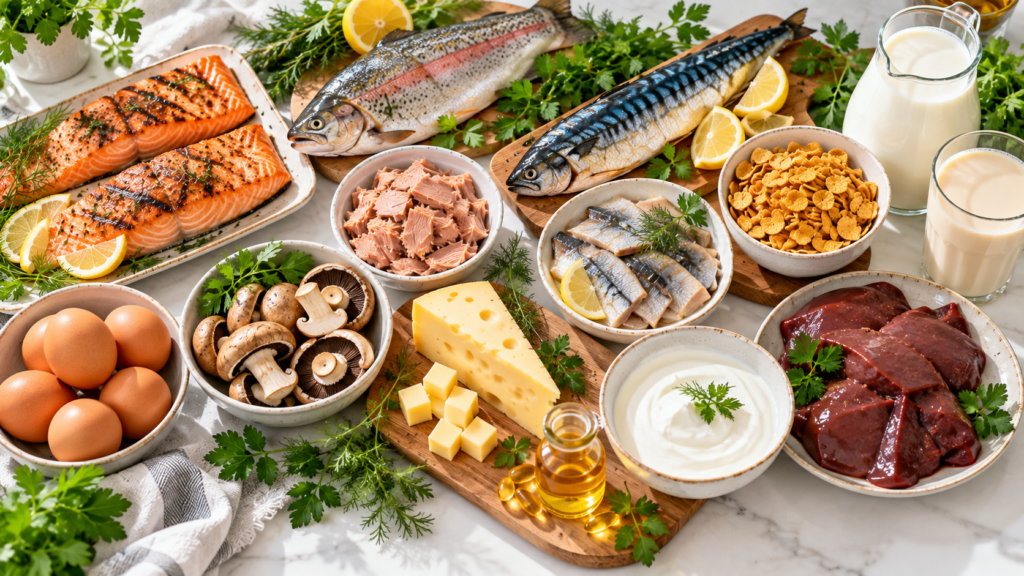
Natural Vitamin D Foods vs Fortified Foods
Understanding this difference can make choosing vitamin D rich foods much easier.
Natural Sources
Natural vitamin D food sources include:
- Salmon
- Trout
- Tuna
- Mackerel
- Sardines
- Herring
- Egg yolks
- Beef liver
- Cheese
- Some mushrooms
Fatty fish generally stand out because they can provide considerably more vitamin D than most other naturally occurring food sources. Office of Dietary Supplements
Fortified Sources
Common fortified foods can include:
- Cow’s milk
- Soy milk
- Almond milk
- Oat milk
- Breakfast cereals
- Some orange juice
- Some yogurt
- Margarine
Fortification is particularly important because relatively few foods naturally contain vitamin D. Office of Dietary Supplements
[Internal Link: Insert relevant internal URL here with anchor text: Vitamin D Foods Chart]
How Much Vitamin D Do You Need?
The recommended daily amount depends on age.
| Life stage | Recommended amount |
|---|---|
| Birth to 12 months | 10 mcg (400 IU) |
| Children 1–13 years | 15 mcg (600 IU) |
| Teens 14–18 years | 15 mcg (600 IU) |
| Adults 19–70 years | 15 mcg (600 IU) |
| Adults 71+ years | 20 mcg (800 IU) |
| Pregnant and breastfeeding teens and women | 15 mcg (600 IU) |
These recommendations are from the NIH Office of Dietary Supplements. Office of Dietary Supplements
For a more detailed article, use:
[Internal Link: Insert relevant internal URL here with anchor text: How Much Vitamin D Do You Need Per Day?]
Can You Get Vitamin D From Food Alone?
Getting enough vitamin D from food can be challenging because the number of naturally rich food sources is limited. Fortified foods can make a meaningful contribution to dietary intake. Office of Dietary Supplements
Your body can also produce vitamin D when exposed to sunlight. However, vitamin D production depends on factors such as skin pigmentation, age, season, geographic location, clothing, sunscreen use, and the amount of UVB exposure.
This means sunlight should not be treated as a precise substitute for dietary sources because vitamin D production varies considerably between individuals.
How to Choose Vitamin D Fortified Foods
If you’re shopping for foods high in vitamin D, don’t rely only on the product name.
Instead, check:
1. Nutrition Facts Label
Look for vitamin D in the nutrient panel.
2. Serving Size
A product may appear high in vitamin D until you realize that the listed amount applies to a larger serving than you normally consume.
3. Fortification
Look for wording indicating that vitamin D has been added.
4. Compare Brands
Two similar products can have different vitamin D amounts.
5. Consider the Entire Diet
A food does not need to be extremely high in vitamin D to contribute to your overall intake.
[External Link: Insert high-authority external URL here with anchor text: NIH Vitamin D Fact Sheet]
The NIH Office of Dietary Supplements provides evidence-based information about vitamin D, dietary sources, recommended intake, deficiency, safety, and supplements. Office of Dietary Supplements
Simple Ways to Add More Vitamin D Foods to Your Diet
You don’t need to completely redesign your diet.
Here are some practical combinations:
Breakfast: fortified cereal + fortified milk + eggs.
Lunch: tuna or sardine salad with vegetables.
Dinner: grilled salmon or trout with vegetables and a whole-grain side.
Snack: fortified yogurt with fruit and nuts.
Plant-based option: UV-exposed mushrooms with fortified soy or oat milk.
The goal is dietary variety rather than depending on one particular food.

Vitamin D Rich Foods for Different Dietary Preferences
For People Who Eat Fish
Fatty fish are among the easiest natural sources to include. Salmon, trout, tuna, mackerel, sardines, and herring provide useful options.
For People Who Eat Meat and Eggs
Egg yolks and beef liver can contribute smaller amounts of vitamin D.
For Vegetarians
Depending on the individual’s dietary pattern, eggs, fortified milk, fortified plant-based beverages, fortified cereals, fortified yogurt, and UV-exposed mushrooms can provide options.
For People Following a Vegan Diet
Fortified plant-based beverages, fortified cereals, some fortified orange juices, and UV-exposed mushrooms may be useful options. Product fortification should always be confirmed on the label.
Vitamin D Foods and Supplements: Are They the Same?
Food and supplements can both contribute to vitamin D intake, but they are not interchangeable in every situation.
The NIH recommends getting most nutrients from foods and beverages when possible, while recognizing that fortified foods and dietary supplements can be useful in certain circumstances. Office of Dietary Supplements
People who have limited dietary sources, certain medical conditions, or confirmed low vitamin D levels may need individualized advice from a healthcare professional.
High-dose supplementation should not be used simply because vitamin D is beneficial. For adults, the established upper limit is 100 mcg (4,000 IU) per day from all sources unless a healthcare professional recommends otherwise. Office of Dietary Supplements
What Happens If You Don’t Get Enough Vitamin D?
Vitamin D inadequacy can affect bone health because vitamin D is required for efficient calcium absorption.
However, symptoms alone cannot reliably establish whether someone has a vitamin D deficiency. A healthcare professional may use a blood test measuring 25-hydroxyvitamin D when testing is appropriate. Office of Dietary Supplements
If you think you may have a deficiency, particularly if you have risk factors or symptoms that concern you, speak with a qualified healthcare professional rather than relying solely on food or supplements.
What About Vitamin D From Sunlight?
Food is only one source of vitamin D.
The body can produce vitamin D when skin is exposed to sunlight, but the amount produced varies considerably from person to person. Office of Dietary Supplements
Factors include:
- Skin pigmentation
- Age
- Season
- Geographic location
- Time of day
- Clothing
- Sunscreen use
- Amount of exposed skin
Because these factors vary, there is no universal number of minutes of sun exposure that guarantees an adequate vitamin D level for everyone.
A Simple Vitamin D Food Plan
A practical approach could look like this:
| Meal | Example |
|---|---|
| Breakfast | Fortified cereal + fortified milk + egg |
| Lunch | Tuna or sardine salad |
| Snack | Fortified yogurt |
| Dinner | Salmon or trout + vegetables |
| Plant-based option | UV-exposed mushrooms + fortified plant milk |
This isn’t a prescription or a required meal plan. It simply demonstrates how different vitamin D rich foods can be incorporated into an ordinary diet.
Frequently Asked Questions
What are the best vitamin D rich foods?
Fatty fish such as salmon, trout, tuna, mackerel, sardines, and herring are among the best natural food sources of vitamin D. Fortified foods can also provide meaningful amounts. Office of Dietary Supplements
Which foods are naturally high in vitamin D?
Fatty fish are the strongest commonly consumed natural sources. Egg yolks, beef liver, cheese, and some mushrooms contain smaller amounts. Office of Dietary Supplements
What foods contain vitamin D besides fish?
Fortified milk, fortified plant-based beverages, some breakfast cereals, fortified orange juice, some yogurts, egg yolks, mushrooms, cheese, and beef liver can provide vitamin D. Office of Dietary Supplements
Are eggs a good source of vitamin D?
Egg yolks contain vitamin D, but the amount is relatively modest compared with fatty fish. Eggs can still contribute to overall dietary intake. Office of Dietary Supplements
Are mushrooms a source of vitamin D?
Yes. Some mushrooms can contain vitamin D, particularly mushrooms that have been exposed to ultraviolet light. Office of Dietary Supplements
Are there fruits naturally rich in vitamin D?
Most fruits are not naturally significant sources of vitamin D. Some fruit products, such as certain orange juices, may contain vitamin D because they are fortified.
Are there vegetables high in vitamin D?
Most vegetables are not significant natural sources of vitamin D. Mushrooms are the notable exception, especially when they have been UV-exposed.
What is the best vitamin D food for adults?
Fatty fish such as salmon and trout are among the strongest natural options. Fortified foods can provide additional sources depending on the product.
Can I get enough vitamin D from food?
Some people can obtain meaningful amounts from dietary sources, but because few foods naturally contain substantial vitamin D, fortified foods and, when appropriate, supplements may also play a role. Individual needs vary. Office of Dietary Supplements
How much vitamin D do adults need daily?
Adults ages 19–70 generally need 15 mcg (600 IU) daily, while adults 71 and older need 20 mcg (800 IU). Office of Dietary Supplements
Conclusion
The best vitamin D rich foods are not limited to a single food group. Fatty fish such as salmon, trout, tuna, mackerel, sardines, and herring provide some of the strongest natural dietary sources, while fortified milk, plant-based beverages, cereals, orange juice, and certain yogurts can provide additional vitamin D. Office of Dietary Supplements
The most practical strategy is to build variety into your diet. Choose nutrient-dense foods you enjoy, check labels on fortified products, and avoid assuming that every food in a particular category contains the same amount of vitamin D.
If you’re concerned about vitamin D deficiency or considering a high-dose supplement, speak with a qualified healthcare professional. Food can be an important part of a healthy diet, but individual vitamin D needs depend on your circumstances.
Medical disclaimer: This article is for general educational purposes and does not provide individualized medical advice, diagnosis, or treatment.
Recommended authoritative sources
For the published Bloomivita version, I recommend linking to these sources rather than relying on generic health blogs:
NIH Office of Dietary Supplements Vitamin D Fact Sheet
The NIH confirms that very few foods naturally contain vitamin D, with fatty fish among the strongest natural sources and fortified foods providing an important dietary source. Office of Dietary Supplements USDA-derived dietary data provide more detailed food-by-food vitamin D values. Office of Dietary Supplements
2 thoughts on “Vitamin D Rich Foods: Complete Food Guide”