
Best Sources of Vitamin D: Food and Other Sources is a fat-soluble nutrient that plays an important role in calcium absorption, bone mineralization, and maintaining normal calcium and phosphate levels in the body. Unlike many vitamins, vitamin D can come from several different sources: food, fortified foods, sunlight, and dietary supplements.
The challenge is that relatively few foods naturally contain significant amounts of vitamin D. Fatty fish are among the richest natural food sources, while fortified milk, plant-based beverages, cereals, and some other products can make a meaningful contribution to daily intake. Sunlight is another important source because the body can produce vitamin D when ultraviolet B (UVB) radiation reaches exposed skin.
So, what are the best sources of vitamin D, and how can you include them in a practical eating pattern?
This guide explains the strongest food sources, fortified options, sunlight, vitamin D2 versus D3, supplements, and simple ways to improve your overall vitamin D intake.
Key Takeaways
- Fatty fish are among the best natural food sources of vitamin D.
- Farmed rainbow trout provides about 645 IU (16.2 mcg) per 3-ounce serving.
- Cooked sockeye salmon provides about 570 IU (14.2 mcg) per 3-ounce serving.
- UV-exposed mushrooms can provide meaningful amounts of vitamin D2.
- Fortified milk and many plant-based milk alternatives can provide around 100–144 IU per cup, depending on the product.
- Sunlight allows the body to make vitamin D, but vitamin D production varies considerably between individuals and circumstances.
- Vitamin D2 and D3 are both absorbed by the body, although D3 may raise blood vitamin D levels somewhat more and for longer.
- Supplements can be useful in some situations, but higher doses should not be taken routinely without appropriate medical guidance.
What Are the Best Sources of Vitamin D?
Vitamin D sources can be divided into four main categories:
- Naturally vitamin-D-rich foods
- Vitamin-D-fortified foods and beverages
- Sunlight
- Dietary supplements
For most people, the most practical approach is not to rely on just one source. Instead, vitamin D can come from a combination of dietary sources, appropriate sun exposure, and supplements when medically or nutritionally appropriate.
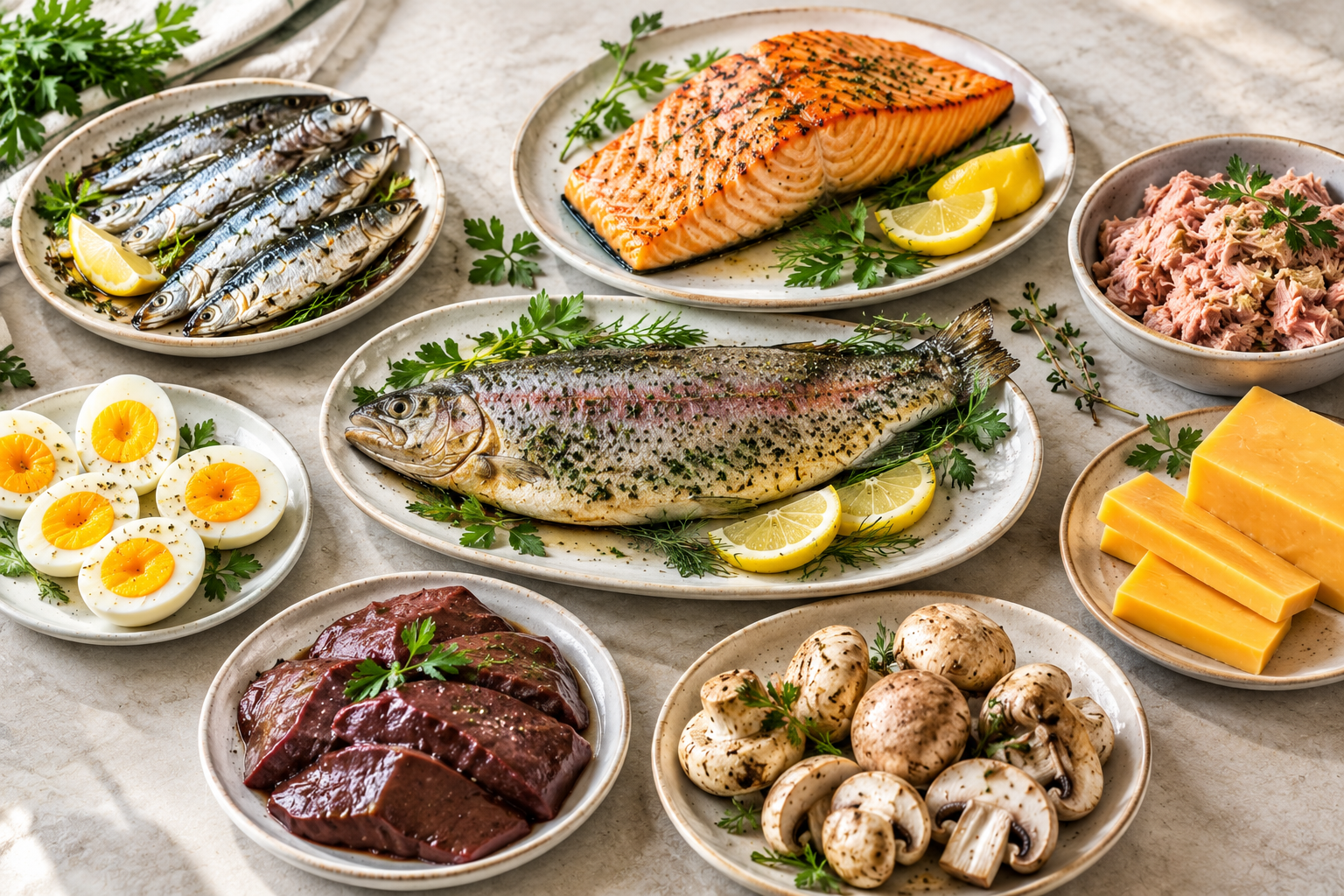
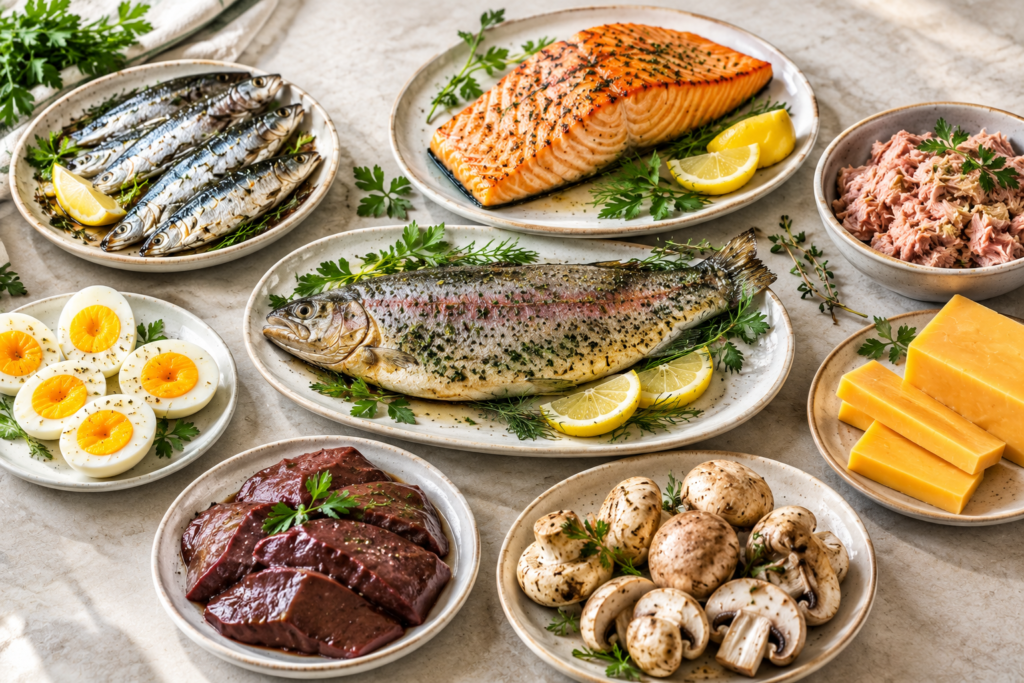
The NIH notes that naturally occurring vitamin D is found in relatively few foods. Fatty fish and fish liver oils are among the strongest natural sources, while smaller amounts occur in foods such as egg yolks, beef liver, and cheese. Mushrooms can provide vitamin D2, particularly when they have been exposed to UV light.
Best Food Sources of Vitamin D
1. Rainbow Trout
Rainbow trout is one of the most concentrated naturally occurring food sources of vitamin D.
A 3-ounce serving of cooked farmed rainbow trout provides approximately 16.2 mcg (645 IU) of vitamin D. That is about 81% of the U.S. Daily Value.
Trout can be baked, grilled, or roasted and paired with vegetables, potatoes, whole grains, or a fresh salad.
2. Salmon
Salmon is another excellent choice when looking for foods high in vitamin D.
Three ounces of cooked sockeye salmon provide approximately 14.2 mcg (570 IU) of vitamin D.
Besides vitamin D, salmon is valued for its protein and omega-3 fatty acids, making it a nutrient-dense addition to a balanced diet.
3. UV-Exposed Mushrooms
Mushrooms are one of the more unusual vitamin D sources because they can contain vitamin D2.
The amount varies substantially depending on how the mushrooms were grown and processed. For example, a half-cup of sliced white mushrooms exposed to UV light provides approximately 9.2 mcg (366 IU) of vitamin D.
If you are specifically buying mushrooms as a source of vitamin D, check the product information to determine whether they have been treated with UV light.
4. Sardines
Sardines provide smaller amounts of vitamin D than salmon or trout, but they can still contribute to your overall intake.
Two canned Atlantic sardines provide approximately 1.2 mcg (46 IU) of vitamin D.
They are convenient for salads, sandwiches, toast, pasta, and grain bowls.
5. Tuna
Light tuna canned in water provides approximately 1.0 mcg (40 IU) of vitamin D per 3-ounce serving.
Although it contains considerably less vitamin D than salmon or trout, tuna can still be useful as part of a varied diet.
6. Egg Yolks
Eggs contain vitamin D primarily in the yolk.
One large scrambled egg provides approximately 1.1 mcg (44 IU) of vitamin D.
Eggs therefore make a useful supporting contribution, although they are not one of the most concentrated sources.
7. Beef Liver
Beef liver contains a modest amount of vitamin D.
Three ounces of braised beef liver provide approximately 1.0 mcg (42 IU).
It also contains several other nutrients, but it is not necessary to consume liver specifically to obtain vitamin D if other sources are available.
8. Cheese
Cheese generally contains smaller quantities of vitamin D.
For example, 1.5 ounces of cheddar cheese provides approximately 0.4 mcg (17 IU).
Cheese can contribute to overall vitamin D intake, but it should not be confused with fortified milk, which typically contains considerably more vitamin D.
Best Fortified Sources of Vitamin D
Fortification is important because naturally occurring vitamin D is limited to a relatively small number of foods.
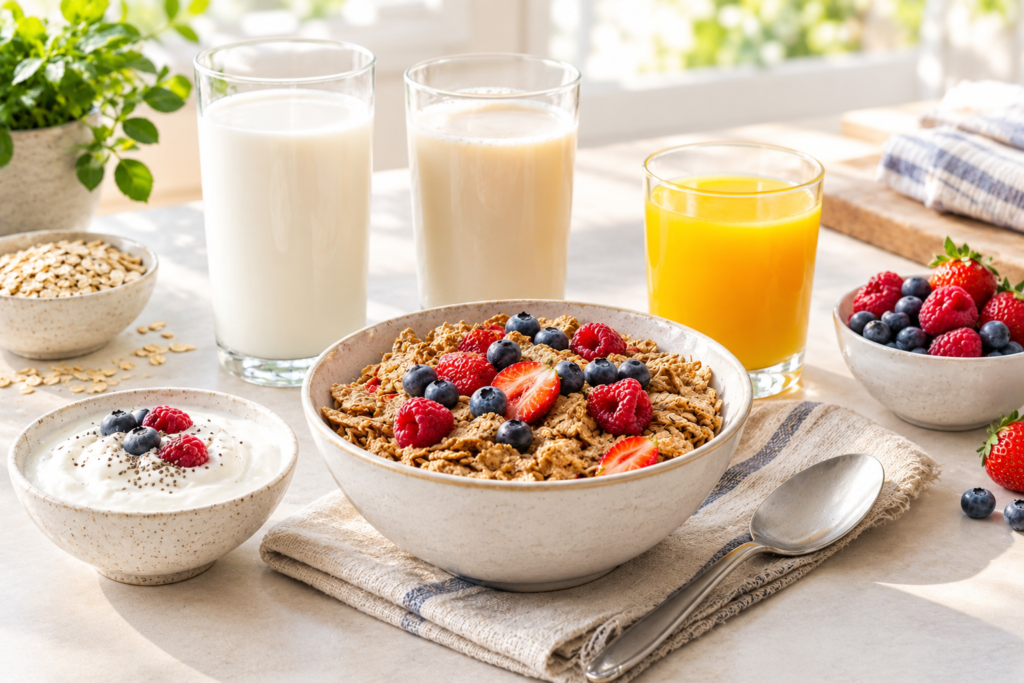
In the United States, fortified foods provide much of the vitamin D in the diet. Common examples include milk, breakfast cereals, and some plant-based beverages and orange juices.
Fortified Cow’s Milk
One cup of vitamin-D-fortified 2% milk contains approximately 2.9 mcg (120 IU) of vitamin D.
Milk can therefore provide a convenient source of vitamin D when consumed regularly.
However, fortification practices vary by country and product, so the Nutrition Facts label remains the best source for the actual amount in a particular product.
Fortified Plant-Based Milk
Soy, almond, and oat beverages are often fortified with vitamin D.
The NIH lists approximately 2.5–3.6 mcg (100–144 IU) per cup for various fortified products.
If you use a plant-based beverage, look for vitamin D on the nutrition label rather than assuming every product has been fortified.
Fortified Breakfast Cereals
Some ready-to-eat breakfast cereals contain added vitamin D.
The amount can vary significantly between brands and serving sizes. Compare nutrition labels if vitamin D is an important consideration when choosing cereal.
Fortified Orange Juice
Some orange juice products are fortified with vitamin D.
A fortified product can provide useful vitamin D, but ordinary orange juice should not automatically be considered a vitamin D source. Check the label.
Fortified Yogurt and Other Foods
Some yogurts, margarines, and other products may contain added vitamin D. Fortification varies, so the specific product label matters more than the food category alone.
How Much Vitamin D Do You Need?
The recommended dietary allowance depends on age.
For adults ages 19 through 70, the recommended intake is 15 mcg (600 IU) per day. Adults older than 70 need 20 mcg (800 IU) per day. These recommendations include vitamin D from food, beverages, and supplements.
| Age group | Recommended vitamin D intake |
|---|---|
| Birth–12 months | 10 mcg (400 IU) |
| 1–70 years | 15 mcg (600 IU) |
| Over 70 years | 20 mcg (800 IU) |
These are general recommendations for healthy populations. Individual medical needs can differ.
Vitamin D2 vs. Vitamin D3: What’s the Difference?
Vitamin D occurs in two major forms:
- Vitamin D2 (ergocalciferol)
- Vitamin D3 (cholecalciferol)
Vitamin D2 is commonly associated with plant and fungal sources, including UV-exposed mushrooms.
Vitamin D3 occurs naturally in many animal-based foods and is also commonly used to fortify foods and manufacture supplements.
Both forms are absorbed by the body and can increase blood vitamin D levels. However, the NIH notes that vitamin D3 may increase blood levels somewhat more and for longer than vitamin D2.
The distinction matters when comparing vitamin D sources, but it does not mean that every person needs to avoid vitamin D2.
Sunlight: A Natural Source of Vitamin D
Food isn’t the only way to obtain vitamin D.
When UVB radiation from sunlight reaches exposed skin, the body can produce vitamin D. This is why sunlight is sometimes described as a natural vitamin D source.
However, vitamin D production from sunlight is not consistent for everyone.
It can vary according to:
- Season
- Time of day
- Geographic location
- Skin pigmentation
- Age
- Amount of skin exposed
- Clothing
- Sunscreen use
- Environmental conditions
- Time spent outdoors
This means there is no universal number of minutes in the sun that guarantees adequate vitamin D for everyone.
It is also important not to deliberately seek excessive UV exposure simply to increase vitamin D production. UV exposure can damage skin and increase skin-cancer risk.
Does Sunlight Through a Window Provide Vitamin D?
Ordinary window glass blocks most UVB radiation needed for vitamin D production. Therefore, sitting in direct sunlight behind a closed window should not be considered equivalent to exposing skin to outdoor sunlight.
Can You Get Too Much Vitamin D From the Sun?
The body regulates vitamin D production in the skin, so excessive vitamin D from sunlight is not the usual cause of vitamin D toxicity.
Excessive vitamin D intake is much more commonly associated with high-dose supplementation.

Vitamin D From Supplements
Dietary supplements can provide vitamin D in concentrated amounts.
They may be appropriate for some people who cannot obtain enough vitamin D from food and other sources, but supplementation should be considered in the context of age, diet, health status, medications, and individual risk factors.
The NIH notes that some groups are more likely to have inadequate vitamin D status, including people with limited sun exposure, older adults, people with certain fat-malabsorption conditions, people with obesity, and people who have undergone gastric bypass surgery.
A supplement is therefore not automatically necessary simply because someone eats few vitamin-D-rich foods.
If you suspect deficiency, discuss your situation with a healthcare professional rather than automatically taking high-dose vitamin D.
How to Choose the Best Vitamin D Source for Your Diet
There isn’t one universally “best” source for everyone.
Instead, consider your dietary pattern and what you can realistically consume consistently.
If You Eat Fish
Fatty fish such as salmon and trout are excellent choices because they provide substantial amounts of vitamin D in relatively normal serving sizes.
If You Don’t Eat Fish
Fortified milk, fortified plant-based beverages, fortified cereals, and UV-exposed mushrooms can help diversify your vitamin D sources.
If You Follow a Vegetarian Diet
Eggs, fortified dairy products, fortified plant beverages, fortified cereals, and UV-exposed mushrooms may provide useful options, depending on what your diet includes.
If You Follow a Vegan Diet
Focus on appropriately fortified plant-based foods and UV-exposed mushrooms. Because naturally occurring vitamin D is limited in plant foods, label checking becomes particularly important.
If You Rarely Get Outdoor Sunlight
Food and fortified products become more important. Depending on your individual circumstances, a healthcare professional may also recommend a supplement.
A Simple Vitamin D-Rich Meal Plan
You don’t need to eat every vitamin D source in one day.
A simple pattern could look like this:
Breakfast:
Fortified cereal with fortified milk or fortified plant-based milk, plus fruit.
Lunch:
A tuna or sardine salad with vegetables and whole-grain bread.
Snack:
Fortified yogurt, if appropriate for your diet.
Dinner:
Grilled salmon or trout with vegetables and a whole-grain side.
Plant-based alternative:
UV-exposed mushrooms with fortified plant-based milk and other fortified foods.
The goal is variety rather than trying to obtain the entire recommended intake from a single food.
Natural vs. Fortified Vitamin D Sources
Both natural and fortified sources can be useful.
| Source type | Examples | Key consideration |
|---|---|---|
| Natural animal sources | Salmon, trout, sardines, tuna, egg yolks | Amount varies by food and serving |
| Natural fungal sources | UV-exposed mushrooms | Primarily provide vitamin D2 |
| Fortified dairy | Milk, some yogurt products | Check the label |
| Fortified plant foods | Soy, almond, oat beverages | Fortification varies |
| Fortified grains | Breakfast cereals | Serving size and fortification vary |
| Sunlight | Outdoor UVB exposure | Production varies considerably |
| Supplements | Vitamin D2 or D3 | Dose should be appropriate for the individual |
The important distinction is that vitamin D content can vary considerably even among foods in the same category.
Signs You May Need to Pay More Attention to Vitamin D Intake
Certain circumstances can make it more difficult to maintain adequate vitamin D status.
These include limited sun exposure, older age, certain conditions affecting fat absorption, obesity, and gastric bypass surgery.
However, symptoms alone cannot reliably tell you whether you have adequate vitamin D.
If you have concerns about deficiency, a healthcare professional can determine whether testing or supplementation is appropriate.
Can You Get Too Much Vitamin D?
Yes.
Although vitamin D is essential, excessive intake can be harmful. Vitamin D toxicity is generally associated with excessive supplement use rather than normal food consumption or sunlight.
For adults, the established tolerable upper intake level is 100 mcg (4,000 IU) per day from all sources, unless a healthcare professional is directing treatment for a deficiency.
Very high vitamin D levels can cause excessive calcium in the blood and may lead to problems such as nausea, weakness, excessive thirst and urination, kidney stones, and, in severe cases, more serious complications.
More vitamin D is therefore not automatically better.
Common Mistakes When Looking for Vitamin D Sources
Assuming All Mushrooms Are High in Vitamin D
Mushrooms can contain vitamin D2, but the amount varies. UV-treated mushrooms are specifically useful because UV exposure can increase their vitamin D2 content.
Assuming Every Plant-Based Milk Contains Vitamin D
Many are fortified, but not all products have identical nutrient profiles.
Always check the nutrition label.
Assuming All Dairy Products Are Fortified
Milk is commonly fortified in the United States, but other dairy foods such as cheese and ice cream are not necessarily fortified.
Taking High-Dose Supplements Without a Reason
Vitamin D supplements can be useful, but unnecessarily high doses can create health risks.
Relying Entirely on Sunlight
Sunlight contributes to vitamin D production, but exposure varies substantially from person to person and should not be used as an excuse for excessive UV exposure.
Frequently Asked Questions
What are the best sources of vitamin D?
The best sources include fatty fish such as trout and salmon, UV-exposed mushrooms, fortified milk and plant-based beverages, fortified cereals, and certain other fortified foods. Sunlight also enables the body to produce vitamin D.
What is the best food source of vitamin D?
Among commonly consumed foods, farmed rainbow trout and sockeye salmon are particularly rich sources. A 3-ounce serving provides approximately 645 IU and 570 IU, respectively.
How can I get vitamin D naturally?
Natural options include fatty fish, egg yolks, beef liver, cheese, and UV-exposed mushrooms. Sunlight can also stimulate vitamin D production in the skin.
What are the best vegetarian sources of vitamin D?
For vegetarians, useful options can include UV-exposed mushrooms, fortified milk, fortified plant-based beverages, fortified cereals, and eggs if they are included in the diet.
What are the best vegan sources of vitamin D?
UV-exposed mushrooms and appropriately fortified plant-based foods are among the most practical vegan options. Because naturally occurring vitamin D is limited in plant foods, checking labels is particularly important.
Is sunlight the best source of vitamin D?
Sunlight is an important natural source because the body can produce vitamin D through UVB exposure, but it isn’t necessarily the best or safest strategy for everyone. Vitamin D production varies considerably, and excessive UV exposure carries skin-health risks.
Are vitamin D supplements better than food?
Not necessarily. Food provides vitamin D alongside other nutrients, while supplements provide a concentrated dose. Supplements can be useful when dietary intake is insufficient or when recommended by a healthcare professional.
Is vitamin D2 or D3 better?
Both forms are absorbed and can raise blood vitamin D levels. However, vitamin D3 may raise levels somewhat more and for longer than vitamin D2.
How much vitamin D do adults need each day?
Adults ages 19–70 generally need 15 mcg (600 IU) daily, while adults over 70 need 20 mcg (800 IU) according to the U.S. Recommended Dietary Allowance.
Conclusion
The best sources of vitamin D aren’t limited to a single food or supplement. Fatty fish such as salmon and trout provide some of the highest natural amounts, while UV-exposed mushrooms offer a useful vitamin D2 source. Fortified milk, plant-based beverages, cereals, and other fortified foods can make everyday intake easier.
Sunlight is another important source because the body can produce vitamin D when UVB radiation reaches the skin. However, vitamin D production varies from person to person, and excessive UV exposure is not an appropriate substitute for a balanced approach to nutrition.
For most people, the smartest strategy is variety: include vitamin-D-containing foods regularly, choose fortified products when appropriate, and consider supplements only when they make sense for your individual needs.
If you’re concerned about vitamin D deficiency or considering high-dose supplementation, speak with a qualified healthcare professional rather than assuming that more vitamin D is better.
2 thoughts on “Best Sources of Vitamin D: Food and Other Source”