
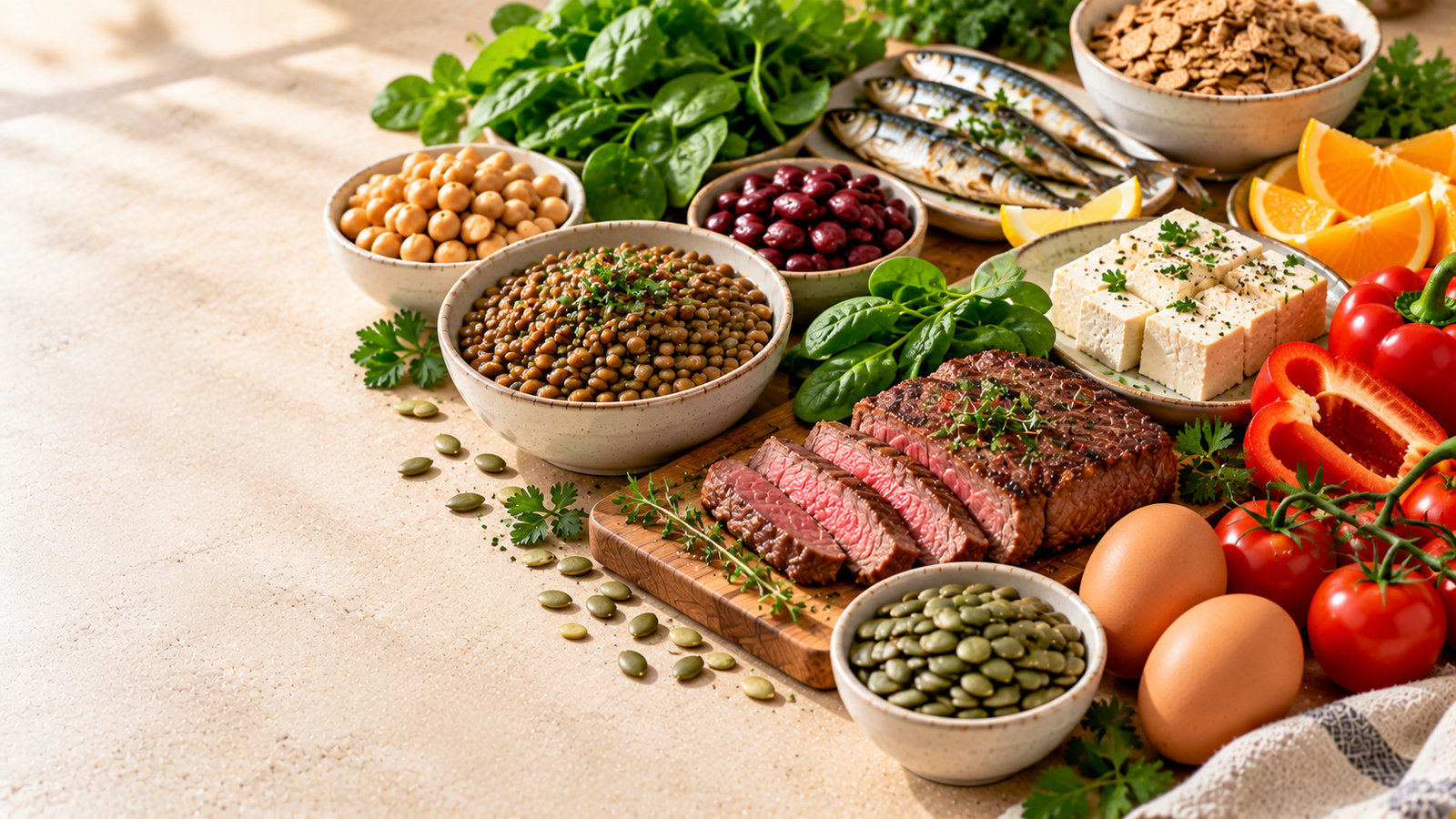
Iron deficiency foods high in iron are important for people who want to support healthy iron levels through everyday meals. Iron is an essential mineral that helps the body produce hemoglobin, the protein in red blood cells that carries oxygen to tissues. When iron intake or absorption is insufficient—or iron losses are too high—iron stores can become depleted.
Choosing iron-rich foods such as lentils, beans, meat, seafood, tofu, seeds, and fortified cereals can help improve dietary iron intake. Pairing plant-based iron sources with vitamin C-rich foods can also improve absorption. However, if you already have iron-deficiency anemia, food alone may not be enough to correct it, and you may need medical assessment and treatment.
Key Takeaways
- Iron helps make hemoglobin, which carries oxygen through the body.
- Meat and seafood provide heme iron, while legumes, seeds, vegetables, and fortified grains provide non-heme iron.
- Vitamin C-rich foods can improve the absorption of non-heme iron.
- Tea and coffee consumed with meals can reduce the absorption of iron from plant foods.
- Iron deficiency can cause fatigue, weakness, and reduced exercise tolerance, but symptoms alone cannot confirm the diagnosis.
- Heavy menstrual bleeding, pregnancy, blood loss, and absorption problems can increase the risk of iron deficiency.
- Iron supplements should be used according to appropriate medical advice, particularly when deficiency or anemia is suspected.
What Is Iron Deficiency?
Iron deficiency occurs when the body does not have enough iron to meet its needs. It often develops gradually as the body’s iron stores decline.
If the deficiency becomes severe enough to reduce red blood cell production or hemoglobin, it can lead to iron-deficiency anemia. Iron deficiency can occur even before anemia develops.
Why does the body need iron?
Iron supports several essential functions:
- Oxygen transport: Iron is part of hemoglobin, which carries oxygen in red blood cells.
- Energy metabolism: Iron-dependent enzymes help cells produce and use energy.
- Brain function: Iron is involved in normal cognitive and neurological processes.
- Growth and development: Adequate iron is especially important during infancy, childhood, adolescence, and pregnancy.
- Muscle function: Iron contributes to myoglobin, a protein that helps muscles use oxygen.
When iron levels become low, a person may feel tired or weak because the body has difficulty meeting its normal oxygen-transport needs.
Iron Deficiency: Foods High in Iron at a Glance
The table below highlights common iron-containing foods. Values are approximate and vary by food variety, preparation, serving size, and fortification.
| Food | Example serving | Approximate iron |
|---|---|---|
| Cooked lentils | ½ cup | 3.3 mg |
| Cooked spinach | ½ cup | 3.2 mg |
| Cooked chickpeas | ½ cup | 2.4 mg |
| Cooked kidney beans | ½ cup | 2 mg |
| Firm tofu | ½ cup | 3 mg |
| Pumpkin seeds | 28 g (1 oz) | 2–3 mg |
| Cooked beef | 85 g (3 oz) | 2–3 mg |
| Cooked sardines | 85 g (3 oz) | About 2 mg |
| Cooked chicken | 85 g (3 oz) | About 1 mg |
| Iron-fortified breakfast cereal | 1 serving | Varies widely; check the label |
| Oatmeal | ½ cup dry | About 2 mg |
| Egg | 1 large | About 0.9 mg |
These examples are intended as a practical guide, not a precise ranking. Fortified cereal can provide substantially more iron than unfortified cereal, so its nutrition label matters.
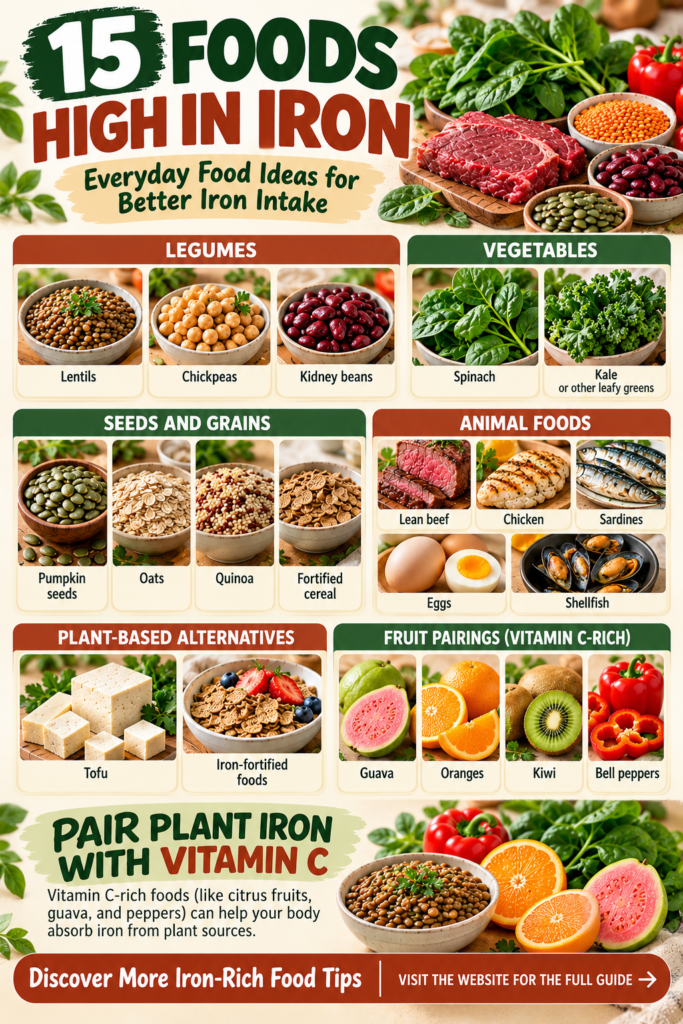
15 Best Foods High in Iron for Iron Deficiency
A varied diet can include both animal and plant sources of iron. The best choices depend on your dietary preferences, budget, nutritional needs, and whether you have a confirmed deficiency.
1. Lean red meat

Lean beef provides heme iron, which the body generally absorbs more efficiently than non-heme iron. It also supplies protein, vitamin B12, and zinc.
How to eat it: Serve a moderate portion with vegetables and whole grains. If you do not eat meat, you can obtain iron from legumes, tofu, seeds, and fortified foods.
2. Lentils

Lentils are an affordable plant-based source of iron, folate, protein, and fiber. They are especially useful for vegetarian diets.
How to eat them: Add lentils to soups, curries, salads, or rice dishes. Include tomatoes, bell peppers, or another vitamin C-rich ingredient to help improve iron absorption.
3. Chickpeas

Chickpeas contain iron, protein, and fiber. They can help make meals more filling while increasing the nutritional value of a plant-based diet.
How to eat them: Make chickpea curry, hummus, roasted chickpeas, or a salad with lemon juice and fresh vegetables.
4. Beans
Kidney beans, white beans, black beans, and other legumes provide non-heme iron along with fiber, folate, and protein.
How to eat them: Add beans to soups, stews, chili, or whole-grain meals. Canned beans are convenient; drain and rinse them if you want to reduce excess sodium.
5. Spinach and other leafy greens

Spinach provides iron and folate, as well as other micronutrients. However, it contains oxalates that can limit the absorption of some minerals, so it should not be your only iron source.
How to eat it: Add spinach to omelets, lentil curry, soups, or vegetable dishes. Combine it with other iron-rich foods and a vitamin C source.
6. Pumpkin seeds
Pumpkin seeds provide iron, magnesium, zinc, and healthy fats. Their nutrient content makes them a convenient addition to meals and snacks.
How to eat them: Sprinkle a small handful over oatmeal, yogurt, salads, or homemade trail mix. Because seeds are energy-dense, portions can be adjusted to your overall dietary needs.
7. Tofu
Tofu can be a useful source of iron and protein for people who avoid meat. Its iron content varies by type and preparation.
How to eat it: Stir-fry tofu with broccoli and bell peppers, add it to soups, or serve it with brown rice. The vitamin C in peppers and broccoli can improve absorption of plant-based iron.
8. Iron-fortified breakfast cereals
Fortified cereals can be one of the most concentrated dietary sources of iron, but amounts differ substantially among products.
How to choose: Read the nutrition label and compare iron per serving. Choose a cereal that fits your overall dietary needs, preferably one with limited added sugar and a useful amount of fiber.
9. Oats and whole grains
Oats and some whole-grain products contain iron along with fiber and B vitamins. Iron content varies by grain and whether it is fortified.
How to eat them: Prepare oatmeal with fruit and seeds, or choose whole-grain bread alongside beans, eggs, or another iron-containing food.
10. Sardines and other seafood
Sardines, some shellfish, and other seafood can provide iron. Some varieties also supply vitamin B12, protein, and omega-3 fatty acids.
How to eat them: Serve sardines with tomato salad and whole-grain bread. Iron content varies by species, so check food-composition data if you need a more precise estimate.
11. Eggs
Eggs provide protein, vitamin B12, and a modest amount of iron. They can contribute to total intake but are not usually the most concentrated source.
How to eat them: Pair eggs with whole-grain toast, beans, or vegetables. Add bell peppers or tomatoes for vitamin C.
12. Chicken and turkey
Poultry supplies some iron, along with protein and other nutrients. Dark meat generally contains more iron than breast meat.
How to eat them: Include poultry in soups, grain bowls, or balanced meals with vegetables and legumes.
13. Quinoa
Quinoa supplies non-heme iron, protein, and other minerals. Its contribution depends on the portion eaten and the rest of the meal.
How to eat it: Serve quinoa with beans, chickpeas, tofu, or vegetables rich in vitamin C.
14. Dried apricots and other dried fruit
Dried apricots and certain other dried fruits provide small amounts of iron, as well as fiber and other nutrients. They are more concentrated in sugar and calories by weight than fresh fruit because their water content is lower.
How to eat them: Add a modest portion to oatmeal or trail mix. Do not rely on dried fruit as your primary treatment for iron deficiency.
15. Shellfish
Some shellfish, particularly clams and mussels, can be rich in iron. They also provide protein and other minerals, although the nutrient content varies by species.
How to eat them: Choose properly cooked shellfish from a safe source. People who do not eat seafood can obtain iron from legumes, tofu, seeds, and fortified foods.
Heme Iron vs. Non-Heme Iron: What Is the Difference?
Understanding the two types of dietary iron helps explain why the combination of foods matters.
| Feature | Heme iron | Non-heme iron |
|---|---|---|
| Main sources | Meat, poultry, seafood | Legumes, grains, seeds, vegetables, fortified foods |
| Absorption | Generally more readily absorbed | More affected by the meal’s composition |
| Vitamin C effect | Not required to enhance absorption in the same way | Vitamin C can improve absorption |
| Suitable for vegetarian diets | No | Yes |
| Practical approach | Include suitable animal foods if desired | Combine varied plant sources with vitamin C-rich foods |
Both types can contribute to a healthy diet. People who do not eat animal products can meet iron needs through thoughtful meal planning, although they may need to pay closer attention to iron intake and absorption.
How to Improve Iron Absorption Naturally
Choosing iron-rich foods is only part of the process. The body also needs to absorb the iron from the meals you eat.
Pair plant-based iron with vitamin C
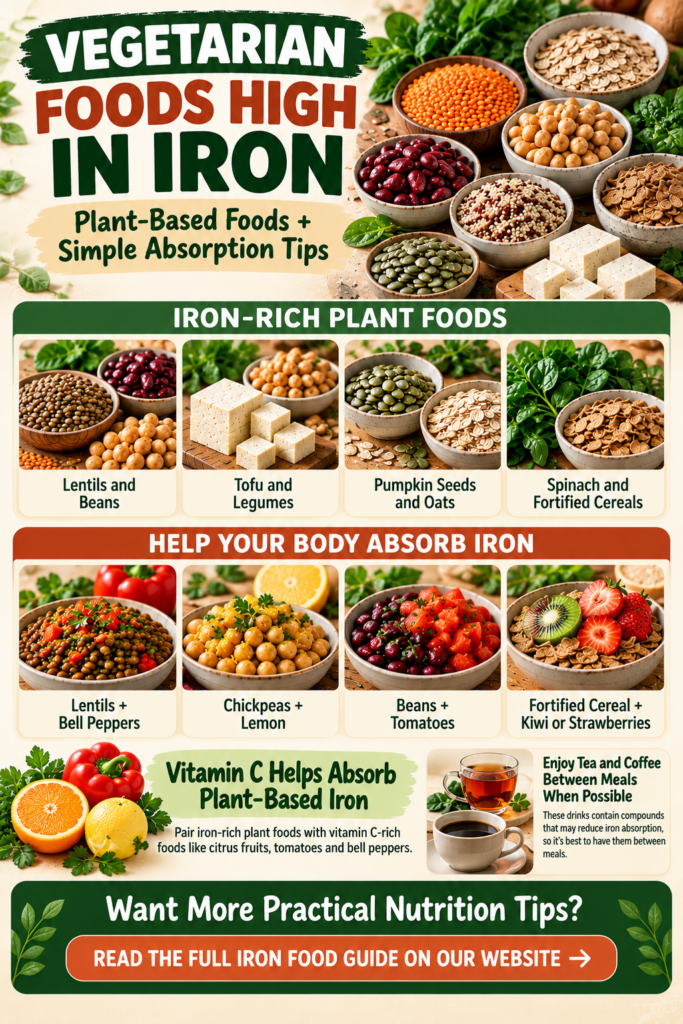
Vitamin C improves the absorption of non-heme iron. Useful combinations include:
- Lentils with tomatoes and lemon juice.
- Chickpeas with bell peppers.
- Beans with cabbage or broccoli.
- Iron-fortified cereal with strawberries or kiwi.
- Tofu with peppers and a squeeze of lemon.
- Spinach dishes served with citrus fruit.
You do not need to take vitamin C supplements routinely just to improve iron absorption; foods rich in vitamin C are often a practical option.
Keep tea and coffee away from iron-rich meals when possible
Tea and coffee contain compounds that can reduce non-heme iron absorption when consumed with meals. If you are trying to improve iron intake, especially if you have low iron stores, consider drinking them between meals rather than alongside your main iron-rich meal.
Include a variety of iron sources
Do not depend on one food. Rotate between beans, lentils, tofu, seeds, whole grains, fortified foods, and other sources that suit your diet.
Prepare legumes and grains appropriately
Soaking, sprouting, and fermenting some grains and legumes can reduce phytates, compounds that can inhibit mineral absorption. These methods can be useful, but they are not required for every meal.
Check fortified-food labels
Fortification varies by country and brand. Compare the amount of iron per serving rather than assuming every cereal, flour, or plant-based product is fortified.
Iron-Rich Foods for Vegetarians and Vegans
Vegetarians and vegans can obtain iron from a variety of plant foods. Because non-heme iron is generally less readily absorbed than heme iron, planning meals carefully can be particularly helpful.
Best plant-based iron sources
| Food | Practical way to include it |
|---|---|
| Lentils | Add to curry, soup, or rice |
| Chickpeas | Make hummus or chickpea salad |
| Kidney beans | Add to stews or whole-grain bowls |
| Tofu | Stir-fry with vegetables |
| Pumpkin seeds | Sprinkle over oatmeal or salads |
| Iron-fortified cereal | Serve with fruit |
| Oats | Prepare with berries and seeds |
| Spinach | Add to soups, omelets, or curries |
| Quinoa | Combine with beans and peppers |
A sample vegetarian iron-rich meal
Try a bowl containing lentils, brown rice, sautéed spinach, red bell peppers, and lemon juice. This combination provides plant-based iron, while the vitamin C in the peppers and lemon helps improve absorption.
People following vegan diets should also plan for nutrients such as vitamin B12, which is not reliably supplied by ordinary unfortified plant foods.
Iron Deficiency Foods High in Iron for Women
Women who menstruate may have increased iron requirements because of blood loss. Heavy menstrual bleeding can increase the risk of iron deficiency, and iron needs also rise during pregnancy.
Helpful foods to include
- Lentils, beans, and chickpeas.
- Lean meat or seafood, if eaten.
- Iron-fortified cereals.
- Tofu and pumpkin seeds.
- Leafy greens as part of a varied diet.
- Vitamin C-rich fruit and vegetables to improve non-heme iron absorption.
Women experiencing unusually heavy periods, persistent fatigue, dizziness, or shortness of breath should discuss these symptoms with a healthcare professional. Iron deficiency should be assessed rather than assumed, and the cause of significant blood loss may need treatment.
Iron Needs by Age and Life Stage
Iron requirements vary with age, sex, pregnancy, and individual circumstances. The following reference values are the US National Institutes of Health recommendations for generally healthy people; requirements and public-health recommendations may differ by country.
| Life stage | Recommended iron intake per day |
|---|---|
| Children aged 1–3 | 7 mg |
| Children aged 4–8 | 10 mg |
| Children aged 9–13 | 8 mg |
| Teen boys aged 14–18 | 11 mg |
| Teen girls aged 14–18 | 15 mg |
| Adult men aged 19–50 | 8 mg |
| Adult women aged 19–50 | 18 mg |
| Adults aged 51 and older | 8 mg |
| Pregnancy, ages 19–50 | 27 mg |
These are population reference values, not treatment doses for iron deficiency. Individual needs can differ, especially during pregnancy, with heavy menstrual bleeding, or when a medical condition affects iron absorption.
People following vegetarian diets may need to pay extra attention to iron because plant-based iron is less readily absorbed on average. Do not multiply the recommended intake or start high-dose iron supplements without professional guidance.
NIH Office of Dietary Supplements: Iron Fact Sheet
Can Foods High in Iron Cure Iron Deficiency?
Iron-rich foods can help prevent deficiency and support recovery when low dietary intake is the cause. However, food alone may not be enough to treat iron-deficiency anemia.
The right approach depends on how low your iron stores are and why the deficiency developed.
When dietary changes may help
Increasing iron-rich foods may be appropriate when intake is inadequate and there is no significant underlying medical cause. A healthcare professional can help determine whether dietary changes are sufficient.
When medical treatment may be needed
A clinician may recommend iron supplements or other treatment when deficiency is confirmed. They may also investigate heavy menstrual bleeding, gastrointestinal blood loss, pregnancy-related needs, or conditions that affect absorption.
Do not take high-dose iron simply because you feel tired. Too much iron can be harmful, and iron supplements can interact with some medicines.
How long does it take to improve iron levels?
The timeline depends on the severity of the deficiency, the treatment used, ongoing blood loss, and whether the body absorbs iron properly. Recovery can take weeks to months, and restoring iron stores may take longer than improving the blood count.
Follow-up blood tests may be recommended to check your response to treatment.
Signs of Iron Deficiency You Should Not Ignore
Iron deficiency can develop gradually, and early symptoms may be subtle.
Possible signs include:
- Persistent tiredness or weakness.
- Pale skin.
- Headaches or dizziness.
- Shortness of breath during activity.
- Reduced exercise tolerance.
- Difficulty concentrating.
- Brittle nails or unusual cravings, such as ice, in some people.
These symptoms can also occur with other conditions. A blood count and iron studies, including ferritin when appropriate, can help a clinician determine whether iron deficiency is present.
Seek urgent medical attention for severe shortness of breath, chest pain, fainting, or significant bleeding . Common Nutrient Deficiencies and Their Food Sources
Readers who want to learn about other nutrient deficiencies can explore your related article on common nutrient deficiencies and their food sources. It can help them understand how iron fits into a broader, balanced diet.
Frequently Asked Questions
1. What are the best foods high in iron for iron deficiency?
Lentils, beans, chickpeas, tofu, pumpkin seeds, lean meat, seafood, and iron-fortified cereals are useful choices. Pair plant sources with vitamin C-rich foods to improve absorption.
2. Which fruit is highest in iron?
Most fruits are not especially concentrated sources of iron. Dried apricots and some other dried fruits provide modest amounts, while guava, oranges, kiwi, and strawberries are useful vitamin C sources that can help the body absorb plant-based iron.
3. Can I increase my iron levels naturally through food?
Dietary changes can help increase iron intake and may help when low intake is the main problem. Confirmed iron-deficiency anemia may require medical treatment, so consult a healthcare professional if you suspect a deficiency.
4. What should I eat to improve iron absorption?
Combine plant-based iron sources, such as lentils and beans, with vitamin C-rich foods like peppers, tomatoes, citrus fruit, or kiwi. Consider drinking tea and coffee between meals rather than alongside iron-rich foods.
5. Are eggs good for iron deficiency?
Eggs contain some iron and provide protein and vitamin B12. However, they are not among the most concentrated iron sources. Combine them with beans, fortified grains, or other iron-rich foods for a more substantial contribution.
6. Which iron-rich foods are best for vegetarians?
Lentils, chickpeas, kidney beans, tofu, pumpkin seeds, oats, quinoa, spinach, and iron-fortified cereals are useful vegetarian options. Combining these foods with vitamin C-rich ingredients can improve iron absorption.
7. Does spinach contain enough iron to treat iron deficiency?
Spinach contains iron, but its oxalates limit the absorption of some minerals. It can contribute to a varied diet, but it should not be relied on as the sole source of iron or as a replacement for prescribed treatment.
8. Should I take iron supplements if I feel tired?
Not without considering the cause. Fatigue can result from many conditions, and excessive iron can be harmful. If you have persistent tiredness or other symptoms, seek medical advice to determine whether testing or treatment is appropriate.
Conclusion: Choose Iron-Rich Foods for Better Nutrition
Iron deficiency foods high in iron can help you build a practical eating plan that supports healthy iron intake. Lentils, beans, chickpeas, tofu, pumpkin seeds, fortified cereals, meat, and seafood all offer useful options, depending on your dietary preferences.
For better absorption, combine plant-based iron sources with vitamin C-rich foods and consider having tea or coffee between meals. A varied diet is a good foundation, but persistent symptoms or suspected iron-deficiency anemia deserve medical assessment.
Start with small, sustainable changes: add a serving of legumes to your meals, choose an iron-containing food regularly, and include fruit or vegetables rich in vitamin C.