

The best fruits high in vitamin C are an easy and delicious way to support your daily nutritional needs. Vitamin C is an essential nutrient that helps your body produce collagen, supports normal immune function, improves the absorption of iron from plant-based foods, and protects cells from oxidative damage.
Although oranges are widely known for their vitamin C content, many other fruits can provide substantial amounts of this nutrient. Guava, kiwi, strawberries, papaya, and several tropical fruits are excellent options to add to a balanced diet.
In this guide, you will discover 15 fruits high in vitamin C, compare their nutritional value, learn how much vitamin C adults need, and find practical ways to enjoy these fruits every day.
Key Takeaways
- Guava, kiwi, strawberries, oranges, and papaya are useful vitamin C-rich fruit choices.
- The vitamin C content varies with serving size, fruit variety, ripeness, storage, and preparation.
- Eating whole fruits provides vitamin C alongside fiber, water, and other nutrients.
- Adults generally need 75–90 mg of vitamin C daily, depending on sex; individual requirements vary by life stage.
- Eating a variety of fruits is more practical than relying on one fruit alone.
- Fresh fruit is convenient, but frozen fruit can also be nutritious.
Why Is Vitamin C Important for Your Body?
Vitamin C, also called ascorbic acid, is a water-soluble vitamin that your body cannot make on its own. You need to obtain it regularly from foods or, when appropriate, supplements.
According to the NIH Office of Dietary Supplements Vitamin C Fact Sheet, vitamin C supports several important functions.
Supports Collagen Production
Collagen is a protein that helps maintain the structure of skin, blood vessels, cartilage, bones, and connective tissue. Vitamin C is necessary for normal collagen formation and wound healing.
Eating vitamin C-rich fruits can help you meet your body’s nutritional needs, although no individual fruit can guarantee younger-looking skin or prevent wrinkles.
Helps the Immune System Function Normally
Vitamin C contributes to normal immune function. Getting enough is important for overall health, but consuming very large amounts does not guarantee that you will avoid infections.
Improves Absorption of Plant-Based Iron
Vitamin C helps your body absorb non-heme iron, the type found in foods such as beans, lentils, tofu, and iron-fortified cereals.
For example, eating kiwi or oranges alongside a meal containing lentils can help improve iron absorption.
Provides Antioxidant Protection
Vitamin C acts as an antioxidant, helping protect cells from oxidative damage caused by free radicals. Fruits also provide other beneficial compounds, making them useful components of a balanced eating pattern.
15 Best Fruits High in Vitamin C
The following fruits offer practical ways to increase your vitamin C intake. Their exact vitamin C content depends on the serving size, variety, and freshness.
1. Guava
Guava is one of the most vitamin C-rich fruits commonly available. A relatively small serving can provide substantially more vitamin C than an orange.
Guava also supplies dietary fiber and has a naturally sweet, fragrant flavor.
How to eat it: Enjoy fresh guava, add slices to a fruit salad, or blend it into a smoothie without straining away the pulp.
Best for: People looking for a concentrated natural source of vitamin C.
2. Kiwi
Kiwi is a nutrient-dense fruit that provides vitamin C along with fiber and other nutrients. Green and golden kiwi varieties differ in their nutrient composition, but both can contribute to daily vitamin C intake.
How to eat it: Slice kiwi over oatmeal, mix it into yogurt, or combine it with berries for a refreshing snack.
Best for: An easy snack or breakfast topping.
3. Strawberries
Strawberries are a popular source of vitamin C. They also contain fiber and naturally occurring plant compounds.
A half-cup serving of fresh sliced strawberries provides approximately 49 mg of vitamin C, according to the NIH fact sheet’s food table.
How to eat them: Add strawberries to breakfast cereal, yogurt, smoothies, or fruit salads.
Best for: A versatile fruit that works in snacks and desserts.
4. Oranges
Oranges are among the most recognizable vitamin C-rich fruits. One medium orange provides approximately 70 mg of vitamin C.
They are convenient, portable, and easy to include in breakfast or lunch.
How to eat them: Eat a whole orange, add segments to a salad, or pair it with nuts for a balanced snack.
Best for: A familiar everyday source of vitamin C.
5. Papaya
Papaya provides vitamin C, fiber, and carotenoids. Its soft texture and mild sweetness make it suitable for breakfast and snacks.
How to eat it: Serve fresh papaya with lime juice, combine it with yogurt, or add it to a tropical fruit bowl.
Best for: People who enjoy soft, naturally sweet tropical fruit.
6. Acerola Cherries
Acerola cherries, also called Barbados cherries, can contain exceptionally high amounts of vitamin C. Their content varies considerably with variety and ripeness.
They are more common in some tropical regions and specialty frozen or processed products than in ordinary grocery stores.
How to eat them: Enjoy fresh or frozen acerola where available, or check the nutrition label of unsweetened pulp products.
Best for: Those with access to this particularly vitamin C-rich tropical fruit.
7. Blackcurrants
Blackcurrants are dark berries with a tart flavor and a useful vitamin C content. They also provide fiber and naturally occurring plant pigments.
How to eat them: Add blackcurrants to oatmeal, blend them into smoothies, or combine them with sweeter fruits.
Best for: Berry lovers who want variety beyond strawberries.
8. Grapefruit
Grapefruit supplies vitamin C and has a refreshing sweet-tart taste. Its vitamin C content varies with fruit size and variety.
How to eat it: Eat fresh grapefruit segments or add them to a salad with leafy greens.
Important: Grapefruit can interact with certain medicines. Check with your pharmacist or healthcare professional if you take prescription medication.
9. Pineapple
Pineapple provides vitamin C along with water and natural sweetness. It can be eaten fresh or frozen and works well in both sweet and savory meals.
How to eat it: Add pineapple to fruit bowls, blend it into smoothies, or combine it with plain yogurt.
Best for: A refreshing tropical snack.
10. Mango
Mango contains vitamin C as well as carotenoids and fiber. Its nutrient content varies with variety and serving size.
How to eat it: Enjoy fresh mango, mix it into overnight oats, or add it to a fruit salad.
Best for: Adding natural sweetness and variety to meals.
11. Cantaloupe
Cantaloupe, also known as muskmelon, provides vitamin C and water. It is especially refreshing when served chilled.
How to eat it: Cut it into cubes, serve it with breakfast, or combine it with strawberries and kiwi.
Best for: A hydrating snack during warm weather.
12. Lemons
Lemons contain vitamin C, although people typically consume smaller quantities of lemon than they do of oranges or guava.
How to eat them: Add lemon juice to water, drizzle it over salads, or squeeze it onto cooked vegetables and lentils.
Best for: Adding flavor and a small contribution of vitamin C to everyday meals.
13. Limes
Limes are another citrus fruit that provides vitamin C. Their sharp flavor makes them useful in dressings, marinades, drinks, and savory dishes.
How to eat them: Squeeze fresh lime over fruit salad, beans, or grilled vegetables.
Best for: Enhancing the flavor of meals without relying on sugary sauces.
14. Lychee
Lychee is a sweet tropical fruit that contributes vitamin C and water. Its availability is seasonal in many places.
How to eat it: Eat peeled fresh lychee, add it to a fruit bowl, or combine it with kiwi and strawberries.
Best for: Expanding the variety of tropical fruits in your diet.
15. Melons and Other Berries
Other fruits, including watermelon, raspberries, and blueberries, contribute varying amounts of vitamin C. They may not always provide as much per serving as guava or kiwi, but they help add variety to your diet.
How to eat them: Combine several fruits in a bowl or rotate your choices throughout the week.
Best for: Building a varied diet rather than relying on only the highest-concentration fruits.
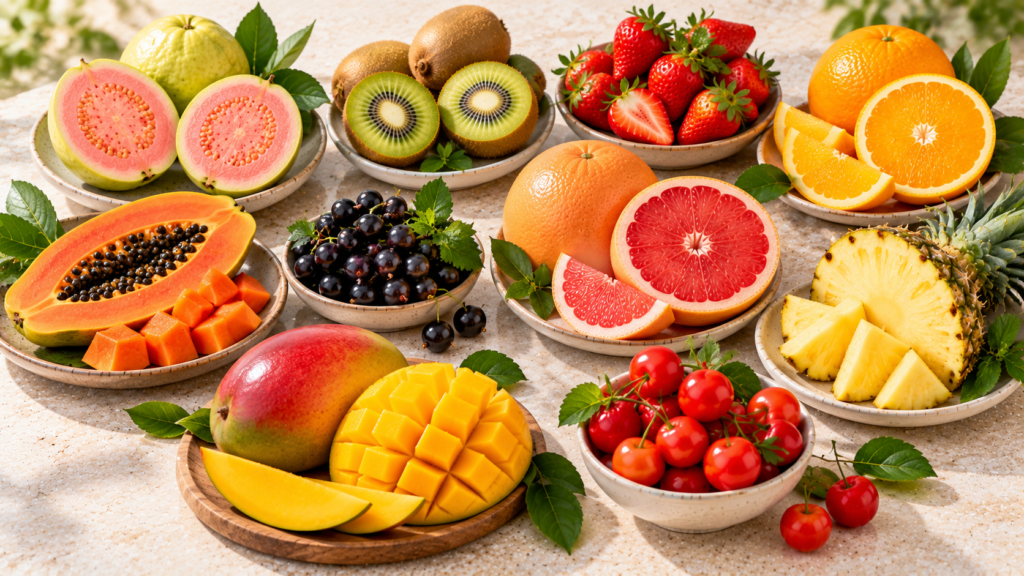
Best fruits high in vitamin C including guava, kiwi, strawberries, oranges, and papaya
Vitamin C Content of Popular Fruits
Comparing familiar serving sizes can help you choose fruit that fits your daily routine. The figures below are approximate and should be treated as a practical guide, not a precise ranking of every fruit variety.
| Fruit | Typical serving | Approximate vitamin C |
|---|---|---|
| Guava | ½ cup | Often over 100 mg; varies widely |
| Orange | 1 medium | 70 mg |
| Kiwi | 1 medium | 64 mg |
| Strawberries | ½ cup sliced | 49 mg |
| Grapefruit | ½ medium | 39 mg |
| Cantaloupe | ½ cup | 29 mg |
The orange, kiwi, strawberry, grapefruit, and cantaloupe figures are based on selected food entries in the NIH Office of Dietary Supplements fact sheet. Guava values vary substantially by variety and serving size. For precise values, consult a food-composition database and match the food preparation and serving weight.
Which Fruit Has the Most Vitamin C?
Acerola cherries and guava are well known for their high vitamin C content, although the exact winner depends on the variety, serving size, and how the food is measured.
Among familiar everyday choices, guava is often an excellent option. Kiwi, strawberries, and oranges are also convenient sources.
Instead of focusing only on the highest number, consider affordability, availability, taste, and how easily you can include the fruit in your meals.
How Much Vitamin C Do You Need Per Day?
Vitamin C requirements depend on age, sex, and life stage. The following recommended daily amounts apply to adults under the US dietary reference guidelines.
| Adult group | Recommended daily vitamin C |
|---|---|
| Men | 90 mg |
| Women | 75 mg |
| Pregnant adults | 85 mg |
| Breastfeeding adults | 120 mg |
| Adults who smoke | An additional 35 mg daily |
These are general guidelines, not personalized medical advice. Requirements for children and teenagers differ.
One medium orange provides around 70 mg, while one medium kiwi provides around 64 mg. Combining fruit with vegetables such as red bell peppers and broccoli can make it easier to meet your daily needs.
Most people can obtain enough vitamin C through a varied diet. If you have a restricted diet, a diagnosed deficiency, or a medical condition affecting nutrient absorption, discuss your needs with a qualified healthcare professional.
How to Add More Vitamin C Fruits to Your Diet
You do not need an expensive meal plan to eat more vitamin C-rich fruit. A few simple habits can help.
At Breakfast
- Add kiwi or strawberries to oatmeal.
- Serve orange segments with eggs or whole-grain toast.
- Mix papaya into plain yogurt.
- Prepare a fruit bowl with mango and berries.
At Lunch
- Add orange segments to a leafy green salad.
- Eat guava or kiwi as a side serving.
- Include lemon or lime juice in salad dressing.
- Pair fruit with a meal containing lentils or beans to help your body absorb plant-based iron.
As a Snack
- Keep whole oranges or kiwi available for convenience.
- Choose strawberries or melon when you want something refreshing.
- Prepare a small fruit bowl ahead of time and refrigerate it.
In Smoothies
Blend kiwi, strawberries, guava, or orange with water or plain yogurt. Whole-fruit smoothies can be convenient, but avoid adding large amounts of sugar or syrup.
Remember that vitamin C can be lost during prolonged storage and some cooking methods. Eating fresh fruit soon after cutting it is a practical way to preserve quality.
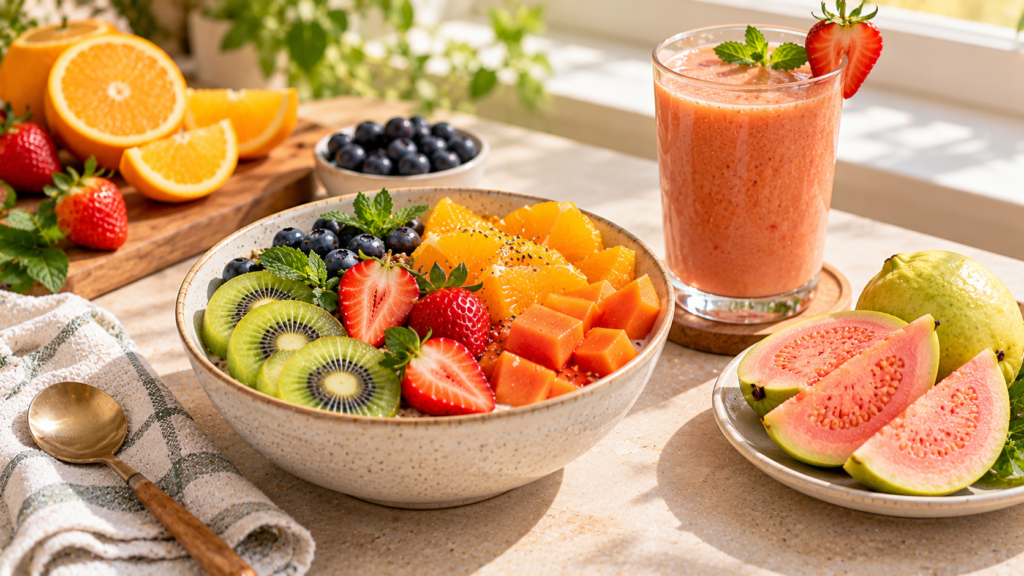
Healthy fruit bowl and smoothie made with vitamin C-rich fruits
Fresh, Frozen, or Juiced: Which Is Better?
Fresh, frozen, and juiced fruits can all contribute vitamin C. The best option depends on convenience, availability, preparation, and the rest of your diet.
Fresh Fruit
Fresh fruit is easy to portion and usually provides fiber when eaten whole. It is a practical choice for snacks and meals.
Frozen Fruit
Frozen fruit can be a nutritious and convenient option, especially when certain fruits are out of season. Vitamin C retention depends on processing and storage, but frozen fruit can still contribute meaningfully to your intake.
Fruit Juice
Juice can provide vitamin C, but it generally contains less fiber than whole fruit. Some commercial juices also contain added sugar. Choose products with no added sugar when possible, and consider whole fruit as your everyday option.
Is Dried Fruit a Good Source?
Dried fruit may contain some vitamin C, but processing and storage can reduce its content. It can still be useful for other nutrients, but fresh or appropriately frozen fruit is often a better choice when your main goal is vitamin C.
Common Mistakes When Choosing Vitamin C Fruits
Eating Only Oranges
Oranges are nutritious, but they are not your only option. Guava, kiwi, strawberries, papaya, and other fruits provide variety.
Assuming Every Fruit Has the Same Amount
Vitamin C content differs by species, variety, ripeness, serving size, and storage. A comparison should always account for the quantity eaten.
Leaving Cut Fruit Exposed for Too Long
Vitamin C can gradually decline with storage and exposure. Refrigerate cut fruit in a covered container and eat it within a reasonable time.
Taking Supplements Without a Clear Need
Vitamin C supplements can help in some circumstances, but high doses are not necessary for everyone. Excessive intake may cause digestive symptoms, and certain medical conditions require extra caution.
Forgetting Vegetables
Although this guide focuses on fruit, vegetables such as red bell peppers, broccoli, and Brussels sprouts can also provide substantial amounts of vitamin C. Including both fruits and vegetables creates more opportunities to meet your needs.
Internal Link: Read our complete guide to vitamin C-rich foods.
Internal Link: Learn about the health benefits of vitamin C.
External Link: NIH Office of Dietary Supplements Vitamin C Fact Sheet.
Conclusion
The best fruits high in vitamin C include guava, kiwi, strawberries, oranges, papaya, blackcurrants, and several other fresh or frozen fruits. Each offers a different combination of flavor, convenience, and nutrients, so the best choice is the one you enjoy and can eat regularly.
For most people, a varied diet that includes fruit and vegetables is a practical way to meet vitamin C needs. Choose whole fruits often, store cut fruit appropriately, and combine vitamin C-rich foods with plant-based iron sources when possible.
Rather than relying on a single so-called superfruit, build a consistent habit of enjoying different colorful fruits throughout the week.
Frequently Asked Questions
Which fruit is highest in vitamin C?
Acerola cherries and guava are known for exceptionally high vitamin C content. The precise amount depends on variety, serving size, and freshness.
Are oranges the best source of vitamin C?
Oranges are a convenient source, but guava, kiwi, strawberries, and other fruits can provide comparable or higher amounts per serving.
Which fruits are high in vitamin C but low in calories?
Strawberries, kiwi, oranges, and grapefruit can fit into a lower-calorie eating pattern. Exact calories depend on serving size, and no single fruit is necessary for weight management.
Can I eat vitamin C fruits every day?
Yes. Most people can safely enjoy a variety of vitamin C-rich fruits every day as part of a balanced diet, taking individual dietary needs and medical advice into account.
Does cooking or freezing reduce vitamin C in fruit?
Heat and prolonged storage can reduce vitamin C. Freezing can preserve much of a fruit’s nutritional value, although retention varies with processing and storage conditions.
Can vitamin C fruits help my body absorb iron?
Yes. Vitamin C improves the absorption of non-heme iron from plant foods. Eating fruit such as oranges, kiwi, or strawberries alongside beans and lentils is a useful strategy.
1 thought on “Best Fruits High in Vitamin C”