
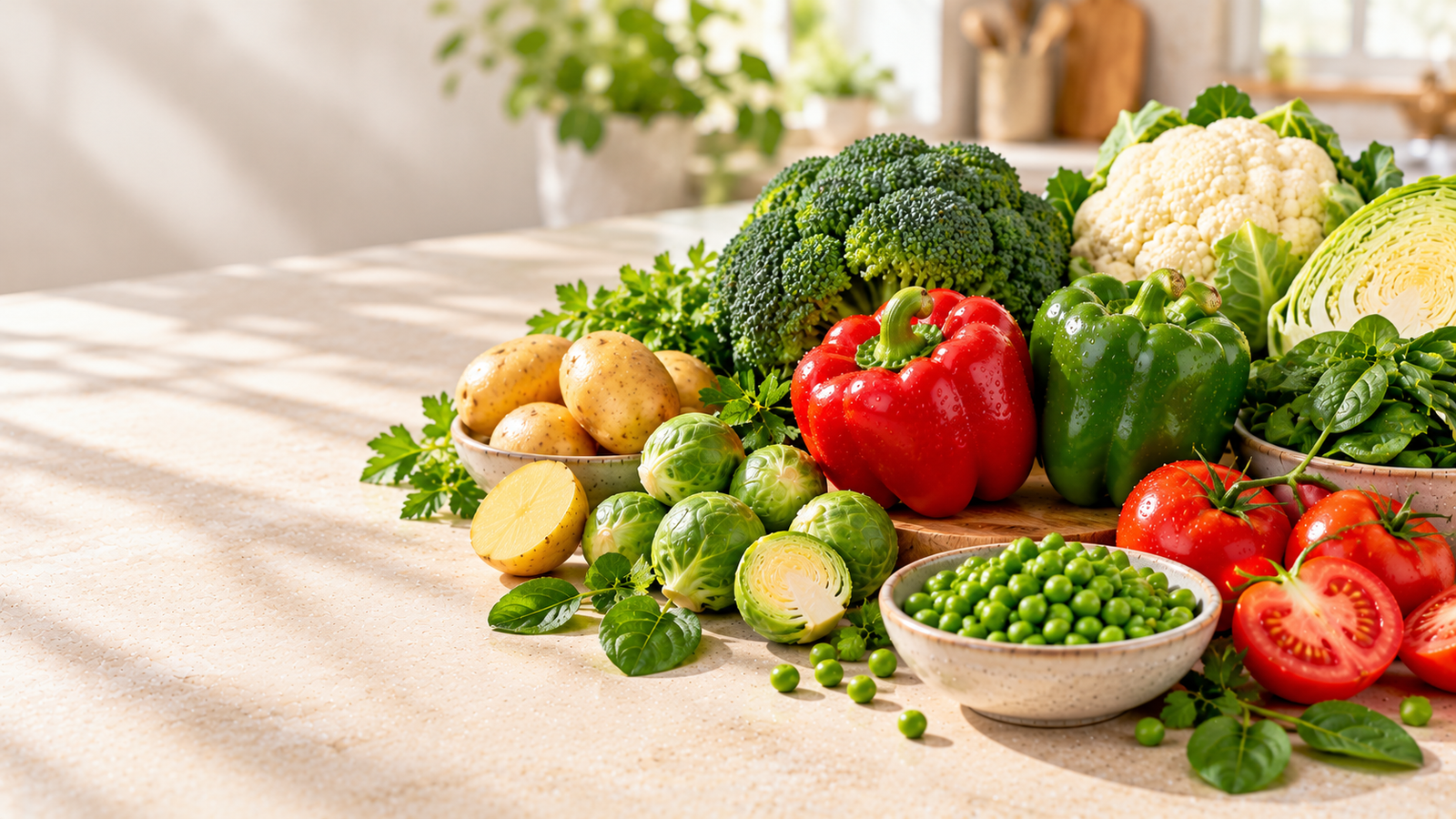
The best vegetables high in vitamin C can help you meet your daily nutritional needs while adding color, flavor, and variety to your meals. Vitamin C is an essential nutrient that supports collagen production, helps your immune system function normally, improves the absorption of iron from plant-based foods, and protects cells from oxidative damage.
Although citrus fruits are well-known sources of vitamin C, many vegetables provide substantial amounts too. Red bell peppers, broccoli, Brussels sprouts, cauliflower, and cabbage are practical options for increasing your intake.
The amount of vitamin C you get depends on the vegetable, serving size, storage conditions, and cooking method. Learning which vegetables contain more vitamin C—and how to prepare them—can help you make more informed food choices.
This guide covers 15 vegetables high in vitamin C, their approximate nutritional values, simple meal ideas, and practical ways to preserve their nutrients.
Key Takeaways
- Red bell peppers are an excellent source of vitamin C.
- Broccoli and Brussels sprouts provide substantial amounts in a half-cup cooked serving.
- Green bell peppers, cauliflower, and cabbage are useful everyday options.
- Vitamin C can decline with prolonged storage and some cooking methods.
- Steaming, microwaving, and eating suitable vegetables raw can help preserve vitamin C.
- A varied diet of vegetables and fruits is generally the easiest way to meet daily vitamin C requirements.
Why Is Vitamin C Important?
Vitamin C, also known as ascorbic acid, is a water-soluble vitamin that your body cannot produce on its own. You must obtain it through food or, when appropriate, supplements.
According to the NIH Office of Dietary Supplements Vitamin C Fact Sheet, vitamin C has several important functions in the body.
Supports Collagen Production
Collagen is a structural protein found in skin, blood vessels, bones, cartilage, and connective tissue. Vitamin C is necessary for normal collagen formation and wound healing.
Eating vitamin C-rich vegetables helps you obtain this essential nutrient as part of a balanced diet.
Helps the Immune System Function Normally
Vitamin C contributes to normal immune function. Getting enough supports overall health, although eating extra vitamin C does not guarantee that you will avoid infections.
Helps Absorb Plant-Based Iron
Vitamin C improves the absorption of non-heme iron, the form of iron found in beans, lentils, tofu, spinach, and fortified cereals.
For example, adding red bell pepper or broccoli to a meal containing lentils can help your body absorb iron from the plant foods.
Provides Antioxidant Protection
Vitamin C acts as an antioxidant, helping protect cells against oxidative damage. Vegetables also provide other nutrients and beneficial plant compounds, making them valuable components of a varied diet.
15 Best Vegetables High in Vitamin C
The following vegetables are useful sources of vitamin C. Nutrient values vary with serving size, variety, freshness, and preparation.
1. Red Bell Peppers
Red bell peppers are among the best everyday vegetable sources of vitamin C. A half-cup of raw sweet red pepper provides approximately 95 mg of vitamin C, according to the NIH fact sheet.
They also add crunch, color, and sweetness to meals.
How to eat them:
- Slice them into salads.
- Serve them with hummus.
- Add them to wraps and sandwiches.
- Combine them with beans or lentils for a vitamin C-rich meal.
Best for: People looking for a vegetable that provides a substantial amount of vitamin C in a practical serving.
2. Green Bell Peppers
Green bell peppers are another useful source. A half-cup of raw green sweet pepper provides approximately 60 mg of vitamin C.
They have a slightly more bitter flavor than red peppers and work well in savory dishes.
How to eat them: Add chopped green pepper to salads, stir-fries, omelets, or vegetable curries.
Best for: Everyday cooking and adding vitamin C to lunch or dinner.
3. Broccoli
Broccoli is a nutrient-dense vegetable that supplies vitamin C, fiber, and other vitamins and minerals. A half-cup of cooked broccoli provides approximately 51 mg of vitamin C, while a half-cup of raw broccoli provides around 39 mg.
Cooking can change vitamin C content, so values depend on the method and preparation.
How to eat it: Steam broccoli briefly, add it to stir-fries, or serve it with lentils, rice, or lean protein.
Best for: A versatile vegetable that fits into many meals.
4. Brussels Sprouts
Brussels sprouts belong to the cruciferous vegetable family. A half-cup of cooked Brussels sprouts provides approximately 48 mg of vitamin C.
They also contain fiber and other nutrients.
How to eat them: Steam or roast them until tender. Avoid prolonged cooking in large amounts of water when preserving vitamin C is a priority.
Best for: Adding variety to vegetable side dishes.
5. Cauliflower
Cauliflower provides vitamin C and can be used in a variety of recipes. A half-cup of raw cauliflower contains approximately 26 mg of vitamin C.
Its mild flavor makes it easy to combine with spices and other vegetables.
How to eat it: Enjoy raw florets, lightly steam them, or add cauliflower to soups and curries.
Best for: People who want a versatile vegetable for everyday meals.
6. Cabbage
Cabbage contains vitamin C and dietary fiber. A half-cup of cooked cabbage provides approximately 28 mg of vitamin C in the NIH fact sheet’s selected food data.
Red and green cabbage can both contribute to a varied diet, although their exact nutrient values differ.
How to eat it: Add shredded cabbage to salads, prepare a lightly cooked side dish, or include it in vegetable soups.
Best for: Affordable meals and large-batch cooking.
7. Tomatoes
Tomatoes provide vitamin C along with other plant compounds, including lycopene. One medium raw tomato contains approximately 17 mg of vitamin C.
They are easy to use in salads, sandwiches, sauces, and cooked dishes.
How to eat them: Add fresh tomatoes to meals or combine them with red bell peppers for a flavorful vitamin C-rich salad.
Best for: Everyday meals and simple vegetable combinations.
8. Potatoes
Potatoes provide vitamin C as well as carbohydrates and potassium. One medium baked potato with skin provides approximately 17 mg of vitamin C in the NIH fact sheet.
The amount varies with potato size and cooking method.
How to eat them: Bake or steam potatoes and serve them with broccoli, cabbage, or bell peppers.
Best for: Adding vitamin C to a familiar, filling staple.
9. Spinach
Spinach contains vitamin C, folate, vitamin K, and other nutrients. A half-cup of cooked spinach provides approximately 9 mg of vitamin C.
Although it contains less vitamin C per serving than red bell peppers or broccoli, it still contributes to overall nutritional intake.
How to eat it: Add fresh spinach to salads, stir it into soups, or briefly cook it with garlic.
Best for: Combining several nutrients in one leafy vegetable.
10. Green Peas
Green peas contribute vitamin C, fiber, and plant-based protein. A half-cup of cooked frozen green peas provides approximately 8 mg of vitamin C in the NIH fact sheet’s selected food data.
How to eat them: Add peas to rice dishes, soups, vegetable curries, or mixed vegetable sides.
Best for: Convenient meals using frozen vegetables.
11. Kale
Kale is a leafy green that contributes vitamin C, vitamin K, and carotenoids. Its nutrient content varies by variety and preparation.
How to eat it: Add young kale to salads, blend it into a smoothie, or briefly sauté it.
Best for: Increasing variety among leafy green vegetables.
12. Red Cabbage
Red cabbage provides vitamin C alongside colorful plant compounds called anthocyanins. Its texture makes it useful in both raw and cooked dishes.
How to eat it: Shred it into salads, combine it with carrots, or add it to wraps and sandwiches.
Best for: Colorful salads and crunchy side dishes.
13. Mustard Greens
Mustard greens are leafy vegetables that contribute vitamin C and other nutrients. Their peppery flavor works well in traditional cooked dishes.
How to eat them: Wash thoroughly and cook briefly with garlic, onion, or spices.
Best for: Adding leafy greens to a varied diet.
14. Turnip Greens
Turnip greens provide vitamin C alongside other vitamins and minerals. They are useful in cooked vegetable dishes and soups.
How to eat them: Steam or lightly sauté the leaves, or add them to soups and stews.
Best for: Using a wider variety of edible leafy vegetables.
15. Snow Peas and Other Fresh Peas
Snow peas and other edible-pod peas can contribute vitamin C, although the amount depends on variety and serving size. Their crisp texture makes them suitable for quick cooking.
How to eat them: Add them to stir-fries, salads, or mixed vegetable dishes and cook them briefly to retain texture.

Best for: Quick meals and colorful vegetable combinations. Best vegetables high in vitamin C including red bell peppers, broccoli, Brussels sprouts, and cauliflower
Vitamin C Content of Vegetables: Comparison Chart
Use this chart to compare selected vegetables in practical serving sizes.
| Vegetable | Serving size | Approximate vitamin C |
|---|---|---|
| Red sweet pepper, raw | ½ cup | 95 mg |
| Green sweet pepper, raw | ½ cup | 60 mg |
| Broccoli, cooked | ½ cup | 51 mg |
| Brussels sprouts, cooked | ½ cup | 48 mg |
| Broccoli, raw | ½ cup | 39 mg |
| Cabbage, cooked | ½ cup | 28 mg |
| Cauliflower, raw | ½ cup | 26 mg |
| Potato, baked | 1 medium | 17 mg |
| Tomato, raw | 1 medium | 17 mg |
| Spinach, cooked | ½ cup | 9 mg |
| Green peas, frozen and cooked | ½ cup | 8 mg |
Source: Selected food entries from the NIH Office of Dietary Supplements Vitamin C Fact Sheet. Values are approximate and can vary with variety, preparation, and serving size.
Which Vegetable Has the Most Vitamin C?
Among the vegetables listed in the NIH comparison, raw red sweet pepper provides the highest amount per serving: approximately 95 mg in half a cup.
However, the best choice for your diet is not necessarily the vegetable with the highest number. Availability, cost, taste, portion size, and how often you eat it all matter.
Red bell peppers, broccoli, and Brussels sprouts are practical choices for increasing vitamin C intake, while cabbage, tomatoes, peas, and leafy greens provide variety.
How Much Vitamin C Do You Need Per Day?
The recommended daily amount depends on age, sex, and life stage. For adults under US dietary reference guidelines, the general recommendations are:
| Adult group | Daily vitamin C recommendation |
|---|---|
| Men | 90 mg |
| Women | 75 mg |
| Pregnant adults | 85 mg |
| Breastfeeding adults | 120 mg |
| Adults who smoke | An additional 35 mg daily |
These figures are general guidelines, not individualized medical advice. Children and teenagers have different requirements.
A half-cup of raw red bell pepper can provide approximately 95 mg of vitamin C, while half a cup of cooked broccoli supplies around 51 mg. Combining vegetables with fruits such as oranges, kiwi, or strawberries can make it easier to meet your daily needs.
Most people can obtain enough vitamin C through a varied diet. If you have a restricted diet or a condition that affects nutrient absorption, consult a qualified healthcare professional.
How to Preserve Vitamin C When Cooking Vegetables
Vitamin C is water-soluble and sensitive to heat. Prolonged storage and some cooking methods can reduce the amount retained in vegetables.
The NIH Office of Dietary Supplements notes that steaming or microwaving may reduce cooking losses compared with some other preparation methods.
1. Steam Vegetables Briefly
Steam broccoli, Brussels sprouts, and cauliflower until tender but not overly soft. Shorter cooking times can help preserve vitamin C.
2. Eat Suitable Vegetables Raw
Raw bell peppers, tomatoes, cabbage, and spinach can be included in salads and snacks when appropriate.
Wash produce under running water before eating or cutting it.
3. Avoid Excessive Boiling
Boiling vegetables for long periods can lead to vitamin C losses, including nutrients that move into the cooking water.
If you boil vegetables, consider using the cooking liquid in soups or stews when suitable.
4. Store Produce Properly
Keep vegetables refrigerated as appropriate and avoid leaving cut produce exposed for long periods. Buy amounts you can use while the vegetables are still fresh.
5. Use Frozen Vegetables Conveniently
Frozen vegetables can be useful when fresh produce is expensive or unavailable. Follow package instructions and avoid unnecessary prolonged cooking.
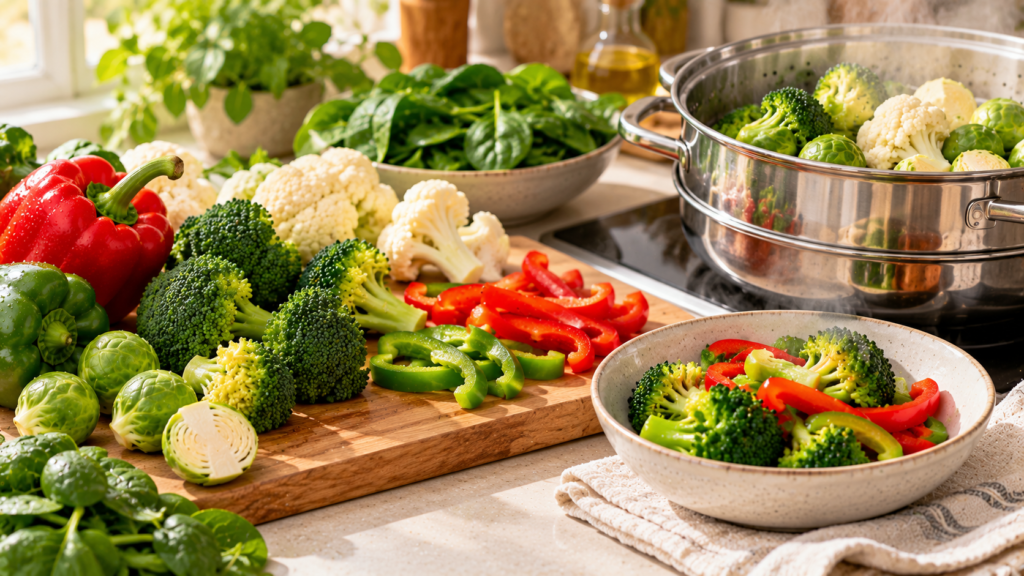
Fresh and lightly steamed vegetables prepared to help preserve vitamin C
Easy Ways to Add More Vitamin C Vegetables to Your Diet
You do not need complicated recipes to eat more vegetables high in vitamin C. Small, repeatable habits can make a difference.
At Breakfast
- Add sliced tomatoes and green peppers to an omelet.
- Serve raw red pepper strips alongside eggs or whole-grain toast.
- Include spinach in a vegetable wrap.
At Lunch
- Make a salad with red cabbage, tomatoes, and bell peppers.
- Add broccoli to a grain bowl.
- Serve lentils with a side of raw pepper strips.
At Dinner
- Steam broccoli or Brussels sprouts as a side dish.
- Add cauliflower and cabbage to a vegetable curry.
- Include tomatoes and green peppers in soups or stews.
For Snacks
- Enjoy raw red bell pepper strips with hummus.
- Keep washed cherry tomatoes available in the refrigerator.
- Pair vegetables with beans, chickpeas, or another protein-rich food.
Vitamin C Vegetables and Plant-Based Iron
Combining vitamin C-rich vegetables with plant-based iron sources can be a useful nutrition strategy.
Plant-based iron, known as non-heme iron, is found in foods such as lentils, beans, chickpeas, tofu, and fortified cereals. Vitamin C helps the body absorb this type of iron.
Try these combinations:
- Lentils with red bell peppers: Add chopped raw pepper to a lentil salad.
- Beans with tomatoes: Combine beans and tomatoes in a stew.
- Tofu with broccoli: Stir-fry tofu with broccoli and other vegetables.
- Chickpeas with cabbage: Make a chickpea salad with shredded cabbage and lemon dressing.
- Iron-fortified cereal with fruit: Add a vitamin C-rich fruit such as kiwi or strawberries.
NIH Office of Dietary Supplements Vitamin C Fact Sheet.
Read our guide to vitamin C and iron-rich foods.
Fresh, Frozen, or Cooked: Which Vegetables Are Best?
Fresh, frozen, raw, and cooked vegetables can all contribute to a healthy diet. There is no single preparation method that is best for every vegetable.
- Raw vegetables: Bell peppers and tomatoes are convenient choices for salads and snacks.
- Steamed vegetables: Broccoli and Brussels sprouts can retain useful amounts of vitamin C when cooked briefly.
- Frozen vegetables: Convenient and practical when fresh produce is unavailable or expensive.
- Cooked vegetables: Still contribute nutrients even when some vitamin C is lost during preparation.
Instead of avoiding cooked vegetables, use a mixture of raw and cooked options. The variety of nutrients in your overall diet matters more than achieving a perfect vitamin C number at every meal.
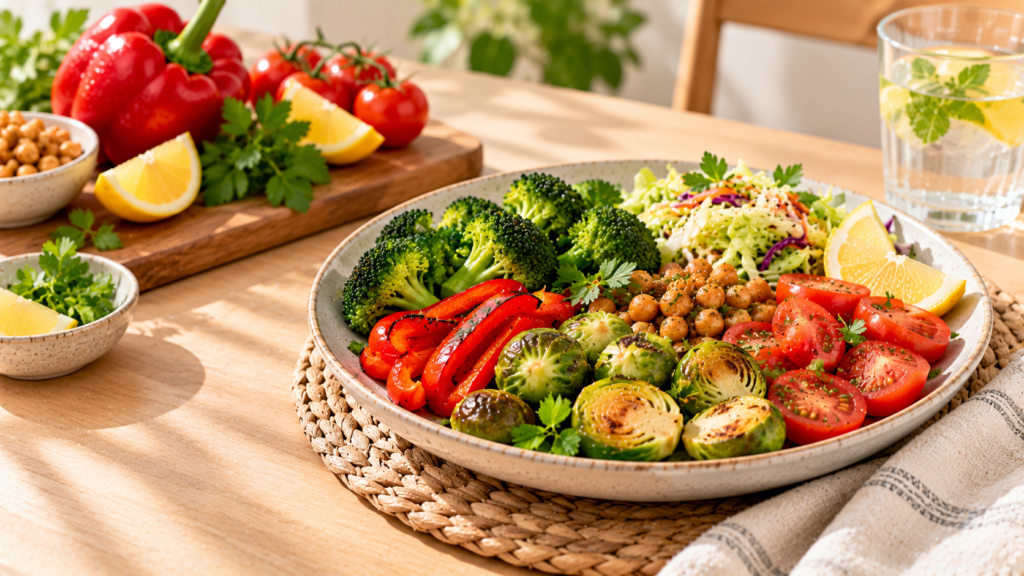
Balanced meal featuring broccoli, red bell peppers, tomatoes, and other vitamin C-rich vegetables
Common Mistakes to Avoid
Assuming All Vegetables Have the Same Vitamin C Content
Different vegetables contain different amounts of vitamin C. Red bell peppers and broccoli provide more per serving than spinach and green peas in the selected comparison chart.
Overcooking Every Vegetable
Long cooking times can reduce vitamin C. Steam vegetables briefly when appropriate, and include some suitable raw vegetables in your meals.
Ignoring Serving Size
Nutrient values are meaningful only when you compare realistic portions. A half-cup of one vegetable is not necessarily equivalent in weight to a half-cup of another.
Relying on One Vegetable
Eating only broccoli or red peppers limits dietary variety. Rotate vegetables based on availability, taste, and affordability.
Taking Supplements Without a Clear Need
Vitamin C supplements may be useful in some circumstances, but they are not necessary for everyone. High doses can cause digestive side effects. If you suspect a deficiency or have specific health concerns, speak with a healthcare professional.
Frequently Asked Questions
Which vegetable has the highest amount of vitamin C?
Raw red sweet bell pepper is an excellent source. A half-cup provides approximately 95 mg of vitamin C in the NIH fact sheet’s selected food data.
Are vegetables higher in vitamin C than fruits?
Some vegetables, including red bell peppers and broccoli, can provide as much or more vitamin C per serving than familiar fruits. The comparison depends on the food and portion size.
Does cooking destroy vitamin C in vegetables?
Cooking can reduce vitamin C, particularly when vegetables are exposed to prolonged heat or large amounts of water. Brief steaming or microwaving may help reduce losses.
Are frozen vegetables good sources of vitamin C?
Yes. Frozen vegetables can contribute vitamin C and are a convenient option. Their nutrient content depends on the vegetable, processing, storage, and preparation.
Can vitamin C vegetables help with iron absorption?
Yes. Vitamin C improves absorption of non-heme iron from plant foods. Combining vegetables such as red bell peppers or broccoli with beans and lentils is a useful strategy.
How can I get enough vitamin C without eating fruit?
You can obtain vitamin C from vegetables such as red bell peppers, broccoli, Brussels sprouts, and cauliflower. Including a variety of vegetables throughout the day can help you meet your needs.
Explore our guide to vitamin C-rich foods.
Discover the health benefits of vitamin C.
NIH Office of Dietary Supplements Vitamin C Fact Sheet.
Conclusion
The best vegetables high in vitamin C include red bell peppers, green bell peppers, broccoli, Brussels sprouts, cauliflower, and cabbage. These vegetables provide practical ways to meet your nutritional needs while adding flavor, color, and variety to everyday meals.
Red bell peppers are particularly rich in vitamin C, while broccoli and Brussels sprouts are convenient cooked options. You can also benefit from tomatoes, potatoes, leafy greens, and peas as part of a varied diet.
To get the most from your vegetables, store them appropriately, avoid unnecessarily long cooking times, and combine raw and cooked options throughout the week. Pairing vitamin C-rich vegetables with plant-based iron foods is another useful way to support your overall nutrition.
A balanced diet does not depend on one superfood. Regularly enjoying a variety of vegetables is a practical, sustainable approach to better nutrition.