
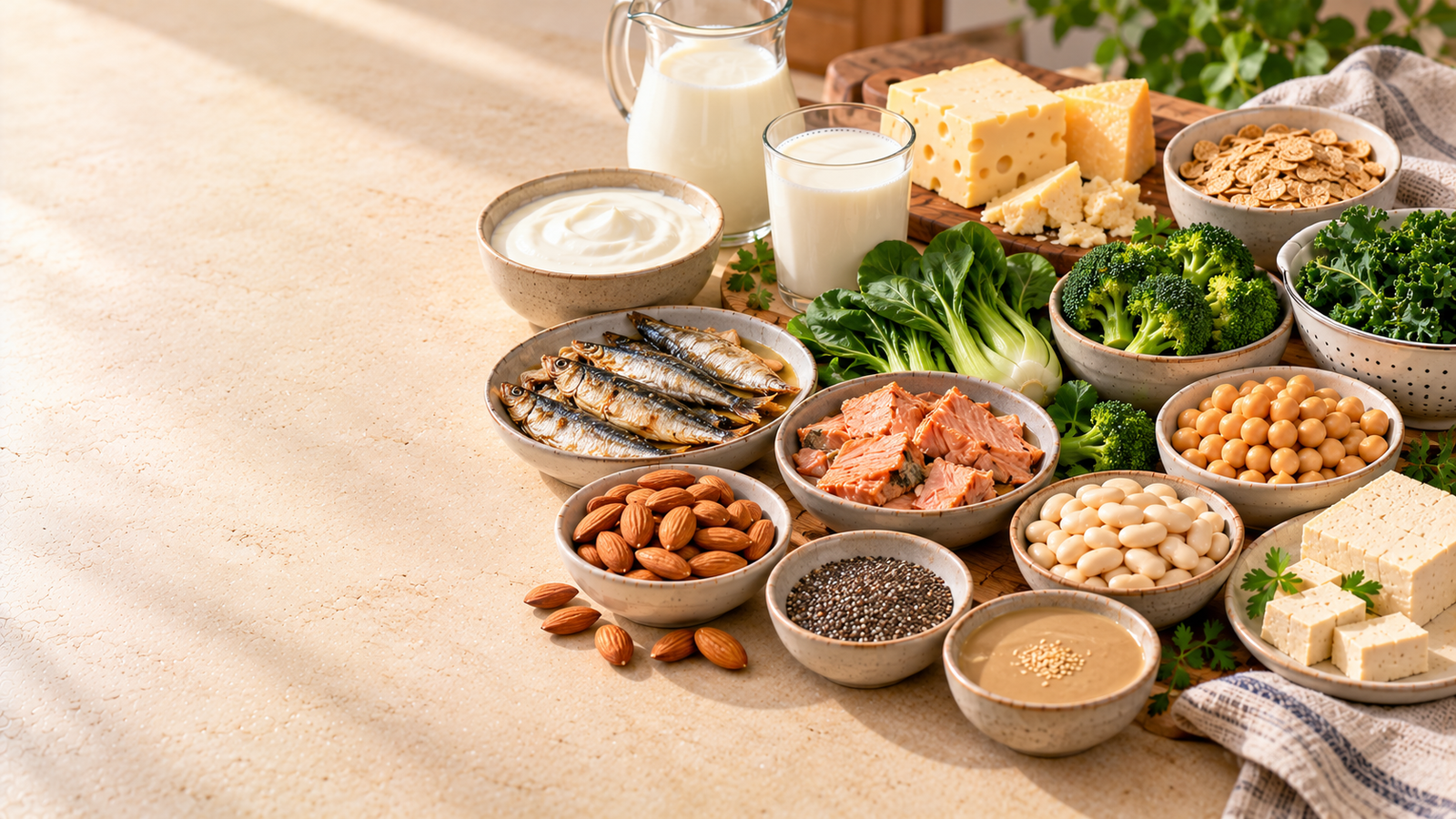
Adding calcium rich foods to your daily diet is an effective way to support strong bones and teeth while helping your body perform essential functions. Calcium is the most abundant mineral in the human body, and it also plays a role in muscle contraction, nerve signaling, and normal blood clotting.
Milk, yogurt, and cheese are well-known sources of calcium, but they are not your only options. Calcium-set tofu, certain leafy greens, canned fish with edible bones, beans, seeds, almonds, and fortified foods can also help you meet your daily needs.
This guide explores 20 calcium-rich foods, their approximate calcium content per serving, dairy-free alternatives, daily calcium requirements, and practical ways to include more calcium in your meals.
Most Important Points
- Dairy foods such as milk, yogurt, and cheese are useful sources of calcium.
- Calcium-set tofu, fortified plant milk, canned sardines with bones, and certain leafy greens offer alternatives to dairy.
- Most adults aged 19–50 need approximately 1,000 mg of calcium daily under U.S. recommendations.
- Calcium content varies by serving size, brand, preparation method, and whether a product is fortified.
- Vitamin D helps your body absorb calcium.
- Eating a variety of calcium-containing foods is a practical way to support bone health.
20 Calcium Rich Foods: Complete Food Chart
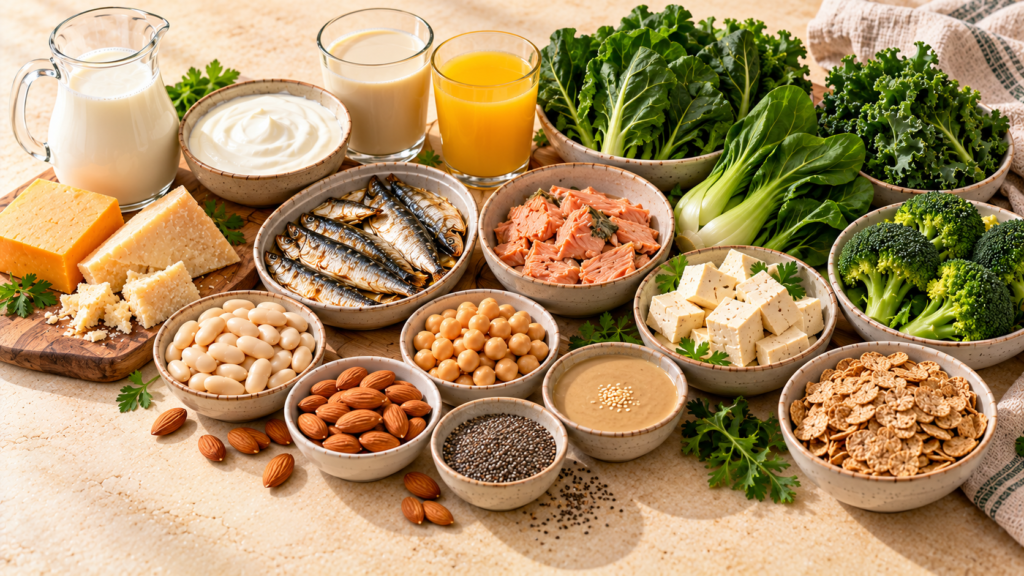
The following calcium-rich foods chart provides approximate amounts for common serving sizes. Values are rounded estimates based on typical food composition data; products and preparation methods can differ considerably.
| No. | Food | Typical serving | Approx. calcium |
|---|---|---|---|
| 1 | Plain milk | 1 cup (240 ml) | 300 mg |
| 2 | Plain yogurt | 1 cup (245 g) | 300–450 mg |
| 3 | Cheddar cheese | 1.5 oz (42 g) | 300 mg |
| 4 | Parmesan cheese | 1 oz (28 g) | 330 mg |
| 5 | Calcium-set firm tofu | ½ cup | 200–400 mg |
| 6 | Sardines with edible bones | 3 oz (85 g) | 300–350 mg |
| 7 | Canned salmon with bones | 3 oz (85 g) | 180–240 mg |
| 8 | Calcium-fortified soy milk | 1 cup | 250–450 mg |
| 9 | Calcium-fortified orange juice | 1 cup | 300–350 mg |
| 10 | Cooked collard greens | 1 cup | 250–270 mg |
| 11 | Cooked turnip greens | 1 cup | 180–200 mg |
| 12 | Cooked kale | 1 cup | 150–180 mg |
| 13 | Cooked bok choy | 1 cup | 150–160 mg |
| 14 | Cooked broccoli | 1 cup | 50–60 mg |
| 15 | White beans | 1 cup cooked | 150–160 mg |
| 16 | Chickpeas | 1 cup cooked | 70–90 mg |
| 17 | Almonds | 1 oz (28 g) | 70–80 mg |
| 18 | Chia seeds | 1 oz (28 g) | 170–180 mg |
| 19 | Tahini | 2 tbsp | 120–130 mg |
| 20 | Fortified breakfast cereal | 1 serving | Varies by brand |
Important: Check the Nutrition Facts label for fortified products and calcium-set tofu. Some tofu is made with calcium salts and contains substantially more calcium than tofu made with other coagulants. Calcium amounts in leafy greens also vary, and some greens contain compounds that reduce absorption.
How to Use This Calcium-Rich Foods Chart
- Choose a few foods you enjoy from different food groups.
- Check serving sizes before comparing calcium amounts.
- Look for calcium-fortified labels on plant milk, juice, and cereal.
- Include suitable foods at more than one meal rather than relying on one large serving.
- Consider calcium absorption, not just the amount listed in the chart.
Calcium Benefits and Daily Calcium Requirements
1. Dairy Foods High in Calcium
Dairy products are among the most convenient sources of dietary calcium. They provide calcium in familiar portions and can be included in breakfast, snacks, and main meals.
1. Milk
Milk provides approximately 300 mg of calcium per cup, although values vary by product. Whole, reduced-fat, and skim milk generally provide similar amounts of calcium per serving.
How to eat it: Drink a glass with breakfast, add it to oatmeal, or use it in soups and smoothies.
2. Yogurt
Plain yogurt provides calcium and protein. Some varieties contain more calcium than others, depending on how they are produced and the serving size.
How to eat it: Add yogurt to breakfast bowls, smoothies, or savory sauces. Choose unsweetened options when you want to limit added sugar.
3. Cheddar Cheese
Cheddar cheese provides a concentrated amount of calcium in a relatively small serving. It also supplies protein, although some varieties are high in saturated fat and sodium.
How to eat it: Add a measured portion to sandwiches, omelets, or vegetable dishes.
4. Parmesan Cheese
Parmesan is a hard cheese with a concentrated calcium content. Because it has a strong flavor, a small amount can add taste as well as calcium to a meal.
How to eat it: Sprinkle grated Parmesan over pasta, roasted vegetables, or homemade soups.
2. Non-Dairy Calcium Foods
If you avoid dairy because of lactose intolerance, dietary preferences, allergies, or availability, you can still get calcium from a range of other foods.
5. Calcium-Set Tofu
Tofu made with calcium salts can be a particularly useful plant-based calcium source. The amount varies greatly depending on the manufacturing process.
How to eat it: Add calcium-set tofu to stir-fries, curries, salads, or baked dishes. Check the package label to confirm the calcium content.
6. Sardines With Edible Bones
Canned sardines with their soft, edible bones provide calcium along with protein and omega-3 fatty acids.
How to eat them: Serve sardines on whole-grain toast, add them to salads, or pair them with vegetables and rice.
7. Canned Salmon With Bones
Canned salmon that includes edible bones contributes calcium and protein. Salmon also provides vitamin D, although the amount varies by product.
How to eat it: Mix canned salmon into sandwiches, patties, salads, or grain bowls. Choose products that clearly identify whether bones are included.
8. Calcium-Fortified Soy Milk
Fortified soy milk can provide a similar amount of calcium per cup to cow’s milk, depending on the brand. It also supplies plant protein.
How to eat it: Use it in oatmeal, smoothies, coffee, or recipes that call for milk. Shake the container before pouring because added calcium can settle.
9. Calcium-Fortified Orange Juice
Some orange juices contain added calcium. Fortified products can help people increase their calcium intake, but not all orange juice is fortified.
How to eat it: Check the label and follow the serving size. Whole fruit remains useful for fiber, while juice portions may need more attention because of their sugar content.
3. Calcium-Rich Vegetables
Certain vegetables supply calcium, but the amount your body absorbs differs from one vegetable to another. Some leafy greens contain oxalates, which bind calcium and reduce its absorption.
10. Collard Greens
Cooked collard greens can provide a substantial amount of calcium, and their calcium is relatively well absorbed compared with high-oxalate greens such as spinach.
How to eat them: Steam or sauté collard greens and serve them with beans, grains, or a protein source.
11. Turnip Greens
Turnip greens provide calcium along with vitamin K and other nutrients. Their calcium content depends on the serving size and cooking method.
How to eat them: Add cooked turnip greens to soups, stews, or vegetable side dishes.
12. Kale
Kale contains calcium and is generally a useful vegetable choice because its calcium is relatively bioavailable compared with spinach.
How to eat it: Add kale to salads, soups, omelets, or lightly sautéed vegetable dishes.
13. Bok Choy
Bok choy is a leafy vegetable that contributes calcium and other nutrients. It is easy to incorporate into quick meals.
How to eat it: Steam, roast, or stir-fry bok choy with garlic and a small amount of oil.
14. Broccoli
Broccoli contains a smaller amount of calcium per cup than many dairy products, but it can contribute to your overall intake while providing fiber and vitamin C.
How to eat it: Steam broccoli, roast it, or add it to pasta, soups, and rice dishes.
4. Calcium-Rich Beans, Nuts, and Seeds
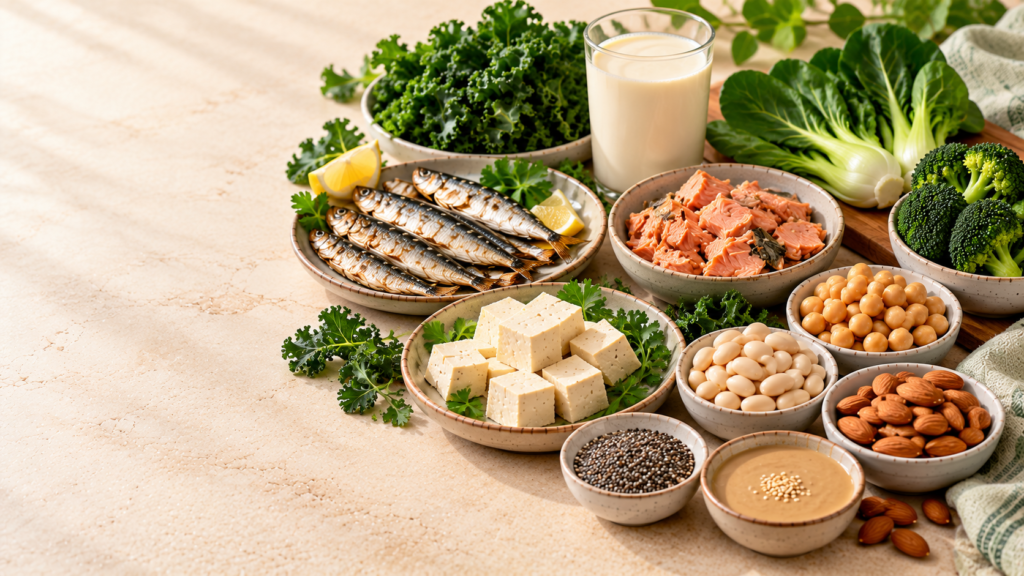
Beans, nuts, and seeds can contribute calcium alongside fiber, protein, and healthy fats. Their calcium levels vary, so they work best as part of a varied diet rather than as the only calcium source.
15. White Beans
White beans supply calcium, plant protein, and fiber. They can be a useful pantry staple because dried and canned versions are widely available in many markets.
How to eat them: Add cooked white beans to soups, salads, stews, or mashed vegetable dishes.
16. Chickpeas
Chickpeas contain some calcium as well as protein, fiber, and folate. Their calcium contribution is lower than that of many dairy products, but they provide other valuable nutrients.
How to eat them: Use chickpeas in curries, salads, hummus, and roasted snacks.
17. Almonds
Almonds provide calcium along with healthy fats, protein, and vitamin E. They are energy-dense, so a small handful is often a practical serving.
How to eat them: Add chopped almonds to oatmeal, yogurt, salads, or homemade trail mix.
18. Chia Seeds
Chia seeds are a concentrated plant source of calcium and fiber. They absorb liquid and develop a gel-like texture when soaked.
How to eat them: Stir chia seeds into overnight oats, smoothies, or homemade chia pudding. Drink adequate fluids and use them in a form that is comfortable for you to swallow.
19. Tahini
Tahini is a paste made from sesame seeds. It can contribute calcium, although the amount varies depending on the seeds and product.
How to eat it: Mix tahini with lemon juice and water for a dressing, spread it on toast, or use it in hummus.
20. Calcium-Fortified Breakfast Cereal
Some breakfast cereals contain added calcium and can contribute a meaningful amount per serving. The calcium content differs substantially between brands.
How to eat it: Check the Nutrition Facts label and pair cereal with milk or a calcium-fortified plant milk if suitable for your diet.
5. How Much Calcium Do You Need Per Day?
Calcium requirements vary by age and life stage. The following table uses U.S. National Institutes of Health reference values.
| Age or life stage | Recommended calcium per day |
|---|---|
| Children 1–3 years | 700 mg |
| Children 4–8 years | 1,000 mg |
| Children 9–18 years | 1,300 mg |
| Adults 19–50 years | 1,000 mg |
| Men 51–70 years | 1,000 mg |
| Women 51–70 years | 1,200 mg |
| Adults 71 years and older | 1,200 mg |
| Pregnancy and breastfeeding, ages 19–50 | 1,000 mg |
These are U.S. reference values; recommendations may differ by country. Infants and younger children have separate requirements. For individual needs, especially during pregnancy, adolescence, or older age, consult a qualified healthcare professional.
How to Reach Your Daily Calcium Target
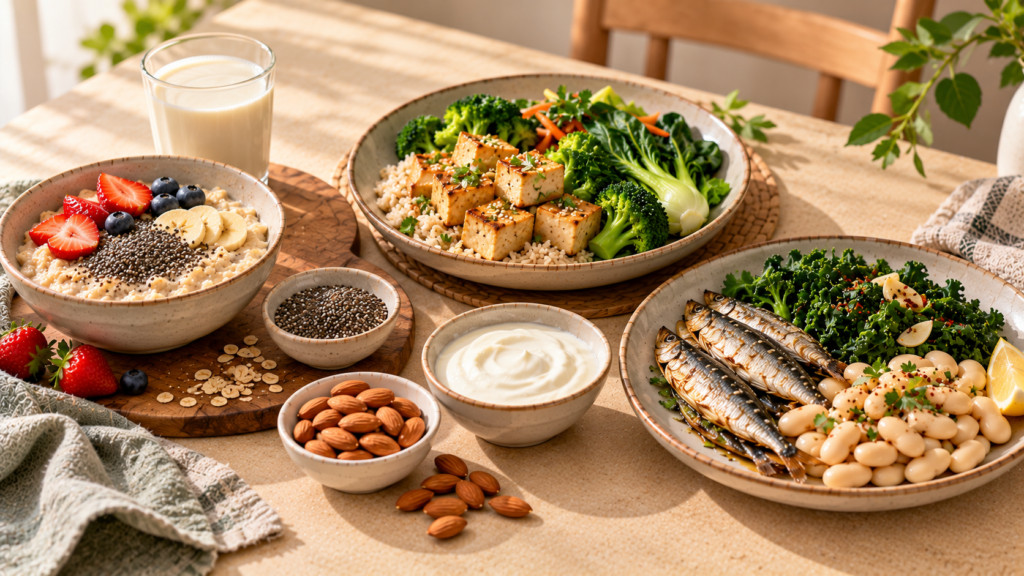
You can spread calcium-containing foods across several meals. For example:
- Breakfast: Oatmeal with milk or calcium-fortified soy milk.
- Lunch: A tofu and vegetable stir-fry.
- Snack: Yogurt or a small serving of almonds.
- Dinner: Sardines with edible bones, beans, or cooked leafy greens.
This is an example, not a prescribed meal plan. The total calcium depends on the portions, product labels, and ingredients you choose.
6. How to Improve Calcium Absorption
Eating calcium-rich foods is important, but the amount your body absorbs also matters.
Get Enough Vitamin D
Vitamin D helps your body absorb calcium from the digestive tract. Foods such as oily fish, eggs, and vitamin D-fortified products can contribute vitamin D, although dietary sources alone may not always meet individual needs.
Vitamin D Rich Foods and Daily Requirements
Choose Calcium Sources Your Body Can Use
Calcium absorption differs among foods. Calcium from milk, many fortified drinks, and low-oxalate vegetables such as kale and bok choy is generally well absorbed. Spinach contains calcium, but its high oxalate content limits how much can be absorbed.
This is why the calcium amount on a nutrition label does not always tell the whole story.
Spread Calcium Intake Throughout the Day
Rather than relying on one very large serving, include calcium sources in several meals. This can make it easier to meet your needs while keeping your diet varied.
Check Fortified Food Labels
Calcium-fortified plant milks, juices, and cereals can help you meet your daily target. Compare the calcium per serving, check the serving size, and follow any storage or shaking instructions on the packaging.
For evidence-based information about calcium requirements, food sources, and health, visit the NIH Office of Dietary Supplements Calcium Fact Sheet.
Calcium Fact Sheet for Health Professionals
7. Easy Ways to Add More Calcium to Your Diet
You do not need to overhaul your eating habits to include more calcium-rich foods. Small, consistent changes can help.
- Replace water-only oatmeal with milk or calcium-fortified soy milk when appropriate.
- Add yogurt to breakfast or use it as a base for a savory dip.
- Sprinkle chia seeds or almonds over breakfast bowls.
- Include calcium-set tofu in curries, stir-fries, or wraps.
- Add kale, bok choy, or broccoli to lunch and dinner.
- Use canned sardines with edible bones in sandwiches or salads.
- Choose fortified cereals or plant milks when they fit your dietary needs.
- Keep a variety of calcium sources available so you are not dependent on a single food.
Calcium-Rich Foods on a Budget
If you need affordable options, compare the cost per serving rather than the price of the whole package. Milk, yogurt, fortified products, dried beans, and seasonal leafy greens may all be practical options depending on local prices.
Canned fish with edible bones can also provide calcium, protein, and other nutrients. Choose products that suit your budget and dietary preferences, and compare nutrition labels where possible.
8. Calcium Supplements vs. Calcium From Food
Food is generally a sensible starting point for meeting calcium needs because calcium-rich foods may also provide protein, vitamins, and other minerals. Supplements can be useful for people who cannot meet their requirements through food or who have specific medical needs.
| Calcium from food | Calcium supplements |
|---|---|
| Provides calcium as part of meals and snacks | Provides a measured amount of calcium |
| Can supply additional nutrients depending on the food | May help fill a dietary gap when appropriate |
| Includes dairy and non-dairy choices | Product type and dose need careful selection |
| Can be spread across meals | May cause side effects such as constipation in some people |
Taking more calcium than you need is not automatically beneficial. High supplemental intakes can increase the risk of side effects and may be unsuitable for some people. If you have a medical condition, take regular medication, or are considering a supplement, discuss the appropriate dose with a healthcare professional.
9. What Happens If You Do Not Get Enough Calcium?
Calcium is essential for maintaining bones and teeth. If calcium intake remains inadequate over time, the body can draw on calcium stored in bones to maintain calcium levels in the blood. Long-term inadequacy may contribute to reduced bone mineral density.
However, low calcium intake does not always cause obvious symptoms straight away. Bone health also depends on factors such as vitamin D, physical activity, age, hormones, and overall nutrition.
If you are concerned about your calcium intake or bone health, seek professional advice rather than relying on symptoms alone.
Frequently Asked Questions About Calcium Rich Foods
1. What are the 20 best calcium-rich foods?
Useful options include milk, yogurt, cheddar, Parmesan, calcium-set tofu, sardines with edible bones, canned salmon with bones, fortified soy milk, fortified orange juice, collard greens, turnip greens, kale, bok choy, broccoli, white beans, chickpeas, almonds, chia seeds, tahini, and fortified breakfast cereal.
2. Which foods are highest in calcium?
Some cheeses, yogurt, calcium-set tofu, sardines with edible bones, and calcium-fortified products can provide substantial calcium per serving. The exact amount depends on the food and product.
3. What are the best non-dairy foods high in calcium?
Calcium-set tofu, sardines with edible bones, fortified plant milk, fortified orange juice, certain leafy greens, chia seeds, white beans, and tahini are useful non-dairy options.
4. Which vegetables are rich in calcium?
Collard greens, turnip greens, kale, and bok choy are useful vegetable sources. Spinach contains calcium too, but its oxalate content limits absorption.
5. How much calcium should an adult consume daily?
Under U.S. recommendations, most adults aged 19–50 need 1,000 mg daily. Women aged 51–70 and all adults aged 71 and older generally need 1,200 mg daily.
6. Can I get enough calcium without drinking milk?
Yes. Calcium-set tofu, fortified plant milk, certain leafy greens, canned fish with edible bones, beans, seeds, and fortified foods can help meet calcium needs. Choose a variety of sources and check product labels.
7. Does vitamin D help the body absorb calcium?
Yes. Vitamin D supports calcium absorption in the digestive tract and helps maintain normal calcium levels. Adequate vitamin D and calcium both contribute to bone health.
8. Are calcium supplements better than calcium-rich foods?
Not necessarily. Food is a good starting point for most people, while supplements may help when dietary intake is insufficient or a healthcare professional recommends them.
Conclusion
Including calcium rich foods in your daily diet is a practical way to support bone health, teeth, muscle function, and other essential processes. Milk, yogurt, and cheese are familiar sources, but calcium-set tofu, fortified plant milk, sardines with edible bones, leafy greens, beans, seeds, and fortified cereals provide additional choices.
The best strategy is to choose a variety of calcium-containing foods, pay attention to serving sizes, get adequate vitamin D, and consider your individual daily requirements. Use this calcium-rich foods chart as a guide for planning balanced meals, and consult a qualified healthcare professional if you need personalized advice about calcium intake or supplementation.