

A zinc foods chart helps you compare foods that contain zinc, understand their approximate nutritional value, and choose ingredients that support your daily needs. Zinc is an essential mineral that contributes to immune function, wound healing, DNA synthesis, normal growth, and the senses of taste and smell.
Your body needs zinc regularly, and a varied diet can provide it through everyday foods such as meat, seafood, dairy products, legumes, nuts, seeds, and whole grains.
Whether you follow a mixed diet, eat vegetarian meals, or want to improve your family’s nutrition, this guide includes a practical zinc foods chart, daily intake recommendations, meal-planning tips, and answers to common questions.
Most Important Points
- Oysters are among the richest natural food sources of zinc, although their zinc content varies widely.
- Beef, crab, pork, poultry, seeds, legumes, nuts, and fortified cereals can also provide zinc.
- Adult men generally need 11 mg of zinc daily, while adult women generally need 8 mg under U.S. dietary reference values.
- Plant foods contain zinc, but phytates can reduce the amount your body absorbs.
- Eating a variety of zinc-containing foods is a practical way to meet your nutritional needs.
- Food zinc values are estimates and vary by serving size, variety, brand, and preparation method.
Zinc Foods Chart: 20 Foods High in Zinc
Use this zinc foods chart to compare common foods and their approximate zinc content. Values are rounded estimates for typical servings and may differ from specific food database entries or product labels.
| Food | Typical serving | Approximate zinc |
|---|---|---|
| Cooked oysters | 3 oz (85 g) | 20–30+ mg |
| Cooked beef | 3 oz (85 g) | 5–7 mg |
| Cooked crab | 3 oz (85 g) | 3–4 mg |
| Pumpkin seeds | 1 oz (28 g) | 2–3 mg |
| Hemp seeds | 3 tbsp (30 g) | 2–3 mg |
| Cooked lentils | 1 cup | 2–3 mg |
| Cooked chickpeas | 1 cup | 2–3 mg |
| Fortified breakfast cereal | 1 serving | Varies by brand |
| Cooked pork | 3 oz (85 g) | 2–3 mg |
| Cooked chicken, dark meat | 3 oz (85 g) | 2–3 mg |
| Cooked turkey | 3 oz (85 g) | 1–3 mg |
| Cashews | 1 oz (28 g) | 1.5–2 mg |
| Cooked oats | 1 cup | 1–2 mg |
| Cooked quinoa | 1 cup | 1.5–2 mg |
| Tofu | ½ cup | 1–2 mg |
| Plain yogurt | 1 cup | 1–2 mg |
| Milk | 1 cup | About 1 mg |
| Egg | 1 large | About 0.5–0.7 mg |
| Whole-wheat bread | 2 slices | About 1–2 mg |
| Cooked peas | 1 cup | About 1–2 mg |
Important: These figures are estimates, not exact values for every serving. Oyster zinc levels can be exceptionally high and vary considerably by species. Fortified cereals can differ substantially by brand, so check the nutrition label for the most accurate information.
How to Use This Zinc Foods Chart
- Choose a protein source: Select seafood, meat, eggs, tofu, or legumes according to your dietary preferences.
- Add a plant-based option: Pumpkin seeds, lentils, chickpeas, and cashews can contribute additional zinc.
- Check food labels: Fortified cereal and other fortified products may contain different amounts of zinc.
- Plan across the day: You do not need to obtain all your zinc from one food or meal.
- Consider absorption: If most of your diet consists of plant foods, pay attention to variety and overall intake.
Zinc Rich Foods — Complete Food Guide
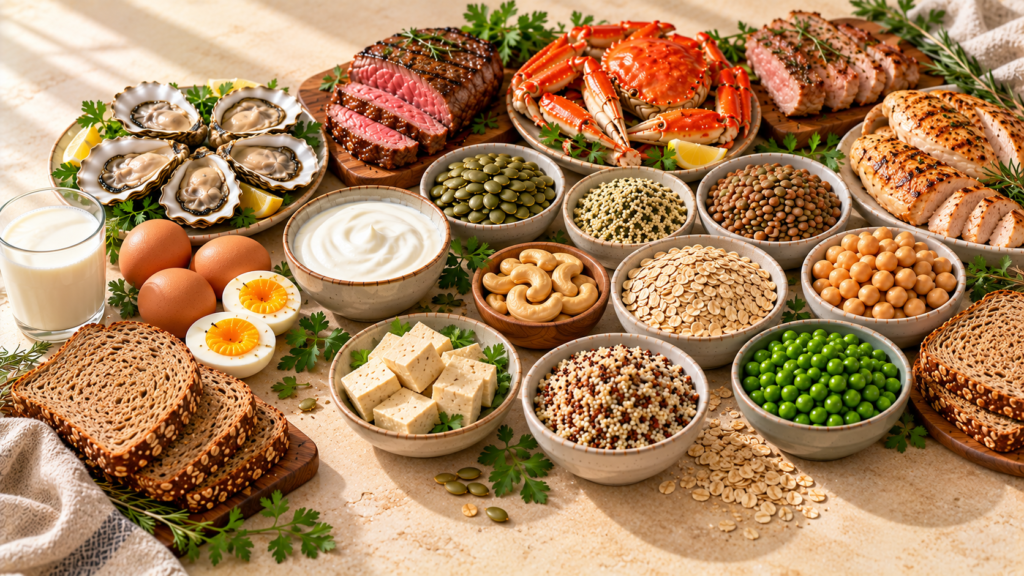
Zinc Foods Chart by Dietary Preference
The best zinc foods chart is one that helps you choose foods you actually enjoy eating. Your ideal zinc sources may differ depending on whether you eat meat, follow a vegetarian diet, or prefer plant-based meals.
| Dietary preference | Zinc-rich food choices | Practical meal idea |
|---|---|---|
| Omnivorous diet | Beef, crab, eggs, yogurt, pumpkin seeds | Beef with whole grains and vegetables |
| Vegetarian diet | Yogurt, milk, lentils, pumpkin seeds, cashews | Lentil curry with whole-wheat roti |
| Vegan diet | Chickpeas, lentils, tofu, seeds, nuts, fortified cereal | Chickpea and quinoa bowl with pumpkin seeds |
| Budget-conscious diet | Lentils, chickpeas, oats, eggs, seeds | Oatmeal followed by a lentil-based meal |
| Quick breakfast options | Oats, eggs, milk, fortified cereal, seeds | Oatmeal with milk and pumpkin seeds |
These foods can contribute zinc in different amounts. For the most accurate estimate, consider the serving size and check product labels for fortified foods.
How to Choose Zinc-Rich Foods for Your Daily Diet
You do not need to eat every food in this zinc foods chart every day. Choose a combination of zinc sources that fits your usual meals.
- Add pumpkin seeds to oatmeal, yogurt, or salads.
- Include lentils or chickpeas in curries, soups, and grain bowls.
- Choose eggs, dairy products, tofu, or other suitable protein sources.
- Include meat or seafood if you eat them and they fit your budget.
- Check the nutrition label when buying fortified breakfast cereals.
A varied diet helps you obtain zinc alongside protein, fiber, iron, and other essential nutrients.
Zinc Content in Foods: What Changes the Amount?
The zinc content listed in a zinc foods chart is an estimate rather than a guaranteed value for every food. Several factors can change the amount of zinc in a serving.
1. Serving Size
A larger portion generally provides more zinc than a smaller portion of the same food. Compare foods using similar serving sizes to avoid misleading comparisons.
2. Food Variety
Different species of seafood, cuts of meat, varieties of seeds, and types of legumes can contain different amounts of zinc.
3. Preparation Method
Cooking changes the weight and water content of food. As a result, zinc values reported per 100 grams of raw food may differ from values reported for cooked food.
4. Fortification
Some breakfast cereals and other packaged foods have zinc added during manufacturing. The amount varies by product, so check the Nutrition Facts label instead of assuming all cereals provide the same amount.
5. Zinc Absorption
The amount of zinc present in food is not necessarily the amount your body absorbs. Plant foods such as legumes and whole grains can contain phytates that reduce zinc absorption. These foods can still be valuable parts of a balanced diet.
How to Read a Zinc Foods Chart Correctly
Use these simple steps to interpret zinc values accurately.
- Check the unit: Zinc is usually listed in milligrams (mg).
- Check the serving size: A value for one cup cannot be compared directly with a value for one tablespoon without adjusting the portions.
- Check whether the food is cooked: Raw and cooked entries may differ because cooking changes the food’s weight and water content.
- Look at the source: Prefer reliable nutrition databases, government nutrition resources, or product labels.
- Consider your daily needs: Compare your estimated intake with the recommended amount for your age and life stage.
- Avoid treating the upper limit as a target: More zinc is not automatically better, and excessive intake can be harmful.
For reliable information about zinc intake, deficiency, food sources, and safety, consult the NIH Office of Dietary Supplements Zinc Fact Sheet.
Common Mistakes When Choosing Zinc-Rich Foods
Even when using a zinc foods chart, it is easy to misunderstand food values or daily requirements.
- Focusing on one food: You do not need to rely on oysters, beef, or any other single source.
- Ignoring serving sizes: A food may look rich in zinc per 100 grams but be eaten in much smaller portions.
- Forgetting plant-based sources: Seeds, legumes, nuts, and whole grains can all contribute zinc.
- Assuming all fortified cereals are equal: Zinc levels vary by brand and serving.
- Taking supplements unnecessarily: High-dose zinc supplements can cause side effects and interfere with copper absorption.
- Confusing intake with absorption: The listed amount of zinc does not tell you exactly how much your body will absorb.
The goal is to use a zinc foods chart as a practical planning tool, not as a reason to chase the highest possible zinc intake.
A Simple Checklist for Meeting Your Zinc Needs
Use this checklist when planning meals throughout the week:
- Include a variety of zinc-containing foods.
- Eat suitable protein sources with meals.
- Add seeds, nuts, legumes, or whole grains where practical.
- Check the labels of fortified products.
- Consider your age, sex, and life stage when reviewing daily zinc requirements.
- Seek professional advice if you have concerns about deficiency, absorption, or supplements.
A balanced diet that includes several zinc-rich foods can help you work toward your daily requirements without depending on one food or unnecessary supplementation.
Best Animal-Based Sources of Zinc
Animal foods can be useful sources of zinc because zinc from meat and seafood is generally more bioavailable than zinc from many plant foods. Bioavailability refers to how much of a nutrient your body can absorb and use.
1. Oysters
Oysters are among the most concentrated natural sources of zinc. Depending on the species, even a modest serving may provide more than the daily requirement for adults.
You do not need to eat oysters to obtain enough zinc. Meat, seafood, dairy products, legumes, seeds, nuts, and fortified foods offer alternatives.
For food safety, avoid raw or undercooked oysters, particularly if you are at increased risk of severe foodborne illness.
2. Beef
Beef provides zinc alongside protein, vitamin B12, and iron. A serving of lean beef can contribute a substantial amount toward your daily zinc needs.
Choose lean cuts and prepare them by grilling, baking, or stewing. If you eat red meat, balance it with other protein sources throughout the week.
3. Crab and Other Seafood
Crab and some other seafood provide zinc, protein, and additional nutrients. The zinc content depends on the species and serving size.
Seafood can fit into a balanced diet, but it is not essential if you prefer other zinc-rich foods.
4. Pork, Chicken, and Turkey
Pork and poultry can contribute useful amounts of zinc. They generally provide less zinc per serving than oysters and some cuts of beef, but they are versatile ingredients for everyday meals.
Pair them with vegetables, whole grains, or legumes to create a balanced plate.
Best Plant-Based Foods High in Zinc
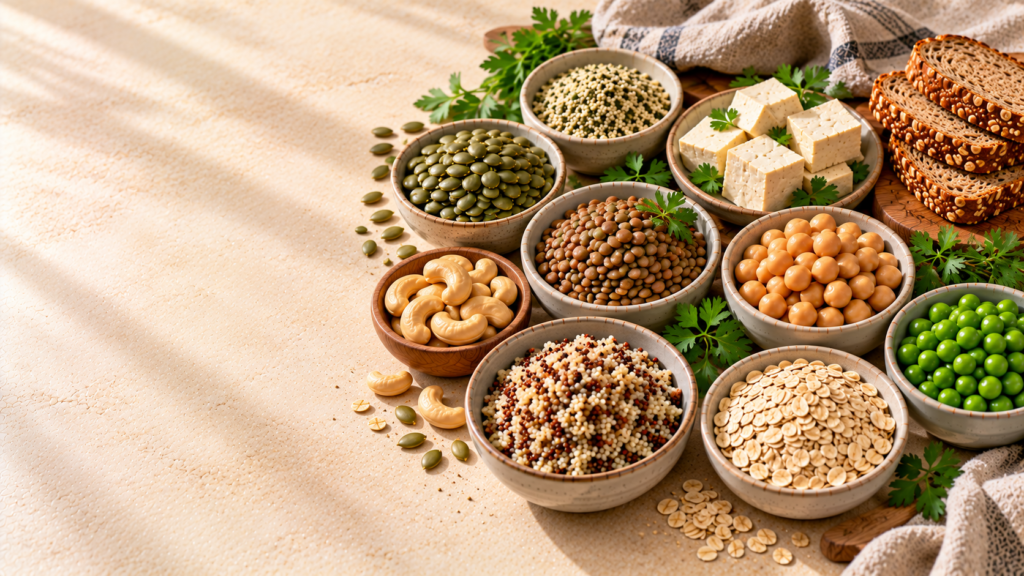
Plant foods are valuable zinc sources, particularly for vegetarians and vegans. Including several different types throughout the day helps improve dietary variety.
1. Pumpkin Seeds and Hemp Seeds
Pumpkin seeds and hemp seeds are easy to add to everyday meals. Sprinkle them over oatmeal, salads, soups, or yogurt. They also provide protein, healthy fats, and other minerals.
A measured serving is useful because seeds are nutrient-dense and relatively high in calories.
2. Lentils and Chickpeas
Lentils and chickpeas supply zinc, plant protein, fiber, and folate. Add them to soups, curries, stews, salads, or homemade hummus.
Soaking, sprouting, fermenting, and thoroughly cooking legumes can reduce some phytates, potentially improving mineral availability. The effect varies with the food and preparation method.
3. Cashews and Other Nuts
Cashews provide zinc in a convenient snack or meal ingredient. Add a small handful to a snack plate, mix them into stir-fries, or blend them into sauces.
Other nuts can also contribute zinc, although the amount varies by type and portion.
4. Oats, Whole Grains, and Quinoa
Oats, quinoa, and whole-wheat bread contribute zinc alongside fiber and other nutrients. They can form the foundation of breakfast bowls, lunches, or side dishes.
Whole grains also contain phytates, which can reduce zinc absorption. This does not mean you should avoid whole grains; it means that varied food choices and adequate intake are important.
How Much Zinc Do You Need Per Day?
Zinc requirements depend on age, sex, and life stage. The following reference values are from the U.S. National Institutes of Health Office of Dietary Supplements.
| Age or life stage | Recommended zinc intake per day |
|---|---|
| Infants 0–6 months | 2 mg (adequate intake) |
| Infants 7–12 months | 3 mg |
| Children 1–3 years | 3 mg |
| Children 4–8 years | 5 mg |
| Children 9–13 years | 8 mg |
| Teen boys 14–18 years | 11 mg |
| Teen girls 14–18 years | 9 mg |
| Adult men 19+ years | 11 mg |
| Adult women 19+ years | 8 mg |
| Pregnancy, ages 19+ | 11 mg |
| Breastfeeding, ages 19+ | 12 mg |
These are U.S. dietary reference values; recommendations can vary by country. For infants under seven months, the figure shown is an adequate intake rather than an established recommended dietary allowance.
For detailed guidance, consult the NIH Office of Dietary Supplements Zinc Fact Sheet.
What Does Meeting Your Daily Zinc Requirement Look Like?
An adult woman whose recommended intake is 8 mg per day might obtain zinc from legumes, seeds, dairy products, and whole grains. An adult man whose recommended intake is 11 mg may need larger portions or additional zinc-containing foods.
These are examples, not prescribed meal plans. Actual intake depends on the foods selected, portion sizes, and zinc absorption.
Zinc Foods Chart for Vegetarians and Vegans
People who avoid meat and seafood can obtain zinc from plant foods and, when suitable, fortified products. Because zinc from many plant foods is less bioavailable, vegetarians and vegans should pay attention to their overall intake and food variety.
| Plant-based food | Easy way to include it |
|---|---|
| Pumpkin seeds | Sprinkle over oats or salads |
| Hemp seeds | Add to smoothies or breakfast bowls |
| Lentils | Use in soups, curries, and grain bowls |
| Chickpeas | Make hummus or roasted chickpea snacks |
| Cashews | Add to stir-fries or eat as a measured snack |
| Oats | Prepare oatmeal for breakfast |
| Quinoa | Use as a base for lunch bowls |
| Tofu | Add to stir-fries or curries |
| Fortified breakfast cereal | Check the label for zinc per serving |
| Whole-wheat bread | Use for sandwiches or toast |
Tips to Improve Zinc Availability From Plant Foods
- Eat a variety of legumes, nuts, seeds, and whole grains rather than relying on a single source.
- Soak beans and legumes before cooking when appropriate.
- Include fermented foods as part of a varied diet.
- Check fortified-food labels to compare zinc content.
- Remember that the amount listed in a food chart is not necessarily the amount your body absorbs.
Zinc Rich Foods for Vegetarians
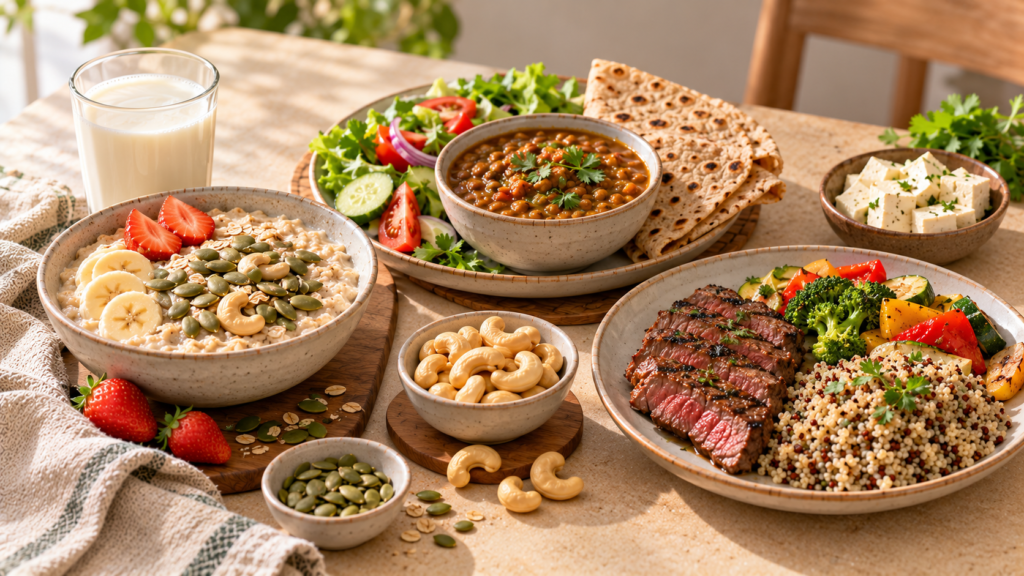
How to Build a Zinc-Rich Daily Meal Plan
A useful zinc foods chart should help turn nutrition information into practical meals. You do not need to eat every food on the list each day. Instead, choose a few sources that suit your preferences, budget, and dietary needs.
| Meal | Example foods | Zinc contribution |
|---|---|---|
| Breakfast | Oatmeal with pumpkin seeds and milk | Zinc from oats, seeds, and milk |
| Lunch | Lentil curry with whole-wheat roti | Zinc from lentils and whole grains |
| Snack | A small serving of cashews | Additional zinc from nuts |
| Dinner | Beef, chicken, tofu, or chickpea curry with vegetables | Zinc from the chosen protein source |
The amount of zinc in this sample day depends on portion sizes and ingredients. For a more precise estimate, compare your portions with a reliable nutrient database or product labels.
Budget-Friendly Ways to Add Zinc
- Add lentils or chickpeas to soups, curries, and rice dishes.
- Keep pumpkin seeds or cashews available for measured snack portions.
- Use eggs, milk, yogurt, or suitable alternatives that fit your usual grocery budget.
- Choose meat or seafood when affordable, but do not assume expensive foods are essential.
- Compare breakfast cereal labels if you use fortified foods.
Signs You May Not Be Getting Enough Zinc
Inadequate zinc intake can contribute to zinc deficiency, but symptoms are not unique to this nutrient. Possible signs include:
- Reduced appetite
- Changes in taste or smell
- Slow wound healing
- Hair loss
- Skin problems
- More frequent infections
- Growth problems in children
These symptoms can have many causes. They do not confirm zinc deficiency on their own. If you have persistent symptoms or are concerned about your intake, consult a qualified healthcare professional.
People at increased risk can include those with certain digestive conditions that impair nutrient absorption, people with very limited diets, and individuals with some chronic health conditions. A healthcare professional can help determine whether dietary changes, further evaluation, or supplementation is appropriate.
Can You Get Too Much Zinc From Food?
Excessive zinc intake is possible, particularly through supplements or high-dose products. Too much zinc can cause nausea, vomiting, stomach discomfort, and loss of appetite. Long-term excessive intake can interfere with copper absorption and lead to copper deficiency.
For adults in the United States, the tolerable upper intake level is 40 mg per day from all sources, including food, beverages, and supplements. This is a safety limit, not a recommended daily target. The upper limit is lower for children and teenagers.
Some oyster servings contain more zinc than the adult upper limit. Avoid deliberately consuming very large amounts of exceptionally zinc-rich foods or taking high-dose supplements without appropriate professional guidance.
For more information, consult the NIH Office of Dietary Supplements Zinc Fact Sheet.
Zinc: Fact Sheet for Health Professionals
Zinc From Food vs. Zinc Supplements
Food is a sensible starting point for meeting daily zinc needs because it provides zinc alongside other nutrients. Supplements may be useful for some people, but they are not necessary for everyone.
| Zinc from food | Zinc supplements |
|---|---|
| Provides zinc alongside other nutrients, depending on the food | Provides a measured dose of zinc |
| Can be included in everyday meals | May be useful when intake or absorption is inadequate |
| Allows intake through a variety of foods | High doses can cause side effects and nutrient imbalances |
| Includes animal and plant sources | Should be chosen according to individual need |
Check supplement labels carefully: the relevant amount is usually the elemental zinc content, not the total weight of the zinc compound. Zinc can interact with certain medicines, including some antibiotics. Ask a pharmacist or clinician about suitability and timing if you take medication.
[Internal Link: Insert relevant internal URL here with anchor text: Zinc Benefits and Daily Zinc Requirements]
Frequently Asked Questions About the Zinc Foods Chart
1. What is the best zinc foods chart for daily meal planning?
A useful zinc foods chart lists foods, serving sizes, and approximate zinc amounts. Oysters, beef, crab, pumpkin seeds, lentils, chickpeas, cashews, and fortified cereals are useful options to compare.
2. Which food is highest in zinc?
Oysters are among the richest natural sources of zinc. Their zinc content varies by species, so the amount in a serving is not always the same.
3. What are the best vegetarian foods high in zinc?
Pumpkin seeds, hemp seeds, lentils, chickpeas, cashews, oats, quinoa, tofu, and fortified cereals can all contribute zinc to a vegetarian diet.
4. How much zinc do adults need each day?
Under U.S. dietary reference values, most adult men need 11 mg daily and most adult women need 8 mg. Pregnancy and breastfeeding change these requirements.
5. Are eggs a good source of zinc?
Eggs contain zinc, but one egg provides only a modest amount. They can contribute to your intake when combined with other zinc-rich foods.
6. Do fruits and vegetables contain zinc?
Many fruits and vegetables contain small amounts of zinc, but they are generally less concentrated sources than seafood, meat, seeds, legumes, and fortified foods. Eating a varied diet helps meet overall nutritional needs.
7. Can I get enough zinc without eating meat?
Yes. A carefully planned vegetarian or vegan diet can provide zinc through legumes, seeds, nuts, whole grains, tofu, and fortified foods. Because zinc absorption from plant foods may be lower, adequate intake and variety are important.
8. Should I take a zinc supplement every day?
Not necessarily. Many people can meet their needs through food. Supplements may be appropriate for a deficiency or a specific dietary or medical reason, but unnecessary high doses can be harmful. Ask a healthcare professional before starting regular supplementation.
Conclusion
A zinc foods chart is a practical way to compare zinc-rich foods, understand serving sizes, and make informed everyday meal choices. Seafood and meat can provide concentrated amounts of zinc, while pumpkin seeds, lentils, chickpeas, cashews, oats, and fortified cereals offer additional options.
The best approach is to build a varied diet that fits your preferences and nutritional needs rather than relying on one food or taking high-dose supplements without guidance. Use this chart as a starting point, check product labels when necessary, and speak with a healthcare professional if you suspect a deficiency.