
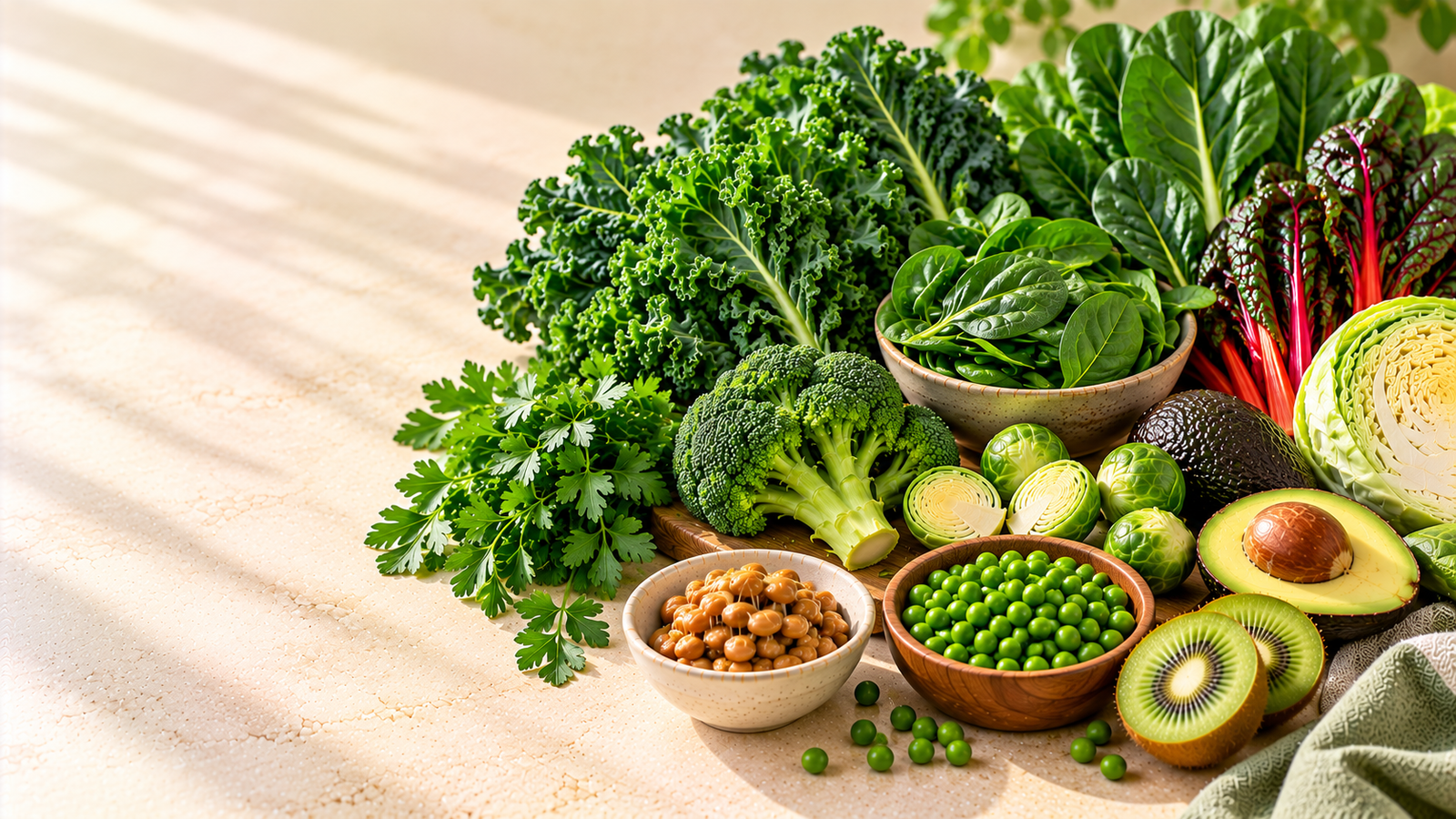
Vitamin K rich foods are an important part of a balanced diet because vitamin K supports normal blood clotting and helps maintain healthy bones. Many everyday foods contain this essential fat-soluble vitamin, particularly leafy green vegetables such as kale, spinach, collard greens, and Swiss chard.
Other sources include broccoli, Brussels sprouts, certain plant oils, and fermented foods such as natto. Understanding the differences between these foods can help you build meals that provide vitamin K alongside fiber, minerals, and other essential nutrients.
This complete guide explains the best vitamin K food sources, compares approximate nutrient amounts, covers daily intake recommendations, and shares practical ways to add vitamin K-rich foods to your routine.
Most Important Points
- Leafy green vegetables are among the richest sources of vitamin K1.
- Kale, spinach, collard greens, and Swiss chard are especially concentrated sources.
- Natto is a notable source of vitamin K2.
- Vitamin K is fat-soluble, so consuming vegetables with some dietary fat can support absorption.
- Adults in the United States have an adequate intake target of 90 mcg per day for women and 120 mcg for men.
- People taking warfarin should keep vitamin K intake consistent and consult their healthcare professional before making major dietary changes.
What Is Vitamin K?
Vitamin K is a fat-soluble vitamin that helps the body produce proteins involved in blood clotting. It also contributes to the normal function of proteins involved in bone metabolism.
Vitamin K1 vs. Vitamin K2
There are two main dietary categories of vitamin K.
Vitamin K1 (phylloquinone) is found mainly in green leafy vegetables, broccoli, and certain plant oils. It is the predominant form of vitamin K in many diets.
Vitamin K2 (menaquinones) occurs in fermented foods such as natto and in varying amounts in certain cheeses, eggs, and animal products. Different forms of vitamin K2 can occur in different foods, so amounts are not interchangeable.
Both contribute to vitamin K nutrition, but they differ in their food sources and how the body processes them.
For additional information, consult the NIH Office of Dietary Supplements Vitamin K fact sheet.
Vitamin K Foods Chart: 20 Everyday Food Sources
The following chart uses food values reported by the US National Institutes of Health (NIH). Serving sizes and nutrient amounts are shown together to help you compare options.
| No. | Food | Typical serving | Vitamin K (approx.) |
|---|---|---|---|
| 1 | Natto (fermented soybeans) | 3 oz | 850 mcg |
| 2 | Collard greens, boiled | ½ cup | 530 mcg |
| 3 | Turnip greens, boiled | ½ cup | 426 mcg |
| 4 | Spinach, raw | 1 cup | 145 mcg |
| 5 | Kale, raw | 1 cup | 113 mcg |
| 6 | Broccoli, boiled | ½ cup | 110 mcg |
| 7 | Roasted soybeans | ½ cup | 43 mcg |
| 8 | Carrot juice | ¾ cup | 28 mcg |
| 9 | Soybean oil | 1 tablespoon | 25 mcg |
| 10 | Edamame, cooked | ½ cup | 21 mcg |
| 11 | Canned pumpkin | ½ cup | 20 mcg |
| 12 | Pomegranate juice | ¾ cup | 19 mcg |
| 13 | Okra, raw | ½ cup | 16 mcg |
| 14 | Pine nuts | 1 oz | 15 mcg |
| 15 | Blueberries, raw | ½ cup | 14 mcg |
| 16 | Iceberg lettuce, raw | 1 cup | 14 mcg |
| 17 | Grapes | ½ cup | 11 mcg |
| 18 | Canola oil | 1 tablespoon | 10 mcg |
| 19 | Carrots, raw | 1 medium | 8 mcg |
| 20 | Olive oil | 1 tablespoon | 8 mcg |
These are approximate reference values, not exact values for every brand or preparation. Natto’s value represents vitamin K2 (MK-7); most of the other listed values represent vitamin K1. Source: NIH Vitamin K fact sheet.
How to Use This Vitamin K Food Chart
- Choose leafy greens regularly if you enjoy them.
- Add broccoli, edamame, or other vegetables to lunch and dinner.
- Use oils in moderate amounts as part of balanced meals.
- Try natto if you want to explore a fermented source of vitamin K2.
- Include fruits such as blueberries and grapes for variety, while recognizing that they generally provide less vitamin K than leafy greens.
A higher vitamin K value does not automatically make one food the best choice for every person. Consider your preferences, overall dietary pattern, and any medical advice you have received.
Best Leafy Green Vegetables High in Vitamin K
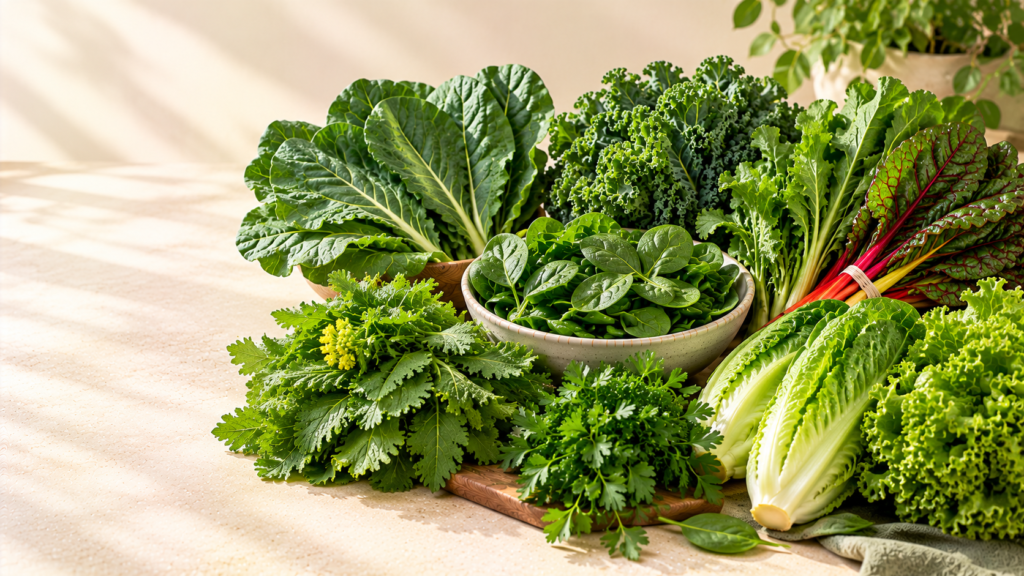
Leafy greens are among the most concentrated sources of vitamin K1. They are versatile, affordable in many regions, and easy to incorporate into home cooking.
1. Collard Greens
Collard greens are an especially rich source of vitamin K. Boil, steam, or sauté the leaves and serve them with beans, grains, or a protein-rich main dish.
2. Spinach
Spinach works well in salads, soups, omelets, lentil dishes, and vegetable curries. Both raw and cooked spinach provide vitamin K, but their nutrient amounts per cup differ because cooking changes the volume.
3. Kale
Kale is another concentrated source of vitamin K. Add it to soups, salads, sautéed vegetables, or smoothies.
4. Turnip Greens
Turnip greens can be steamed, simmered, or sautéed until tender. They are a practical option for people who enjoy dark leafy vegetables.
5. Other Leafy Greens
Swiss chard, mustard greens, parsley, romaine lettuce, and green leaf lettuce can also contribute vitamin K. Rotating different greens adds variety in flavor and other nutrients.
Other Vegetables That Provide Vitamin K
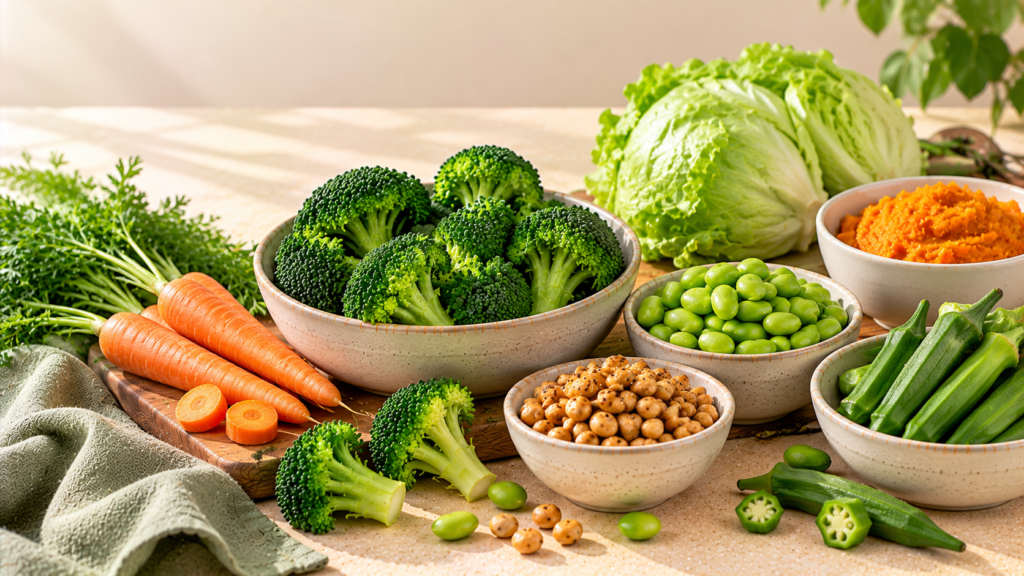
Leafy greens are not the only useful options. Other vegetables contribute vitamin K while also supplying fiber, minerals, and other nutrients.
6. Broccoli
Broccoli is a useful source of vitamin K. Steam it, roast it, or add it to stir-fries and vegetable curries.
7. Okra
Okra provides vitamin K and can be prepared in curries, stews, or sautéed dishes. Its nutrient contribution varies with portion size and preparation.
8. Edamame
Edamame, or young soybeans, provides vitamin K alongside plant-based protein and fiber. Serve it as a snack or add it to rice bowls and salads.
9. Canned Pumpkin
Canned pumpkin contributes a modest amount of vitamin K. Stir it into soups, stews, or savory grain dishes.
10. Carrots
Carrots provide smaller amounts of vitamin K alongside beta-carotene. Eat them raw, roast them, or add them to soups and mixed vegetable dishes.
11. Lettuce
Iceberg lettuce contributes some vitamin K, while darker leafy varieties can provide more. Use lettuce in salads, wraps, and sandwiches.
12. Soybeans
Roasted soybeans provide vitamin K, protein, and other nutrients. They can be eaten as a snack or incorporated into mixed dishes.
Fruits, Oils, and Fermented Foods With Vitamin K
These foods can contribute to overall intake, although many provide less vitamin K per serving than leafy greens.
13. Blueberries
Blueberries contain a modest amount of vitamin K. Add them to oatmeal, yogurt, or fruit salads.
14. Grapes
Grapes provide small amounts of vitamin K and make a convenient fruit snack. Their contribution depends on the serving size.
15. Pomegranate Juice
Pomegranate juice contributes a modest amount of vitamin K. Choose a serving that fits your overall dietary needs, and check the label for added sugars.
16. Carrot Juice
Carrot juice provides some vitamin K alongside other nutrients, including beta-carotene. Compare serving sizes when checking nutrient values.
17. Soybean Oil
Soybean oil is a notable plant-based source of vitamin K1. Use it in appropriate cooking applications and moderate quantities.
18. Canola Oil
Canola oil contributes vitamin K and can be used in cooking or dressings. Its nutrient content varies by product.
19. Olive Oil
Olive oil supplies a smaller amount of vitamin K. It can be used in salad dressings and everyday cooking as part of a balanced eating pattern.
20. Natto
Natto is a traditional Japanese food made from fermented soybeans and is notable for its vitamin K2 content, especially MK-7. It is not as familiar as leafy vegetables in many countries, but it is a useful food to know about when learning the differences between vitamin K1 and vitamin K2.
How Much Vitamin K Do You Need Each Day?
Vitamin K recommendations depend on age and life stage. In the United States, the following values are established as adequate intakes (AIs).
| Age or life stage | Adequate intake per day |
|---|---|
| Birth–6 months | 2 mcg |
| 7–12 months | 2.5 mcg |
| 1–3 years | 30 mcg |
| 4–8 years | 55 mcg |
| 9–13 years | 60 mcg |
| 14–18 years | 75 mcg |
| Adult men, 19+ years | 120 mcg |
| Adult women, 19+ years | 90 mcg |
| Pregnancy, ages 19+ | 90 mcg |
| Breastfeeding, ages 19+ | 90 mcg |
These are general US nutrition reference values, not personalized medical recommendations. Requirements for pregnant or breastfeeding teenagers follow the relevant adolescent guidance.
How Can You Meet Your Daily Vitamin K Needs?
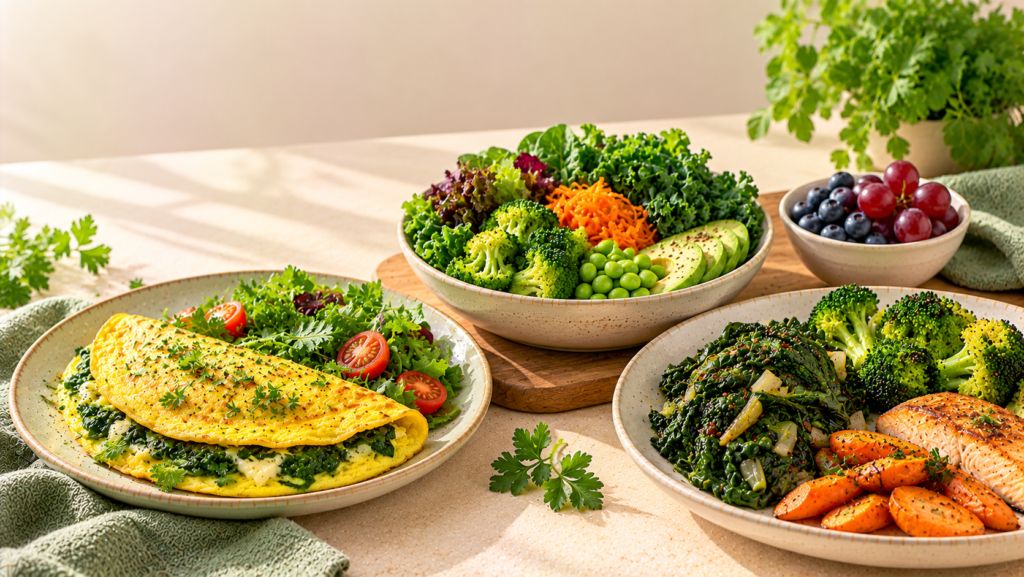
For many adults, a varied diet containing green vegetables, other vegetables, and suitable plant oils can help provide vitamin K. You do not need to rely on one particular food or automatically use supplements.
For example, you might eat spinach at lunch, broccoli with dinner, and other vegetables throughout the week. Exact intake depends on serving sizes, food preparation, and individual needs.
For additional guidance, visit the NIH Office of Dietary Supplements Vitamin K fact sheet.
Practical Ways to Add Vitamin K Rich Foods to Your Diet
Breakfast
- Add spinach to an omelet.
- Serve fruit such as blueberries with oatmeal or yogurt.
- Add a small portion of vegetables to a savory breakfast.
Lunch
- Make a salad with leafy greens, carrots, and other vegetables.
- Add edamame to a grain bowl.
- Include broccoli in a soup or side dish.
Dinner
- Serve collard greens, kale, or turnip greens with your main meal.
- Add broccoli or okra to a vegetable curry.
- Use a suitable plant oil in moderate amounts.
Snacks
- Enjoy blueberries or grapes.
- Try roasted soybeans if you like their flavor and texture.
- Add vegetables to a snack plate with a suitable dip.
Vitamin K and Medication Safety
Vitamin K is essential, but it can interact with certain medications.
If You Take Warfarin
Warfarin is an anticoagulant that works by interfering with vitamin K-dependent clotting processes. Sudden changes in vitamin K intake can affect how the medication works.
- Keep your vitamin K intake consistent from day to day, following your clinician’s advice.
- Do not eliminate leafy greens automatically.
- Discuss major dietary changes with your healthcare professional.
- Ask before starting or stopping a vitamin K supplement.
People taking warfarin can often eat vitamin K-containing vegetables, but consistency and appropriate monitoring are important.
Who May Need Extra Medical Guidance?
People with conditions that interfere with fat absorption, including some gastrointestinal disorders, may be at greater risk of inadequate vitamin K status. Newborns also require special attention because of the risk of vitamin K deficiency bleeding.
If you suspect a deficiency or have a condition affecting nutrient absorption, seek professional advice rather than trying to treat it with food or supplements alone.
Common Mistakes When Choosing Vitamin K Foods
- Comparing different serving sizes: A cup of raw leaves is not equivalent to half a cup of cooked greens.
- Assuming every green vegetable contains the same amount: Vitamin K content varies substantially among foods.
- Ignoring variety: A varied diet provides a broader range of nutrients.
- Making sudden dietary changes while taking warfarin: Consistency is particularly important for people using this medication.
- Taking supplements without a clear need: Supplements are not necessary for everyone and should be considered in light of individual circumstances.
Use these placeholders where the links naturally support the article:
- Vitamin K Benefits for Bone and Blood Health
- NIH Office of Dietary Supplements — Vitamin K Fact Sheet
- USDA FoodData Central — Search Nutrient Values for Individual Foods
Only insert internal URLs that exist on your website. The USDA database is useful when you want to compare a particular food, portion, or preparation method.
Frequently Asked Questions
1. What are the best vitamin K rich foods?
Collard greens, turnip greens, spinach, kale, and broccoli are among the best-known sources of vitamin K1. Natto is a notable source of vitamin K2.
2. Which vegetables are highest in vitamin K?
Collard greens, turnip greens, kale, and spinach are particularly rich sources. The exact amount depends on the serving size and whether the vegetables are raw or cooked.
3. Which fruits contain vitamin K?
Blueberries, grapes, and some other fruits provide vitamin K in modest amounts. They contribute to dietary variety but are generally less concentrated sources than leafy greens.
4. What is the difference between vitamin K1 and K2 foods?
Vitamin K1 occurs mainly in leafy green vegetables and certain plant oils. Vitamin K2 is found in fermented foods such as natto and in varying amounts in some animal products and cheeses.
5. How much vitamin K should adults get daily?
The US adequate intake is 120 mcg daily for adult men and 90 mcg for adult women. These are general reference values for healthy people.
6. Can people taking warfarin eat vitamin K-rich foods?
Many people taking warfarin can eat these foods, but they should keep vitamin K intake consistent and follow their healthcare professional’s instructions. They should not make major changes without discussing them with their clinician.
7. Do I need a vitamin K supplement if I eat vegetables?
Not necessarily. Many people can obtain vitamin K through a varied diet. Whether supplementation is appropriate depends on individual circumstances and professional advice.
Conclusion
Vitamin K rich foods can be incorporated into everyday meals without complicated planning. Leafy greens such as collard greens, spinach, kale, and turnip greens are especially useful sources, while broccoli, soy foods, certain plant oils, fruits, and fermented foods add variety.
Use this complete food guide to compare sources, understand serving sizes, and build a balanced eating pattern. If you take warfarin or have a condition that affects nutrient absorption, seek individualized advice before making major dietary changes.
1 thought on “Vitamin K Rich Foods: Complete Food Guide”