
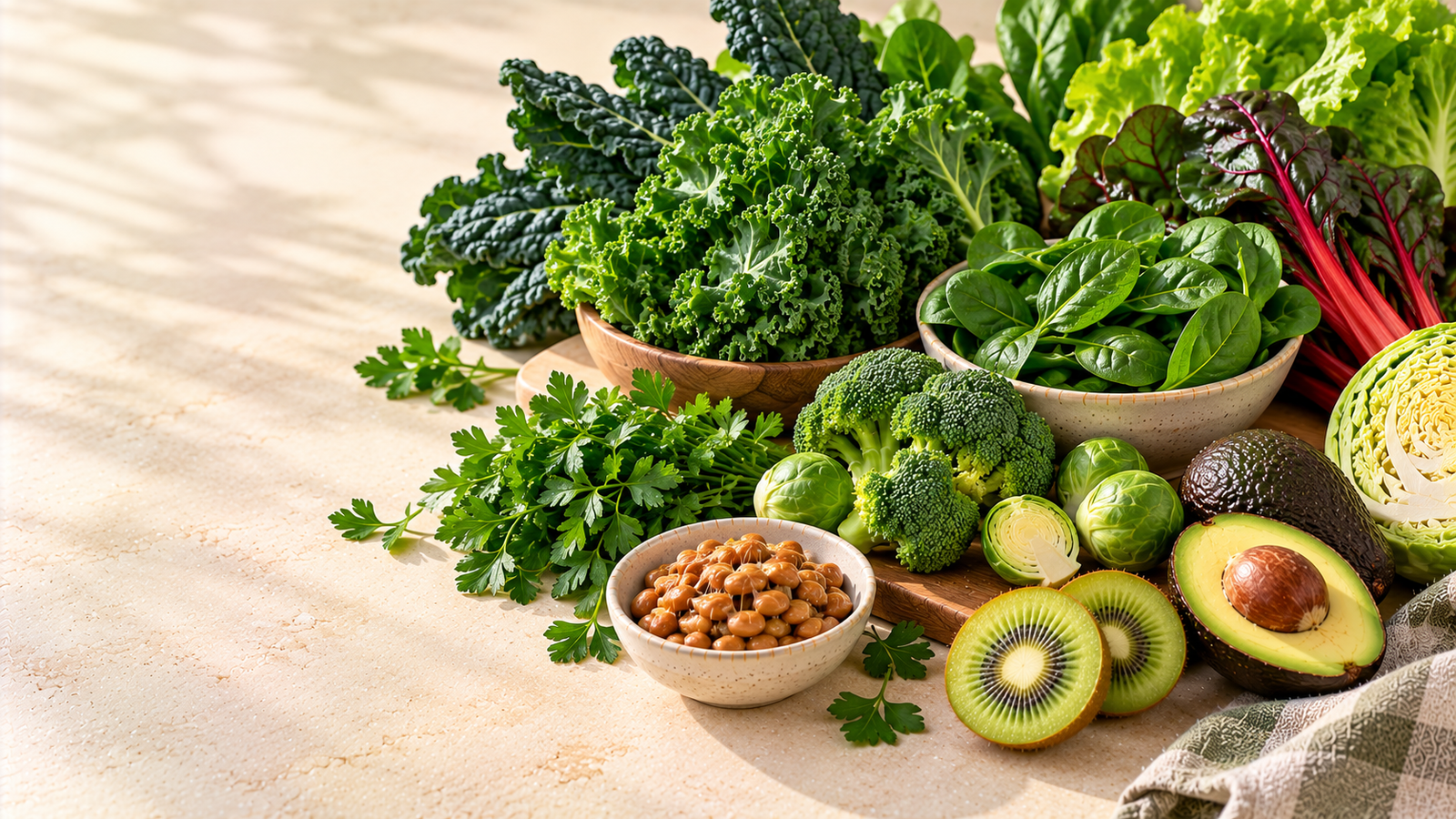
Vitamin K rich foods help supply an essential nutrient that supports normal blood clotting and bone health. Many of the best sources are familiar foods, including kale, spinach, collard greens, broccoli, and Brussels sprouts. Other sources include certain plant oils and fermented foods such as natto.
Vitamin K comes mainly in two forms in the diet: vitamin K1, found largely in green vegetables and some plant oils, and vitamin K2, found in certain fermented foods and animal products. Eating a varied diet can help you obtain vitamin K alongside other essential nutrients.
This guide explores 20 vitamin K-rich foods, compares approximate amounts, explains daily requirements, and shares simple ways to include these foods in balanced meals.
Most Important Points
- Leafy green vegetables are among the richest sources of vitamin K1.
- Kale, collard greens, spinach, and Swiss chard are especially useful food choices.
- Natto is a notable source of vitamin K2.
- Vitamin K is fat-soluble, so eating vegetables with some dietary fat can support absorption.
- People taking warfarin or certain other anticoagulants should keep vitamin K intake consistent and follow their clinician’s advice.
What Is Vitamin K?
Vitamin K is a fat-soluble vitamin that helps the body produce proteins involved in blood clotting. It also supports proteins involved in bone metabolism.
Vitamin K1 vs. Vitamin K2
Vitamin K1 (phylloquinone) is found mainly in green leafy vegetables, broccoli, and certain vegetable oils. It is the main form of vitamin K in many diets.
Vitamin K2 (menaquinones) occurs in fermented foods such as natto and in varying amounts in some cheeses, eggs, and animal products. The amount depends on the food and how it is produced.
Both forms contribute to vitamin K nutrition, but they differ in food sources and how the body processes them.
For more detailed nutrition guidance, see the NIH Office of Dietary Supplements Vitamin K fact sheet.
20 Vitamin K Rich Foods: Food Sources Chart
The following chart compares 20 foods that provide vitamin K. Amounts are approximate and may vary by variety, cooking method, serving size, and product formulation.
| No. | Food | Typical serving | Approx. vitamin K |
|---|---|---|---|
| 1 | Cooked kale | ½ cup | 531 mcg |
| 2 | Cooked collard greens | ½ cup | 530 mcg |
| 3 | Cooked spinach | ½ cup | 444 mcg |
| 4 | Cooked Swiss chard | ½ cup | 299 mcg |
| 5 | Cooked turnip greens | ½ cup | 265 mcg |
| 6 | Fresh parsley | ¼ cup chopped | 246 mcg |
| 7 | Cooked broccoli | ½ cup | 110 mcg |
| 8 | Cooked Brussels sprouts | ½ cup | 109 mcg |
| 9 | Green leaf lettuce | 1 cup shredded | 100 mcg |
| 10 | Raw spinach | 1 cup | 145 mcg |
| 11 | Raw kale | 1 cup chopped | 113 mcg |
| 12 | Raw cabbage | 1 cup shredded | 68 mcg |
| 13 | Cooked asparagus | ½ cup | 33 mcg |
| 14 | Green beans | ½ cup cooked | 30 mcg |
| 15 | Kiwi | 1 medium | 28 mcg |
| 16 | Soybean oil | 1 tablespoon | 25 mcg |
| 17 | Avocado | ½ fruit | 21 mcg |
| 18 | Green peas | ½ cup cooked | 21 mcg |
| 19 | Canola oil | 1 tablespoon | 10 mcg |
| 20 | Cucumber with peel | ½ cup sliced | 8 mcg |
Values are approximate reference figures, not laboratory measurements of every product. The table is intended for food comparison; check a reliable food-composition database for exact entries and preparation methods.
Which Vitamin K Foods Are the Best Choices?
- For high vitamin K intake: Kale, collard greens, spinach, and Swiss chard.
- For everyday meals: Broccoli, Brussels sprouts, cabbage, and green beans.
- For salads: Spinach, green leaf lettuce, parsley, and cucumber.
- For fruit options: Kiwi and avocado.
- For cooking: Certain plant oils, including soybean and canola oil, provide vitamin K in smaller amounts.
A food does not need to be the highest in vitamin K to be a worthwhile addition to your diet. Choose a variety that fits your tastes, budget, and nutritional needs.
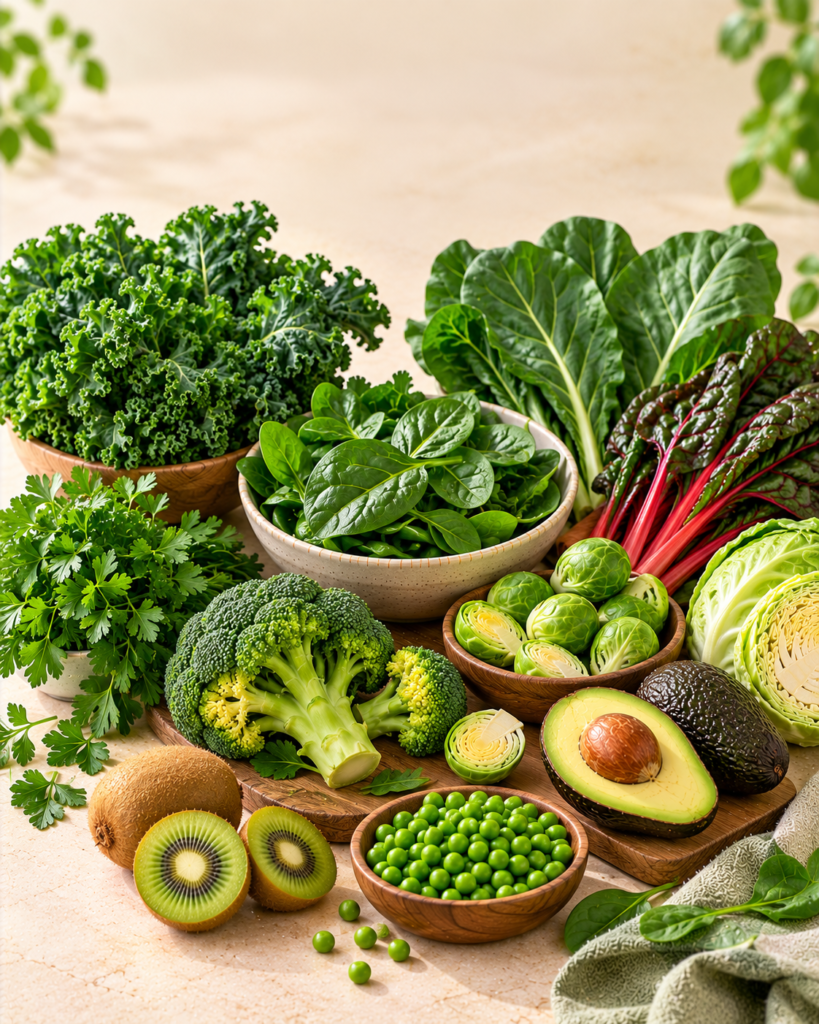
Best Leafy Greens High in Vitamin K
Leafy green vegetables are among the most concentrated sources of vitamin K1. Adding them to meals is one of the simplest ways to increase your intake.
1. Kale
Kale is a particularly rich source of vitamin K. Use it in salads, soups, sautéed vegetable dishes, or blended green smoothies. Cooking changes its volume, so a half-cup cooked serving can contain much more vitamin K than a cup of loosely packed raw leaves.
2. Spinach
Spinach works well in omelets, lentil dishes, soups, salads, and vegetable curries. Both raw and cooked spinach provide vitamin K, but their amounts per cup differ because cooking reduces the volume of the leaves.
3. Collard Greens
Collard greens are especially rich in vitamin K. Wash the leaves thoroughly, remove tough stems if preferred, and simmer or sauté them until tender.
4. Swiss Chard
Swiss chard provides vitamin K along with other nutrients. Add its leaves to soups, grain bowls, or sautéed vegetable dishes.
5. Turnip Greens
Turnip greens are a useful way to add leafy vegetables to your diet. They can be steamed, simmered, or sautéed with garlic and a small amount of cooking oil.
6. Parsley
Parsley is more than a garnish. Fresh chopped parsley can contribute meaningful vitamin K when used in generous amounts. Add it to salads, sauces, soups, and homemade dressings.
Other Vegetables That Provide Vitamin K
7. Broccoli
Broccoli supplies vitamin K and other nutrients, including vitamin C and fiber. Steam it, roast it, or add it to stir-fries.
8. Brussels Sprouts
Brussels sprouts provide vitamin K and can be roasted, steamed, or sautéed. Avoid overcooking them if you prefer a firmer texture.
9. Cabbage
Green cabbage provides vitamin K and is easy to use in salads, slaws, soups, and cooked vegetable dishes.
10. Green Leaf Lettuce
Green leaf lettuce contributes vitamin K to salads, sandwiches, and wraps. Combine it with other vegetables for a more varied meal.
11. Asparagus
Asparagus contributes vitamin K in addition to folate and other nutrients. Steam, roast, or grill it as a side dish.
12. Green Beans
Green beans are an accessible vegetable source of vitamin K. Serve them steamed, stir-fried, or mixed into soups and casseroles.
13. Green Peas
Green peas contribute vitamin K along with fiber and plant-based protein. Add them to rice dishes, pasta, soups, and vegetable curries.
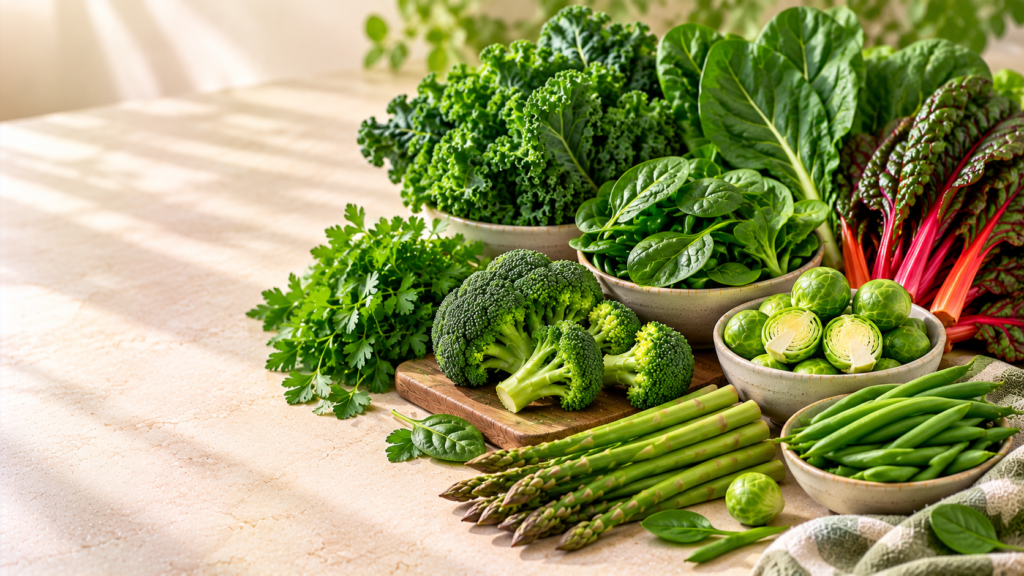
Fruits, Plant Oils, and Fermented Foods With Vitamin K
Leafy greens are important sources, but they are not the only foods that contribute vitamin K.
14. Kiwi
Kiwi provides a modest amount of vitamin K alongside vitamin C and fiber. Eat it fresh, add it to fruit salads, or serve it with breakfast.
15. Avocado
Avocado contains vitamin K and unsaturated fats. Add slices to sandwiches, salads, grain bowls, or whole-grain toast.
16. Soybean Oil
Soybean oil provides vitamin K and is commonly used in cooking. Its nutrient contribution depends on the amount used and the product’s composition.
17. Canola Oil
Canola oil contributes a smaller amount of vitamin K. Use it in moderation for dressings or cooking, depending on the recipe.
18. Cucumber With Peel
Cucumber is not a concentrated vitamin K source, but it can contribute small amounts when eaten with the peel. Add it to salads, sandwiches, or yogurt-based side dishes.
19. Natto
Natto is a traditional Japanese food made from fermented soybeans. It is notable for its vitamin K2 content, particularly the form called menaquinone-7 (MK-7). Natto may be less familiar than vegetables, but it is an important example of a fermented food containing vitamin K.
20. Certain Cheeses
Some cheeses provide vitamin K2, but the amounts vary considerably by cheese type, fermentation process, and production method. Cheese can contribute vitamin K as part of a balanced diet, although it is not generally as concentrated a source as leafy greens.
Note: The food chart emphasizes foods with useful or commonly reported vitamin K contributions. Exact values for natto and cheeses can vary substantially, so consult a specific food database entry or product label when comparing them.
How Much Vitamin K Do You Need Daily?
Vitamin K requirements are expressed as adequate intake (AI) in US dietary reference guidelines, rather than a recommended dietary allowance.
| Age or life stage | Adequate intake per day |
|---|---|
| Birth–6 months | 2 mcg |
| 7–12 months | 2.5 mcg |
| 1–3 years | 30 mcg |
| 4–8 years | 55 mcg |
| 9–13 years | 60 mcg |
| 14–18 years | 75 mcg |
| Adult men, 19 years and older | 120 mcg |
| Adult women, 19 years and older | 90 mcg |
| Pregnancy, ages 19 and older | 90 mcg |
| Breastfeeding, ages 19 and older | 90 mcg |
These are general US reference values. Requirements for younger pregnant or breastfeeding people follow the relevant age-group guidance. Your healthcare professional can advise you about individual needs.
For authoritative details, read the NIH Office of Dietary Supplements Vitamin K fact sheet.
How to Add More Vitamin K Rich Foods to Your Diet
You can incorporate vitamin K-rich foods into everyday meals without following a complicated diet.
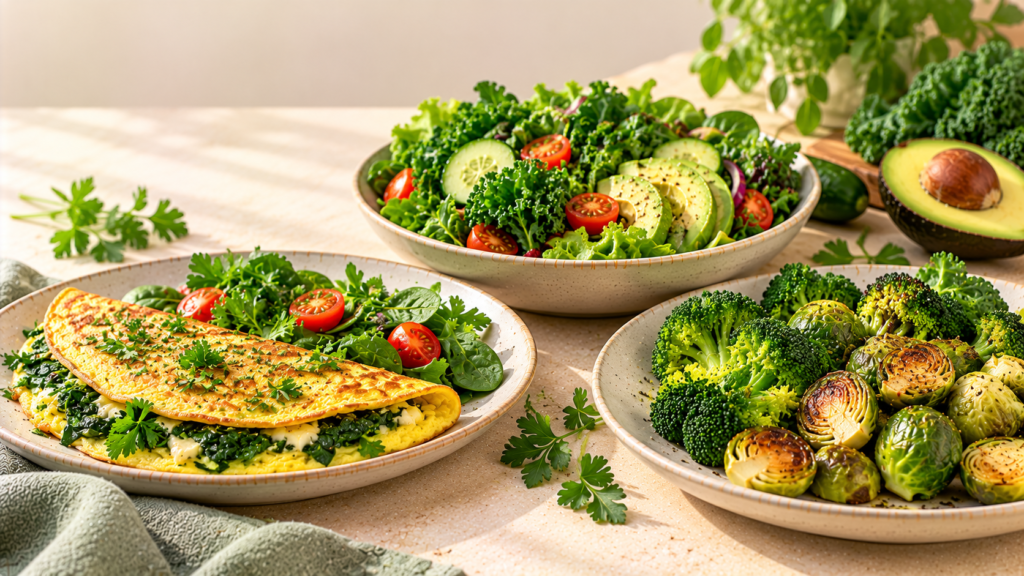
Breakfast Ideas
- Add spinach to an omelet.
- Serve kiwi with yogurt and oats.
- Add chopped parsley to savory eggs or a breakfast wrap.
Lunch Ideas
- Prepare a salad with spinach, green leaf lettuce, cucumber, and avocado.
- Add broccoli or green peas to a grain bowl.
- Include cabbage in a sandwich or wrap.
Dinner Ideas
- Serve cooked kale or collard greens alongside your main dish.
- Add spinach to lentil soup or vegetable curry.
- Roast Brussels sprouts or broccoli as a side dish.
- Use a moderate amount of cooking oil in vegetable recipes.
Snack Ideas
- Eat kiwi or another fruit you enjoy.
- Serve cucumber with a yogurt dip.
- Add avocado to whole-grain toast.
Important Safety Advice: Vitamin K and Blood-Thinning Medicines
Vitamin K is essential for normal blood clotting, but people taking warfarin need special care with changes in their vitamin K intake.
- Do not suddenly make major changes to your intake of leafy green vegetables without discussing the change with your healthcare professional.
- Aim for a consistent intake from week to week, following your clinician’s advice.
- Do not stop prescribed medication or change its dose based on a food chart.
- Ask your pharmacist or healthcare professional before starting vitamin K supplements.
This does not mean people taking warfarin must avoid green vegetables. The key is to follow individualized advice and keep intake consistent.
Common Mistakes to Avoid When Choosing Vitamin K Foods
Assuming All Green Vegetables Contain the Same Amount
Kale, spinach, lettuce, and broccoli differ in vitamin K content. Serving size and preparation also affect the amount you eat.
Comparing Raw and Cooked Portions Directly
Cooking changes a vegetable’s volume. A half-cup of cooked spinach contains a different amount of vitamin K than a cup of raw leaves, so compare like-for-like serving sizes.
Ignoring Food Variety
Eating only one vegetable is unnecessary. A varied diet helps provide fiber and a broader range of nutrients.
Taking Supplements Without a Clear Reason
Vitamin K supplements are not necessary for everyone. If you have a medical condition, take anticoagulant medication, or suspect a deficiency, seek professional guidance before supplementing.
Add relevant links naturally within your published article:
- https://bloomivita.com/vitamin-e-benefits/
- NIH Office of Dietary Supplements — Vitamin K Fact Sheet
- USDA FoodData Central — Nutrient Information for Individual Foods
Use your actual published internal URLs, and ensure each link adds useful context for readers.
Frequently Asked Questions
1. What are the best vitamin K rich foods?
Kale, collard greens, spinach, Swiss chard, turnip greens, and parsley are among the richest food sources of vitamin K1. Natto is a notable source of vitamin K2.
2. Which vegetables are highest in vitamin K?
Cooked kale, collard greens, spinach, Swiss chard, and turnip greens are excellent choices. The amount depends on the serving size and preparation method.
3. Which fruits contain vitamin K?
Kiwi and avocado provide vitamin K, although most fruits contain much less than leafy green vegetables. Fruit can still contribute to a varied, balanced diet.
4. Are vitamin K1 and vitamin K2 found in the same foods?
Vitamin K1 occurs mainly in leafy green vegetables and some plant oils. Vitamin K2 occurs in fermented foods such as natto and in varying amounts in some cheeses and animal products.
5. How can I get more vitamin K naturally?
Include leafy greens, broccoli, Brussels sprouts, cabbage, and other vitamin K-containing foods in your regular meals. Vary your food choices and use appropriate serving sizes.
6. Can you eat vitamin K-rich foods while taking warfarin?
Many people taking warfarin can eat vitamin K-containing vegetables, but keeping intake consistent is important. Discuss significant dietary changes with your healthcare professional rather than eliminating these foods automatically.
7. Does cooking affect vitamin K levels?
Cooking can change the volume and measured nutrient concentration of vegetables. The effect depends on the food and cooking method, so raw and cooked values should not be compared without accounting for serving size.
8. How much vitamin K should adults get daily?
The US adequate intake is 120 mcg per day for adult men and 90 mcg per day for adult women. These are general reference values, not individualized medical recommendations.
Conclusion
Adding vitamin K rich foods to your diet can be straightforward. Leafy greens such as kale, spinach, collard greens, and Swiss chard are excellent sources, while broccoli, Brussels sprouts, kiwi, avocado, plant oils, and certain fermented foods provide additional options.
Use the food chart to plan varied meals, pay attention to serving sizes, and choose foods that suit your budget and preferences. If you take warfarin, focus on maintaining a consistent vitamin K intake with guidance from your healthcare professional.
A varied, balanced eating pattern is a practical way to obtain vitamin K alongside the other nutrients your body needs.
1 thought on “20 Vitamin K Rich Foods to Add to Your Diet”