
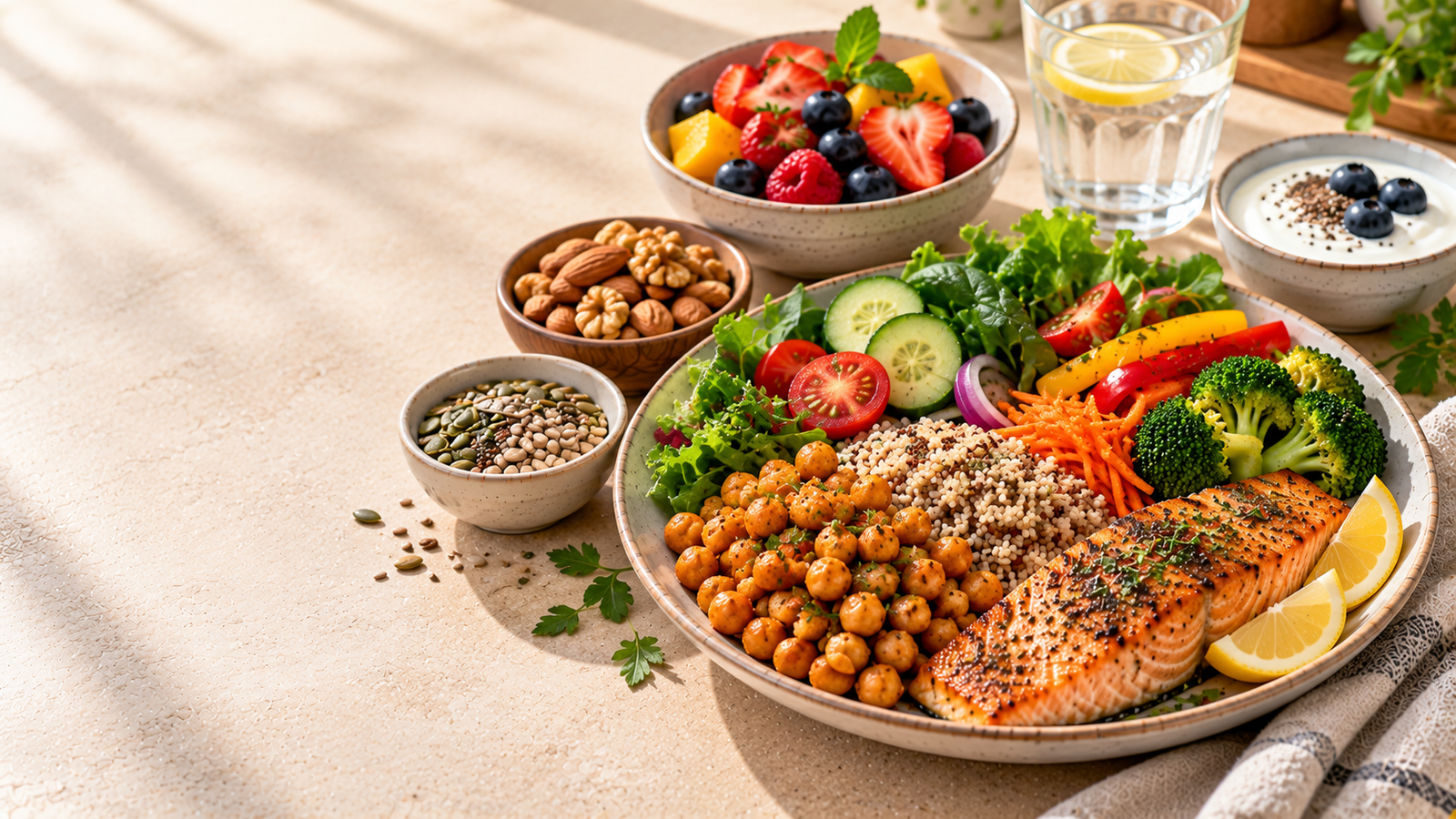
What is a balanced diet? A balanced diet is an eating pattern that provides your body with the energy and essential nutrients it needs from a variety of foods in appropriate amounts. It includes vegetables, fruits, whole grains, protein-rich foods, dairy or suitable alternatives, healthy fats, and enough water.
A balanced diet does not mean eating perfectly at every meal, avoiding your favorite foods, or following an expensive meal plan. It means choosing a variety of nutritious foods most of the time and adjusting your meals to suit your needs, preferences, culture, and budget.
In this guide, you will learn the main components of a balanced diet, how to build balanced meals, which foods to eat more often, and how to make healthy eating practical in everyday life.
Key Takeaways
- A balanced diet provides energy, protein, healthy fats, carbohydrates, vitamins, minerals, fiber, and water.
- Eat a variety of vegetables, fruits, whole grains, and protein-rich foods.
- Choose unsaturated fats more often and limit excessive added sugar, sodium, and saturated fat.
- Portion sizes should reflect your hunger, activity level, age, and individual needs.
- You do not need to eliminate entire food groups unless medically necessary or appropriate for your dietary requirements.
- Affordable staples such as lentils, beans, seasonal produce, eggs, oats, and whole grains can support healthy eating.
- Consistency and variety matter more than achieving a perfect meal every day.
What Is a Balanced Diet and Why Is It Important?
A balanced diet supplies different nutrients in amounts that help the body function properly. No single food contains everything you need, which is why eating a variety of foods is important.
Your body uses nutrients for many essential processes:
- Energy: Carbohydrates, fats, and protein supply energy.
- Growth and repair: Protein helps build and maintain tissues.
- Bone health: Calcium, vitamin D, protein, and other nutrients support healthy bones.
- Immune function: Adequate nutrition helps maintain normal immune function.
- Digestion: Fiber supports bowel regularity and digestive health.
- Nerve and muscle function: Minerals such as potassium, magnesium, and calcium help regulate normal muscle and nerve activity.
A balanced diet can help you meet your nutritional needs and support long-term health. However, no single eating pattern guarantees that you will avoid disease, and nutritional needs vary from person to person.
What Are the Main Components of a Balanced Diet?
A balanced diet includes several food groups that provide different combinations of nutrients.
1. Vegetables and Fruits
Vegetables and fruits supply vitamins, minerals, fiber, water, and beneficial plant compounds. Different varieties provide different nutrients, so eating a range of colors and types is helpful.
Examples include:
- Leafy greens such as spinach.
- Broccoli, cabbage, and cauliflower.
- Carrots, pumpkin, and sweet potatoes.
- Tomatoes and bell peppers.
- Apples, bananas, oranges, guava, and berries.
Try adding fruit to breakfast, including vegetables with lunch and dinner, and choosing seasonal produce when possible.
Fresh, frozen, and many canned fruits and vegetables can all contribute to a healthy diet. When buying canned options, check for added sugar or excessive sodium.
2. Whole Grains and Other Starchy Foods
Carbohydrates are an important energy source. Whole grains also provide fiber, B vitamins, and minerals.
Examples include:
- Oats.
- Whole-wheat bread and roti.
- Brown rice.
- Barley.
- Whole-grain cereals.
- Millet and other grains.
- Potatoes and sweet potatoes.
Whole grains are generally higher in fiber than refined grains, although some refined grain products are fortified. You do not have to eliminate white rice, bread, or other familiar staples. Replacing some refined grains with whole-grain options is a practical way to increase dietary variety and fiber.
3. Protein-Rich Foods
Protein supports tissue repair, muscle maintenance, enzymes, and other important functions.
Useful protein sources include:
- Eggs.
- Fish and seafood.
- Chicken and other poultry.
- Milk, yogurt, and other dairy foods.
- Lentils, chickpeas, and beans.
- Tofu and other soy foods.
- Nuts and seeds.
Plant-based protein foods often provide fiber and other nutrients as well. Including a variety of protein sources across your meals can help you meet your needs.
4. Dairy Foods or Suitable Alternatives
Milk, yogurt, and some cheeses provide protein and calcium. Depending on the product, they may also provide vitamin B12, iodine, and vitamin D.
If you do not consume dairy, choose suitable alternatives such as fortified soy drinks or other fortified plant-based products. Compare nutrition labels because plant-based beverages vary considerably in protein, calcium, vitamin D, and added sugar.
5. Healthy Fats
Fat is essential for cell structure, energy, and the absorption of vitamins A, D, E, and K.
Sources of unsaturated fats include:
- Olive and other unsaturated vegetable oils.
- Walnuts and almonds.
- Chia and flax seeds.
- Avocados.
- Oily fish such as sardines and salmon.
These foods can form part of a balanced diet. Because fats are energy-dense, moderate portions are often appropriate. Choose unsaturated fats more often than foods high in saturated fat, and avoid industrial trans fats where possible.
6. Water and Other Fluids
Water supports digestion, circulation, temperature regulation, and many other bodily functions.
You can obtain water from drinking water, other beverages, and foods such as fruit, vegetables, and soups. Needs vary with climate, activity, body size, and health.
Drink regularly throughout the day, paying attention to thirst and circumstances that increase fluid loss. Follow medical advice if you have been instructed to limit your fluid intake.
What Should a Balanced Diet Plate Look Like?
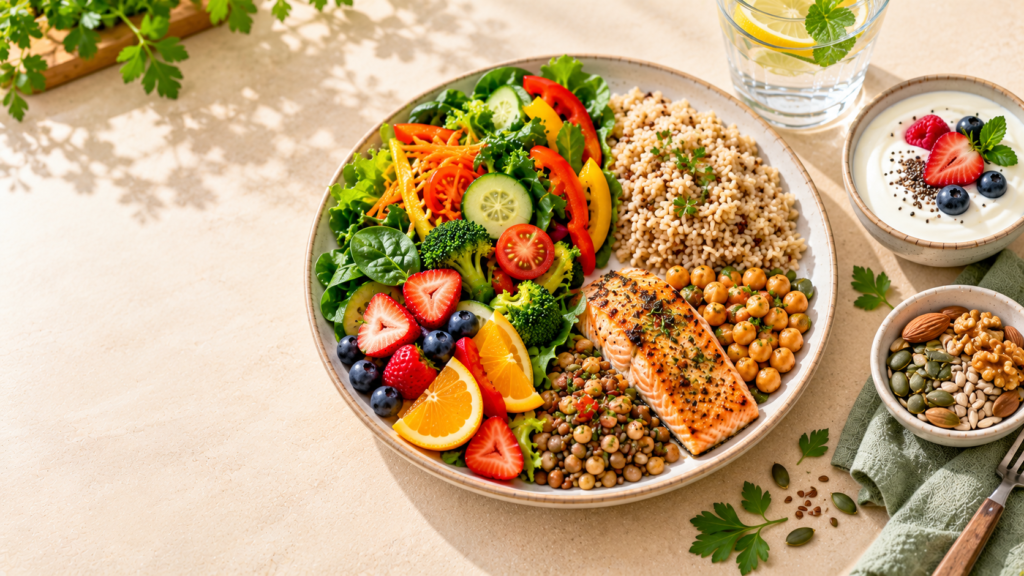
A simple way to plan a balanced meal is to use a plate as a visual guide. One widely used approach is to fill approximately half your plate with vegetables and fruit, one-quarter with protein foods, and one-quarter with whole grains or other starchy foods.

This is a flexible guide rather than a strict rule. Your ideal portions depend on your energy needs, appetite, activity, and medical circumstances. Some meals, such as soups, curries, sandwiches, or mixed dishes, may not fit neatly into separate sections.
Example of a balanced plate
| Plate section | Food examples | Why it helps |
|---|---|---|
| Half: vegetables and fruit | Spinach, carrots, broccoli, tomatoes, seasonal fruit | Fiber, vitamins, minerals, and beneficial plant compounds |
| One-quarter: protein | Eggs, fish, chicken, tofu, beans, or lentils | Protein and varying amounts of iron, zinc, and other nutrients |
| One-quarter: grains or starchy foods | Brown rice, whole-wheat roti, oats, or potatoes | Energy, with whole grains also contributing fiber |
| Optional additions | Yogurt, nuts, seeds, or a small amount of oil | Additional protein, calcium, healthy fats, and other nutrients |
How to Build a Balanced Diet With Everyday Foods
You do not need specialty products or expensive ingredients to eat well. Start with familiar foods and combine them to provide a range of nutrients.
Breakfast ideas
- Oatmeal with milk or a fortified alternative and a banana.
- Eggs with whole-wheat toast and tomatoes.
- Plain yogurt with fruit, oats, and a few nuts.
- Whole-wheat roti with eggs or beans and vegetables.
Lunch ideas
- Lentil curry with whole-wheat roti and spinach.
- Rice with chickpeas and a vegetable side.
- A chicken, egg, or tofu sandwich with vegetables.
- Bean soup with whole-grain bread and fruit.
Dinner ideas
- Fish with potatoes and cooked vegetables.
- Beans with rice and a tomato salad.
- Chicken or tofu with vegetables and whole grains.
- A vegetable and lentil curry with roti and plain yogurt.
Snack ideas
- Seasonal fruit.
- Unsalted nuts or seeds.
- Plain yogurt.
- Hummus with vegetables.
- A boiled egg with whole-grain toast.
These are examples, not a prescribed meal plan. Adjust portions and ingredients to your hunger, preferences, allergies, dietary requirements, and budget.
How to Get More Nutrients From Your Everyday Diet
How Much of Each Food Group Do You Need?
There is no single portion size that suits every adult. Your needs depend on age, sex, body size, activity level, pregnancy or breastfeeding, and health conditions.
Instead of following rigid quantities, use these practical principles:
- Include vegetables and fruit regularly throughout the day.
- Choose whole grains or other suitable starchy foods as part of meals.
- Include a source of protein in main meals.
- Add moderate amounts of unsaturated fats.
- Drink enough fluids for your circumstances.
- Adjust portions to your hunger, activity, and individual nutritional needs.
For more detailed recommendations, consult your country’s dietary guidelines or a qualified dietitian. In the United States, the USDA MyPlate resource provides food-group guidance and practical meal-planning information.
Healthy Food Swaps for a More Balanced Diet
Small changes are often easier to maintain than completely changing your eating habits.
| Instead of | Try more often |
|---|---|
| Sugary drinks | Water or unsweetened drinks |
| Refined grains at every meal | Whole-grain options for some meals |
| Snacks made mainly from sweets | Fruit, yogurt, nuts, or other suitable options |
| Meals with little or no vegetables | Add a vegetable side or include vegetables in the dish |
| Meat as the only protein choice | Rotate with beans, lentils, eggs, fish, or tofu |
| Large amounts of butter or other saturated fats | Use suitable unsaturated oils more often |
These are options, not rules. Your overall eating pattern matters more than one individual food choice.
How Does a Balanced Diet Help Your Health?
A balanced diet supports normal body functions and helps you obtain the nutrients needed for everyday life. Its benefits come from the overall pattern of eating, not from one particular food.
Supports energy and concentration
Carbohydrates and fats provide energy, while protein and micronutrients support the processes that allow your body to use that energy. Eating regular, satisfying meals can help you maintain a consistent eating routine.
Supports digestion
Fiber from vegetables, fruit, legumes, and whole grains helps support bowel regularity. Increasing fiber gradually and drinking adequate fluids can help you tolerate a higher-fiber diet.
Helps maintain muscle and bone health
Protein supports muscle maintenance, while calcium, vitamin D, and other nutrients contribute to healthy bones. Physical activity, including appropriate muscle-strengthening and weight-bearing activity, also plays an important role.
Supports heart health
A dietary pattern that includes vegetables, fruit, whole grains, legumes, nuts, and suitable sources of unsaturated fats—and limits excessive sodium, added sugars, and saturated fat—can support cardiovascular health.
Helps meet essential nutrient requirements
Eating a range of foods makes it easier to obtain different vitamins and minerals. However, a balanced diet does not guarantee that every individual requirement will be met, especially when medical conditions, dietary restrictions, or absorption problems are present.
World Health Organization — Healthy Diet
What Foods Should You Limit in a Balanced Diet?
A balanced diet does not require you to ban specific foods. Instead, consider how often you eat them and whether they are displacing more nutritious choices.
Foods and drinks to limit include:
- Sugary drinks and foods high in added sugar.
- Foods high in sodium, especially when eaten frequently.
- Products containing substantial amounts of saturated fat.
- Highly processed snacks that provide few beneficial nutrients relative to their calories.
Some processed foods, such as frozen vegetables, canned beans, plain yogurt, and fortified cereals, can be nutritious and convenient. The term processed alone does not determine whether a food is healthy.
A practical approach
Enjoy your favorite foods in a way that fits your overall eating pattern. Add vegetables to a meal, choose water more often, or include beans and whole grains during the week. These small changes can improve your diet without unnecessary restriction.
How to Eat a Balanced Diet on a Budget
Healthy eating can be affordable when you plan around accessible ingredients and reduce food waste.

Try these practical strategies:
- Buy seasonal produce. Locally available fruits and vegetables can offer good value.
- Use beans and lentils regularly. They provide protein, fiber, and several vitamins and minerals.
- Choose frozen vegetables. Plain frozen vegetables can be a convenient alternative to fresh produce.
- Plan meals before shopping. Make a list based on meals you intend to prepare.
- Use leftovers safely. Incorporate leftover vegetables, grains, and beans into soups, curries, or other dishes.
- Compare prices and nutrition labels. Choose products that offer good value and suit your needs.
- Prepare staple foods in batches. Cooking grains or legumes ahead of time can make balanced meals easier to assemble.
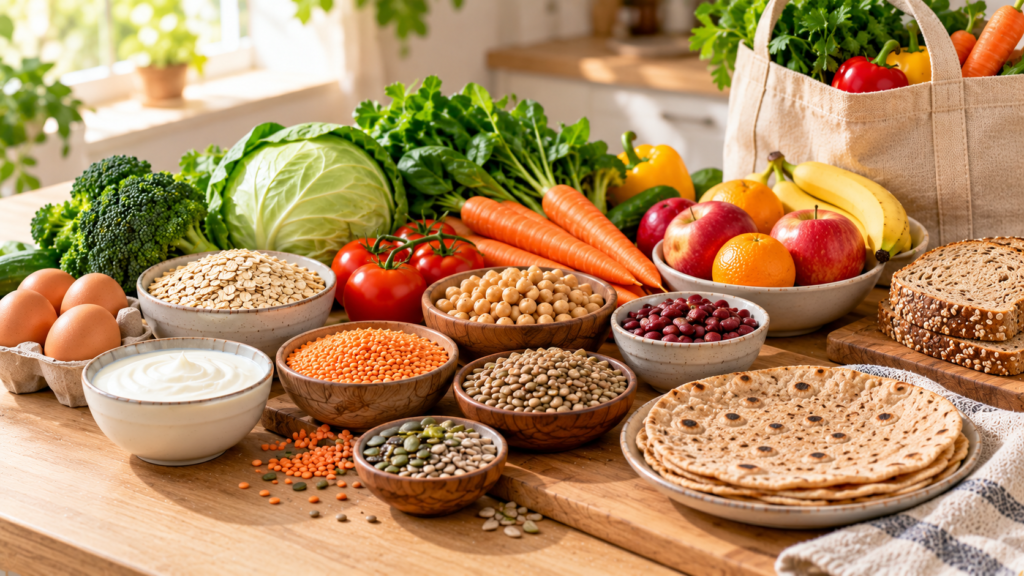
Affordable staples such as oats, eggs, seasonal produce, lentils, beans, and whole-wheat roti can all be part of a nutritious eating pattern.
Common Balanced Diet Mistakes to Avoid
Even when you are trying to eat well, a few common habits can make balanced eating more difficult.
Skipping food groups unnecessarily
Removing entire food groups without a suitable replacement may make it harder to obtain certain nutrients. If you avoid dairy, for example, consider appropriate calcium- and vitamin D-fortified alternatives.
Focusing only on calories
Calories provide information about energy, but they do not tell you everything about a food’s nutritional value. Fiber, protein, vitamins, minerals, and the type of fat also matter.
Assuming healthy eating must be expensive
Many affordable foods are nutritious. Beans, lentils, oats, eggs, seasonal vegetables, and whole grains can form the foundation of practical meals.
Taking supplements instead of improving your diet
Supplements can be useful when appropriate, but they do not replace the fiber and full range of beneficial compounds supplied by a variety of foods. High doses of certain vitamins and minerals can also be harmful.
Expecting every meal to be perfect
One meal does not determine the quality of your whole diet. Aim for a varied eating pattern over time, and make adjustments that you can realistically maintain.
A Simple One-Day Balanced Diet Example
Use this sample as inspiration, not a strict prescription. Portion sizes and food choices should be adjusted to your personal needs.
| Meal | Example | Food groups represented |
|---|---|---|
| Breakfast | Oats with milk or fortified soy drink, banana, and seeds | Whole grains, fruit, protein or fortified alternative |
| Morning snack | Guava, orange, or another seasonal fruit | Fruit |
| Lunch | Lentil curry, whole-wheat roti, and spinach or other vegetables | Legumes, grains, vegetables |
| Afternoon snack | Plain yogurt or a suitable fortified alternative | Dairy or alternative |
| Dinner | Fish, eggs, tofu, or beans with rice or potatoes and vegetables | Protein, starchy foods, vegetables |
| Drinks | Water throughout the day | Hydration |
This example illustrates variety, not a guarantee that every vitamin, mineral, or energy requirement is met. Your needs depend on your portions, ingredients, life stage, and health.
Frequently Asked Questions About a Balanced Diet
What is a balanced diet in simple words?
A balanced diet is an eating pattern that provides the energy and nutrients your body needs through a variety of foods, including vegetables, fruit, grains, protein foods, healthy fats, and water.
What are the five main components of a balanced diet?
A simple way to describe the main food groups is vegetables and fruit, grains and starchy foods, protein foods, dairy or suitable alternatives, and healthy fats. Water is also essential, and dietary guidance varies by country.
What is an example of a balanced meal?
A meal containing lentils or fish, whole-wheat roti or brown rice, and a serving of vegetables is one example. Fruit or yogurt can be included elsewhere in the meal or day, depending on your needs.
Can I eat rice and roti on a balanced diet?
Yes. Rice and roti can both fit into a balanced diet. Whole-grain options generally provide more fiber, but portion sizes, meal variety, and your overall eating pattern matter too.
Do I need to avoid sugar completely?
No. Most people do not need to eliminate all sugar-containing foods. It is helpful to limit excessive added sugar, particularly from sugary drinks and foods that provide few other nutrients.
Is a balanced diet the same for everyone?
No. Nutritional needs vary with age, activity level, health conditions, food preferences, culture, and life stage. A balanced eating pattern should be adapted to the individual.
How can I start eating a balanced diet today?
Begin with one manageable change: add a vegetable to lunch, include fruit with breakfast, choose whole grains more often, or add beans or lentils to a meal. Gradually build a varied routine that suits your budget and preferences.
Conclusion: Build a Balanced Diet One Meal at a Time
Understanding what is a balanced diet is the first step toward making better everyday food choices. A balanced diet provides a variety of nutrients through vegetables, fruits, whole grains, protein-rich foods, healthy fats, and adequate fluids.
You do not need expensive ingredients, strict rules, or a perfect meal plan to get started. Choose foods you enjoy, include different food groups, pay attention to your appetite, and make small changes that fit your lifestyle and budget.
The most important thing is consistency. Build a varied eating pattern over time, and seek personalized advice if you have specific nutritional needs or a medical condition.