

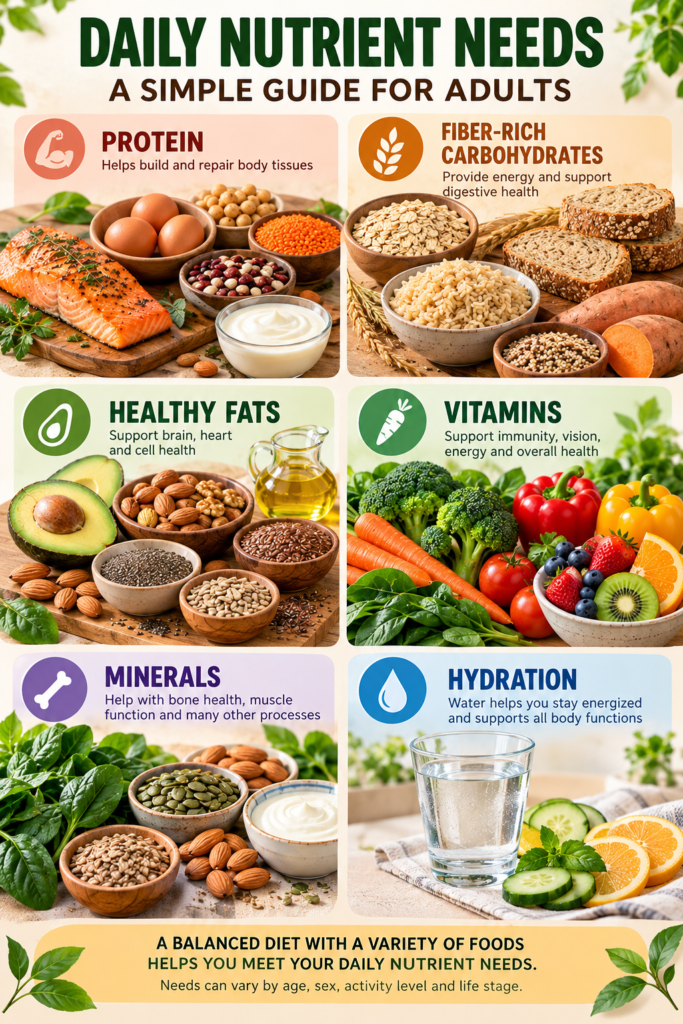
Understanding your daily nutrient needs for adults can make healthy eating much easier. Your body needs a combination of protein, carbohydrates, fats, vitamins, minerals, fiber, and water to support everyday functions, maintain tissues, and help you stay healthy.
However, nutrient requirements are not identical for everyone. Your age, sex, activity level, health status, and life stage can affect how much you need. The best approach is to understand the main nutrient groups, learn their recommended amounts, and build a varied diet around foods you enjoy.
This guide explains daily nutrient requirements for adults, provides practical reference tables, and shows how to meet your needs through everyday meals.
Key Takeaways
- Adults need both macronutrients—protein, carbohydrates, and fats—and micronutrients such as vitamins and minerals.
- Recommended amounts vary by age, sex, pregnancy status, activity level, and individual health needs.
- Fiber, calcium, vitamin D, iron, potassium, and vitamin B12 deserve particular attention when planning a balanced diet.
- Whole grains, vegetables, fruits, legumes, protein foods, nuts, seeds, and appropriate fortified foods help provide essential nutrients.
- Food labels can help you compare products, but the Daily Value on a label is not always the same as your personal recommended intake.
- Supplements can be useful in specific circumstances, but taking more than you need is not necessarily beneficial.
What Are Daily Nutrient Needs for Adults?
Daily nutrient needs are the amounts of essential nutrients your body requires to support normal growth, maintenance, and function. Some nutrients provide energy, while others help regulate body processes or build and repair tissues.
Nutrients are commonly divided into two groups.
Macronutrients
Macronutrients are needed in relatively large amounts.
- Protein: Supports muscle maintenance, tissue repair, enzymes, and other body functions.
- Carbohydrates: Provide energy and include fiber-rich foods that support digestive health.
- Fats: Provide energy, support cell membranes, and help the body absorb vitamins A, D, E, and K.
- Water: Supports temperature regulation, circulation, digestion, and other essential processes.
Micronutrients
Micronutrients are vitamins and minerals needed in smaller amounts, but they are still essential.
Examples include vitamin C for collagen production, vitamin D for calcium absorption, iron for oxygen transport, calcium for bones and teeth, and potassium for normal muscle and nerve function.
A healthy diet must supply both macronutrients and micronutrients. Eating enough calories alone does not guarantee that your diet provides all the nutrients you need.
Daily Nutrient Requirements for Adults: Quick Reference Chart
The following table summarizes selected U.S. dietary reference values for generally healthy, nonpregnant adults aged 19–50. These values are useful educational references, not personalized prescriptions. Recommendations can differ between countries and individual circumstances.
| Nutrient | Adult men | Adult women |
|---|---|---|
| Protein | 0.8 g/kg of body weight | 0.8 g/kg of body weight |
| Carbohydrates | 130 g | 130 g |
| Dietary fiber | 38 g (ages 19–50) | 25 g (ages 19–50) |
| Calcium | 1,000 mg | 1,000 mg |
| Iron | 8 mg | 18 mg |
| Magnesium | 400–420 mg | 310–320 mg |
| Vitamin C | 90 mg | 75 mg |
| Vitamin D | 15 mcg (600 IU) | 15 mcg (600 IU) |
| Vitamin B12 | 2.4 mcg | 2.4 mcg |
| Zinc | 11 mg | 8 mg |
| Potassium | 3,400 mg (AI) | 2,600 mg (AI) |
Units: g = grams; mg = milligrams; mcg = micrograms; IU = international units; AI = adequate intake. Protein is expressed per kilogram of body weight. These figures are selected reference values, not a complete list of all essential nutrients.
Important: Protein needs can be higher for some people, including those who are very active, older adults, or people recovering from illness. Iron needs differ significantly with life stage; for example, many women who menstruate need more iron than adult men, while requirements change after menopause. Kidney disease and certain medications may also affect appropriate nutrient intake.
For detailed nutrient-specific recommendations, consult the NIH Office of Dietary Supplements’ nutrient fact sheets.
1. How Much Protein Do Adults Need Daily?
Protein is essential for maintaining muscle, repairing tissues, making enzymes, and supporting immune function. Your daily protein requirement depends partly on your body weight and overall circumstances.
For generally healthy adults, the U.S. Recommended Dietary Allowance is approximately 0.8 grams of protein per kilogram of body weight per day.
For example, a 70 kg adult would calculate a baseline of:
\(70 \times 0.8 = 56\text{ grams of protein per day}\)
This is a general reference, not necessarily the optimal intake for every individual. Needs may differ with age, exercise, recovery, pregnancy, and health status.
Best food sources of protein
- Eggs.
- Fish and poultry.
- Milk, yogurt, and other dairy foods.
- Lentils, chickpeas, and beans.
- Tofu and other soy foods.
- Nuts and seeds.
Including a protein source in meals can make your diet more balanced. Plant-based eaters can meet their needs through a varied combination of legumes, soy foods, grains, nuts, and seeds.
2. Daily Carbohydrate and Fiber Requirements
Carbohydrates are a major energy source for the body. The type of carbohydrate you choose matters because foods such as whole grains, fruit, vegetables, and legumes provide fiber and other nutrients, while sugary drinks and many highly refined snacks provide comparatively few nutrients.
The carbohydrate Recommended Dietary Allowance for adults is 130 grams per day, but this is a reference value—not a universal meal plan or an individualized energy target.
How much fiber do adults need?
For adults aged 19–50, the reference intake is 38 grams daily for men and 25 grams daily for women. Fiber needs can differ with age and energy requirements.
Good fiber sources include:
- Oats and whole-wheat products.
- Lentils, chickpeas, and beans.
- Apples, pears, berries, and other whole fruit.
- Broccoli, carrots, and leafy greens.
- Nuts and seeds.
Increase fiber gradually and drink enough fluid to help your digestive system adjust. If your current diet is low in fiber, suddenly increasing your intake may cause gas or bloating.
3. How Much Fat Do Adults Need Daily?
Fat supplies energy, supports cell structure, helps the body absorb fat-soluble vitamins, and provides essential fatty acids.
Rather than avoiding all fat, focus on the type and overall amount.
Sources of healthier fats
- Olive and other unsaturated vegetable oils.
- Walnuts and other nuts.
- Chia, flax, and other seeds.
- Avocados.
- Fatty fish such as salmon and sardines.
Unsaturated fats are generally preferred over trans fats and excessive saturated fat. Foods such as nuts, seeds, and oils are energy-dense, so appropriate portions are important.
The right amount of fat depends on your total energy requirements and dietary pattern. You do not need to add oil or nuts to every meal to meet your needs.
4. Essential Vitamins: What Adults Need Every Day
Vitamins help the body carry out processes involving vision, energy metabolism, immune function, cell division, bone health, and blood clotting.
The table below gives selected reference intakes for healthy adults aged 19–50. B-vitamin requirements are shown for common adult reference groups; pregnancy, breastfeeding, older age, and certain medical circumstances may change needs.
| Vitamin | Men | Women | Main role |
|---|---|---|---|
| Vitamin A | 900 mcg RAE | 700 mcg RAE | Vision and immune function |
| Vitamin C | 90 mg | 75 mg | Collagen formation and iron absorption |
| Vitamin D | 15 mcg | 15 mcg | Calcium absorption and bone health |
| Vitamin E | 15 mg | 15 mg | Antioxidant function |
| Vitamin K | 120 mcg | 90 mcg | Normal blood clotting |
| Vitamin B1 | 1.2 mg | 1.1 mg | Energy metabolism |
| Vitamin B2 | 1.3 mg | 1.1 mg | Energy metabolism |
| Vitamin B3 | 16 mg NE | 14 mg NE | Energy metabolism |
| Vitamin B6 | 1.3 mg | 1.3 mg | Protein metabolism and nerve function |
| Vitamin B9 (folate) | 400 mcg DFE | 400 mcg DFE | DNA synthesis and cell division |
| Vitamin B12 | 2.4 mcg | 2.4 mcg | Nerve function and red blood cells |
RAE = retinol activity equivalents; NE = niacin equivalents; DFE = dietary folate equivalents. The table lists selected vitamins rather than every B vitamin. Adult reference intakes for biotin and pantothenic acid are generally expressed as adequate intakes.
Best food sources of vitamins
- Vitamin A: Sweet potatoes, carrots, spinach, eggs.
- B vitamins: Whole grains, legumes, eggs, meat, fish, and fortified foods.
- Vitamin C: Guava, citrus fruit, berries, tomatoes, and peppers.
- Vitamin D: Fatty fish and fortified foods.
- Vitamin E: Nuts, seeds, and vegetable oils.
- Vitamin K: Leafy greens, broccoli, and other green vegetables.
A varied diet helps supply many vitamins. However, vitamin B12 deserves special attention for people who avoid animal products because unfortified plant foods are not reliable natural sources.
5. Essential Minerals and Their Daily Requirements
Minerals support bones, fluid balance, nerve signaling, muscle function, oxygen transport, and many other processes.
| Mineral | Adult men | Adult women | Main food sources |
|---|---|---|---|
| Calcium | 1,000 mg | 1,000 mg | Dairy foods, calcium-set tofu, fortified drinks |
| Iron | 8 mg | 18 mg | Meat, lentils, beans, fortified grains |
| Magnesium | 400–420 mg | 310–320 mg | Nuts, seeds, legumes, whole grains |
| Zinc | 11 mg | 8 mg | Meat, shellfish, dairy, beans, seeds |
| Potassium | 3,400 mg (AI) | 2,600 mg (AI) | Potatoes, beans, vegetables, fruit |
| Iodine | 150 mcg | 150 mcg | Iodized salt, seafood, dairy products |
| Selenium | 55 mcg | 55 mcg | Seafood, meat, eggs, grains |
These are selected U.S. adult reference values for generally healthy people aged 19–50. Calcium, iron, and some other nutrient needs change with age and life stage. Potassium values shown are adequate intakes (AIs), not RDAs.
Why these minerals matter
- Calcium: Helps maintain bones and teeth and supports muscle function.
- Iron: Helps produce hemoglobin, which carries oxygen in the blood.
- Magnesium: Supports muscle and nerve function and many enzyme reactions.
- Zinc: Supports immune function, wound healing, and normal growth.
- Potassium: Helps regulate fluid balance, muscle contractions, and nerve signals.
- Iodine: Is needed to make thyroid hormones.
- Selenium: Supports antioxidant systems and thyroid function.
NIH Office of Dietary Supplements — Vitamins and Minerals Fact Sheets
6. How Much Water Do Adults Need Daily?
Water is essential for temperature regulation, circulation, digestion, and normal kidney function. Your requirements vary with climate, activity, body size, diet, pregnancy, breastfeeding, and health conditions.
U.S. dietary reference values for total water—including drinking water, other beverages, and water from food—are approximately:
- Men: 3.7 liters per day.
- Women: 2.7 liters per day.
These are adequate-intake reference values, not amounts that everyone must drink as plain water. Foods contribute to total water intake, and individual requirements can differ.
Practical hydration habits include:
- Keep water available throughout the day.
- Drink more when heat or exercise increases fluid loss.
- Include water-rich foods such as fruit, vegetables, and soups.
- Follow medical advice if you have been told to restrict fluids.
Do not force yourself to drink excessive amounts of water. People with certain kidney, heart, or other medical conditions may need individualized fluid guidance.
7. How to Meet Your Daily Nutrient Needs Through Food
You do not need a separate food for every vitamin or mineral. The easiest way to cover a wide range of nutritional needs is to eat different foods from several food groups.

Vegetables and fruit
Provide fiber, vitamin C, folate, potassium, carotenoids, and other beneficial plant compounds. Choose different colors and varieties throughout the week.

Protein foods
Beans, lentils, eggs, fish, dairy, tofu, poultry, and other protein sources supply amino acids and varying amounts of iron, zinc, calcium, and B vitamins.

Whole grains, nuts, and seeds
Contribute fiber, magnesium, healthy fats, and other nutrients. Choose a variety that suits your preferences and budget.
A varied eating pattern is more useful than depending on one “superfood.” Frozen vegetables, canned beans, plain yogurt, and appropriately fortified foods can also be practical choices.
8. Example of a Balanced Day of Eating
The following example illustrates how ordinary meals can contribute to daily nutrient needs for adults. Portions should be adjusted for your appetite, energy needs, culture, and health requirements.
| Meal | Example foods | Nutrients contributed |
|---|---|---|
| Breakfast | Oats with milk or fortified soy drink, fruit, and seeds | Fiber, protein, calcium if fortified, and B vitamins |
| Morning snack | Guava, orange, or another seasonal fruit | Vitamin C and fiber |
| Lunch | Lentil curry, whole-wheat roti, and spinach or other vegetables | Protein, iron, folate, and fiber |
| Afternoon snack | Plain yogurt or a suitable fortified alternative | Protein and calcium, depending on the product |
| Dinner | Fish, eggs, tofu, or beans with vegetables and rice or potatoes | Protein, vitamins, minerals, and energy |
| Drinks | Water throughout the day, adjusted to thirst and circumstances | Hydration |
This sample menu does not guarantee that every nutrient requirement is met. Exact amounts depend on portion sizes, ingredients, food fortification, and individual needs.

9. How to Read Nutrition Labels to Meet Your Daily Nutrient Needs
Nutrition labels help you compare foods and understand how a serving contributes to your intake. They are particularly useful when choosing fortified cereals, dairy products, plant-based drinks, packaged bread, and snacks.
What should you check on a food label?
- Serving size: Check how much the nutrition information represents.
- Protein: Compare products if you need a convenient protein source.
- Dietary fiber: Look for higher-fiber options where appropriate.
- Added sugars: Compare similar products and choose options with less added sugar when possible.
- Sodium: Consider sodium content, especially if you have been advised to limit it.
- Vitamins and minerals: Look for calcium, iron, vitamin D, or other nutrients relevant to your diet.
- Ingredients: Check for whole grains, fortification, allergens, and ingredients that matter to you.
What does % Daily Value mean?
The percentage Daily Value (%DV) shows how much a serving contributes to a standard daily reference value used on food and supplement labels. It is useful for comparing products, but it does not necessarily reflect your exact personal requirement.
For example, your needs may differ because of age, sex, pregnancy, health conditions, or a healthcare professional’s recommendations.
NIH Office of Dietary Supplements — Understanding Nutrient Recommendations and Daily Values
10. How Daily Nutrient Needs Change With Age and Life Stage
Although this guide focuses on adults, nutrient requirements are not fixed throughout adulthood.
Adults in their 20s and 30s
A varied diet should provide enough energy, protein, essential fats, vitamins, and minerals for everyday activity and tissue maintenance. People who menstruate may need particular attention to iron intake.
Adults in their 40s and 50s
Dietary patterns that provide adequate fiber, calcium, vitamin D, protein, and other essential nutrients remain important. Nutrient needs can change as activity, body composition, and health status change.
Adults over 50
Some nutrient requirements change with age. For example, calcium needs increase to 1,200 mg daily for women aged 51 and older and for men aged 71 and older under U.S. reference guidelines. Vitamin B12 absorption can also become more difficult for some older adults, so fortified foods or supplements may be appropriate in certain circumstances.
Pregnancy and breastfeeding
Requirements for several nutrients increase during pregnancy or breastfeeding, including folate, iron, and some other nutrients. Anyone who is pregnant or planning pregnancy should seek appropriate prenatal nutrition advice rather than relying on a general adult chart.
Essential Vitamins and Minerals for Different Life Stages
11. What Happens If You Do Not Meet Your Daily Nutrient Needs?
Consistently low intake of certain nutrients can lead to deficiencies. The effects depend on the nutrient, the severity of the shortage, and how long it lasts.
| Nutrient | Potential consequence of deficiency |
|---|---|
| Iron | Iron-deficiency anemia |
| Vitamin B12 | Megaloblastic anemia and possible nerve damage |
| Vitamin C | Scurvy in severe deficiency |
| Vitamin D | Poor bone mineralization, including osteomalacia in adults |
| Calcium | The body may draw on bone calcium to maintain blood levels over time |
| Folate | Megaloblastic anemia |
| Iodine | Impaired thyroid hormone production |
These examples do not mean that any single symptom proves a deficiency. Fatigue, weakness, and changes in skin or hair can have many causes.
If you have persistent symptoms, a restrictive diet, a condition that affects absorption, or concerns about your nutrient intake, consult a qualified healthcare professional. Testing may be appropriate depending on your situation.
12. Should Adults Take Daily Vitamin and Mineral Supplements?
Not everyone needs a multivitamin or separate vitamin and mineral supplements. Supplements can help address particular nutrient gaps, but they do not replace the full range of nutrients and other beneficial compounds in a varied diet.
A supplement may be appropriate when a healthcare professional identifies a deficiency or when your life stage, dietary pattern, or health circumstances create a specific need.
Before starting a supplement:
- Identify the nutrient you may be missing.
- Review your diet, including fortified foods and drinks.
- Check the amount provided per serving.
- Consider interactions with medicines or other supplements.
- Ask a qualified professional about appropriate dosing when you have a medical condition or need high-dose treatment.
Excess intake can be harmful. High doses of some vitamins and minerals can cause side effects or interact with medicines. Iron supplements, for example, should not be taken in high doses without an appropriate reason and guidance.
13. Common Mistakes When Planning Daily Nutrient Intake
Avoid these common mistakes when trying to meet your daily nutrient needs.
- Focusing on calories alone: Calories matter, but the nutritional quality of your food matters too.
- Eating a very limited variety of foods: A narrow diet may leave gaps in certain nutrients.
- Assuming supplements are always necessary: Many people can meet their needs through food, while some require targeted supplementation.
- Ignoring fortified foods: Fortified products can be useful sources of nutrients that are otherwise difficult to obtain.
- Using one reference chart for everyone: Requirements vary by age, sex, pregnancy, breastfeeding, and health status.
- Changing your diet too quickly: Gradual changes, especially when increasing fiber, may be easier to tolerate and maintain.
The most useful approach is to build sustainable eating habits rather than trying to hit every nutrient number perfectly at every meal.
Frequently Asked Questions About Daily Nutrient Needs for Adults
What nutrients do adults need every day?
Adults need protein, carbohydrates, fats, water, vitamins, minerals, and adequate fiber. The amounts vary by age, sex, activity level, and life stage. A varied diet helps provide these nutrients.
How can I calculate my daily nutrient needs?
Start with established dietary reference values for your age and sex, then consider body weight, activity, pregnancy or breastfeeding, and health conditions. A healthcare professional or registered dietitian can help you personalize your intake.
What are the most important nutrients for adults?
All essential nutrients have important roles. Protein, fiber, calcium, iron, vitamin D, vitamin B12, and potassium are useful nutrients to pay attention to, but individual priorities depend on your diet and health.
Can I meet my daily nutrient needs without supplements?
Many adults can meet their needs through a varied diet that includes vegetables, fruit, whole grains, legumes, protein foods, nuts, seeds, and appropriate fortified foods. Some people need supplements because of deficiencies, dietary restrictions, or specific life stages.
Do daily nutrient requirements change after age 50?
Yes. Requirements for some nutrients change with age. For example, calcium recommendations increase for certain older adults, and some people experience reduced vitamin B12 absorption. Individual needs should be assessed rather than assumed.
How do I know if I am getting enough vitamins and minerals?
Review your usual eating pattern and compare it with appropriate dietary reference values. Food tracking can provide an estimate, but it may not be exact. A healthcare professional can recommend assessment or testing if you have symptoms or specific risk factors.
Conclusion: Build a Diet That Meets Your Daily Nutrient Needs
Understanding your daily nutrient needs for adults is a practical first step toward healthier eating. Your body needs a balanced combination of protein, carbohydrates, healthy fats, fiber, vitamins, minerals, and water—and the right amounts depend on your individual circumstances.
Focus on eating a variety of vegetables and fruit, choosing whole grains more often, including protein-rich foods, and making room for nuts, seeds, and other nutrient-dense ingredients. Use nutrition labels and reliable dietary reference values to guide your choices, and seek professional advice if you have specific nutritional concerns.
You do not need a perfect diet every day. Start with small, sustainable changes, build variety into your meals, and aim to meet your nutrient needs consistently over time.