
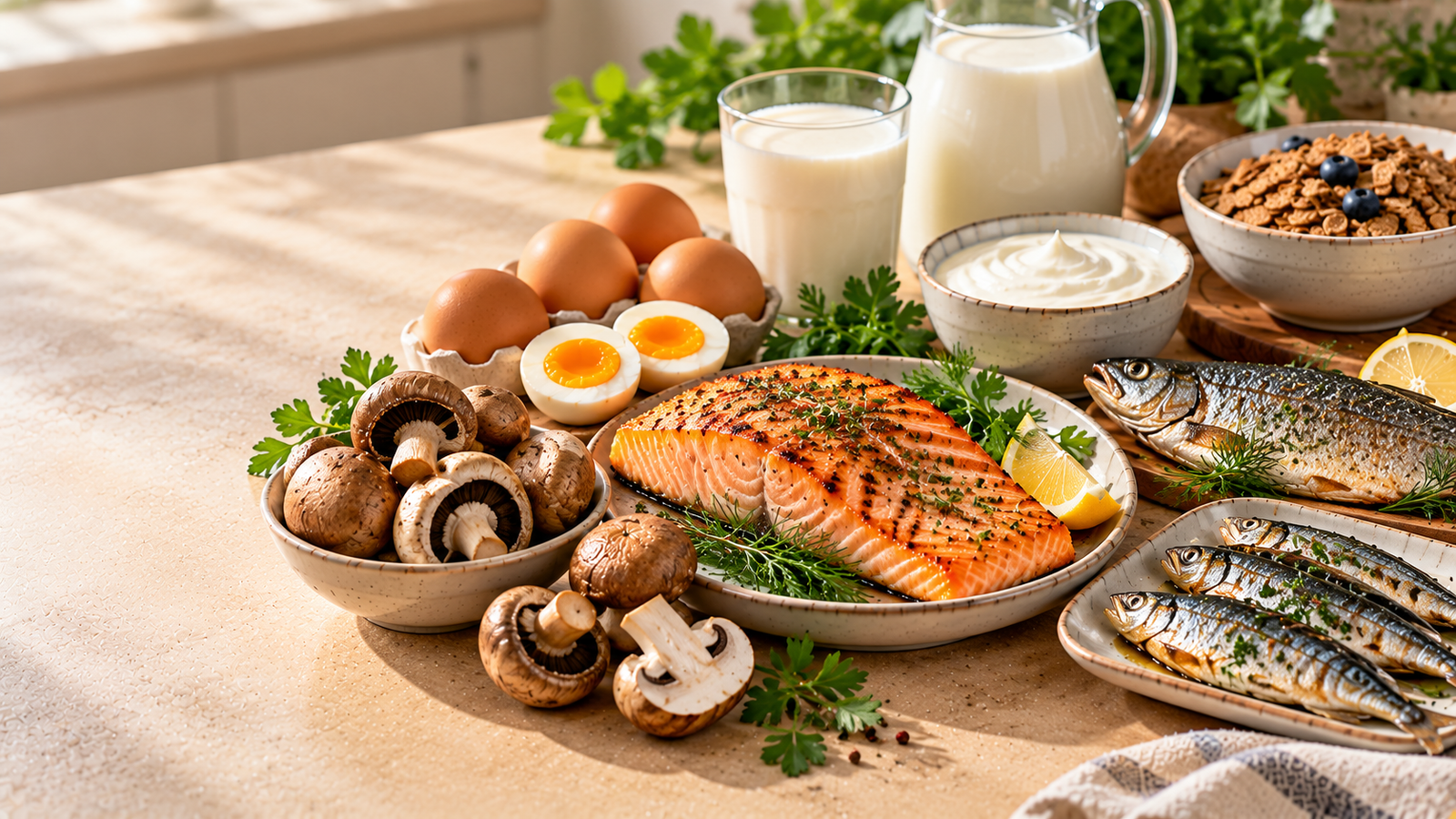
Vitamin D deficiency foods high in vitamin D are an important topic for anyone looking to support healthy bones, muscles, and normal calcium absorption. Vitamin D helps the body absorb calcium and maintain bone health, but relatively few foods naturally contain substantial amounts of this nutrient.
Oily fish, certain UV-exposed mushrooms, egg yolks, and vitamin D-fortified foods can help increase dietary intake. However, food sources alone may not be enough for everyone, especially people with a confirmed deficiency or medical conditions that affect absorption.
Understanding the best vitamin D food sources, how to identify fortified products, and when to seek medical advice can help you make informed choices for everyday nutrition.
Key Takeaways
- Oily fish such as salmon, trout, and sardines are among the best natural food sources of vitamin D.
- Fortified milk, plant-based drinks, and breakfast cereals can contribute useful amounts, depending on the product.
- Egg yolks contain some vitamin D, while UV-exposed mushrooms can provide vitamin D2.
- Vitamin D helps the body absorb calcium and supports bone and muscle health.
- Vitamin D deficiency may have no obvious symptoms, so symptoms alone cannot confirm it.
- Food choices can support vitamin D intake, but a diagnosed deficiency may require clinician-guided treatment.
- Avoid high-dose vitamin D supplements without appropriate guidance because excessive intake can be harmful.
What Is Vitamin D Deficiency?
Vitamin D deficiency occurs when the body does not have enough vitamin D to meet its needs. This may happen because of low dietary intake, limited vitamin D production in the skin, problems absorbing fat or nutrients, certain medical conditions, or other risk factors.
Vitamin D supports calcium absorption and helps maintain normal bones and muscles. Severe deficiency in children can cause rickets, while severe deficiency in adults can cause osteomalacia, a condition in which bones become poorly mineralized.
Why does the body need vitamin D?
Vitamin D plays several important roles:
- Bone health: It helps the body absorb calcium and phosphorus.
- Muscle function: It contributes to normal muscle function.
- Growth and development: It is important for developing and maintaining healthy bones.
- Calcium regulation: It helps maintain appropriate calcium levels in the body.
Vitamin D is not a substitute for calcium. Both nutrients are important, and a balanced diet should supply adequate amounts of each.
Vitamin D Foods at a Glance
The table below provides approximate vitamin D amounts in selected foods. Actual values vary by species, serving size, preparation, and fortification.
| Food | Example serving | Approximate vitamin D |
|---|---|---|
| Cooked rainbow trout | 85 g (3 oz) | About 16 mcg (640 IU) |
| Cooked salmon | 85 g (3 oz) | About 10–15 mcg (400–600 IU) |
| Cooked sardines | 85 g (3 oz) | About 4–5 mcg (160–200 IU) |
| UV-exposed mushrooms | ½ cup | Highly variable; check the label where available |
| Egg yolk | 1 large | About 1 mcg (40 IU) |
| Fortified milk | 1 cup | Often about 2.5–3 mcg (100–120 IU) in the US |
| Fortified plant-based drink | 1 cup | Varies by product |
| Fortified breakfast cereal | 1 serving | Varies by product |
| Cod liver oil | Product-dependent serving | Can be high; use caution and follow label or clinician advice |
Unit conversion: 1 microgram (mcg or µg) of vitamin D equals 40 international units (IU).
Cod liver oil is listed for reference, but it is not necessary to rely on it as a vitamin D source. It may also contain substantial vitamin A, which can be harmful in excess.
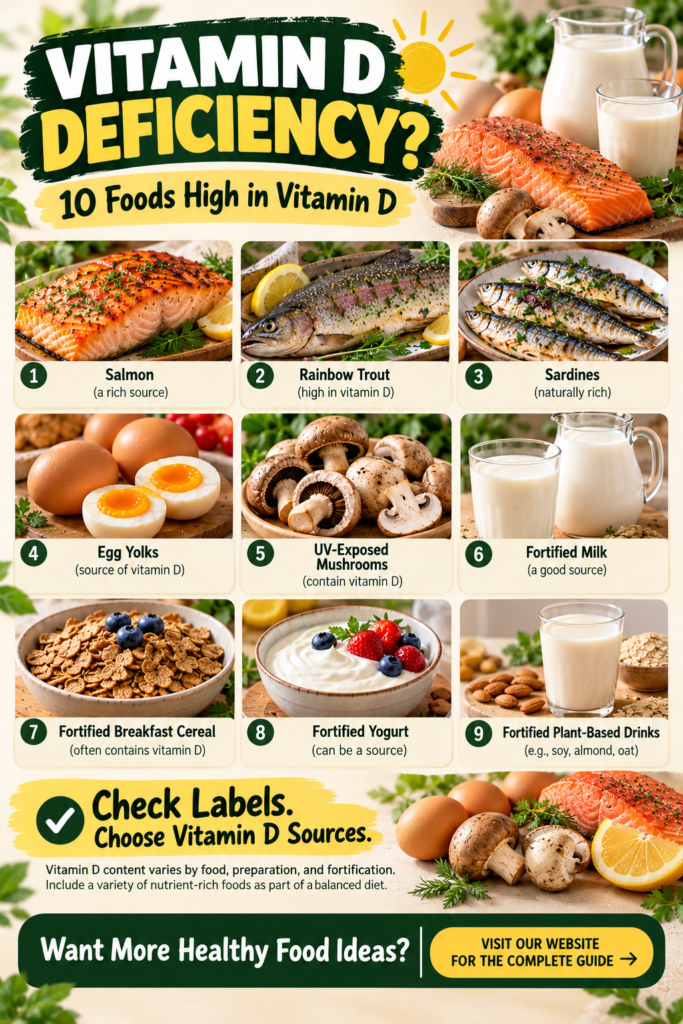
10 Best Foods High in Vitamin D
1. Salmon

Salmon is one of the most useful dietary sources of vitamin D. Its vitamin D content varies by species and whether it is wild or farmed, but many varieties provide a substantial amount in a normal serving.
Salmon also supplies protein and omega-3 fatty acids.
How to eat it: Bake or grill salmon and serve it with broccoli, potatoes, or a whole grain for a balanced meal.
2. Rainbow trout

Rainbow trout can provide a substantial amount of vitamin D, along with protein and beneficial fats.
How to eat it: Bake, grill, or pan-cook trout with herbs and lemon. Choose cooking methods that suit your preferences and overall dietary needs.
3. Sardines

Sardines provide vitamin D, protein, and omega-3 fats. Canned sardines can be a convenient, budget-friendly option.
How to eat them: Add sardines to whole-grain toast, salads, or tomato-based meals. Compare labels for sodium if you are choosing canned products.
4. Herring and other oily fish
Herring and some other oily fish provide vitamin D, although the amount varies by species and preparation.
How to eat them: Include oily fish in your regular meal rotation if you enjoy it. People who do not eat fish can use fortified foods and other suitable sources.
5. Fortified milk

Some milk products are fortified with vitamin D. Fortification is common in certain countries but not universal, so the nutrition label is important.
How to choose: Check the label for vitamin D per serving. Milk also provides calcium and protein, making it a useful option for many balanced diets.
6. Fortified plant-based drinks
Soy, oat, almond, and other plant-based drinks may be fortified with vitamin D. Their nutrient profiles differ substantially by brand.
How to choose: Look for vitamin D and calcium on the nutrition label. If you use a plant-based drink as a milk alternative, also check protein content, particularly if you choose an almond or oat drink.
7. Egg yolks

Egg yolks contain some vitamin D, although the amount is generally modest compared with oily fish. Levels can vary with the hens’ feed and rearing conditions.
How to eat them: Enjoy eggs boiled, poached, or cooked into an omelet with vegetables. Eggs can contribute to overall vitamin D intake but are unlikely to be sufficient as the only source.
8. UV-exposed mushrooms

Certain mushrooms exposed to ultraviolet light can produce vitamin D2. Ordinary mushrooms may contain much less, so not all mushrooms are equivalent sources.
How to choose: Look for packaging that specifically identifies vitamin D or UV treatment, and check the label when nutrient amounts are provided.
9. Fortified breakfast cereal
Some breakfast cereals are fortified with vitamin D and may help increase intake, particularly when paired with fortified milk or a fortified plant-based drink.
How to choose: Compare the vitamin D content per serving and consider added sugar, fiber, and the overall nutritional profile.
10. Fortified yogurt and other dairy products
Some yogurts and dairy products contain added vitamin D, while others provide little or none. Calcium content may be useful, but it does not guarantee that a product contains vitamin D.
How to choose: Read the nutrition label instead of assuming all dairy products are fortified.
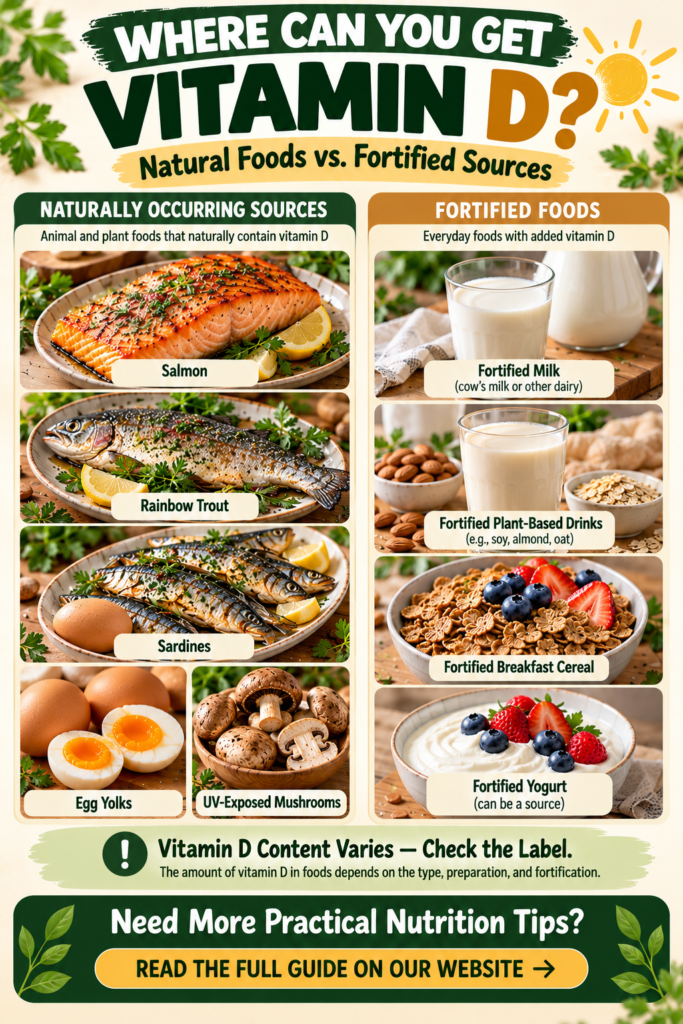
Natural vs. Fortified Vitamin D Foods
Both naturally occurring and fortified sources can help support vitamin D intake.
| Food category | Examples | What to know |
|---|---|---|
| Naturally occurring sources | Salmon, trout, sardines, egg yolks | Amounts vary by species and serving |
| UV-exposed foods | Certain mushrooms | May provide vitamin D2; levels vary |
| Fortified dairy | Some milk and yogurt products | Check the nutrition label |
| Fortified plant-based drinks | Soy, oat, almond drinks | Fortification and protein content vary |
| Fortified cereals | Selected breakfast cereals | Check vitamin D per serving and added sugar |
Which type is better?
Neither category is automatically better for everyone. Oily fish can provide substantial vitamin D, while fortified foods may be more accessible or suitable for people who avoid fish or dairy.
A practical approach is to combine sources that fit your diet and budget rather than relying on a single food.
How Much Vitamin D Do You Need Per Day?
Vitamin D requirements vary by age and life stage. The following values are US National Institutes of Health recommended dietary allowances for generally healthy people.
| Age or life stage | Recommended daily intake |
|---|---|
| Birth to 12 months | 10 mcg (400 IU) |
| Ages 1–70 years, including pregnancy and breastfeeding | 15 mcg (600 IU) |
| Adults older than 70 years | 20 mcg (800 IU) |
These values are reference intakes, not treatment doses for vitamin D deficiency. Individual medical needs may differ, and clinical guidance varies by country.
For reference, the US adult tolerable upper intake level is generally 100 mcg (4,000 IU) per day from all sources for adults. This is a safety limit, not a recommended target, and a clinician may prescribe different doses for a limited period to treat a confirmed deficiency.
NIH Office of Dietary Supplements: Vitamin D Fact Sheet
Can Food Alone Correct Vitamin D Deficiency?
Eating vitamin D-rich foods can improve dietary intake and help prevent inadequate intake. However, correcting a confirmed deficiency may require more than food, especially when levels are significantly low or an underlying condition affects absorption.
A healthcare professional may consider symptoms, risk factors, medical history, and a blood test for 25-hydroxyvitamin D [25(OH)D] when testing is appropriate.
Do not start high-dose vitamin D supplements on your own. Excessive vitamin D can raise blood calcium and cause kidney and other health problems.
Vitamin D Deficiency Symptoms: What Should You Look For?
Vitamin D deficiency may not cause noticeable symptoms at first. When symptoms do occur, they can overlap with many other conditions.
Possible signs include:
- Bone discomfort or pain.
- Muscle weakness.
- Difficulty getting up from a chair or climbing stairs in some cases.
- Bone tenderness or fractures in severe or prolonged deficiency.
- Rickets in children or osteomalacia in adults when deficiency is severe.
Feeling tired alone does not prove that your vitamin D level is low. Fatigue can have many causes, including iron deficiency, sleep problems, thyroid disorders, and other medical conditions.
Who may be at higher risk?
Some people have a greater chance of developing low vitamin D levels, including:
- Older adults.
- People who get limited sunlight exposure.
- People with darker skin, because higher melanin levels reduce vitamin D production from UVB exposure.
- People with conditions that affect fat absorption, such as some intestinal or pancreatic disorders.
- People who have had certain bariatric or gastrointestinal surgeries.
- People whose diets contain few vitamin D sources.
- People with certain kidney or liver conditions that affect vitamin D metabolism.
Risk varies from person to person. Living in a sunny country does not guarantee adequate vitamin D status, and excessive unprotected sun exposure is not a safe treatment.
When should you seek medical advice?
Speak with a healthcare professional if you have persistent bone discomfort, unexplained muscle weakness, known risk factors for deficiency, or a condition that affects nutrient absorption. They can decide whether testing is appropriate.
Seek prompt care for severe muscle weakness, significant bone pain, or other concerning symptoms rather than trying to manage them with food alone.
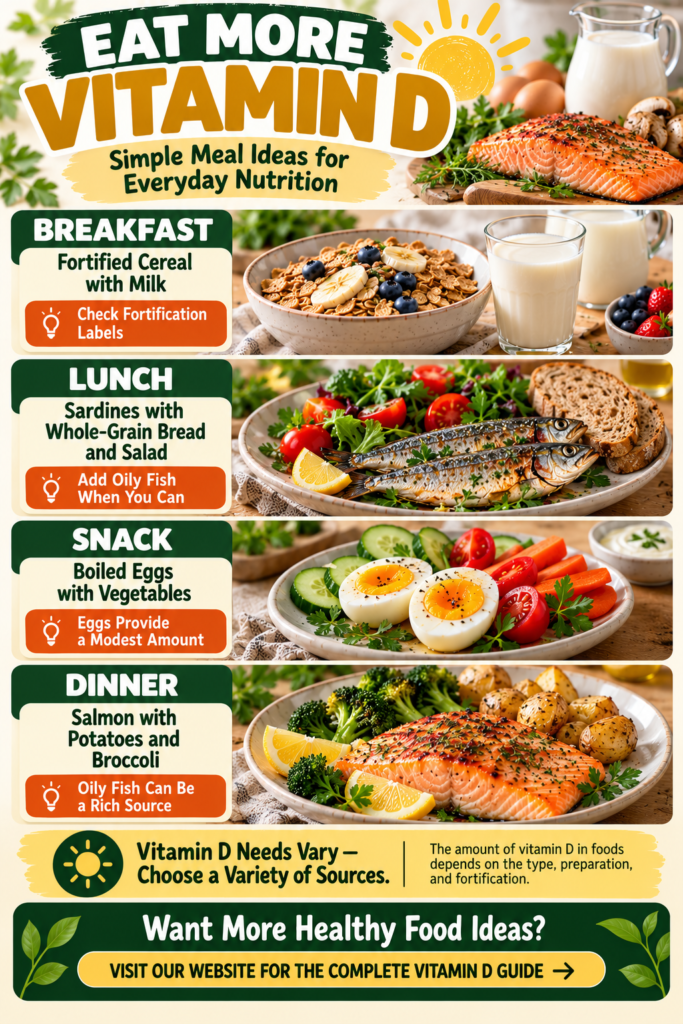
How to Increase Vitamin D Intake Through Everyday Meals
You do not need to redesign your entire diet to include more vitamin D sources. A few practical changes can help.
At breakfast
Choose a vitamin D-fortified cereal with fortified milk or a fortified plant-based drink. Add fruit for fiber and other nutrients.
At lunch
Include sardines or another oily fish if you eat seafood. Alternatively, use eggs or fortified foods as part of a varied meal.
At dinner
Serve salmon or trout with potatoes and vegetables. If you do not eat fish, consider a meal that includes fortified foods elsewhere in the day.
When shopping
- Read labels for vitamin D fortification.
- Compare amounts per serving rather than relying on front-of-package claims.
- Check whether plant-based drinks are also fortified with calcium.
- Choose foods that fit your budget and usual eating pattern.
- Avoid buying supplements solely because a product promises rapid results.
A Simple One-Day Menu Featuring Vitamin D Foods
The following example shows how vitamin D sources can fit into everyday meals. It is not a personalized diet plan and does not guarantee that your daily vitamin D requirement will be met.
| Meal | Example | Vitamin D contribution |
|---|---|---|
| Breakfast | Fortified cereal with fortified milk or plant drink | Depends on the products and serving sizes |
| Lunch | Egg and vegetable sandwich with a side salad | Eggs provide a modest amount |
| Snack | Plain yogurt or a fortified alternative | Depends on fortification |
| Dinner | Baked salmon or trout with potatoes and broccoli | Oily fish can provide a substantial amount |
| Alternative dinner | Tofu with vegetables, plus fortified foods during the day | Tofu is not usually a meaningful vitamin D source unless fortified |
People following vegan diets may need to pay special attention to reliable fortified sources and may benefit from discussing supplementation with a qualified healthcare professional.
Vitamin D and Calcium: Why They Work Together
Vitamin D helps the body absorb calcium from the digestive tract. Calcium, in turn, is needed to maintain bones and teeth and supports muscle contraction and nerve signaling.
A diet that contains vitamin D but very little calcium may not fully support bone health. Similarly, adequate calcium intake does not remove the need for vitamin D.
Foods that provide calcium
- Milk, yogurt, and cheese.
- Calcium-fortified plant-based drinks.
- Calcium-set tofu.
- Sardines or canned salmon with edible bones.
- Some leafy green vegetables.
Include sources of both nutrients as part of a varied diet. If you have a diagnosed deficiency, your clinician can advise whether dietary changes alone are enough.
Calcium-Rich Foods for Strong Bones and Teethes.
Can Sunlight Help Prevent Vitamin D Deficiency?
The skin can produce vitamin D when exposed to UVB radiation from sunlight. However, the amount produced varies according to skin pigmentation, age, season, time of day, cloud cover, clothing, sunscreen use, and other factors.
Sunlight exposure is not a precise or universally safe way to manage vitamin D deficiency. Avoid sunburn and follow local skin-protection guidance. People at risk of deficiency should discuss suitable dietary sources, testing, and supplementation with a healthcare professional rather than deliberately increasing unprotected UV exposure.
Vitamin D Supplements: When Are They Needed?
Supplements can be useful for people who cannot obtain enough vitamin D from food or sunlight, or who have a confirmed deficiency or a medical reason for supplementation.
Important safety tips
- Choose a dose appropriate for your age and circumstances.
- Avoid taking multiple products that contain vitamin D without checking the combined dose.
- Do not use high-dose supplements to treat suspected deficiency without medical advice.
- Tell your healthcare professional about your medicines and existing medical conditions.
- Follow recommended follow-up testing if you are being treated for a confirmed deficiency.
Excessive vitamin D supplementation can cause hypercalcemia, which means too much calcium in the blood. Possible complications include nausea, weakness, kidney stones, and kidney damage.
Food remains a valuable foundation for nutrition, but supplements may be appropriate when recommended for a specific need.
Frequently Asked Questions
1. What are the best foods high in vitamin D for deficiency?
Salmon, trout, sardines, certain UV-exposed mushrooms, egg yolks, and vitamin D-fortified foods are useful sources. Fortification and nutrient content vary, so check product labels.
2. Which fruit is highest in vitamin D?
Most fruits contain little or no meaningful vitamin D. Fruits such as oranges, guava, and kiwi provide other nutrients, particularly vitamin C, but are not reliable vitamin D sources.
3. Do eggs contain enough vitamin D?
Egg yolks contain some vitamin D, but the amount is generally modest. Eggs can contribute to your intake, but oily fish and appropriately fortified foods are often more substantial sources.
4. Can vitamin D deficiency be corrected through food alone?
Food can help improve vitamin D intake, but it may not correct an established deficiency. Depending on the severity and cause, medical assessment and supplementation may be necessary.
5. Are mushrooms a good source of vitamin D?
Some mushrooms exposed to UV light can provide useful amounts of vitamin D2. Ordinary mushrooms may contain much less, so check product information when available.
6. Which vitamin D foods are suitable for vegetarians?
Eggs, UV-exposed mushrooms, and fortified foods may suit some vegetarian diets. People following vegan diets can look for fortified plant-based drinks and cereals and discuss appropriate supplementation if needed.
7. What are the symptoms of vitamin D deficiency?
Some people have no symptoms. Others may experience bone discomfort or muscle weakness, while severe deficiency can lead to bone disorders. Symptoms alone cannot confirm a deficiency.
8. How much vitamin D should adults get daily?
The US recommended intake is generally 15 mcg (600 IU) daily for adults aged 19–70 and 20 mcg (800 IU) for adults older than 70. Requirements and clinical recommendations may vary by country and individual circumstances.
Conclusion: Choose Vitamin D Foods to Support Healthy Bones
Vitamin D deficiency foods high in vitamin D can help you make informed choices about everyday nutrition. Salmon, trout, sardines, egg yolks, UV-exposed mushrooms, and fortified foods are useful options, although their vitamin D content varies.
A practical strategy is to include suitable vitamin D sources regularly, read food labels, and combine these foods with calcium-rich choices to support bone health. If you have risk factors or suspect a deficiency, seek appropriate medical advice rather than relying on food or high-dose supplements alone.
Start with one simple change: add an appropriate vitamin D food to your weekly meal plan and check whether your usual fortified products actually contain vitamin D.