
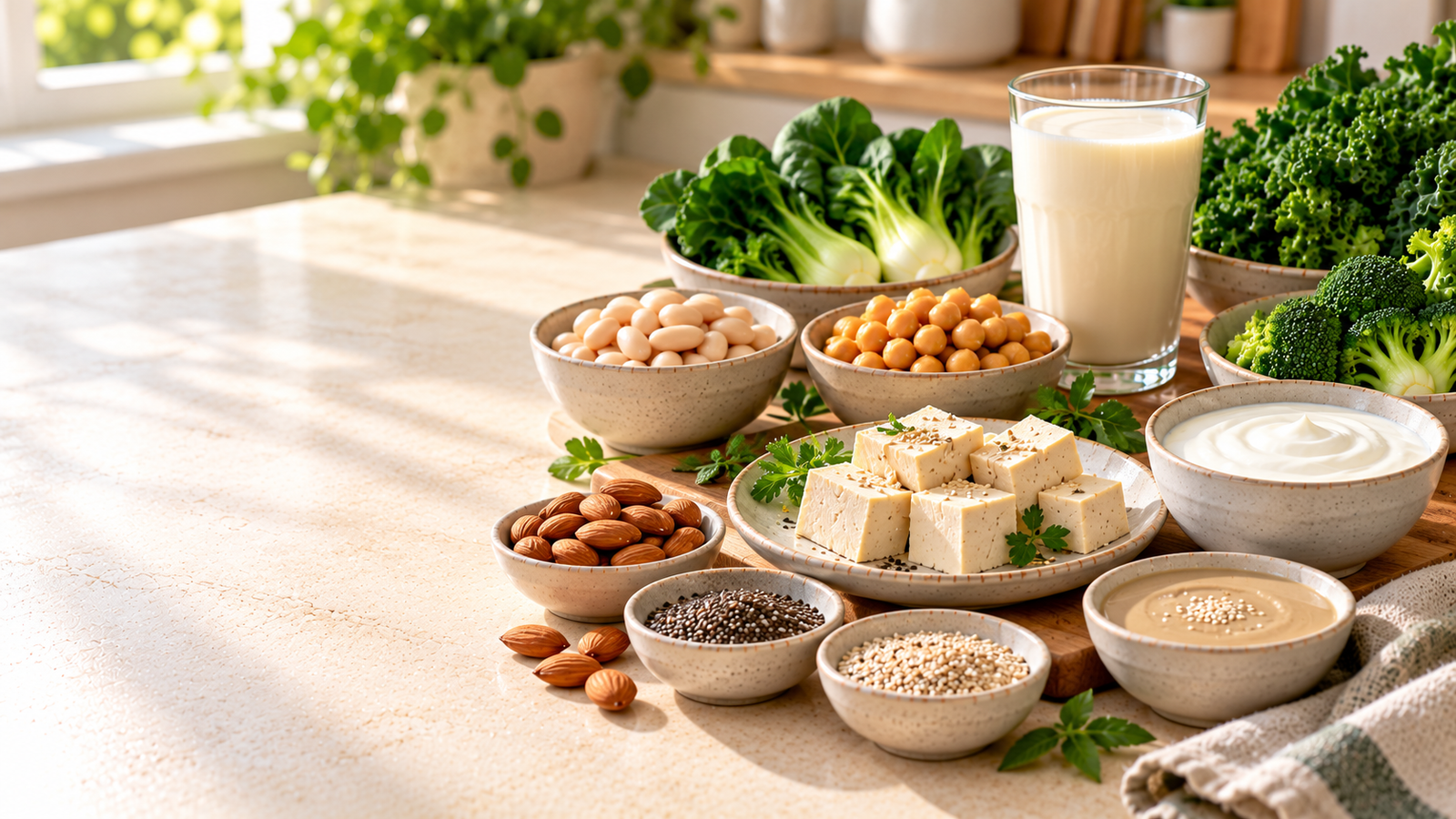
Avoiding dairy does not mean you have to miss out on calcium. Whether you follow a vegan diet, have lactose intolerance, have a milk allergy, or simply prefer plant-based foods, there are plenty of ways to get this essential mineral without drinking milk or eating cheese.
The key is knowing which foods contain meaningful amounts of calcium and how to choose options your body can absorb efficiently. Some vegetables, beans, seeds, tofu products, and fortified plant-based foods can make valuable contributions to your daily intake.
This guide to calcium rich foods for people who avoid dairy explains the best non-dairy sources, how much calcium they provide, how to improve absorption, and how to build practical dairy-free meals for bone health.
Key Takeaways
- Calcium is essential for strong bones and teeth, normal muscle contraction, nerve signaling, and blood clotting.
- Calcium-set tofu, calcium-fortified plant milks, certain leafy greens, beans, seeds, and some fortified foods can help replace dairy.
- Fortified products vary considerably, so check the nutrition label rather than assuming every plant milk contains calcium.
- Calcium needs vary by age and life stage; many adults need approximately 1,000 mg daily, while some older adults need 1,200 mg.
- Vitamin D, regular weight-bearing activity, and adequate overall nutrition also contribute to bone health.
- You can meet calcium needs without dairy, but planning matters, especially if you avoid several food groups.
Why Is Calcium Important When You Avoid Dairy?
Calcium is the most abundant mineral in the human body. Most of it is stored in bones and teeth, where it helps maintain their structure and strength. The body also needs calcium for several essential functions.
Getting enough calcium from a dairy-free diet is important because dairy products are common sources of this mineral in many diets. When you remove them, you need suitable alternatives rather than simply eliminating those foods.
Adequate calcium intake helps support:
- Bone health: Calcium helps maintain bone structure throughout life.
- Muscle function: Muscles need calcium to contract normally.
- Nerve signaling: Calcium participates in communication between nerves and other cells.
- Blood clotting: It plays a role in normal blood-clotting processes.
A balanced dairy-free diet can provide calcium, but the amount depends on the foods you choose, their serving sizes, and whether products are fortified.
15 Best Calcium Rich Foods for People Who Avoid Dairy
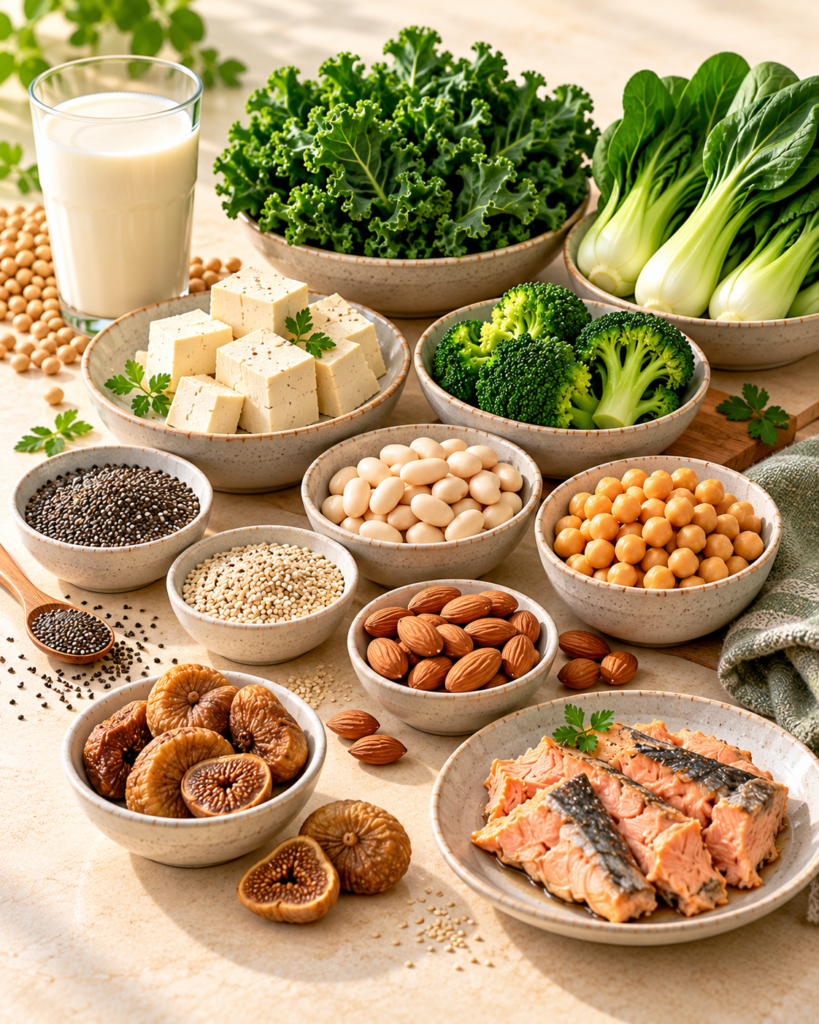
The best approach is to combine several calcium sources throughout the day. Some foods provide calcium naturally, while others contain added calcium through fortification.
The following table gives approximate calcium amounts per typical serving. Actual values vary by variety, preparation method, brand, and fortification.
| Food | Serving size | Approx. calcium |
|---|---|---|
| Calcium-fortified soy milk | 1 cup | 299 mg |
| Calcium-set firm tofu | ½ cup | 253 mg |
| Calcium-fortified orange juice | 1 cup | 349 mg |
| Canned salmon with edible bones | 3 oz (85 g) | 181 mg |
| Cooked kale | 1 cup | 94 mg |
| Cooked bok choy | 1 cup | About 150–160 mg |
| Chia seeds | 1 tablespoon | 76 mg |
| Cooked turnip greens | ½ cup | 99 mg |
| Cooked soybeans | ½ cup | 131 mg |
| White beans | ½ cup | About 80–100 mg |
| Tahini (sesame paste) | 1 tablespoon | About 60–65 mg |
| Almonds | 1 oz (28 g) | About 76 mg |
| Cooked broccoli | 1 cup | About 60–65 mg |
| Calcium-fortified breakfast cereal | 1 serving | Varies; check label |
| Dried figs | ½ cup | About 120 mg |
Sources and reference values: NIH Office of Dietary Supplements and standard food-composition estimates. Values are rounded and may differ by product and serving size.
1. Calcium-fortified plant milk

Calcium-fortified plant milk is one of the easiest alternatives to dairy milk. Depending on the brand, soy, almond, oat, and other plant-based beverages can provide a similar amount of calcium per cup to cow’s milk.
Soy milk is especially useful because it also provides protein.
How to use it:
- Add it to oatmeal or overnight oats.
- Blend it into fruit smoothies.
- Use it in soups, sauces, and dairy-free baking.
- Choose unsweetened varieties if you want to limit added sugar.
Buying tip: Look for calcium on the nutrition label. Not every plant-based beverage is fortified, and calcium amounts vary considerably. Shake fortified plant milk before pouring because added calcium can settle at the bottom.
2. Calcium-set tofu
Tofu is a versatile plant-based calcium source, but its calcium content depends heavily on how it is made.
Tofu prepared with calcium sulfate can provide substantial calcium. Other varieties made using different coagulants may contain much less.
How to use it:
- Stir-fry tofu with broccoli and bok choy.
- Add firm tofu to curries.
- Bake seasoned tofu for salads and grain bowls.
- Crumble tofu into a vegetable scramble.
Buying tip: Check the ingredients for calcium sulfate and compare nutrition labels. Do not assume all tofu provides the same calcium content.
3. Kale and other low-oxalate leafy greens
Kale is one of the useful vegetables for a dairy-free diet because it supplies calcium that the body can absorb relatively well.
Other helpful options include bok choy, Chinese cabbage, collard greens, and turnip greens. Calcium content and absorption vary among these vegetables.
How to use them:
- Sauté kale with garlic.
- Add chopped greens to lentil soup.
- Serve steamed bok choy alongside tofu.
- Mix cooked greens into vegetable curries.
Although spinach contains calcium, it is not as reliable a primary calcium source because its high oxalate content limits calcium absorption.
4. Chia seeds
Chia seeds contain calcium along with fiber, plant-based omega-3 fatty acids, and other nutrients.
They are easy to incorporate into breakfast and snacks, although a tablespoon alone does not provide enough calcium to meet most people’s daily needs.
How to use them:
- Make chia pudding with fortified soy milk.
- Sprinkle them over oatmeal.
- Blend them into smoothies.
- Stir them into overnight oats.
Pairing chia seeds with fortified plant milk creates a more calcium-rich meal than using water or an unfortified beverage.
5. Sesame seeds and tahini
Sesame seeds and tahini, a paste made from sesame seeds, can contribute calcium to a dairy-free diet. The amount varies with the product and whether the seeds are hulled.
Tahini also provides unsaturated fats and some protein.
How to use them:
- Make a lemon-tahini dressing.
- Drizzle tahini over roasted vegetables.
- Add sesame seeds to salads.
- Blend tahini into hummus.
Because tahini is energy-dense and is typically eaten in small portions, treat it as one part of a varied calcium-rich diet rather than your only source.
6. Calcium-fortified orange juice
Some orange juices contain added calcium, making them a convenient alternative source for people who avoid dairy.
A fortified variety may provide around 300–350 mg per cup, depending on the formulation.
How to use it: Have a measured serving with breakfast or alongside a balanced meal.
Check both the calcium content and added sugar information. Whole fruit is still useful for fiber, but ordinary oranges contain much less calcium than many fortified juices.
7. White beans and other legumes
White beans, chickpeas, soybeans, and certain other legumes supply calcium in varying amounts. They also provide fiber, protein, iron, and other nutrients.
Their calcium content is generally lower per serving than that of well-fortified plant milk or calcium-set tofu, but they can contribute meaningfully across a balanced diet.
How to use them:
- Make white bean soup.
- Add chickpeas to salads and curries.
- Blend beans into dips.
- Prepare tofu and bean bowls with leafy greens.
Legumes are especially useful when you want to improve overall diet quality while increasing calcium intake.
8. Bok choy and Chinese cabbage
Bok choy is a practical calcium-rich vegetable with relatively good calcium bioavailability. It also provides vitamin K and other micronutrients.
How to use it:
- Steam it and serve with tofu.
- Add it to vegetable stir-fries.
- Mix it into noodle soups.
- Sauté it with garlic and ginger.
Cooking methods and serving sizes affect the final amount you eat, but regularly including these vegetables helps diversify calcium sources.
9. Almonds
Almonds provide calcium, magnesium, protein, and unsaturated fats. They are convenient as a snack but are not as calcium-dense per typical serving as fortified plant milk or calcium-set tofu.
How to use them:
- Eat a small handful as a snack.
- Add chopped almonds to oatmeal.
- Sprinkle them over salads.
- Combine them with dried figs for a snack.
Almonds are also energy-dense, so a modest serving is usually sufficient.
10. Broccoli
Broccoli contains calcium alongside vitamin C, fiber, and other nutrients. Although it does not provide as much calcium per serving as fortified foods, its calcium is reasonably well absorbed.
How to use it:
- Steam broccoli as a side dish.
- Roast it with olive oil and herbs.
- Add it to tofu stir-fries.
- Mix it into lentil or chickpea dishes.
Broccoli is a good example of why food variety matters: several moderate sources can add up throughout the day.
11. Turnip greens
Cooked turnip greens are another useful leafy vegetable for people avoiding dairy. They supply calcium and other micronutrients, and they work well in traditional home cooking.
How to use them:
- Cook them with garlic and a little oil.
- Stir them into lentils.
- Add them to vegetable soups.
- Serve them with beans and whole grains.
Choose greens that are fresh or properly stored, and cook them according to your preferred texture.
12. Calcium-rich dried figs
Dried figs provide calcium, fiber, and natural carbohydrates. Their calcium content is concentrated compared with many fresh fruits because water is removed during drying.
They are easy to carry and require no preparation.
How to use them:
- Pair a few figs with almonds.
- Chop them into oatmeal.
- Add them to a seed-and-nut snack mix.
Dried figs contain natural sugars and are relatively energy-dense, so use a reasonable portion.
13. Calcium-fortified breakfast cereal
Some breakfast cereals contain added calcium and can be a convenient option for busy mornings. The amount depends on the cereal and serving size.
How to use them: Serve a calcium-fortified cereal with fortified soy milk and sliced fruit.
Check the nutrition label for calcium per serving, added sugar, and fiber. Remember that the labeled serving size may be smaller than the amount you normally pour into a bowl.
14. Calcium-fortified plant-based yogurt
Some dairy-free yogurts contain added calcium, while others contain very little. Coconut-based products, for example, should not automatically be assumed to have the same nutrient profile as fortified soy-based products.
How to use them:
- Add fruit and chia seeds.
- Make a breakfast bowl with oats.
- Use unsweetened varieties in dips.
- Blend them into smoothies.
Choose a product that provides calcium and, when possible, useful amounts of protein.
15. Canned salmon with edible bones
If you eat fish but avoid dairy, canned salmon with its soft, edible bones can be a valuable calcium source. The bones supply much of the calcium.
Sardines with edible bones are another option.
How to use them:
- Mix salmon into a salad.
- Make salmon patties.
- Serve sardines on whole-grain toast.
- Add fish to a meal with leafy greens.
This option is not suitable for vegans, but it broadens the choices for people who avoid dairy without avoiding all animal foods.
How to Choose the Best Non-Dairy Calcium Sources
Not all foods that contain calcium are equally useful for meeting daily requirements. Compare calcium per serving, the amount you realistically eat, and how easily the calcium is absorbed.

For convenience: fortified plant milk
An easy everyday option for breakfast, drinks, and cooking. Soy milk also offers useful protein.

For plant-based meals: calcium-set tofu
A flexible ingredient that can provide both protein and substantial calcium when prepared with calcium-containing coagulants.

For everyday cooking: leafy greens
Kale, bok choy, and broccoli provide calcium plus other nutrients in a minimally processed form.
The most effective approach is usually to use a combination of these options rather than depending on a single food.
How Much Calcium Do You Need Every Day?
Your daily calcium requirement depends on your age and life stage. For most people, the goal is to get adequate calcium from food first, using fortified foods or supplements when needed.
The following recommendations are based on the US National Institutes of Health Office of Dietary Supplements. Requirements can vary according to the national guidelines used in your country.
| Age group | Recommended daily calcium |
|---|---|
| Children 1–3 years | 700 mg |
| Children 4–8 years | 1,000 mg |
| Children 9–18 years | 1,300 mg |
| Adults 19–50 years | 1,000 mg |
| Men 51–70 years | 1,000 mg |
| Women 51–70 years | 1,200 mg |
| Adults 71 years and older | 1,200 mg |
Pregnancy and breastfeeding do not automatically increase the recommended amount for every age group. Adolescents who are pregnant or breastfeeding generally need more calcium than adult women in those life stages.
If you avoid dairy, consider keeping a simple food diary for several days. Record the calcium listed on food labels and estimate the amount from naturally calcium-containing foods. This can reveal whether your meals consistently provide enough.
Important: These are general recommendations, not a personalized prescription. Children, people with certain medical conditions, and people taking medicines that affect calcium metabolism may need individualized advice.
How to Improve Calcium Absorption Without Dairy
Choosing calcium-rich foods is only part of the process. Your body must also absorb the calcium from those foods.
1. Choose vegetables with more available calcium
Kale, bok choy, and broccoli are useful options because their calcium is generally more bioavailable than the calcium in high-oxalate vegetables such as spinach.
You can still eat spinach for its other nutrients, but do not rely on it as your main calcium source.
2. Check whether plant milk is fortified
Calcium-fortified beverages can be convenient, but the amount added differs by product. Some plant milks contain little calcium or none at all.
Read the nutrition label and compare the amount per serving. Shake the container before pouring if the product instructions recommend it.
3. Spread calcium sources across meals
Instead of trying to get most of your calcium from one meal, include calcium-rich foods at breakfast, lunch, and dinner.
For example, have fortified soy milk at breakfast, tofu and bok choy at lunch, and beans with broccoli at dinner. This makes it easier to build a consistent eating pattern.
4. Get enough vitamin D
Vitamin D helps your body absorb calcium. Foods containing vitamin D include certain oily fish, egg yolks, and some fortified foods.
People who avoid both dairy and animal products may need to pay particular attention to fortified foods and their overall vitamin D intake. A healthcare professional can advise whether testing or supplementation is appropriate.
5. Include enough protein and other nutrients
Bone health depends on more than calcium alone. Adequate protein, vitamin D, magnesium, and other nutrients contribute to maintaining healthy bones.
Beans, lentils, tofu, nuts, seeds, vegetables, and whole grains can help create a balanced dietary pattern.
6. Stay physically active
Weight-bearing activity, such as walking, dancing, and stair climbing, helps support bone health. Strength training can also be beneficial when appropriate for your fitness level and health status.
Exercise does not replace calcium intake, but it is an important part of an overall approach to maintaining healthy bones.
These strategies align with guidance from the NIH on calcium nutrition and absorption.
A Simple Dairy-Free Meal Plan for Calcium
You do not need complicated recipes to include more calcium in your diet. The following example illustrates how different sources can fit into ordinary meals.

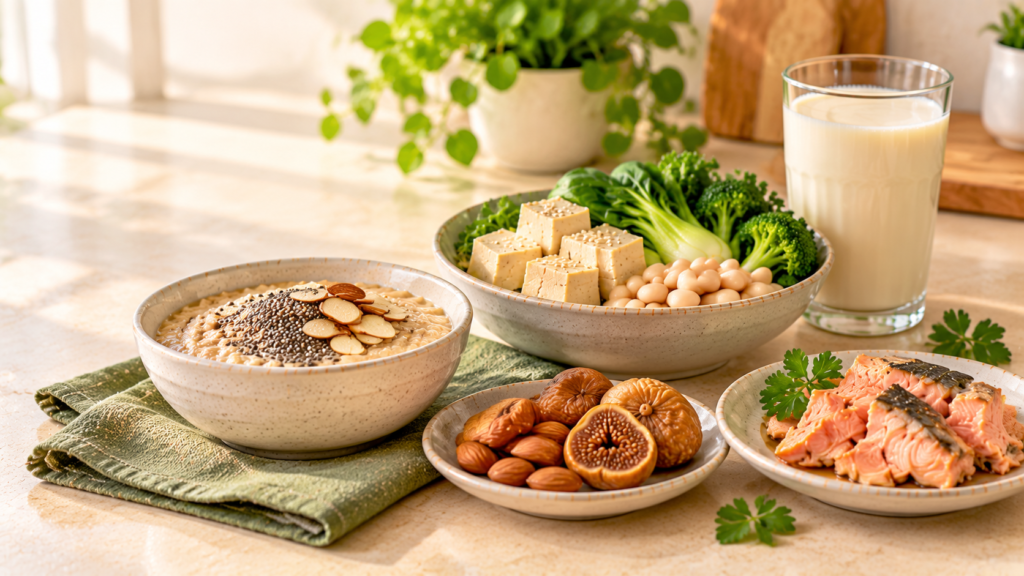
BREAKFAST
Oats with fortified soy milk and chia seeds
Provides calcium from the fortified beverage and seeds, plus fiber from oats.

SNACK
Almonds and dried figs
A convenient snack that contributes some calcium, fiber, and other nutrients.

LUNCH
Tofu, bok choy, and broccoli bowl
Combines calcium-set tofu with vegetables and a whole grain such as brown rice.

DINNER
White bean and leafy green soup
Provides additional calcium alongside protein, fiber, and other micronutrients.
This meal plan is an example, not a calculated nutritional prescription. Total calcium depends on actual portion sizes, product fortification, and the tofu used. To assess whether it meets your needs, calculate calcium from the products and quantities you consume.
Vitamin D Rich Foods: Best Sources for Bone Health
This related article can help readers understand why calcium and vitamin D are both important for maintaining healthy bones.
Common Mistakes to Avoid on a Dairy-Free Diet
When replacing dairy, a few common mistakes can make it harder to get enough calcium.
- Assuming every plant milk is fortified: Always check the label.
- Using spinach as the primary calcium source: Its calcium is poorly absorbed because of oxalates.
- Choosing tofu without checking its ingredients: Calcium content depends on the coagulant used.
- Relying only on nuts and seeds: These foods contribute calcium but may not supply enough on their own.
- Ignoring portion sizes: A food may look calcium-rich, but the amount you actually eat matters.
- Forgetting vitamin D: Calcium intake alone does not guarantee adequate vitamin D status.
- Taking high-dose supplements without guidance: Supplements may be useful when dietary intake is inadequate, but more is not always better.
A varied diet built around fortified foods, suitable vegetables, legumes, and other calcium-containing foods is usually a more practical starting point than relying on a single food or supplement.
Calcium Rich Foods for People Who Avoid Dairy With Food Allergies or Dietary Restrictions
Not everyone avoids dairy for the same reason, so choosing suitable alternatives depends on your individual needs.
If you have lactose intolerance
Lactose intolerance means your body has difficulty digesting lactose, the natural sugar in milk. It is different from a milk allergy.
If you avoid regular dairy because of lactose intolerance, calcium-fortified plant beverages, calcium-set tofu, and suitable vegetables are useful options. Some people with lactose intolerance can also tolerate lactose-free dairy products, although these are not suitable for people with a milk protein allergy.
If you have a milk allergy
Avoid products containing the milk proteins that trigger your allergy. Check ingredient lists carefully, including those on packaged foods and plant-based alternatives.
If your allergy is severe, review allergen statements and cross-contact warnings, and follow your allergist’s guidance.
If you follow a vegan diet
Focus on calcium-fortified plant milk, calcium-set tofu, bok choy, kale, broccoli, beans, seeds, and other suitable fortified foods.
Fortified plant-based yogurt and breakfast cereals can also contribute, depending on their ingredients and nutritional content.
If you are planning meals for children
Calcium is especially important during childhood and adolescence, when bones are growing. Children who avoid dairy need age-appropriate alternatives that provide enough calcium, protein, vitamin D, and energy.
Discuss a child’s dairy-free diet with a pediatrician or registered dietitian, particularly if several food groups are excluded.

Conclusion
Getting enough calcium without dairy is achievable when you know which foods to choose and how to combine them. Calcium-fortified plant milk, calcium-set tofu, kale, bok choy, broccoli, beans, seeds, and selected fortified products can all help support your daily intake.
The best calcium rich foods for people who avoid dairy are not necessarily the same for everyone. Your ideal choices depend on your dietary preferences, nutritional needs, food availability, and any allergies or medical conditions.
Start by choosing a reliable calcium source for breakfast, adding calcium-rich vegetables or tofu to lunch and dinner, and checking labels on fortified products. Pair these habits with adequate vitamin D, balanced nutrition, and regular physical activity.
If you consistently struggle to meet your calcium needs through food, speak with a qualified healthcare professional or registered dietitian about whether a supplement is appropriate for you.
NIH Calcium Fact Sheet: Recommended Intakes and Food Sources
Frequently Asked Questions
1. What are the best calcium-rich foods for people who avoid dairy?
Calcium-fortified soy milk, calcium-set tofu, calcium-fortified orange juice, bok choy, kale, chia seeds, and canned salmon with edible bones are useful choices. The best combination depends on whether you eat animal products and which foods you enjoy.
2. How can I get 1,000 mg of calcium a day without dairy?
Combine several calcium-containing foods throughout the day. For example, fortified soy milk, calcium-set tofu, leafy greens, beans, and seeds can all contribute. Check product labels and serving sizes to calculate your actual intake rather than relying on estimates alone.
3. Which plant-based milk has the most calcium?
There is no single winner across all brands. Fortified soy, almond, oat, and other plant beverages can contain substantial calcium, but amounts vary. Compare nutrition labels and select a product that provides calcium in a serving size you regularly consume.
4. Are almonds enough to meet daily calcium needs?
No. Almonds contain calcium, but a typical 1-ounce serving provides approximately 76 mg. They can contribute to your intake, but most people need several other calcium sources to meet their daily requirements.
5. Is spinach a good source of calcium?
Spinach contains calcium, but its oxalate content limits how much your body absorbs. Kale and bok choy are generally more useful choices when your goal is to obtain calcium from leafy vegetables.
6. Can I build strong bones without drinking milk?
Yes. Milk is not essential if you obtain sufficient calcium and other important nutrients from suitable alternatives. Adequate vitamin D, protein, physical activity, and an overall balanced diet also matter for bone health.
7. Do dairy-free calcium supplements help?
They can help when dietary intake is insufficient, but supplementation is not necessary for everyone. A healthcare professional can help determine whether you need a supplement and what dose is appropriate, taking your diet, health, and medicines into account.
8. What are the best calcium-rich foods for vegans?
Fortified plant milk, calcium-set tofu, bok choy, kale, broccoli, beans, chia seeds, tahini, and calcium-fortified cereals are useful vegan options. Read labels because fortification and calcium content vary.
3 thoughts on “Calcium Rich Foods for People Who Avoid Dairy”