
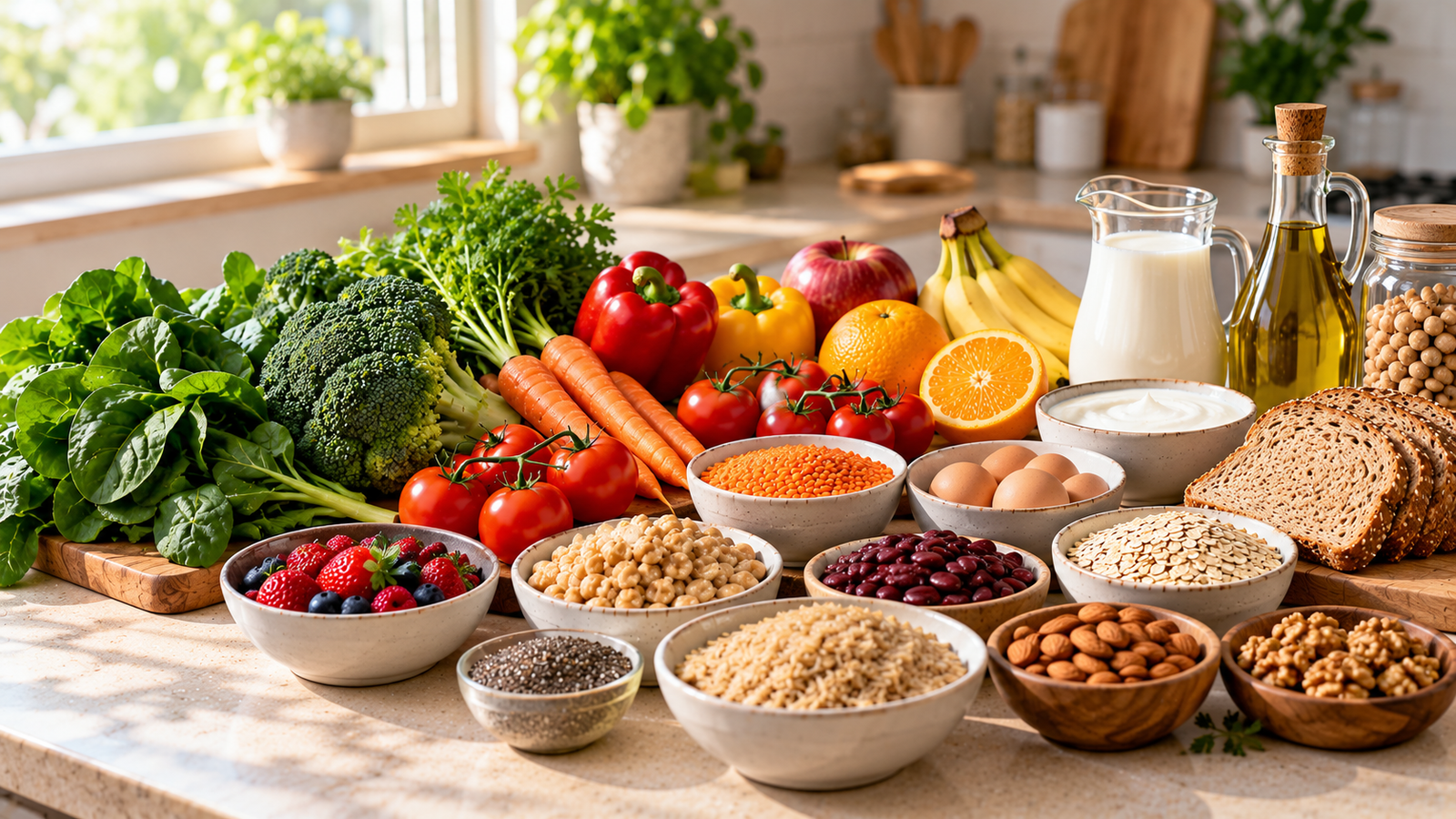
The healthy foods to keep in your kitchen can make everyday eating easier, more affordable, and more nutritious. When your refrigerator, freezer, and pantry contain versatile ingredients, preparing a balanced meal becomes much simpler—even when you’re short on time.
You do not need an expensive grocery list, a perfectly organized kitchen, or specialty health foods to eat well. Everyday staples such as eggs, lentils, oats, seasonal vegetables, fruit, plain yogurt, whole grains, nuts, and canned beans can provide essential nutrients and form the foundation of satisfying meals.
The key is to choose foods that fit your budget, cooking habits, dietary needs, and local availability. This guide explains which healthy kitchen staples are worth keeping, how to store them, and how to combine them into practical breakfasts, lunches, dinners, and snacks.
Key Takeaways
- Stock a mix of vegetables, fruit, protein foods, whole grains, and healthy fats.
- Choose fresh, frozen, dried, and canned ingredients according to your budget and storage space.
- Keep versatile staples such as eggs, lentils, beans, oats, and whole-wheat flour available.
- Use frozen vegetables and canned beans to prepare quick meals with less food waste.
- Read labels for added sugar, sodium, and the amount of whole grain in packaged foods.
- Build meals around variety and balance rather than relying on a single “superfood.”
Why Keep Healthy Foods in Your Kitchen?
A well-stocked kitchen makes it easier to turn nutritious intentions into everyday habits.
1. Make balanced meals more convenient
When you have vegetables, a protein source, and a whole grain or other starchy food available, you can prepare a balanced meal without needing a special shopping trip.
For example, combine lentils, brown rice, and vegetables for a filling meal, or serve eggs with whole-wheat toast and tomatoes for breakfast.
2. Save money on groceries
Beans, lentils, oats, seasonal produce, and frozen vegetables can be economical choices. Planning several meals around the same ingredients helps reduce waste and makes your grocery budget go further.
3. Reduce reliance on last-minute convenience foods
Convenience foods can fit into a healthy eating pattern, but having nutritious alternatives available makes it easier to prepare meals that suit your needs. A can of chickpeas, frozen spinach, and whole-wheat bread can become a quick meal with very little preparation.
4. Improve variety in your diet
Different foods provide different combinations of vitamins, minerals, protein, fiber, and other beneficial compounds. Keeping a range of ingredients encourages you to eat a wider variety of foods throughout the week.
25 Healthy Foods to Keep in Your Kitchen
These 25 kitchen essentials are flexible suggestions, not a list you must buy all at once. Start with the foods you already enjoy, then add a few useful ingredients each week.
Vegetables and fruits

1. Leafy greens
Spinach, kale, mustard greens, and other leafy vegetables provide folate, vitamin K, and other nutrients. Use them in omelets, lentils, soups, curries, or side dishes. Fresh and frozen options can both be useful.

2. Broccoli and cauliflower
These vegetables provide fiber and vitamin C. Roast, steam, stir-fry, or add them to soups and rice dishes. Frozen florets are convenient when fresh produce is expensive or unavailable.

3. Carrots and sweet potatoes
Carrots provide beta-carotene, which the body can convert into vitamin A. Sweet potatoes also supply beta-carotene and carbohydrates. Roast them, add them to stews, or serve them as a side dish.

4. Tomatoes and bell peppers
Tomatoes provide vitamin C and lycopene, while bell peppers can be especially rich in vitamin C. Use them in salads, sandwiches, sauces, omelets, and cooked vegetable dishes.

5. Whole fruit
Apples, bananas, oranges, guavas, pears, and other seasonal fruits provide different vitamins, minerals, and fiber. Choose whole fruit more often than juice because it retains its natural fiber and is generally more filling.
Protein-rich foods

6. Eggs
Eggs provide high-quality protein, choline, and vitamin B12. They cook quickly and work well for breakfast, sandwiches, salads, and vegetable omelets. Refrigerate eggs according to local food-safety guidance and the product label.

7. Lentils
Lentils supply plant protein, fiber, folate, and iron. They are inexpensive, store well when dry, and can be cooked into dal, soups, stews, and salads. Pairing lentils with vitamin C-rich foods such as tomatoes can improve absorption of their non-heme iron.

8. Beans and chickpeas
These foods provide fiber, protein, and minerals. Keep dry beans or low-sodium canned varieties in your pantry. Add them to curries, salads, wraps, soups, or homemade bean patties.

9. Plain yogurt and milk
These foods can provide protein and calcium; their vitamin B12 content and other nutrients vary. Choose unsweetened yogurt for a flexible breakfast, snack, or cooking ingredient. If you avoid dairy, consider a suitably fortified alternative.

10. Fish
Fish provides protein, and oily varieties such as salmon and sardines provide omega-3 fats. Frozen fish and canned sardines or salmon can be convenient options. Choose varieties appropriate for your budget and follow local advice on fish safety.

11. Tofu or other soy foods
Tofu provides plant protein and is versatile in stir-fries, soups, curries, and sandwiches. Its calcium content depends on how it is made, so check the label if you rely on tofu as a calcium source.
Whole grains and starchy staples

12. Oats
Oats provide whole-grain carbohydrates, fiber, and a type of soluble fiber called beta-glucan. Make porridge, overnight oats, or homemade oat pancakes, or add oats to yogurt and smoothies.

13. Whole grains
Brown rice, whole-wheat bread, whole-wheat flour, and other whole grains provide carbohydrates and fiber. Whole-wheat roti can be a practical everyday staple. Look for products listing whole grains among the first ingredients.

14. Potatoes
Potatoes provide carbohydrates and potassium, with some vitamin C. Boiling, baking, or roasting with a moderate amount of oil can be a useful everyday preparation. The overall meal and cooking method matter more than labeling potatoes as simply good or bad.
Healthy fats, nuts, and seeds

15. Nuts
Almonds, walnuts, peanuts, and pistachios provide unsaturated fats, and many contain protein, fiber, and minerals. Unsalted options are useful everyday choices. Store nuts in airtight containers and refrigerate or freeze them for longer storage.

16. Seeds
Chia, flax, pumpkin, and sesame seeds contribute fiber, unsaturated fats, and minerals. Sprinkle them over porridge, yogurt, salads, or homemade bread. Ground flaxseed can be easier to use in some recipes.

17. Unsaturated cooking oils
Olive, canola, sunflower, and other suitable liquid plant oils can provide unsaturated fats. Use reasonable amounts for cooking and dressings. Choose an oil that suits your recipes, budget, and cooking temperature.

18. Avocado, when available
Avocado supplies fiber and mostly unsaturated fats. Add it to toast, salads, or sandwiches. It is optional, not essential—peanuts, seeds, and suitable plant oils can also contribute unsaturated fats.
Pantry and freezer essentials

19. Canned tomatoes and vegetables
Canned produce can make cooking quicker and may be nutritious alternatives to fresh foods. Compare sodium levels when possible, and drain or rinse vegetables if that suits the recipe.

20. Frozen vegetables
Frozen peas, spinach, mixed vegetables, and broccoli are easy to portion and often reduce waste. Frozen vegetables can retain substantial nutrients because they are usually frozen soon after harvesting.

21. Frozen fruit
Frozen berries, mango, and other fruits are useful for porridge, smoothies, and yogurt. Choose products without added sugar when possible, and follow the package instructions for storage and thawing.

22. Peanut butter or another nut butter
Nut butters provide energy, unsaturated fats, and some protein. Look for options with little or no added sugar and compare sodium levels. If allergies are a concern, choose an appropriate alternative.

23. Popcorn kernels
Popcorn is a whole grain and can be a fiber-containing snack. Prepare it with a moderate amount of oil and your preferred seasonings instead of relying on heavily salted or sugary toppings.

24. Garlic, onions, ginger, and herbs
These ingredients add flavor to everyday meals, making vegetables, beans, and whole grains more enjoyable. They can help you prepare satisfying dishes without needing large amounts of salt.

25. Everyday spices
Cumin, turmeric, black pepper, cinnamon, paprika, and other spices make simple ingredients more flavorful. Use them to vary your meals and support a cooking routine you enjoy.
Healthy Kitchen Staples: Quick Nutrition Comparison
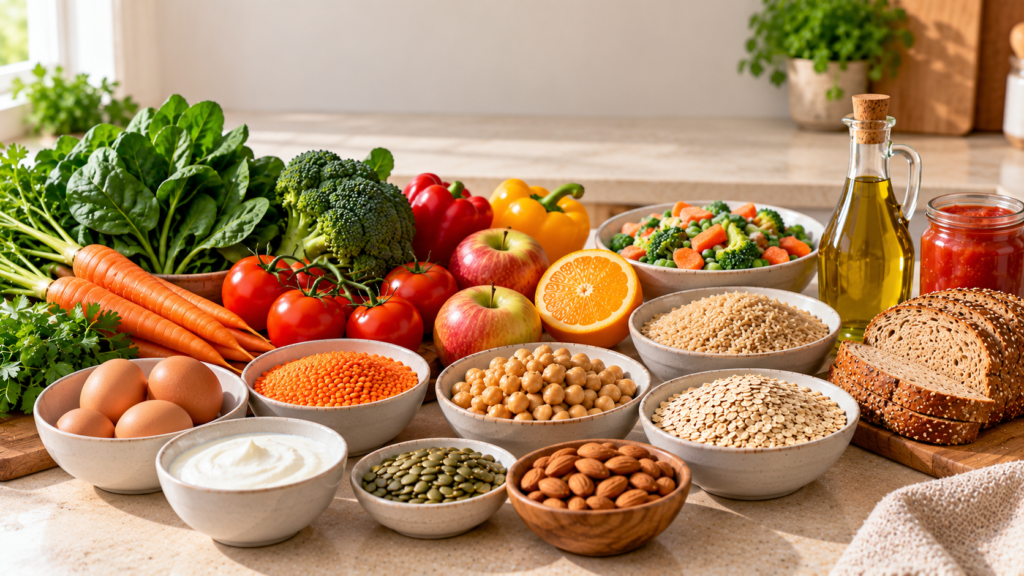
Use this table to choose ingredients that cover different nutritional needs. Values and nutrient content vary by product, variety, and serving size.
| Food | Main nutritional contribution | Easy way to use it |
|---|---|---|
| Spinach | Folate, vitamin K | Add to dal or eggs |
| Broccoli | Fiber, vitamin C | Steam or stir-fry |
| Oranges | Vitamin C, fiber | Eat as a snack |
| Eggs | Protein, choline, vitamin B12 | Boil or make an omelet |
| Lentils | Protein, fiber, folate, iron | Prepare dal or soup |
| Chickpeas | Protein, fiber | Add to curries or salads |
| Plain yogurt | Protein, calcium | Serve with breakfast |
| Oats | Whole grains, beta-glucan fiber | Make porridge |
| Whole-wheat flour | Carbohydrates, fiber | Make whole-wheat roti |
| Nuts and seeds | Unsaturated fats, minerals | Add to snacks or porridge |
| Frozen vegetables | Fiber and varied micronutrients | Add to quick meals |
| Canned tomatoes | Vitamin C and other nutrients | Use in sauces and currie |
Best Nutrient-Dense Foods for Everyday Meals
How to Stock Your Kitchen on a Budget
You do not need to purchase all 25 foods in one shopping trip. Build a useful collection around a few affordable staples and expand it as needed.
Start with a small foundation
For a basic healthy kitchen, prioritize:
- One or two affordable fruits, such as bananas, apples, oranges, or seasonal fruit.
- Two or three vegetables, including at least one leafy or green vegetable.
- Lentils, chickpeas, or beans.
- Eggs or another protein source that suits your diet.
- Oats, whole-wheat flour, brown rice, or another whole-grain staple.
- Plain yogurt or a suitable fortified alternative.
- A small amount of nuts, seeds, or an appropriate cooking oil.
- Garlic, onions, and a few spices you regularly use.
This foundation can support breakfasts, lunches, dinners, and snacks without requiring specialty ingredients.
Choose fresh, frozen, and canned foods strategically
Fresh food is excellent, but it is not automatically more nutritious than every frozen or canned alternative.
- Fresh produce: Buy seasonal foods and quantities you can use before they spoil.
- Frozen produce: Keep peas, spinach, mixed vegetables, and fruit available for quick meals.
- Canned foods: Choose beans, chickpeas, tomatoes, or fish when convenient. Compare sodium levels and choose lower-sodium options when possible.
- Dried staples: Store lentils, beans, oats, and grains in airtight containers in a cool, dry place.
Frozen and canned foods can make nutritious eating more convenient and reduce waste. Check labels for added sugar, sodium, sauces, and other ingredients that may affect your preferences.
Make a weekly shopping plan
Before shopping, check what is already in your kitchen. Then choose a few meals that share ingredients.
For example, spinach can go into eggs, dal, and a vegetable curry. Chickpeas can be used for lunch and dinner. Plain yogurt can serve as breakfast, a snack, or a side dish.
Buying ingredients with multiple uses can be more economical than purchasing a different specialty ingredient for every recipe.
A Healthy Kitchen Checklist
Use this checklist to assess your current kitchen. You do not need every item to eat well.
Kitchen stock checklist
0 of 12 checked
Fruit and vegetablesFresh or frozen vegetablesFresh or frozen fruitOnions, garlic, or ginger
Protein foodsLentils, beans, or chickpeasEggs, fish, tofu, or another proteinPlain yogurt, milk, or fortified alternative
Grains and pantry foodsOats or another whole grainWhole-wheat flour, bread, or riceCanned tomatoes or vegetables
Healthy fats and flavorNuts, seeds, or nut butterCooking oil rich in unsaturated fatsHerbs and spices
Reset checklistCopy checklist
How to Store Healthy Foods Safely
Proper storage helps protect food quality, prevent spoilage, and reduce waste.
Refrigerator essentials
- Refrigerate perishable foods such as milk, yogurt, cooked meals, and foods labeled for refrigeration.
- Store raw meat and fish securely below ready-to-eat foods to prevent drips and cross-contamination.
- Keep cut fruit and vegetables in clean, covered containers and follow food-safety guidance for storage times.
- Avoid leaving perishable foods at room temperature for extended periods.
Pantry essentials
- Keep dry grains, oats, lentils, beans, and nuts in clean, airtight containers.
- Store pantry foods in a cool, dry place away from direct sunlight.
- Check expiry dates and rotate older items to the front.
- Discard foods with signs of spoilage, damaged packaging, or unusual odors.
Freezer essentials
- Freeze foods in suitable, sealed containers or bags.
- Label containers with the food name and date so you can use older items first.
- Thaw foods safely in the refrigerator or by another recommended food-safe method, rather than leaving them out for long periods.
For detailed food-safety advice, consult the USDA Food Safety and Inspection Service — Safe Food Handling.
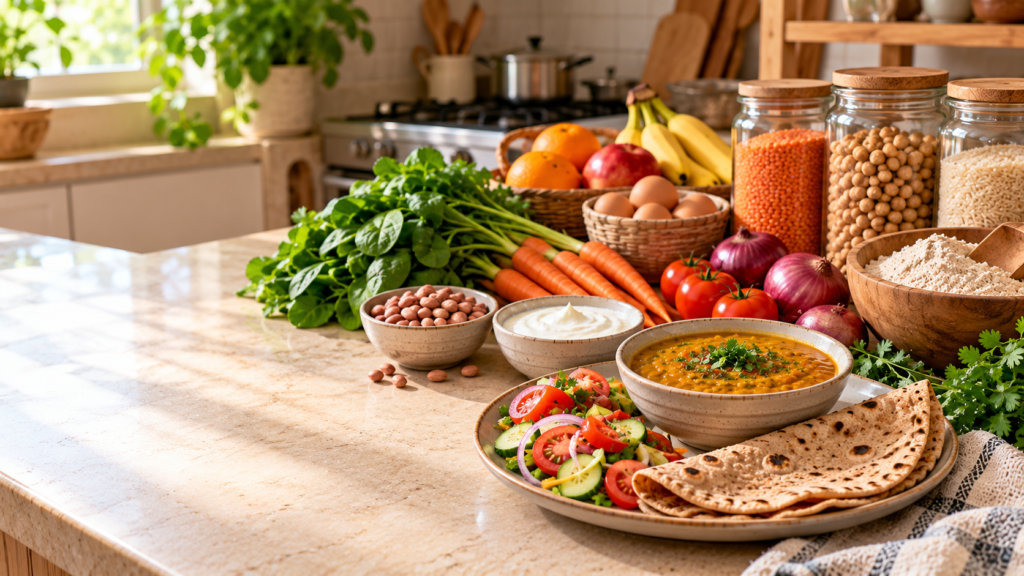
Easy Meal Ideas Using Foods You Keep at Home
A well-stocked kitchen becomes especially useful when you know how to combine ingredients into simple meals.
| Meal | Ingredients | Preparation idea |
|---|---|---|
| Quick breakfast | Oats, milk or fortified alternative, banana, seeds | Cook oats and top with fruit and seeds |
| Protein-rich breakfast | Eggs, tomatoes, spinach, whole-wheat roti | Cook vegetables with eggs and serve with roti |
| Simple lunch | Lentils, rice or roti, vegetables, yogurt | Serve dal with a vegetable side and plain yogurt |
| Chickpea salad | Chickpeas, tomatoes, cucumber, lemon | Mix together and season with herbs or spices |
| Quick dinner | Frozen vegetables, eggs or tofu, rice | Stir-fry vegetables and protein; serve with rice |
| Filling snack | Plain yogurt, fruit, nuts | Combine in a bowl |
| Easy soup | Canned tomatoes, lentils, carrots, onions | Simmer until the lentils and vegetables are tender |
Three practical ways to build a balanced meal
- Include vegetables or fruit. Add a salad, cooked vegetables, or a serving of fruit.
- Choose a protein source. Use eggs, lentils, beans, fish, poultry, tofu, yogurt, or another suitable option.
- Add a grain or starchy food. Choose oats, whole-wheat roti, whole-grain bread, rice, or potatoes according to your meal and preferences.
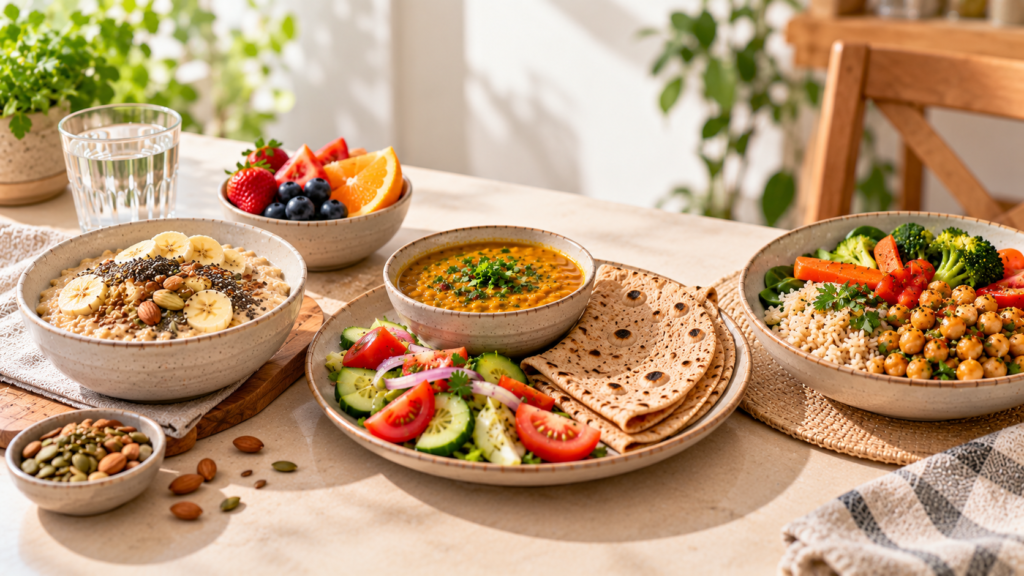
A useful general guide is to fill about half your plate with vegetables and fruit, one-quarter with protein foods, and one-quarter with whole grains. Treat this as a flexible starting point rather than a strict rule; food needs vary with age, activity, health, and appetite.
For more guidance, see the Harvard T.H. Chan School of Public Health — Healthy Eating Plate.
How to Build a Balanced Plate for Healthy Eating
Common Mistakes to Avoid When Stocking a Healthy Kitchen
Buying too much fresh food at once
Fresh produce is valuable, but buying more than you can use may lead to food waste. Start with smaller quantities and supplement them with frozen or longer-lasting produce.
Assuming every packaged food is unhealthy
Canned beans, frozen vegetables, plain yogurt, and some whole-grain packaged foods can be convenient and nutritious. Look at the ingredient list and nutrition label instead of judging solely by packaging.
Forgetting protein and fiber
A kitchen stocked mainly with snack foods, refined grains, or condiments may make balanced meals harder to prepare. Keep affordable sources of protein and fiber, such as lentils, beans, oats, and vegetables, readily available.
Buying expensive foods you rarely eat
Avocados, berries, specialty seeds, and imported products can be nutritious, but they are not essential. Choose local seasonal produce, ordinary nuts or peanuts, beans, lentils, and familiar staples that suit your budget.
Thinking one food can provide everything
No single ingredient supplies every nutrient in the amounts your body needs. Variety across food groups is more useful than relying on one highly promoted food.
Frequently Asked Questions
1. What are the healthiest foods to keep in your kitchen?
Useful choices include vegetables, fruit, eggs, lentils, beans, plain yogurt, oats, whole grains, nuts, seeds, and suitable cooking oils. The best combination depends on your dietary needs, preferences, and budget.
2. What healthy foods should I always have at home?
Start with a few versatile staples: lentils or beans, eggs or another protein source, oats or whole grains, seasonal vegetables, fruit, and a source of healthy fats. Frozen vegetables and canned tomatoes can also help you prepare quick meals.
3. What are the best healthy pantry staples for a tight budget?
Lentils, dried beans, chickpeas, oats, whole-wheat flour, rice, peanuts, and seasonal produce are often practical choices. Prices vary by location and season, so compare cost per serving rather than buying ingredients simply because they are marketed as healthy.
4. Which healthy foods should I keep in the refrigerator?
Depending on your needs, useful refrigerator foods include eggs, milk, plain yogurt, leafy greens, carrots, tomatoes, and other fresh produce. Store each food according to its food-safety requirements and packaging instructions.
5. Are frozen vegetables as healthy as fresh vegetables?
Frozen vegetables can retain substantial amounts of vitamins and minerals and are often a convenient alternative to fresh produce. Choose plain varieties when possible, particularly if you want to control added salt, sauces, or fats.
6. What foods should I keep in my kitchen for quick healthy meals?
Keep oats, eggs, canned beans, lentils, frozen vegetables, whole-grain staples, plain yogurt, and fruit available. These ingredients can be combined into quick breakfasts, soups, salads, curries, and simple dinners.
7. How can I stock a healthy kitchen without spending too much?
Plan meals before shopping, buy seasonal foods, compare prices, use leftovers safely, and choose dried or canned staples when practical. Build your supply gradually rather than purchasing everything at once.
8. How often should I restock healthy kitchen foods?
Check your supplies weekly or whenever you plan your meals. Buy perishables according to how quickly you use them, and replenish pantry staples when they begin running low.
Conclusion
The best healthy foods to keep in your kitchen are the ones that help you prepare balanced, enjoyable meals consistently. Vegetables, fruit, lentils, beans, eggs, yogurt, oats, whole grains, nuts, seeds, and convenient frozen or canned ingredients provide a flexible foundation for everyday eating.
You do not need to transform your entire kitchen overnight. Start by choosing a few nutritious staples, plan two or three meals around them, and gradually add foods that match your tastes and budget. With a little preparation, healthy eating can become easier, more affordable, and more sustainable.
2 thoughts on “Healthy Foods to Keep in Your Kitchen”