
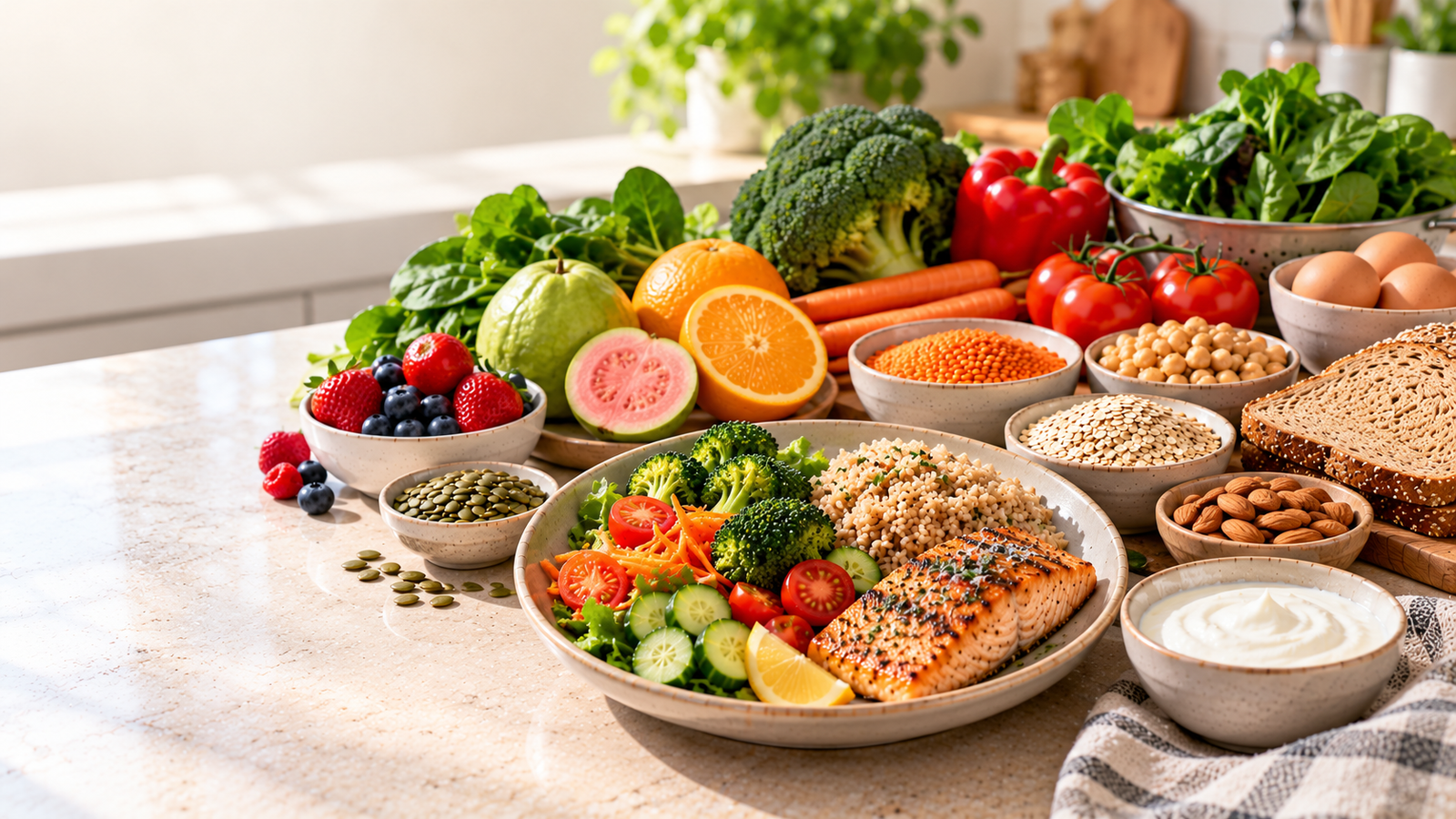
Learning how to add more vitamins and minerals to your diet does not require expensive supplements, complicated recipes, or a complete lifestyle change. Small adjustments to your everyday meals can help you get a wider range of essential nutrients from foods you already enjoy.
Vitamins and minerals support many important body functions, including energy metabolism, immune function, bone health, blood formation, nerve function, and normal muscle activity. Your body needs different amounts of these nutrients, and no single food provides everything in the proportions you need.
A practical approach is to eat a varied diet that includes vegetables, fruits, whole grains, legumes, nuts, seeds, and suitable protein sources. Fortified foods can also help meet specific nutrient needs. In this guide, you will learn simple ways to improve nutrient intake, identify useful food sources, plan balanced meals, and avoid common mistakes.
Key Takeaways
- Eat a variety of colorful vegetables and fruits throughout the week.
- Include legumes, whole grains, nuts, and seeds for additional vitamins, minerals, and fiber.
- Combine different food groups instead of relying on one so-called superfood.
- Use frozen and canned produce when fresh options are expensive or inconvenient.
- Pair plant-based iron sources with vitamin C-rich foods to improve iron absorption.
- Choose fortified foods when appropriate, especially if your diet excludes certain food groups.
- Supplements can be useful in specific circumstances, but more is not always better.
Why Are Vitamins and Minerals Important?
Vitamins and minerals are essential micronutrients. Your body needs them in relatively small amounts, but they contribute to many processes that help maintain health.
Vitamins support essential body functions
Different vitamins perform different roles:
- Vitamin A: Supports normal vision, immune function, and cell growth.
- B vitamins: Help the body use energy from food; some are also essential for red blood cell formation and normal nerve function.
- Vitamin C: Supports collagen formation, wound healing, and the absorption of non-heme iron from plant foods.
- Vitamin D: Helps the body absorb calcium and supports bone health.
- Vitamin E: Acts as an antioxidant that helps protect cells.
- Vitamin K: Plays an important role in normal blood clotting and bone metabolism.
Minerals help maintain normal body function
Important minerals include:
- Calcium: Needed for bones, teeth, muscle contraction, and nerve signaling.
- Iron: Needed to make hemoglobin, which carries oxygen in the blood.
- Magnesium: Involved in muscle and nerve function, energy production, and many enzyme reactions.
- Potassium: Helps regulate fluid balance, nerve signals, and muscle contractions.
- Zinc: Supports immune function, wound healing, and DNA and protein synthesis.
- Iodine: Needed to produce thyroid hormones.
Your requirements depend on factors such as age, sex, pregnancy status, health, and dietary pattern. The goal is to meet your individual needs through a varied eating pattern rather than trying to maximize every nutrient.
NIH Office of Dietary Supplements — Vitamins and Minerals
15 Simple Ways to Add More Vitamins and Minerals to Your Diet
These strategies focus on everyday changes that can fit into different budgets, cultures, and cooking routines.
1. Add one extra vegetable to your main meals
Vegetables supply a range of vitamins, minerals, fiber, and beneficial plant compounds. Adding even one extra vegetable to a meal can increase variety.
Try:
- Adding spinach to eggs, lentils, or curries.
- Mixing carrots and peas into rice dishes.
- Serving tomatoes and cucumber with lunch.
- Adding broccoli, cauliflower, or cabbage to dinner.
- Stirring frozen vegetables into soups and noodles.
You do not need to eat every vegetable every day. Rotate the options available to you and choose seasonal produce when it offers better value.
2. Eat different colors of fruit and vegetables
Different plant foods contain different combinations of nutrients and natural plant compounds. Eating a variety of colors can be an easy way to broaden your food choices.

Red foods
Tomatoes, red peppers, and strawberries provide vitamin C or other beneficial plant compounds, depending on the food.

Green foods
Spinach, broccoli, peas, and kiwi can contribute folate, vitamin K, vitamin C, and other nutrients.

Orange and yellow foods
Carrots, pumpkin, sweet potatoes, and mango provide carotenoids; some are converted into vitamin A by the body.

Blue and purple foods
Berries, purple cabbage, and eggplant provide different plant compounds, along with varying amounts of vitamins and minerals.
Color is a useful variety cue, not a guarantee of a particular nutrient. White foods such as cauliflower, onions, and mushrooms can also be nutritious.
3. Choose whole fruit instead of juice more often
Whole fruit usually provides more fiber and is often more filling than juice. Oranges, guavas, apples, bananas, pears, and seasonal fruits can all contribute to your nutrient intake.
Practical ideas include:
- Eat a piece of fruit with breakfast.
- Keep washed fruit where you can easily see it.
- Add sliced banana or berries to oats.
- Pair an orange or guava with a handful of nuts.
Frozen fruit without added sugar is another convenient option. Juice can fit into a balanced diet, but it is generally better not to rely on it as your main source of fruit.
4. Include beans, lentils, and chickpeas regularly
Legumes are affordable sources of plant protein, fiber, folate, and minerals such as iron and magnesium.
You can add them to your diet by:
- Preparing lentil soup or dal.
- Adding chickpeas to salads and wraps.
- Mixing beans into vegetable stews.
- Serving lentils with whole-wheat roti or rice.
- Keeping cooked portions in the refrigerator or freezer for convenient meals.
If you are increasing your fiber intake, do so gradually and drink enough fluids to help your digestive system adjust.
5. Choose whole grains more often
Whole grains retain more of their original grain components than refined grains, including the bran and germ. These parts contribute fiber and several nutrients.
Useful options include:
- Oats for breakfast.
- Whole-wheat roti or bread.
- Brown rice.
- Barley.
- Whole-grain cereals with limited added sugar.
You do not have to replace every refined grain immediately. Start by switching one meal or one product to a whole-grain option you enjoy.
6. Add nuts and seeds to everyday meals
Nuts and seeds can provide magnesium, vitamin E, unsaturated fats, and other nutrients, although their exact composition varies.
Easy ways to use them include:
- Adding pumpkin seeds to salads.
- Mixing chia or ground flaxseed into oats.
- Eating a small handful of unsalted nuts as a snack.
- Sprinkling sesame seeds over vegetables.
- Using peanut butter on whole-grain toast.
Because nuts and seeds are energy-dense, modest portions are often practical. Choose options appropriate for your allergies and dietary needs.
7. Eat a variety of protein foods
Protein foods can contribute several important vitamins and minerals, depending on the source.
- Eggs provide protein, choline, and vitamin B12.
- Fish provides protein; oily fish also supplies omega-3 fats, and some varieties provide vitamin D.
- Dairy foods provide calcium and may provide vitamin B12.
- Beans and lentils supply folate, iron, and magnesium.
- Meat and poultry provide protein and several minerals; red meat can be a source of readily absorbed heme iron.
- Tofu can provide protein, and calcium-set varieties may contribute calcium.
Rotating protein sources across the week helps broaden nutrient intake.
8. Pair plant-based iron foods with vitamin C
Iron is important for oxygen transport and normal energy metabolism. Plant foods contain non-heme iron, which is generally less readily absorbed than the heme iron in animal foods.
Vitamin C can improve non-heme iron absorption when eaten as part of the same meal.
Try these combinations:
| Plant-based iron source | Vitamin C-rich pairing |
|---|---|
| Lentils | Tomatoes or bell peppers |
| Chickpeas | Lemon juice or fresh peppers |
| Beans | Cabbage or tomatoes |
| Iron-fortified cereal | Kiwi, orange, or berries |
| Tofu | Broccoli or bell peppers |
Tea and coffee consumed with meals can reduce the absorption of non-heme iron. People at risk of iron deficiency may benefit from drinking them between meals instead. Anyone with diagnosed iron deficiency should follow professional medical advice rather than relying on food changes alone.
9. Include calcium-rich foods
Calcium supports bones and teeth, muscle contraction, and nerve function.
Useful sources include:
- Milk and yogurt.
- Calcium-fortified plant-based drinks.
- Calcium-set tofu.
- Sardines or canned salmon with edible bones.
- Certain leafy greens, such as kale and bok choy.
- Foods made with calcium-fortified ingredients.
The amount of calcium in plant foods varies, and some contain compounds that reduce absorption. If you avoid dairy, check labels on fortified alternatives and choose a variety of calcium sources.
10. Do not overlook vitamin B12
Vitamin B12 is important for normal nerve function and red blood cell formation. Natural food sources include fish, meat, eggs, and dairy products. Some foods, including selected breakfast cereals and plant-based alternatives, are fortified with B12.
People following vegan diets need a reliable source of vitamin B12 from appropriately fortified foods or a suitable supplement. Vegetarians who eat few animal foods may also need to plan carefully.
If you have symptoms or risk factors for B12 deficiency, seek medical advice. Food changes alone may not be enough to correct an established deficiency.
11. Use frozen vegetables and fruit
Frozen produce can be a convenient way to eat more plant foods throughout the year. Freezing soon after harvest helps preserve many nutrients, although levels vary with processing, storage, and cooking.
Keep a few versatile options in the freezer, such as:
- Spinach.
- Peas.
- Broccoli.
- Mixed vegetables.
- Berries.
- Mango pieces.
Add frozen vegetables directly to many soups, stews, and curries. Follow package instructions and avoid unnecessary cooking that can damage heat-sensitive nutrients.
12. Choose fortified foods when they meet a real need
Fortified foods have selected vitamins or minerals added during production. Examples include certain breakfast cereals, milk alternatives, and other regionally available products.
Fortification can be particularly useful for nutrients that may be difficult to obtain from a restricted diet, such as vitamin B12 for vegans or vitamin D in populations with limited dietary sources.
Read the nutrition label to check which nutrients are added and how much a serving provides. Fortified does not automatically mean healthier; added sugar, sodium, and serving size still matter.
13. Add herbs and spices to your cooking
Herbs and spices help make nutritious meals flavorful. Some provide small amounts of vitamins, minerals, or beneficial plant compounds, but typical culinary portions should not be treated as concentrated nutrient sources.
Try:
- Adding coriander, parsley, or other fresh herbs to cooked dishes.
- Using garlic, ginger, cumin, and turmeric in lentils and vegetables.
- Seasoning soups with herbs and black pepper.
- Using cinnamon in porridge without relying on added sugar.
Their biggest practical benefit may be helping you enjoy a wider range of nutritious foods.
14. Plan meals before you shop
A simple meal plan makes it easier to include a variety of nutrient-rich foods without spending unnecessarily.
For example, plan three meals around shared ingredients:
- Breakfast: oats, milk or fortified alternative, and fruit.
- Lunch: lentils, whole-wheat roti, and vegetables.
- Dinner: eggs, tofu, or fish with rice and mixed vegetables.
Check your pantry first, then make a list of only what you need. This can also reduce food waste.
15. Make water your usual drink
Water does not supply vitamins or minerals in meaningful amounts in most cases, but staying hydrated supports normal body function. Drinking water instead of sugary beverages can also reduce added sugar intake.
Milk and some fortified alternatives contribute nutrients as well, but they serve a different nutritional role. Choose drinks according to your dietary needs, preferences, and any medical advice you have received.
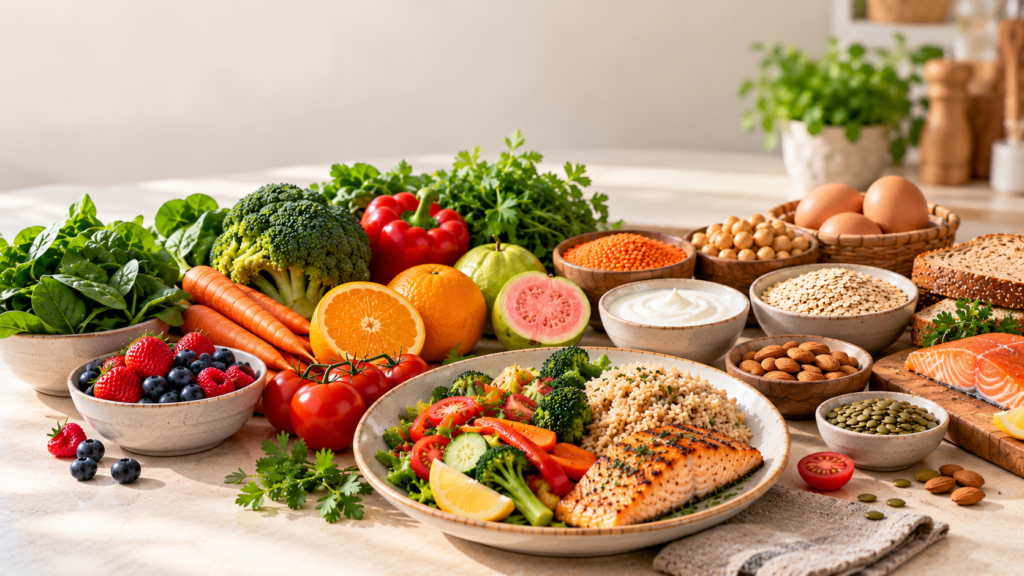
A Simple Daily Meal Plan for Better Vitamin and Mineral Intake
You do not need to calculate every vitamin and mineral at every meal. A practical starting point is to include a variety of food groups throughout the day.
Here is an example plan that you can adapt to your preferences and budget.
| Meal | Example | Nutrients contributed |
|---|---|---|
| Breakfast | Oats with milk or fortified alternative, banana, and seeds | Fiber, magnesium, and other nutrients; calcium and vitamin B12 if provided by the chosen milk or alternative |
| Morning snack | Orange or guava with a small handful of nuts | Vitamin C, fiber, and unsaturated fats |
| Lunch | Lentil dal, whole-wheat roti, tomatoes, and spinach | Folate, iron, fiber, and other vitamins and minerals |
| Afternoon snack | Plain yogurt with fruit | Protein and calcium; other nutrients vary by product |
| Dinner | Fish, tofu, or beans with rice and mixed vegetables | Protein, varied minerals, and vitamins depending on the foods selected |
This is an example, not a personalized prescription. Portions and food choices should reflect your energy needs, appetite, culture, budget, and dietary requirements. If you do not eat animal products, use reliable fortified foods or other appropriate sources for nutrients such as vitamin B12.
How to adapt this plan to a tight budget
- Choose seasonal fruit and vegetables.
- Use lentils, beans, chickpeas, and eggs when suitable and affordable.
- Buy oats and other staple grains in economical packages.
- Use frozen vegetables when fresh produce is expensive or spoils quickly.
- Prepare larger batches of suitable meals and freeze portions safely.
- Use locally available nutrient-rich foods instead of expensive specialty products.
Harvard T.H. Chan School of Public Health — Healthy Eating Plate.
How to Build a Balanced Plate for Healthy Eating
How Cooking and Food Preparation Affect Nutrients
Getting more vitamins and minerals is not only about which foods you buy. How you store and prepare them can also make a difference.
Use suitable cooking methods
- Steam or microwave vegetables: These methods can limit contact with water and may help preserve some water-soluble vitamins.
- Boil vegetables thoughtfully: Some vitamins and minerals can move into cooking water. Use the liquid in soups or sauces when appropriate.
- Cook foods safely: Thoroughly cook foods that require cooking, including eggs, meat, fish, and legumes prepared from dry.
- Vary your methods: Some nutrients become more available after cooking, while others are sensitive to heat. There is no single cooking method that is best for every food.
Store food properly
- Refrigerate perishable foods promptly.
- Keep grains, legumes, nuts, and seeds in clean, airtight containers.
- Store cut produce safely and use it before it spoils.
- Follow package instructions for frozen and fortified foods.
These habits help protect food quality and reduce waste.

Do You Need Vitamin and Mineral Supplements?
Food should generally be the foundation of a healthy eating pattern, but supplements can be useful in certain circumstances.
You may need additional guidance if you:
- Follow a vegan or highly restrictive diet.
- Are pregnant, planning pregnancy, or breastfeeding.
- Have a diagnosed nutrient deficiency.
- Have a condition that affects nutrient absorption.
- Take medicines that affect nutrient levels.
- Have difficulty meeting nutrient requirements through food alone.
For example, vitamin B12 supplementation or reliable fortified sources are important for people following vegan diets. Folic acid supplementation is recommended before pregnancy and during early pregnancy to reduce the risk of neural tube defects; people who may become pregnant should seek guidance on the appropriate dose. Vitamin D, iron, and other supplements may be recommended in particular circumstances.
However, high doses of certain vitamins and minerals can be harmful. Too much iron can cause serious toxicity, excessive vitamin A can be dangerous, and high-dose zinc taken over time can cause copper deficiency. Supplements can also interact with medicines.
Avoid taking multiple high-dose products simply because you want to improve your nutrition. Ask a qualified healthcare professional whether a supplement is appropriate for your individual circumstances.
NIH Office of Dietary Supplements — Fact Sheets for Consumers
Common Mistakes When Trying to Get More Vitamins and Minerals
Relying on one superfood
No single food provides every essential nutrient. Eating a variety of foods across the week is more useful than depending on one highly promoted ingredient.
Cutting out entire food groups without planning replacements
Avoiding dairy, meat, grains, or other food groups does not automatically cause a deficiency, but it can make certain nutrients harder to obtain. If you exclude a major food group, identify suitable alternatives and fortified foods where necessary.
Assuming expensive foods are always healthier
Affordable foods such as lentils, beans, oats, cabbage, carrots, peanuts, and seasonal fruit can contribute valuable nutrients. The best choices are those that are nutritious, accessible, and practical for you.
Overcooking every vegetable
Long cooking in large amounts of water can reduce some heat-sensitive or water-soluble vitamins. Choose cooking methods suited to the food, but do not avoid cooking when it is needed for safety, taste, or digestibility.
Taking supplements without checking the dose
More is not always better. The safety of a supplement depends on the nutrient, dose, other products you take, and your health circumstances. Seek professional advice when you are unsure.
Frequently Asked Questions
1. What is the easiest way to add more vitamins and minerals to your diet?
Add a serving of vegetables or fruit to meals, include legumes regularly, choose whole grains more often, and rotate protein sources. Small, consistent changes can improve dietary variety over time.
2. Which foods contain the most vitamins and minerals?
Leafy greens, broccoli, peppers, citrus fruits, legumes, nuts, seeds, eggs, fish, dairy products, and whole grains all provide useful nutrients. No single food contains everything, so variety matters more than choosing one “most nutritious” food.
3. How can I get more vitamins naturally without supplements?
Eat a varied diet containing vegetables, fruits, whole grains, legumes, nuts, seeds, and suitable protein sources. Some people still need supplements or fortified foods to meet specific requirements, particularly when following restrictive diets or during certain life stages.
4. What should I eat daily to improve my vitamin and mineral intake?
Aim for a variety of vegetables and fruits, a protein source, whole grains or other nutritious starchy foods, and sources of healthy fats. Include calcium-rich foods and reliable sources of nutrients such as vitamin B12 according to your dietary pattern.
5. How can vegetarians get enough vitamins and minerals?
Vegetarians can obtain many nutrients from legumes, whole grains, nuts, seeds, vegetables, fruit, eggs, and dairy products if included in their diet. Pay particular attention to iron, vitamin B12, calcium, iodine, and vitamin D. Vegans need a reliable source of vitamin B12 from fortified foods or supplements.
6. Does cooking destroy vitamins and minerals?
Cooking can reduce some heat-sensitive vitamins, particularly vitamin C and certain B vitamins. Minerals are not destroyed by heat, although some can move into cooking water. Steaming, microwaving, and using cooking liquids in soups can help preserve or retain nutrients.
7. Are frozen fruits and vegetables good sources of nutrients?
Yes. Frozen fruits and vegetables can provide many of the same nutrients as fresh produce. Their nutritional value depends on the food, processing, storage, and preparation method. Choose plain varieties without unnecessary added sugar or sauces when possible.
8. How long does it take to improve vitamin and mineral levels?
It depends on the nutrient, the extent of any deficiency, your diet, and your health. Some nutrient levels may respond to dietary changes over time, while established deficiencies may require medical assessment and targeted treatment. Symptoms alone cannot reliably identify which nutrient is low.
Conclusion
Learning how to add more vitamins and minerals to your diet starts with simple, repeatable habits. Include more colorful vegetables and fruits, eat beans and lentils regularly, choose whole grains, add nuts and seeds, and vary your protein sources. Frozen produce and fortified foods can make healthy eating more convenient, while thoughtful meal planning helps keep costs manageable.
You do not need to change everything at once. Start with one or two practical changes this week, such as adding fruit to breakfast or vegetables to lunch and dinner. Over time, these habits can help you build a more varied and nutritious eating pattern.
Remember that supplements are useful in some situations, but they should not replace a balanced diet or professional advice when a deficiency is suspected.
1 thought on “Simple Ways to Add More Vitamins and Minerals to Your Diet”