

A nutrient-rich breakfast can be a practical way to start your day with protein, fiber, vitamins, minerals, and other nutrients your body needs. You do not need expensive superfoods, complicated recipes, or a long morning routine to make a nutritious breakfast.
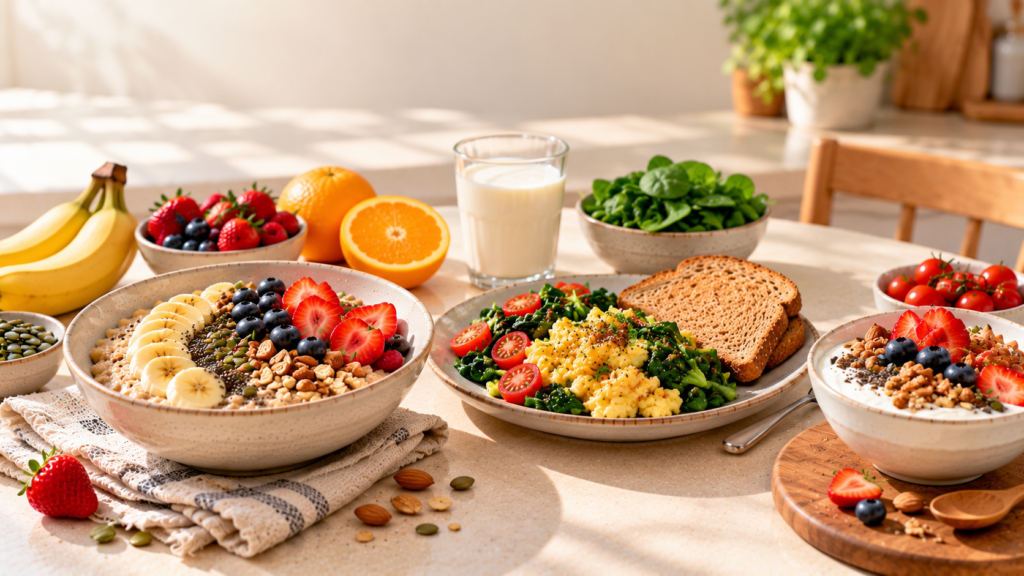
The secret is to combine a few everyday food groups. Whole grains can provide fiber and energy, eggs or yogurt can contribute protein, fruits can add vitamins and minerals, and nuts or seeds can provide unsaturated fats and additional nutrients.
Whether you prefer oatmeal, eggs and whole-wheat roti, yogurt with fruit, or a quick smoothie alongside a filling snack, you can build a breakfast that suits your appetite, culture, budget, and schedule.
This guide explains the essential components of a balanced morning meal, provides easy combinations, and shows you how to prepare nutritious breakfasts without unnecessary effort.
Key Takeaways
- Combine protein, fiber-rich carbohydrates, and healthy fats when practical.
- Include fruit or vegetables to increase variety and provide vitamins and minerals.
- Choose whole grains more often for additional fiber.
- Use eggs, yogurt, milk, legumes, nuts, seeds, or suitable alternatives to add protein.
- Prepare ingredients ahead of time to make busy mornings easier.
- Adapt portion sizes to your hunger, activity, and individual nutritional needs.
- There is no single perfect breakfast; the overall quality and variety of your diet matter most.
What Makes a Breakfast Nutrient-Rich?
A nutrient-rich breakfast provides a useful combination of nutrients without relying heavily on added sugar or offering very little nutritional variety.
A good starting point is to choose foods from three or four of these groups.
1. Protein-rich foods
Protein contributes to tissue growth and repair and helps maintain muscles. Including a protein source can also make breakfast more satisfying.
Useful options include:
- Eggs.
- Plain Greek yogurt or other high-protein yogurt.
- Milk or a suitable fortified alternative.
- Cottage cheese or other fresh cheeses.
- Beans, chickpeas, or lentils.
- Tofu.
- Nuts and seeds, which also supply fats and other nutrients.
You do not have to eat eggs or dairy to build a nutritious breakfast. Plant-based combinations can work well too.
2. Fiber-rich carbohydrates
Carbohydrates supply energy, while fiber supports digestive health and can help make meals more filling.
Choose options such as:
- Oats.
- Whole-wheat bread or roti.
- Whole-grain cereal with limited added sugar.
- Barley or other whole grains.
- Whole fruit.
- Beans and lentils.
Refined grains can still fit into your diet, but choosing whole grains more often helps increase fiber intake.
3. Fruits and vegetables
Fruit and vegetables contribute different vitamins, minerals, fiber, and beneficial plant compounds.
Breakfast-friendly choices include:
- Bananas and apples.
- Oranges and guava.
- Berries, fresh or frozen.
- Tomatoes and cucumber.
- Spinach.
- Mushrooms.
- Bell peppers.
Try adding fruit to oatmeal or yogurt, or include vegetables in an omelet or savory breakfast wrap.
4. Healthy fats
Unsaturated fats provide energy and help your body absorb fat-soluble vitamins. They can also contribute to a satisfying meal.
Useful options include:
- Almonds and walnuts.
- Chia, flax, sesame, and pumpkin seeds.
- Peanut butter or other nut butters.
- Avocado.
- Small amounts of suitable plant oils for cooking.
Because nuts and seeds are energy-dense, you can use modest portions and adjust them to your needs.
10 Simple Ways to Build a Nutrient-Rich Breakfast
1. Start with a whole-grain base
Oats, whole-wheat bread, and whole-wheat roti are practical breakfast foundations. They provide carbohydrates, and whole-grain options generally contain more fiber than refined alternatives.
Try this: Prepare oatmeal with milk or a fortified alternative, or serve whole-wheat roti with eggs and vegetables.
2. Add a protein source
Protein can make breakfast more satisfying and contributes to normal muscle maintenance and other body functions.
Try this: Add an egg to toast, mix plain yogurt into a breakfast bowl, or serve chickpeas with whole-wheat roti.
3. Include one serving of fruit
Fruit adds variety and contributes vitamins, minerals, and fiber.
Try this: Slice a banana into oatmeal, add berries to yogurt, or enjoy an orange or guava alongside your meal.
Whole fruit is usually a more filling choice than juice because it retains its fiber.
4. Add nuts or seeds
Nuts and seeds contribute unsaturated fats, minerals, and, depending on the type, fiber and protein.
Try this: Sprinkle pumpkin seeds over oats, add ground flaxseed to yogurt, or spread a thin layer of peanut butter on whole-grain toast.
5. Include vegetables in savory breakfasts
Breakfast does not have to be sweet. Vegetables can add flavor and nutrients to a morning meal.
Try this: Prepare an omelet with spinach and tomatoes, serve cucumber with eggs and roti, or add leftover cooked vegetables to a breakfast wrap.
6. Choose plain yogurt and suitable dairy alternatives
Plain yogurt provides protein, and dairy yogurt is generally a source of calcium. Fortified plant-based alternatives may also provide calcium, vitamin B12, and vitamin D, depending on the product.
Try this: Combine unsweetened yogurt with fruit, oats, and seeds. If you use a plant-based alternative, check its protein content and fortification on the label.
7. Limit unnecessary added sugar
Sweetened cereals, flavored yogurts, syrups, and some breakfast drinks can contribute substantial added sugar.
Try this: Choose plain oats or unsweetened yogurt and add fruit, cinnamon, or a small amount of another preferred topping for flavor.
You do not need to avoid all sweet foods. The aim is to make nutrient-rich foods the foundation of your breakfast.
8. Use affordable local foods
A healthy breakfast does not need imported berries, avocado, or specialty seeds.
Affordable options may include:
- Eggs.
- Lentils and chickpeas.
- Whole-wheat roti.
- Oats.
- Plain yogurt.
- Seasonal fruit.
- Peanuts.
- Tomatoes and other locally available vegetables.
The best breakfast is one you can afford, enjoy, and prepare consistently.
9. Prepare ingredients in advance
A little preparation can make a balanced breakfast much easier on busy mornings.
- Portion oats and seeds into containers.
- Wash fruit when appropriate and store it safely.
- Boil eggs ahead of time and refrigerate them promptly.
- Prepare overnight oats in the refrigerator.
- Cook extra vegetables for use the next morning.
Keep perishable foods refrigerated and follow food-safety guidance for storage and reheating.
10. Adjust your breakfast to your appetite
There is no universal breakfast size that works for everyone. Your appetite, activity level, health, and daily schedule all affect how much food you need.
If you get hungry soon after breakfast, consider adding protein, fiber, or a little more food. If you prefer a smaller breakfast, you can distribute your nutritional intake across other meals and snacks.
Remember: A nutrient-rich breakfast should support your needs, not follow rigid food rules.
Nutrient-Rich Breakfast Food Chart
Use this chart to combine foods with different nutritional benefits.
| Food | Key nutrients or benefits | Easy breakfast use |
|---|---|---|
| Oats | Whole grains, beta-glucan fiber | Porridge or overnight oats |
| Eggs | Protein, choline, vitamin B12 | Boiled eggs or omelets |
| Plain yogurt | Protein and calcium | Yogurt bowls |
| Milk | Protein and calcium | Oatmeal or a drink with breakfast |
| Fortified plant-based drink | Nutrients depend on fortification | Oats or smoothies |
| Bananas | Carbohydrates, potassium, vitamin B6 | Add to cereal or yogurt |
| Oranges and guava | Vitamin C and other nutrients | Whole-fruit side |
| Spinach | Folate, vitamin K | Omelets or savory wraps |
| Chickpeas | Protein, fiber, folate | Savory breakfast bowls |
| Almonds and peanuts | Unsaturated fats, protein, minerals | Small handful or topping |
| Chia and pumpkin seeds | Fiber, unsaturated fats, minerals | Sprinkle over oats |
| Whole-wheat bread or roti | Carbohydrates and fiber | Serve with eggs or beans |
Nutrient content varies by variety, serving size, preparation, and fortification. This chart is a practical guide, not a precise nutrient analysis.

7 Nutrient-Rich Breakfast Ideas You Can Make at Home
Here are seven practical combinations you can adapt to your tastes and available ingredients.

1. Oatmeal with banana and seeds
Cook oats in milk or a fortified alternative. Top with banana slices and pumpkin or chia seeds.
Best for: A quick, customizable breakfast with whole grains and fiber.

2. Egg and vegetable toast
Prepare eggs with spinach and tomatoes, then serve with whole-wheat toast.
Best for: A savory breakfast with protein and vegetables.

3. Yogurt, fruit, and seed bowl
Combine plain yogurt with fresh or frozen fruit and a small sprinkle of seeds. Add oats if you want more whole grains.
Best for: A no-cook breakfast that takes only a few minutes.

4. Whole-wheat roti with eggs and vegetables
Serve roti with boiled eggs or a vegetable omelet, plus tomatoes or cucumber.
Best for: A familiar, savory meal using everyday household ingredients.

5. Chickpea breakfast bowl
Combine cooked chickpeas with tomatoes, cucumber, herbs, and lemon. Serve with whole-wheat roti or bread.
Best for: A plant-based breakfast with fiber and protein.

6. Overnight oats
Mix oats with milk or a fortified alternative and refrigerate overnight. Add fruit and seeds before serving.
Best for: Busy mornings when you want breakfast ready in advance.

7. Tofu and vegetable scramble
Crumble tofu into a pan with spinach, tomatoes, and spices. Serve with whole-grain toast or roti.
Best for: A dairy-free, plant-based savory breakfast.
How to Balance Your Breakfast for Different Needs
A nutrient-rich breakfast can look different depending on your dietary pattern, schedule, and nutritional requirements.
For busy mornings
Choose combinations that require little preparation:
- Overnight oats with fruit.
- Plain yogurt with oats and nuts.
- A boiled egg with whole-wheat toast and fruit.
- Leftover chickpeas with roti and cucumber.
For vegetarian and vegan diets
Vegetarian breakfasts can include eggs and dairy if you eat them, along with legumes, nuts, seeds, and whole grains.
For vegan breakfasts, use options such as tofu, chickpeas, nut butter, oats, and fortified plant-based drinks. Pay particular attention to vitamin B12, because unfortified plant foods are not reliable sources of this nutrient.
For children
Offer age-appropriate portions and a variety of familiar foods. Examples include oatmeal with fruit, eggs with whole-grain toast, or plain yogurt with soft fruit. Avoid whole nuts for young children because they can pose a choking hazard; use an age-appropriate form instead.
For people who want a more filling breakfast
Combine protein, fiber-rich carbohydrates, and some unsaturated fat. For example, oats with yogurt and nuts or eggs with whole-wheat roti and vegetables may be more satisfying than a breakfast consisting mainly of a sugary drink or refined carbohydrate.
Individual needs vary, so people with specific medical conditions or prescribed dietary requirements should follow guidance from their healthcare professional.
How to Prepare a Nutrient-Rich Breakfast for the Week
Planning ahead helps you make nutritious choices even when you have limited time in the morning.
A simple three-day breakfast plan
| Day | Breakfast | Preparation tip |
|---|---|---|
| Day 1 | Oatmeal, banana, milk, and seeds | Portion dry ingredients the night before |
| Day 2 | Eggs, whole-wheat roti, and tomatoes | Wash vegetables and refrigerate them safely |
| Day 3 | Plain yogurt, fruit, oats, and nuts | Prepare the dry toppings in advance |
Repeat or rotate these meals based on what you enjoy. You do not need a completely different breakfast every day.
A practical meal-prep routine
- Plan three or four combinations. Choose meals that share ingredients to reduce waste.
- Check your kitchen first. Use existing oats, eggs, fruit, seeds, and other staples before shopping.
- Prepare dry ingredients. Portion oats, seeds, and nuts into containers.
- Wash and store produce safely. Refrigerate cut or prepared perishable foods as recommended.
- Keep convenient protein options available. Eggs, yogurt, tofu, or cooked legumes can make breakfast easier to assemble.
Refrigerate perishable prepared foods promptly and follow appropriate storage and food-safety guidance.
Healthy Foods to Keep in Your Kitchen
For general guidance on combining food groups, see the Harvard T.H. Chan School of Public Health — Healthy Eating Plate.
Common Breakfast Mistakes to Avoid
Eating a breakfast that lacks variety
A breakfast made up of only one food group may provide some nutrients but leave out others. Try adding fruit, vegetables, a protein source, or whole grains where appropriate.
Choosing breakfast products based only on health claims
Words such as “natural,” “multigrain,” or “high protein” do not automatically make a product the best choice. Compare ingredient lists, added sugar, fiber, sodium, and protein content.
Assuming breakfast must be large
Your nutritional needs are individual. Some people prefer a substantial breakfast, while others eat a smaller meal and get more of their food later in the day. Focus on your overall diet and appetite rather than a rigid breakfast rule.
Relying on supplements instead of food variety
Supplements may be useful for specific needs, but they do not replace the fiber, protein, and range of beneficial compounds found in whole foods. Seek professional advice if you suspect a deficiency or need help choosing a supplement.

Frequently Asked Questions
1. What should a nutrient-rich breakfast include?
A nutrient-rich breakfast can include a protein source, whole grains or another fiber-rich carbohydrate, fruit or vegetables, and some healthy fats. The ideal combination depends on your dietary needs and preferences.
2. What is the healthiest breakfast to eat every morning?
There is no single healthiest breakfast for everyone. Oatmeal with fruit and nuts, eggs with vegetables and whole-wheat toast, or yogurt with fruit and seeds can all be nutritious options.
3. How can I build a nutrient-rich breakfast on a budget?
Choose affordable staples such as oats, eggs, whole-wheat roti, lentils, chickpeas, peanuts, plain yogurt, and seasonal fruit. Use ingredients across multiple meals to reduce costs and waste.
4. What is a good high-protein, high-fiber breakfast?
Oats with plain yogurt, fruit, and seeds can provide both protein and fiber. Another option is eggs with whole-wheat toast and vegetables, although the amount of fiber depends on the ingredients and portions.
5. Is oatmeal a nutrient-rich breakfast?
Yes. Oats provide whole grains and beta-glucan fiber. Add fruit, nuts, seeds, milk, or a suitable fortified alternative to broaden the meal’s nutritional contribution.
6. Can I have a nutrient-rich breakfast without eggs or dairy?
Yes. Try overnight oats with fortified soy milk, fruit, and seeds; chickpeas with whole-wheat roti and vegetables; or tofu with spinach and toast. For vegan diets, ensure you have a reliable source of vitamin B12.
7. Is fruit alone enough for breakfast?
Fruit provides vitamins, minerals, and fiber, but fruit alone may not provide enough energy or protein for some people. If you become hungry soon afterward, combine it with yogurt, nuts, oats, eggs, or another suitable food.
8. How long does it take to prepare a healthy breakfast?
Many simple options take around 5–15 minutes, depending on the recipe. Overnight oats and prepared ingredients can reduce morning work further.
Conclusion
Learning how to build a nutrient-rich breakfast is about combining everyday foods in ways that are practical, enjoyable, and nutritionally varied. Start with a whole-grain base, add protein, include fruit or vegetables, and use nuts or seeds when they suit your needs.
You do not need expensive ingredients or a complicated meal plan. Oats, eggs, lentils, yogurt, seasonal fruit, whole-wheat roti, and vegetables can all help you build a satisfying breakfast. Prepare a few ingredients ahead of time, adjust portions to your appetite, and choose combinations you can maintain consistently.
The most useful breakfast is not the one with the most ingredients or the biggest health claims. It is one that fits your life and contributes to a balanced overall diet.
2 thoughts on “How to Build a Nutrient-Rich Breakfast”