

The best sources of vitamin B12 are foods that provide this essential nutrient in dependable amounts and fit comfortably into your daily eating habits. Vitamin B12, also known as cobalamin, supports normal nerve function, red blood cell formation, and DNA production. Because your body cannot make enough of it independently, you need to obtain it through food, fortified products, or supplements when appropriate.
Fish, shellfish, meat, eggs, and dairy products are important natural sources. Some fortified breakfast cereals, nutritional yeast products, and plant-based milk alternatives can also provide vitamin B12, making them especially useful for people who avoid animal products.
However, not every food contains the same amount. A serving of beef liver or clams can provide considerably more vitamin B12 than an egg or glass of milk. Knowing these differences can help you choose foods that suit your nutritional needs, preferences, and budget.
This guide compares the best sources of vitamin B12, explains natural versus fortified options, and offers practical meal ideas to help you maintain an appropriate intake.
Key Takeaways
- Rich natural sources: Beef liver, clams, oysters, fish, and other animal foods can supply vitamin B12.
- Everyday options: Milk, yogurt, eggs, meat, and seafood can contribute to daily intake.
- Fortified alternatives: Some breakfast cereals, plant-based milks, nutritional yeast products, and meat substitutes contain added B12.
- Plant-based diets require planning: Unfortified plant foods are generally not reliable sources of vitamin B12.
- Daily requirements vary: Most adults need 2.4 mcg per day, while pregnancy and breastfeeding increase the recommended amount.
- Absorption matters: Some people need medical evaluation or treatment even if they regularly eat vitamin B12-containing foods.
Why Is Vitamin B12 Important?
Vitamin B12 is a water-soluble vitamin that plays several essential roles in the body. Getting enough helps support normal blood cell production, nervous system function, and the formation of DNA.
Major functions of vitamin B12
Supports red blood cells: Vitamin B12 is necessary for normal red blood cell formation. A deficiency can lead to megaloblastic anemia.
Helps maintain healthy nerves: It contributes to normal neurological function and helps maintain the protective covering around nerves.
Supports DNA production: Your cells need vitamin B12 to produce DNA and divide normally.
Participates in metabolism: Vitamin B12 is involved in biochemical processes that help the body use certain nutrients.
A balanced diet that includes reliable sources of vitamin B12 can help meet your needs. However, people with absorption problems may require additional medical care.
For detailed information, read the NIH Office of Dietary Supplements vitamin B12 fact sheet.
15 Best Sources of Vitamin B12
The following foods and fortified products offer practical ways to obtain vitamin B12. Amounts can vary depending on the species, serving size, preparation method, and brand.
1. Beef liver
Beef liver is one of the most concentrated natural sources of vitamin B12. A 3-ounce cooked serving provides approximately 70.7 mcg in the reference data published by the NIH Office of Dietary Supplements.
It also contains protein, iron, and vitamin A. Because liver is exceptionally high in preformed vitamin A, pregnant people should avoid liver and liver products unless specifically advised otherwise by their healthcare professional.
How to eat it: If suitable for your diet, serve a modest portion of thoroughly cooked liver with vegetables and whole grains.
2. Clams
Clams are among the richest seafood sources of vitamin B12. A 3-ounce cooked serving provides approximately 17 mcg.
They also supply protein and several minerals. Proper handling and thorough cooking are important for food safety.
How to eat them: Add cooked clams to seafood pasta, soups, or a homemade seafood stew.
3. Oysters
Cooked oysters provide approximately 14.9 mcg of vitamin B12 per 3-ounce serving in the NIH reference data.
They are another concentrated seafood option. However, raw or undercooked oysters can carry harmful microorganisms, particularly posing a risk to pregnant people and those with weakened immune systems.
How to eat them: Enjoy thoroughly cooked oysters with lemon and a side of vegetables.
4. Fortified nutritional yeast
Nutritional yeast is popular for its savory, cheese-like flavor. Certain products are fortified with vitamin B12 and can be useful for people who follow vegetarian or vegan diets.
Depending on the brand, a quarter-cup serving may provide approximately 8.3–24 mcg. These amounts apply to particular fortified products, not nutritional yeast universally.
How to eat it: Sprinkle fortified nutritional yeast over pasta, roasted vegetables, soups, popcorn, or tofu. Check the label before relying on it as a B12 source.
5. Salmon
Salmon is a practical source of vitamin B12. A 3-ounce cooked serving provides approximately 2.6 mcg in the NIH reference data.
It also provides protein and omega-3 fatty acids, making it a useful choice in a varied eating pattern.
How to eat it: Bake or grill salmon and serve it with brown rice, potatoes, or steamed vegetables.
6. Canned light tuna
Canned light tuna provides approximately 2.5 mcg of vitamin B12 per 3-ounce serving in the reference example.
It is convenient for quick lunches and can contribute meaningfully to daily intake. People who are pregnant or breastfeeding should follow relevant guidance on fish consumption and mercury exposure.
How to eat it: Add tuna to a whole-grain sandwich, green salad, or simple lunch bowl.
7. Ground beef
Cooked ground beef provides approximately 2.4 mcg of vitamin B12 per 3-ounce serving in the reference data.
It also contains protein, iron, and zinc. Choose portions and preparations that fit your overall dietary needs.
How to eat it: Prepare homemade meatballs, stuffed peppers, or a beef and vegetable rice bowl.
8. Sardines
Sardines provide vitamin B12 along with protein and omega-3 fatty acids. Sardines eaten with their soft bones also provide calcium.
The exact amount of B12 varies by species and product. Canned varieties can contain added sodium, so compare labels if you need to manage sodium intake.
How to eat them: Serve sardines on whole-grain toast, add them to salads, or pair them with cooked vegetables.
9. Trout
Trout is another fish that supplies vitamin B12, protein, and beneficial fats.
The exact amount varies by species and preparation, but trout is a useful alternative to salmon for people who want to include different types of fish in their diet.
How to eat it: Bake trout with lemon and herbs and serve it with potatoes or whole grains.
10. Milk
One cup of 2% cow’s milk provides approximately 1.3 mcg of vitamin B12 in the reference example.
Milk also supplies protein and calcium. Other dairy products and fortified alternatives may provide different amounts.
How to drink it: Enjoy milk with breakfast, add it to oatmeal, or use it in soups and sauces.
11. Plain yogurt
A 6-ounce serving of plain yogurt provides approximately 1.0 mcg of vitamin B12 in the reference example.
Yogurt can contribute to daily B12 intake while providing protein and calcium. Amounts differ between products.
How to eat it: Pair plain yogurt with fruit and oats, or use it as a base for savory dips.
12. Eggs
One large egg provides approximately 0.5 mcg of vitamin B12 in the reference data.
Eggs are versatile and provide protein and other nutrients. They can contribute to daily intake, although relying on eggs alone may not be enough to meet your B12 requirements.
How to eat them: Prepare boiled eggs, scrambled eggs, or a vegetable omelet.
13. Cheddar cheese
Cheddar cheese provides approximately 0.5 mcg per 1½-ounce serving in the reference example.
Although it contains less vitamin B12 than liver or shellfish, cheese can contribute to your total intake and also provides protein and calcium.
How to eat it: Add a moderate portion to sandwiches, whole-grain toast, omelets, or vegetable dishes.
14. Fortified breakfast cereal
Some breakfast cereals have vitamin B12 added during manufacturing. A serving of a fortified cereal in the NIH reference example provides approximately 0.6 mcg.
Not every cereal is fortified, and the amount can vary considerably between brands. Check the nutrition label for the actual serving size and B12 content.
How to eat it: Serve fortified cereal with milk or a fortified plant-based milk alternative.
15. Fortified plant-based milk
Some soy, almond, oat, and other plant-based milk alternatives contain added vitamin B12.
These products can be useful for people who avoid dairy, but fortification is not universal. Check the nutrition label to confirm the amount per serving.
How to use it: Add fortified plant milk to oatmeal, smoothies, cereal, or coffee. Choose products that fit your overall nutritional needs.

Best sources of vitamin B12, including liver, shellfish, salmon, eggs, dairy, and fortified foods.
Natural vs. Fortified Sources of Vitamin B12
Both natural and fortified foods can help you obtain vitamin B12, but they differ in how the vitamin is present.
Natural sources of vitamin B12
Vitamin B12 occurs naturally in a variety of animal-derived foods, including:
- Beef and other meats
- Fish and shellfish
- Poultry
- Eggs
- Milk, yogurt, and cheese
Some of these foods contain substantially more B12 than others. For example, beef liver and clams provide much more per serving than eggs or milk.
Fortified sources of vitamin B12
Fortified foods have vitamin B12 added during manufacturing. Examples may include:
- Breakfast cereals
- Nutritional yeast
- Soy, almond, or oat milk alternatives
- Selected plant-based meat alternatives
- Certain nutritional drinks
Fortification levels vary, so read the label carefully. A plant-based product should not be considered a reliable source unless it actually contains added vitamin B12.
Which source should you choose?
The best option depends on your diet and circumstances. People who eat animal products may obtain B12 from a variety of foods, while people following vegan diets need dependable fortified products or an appropriate supplement plan.
You do not need to choose only one source. Combining suitable foods can help make your diet more varied and practical.
Vitamin B12 Food Chart: Serving Sizes and Nutrient Amounts
The chart below summarizes selected reference values from the NIH Office of Dietary Supplements professional fact sheet.
| Food | Serving size | Approximate vitamin B12 |
|---|---|---|
| Beef liver, cooked | 3 oz | 70.7 mcg |
| Clams, cooked | 3 oz | 17 mcg |
| Oysters, cooked | 3 oz | 14.9 mcg |
| Fortified nutritional yeast | ¼ cup, product dependent | 8.3–24 mcg |
| Salmon, cooked | 3 oz | 2.6 mcg |
| Canned light tuna | 3 oz | 2.5 mcg |
| Ground beef, cooked | 3 oz | 2.4 mcg |
| Cow’s milk | 1 cup | 1.3 mcg |
| Plain yogurt | 6 oz | 1.0 mcg |
| Fortified breakfast cereal | 1 serving in reference example | 0.6 mcg |
| Large egg | 1 egg | 0.5 mcg |
| Cheddar cheese | 1½ oz | 0.5 mcg |
Values are approximate. Natural nutrient levels vary by food and preparation, while fortified products differ by brand and serving size.
How to use the vitamin B12 food chart
Use the chart to compare foods rather than treating it as a strict meal plan. Some foods provide a large amount in a single serving, while others make smaller contributions that add up across meals.
For example, the reference serving of cooked salmon provides approximately 2.6 mcg, slightly more than the daily recommended amount for most adults. Milk, yogurt, and eggs can contribute smaller amounts as part of a varied diet.
Remember that consuming vitamin B12 and absorbing it are different processes. If you have an absorption problem or diagnosed deficiency, you may need professional advice beyond changing your food choices.
How Much Vitamin B12 Do You Need Daily?
Your vitamin B12 requirement depends on your age and life stage. The following recommended amounts are based on US National Institutes of Health guidance.
| Life stage | Recommended amount per day |
|---|---|
| Infants, birth to 6 months | 0.4 mcg |
| Infants, 7–12 months | 0.5 mcg |
| Children, 1–3 years | 0.9 mcg |
| Children, 4–8 years | 1.2 mcg |
| Children, 9–13 years | 1.8 mcg |
| Teens, 14–18 years | 2.4 mcg |
| Adults, 19 years and older | 2.4 mcg |
| Pregnancy | 2.6 mcg |
| Breastfeeding | 2.8 mcg |
These are general recommendations for healthy people. Individual needs may differ when a healthcare professional has identified a deficiency or an absorption problem.
How can you meet your daily needs?
Most adults need 2.4 mcg of vitamin B12 per day. You may obtain it from fish, meat, dairy, eggs, or suitable fortified products, depending on your dietary preferences.
If you avoid animal products, plan reliable fortified sources and discuss supplementation with a qualified healthcare professional when appropriate.
Best Sources of Vitamin B12 for Vegetarians and Vegans
People who eat fewer or no animal products may need to pay closer attention to their vitamin B12 intake.
Vegetarian sources
Depending on what you eat, useful options include:
- Milk and yogurt
- Cheese
- Eggs
- Fortified breakfast cereal
- Fortified nutritional yeast
- Fortified plant-based milk
Eggs and dairy products contain B12, but their amounts may not be enough for everyone if consumption is limited.
Vegan sources
Reliable vegan options include products specifically fortified with vitamin B12, such as:
- Fortified nutritional yeast
- Fortified breakfast cereals
- Fortified plant-based milks
- Certain fortified plant-based meat alternatives
Check the nutrition label because not all products are fortified.
Unfortified mushrooms, seaweed, fermented foods, beans, nuts, fruits, and vegetables are not dependable sources of vitamin B12. If you follow a vegan diet, identify reliable fortified products or discuss an appropriate supplement with your healthcare professional.
vitamin B12 sources for vegetarians and vegans.
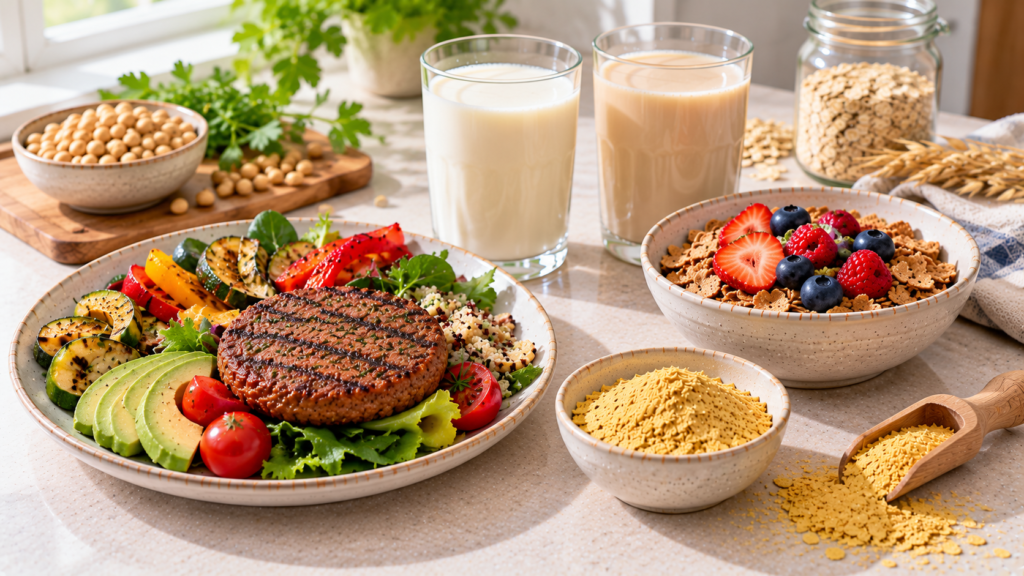
Fortified plant-based milk, breakfast cereal, nutritional yeast, and meat alternatives as vitamin B12 sources.
Easy Meal Ideas Using Vitamin B12-Rich Foods
You can include the best sources of vitamin B12 in familiar meals without following a complicated diet.
Breakfast ideas
- Eggs with whole-grain toast and milk
- Fortified cereal with milk or fortified plant-based milk
- Plain yogurt with oats and fruit
- A savory breakfast bowl topped with fortified nutritional yeast
Lunch ideas
- Tuna salad with whole-grain bread
- Chicken and vegetable wraps
- Salmon with a grain salad
- A fortified plant-based protein with roasted vegetables
Dinner ideas
- Baked trout with potatoes and greens
- Lean beef with brown rice and vegetables
- Thoroughly cooked shellfish with whole-grain pasta
- A fortified plant-based burger with vegetables
Snack ideas
- Plain yogurt
- A boiled egg
- Cheese with whole-grain crackers
- A serving of fortified cereal, if suitable
Choose foods that fit your preferences, budget, and overall dietary needs. You do not need to eat every food listed here to maintain a balanced eating pattern.
Vitamin B12 Deficiency: When Food May Not Be Enough
Eating foods that contain vitamin B12 is important, but deficiency can develop for reasons other than low dietary intake. Some people cannot absorb enough vitamin B12 from food.
Who may be at increased risk?
- Vegans and some vegetarians: They may not get enough B12 without reliable fortified products or appropriate supplements.
- Older adults: Some age-related digestive changes can reduce the absorption of food-bound B12.
- People with digestive disorders: Certain gastrointestinal conditions or surgeries can interfere with absorption.
- People with pernicious anemia: This condition affects intrinsic factor, a protein needed to absorb vitamin B12.
- People taking certain medications: Long-term use of metformin or some acid-reducing medicines may affect B12 status in some individuals.
What are the possible signs?
Vitamin B12 deficiency may cause fatigue, weakness, pale skin, a sore tongue, numbness or tingling, balance difficulties, or changes in memory.
These symptoms can have several causes and cannot confirm a deficiency on their own. If you have concerns, seek medical advice. A healthcare professional may recommend blood tests and determine whether dietary changes, oral supplements, or injections are appropriate.
Neurological symptoms should not be ignored because prolonged deficiency can cause lasting damage.
Vitamin B12 deficiency, risk factors, and treatment information.
Do You Need a Vitamin B12 Supplement?
Not everyone needs a supplement. Many people can obtain adequate vitamin B12 through their diet, while others may need fortified foods or supplements because of dietary restrictions or absorption difficulties.
Consider discussing vitamin B12 with a healthcare professional if you:
- Follow a vegan diet without reliable fortified sources.
- Have been diagnosed with a vitamin B12 deficiency.
- Have a medical condition that affects nutrient absorption.
- Have undergone gastrointestinal surgery.
- Take medication that may affect B12 status over time.
A high-dose supplement is not automatically necessary for everyone. The appropriate approach depends on your diet, medical history, test results, and ability to absorb the vitamin.
If a deficiency is caused by poor absorption, simply eating more B12-rich foods may not correct it. A healthcare professional can help determine the appropriate treatment.
Practical Tips for Choosing the Best Vitamin B12 Sources
Use these simple strategies to make informed food choices:
- Choose variety. Rotate fish, meat, eggs, dairy, and suitable fortified products according to your dietary preferences.
- Read food labels. Confirm that fortified products contain vitamin B12 and check the amount per serving.
- Plan plant-based meals. Identify reliable fortified foods and discuss supplementation when appropriate.
- Pay attention to serving sizes. The amount of vitamin B12 you obtain depends on how much you actually eat.
- Consider absorption. Dietary intake does not always guarantee adequate B12 status.
- Seek advice when needed. Symptoms or medical risk factors may warrant professional assessment rather than dietary changes alone.
Frequently Asked Questions
What is the richest natural source of vitamin B12?
Beef liver is one of the richest natural sources of vitamin B12. Clams and oysters are also exceptionally concentrated sources.
What are the best sources of vitamin B12 for everyday meals?
Fish, meat, milk, yogurt, eggs, and fortified foods can all contribute. The best choices depend on your dietary preferences and the amount of B12 in each serving.
Which fortified foods are good sources of vitamin B12?
Certain breakfast cereals, nutritional yeast products, plant-based milks, and plant-based meat alternatives contain added vitamin B12. Always check the nutrition label.
Can vegetarians get enough vitamin B12 from food?
Some vegetarians obtain B12 from milk, yogurt, cheese, and eggs. People who eat small amounts of these foods may need fortified products or other guidance to meet their requirements.
What are the best vitamin B12 sources for vegans?
Reliable options include fortified nutritional yeast, fortified breakfast cereals, fortified plant-based milks, and certain fortified meat alternatives. A suitable supplement may also be necessary.
How much vitamin B12 do adults need each day?
Most adults aged 19 and older need 2.4 mcg per day. The recommended amount is 2.6 mcg during pregnancy and 2.8 mcg while breastfeeding.
Can I get vitamin B12 from fruits and vegetables?
Most unfortified fruits and vegetables do not provide meaningful amounts of vitamin B12. Choose reliable animal-based or fortified sources instead.
Can eating vitamin B12-rich foods correct a deficiency?
It depends on the cause. Improving dietary intake may help when intake is too low, but an absorption problem may require medical treatment, including supplements or injections.
Conclusion
The best sources of vitamin B12 include concentrated options such as beef liver, clams, and oysters, as well as everyday foods like fish, meat, eggs, milk, and yogurt. Fortified breakfast cereals, nutritional yeast products, and selected plant-based alternatives can also help people meet their needs.
The most effective approach is to choose a variety of suitable sources, check nutrition labels on fortified products, and understand your daily requirements. People following vegan diets or living with conditions that affect absorption may need additional planning or medical guidance.
By making informed food choices and addressing potential absorption problems, you can support healthy vitamin B12 intake as part of a balanced diet.
3 thoughts on “Best Sources of Vitamin B12”