

Calcium deficiency calcium rich foods are important topics to understand if you want to support healthy bones, teeth, muscle function, and normal nerve signaling. Calcium is an essential mineral that helps build and maintain bones throughout life. When calcium intake remains too low over time, the body can draw calcium from bones to maintain normal levels in the blood.
Dairy products are familiar sources of calcium, but they are not the only options. Calcium-set tofu, certain leafy green vegetables, beans, seeds, almonds, and calcium-fortified foods can also contribute to daily intake. Choosing a variety of calcium-rich foods can help you meet your needs without relying on a single food group.
It is also important to understand that low calcium intake does not automatically mean you have a medical calcium deficiency. Blood calcium is tightly regulated, and a blood test alone may not reveal whether your dietary intake is adequate. Persistent symptoms or concerns about deficiency should be discussed with a healthcare professional.
Key Takeaways
- Calcium supports bones, teeth, muscles, nerves, and normal blood clotting.
- Milk, yogurt, cheese, calcium-set tofu, selected greens, and fortified foods can provide substantial calcium.
- Calcium deficiency may not cause obvious symptoms at first.
- Vitamin D helps the body absorb calcium.
- Daily calcium needs vary with age, life stage, and certain medical conditions.
- Food is a useful foundation, but confirmed deficiency or specific medical conditions may require professional treatment.
What Is Calcium Deficiency?
Calcium deficiency can refer to two related but different situations:
- Inadequate calcium intake: You regularly consume less calcium than your body needs.
- Hypocalcemia: The level of calcium in your blood is below the normal range, which can occur for several medical reasons.
Low dietary intake over time can affect bone health, but hypocalcemia may also be related to vitamin D deficiency, problems with the parathyroid glands, kidney disease, certain medicines, or other health conditions.
Eating more calcium-rich foods is a sensible step for improving dietary intake. However, it is not a substitute for medical assessment when blood calcium is low or symptoms are present.
Calcium Deficiency Symptoms to Know
Calcium intake that is too low over a long period may contribute to reduced bone mineral density. Early dietary inadequacy often causes no obvious symptoms.
When blood calcium becomes significantly low, possible symptoms include:
- Tingling or numbness around the mouth, fingers, or toes
- Muscle cramps or spasms
- Muscle stiffness
- Unusual fatigue or weakness
- In severe cases, seizures or abnormal heart rhythms
Long-term inadequate calcium intake can increase the risk of bone problems, including osteoporosis, particularly when combined with other risk factors.
Important: Severe muscle spasms, seizures, fainting, or an irregular heartbeat require urgent medical evaluation. Do not attempt to treat suspected hypocalcemia with food alone.
Calcium Benefits for Bones, Teeth, and Overall Health
20 Calcium Rich Foods to Help Meet Your Daily Needs
The best calcium-rich foods are those you enjoy regularly and can include in balanced meals. Calcium content varies by brand, preparation method, serving size, and whether a product is fortified.
The following chart provides approximate amounts for common foods. Use product labels for fortified drinks, tofu, and packaged foods because calcium levels can vary considerably.
Calcium-Rich Foods Chart
| Food | Typical serving | Approximate calcium |
|---|---|---|
| Plain yogurt | 1 cup (245 g) | 300–450 mg |
| Milk | 1 cup (240 ml) | 275–310 mg |
| Calcium-fortified soy milk | 1 cup | 250–450 mg |
| Calcium-fortified orange juice | 1 cup | 300–350 mg |
| Calcium-set tofu | ½ cup | 200–400 mg or more |
| Cheddar cheese | 1 oz (28 g) | 200 mg |
| Mozzarella cheese | 1 oz (28 g) | 150–200 mg |
| Canned sardines with edible bones | 3 oz (85 g) | 250–350 mg |
| Canned salmon with edible bones | 3 oz (85 g) | 180–240 mg |
| Chia seeds | 1 oz (28 g) | 175–180 mg |
| Cooked collard greens | 1 cup | 250–270 mg |
| Cooked kale | 1 cup | 150–180 mg |
| Cooked turnip greens | 1 cup | 180–200 mg |
| Cooked bok choy | 1 cup | 150–160 mg |
| Almonds | 1 oz (28 g) | 70–80 mg |
| Tahini (sesame paste) | 1 tablespoon | 60–65 mg |
| White beans, cooked | 1 cup | 120–160 mg |
| Cooked broccoli | 1 cup | 40–60 mg |
| Dried figs | ¼ cup | 50–70 mg |
| Fortified breakfast cereal | 1 serving | Varies by product |
These are estimates, not laboratory values for every product. Actual amounts depend on the food variety, preparation, serving size, and fortification. Check labels where available.
1. Milk and Dairy Products

Milk, yogurt, and cheese are practical sources of calcium because they generally provide calcium in useful amounts per serving.
- Milk: A convenient source for breakfast, tea, porridge, or smoothies.
- Yogurt: Provides calcium and protein; plain yogurt can also supply beneficial live cultures, depending on the product.
- Cheese: A concentrated source, although some varieties are high in sodium and saturated fat.
Choose portions that suit your dietary needs. If lactose causes digestive symptoms, lactose-free milk and many hard cheeses may still be suitable calcium sources.
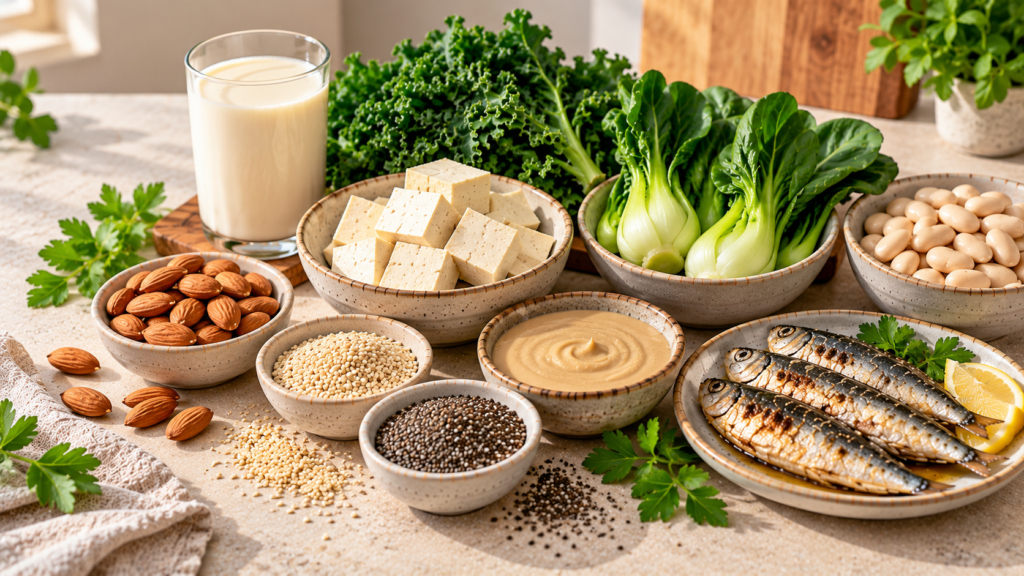
2. Calcium-Rich Foods Without Dairy
You do not have to consume dairy products to get calcium. Plant-based and fortified options can help fill the gap.
Good choices include:
- Calcium-set tofu
- Calcium-fortified soy milk
- Calcium-fortified orange juice
- Kale and bok choy
- White beans
- Chia seeds and tahini
- Almonds
Check the label: Not all tofu contains substantial calcium. Calcium-set tofu is made with a calcium-containing coagulant, whereas other types may contain much less.
Fortified plant milks also differ in calcium content. Shake the carton if the label recommends it, because added calcium can settle during storage.
3. Fish With Edible Bones
Canned sardines and canned salmon can provide both calcium and protein when their soft bones are eaten. The bones are an important part of their calcium content.
Try them in sandwiches, salads, or simple meals with vegetables and whole grains. Choose products that fit your preferences for sodium and flavor, and handle seafood safely.
4. Leafy Green Vegetables
Some green vegetables contribute useful amounts of calcium. Kale, bok choy, collard greens, and turnip greens are good options.
However, not all greens provide calcium equally well. Spinach contains calcium, but it is also high in oxalates, which substantially reduce calcium absorption. Therefore, spinach should not be treated as equivalent to low-oxalate greens or fortified foods when planning calcium intake.
5. Nuts, Seeds, and Beans
Chia seeds, almonds, tahini, and white beans add calcium alongside other nutrients, including fiber, protein, and unsaturated fats.
These foods can be useful additions, but serving sizes matter. For example, a tablespoon of tahini or a small handful of almonds generally provides less calcium than a serving of milk or calcium-fortified soy milk.

How Much Calcium Do You Need Per Day?
Calcium requirements depend on age and life stage. The following values reflect commonly used US National Institutes of Health recommendations for healthy people; local guidance may differ.
| Age or life stage | Recommended calcium per day |
|---|---|
| Infants 0–6 months | 200 mg (adequate intake) |
| Infants 7–12 months | 260 mg (adequate intake) |
| Children 1–3 years | 700 mg |
| Children 4–8 years | 1,000 mg |
| Children 9–18 years | 1,300 mg |
| Adults 19–50 years | 1,000 mg |
| Men 51–70 years | 1,000 mg |
| Women 51–70 years | 1,200 mg |
| Adults 71 years and older | 1,200 mg |
| Pregnant or breastfeeding adults 19–50 years | 1,000 mg |
For infants, adequate intake values are used rather than a recommended dietary allowance. Needs for teenagers are relatively high because bone growth is rapid during adolescence.
Pregnancy does not automatically mean an adult needs more calcium than the usual recommendation for their age group. Individual requirements can vary, so follow advice from a qualified healthcare professional.
How to Reach Your Daily Calcium Target
A practical approach is to spread calcium sources across the day rather than trying to get all your calcium in one meal.
For example, an adult aiming for approximately 1,000 mg might choose:
- Breakfast: milk with oats
- Lunch: calcium-set tofu or beans with vegetables
- Snack: yogurt or a fortified alternative
- Dinner: sardines with edible bones, or another calcium-rich food
The amount supplied by these meals depends on the portions and products chosen. Review labels and adjust your choices to match your individual target.
Read the NIH Office of Dietary Supplements’ calcium fact sheet
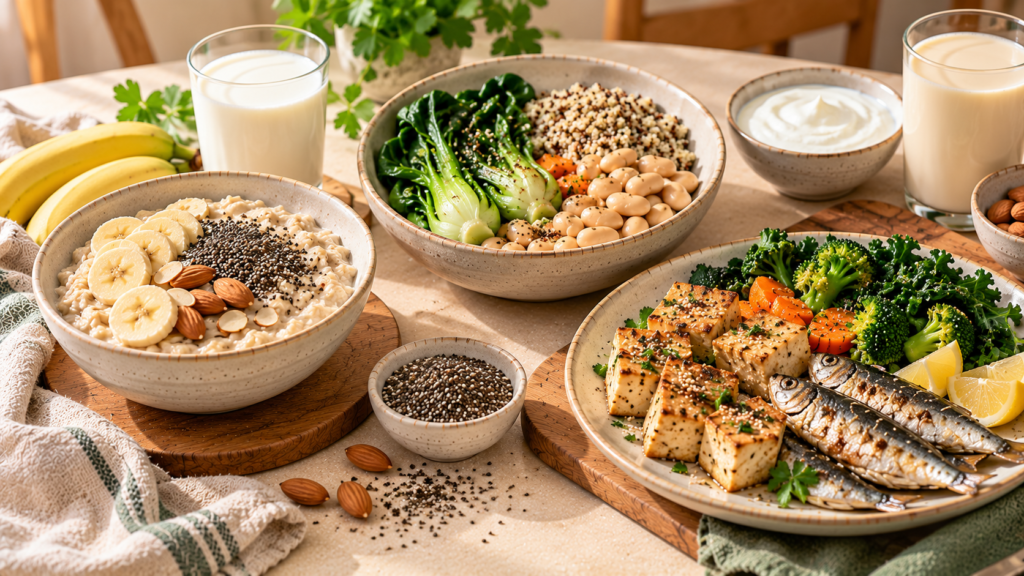
Calcium Deficiency Foods: A Simple One-Day Meal Plan
You can build a calcium-conscious menu with familiar foods. The following is an example, not a prescribed diet.
| Meal | Example | Calcium contribution |
|---|---|---|
| Breakfast | Oats prepared with milk, plus chia seeds | Milk and chia contribute calcium |
| Mid-morning snack | Plain yogurt | Often a substantial source |
| Lunch | Beans with vegetables and whole-grain roti | Beans and selected greens contribute calcium |
| Afternoon snack | Almonds or a calcium-fortified drink | Amount depends on portion or product |
| Dinner | Sardines with edible bones, or calcium-set tofu with bok choy | Can provide a substantial amount |
Practical tip: If you do not eat dairy, use fortified plant milk, calcium-set tofu, selected leafy greens, beans, and seeds in a varied diet. Do not assume that every plant milk or tofu product contains the same amount of calcium.
What Helps Your Body Absorb Calcium?
Eating calcium-rich foods is only part of the picture. Your body must absorb the calcium and regulate how it is used.
Vitamin D
Vitamin D helps the body absorb calcium from the digestive tract. Foods such as oily fish, egg yolks, and vitamin D-fortified products can contribute to vitamin D intake.
Vitamin D status also depends on factors such as sun exposure, age, skin pigmentation, and certain medical conditions. If you suspect a deficiency, ask a healthcare professional whether testing or treatment is appropriate.
Vitamin D Rich Foods and Their Benefits
Food Preparation and Calcium Availability
Preparation can affect how much calcium is available from certain foods.
- Choose low-oxalate greens such as kale or bok choy regularly rather than relying on spinach alone.
- Include calcium-fortified products when useful, and check their nutrition labels.
- Soaking, sprouting, or fermenting some plant foods may reduce certain compounds that interfere with mineral absorption, although the effect varies by food and method.
- Eat a varied diet instead of relying on one food as your primary calcium source.
Calcium and Other Nutrients
Calcium works alongside vitamin D and other nutrients in maintaining bone health. Protein, phosphorus, magnesium, and vitamin K also play roles in normal bone function. A balanced eating pattern is generally more helpful than focusing on a single nutrient in isolation.
Who Is at Greater Risk of Low Calcium Intake?
Some people may find it harder to meet their calcium needs through their usual diet.
- People who avoid dairy: They may need fortified foods or other calcium-rich alternatives.
- Older adults: Calcium needs may be higher for some age groups, and bone loss becomes a greater concern with age.
- Children and teenagers: Calcium is important during periods of rapid growth and bone development.
- People with restrictive diets: Limited food variety may make it difficult to meet calcium requirements.
- People with certain digestive conditions: Some conditions can interfere with nutrient absorption.
- People with low vitamin D levels: Calcium absorption may be affected.
- People with certain kidney or hormonal conditions: Calcium balance may be altered and requires medical guidance.
If you belong to a higher-risk group, reviewing your diet with a registered dietitian or healthcare professional can help identify gaps.
Can Calcium-Rich Foods Correct Calcium Deficiency?
The answer depends on what is causing the problem.
If you simply consume too little calcium, improving your food choices may help you meet your daily requirements. However, if a blood test shows low calcium, the cause may involve vitamin D, parathyroid hormone, kidney function, medications, or another medical issue.
A healthcare professional may recommend blood tests or other investigations and decide whether dietary changes, supplements, or medical treatment are appropriate.
Should You Take Calcium Supplements?
Not everyone needs a calcium supplement. Food is usually a good starting point because it provides calcium alongside other nutrients.
A supplement may be recommended if you cannot meet your needs through food or have a medical reason to use one. The right dose depends on your diet, age, medical history, and other medicines.
Taking more calcium than necessary can cause side effects and may be inappropriate for some people. Calcium supplements can also interact with certain medications, including levothyroxine and some antibiotics.
Do not self-treat suspected low blood calcium with high-dose supplements. Seek medical advice, especially if you have kidney disease, a history of kidney stones, or symptoms suggesting hypocalcemia.
Calcium-Rich Foods: Common Mistakes to Avoid
Avoid these common mistakes when planning your meals:
- Assuming all leafy greens are equal. Spinach contains calcium, but its high oxalate content limits absorption.
- Assuming every plant milk is fortified. Check the nutrition label for calcium content.
- Choosing tofu without checking the ingredients. Calcium content depends partly on the coagulant used.
- Relying on one food alone. A varied diet makes it easier to obtain calcium and other important nutrients.
- Ignoring vitamin D. Adequate calcium intake does not remove the need for vitamin D.
- Taking supplements without considering total intake. Count dietary and supplemental calcium when discussing your needs with a healthcare professional.
- Treating symptoms as proof of deficiency. Muscle cramps and fatigue can have many causes; they do not confirm low calcium on their own.
Frequently Asked Questions
1. What are the best calcium-rich foods for calcium deficiency?
Milk, yogurt, cheese, calcium-set tofu, calcium-fortified soy milk, sardines with edible bones, and selected leafy greens are useful sources. The best choices depend on your dietary preferences and the amount of calcium each serving provides.
2. Which calcium-rich foods are best if I do not drink milk?
Try calcium-fortified soy milk, calcium-set tofu, yogurt alternatives fortified with calcium, bok choy, kale, white beans, chia seeds, and tahini. Compare nutrition labels because the calcium content of fortified products varies.
3. What are the early signs of calcium deficiency?
Low dietary calcium intake may not cause obvious early symptoms. More severe hypocalcemia can cause tingling, muscle cramps, spasms, or other serious symptoms. A healthcare professional can determine whether testing is needed.
4. How much calcium do adults need daily?
Many adults aged 19–50 need about 1,000 mg daily. Women aged 51–70 and adults aged 71 and older generally need 1,200 mg daily under US recommendations. Needs may differ according to local guidelines and individual circumstances.
5. Are bananas high in calcium?
No. Bananas contain only a small amount of calcium per serving. They can be part of a balanced diet, but milk, yogurt, calcium-set tofu, fortified drinks, and certain greens are generally more useful sources.
6. Is spinach a good source of calcium?
Spinach contains calcium, but much of it is less available to the body because spinach is high in oxalates. Kale and bok choy are generally more practical leafy-green choices for absorbable calcium.
7. Can I get enough calcium from a vegan diet?
Yes, it can be possible with careful food choices. Calcium-fortified plant drinks, calcium-set tofu, selected greens, beans, and seeds can help. Planning matters because calcium content varies substantially between foods and products.
8. Does vitamin D help prevent calcium deficiency?
Vitamin D helps the body absorb calcium. Adequate vitamin D supports normal calcium balance, but suspected deficiency may need professional assessment rather than dietary changes alone.
9. Are calcium supplements better than calcium-rich foods?
Not necessarily. Food can provide calcium alongside protein and other nutrients. Supplements may help when dietary intake is insufficient or a clinician recommends them, but they are not necessary for everyone.
10. Can calcium deficiency affect bones and teeth?
Long-term inadequate calcium intake can compromise bone health. Calcium is also important for teeth, but dental problems have many possible causes. Persistent concerns should be evaluated by a dental or healthcare professional.
Conclusion
Calcium deficiency calcium rich foods are worth understanding if you want to support healthy bones, teeth, and normal muscle and nerve function. Milk, yogurt, cheese, calcium-set tofu, fortified plant drinks, sardines with edible bones, selected leafy greens, beans, and seeds can all contribute to your daily calcium intake.
Start by reviewing your usual meals, checking food labels, and including several calcium sources throughout the day. Pair these choices with adequate vitamin D and an overall balanced diet. If you have persistent symptoms, concerns about bone health, or a confirmed low blood calcium level, seek professional advice instead of relying on food changes alone.