
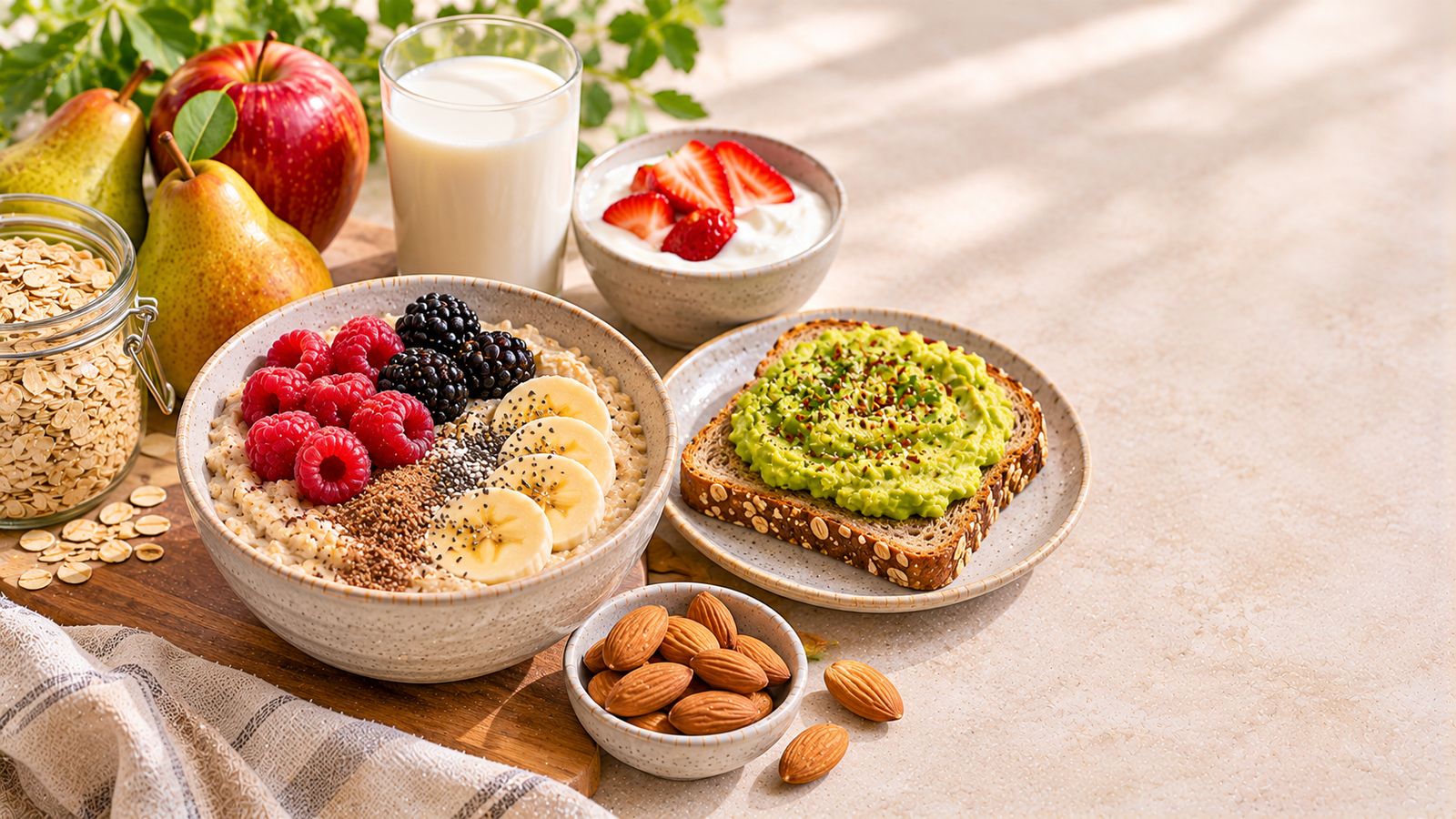
Choosing high fiber breakfast foods is a simple way to improve your morning nutrition and make your first meal more satisfying. Foods such as oats, chia seeds, berries, pears, whole-grain bread, avocado, and beans provide dietary fiber along with vitamins, minerals, and other beneficial nutrients.
Fiber is an important part of a balanced diet. It supports digestive health, helps maintain regular bowel movements, and can contribute to healthy cholesterol and blood glucose levels. However, many people start their day with refined breakfast foods that provide relatively little fiber.
A more balanced breakfast does not have to be complicated. Adding fruit to oatmeal, choosing whole-grain bread, mixing seeds into yogurt, or preparing a bean-based breakfast can help increase your daily fiber intake.
This guide explores 20 high fiber breakfast foods, approximate fiber amounts, their nutritional benefits, easy breakfast combinations, and practical ways to build a fiber-rich morning routine.
Key Takeaways
- Oats, chia seeds, flaxseeds, berries, and pears are useful high-fiber breakfast choices.
- Whole grains generally provide more fiber than refined grains.
- Combining fiber-rich foods with protein can make breakfast more balanced and satisfying.
- Whole fruit is usually a better fiber source than strained fruit juice.
- A healthy high fiber breakfast can be sweet or savory.
- Increase fiber gradually and drink adequate fluids to help your digestive system adjust.
What Makes a Breakfast High in Fiber?
Dietary fiber is a type of carbohydrate found naturally in plant foods. Unlike most carbohydrates, it is not fully broken down and absorbed in the small intestine.
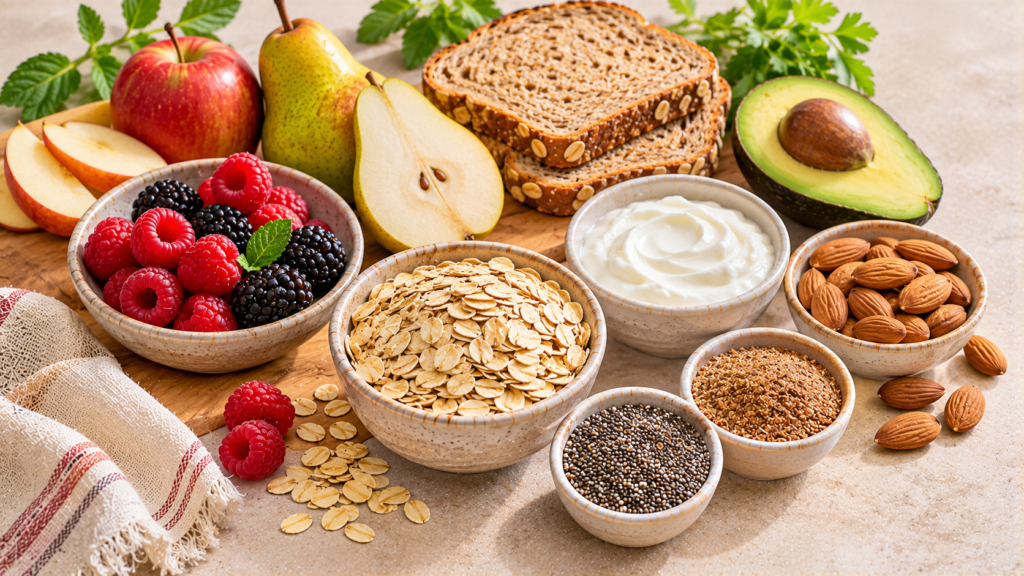
A high-fiber breakfast combines foods such as whole grains, fruits, vegetables, nuts, seeds, and legumes to provide a meaningful amount of dietary fiber.
Soluble Fiber
Soluble fiber dissolves in water and forms a gel-like substance during digestion. It can help:
- Support healthy cholesterol levels.
- Slow the absorption of carbohydrates.
- Promote feelings of fullness.
- Support a healthy gut environment.
Oats, apples, pears, chia seeds, and some berries provide soluble fiber.
Insoluble Fiber
Insoluble fiber does not dissolve in water. It helps add bulk to stool and supports normal bowel movements.
Whole grains, fruit skins, nuts, seeds, and many vegetables contain insoluble fiber.
Important: Most plant foods contain a mixture of soluble and insoluble fiber. Eating a variety of fiber-rich foods is a practical way to include both in your diet.
20 Best High Fiber Breakfast Foods
The following foods are easy to include in breakfast. Fiber amounts are approximate and can vary by brand, variety, serving size, and preparation.
High Fiber Breakfast Foods Chart
| No. | Food | Approximate Fiber |
|---|---|---|
| 1 | Chia seeds | 9.8 g per 28 g |
| 2 | Raspberries | 8 g per cup |
| 3 | Blackberries | 7.6 g per cup |
| 4 | Ground flaxseeds | 7.7 g per 28 g |
| 5 | Oat bran, cooked | About 4 g per cup |
| 6 | Oatmeal, cooked | About 4 g per cup |
| 7 | Pear with skin | 5.5 g per medium fruit |
| 8 | Apple with skin | 4.4 g per medium fruit |
| 9 | Avocado | 6.7 g per half |
| 10 | Whole-grain bread | About 2–4 g per slice |
| 11 | High-fiber whole-grain cereal | Varies; check the label |
| 12 | Almonds | 3.5 g per 28 g |
| 13 | Pistachios | 3 g per 28 g |
| 14 | Pumpkin seeds | About 1.7 g per 28 g |
| 15 | Strawberries | About 3 g per cup |
| 16 | Banana | 3.1 g per medium fruit |
| 17 | Kiwi | About 2–3 g per medium fruit |
| 18 | Black beans, cooked | About 15 g per cup |
| 19 | Chickpeas, cooked | About 12.5 g per cup |
| 20 | Sweet potato with skin | About 4 g per medium potato |
Values are approximate. For packaged cereals and breads, check the nutrition label because fiber content differs significantly between products. Bean values refer to cooked portions, not dry weights.
1. Chia Seeds
chia pudding with raspberries and blueberries
Chia seeds are one of the most concentrated plant sources of dietary fiber. A 28-gram serving provides approximately 9.8 grams of fiber.
They absorb liquid and develop a gel-like texture, making them particularly useful for overnight oats, yogurt bowls, and chia pudding.
Why add chia seeds to breakfast?
- Provide a substantial amount of fiber.
- Supply plant-based omega-3 fatty acids.
- Contain minerals such as calcium and magnesium.
- Help create a thicker, more satisfying breakfast.
Easy ways to eat chia seeds:
- Mix them into overnight oats.
- Prepare chia pudding with milk.
- Sprinkle them over yogurt.
- Add them to fruit smoothies.
Start with a smaller serving if you are not used to eating seeds, and allow them to absorb sufficient liquid before eating.
2. Raspberries
Raspberries provide approximately 8 grams of fiber per cup, making them an excellent addition to a fiber-rich breakfast.
They also contain vitamin C, manganese, and beneficial plant compounds called polyphenols.
Easy ways to eat raspberries:
- Add them to oatmeal.
- Mix them into plain yogurt.
- Top whole-grain pancakes with fresh berries.
- Combine them with chia pudding.
3. Blackberries
Blackberries provide approximately 7.6 grams of fiber per cup. Their small seeds contribute to their fiber content.
They also contain vitamin C, vitamin K, and antioxidant plant compounds.
Easy ways to eat blackberries:
- Add them to breakfast cereal.
- Combine them with strawberries.
- Mix them into yogurt.
- Serve them alongside whole-grain toast.
4. Ground Flaxseeds
Ground flaxseeds provide approximately 7.7 grams of fiber per 28-gram serving. They also supply plant-based omega-3 fatty acids and lignans.
Ground flaxseeds are generally easier to digest than whole flaxseeds because grinding makes their nutrients more accessible.
Easy ways to eat flaxseeds:
- Stir them into oatmeal.
- Add them to smoothies.
- Sprinkle them over yogurt.
- Mix them into whole-grain pancake batter.
5. Oat Bran
Oat bran is the outer layer of the oat grain and is a concentrated source of fiber, including beta-glucan, a type of soluble fiber.
A cooked cup can provide around 4 grams of fiber, depending on the product and preparation.
Why choose oat bran?
- Provides soluble fiber.
- Works well as a warm breakfast cereal.
- Can be combined with fruit and seeds.
- Adds texture to homemade breakfast recipes.
6. Oatmeal
Oatmeal is one of the most convenient high fiber breakfast foods. A cup of cooked oatmeal provides approximately 4 grams of fiber, depending on the oats and amount of water used.
Oats contain beta-glucan, a soluble fiber associated with supporting healthy cholesterol levels as part of an appropriate diet.
Easy ways to eat oatmeal:
- Add raspberries and chia seeds.
- Mix in sliced banana and almonds.
- Prepare overnight oats.
- Top with chopped apple and cinnamon.
7. Pears
A medium pear with its skin provides approximately 5.5 grams of fiber.
Pears contain both soluble and insoluble fiber, along with water and naturally occurring plant compounds.
Easy ways to include pears at breakfast:
- Slice a pear over oatmeal.
- Combine it with plain yogurt.
- Serve it with whole-grain toast.
- Pair it with a small handful of almonds.
8. Apples
A medium apple with its skin provides approximately 4.4 grams of fiber. Apples also contain pectin, a type of soluble fiber.
Easy ways to eat apples:
- Chop them into oatmeal.
- Pair apple slices with peanut butter.
- Add them to whole-grain breakfast bowls.
- Mix them with cinnamon and plain yogurt.
9. Avocado
Half a medium avocado provides approximately 6.7 grams of fiber.
Avocado also contains monounsaturated fats, potassium, and folate, making it a useful ingredient in a balanced savory breakfast.
Easy ways to eat avocado:
- Spread it over whole-grain toast.
- Add slices to an egg sandwich.
- Combine it with tomato and spinach.
- Include it in a savory breakfast bowl.
10. Whole-Grain Bread
Whole-grain bread can provide approximately 2–4 grams of fiber per slice, depending on the ingredients and brand.
Look for bread made with whole-grain flour rather than relying only on the color or words such as “multigrain” on the package.
Easy ways to eat whole-grain bread:
- Top it with avocado.
- Pair it with eggs and spinach.
- Spread it with natural peanut butter.
- Serve it with mashed beans.
11. High-Fiber Whole-Grain Cereal
Some whole-grain breakfast cereals provide a substantial amount of fiber. However, the amount varies widely between products.
Look for cereals that list whole grains as a main ingredient and provide meaningful fiber per serving. Also check added sugar and sodium.
Easy ways to eat high-fiber cereal:
- Serve it with milk or fortified plant milk.
- Add fresh berries.
- Mix it with plain yogurt.
- Sprinkle in chia or ground flaxseeds.
12. Almonds
A 28-gram serving of almonds provides approximately 3.5 grams of fiber.
Almonds also contain vitamin E, magnesium, protein, and unsaturated fats.
Easy ways to eat almonds:
- Add chopped almonds to oatmeal.
- Sprinkle them over yogurt.
- Pair them with a pear.
- Mix them into homemade breakfast muesli.
13. Pistachios
Pistachios provide approximately 3 grams of fiber per 28-gram serving. They also contain protein, potassium, and vitamin B6.
Easy ways to eat pistachios:
- Sprinkle chopped pistachios over oatmeal.
- Add them to yogurt bowls.
- Mix them with dried fruit.
- Serve a small portion alongside fresh fruit.
14. Pumpkin Seeds
Pumpkin seeds are a useful source of fiber, protein, magnesium, and other minerals. A 28-gram serving provides approximately 1.7 grams of fiber.
Easy ways to eat pumpkin seeds:
- Sprinkle them over oatmeal.
- Add them to yogurt.
- Mix them into whole-grain cereal.
- Use them as a topping for avocado toast.
15. Strawberries
One cup of strawberries provides approximately 3 grams of fiber. They also provide vitamin C and antioxidant plant compounds.
Easy ways to eat strawberries:
- Add them to oatmeal.
- Mix them into Greek yogurt.
- Use them as a pancake topping.
- Combine them with chia pudding.
16. Bananas
A medium banana provides approximately 3.1 grams of fiber. It is also a convenient source of potassium and vitamin B6.
Easy ways to eat bananas:
- Slice them over oatmeal.
- Blend them into smoothies.
- Pair them with peanut butter.
- Add them to overnight oats.
17. Kiwi
A medium kiwi provides approximately 2–3 grams of fiber, depending on its size.
It also contains vitamin C, vitamin K, and potassium.
Easy ways to eat kiwi:
- Add slices to yogurt.
- Combine them with berries.
- Include them in fruit bowls.
- Serve them alongside whole-grain toast.
18. Black Beans
Black beans are an excellent plant-based source of fiber. One cup of cooked black beans provides approximately 15 grams.
They also supply plant protein, iron, folate, and potassium.
Easy ways to eat black beans for breakfast:
- Prepare a savory bean-and-egg bowl.
- Serve them with whole-grain toast.
- Add them to breakfast wraps.
- Combine them with avocado and tomatoes.
19. Chickpeas
Cooked chickpeas provide approximately 12.5 grams of fiber per cup. They also contain plant-based protein, iron, folate, and other nutrients.
Easy ways to eat chickpeas:
- Make a savory chickpea breakfast bowl.
- Spread hummus on whole-grain toast.
- Add chickpeas to a vegetable omelet.
- Prepare a chickpea and avocado wrap.
20. Sweet Potatoes
A medium baked sweet potato with its skin provides approximately 4 grams of fiber.
Sweet potatoes also contain beta-carotene, potassium, and vitamin C.
Easy ways to eat sweet potatoes:
- Serve roasted cubes with eggs.
- Prepare a savory sweet potato breakfast bowl.
- Pair them with black beans.
- Add mashed sweet potato to whole-grain breakfast pancakes.
10 Easy High Fiber Breakfast Ideas
You can combine the foods above to create breakfasts that are both nutritious and practical. Here are ten combinations to try.
| Breakfast idea | Main ingredients | Approximate fiber |
|---|---|---|
| Berry oatmeal | 1 cup cooked oats + ½ cup raspberries | 8 g |
| Chia pudding | 28 g chia seeds + milk | 9.8 g |
| Apple flax oatmeal | 1 cup cooked oats + 1 medium apple + 1 tbsp ground flaxseed | About 9 g |
| Avocado toast | 2 slices whole-grain bread + ½ avocado | About 11 g |
| Blackberry yogurt bowl | 1 cup blackberries + plain Greek yogurt | 7.6 g |
| Banana almond oatmeal | 1 cup cooked oats + 1 banana + 28 g almonds | About 10.6 g |
| Pear and seed bowl | 1 pear + 1 tbsp chia seeds | About 10 g |
| Black bean breakfast bowl | ½ cup cooked black beans + vegetables | About 7.5 g |
| Chickpea breakfast wrap | ½ cup chickpeas + whole-grain wrap | Varies by wrap |
| Strawberry flax yogurt | 1 cup strawberries + 1 tbsp ground flaxseed + yogurt | About 5–6 g |
Estimates depend on the exact serving sizes and products used. The table counts only the listed ingredients where a reliable estimate is available; bread, wraps, and other additions can change the total.
Three Simple High Fiber Breakfast Recipes
1. Berry and Chia Overnight Oats
Ingredients:
- ½ cup rolled oats
- 1 tablespoon chia seeds
- ½ cup milk or unsweetened fortified plant milk
- ½ cup raspberries or blackberries
- A little cinnamon
- Plain yogurt, if desired
Preparation:
- Add oats and chia seeds to a jar or bowl.
- Pour in the milk and stir well.
- Cover and refrigerate overnight.
- In the morning, add berries and cinnamon.
- Add plain yogurt if you want extra protein.
Why it works: Oats, chia seeds, and berries provide a combination of soluble and insoluble fiber. Preparing breakfast the night before can also save time on busy mornings.
2. Avocado and Egg Whole-Grain Toast
Ingredients:
- 2 slices whole-grain bread
- ½ medium avocado
- 1 egg
- A few tomato slices
- A handful of spinach
- Black pepper and lemon juice
Preparation:
- Toast the whole-grain bread.
- Mash the avocado with a little lemon juice and black pepper.
- Cook the egg to your preference.
- Spread avocado over the toast.
- Add spinach, tomato, and the egg.
Why it works: Whole-grain bread and avocado contribute fiber, while the egg provides protein. This combination creates a balanced savory breakfast.
3. Apple, Almond, and Flaxseed Yogurt Bowl
Ingredients:
- ¾–1 cup plain Greek yogurt
- 1 medium apple with skin
- 1 tablespoon ground flaxseed
- 15–20 almonds
- Cinnamon
Preparation:
- Add plain yogurt to a bowl.
- Chop the apple into small pieces.
- Add the apple, ground flaxseed, and almonds.
- Sprinkle cinnamon over the top.
- Mix and serve immediately.
Why it works: Apple, flaxseed, and almonds add fiber, while Greek yogurt supplies protein. It is an easy option when you do not have time to cook.
How Much Fiber Should a Healthy Breakfast Provide?
There is no single required fiber amount for every breakfast. Your daily needs depend on your age, sex, and life stage, but a breakfast that provides around 6–10 grams of fiber can be a useful contribution for many adults.
For reference, general daily fiber recommendations include:
| Group | Daily fiber recommendation |
|---|---|
| Women aged 19–50 | 25 g |
| Men aged 19–50 | 38 g |
| Women aged 51 and older | 21 g |
| Men aged 51 and older | 30 g |
| Pregnancy | 28 g |
| Breastfeeding | 29 g |
These are general reference values, not individualized prescriptions. Your needs may differ based on your health and circumstances.
National Academies – Dietary Reference Intakes for Fiber
An Example of a Balanced High Fiber Breakfast
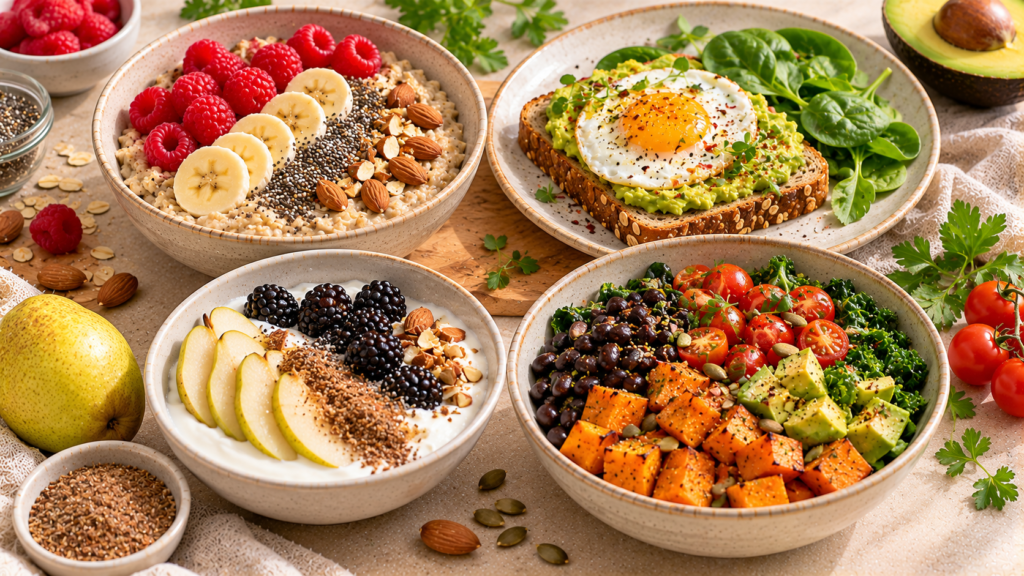
A practical breakfast might include:
- A bowl of oatmeal for whole-grain fiber.
- A serving of raspberries for additional fiber and vitamin C.
- A tablespoon of chia seeds for fiber and plant-based omega-3 fats.
- Plain Greek yogurt or an egg for protein.
This combination provides fiber, protein, and several micronutrients without requiring complicated preparation.
How to Choose High Fiber Breakfast Foods at the Grocery Store
A few label-reading habits can help you select better breakfast products.
Choose Whole Grains
Look for ingredients such as:
- Whole oats
- Whole-wheat flour
- Whole rye
- Barley
- Whole-grain wheat
The word “multigrain” does not necessarily mean a product is made entirely from whole grains. Check the ingredient list.
Compare Fiber on Nutrition Labels
When comparing cereals and breads:
- Check fiber per serving, not just per 100 grams.
- Compare similar serving sizes.
- Look for whole grains among the first ingredients.
- Check added sugar and sodium as well.
Choose Unsweetened or Minimally Sweetened Options
Plain oats, unsweetened yogurt, fresh fruit, and unflavored nuts allow you to control how much sugar is added to breakfast.
Some packaged cereals and flavored yogurts contain substantial added sugar, so compare labels before buying.
Keep Convenient Fiber-Rich Foods Available
Useful options to keep at home include:
- Rolled oats
- Chia seeds
- Ground flaxseeds
- Apples and pears
- Frozen berries
- Whole-grain bread
- Unsalted nuts
- Canned beans with no added salt or lower sodium
Frozen fruit can be a convenient alternative to fresh fruit and can be added directly to oatmeal or smoothies.
Common Mistakes to Avoid When Eating High Fiber Breakfast Foods
1. Choosing Refined Grains Instead of Whole Grains
White bread and many refined breakfast cereals contain less fiber than whole-grain alternatives. Choose products with whole grains as a main ingredient.
2. Drinking Juice Instead of Eating Whole Fruit
Strained fruit juice usually contains much less fiber than the whole fruit. Choose whole berries, apples, pears, or bananas more often.
3. Adding Too Many Seeds Too Quickly
Chia and flaxseeds are fiber-rich, but suddenly eating large amounts may cause bloating or discomfort. Start with smaller portions and increase gradually.
4. Forgetting Protein
A breakfast made only from fruit or refined carbohydrates may not provide a balanced mix of nutrients. Pair fiber-rich foods with eggs, plain yogurt, milk, tofu, nuts, or beans.
5. Ignoring Portion Sizes
Nuts and seeds provide fiber and healthy fats, but they are also energy-dense. Use portions that fit your appetite and nutritional needs.
6. Not Drinking Enough Fluids
Adequate fluids are important when increasing fiber intake. Drink water regularly unless you have been advised to restrict fluids.
7. Eating the Same Breakfast Every Day
Oatmeal is a useful choice, but variety matters. Rotate berries, pears, apples, whole grains, seeds, avocado, and beans to enjoy a broader range of nutrients.
High Fiber Breakfast Foods for Different Eating Preferences
A high fiber breakfast can be adapted to different food preferences and dietary patterns.
| Preference | Breakfast choices |
|---|---|
| Vegetarian | Oatmeal, chia pudding, fruit, yogurt, whole-grain toast |
| Vegan | Overnight oats with fortified soy milk, berries, chia, flaxseed, and nuts |
| Savory breakfast | Avocado toast, eggs, spinach, black beans, whole-grain bread |
| Dairy-free | Oatmeal with fortified plant milk, fruit, seeds, and nuts |
| Budget-friendly | Oats, bananas, seasonal fruit, beans, and homemade whole-grain meals |
| Quick breakfast | Apple with almonds, yogurt with berries, or overnight oats |
People with food allergies or intolerances should choose suitable alternatives and check packaged-food labels.
Frequently Asked Questions About High Fiber Breakfast Foods
1. What are the best high fiber breakfast foods?
Chia seeds, raspberries, blackberries, oats, ground flaxseeds, pears, apples, avocado, and whole-grain bread are excellent options. Beans and chickpeas are also useful for savory breakfasts.
2. What is a good high fiber breakfast to eat every morning?
A bowl of oatmeal topped with berries and chia seeds is a practical option. You can also add plain yogurt or an egg to include protein.
3. Which breakfast has the most fiber?
The fiber amount depends on the ingredients and portions. A breakfast containing chia seeds, oats, berries, and ground flaxseeds can provide a substantial amount of fiber.
4. Are eggs high in fiber?
No. Eggs contain protein and several vitamins and minerals, but they do not provide dietary fiber. Pair eggs with whole-grain toast, avocado, beans, or vegetables to create a higher-fiber breakfast.
5. Is oatmeal a high fiber breakfast?
Yes. A cup of cooked oatmeal provides approximately 4 grams of fiber, depending on the type of oats and preparation. Adding berries, chia seeds, or ground flaxseeds increases the total.
6. What can I eat for a high fiber breakfast without cooking?
Try plain yogurt with berries and ground flaxseeds, overnight oats, an apple with almonds, or whole-grain toast with avocado. These options require little or no morning cooking.
7. Are high fiber breakfast foods good for digestion?
Fiber supports normal digestion and bowel movements. Oats, berries, pears, seeds, and whole grains can contribute to daily fiber intake. Increase fiber gradually and drink adequate fluids.
8. Can I eat high fiber breakfast foods every day?
Most people can enjoy a variety of fiber-rich foods every day as part of a balanced diet. Rotate ingredients and adjust portions to your individual needs.
9. How can I make my breakfast more filling?
Combine fiber-rich foods with protein and healthy fats. For example, pair oatmeal and berries with yogurt, or serve avocado toast with an egg.
10. How much fiber should I eat at breakfast?
There is no universal breakfast target. Around 6–10 grams can be a useful contribution for many adults, but the most important goal is to meet your overall daily fiber needs.

Recommended Internal and External Links
Internal linking opportunities:
Authoritative external resources:
- USDA FoodData Central – Food Nutrient Database — verify fiber amounts and serving sizes.
- National Academies – Dietary Reference Intakes — reference values for daily fiber intake.
- Harvard T.H. Chan School of Public Health – The Nutrition Source — evidence-based nutrition information.
Conclusion: Start Your Day With High Fiber Breakfast Foods
Choosing high fiber breakfast foods is a practical way to improve your daily nutrition and build a more balanced morning routine. Oatmeal, chia seeds, berries, pears, apples, avocado, whole-grain bread, and beans are all useful choices.
You do not need an elaborate recipe or expensive ingredients. Start with a simple bowl of oats, add fresh fruit and seeds, or prepare whole-grain toast with avocado and eggs. Small additions can make a meaningful difference to your overall fiber intake.
For the best results, combine different fiber-rich foods throughout the week, include protein in your breakfast, and increase fiber gradually while drinking enough fluids.
A nutritious breakfast is not about eating one perfect food. It is about building a varied, enjoyable eating pattern that supports your health throughout the day.
1 thought on “High Fiber Breakfast Foods”