

Adding high fiber foods to your daily diet is a practical way to improve the nutritional quality of your meals. Fiber is a type of carbohydrate found naturally in plant foods. Unlike most other carbohydrates, it is not fully broken down and absorbed in the small intestine.
Foods such as beans, lentils, oats, pears, raspberries, broccoli, chia seeds, and whole grains provide dietary fiber along with vitamins, minerals, and other beneficial plant compounds.
Yet many people do not eat enough fiber. Choosing a wider variety of plant foods and making gradual changes can help you increase your intake without relying on complicated recipes or expensive products.
This guide explores 25 high fiber foods, their approximate fiber content, the difference between soluble and insoluble fiber, and simple ways to include more fiber in breakfast, lunch, dinner, and snacks.
Key Takeaways
- Beans, lentils, peas, and chickpeas are among the most useful high-fiber foods.
- Fruits such as raspberries, pears, apples, and avocados contribute fiber.
- Vegetables, whole grains, nuts, and seeds help increase daily fiber intake.
- Soluble and insoluble fiber have different properties, and many foods contain both.
- Increase fiber gradually and drink enough fluids to help your digestive system adjust.
- Eating a variety of plant foods is a practical way to obtain different types of fiber.
What Is Dietary Fiber?
Dietary fiber is the part of plant foods that the body cannot completely digest. It is found in fruits, vegetables, legumes, nuts, seeds, and whole grains.
Unlike refined carbohydrates, which are largely broken down into sugars, fiber passes through the digestive system in different forms. Some fiber dissolves in water and can be fermented by gut bacteria, while other types help add bulk to stool.
Fiber is important for several aspects of health:
- Digestive regularity: Fiber can help support normal bowel movements.
- Gut health: Certain fibers are fermented by gut bacteria.
- Heart health: Some soluble fibers, such as beta-glucan from oats and barley, can help lower LDL cholesterol when consumed regularly as part of an appropriate diet.
- Blood glucose management: Fiber-rich foods can slow digestion and influence how quickly carbohydrates are absorbed.
- Satiety: Foods containing fiber can help meals feel more filling.
The effects depend on the type of fiber, amount consumed, overall diet, and individual health.
25 High Fiber Foods and Their Fiber Content
The chart below compares 25 foods that can help you increase your daily fiber intake. Amounts are approximate and refer to typical portions of cooked or ready-to-eat foods unless otherwise stated.
High Fiber Foods Chart
| No. | Food | Approximate fiber | Serving size |
|---|---|---|---|
| 1 | Raspberries | 8 g | 1 cup |
| 2 | Blackberries | 7.6 g | 1 cup |
| 3 | Pear with skin | 5.5 g | 1 medium |
| 4 | Apple with skin | 4.4 g | 1 medium |
| 5 | Avocado | 6.7 g | ½ fruit |
| 6 | Orange | 3.1 g | 1 medium |
| 7 | Banana | 3.1 g | 1 medium |
| 8 | Green peas, cooked | 8.8 g | 1 cup |
| 9 | Broccoli, cooked | 5.1 g | 1 cup |
| 10 | Brussels sprouts, cooked | 4 g | 1 cup |
| 11 | Carrots, raw | 3.6 g | 1 cup |
| 12 | Sweet potato with skin | 4 g | 1 medium |
| 13 | Artichoke, cooked | 7 g | 1 medium |
| 14 | Lentils, cooked | 15.6 g | 1 cup |
| 15 | Black beans, cooked | 15 g | 1 cup |
| 16 | Chickpeas, cooked | 12.5 g | 1 cup |
| 17 | Kidney beans, cooked | 13 g | 1 cup |
| 18 | Split peas, cooked | 16 g | 1 cup |
| 19 | Oats, dry | 4 g | ½ cup |
| 20 | Barley, cooked | 6 g | 1 cup |
| 21 | Quinoa, cooked | 5 g | 1 cup |
| 22 | Whole-wheat bread | 2–3 g | 1 slice |
| 23 | Chia seeds | 9.8 g | 28 g |
| 24 | Flaxseeds | 7.7 g | 28 g |
| 25 | Almonds | 3.5 g | 28 g |
Values are estimates. Fiber content varies with food variety, size, cooking method, and product brand. Use package labels or a trusted nutrition database for more precise amounts.
1. High Fiber Fruits
Fruits are convenient sources of dietary fiber and can also provide vitamins, minerals, water, and beneficial plant compounds. Whenever appropriate, eat fruit whole rather than drinking its juice because juicing usually removes much of the fiber.
1. Raspberries
Ripe raspberries in ceramic bowl
Raspberries are among the most fiber-rich commonly eaten fruits. One cup provides approximately 8 grams of fiber.
Easy ways to eat raspberries:
- Add them to oatmeal or whole-grain cereal.
- Mix them into plain yogurt.
- Blend them into a smoothie without straining.
- Serve them with nuts for a snack.
Fresh and frozen raspberries can both be useful options. Choose unsweetened frozen fruit when fresh berries are unavailable or expensive.
2. Blackberries
One cup of blackberries provides approximately 7.6 grams of fiber. They also contain vitamin C and naturally occurring plant pigments called anthocyanins.
Add blackberries to breakfast bowls, fruit salads, yogurt, or homemade smoothies. Eating them whole helps retain their fiber.
3. Pears
A medium pear with its skin provides approximately 5.5 grams of fiber.
The skin contributes a meaningful amount of the fruit’s fiber, so wash pears thoroughly and eat them unpeeled when practical.
Try sliced pears with oatmeal, plain yogurt, or a small serving of almonds.
4. Apples
A medium apple with its skin provides approximately 4.4 grams of fiber.
Apples are easy to carry and require little preparation. Eat one as a snack, chop it into oats, or add slices to a salad.
Choose whole apples more often than apple juice. Juice generally contains much less fiber because the pulp is removed during processing.
5. Avocados
Half an avocado provides approximately 6.7 grams of fiber, although the amount varies with size.
Avocados also provide unsaturated fats. Add them to whole-grain toast, salads, wraps, or vegetable bowls. Because they are energy-dense, portion size may matter if you are monitoring your overall calorie intake.
6. Oranges
One medium orange provides around 3.1 grams of fiber. It also supplies vitamin C and water.
Eat the whole fruit as a snack or add orange segments to salads. Whole oranges generally provide more fiber than strained orange juice.
7. Bananas
One medium banana provides approximately 3.1 grams of fiber.
Bananas are easy to include in breakfast and snacks. Slice one over oats, mix it into plain yogurt, or blend it into a smoothie.
Less-ripe bananas contain more resistant starch than very ripe bananas. Resistant starch behaves like dietary fiber in some respects, although the amount depends on ripeness and preparation.
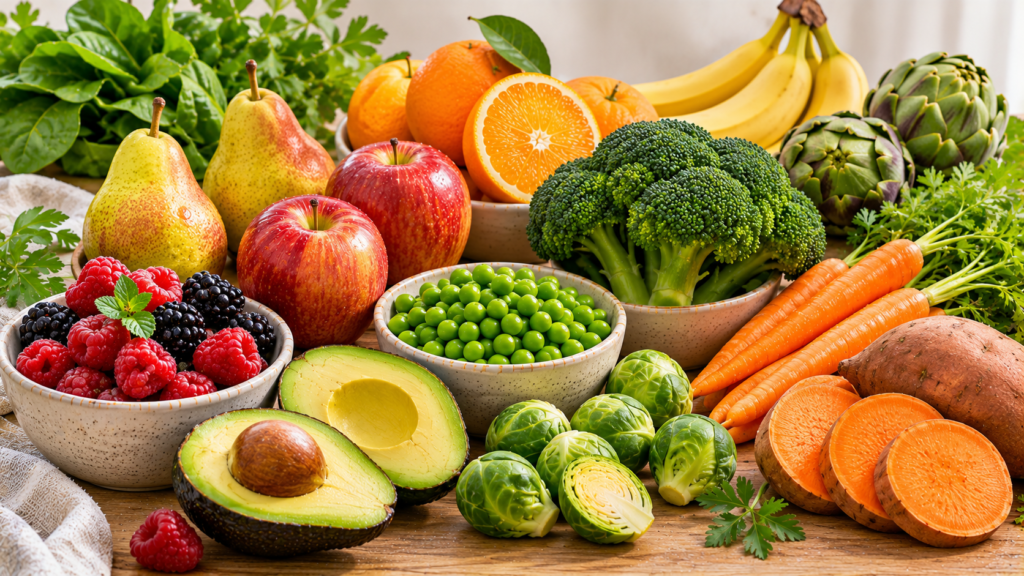
2. High Fiber Vegetables
Vegetables contribute fiber while adding volume, color, vitamins, and minerals to meals. Eating a variety of vegetables is more useful than relying on just one type.
8. Green Peas
One cup of cooked green peas provides approximately 8.8 grams of fiber.
Green peas are easy to add to rice dishes, soups, vegetable curries, pasta, and salads. Frozen peas are convenient because they can be stored for longer periods and cooked quickly.
9. Broccoli
One cup of cooked broccoli provides approximately 5.1 grams of fiber.
Broccoli also contains vitamin C, vitamin K, and other plant compounds. Steam, roast, or stir-fry it, and serve it alongside beans, lentils, tofu, fish, or chicken.
10. Brussels Sprouts
One cup of cooked Brussels sprouts provides approximately 4 grams of fiber.
Roast them with a little olive oil, garlic, and black pepper, or add them to grain bowls and vegetable dishes. Avoid overcooking if you prefer a firmer texture.
11. Carrots
One cup of raw chopped carrots provides approximately 3.6 grams of fiber.
Carrots can be eaten raw, roasted, steamed, or added to soups. Keep washed carrot sticks ready in the refrigerator for an easy snack with hummus.
12. Sweet Potatoes
A medium sweet potato with its skin can provide around 4 grams of fiber.
Bake or roast sweet potatoes and serve them with beans, lentils, eggs, or yogurt-based toppings. Keeping the edible skin on adds fiber.
13. Artichokes
A medium cooked artichoke can provide approximately 7 grams of fiber, depending on its size.
Artichokes can be steamed, roasted, or added to salads and vegetable dishes. If using canned artichoke hearts, check the label for added sodium and oil.
3. High Fiber Legumes and Beans
Legumes are among the most concentrated everyday sources of dietary fiber. They also provide plant-based protein, iron, folate, and other nutrients.
14. Lentils
One cup of cooked lentils provides approximately 15.6 grams of fiber.
Lentils are affordable and versatile. Use them in:
- Daal with whole-wheat roti.
- Lentil and vegetable soup.
- Lentil salads.
- Tomato-based pasta sauces.
- Lentil patties or homemade burgers.
Red lentils cook relatively quickly and soften into a thick texture, while green and brown varieties tend to hold their shape better.
15. Black Beans
One cup of cooked black beans provides approximately 15 grams of fiber.
Add black beans to rice bowls, vegetable wraps, soups, salads, or homemade bean patties. They work particularly well with tomatoes, peppers, onions, coriander, and spices.
16. Chickpeas
One cup of cooked chickpeas provides approximately 12.5 grams of fiber.
Chickpeas can be used in hummus, chana masala, salads, curries, roasted snacks, and vegetable wraps.
Canned chickpeas save preparation time. Drain and rinse them before use to remove some of the added sodium.
17. Kidney Beans
One cup of cooked kidney beans provides approximately 13 grams of fiber.
Add them to vegetable curry, bean chili, rice dishes, or salads. They also provide plant protein and several minerals.
Food safety: Dried kidney beans contain naturally occurring lectins that can cause illness if the beans are eaten raw or undercooked. Soak and boil them thoroughly according to reliable food-safety instructions. Do not rely on a slow cooker alone to make raw kidney beans safe.
18. Split Peas
One cup of cooked split peas provides approximately 16 grams of fiber.
Split peas are especially useful in thick soups and stews. Cook them with onions, carrots, tomatoes, and spices for a filling meal.
Because legumes are fiber-rich, increase portions gradually if you are not used to eating them. Rinsing canned varieties and cooking dried legumes thoroughly may also improve tolerance for some people.
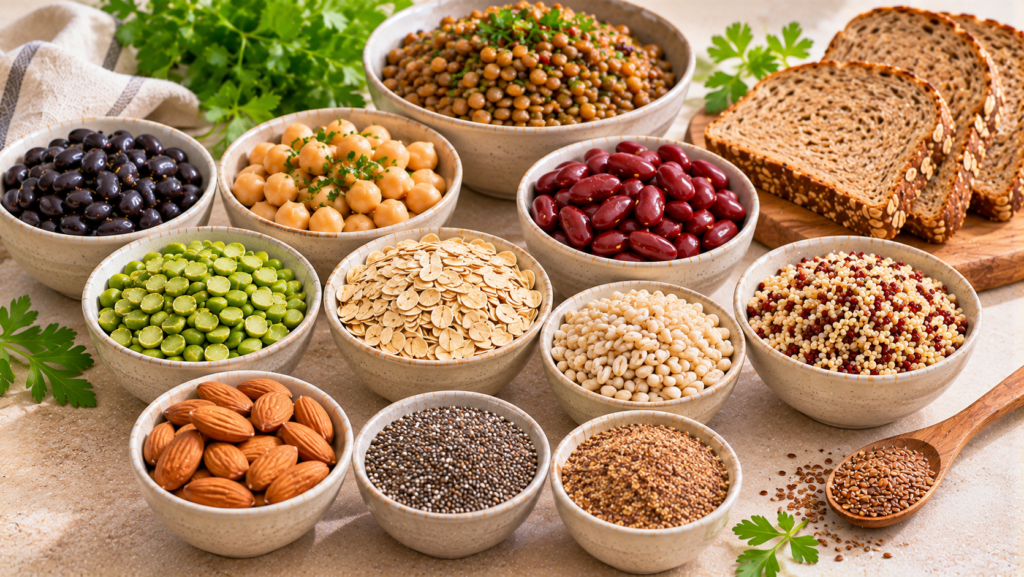
4. High Fiber Whole Grains
Whole grains contain more of their original bran and germ than refined grains. These parts contribute fiber and other nutrients.
19. Oats
Half a cup of dry oats provides approximately 4 grams of fiber.
Oats contain beta-glucan, a soluble fiber that can help lower LDL cholesterol when eaten regularly as part of a heart-healthy diet.
Easy ways to eat oats:
- Prepare oatmeal with milk or fortified soy milk.
- Make overnight oats with fruit.
- Add oats to homemade patties.
- Use oats in homemade breakfast bars.
- Blend oats into a smoothie.
Choose plain oats more often than heavily sweetened instant varieties.
20. Barley
One cup of cooked barley provides approximately 6 grams of fiber.
Barley is another source of beta-glucan. Add it to soups, stews, salads, or vegetable bowls.
Pearled barley is more processed than hulled barley, so its fiber content may be lower. Check the package if you are comparing varieties.
21. Quinoa
One cup of cooked quinoa provides approximately 5 grams of fiber.
Quinoa is technically a seed, although it is commonly used like a grain. It provides protein as well as fiber and can replace some of the rice in everyday meals.
Serve it with beans, roasted vegetables, tofu, or grilled chicken.
22. Whole-Wheat Bread
One slice of whole-wheat bread commonly provides around 2–3 grams of fiber, depending on the brand and slice size.
Use whole-wheat bread for sandwiches and toast. Check the ingredient list to make sure whole grain is a main ingredient; brown color alone does not guarantee that a bread is whole grain.
5. High Fiber Nuts and Seeds
Nuts and seeds are small but useful additions to a fiber-rich eating pattern. They also provide unsaturated fats, minerals, and, in some cases, plant-based omega-3 fats.
23. Chia Seeds
A 28-gram serving of chia seeds provides approximately 9.8 grams of fiber.
Chia seeds absorb liquid and form a gel-like texture. Add them to:
- Overnight oats.
- Yogurt bowls.
- Smoothies.
- Chia pudding.
- Homemade breakfast mixes.
Allow chia seeds to absorb sufficient liquid before eating rather than swallowing large amounts of dry seeds.
24. Flaxseeds
A 28-gram serving of flaxseeds provides approximately 7.7 grams of fiber.
Ground flaxseed is often easier to incorporate into meals than whole flaxseed. Add it to oatmeal, yogurt, smoothies, or homemade whole-grain baking recipes.
Store ground flaxseed in an airtight container according to package instructions to help maintain freshness.
25. Almonds
A 28-gram serving of almonds provides approximately 3.5 grams of fiber.
Eat almonds as a snack or add chopped almonds to oatmeal, salads, and yogurt. They also supply vitamin E, magnesium, and unsaturated fats.
Soluble Fiber vs. Insoluble Fiber: What Is the Difference?
Dietary fiber is commonly grouped into soluble and insoluble fiber. Both are useful, and many plant foods contain a mixture of the two.
Soluble Fiber
Soluble fiber dissolves in water and forms a gel-like substance in the digestive tract. Some types are fermented by gut bacteria.
Potential benefits include:
- Helping support healthy cholesterol levels.
- Slowing the digestion and absorption of some carbohydrates.
- Supporting beneficial gut bacteria, depending on the type of fiber.
Foods that contain soluble fiber include:
- Oats and barley.
- Lentils and beans.
- Apples and pears.
- Citrus fruits.
- Chia seeds.
Beta-glucan in oats and barley is a well-studied soluble fiber associated with reductions in LDL cholesterol when consumed regularly in suitable amounts.
Insoluble Fiber
Insoluble fiber does not dissolve in water. It helps add bulk to stool and can support regular bowel movements.
Foods that contain insoluble fiber include:
- Whole-wheat grains.
- Wheat bran.
- Vegetable skins.
- Nuts and seeds.
- Many leafy and cruciferous vegetables.
Soluble and Insoluble Fiber Comparison
| Feature | Soluble fiber | Insoluble fiber |
|---|---|---|
| Behavior in water | Dissolves or forms a gel | Does not dissolve |
| Main digestive role | Can slow digestion and be fermented | Adds bulk to stool |
| Common food sources | Oats, beans, apples, lentils | Whole grains, vegetable skins, nuts |
| Example | Beta-glucan in oats | Cellulose in many vegetables |
You do not need to calculate the exact amount of each type. Eating a variety of fruits, vegetables, legumes, whole grains, nuts, and seeds is a practical way to obtain both.
How Much Fiber Do You Need Every Day?
Daily fiber needs vary by age, sex, energy intake, and life stage. Common reference recommendations for adults are approximately:
| Group | Daily fiber recommendation |
|---|---|
| Women aged 19–50 | 25 g |
| Men aged 19–50 | 38 g |
| Women aged 51 and older | 21 g |
| Men aged 51 and older | 30 g |
| Pregnancy | Around 28 g |
| Breastfeeding | Around 29 g |
These are general reference values, not personalized prescriptions. Individual needs may vary, and local dietary guidelines may use different recommendations.
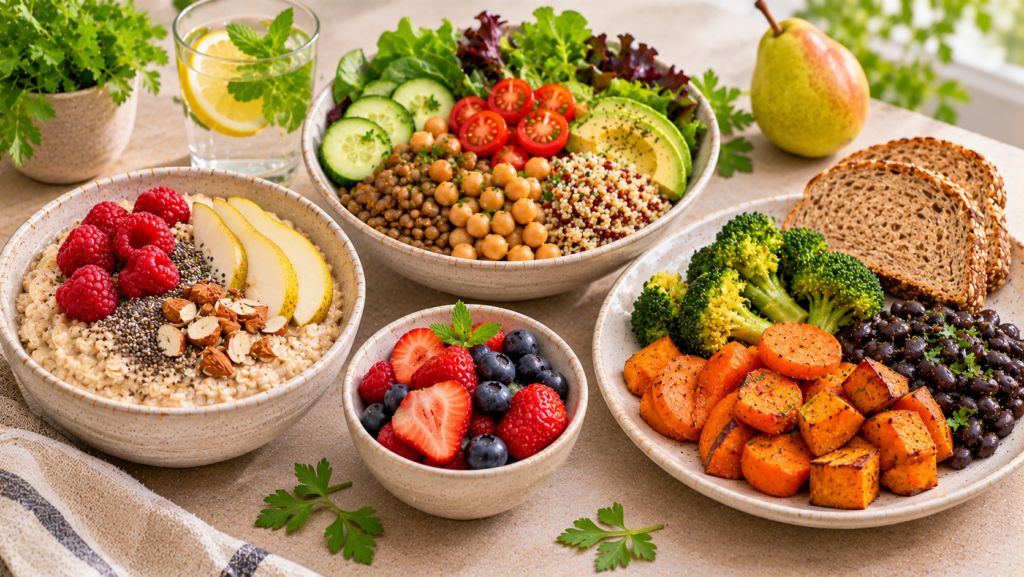
A practical way to increase fiber is to include a source at every meal. For example, eat oats and fruit at breakfast, beans or lentils at lunch, and vegetables with whole grains at dinner.
National Academies — Dietary Reference Intakes for Fiber
You can also use USDA FoodData Central to check the fiber content of individual foods and compare products.
How to Add More High Fiber Foods to Your Daily Diet
The easiest way to increase fiber is to make small changes to foods you already enjoy. You do not need to change your entire eating routine.
1. Start Breakfast With Whole Grains
Replace some refined breakfast choices with oatmeal, whole-grain cereal, or whole-wheat toast.
Add fruit, chia seeds, or ground flaxseed for extra fiber.
Example: Prepare oats with milk or fortified soy milk, then add raspberries and a teaspoon of ground flaxseed.
2. Add Beans or Lentils to Lunch
Beans and lentils are among the most concentrated everyday fiber sources.
Add them to:
- Vegetable salads.
- Rice dishes.
- Soups.
- Curries.
- Whole-grain wraps.
Even adding half a cup of beans to a familiar meal can increase its fiber content.
3. Include Vegetables at Lunch and Dinner
Use a mixture of vegetables rather than relying on just one. Broccoli, carrots, peas, Brussels sprouts, and sweet potatoes are useful options.
Try roasting vegetables, adding them to soups, or serving them with beans, fish, tofu, or chicken.
4. Choose Whole Fruit Instead of Juice
Whole fruit contains the fiber found in its edible flesh and skin. Juice usually contains much less fiber, especially when the pulp is removed.
Keep apples, pears, oranges, and bananas available for convenient snacks.
5. Sprinkle Seeds Over Everyday Foods
Chia seeds and ground flaxseeds can be added to oatmeal, yogurt, smoothies, and salads.
Start with small quantities if you are not accustomed to high-fiber foods, and make sure to consume enough fluids.
6. Replace Some Refined Grains With Whole Grains
Choose whole-wheat bread, oats, barley, and brown rice more often. Check product labels because not every brown-colored bread or grain product is made primarily from whole grains.
Best Nutrient-Dense Foods for Everyday Meals
A Simple 7-Day High Fiber Meal Plan
This sample meal plan demonstrates how to include a variety of high fiber foods throughout the week. Portions should be adjusted to your appetite, energy requirements, and digestive tolerance.
| Day | Breakfast | Lunch | Dinner |
|---|---|---|---|
| Monday | Oatmeal with raspberries and chia seeds | Lentil daal with whole-wheat roti | Chickpea and vegetable curry |
| Tuesday | Whole-wheat toast with avocado | Black bean and quinoa salad | Baked sweet potato with vegetables |
| Wednesday | Greek yogurt with pear and ground flaxseed | Chickpea and cucumber wrap | Barley and vegetable soup |
| Thursday | Oats with banana and almonds | Kidney bean rice bowl | Broccoli, tofu, and brown rice |
| Friday | Whole-grain cereal with apple | Lentil and vegetable soup | Whole-wheat pasta with beans |
| Saturday | Chia pudding with berries | Chickpea salad with whole-wheat bread | Split pea soup with vegetables |
| Sunday | Oatmeal with pear and seeds | Quinoa, black bean, and avocado bowl | Roasted vegetables with lentils |
Practical Meal Preparation Tips
- Cook a batch of lentils or beans and divide it into portions.
- Wash and prepare fruit and vegetables ahead of time.
- Keep oats, chia seeds, and ground flaxseed available.
- Use frozen berries and vegetables when fresh options are not convenient.
- Increase portions gradually rather than adding several large servings of legumes and seeds at once.
How to Increase Fiber Without Digestive Discomfort
Increasing fiber too quickly can cause bloating, gas, abdominal discomfort, or changes in bowel movements. This is particularly common when someone moves from a low-fiber diet to eating large portions of beans, lentils, seeds, and whole grains.
Use these practical steps:
Increase Fiber Gradually
Add one fiber-rich food at a time. For example, begin by adding fruit to breakfast, then introduce a serving of beans at lunch after your body has adjusted.
Drink Enough Fluids
Fiber works alongside fluid in the digestive system. Drink water regularly throughout the day, particularly when increasing fiber intake.
People who have been advised to restrict fluids for a medical reason should follow their healthcare professional’s guidance.
Prepare Legumes Properly
Soaking and thoroughly cooking dried beans and lentils can improve their texture and make them easier for many people to tolerate. Rinse canned legumes before eating.
Chew Food Thoroughly
Eating slowly and chewing well can make meals more comfortable and help you recognize when you are satisfied.
Pay Attention to Your Own Tolerance
Some people experience discomfort with particular high-fiber foods. Keep track of which foods cause symptoms and adjust portions. If digestive symptoms are persistent, severe, or accompanied by unexplained weight loss, blood in the stool, or ongoing pain, seek medical advice.
People with certain digestive conditions may need individualized fiber recommendations. A high-fiber diet is not appropriate for every person in every circumstance.
Common Mistakes to Avoid When Eating High Fiber Foods
Even nutritious foods can cause problems if introduced without considering portions and individual needs.
- Increasing fiber too quickly: Large changes can cause gas and bloating. Increase intake gradually.
- Not drinking enough fluids: Fiber and hydration work together, so fluid intake matters.
- Relying on one food: Eating only oats or only beans does not provide the same variety as including different plant foods.
- Removing edible skins unnecessarily: The skins of many fruits and vegetables contribute fiber. Wash produce thoroughly and keep edible skins when suitable.
- Choosing juice instead of whole fruit: Juice often contains less fiber than whole fruit.
- Assuming every whole-grain product is high in fiber: Compare nutrition labels and look at fiber per serving.
- Ignoring individual digestive needs: Some people need tailored advice about fiber type or amount.
Frequently Asked Questions About High Fiber Foods
What are the 10 best high fiber foods?
Some excellent options include lentils, split peas, black beans, chickpeas, raspberries, blackberries, avocado, green peas, chia seeds, and flaxseeds. Their fiber content varies by serving size.
Which fruit has the most fiber?
Raspberries and blackberries are among the most fiber-rich commonly eaten fruits. One cup of raspberries provides approximately 8 grams of fiber, while one cup of blackberries provides around 7.6 grams.
What vegetables are highest in fiber?
Green peas, artichokes, broccoli, Brussels sprouts, carrots, and sweet potatoes are useful high-fiber vegetables. Legumes such as beans and lentils generally provide even more fiber per serving.
Are beans and lentils good sources of fiber?
Yes. Beans and lentils are excellent sources of dietary fiber. One cup of cooked split peas provides approximately 16 grams, while cooked lentils provide around 15.6 grams.
What are the best high fiber foods for breakfast?
Oats, raspberries, pears, apples, chia seeds, ground flaxseeds, and whole-grain bread are convenient breakfast choices. Combine several of them for a fiber-rich meal.
Can high fiber foods help with constipation?
Fiber can help support regular bowel movements by increasing stool bulk or helping retain water, depending on the type. Increase intake gradually and drink adequate fluids. Persistent constipation should be discussed with a healthcare professional.
How can I eat 25 grams of fiber a day?
You can build toward 25 grams by including oats and fruit at breakfast, lentils or beans at lunch, vegetables and whole grains at dinner, and nuts or seeds as snacks. The exact amount depends on portions and food choices.
Are high fiber foods good for gut health?
Many fiber-rich foods contain fibers that gut bacteria can ferment. A varied diet containing legumes, vegetables, fruit, whole grains, nuts, and seeds can support a diverse gut microbiome. Individual responses differ.
What happens if I eat too much fiber?
A sudden or excessive increase in fiber may cause gas, bloating, cramps, or changes in bowel movements. Increase intake gradually, drink enough fluids, and adjust your food choices according to your tolerance.
Conclusion: Make High Fiber Foods Part of Your Everyday Diet
Adding high fiber foods to your diet does not require complicated recipes or expensive ingredients. Everyday foods such as lentils, chickpeas, beans, raspberries, pears, broccoli, oats, chia seeds, and almonds can help you increase your fiber intake while providing other important nutrients.
The most practical approach is to eat a variety of fruits, vegetables, legumes, whole grains, nuts, and seeds throughout the week. Start with small changes, increase fiber gradually, and drink enough fluids to support comfortable digestion.
Use this list of 25 high fiber foods as a reference when planning meals, preparing your grocery list, or choosing healthier snacks. Consistent food choices can help you build a balanced eating pattern that is both nutritious and enjoyable.