
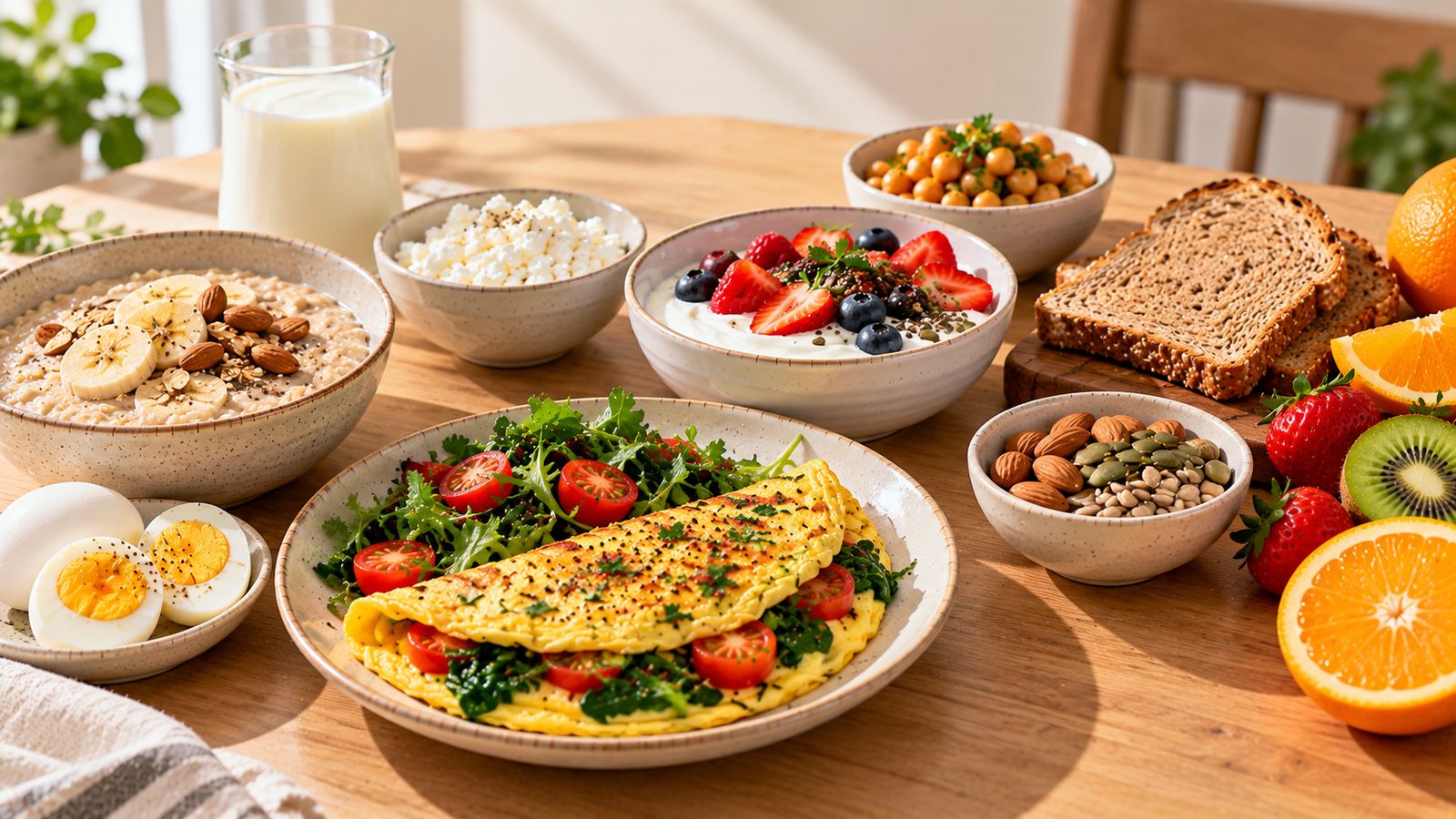
The best high protein foods for breakfast can help you start the day with a balanced meal that supports muscle maintenance, tissue repair, and normal body functions. Protein also contributes to fullness, making it a useful part of a satisfying breakfast.
You do not need an expensive protein shake or complicated recipe to eat a protein-rich breakfast. Eggs, milk, plain yogurt, cottage cheese, oats, lentils, chickpeas, nuts, seeds, and tofu can all contribute protein to your morning meal.
In this guide, you will find 20 high-protein breakfast foods, approximate protein amounts, quick meal combinations, vegetarian choices, and practical tips for eating well on a budget.
Key Takeaways
- Choose a protein source: Eggs, Greek yogurt, milk, cottage cheese, beans, lentils, or tofu.
- Combine foods: Pair protein with fruit, vegetables, whole grains, nuts, or seeds for a more balanced breakfast.
- Plan around your schedule: Boiled eggs, overnight oats, yogurt bowls, and prepared chickpeas can save time.
- Vegetarian options count: Dairy, soy foods, lentils, chickpeas, and beans can provide meaningful amounts of protein.
- Check serving sizes: Protein amounts vary by brand, portion, and preparation.
- You do not need supplements: Many people can meet their protein needs through regular foods.
How Much Protein Should Breakfast Contain?
There is no single protein target that is ideal for everyone at breakfast. Your needs depend on body size, age, activity level, health, and total daily food intake.
For many healthy adults, the general recommended dietary allowance is approximately 0.8 grams of protein per kilogram of body weight per day. This is a baseline reference rather than a personalized target.
For example, an adult weighing 70 kg would calculate the general baseline as:
\[ 70 \times 0.8 = 56 \text{ g protein per day} \]
That amount applies to the whole day, not just breakfast. You can distribute protein across meals according to your preferences and needs.
People who train intensely, older adults, and those with certain medical conditions may need individualized guidance. If you have kidney disease or another condition that affects protein requirements, consult a qualified healthcare professional.
For more information, see MedlinePlus — Protein in Diet.
20 Best High Protein Foods for Breakfast
The following chart compares common breakfast foods and their approximate protein content. Values are estimates; product labels and serving sizes can make a noticeable difference.
| # | Breakfast food | Approximate protein | Typical serving |
|---|---|---|---|
| 1 | Eggs | 6–7 g | 1 large egg |
| 2 | Plain Greek yogurt | 15–20 g | 170 g |
| 3 | Cottage cheese | 11–13 g | 100 g |
| 4 | Cow’s milk | 8 g | 240 ml |
| 5 | Soy milk | 6–8 g | 240 ml |
| 6 | Cheddar cheese | 6–7 g | 28 g |
| 7 | Oats, dry | About 5 g | 40 g |
| 8 | Peanut butter | 7–8 g | 2 tablespoons |
| 9 | Almonds | About 6 g | 28 g |
| 10 | Pumpkin seeds | 8–9 g | 28 g |
| 11 | Chia seeds | 4–5 g | 28 g |
| 12 | Whole-wheat bread | 4–5 g | 2 slices |
| 13 | Cooked lentils | About 9 g | 100 g |
| 14 | Cooked chickpeas | 8–9 g | 100 g |
| 15 | Firm tofu | 10–17 g | 100 g |
| 16 | Edamame | 11–12 g | 100 g |
| 17 | Smoked salmon | About 18–22 g | 100 g |
| 18 | Cooked chicken breast | About 31 g | 100 g |
| 19 | Quinoa, cooked | 4–5 g | 100 g |
| 20 | Fortified high-protein cereal | Varies | Check product label |
Protein values are approximate and may vary with the product, moisture content, preparation, and serving size. Fortified cereals differ considerably, so check the nutrition label.
1. Eggs: A Versatile High-Protein Breakfast
Eggs are among the easiest high protein foods for breakfast. One large egg contains approximately 6–7 g of protein and also provides vitamin B12, riboflavin, and choline.
Easy ways to eat eggs
- Make a two-egg omelet with spinach and tomatoes.
- Serve boiled eggs with whole-wheat toast or roti.
- Prepare scrambled eggs with mushrooms and peppers.
- Add a boiled egg to a breakfast sandwich.
Two large eggs provide roughly 12–14 g of protein before adding bread, milk, or other ingredients.
2. Plain Greek Yogurt: Protein With Minimal Preparation
Plain Greek yogurt often provides around 15–20 g of protein per 170 g serving, although some products contain less. It also provides calcium and vitamin B12.
Try these yogurt combinations
- Greek yogurt, oats, berries, and pumpkin seeds.
- Greek yogurt with banana and peanut butter.
- Greek yogurt with chopped fruit and almonds.
- Plain yogurt with cucumber and herbs alongside savory breakfast foods.
Choose plain yogurt if you want to limit added sugar. Regular yogurt is also nutritious, but it generally contains less protein per serving than Greek yogurt.
3. Cottage Cheese: An Easy Protein Addition
Cottage cheese typically provides about 11–13 g of protein per 100 g. It can be served sweet or savory, making it a convenient choice for busy mornings.
Breakfast idea: Combine cottage cheese with tomatoes and whole-wheat toast, or serve it with fruit and a few nuts.
Check the label if you need to monitor sodium, since the salt content varies by product.
4. Milk and Soy Milk: Simple Ways to Add Protein
A cup of cow’s milk generally provides around 8 g of protein. Fortified soy milk often provides a similar amount, depending on the brand. Other plant-based drinks, such as almond or oat beverages, may contain much less protein.
How to use milk at breakfast
- Prepare oatmeal with milk instead of water.
- Blend milk with banana and plain yogurt.
- Serve milk alongside eggs and whole-grain toast.
- Add unsweetened fortified soy milk to overnight oats.
If choosing a plant-based milk, compare protein content and check whether it is fortified with calcium, vitamin B12, and vitamin D.
5. Oats: A Useful Base for Protein-Rich Breakfasts
Oats provide approximately 5 g of protein per 40 g dry serving. Although oats alone are not exceptionally high in protein, combining them with milk, yogurt, nuts, or seeds can make breakfast more protein-rich.
Three easy oat combinations
- Creamy oats: Cook oats in milk and add almonds.
- Overnight oats: Combine oats, Greek yogurt, milk, and fruit in the refrigerator overnight.
- Peanut butter oats: Stir peanut butter into cooked oats and top with banana.
Oats also contain beta-glucan, a soluble fiber associated with supporting healthy blood cholesterol levels as part of an appropriate diet.
6. Peanut Butter, Almonds, and Pumpkin Seeds
Nuts and seeds contribute protein, unsaturated fats, and other nutrients. They are useful additions, but they are energy-dense, so adjust portions to your appetite and needs.
| Food | Typical serving | Approximate protein |
|---|---|---|
| Peanut butter | 2 tablespoons | 7–8 g |
| Almonds | 28 g | 6 g |
| Pumpkin seeds | 28 g | 8–9 g |
| Chia seeds | 28 g | 4–5 g |
Breakfast idea: Top oatmeal with peanut butter and pumpkin seeds, or add almonds and chia seeds to a yogurt bowl.
Choose unsalted nuts and seeds when practical, and check peanut butter labels for added sugar and salt.
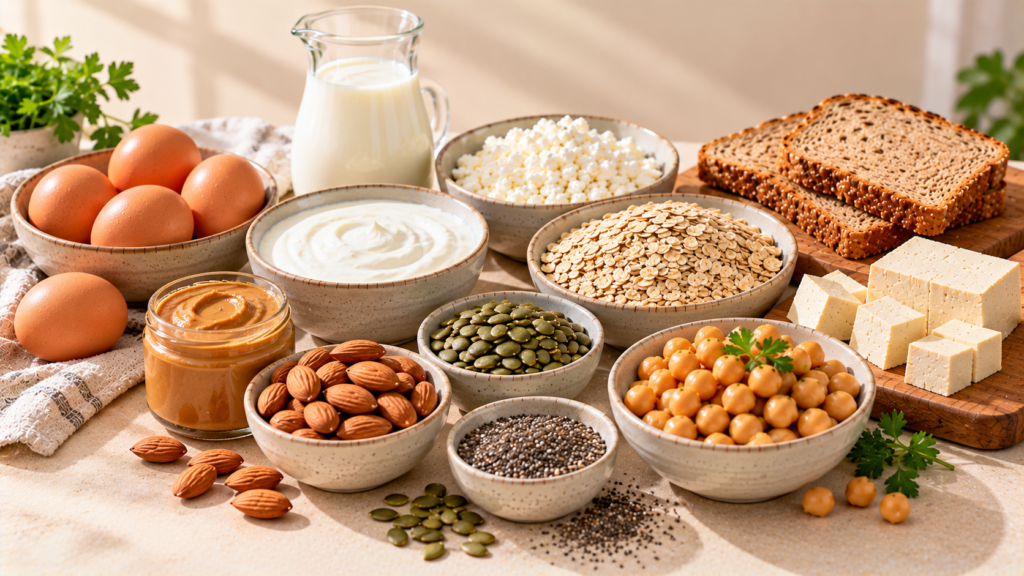
7. Lentils and Chickpeas: Affordable Plant-Based Protein
Lentils and chickpeas are useful breakfast options, especially for people who prefer savory meals or want affordable alternatives to meat and dairy.
Cooked lentils provide approximately 9 g of protein per 100 g, while cooked chickpeas provide around 8–9 g per 100 g.
Savory breakfast ideas
- Lentil dal with whole-wheat roti.
- Chickpea chaat with tomatoes, cucumber, and lemon.
- Chickpea and vegetable patties served with plain yogurt.
- Leftover lentils with an egg or tofu scramble.
If using dried chickpeas or lentils, cook them thoroughly. Refrigerate prepared leftovers promptly and reheat them safely.
8. Tofu and Edamame: High-Protein Plant Choices
Tofu and edamame are made from soybeans and can be useful sources of plant protein.
- Firm tofu: Often provides around 10–17 g protein per 100 g, depending on the brand and firmness.
- Edamame: Provides around 11–12 g protein per 100 g when cooked.
Breakfast ideas
- Tofu scramble with spinach, tomatoes, and spices.
- Edamame with a vegetable and grain bowl.
- Tofu cubes with whole-wheat toast and fruit.
- A savory tofu wrap with peppers and greens.
These options are useful for vegetarians and vegans. Choose fortified foods or another reliable source of vitamin B12 if you follow a fully plant-based diet.
9. Whole-Wheat Bread and Quinoa
Whole-wheat bread and quinoa provide some protein while also contributing carbohydrates. They work best as part of a meal that includes a more concentrated protein source.
For example, pair whole-wheat toast with eggs, cottage cheese, or peanut butter. Combine cooked quinoa with milk or soy milk, nuts, seeds, and yogurt for a warm breakfast bowl.
10. Chicken and Smoked Salmon for Savory Breakfasts
Chicken breast and salmon provide concentrated protein and can be included in savory breakfast meals.
- Cooked chicken breast: Approximately 31 g protein per 100 g.
- Smoked salmon: Often around 18–22 g protein per 100 g, depending on the product.
Try shredded chicken in a breakfast wrap or serve cooked salmon with eggs and whole-grain toast.
Smoked salmon can be high in sodium, and ready-to-eat refrigerated smoked fish may pose a food-safety risk during pregnancy. Follow local pregnancy food-safety guidance; fully cooked fish is an alternative.
11. Five Quick High-Protein Breakfast Ideas
You can make breakfast more nutritious without spending a long time in the kitchen. These meal ideas combine protein sources with fiber-rich carbohydrates, fruits, or vegetables.
| Breakfast idea | What to include | Approximate protein |
|---|---|---|
| Egg and toast plate | 2 eggs, 2 slices whole-wheat bread | 16–19 g |
| Greek yogurt bowl | 170 g Greek yogurt, 40 g oats, 1 tbsp pumpkin seeds | 23–29 g |
| Peanut butter oats | 40 g oats, 240 ml milk, 2 tbsp peanut butter | 20–22 g |
| Tofu breakfast wrap | 150 g firm tofu, whole-wheat wrap, vegetables | 20–30 g |
| Lentil and egg breakfast | 150 g cooked lentils, 1 large egg, tomatoes | 18–21 g |
These estimates depend on the products and exact portions used. The protein from bread, wraps, milk, and other ingredients is included approximately where relevant.
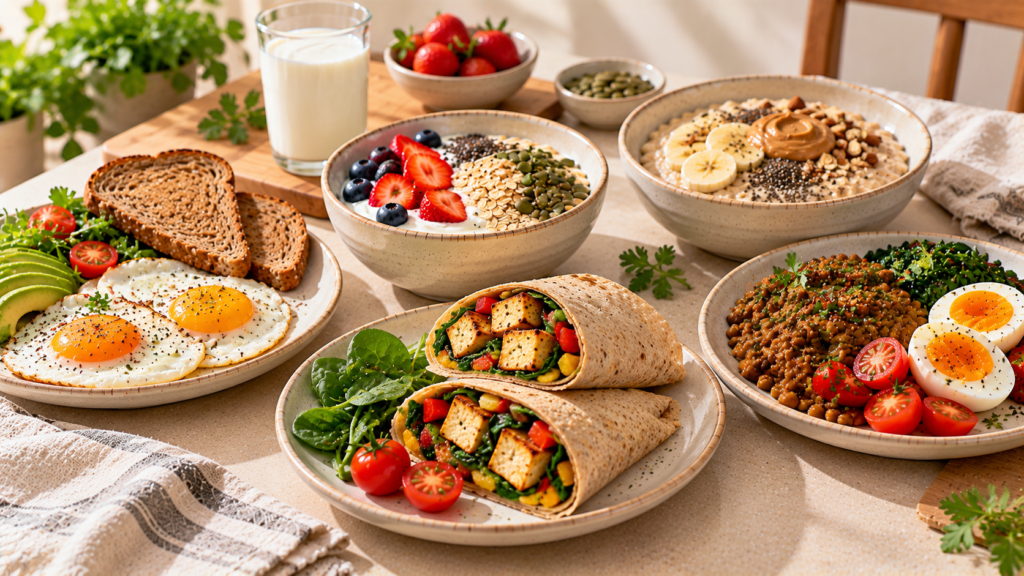
A Simple 7-Day High-Protein Breakfast Plan
Use this plan for variety rather than as a strict prescription. Adjust portions to your appetite, nutritional needs, and daily schedule.
| Day | Breakfast | Easy protein addition |
|---|---|---|
| Monday | Eggs with spinach and whole-wheat toast | Add milk or plain yogurt |
| Tuesday | Overnight oats with Greek yogurt and fruit | Use a higher-protein yogurt |
| Wednesday | Lentil dal with roti and tomatoes | Add an egg if desired |
| Thursday | Tofu scramble with vegetables | Use a generous tofu portion |
| Friday | Cottage cheese on whole-wheat toast | Add fruit on the side |
| Saturday | Chickpea chaat with plain yogurt | Include a full serving of chickpeas |
| Sunday | Oatmeal made with milk, peanut butter, and seeds | Add Greek yogurt if desired |
How to prepare ahead
- Boil eggs and refrigerate them for quick breakfasts.
- Prepare overnight oats and store them in the refrigerator.
- Cook a batch of lentils or chickpeas and refrigerate promptly.
- Portion nuts and seeds ahead of time.
- Wash and cut vegetables in advance, storing them safely.
Meal preparation can make it easier to eat breakfast regularly, but you do not have to eat breakfast if it does not fit your routine. Focus on your overall dietary pattern and total nutrient intake.
12. How to Build a Balanced High-Protein Breakfast
A high-protein breakfast does not need to be protein alone. Combine a protein source with foods that contribute fiber, vitamins, minerals, and energy.
A practical breakfast formula is:
- Protein: Eggs, yogurt, milk, tofu, beans, lentils, or cottage cheese.
- Fiber-rich carbohydrate: Oats, whole-wheat bread, whole-grain roti, or fruit.
- Fruit or vegetables: Berries, oranges, tomatoes, spinach, or peppers.
- Optional healthy fats: Nuts, seeds, avocado, or peanut butter.
For example, eggs with whole-wheat toast and tomatoes provide a different nutrient mix from yogurt with oats, fruit, and seeds. Both can fit into a balanced diet.
How to Build a Nutrient-Rich Breakfast.
30 High Protein Foods to Add to Your Diet.
For general guidance on healthy meal composition, see the Harvard T.H. Chan School of Public Health — Healthy Eating Plate.
13. Common High-Protein Breakfast Mistakes
Choosing protein but forgetting fiber
Eggs, cheese, and meat can supply protein, but a breakfast based only on these foods may lack fiber. Add fruit, vegetables, oats, or whole grains.
Assuming every plant milk has the same protein content
Soy milk often provides more protein than almond or oat drinks, but brands vary. Check the nutrition label instead of assuming all alternatives are equivalent.
Relying on sweetened yogurt and cereal without checking labels
Some products contain substantial added sugar. Plain yogurt and less-sweetened cereals can help you control added sugar while allowing fruit or other toppings for flavor.
Believing a larger protein serving is always better
Protein requirements vary. Consuming much more than you need does not automatically lead to greater muscle growth or better health. Exercise, recovery, total energy intake, and overall diet also matter.
Skipping food safety when preparing meals in advance
Refrigerate eggs, dairy products, cooked legumes, and other perishable foods promptly. Keep cold foods cold and follow local food-safety guidance when storing and reheating leftovers.
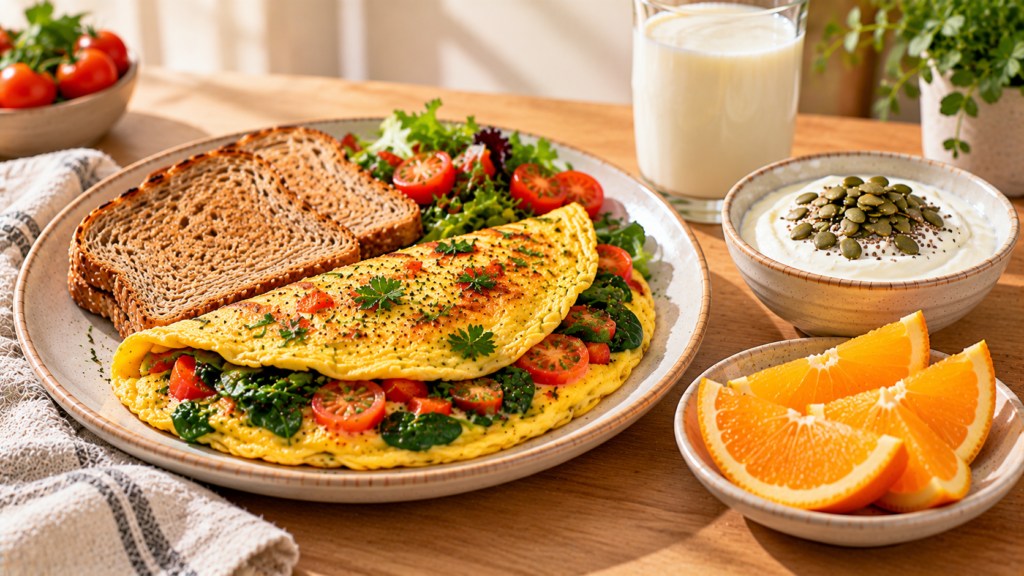
Frequently Asked Questions About High Protein Foods for Breakfast
1. What are the best high protein foods for breakfast?
Eggs, Greek yogurt, cottage cheese, milk, tofu, lentils, chickpeas, and edamame are useful options. Nuts, seeds, and oats can add extra protein when combined with a more concentrated protein source.
2. What is a quick high-protein breakfast for busy mornings?
Try boiled eggs with whole-wheat toast, Greek yogurt with oats and seeds, overnight oats made with milk, or a prepared chickpea wrap. These options require little preparation when ingredients are ready in advance.
3. What are the best high-protein breakfast foods for vegetarians?
Eggs, milk, Greek yogurt, cottage cheese, tofu, tempeh, lentils, chickpeas, and edamame can all contribute protein. Vegans can focus on legumes and soy foods, and should use a reliable source of vitamin B12.
4. Can I get 20 grams of protein at breakfast without protein powder?
Yes. Depending on portions, Greek yogurt with oats and seeds, milk-based oatmeal with peanut butter, or a tofu scramble can provide around 20 g of protein or more. Check product labels and calculate the amounts for your actual ingredients.
5. Are eggs or oatmeal better for protein at breakfast?
Eggs provide more protein per typical serving than plain oats, while oats provide carbohydrates and fiber. Combining eggs with whole grains—or oats with milk, yogurt, or seeds—can make a more varied breakfast.
6. Are high-protein breakfasts good for weight management?
Protein can help increase fullness, and adequate protein supports muscle maintenance. However, weight management depends on the overall diet, physical activity, sleep, and individual circumstances. No particular breakfast guarantees weight loss.
7. What are affordable high-protein breakfast foods?
Eggs, milk, yogurt, lentils, chickpeas, peanuts, oats, and locally available soy foods can be affordable choices. Compare the cost per serving and use ingredients that are available in your area.
Conclusion: Make High-Protein Breakfasts Simple
The best high protein foods for breakfast include eggs, Greek yogurt, cottage cheese, milk, oats, lentils, chickpeas, tofu, nuts, and seeds. By combining a protein source with whole grains, fruit, or vegetables, you can create a more balanced morning meal without complicated recipes or expensive supplements.
Start with one practical change: add an egg to your toast, use milk in your oatmeal, prepare overnight oats with yogurt, or serve lentils with your usual breakfast. Rotate foods throughout the week to enjoy different nutrients and flavors.
Remember, there is no single perfect breakfast for everyone. Choose foods you enjoy, consider your overall protein needs, and build a routine that fits your budget and lifestyle.
2 thoughts on “Best High Protein Foods for Breakfast”