
How much vitamin K do you need per day? The answer depends mainly on your age and sex, and your needs can also differ during pregnancy and breastfeeding. Vitamin K is an essential nutrient that helps your blood clot normally and supports proteins involved in bone health.
For most people, a varied diet that includes leafy green vegetables and other vitamin K-containing foods can help meet daily needs. However, the recommended intake is not the same as a supplement dose, and people taking warfarin or certain other medications may need individualized guidance.
This guide explains the recommended daily vitamin K intake by age, which foods provide it, and how to meet your needs safely.
Most Important Points
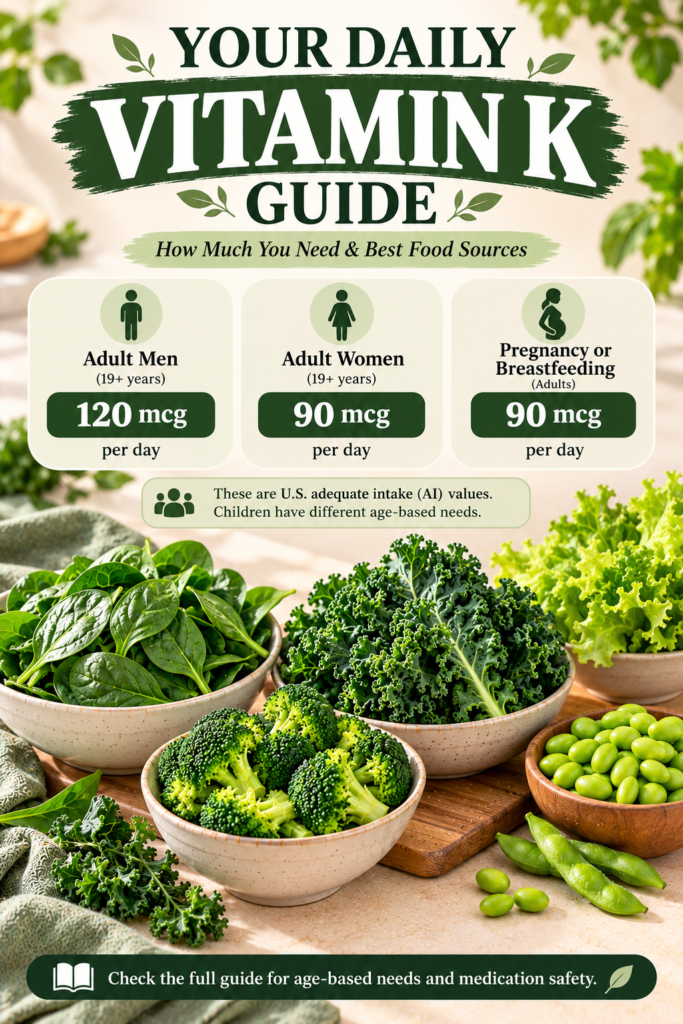
- Adult men need 120 micrograms (mcg) of vitamin K per day.
- Adult women need 90 mcg per day.
- During pregnancy and breastfeeding, the adequate intake for adults is 90 mcg per day.
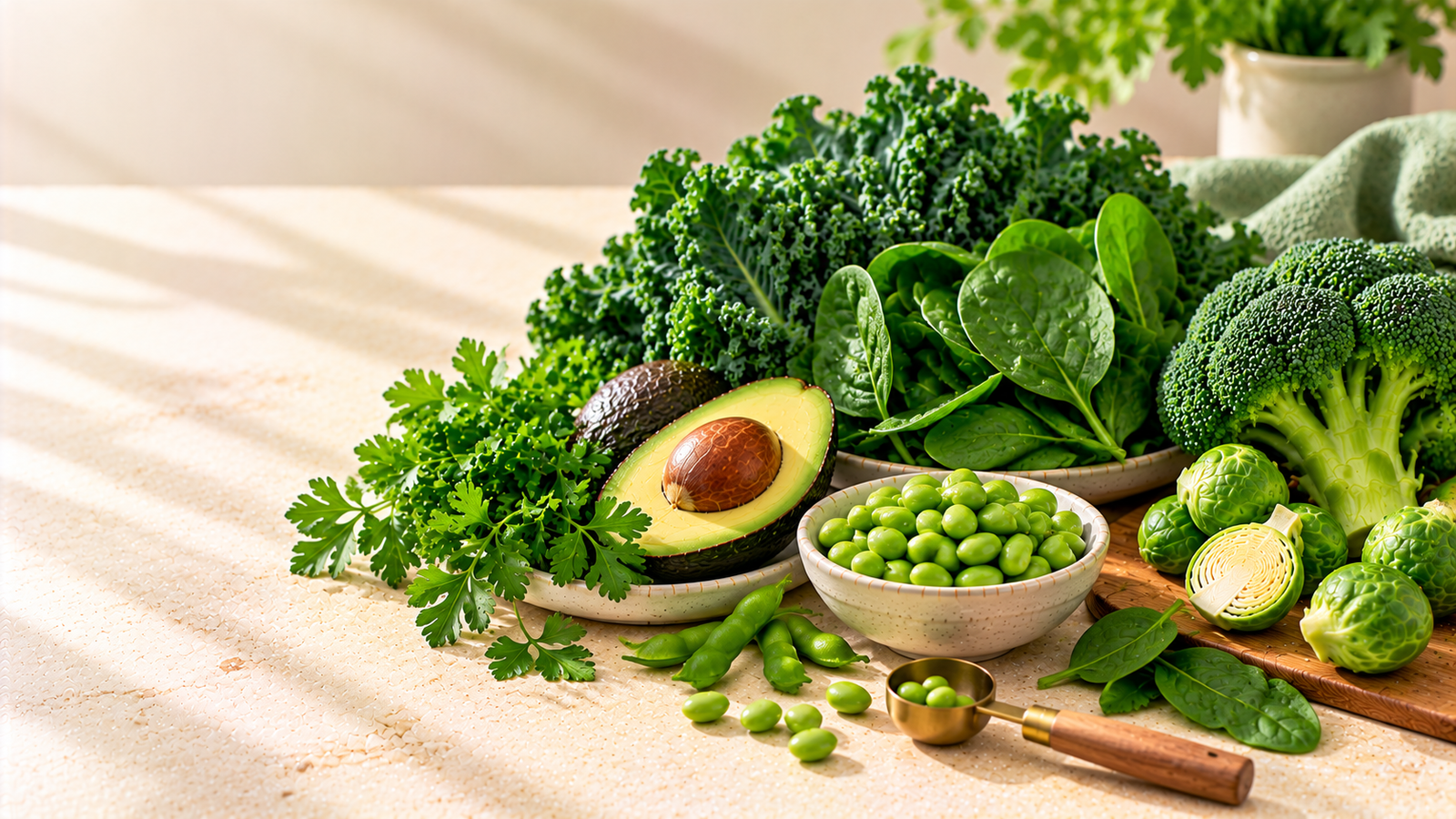
- Vitamin K is found especially in leafy green vegetables, with smaller or varying amounts in other foods.
- These figures are adequate intakes (AIs), not Recommended Dietary Allowances (RDAs).
- If you take warfarin, keep your vitamin K intake consistent and consult your healthcare professional before making major dietary changes.
How Much Vitamin K Do You Need Per Day?
In the United States, the National Institutes of Health (NIH) lists vitamin K intake recommendations as adequate intake (AI) levels. An AI is used when evidence is insufficient to establish a Recommended Dietary Allowance (RDA).
For healthy people, these values provide a practical daily intake target.
| Age or life stage | Recommended daily vitamin K intake |
|---|---|
| Birth–6 months | 2 mcg |
| 7–12 months | 2.5 mcg |
| 1–3 years | 30 mcg |
| 4–8 years | 55 mcg |
| 9–13 years | 60 mcg |
| 14–18 years | 75 mcg |
| Adult men, 19 years and older | 120 mcg |
| Adult women, 19 years and older | 90 mcg |
| Pregnancy, ages 19 and older | 90 mcg |
| Breastfeeding, ages 19 and older | 90 mcg |
Source: NIH Office of Dietary Supplements. These are U.S. adequate intake values; recommendations may vary by country.
Do men and women need different amounts of vitamin K?
Yes. The U.S. adequate intake is 120 mcg per day for adult men and 90 mcg per day for adult women. These are general population guidelines, not personalized prescriptions.
Does vitamin K intake change with age?
Yes. Infants, children, and teenagers have different intake targets as they grow. Adults generally follow the 90 mcg or 120 mcg guideline according to sex. Older adults typically use the same adult values unless their healthcare professional advises otherwise.
How much vitamin K do you need during pregnancy?
The U.S. AI for pregnancy is 90 mcg daily for adults aged 19 and older, and 75 mcg for pregnant teenagers aged 14–18. Breastfeeding intake targets follow the same age-based pattern. If you are pregnant or breastfeeding, discuss supplements with your healthcare professional rather than starting high-dose products on your own.
NIH Office of Dietary Supplements: Vitamin K Fact Sheet
Why Does Your Body Need Vitamin K?
Vitamin K is a fat-soluble vitamin that supports several normal body functions.
1. Normal blood clotting
Your body needs vitamin K to activate proteins involved in blood clotting. These proteins help your body control bleeding after an injury.
2. Bone health
Vitamin K helps activate proteins involved in bone metabolism, including osteocalcin. Getting enough vitamin K is important for normal function, although taking extra vitamin K supplements has not been shown to reliably prevent fractures in everyone.
3. Normal vitamin K-dependent protein function
Vitamin K supports the function of several proteins throughout the body. Researchers continue to study its roles in areas such as cardiovascular health, but evidence does not establish that high-dose supplementation prevents heart disease.
Vitamin K Benefits: What Does Vitamin K Do?
Best Food Sources of Vitamin K
One of the easiest ways to meet your daily vitamin K requirement is to include vegetables, plant oils, and a variety of other nutrient-rich foods in your meals.
Vitamin K occurs in two main forms:
- Vitamin K1 (phylloquinone): Found mainly in green leafy vegetables and certain plant oils.
- Vitamin K2 (menaquinones): Found in some fermented foods and animal-based foods, although the amounts vary.
Both forms contribute to vitamin K activity in the body. Leafy greens are particularly useful dietary sources of vitamin K1. 【turn129634search1】
Vitamin K foods chart
The following chart shows approximate amounts in selected foods. Values can vary by preparation, variety, and serving size.
| Food | Serving size | Approximate vitamin K |
|---|---|---|
| Spinach, raw | 1 cup | 145 mcg |
| Kale, raw | 1 cup | 113 mcg |
| Broccoli, cooked | ½ cup | 110 mcg |
| Soybeans, roasted | ½ cup | 43 mcg |
| Soybean oil | 1 tablespoon | 25 mcg |
| Edamame, cooked | ½ cup | 21 mcg |
| Blueberries | ½ cup | 14 mcg |
| Iceberg lettuce | 1 cup | 14 mcg |
| Carrots, raw | 1 medium | 8 mcg |
| Hard-boiled egg | 1 large | 4 mcg |
Source: NIH Office of Dietary Supplements. Amounts are approximate and refer to the specified serving sizes. 【turn129634search1】
How much vitamin K can you get from leafy greens?
Leafy greens can provide a substantial amount of vitamin K in a single serving. For example, one cup of raw spinach contains approximately 145 mcg, which is more than the daily adequate intake for most adult women and slightly more than the 120 mcg target for adult men.
This does not mean you should avoid vitamin K-rich vegetables. For most healthy people, eating these foods as part of a balanced diet is appropriate. People taking warfarin should focus on keeping their intake consistent rather than suddenly increasing or eliminating these foods.

How to Meet Your Daily Vitamin K Needs
For most healthy adults, meeting daily vitamin K needs can be straightforward. You generally do not need to calculate every microgram if you regularly eat a varied diet.
1. Include leafy vegetables regularly
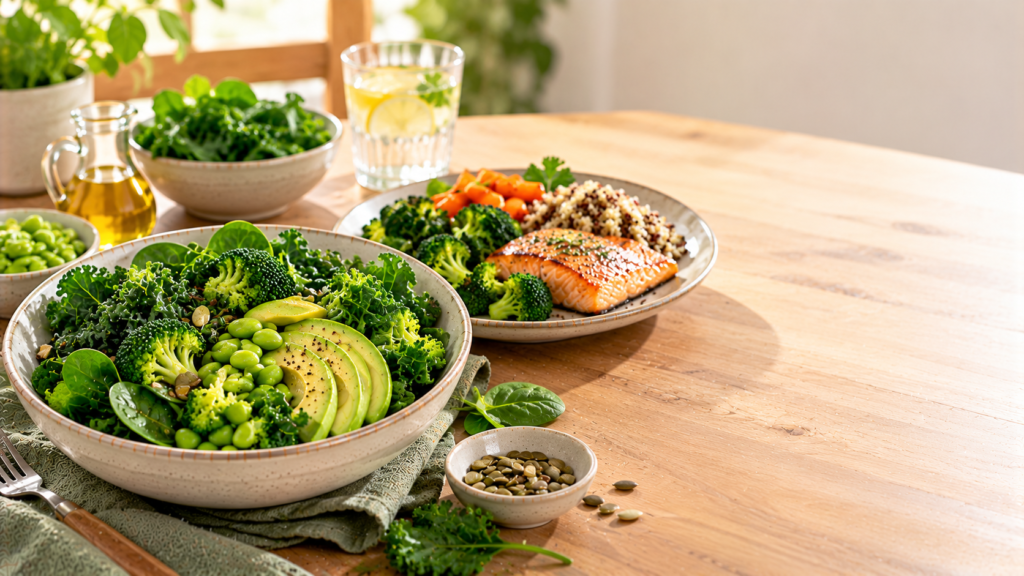
Add spinach, kale, broccoli, lettuce, or other leafy greens to your daily meals. You can use them in salads, soups, curries, omelets, and vegetable side dishes.
2. Eat a varied diet
Although leafy greens are excellent sources, you can also obtain vitamin K from certain plant oils, soy products, eggs, meat, and cheese. Eating a variety of foods helps you obtain other essential nutrients too.
3. Include a little dietary fat with vegetables
Vitamin K is fat-soluble, meaning it dissolves in fat. Eating vegetables with a modest amount of dietary fat, such as olive oil in a salad dressing, can help your body absorb vitamin K from the meal.
4. Do not assume you need a supplement
Most healthy people can obtain sufficient vitamin K through food. A supplement may be appropriate in specific circumstances, but taking more than you need is not automatically better. Speak with a healthcare professional before using high-dose vitamin K products.
Vitamin K1 vs. Vitamin K2: Does the Difference Matter?
Vitamin K1 and vitamin K2 are related forms of the same essential nutrient, but their food sources differ.
| Feature | Vitamin K1 | Vitamin K2 |
|---|---|---|
| Scientific name | Phylloquinone | Menaquinones |
| Common food sources | Spinach, kale, broccoli, plant oils | Some fermented foods, cheese, eggs, meat |
| Main established role | Supports vitamin K-dependent proteins, including those involved in blood clotting | Also supports vitamin K-dependent proteins |
| Practical dietary approach | Eat green vegetables regularly | Include varied foods as appropriate |
Vitamin K1 is the primary dietary form in many diets. Vitamin K2 occurs in several forms, and its amounts vary considerably among foods. Research continues into differences between these forms, but there is no universal recommendation that everyone should take a separate K2 supplement. 【turn129634search1】
Do you need to count vitamin K1 and K2 separately?
For everyday meal planning, most people do not need to track the two forms separately. Focus on a varied diet that supplies vitamin K through ordinary foods. If you have a medical condition that affects nutrient absorption or take medication that interacts with vitamin K, your healthcare professional can advise you on your individual needs.
Can You Get Too Much Vitamin K?
There is no established tolerable upper intake level for vitamin K because available evidence has not identified a clear toxicity threshold from ordinary food or supplement intake in healthy people. However, this does not mean that every supplement dose is appropriate for everyone. 【turn129634search1】
The most important concern is interaction with certain medicines.
Vitamin K and warfarin
Warfarin is an anticoagulant that works by interfering with vitamin K activity. Large, sudden changes in vitamin K intake can alter how warfarin works and may increase the risk of bleeding or blood clots.
If you take warfarin:
- Keep your intake of vitamin K-containing foods reasonably consistent.
- Do not suddenly start eating much larger quantities of leafy greens or stop eating them altogether.
- Tell your healthcare professional about vitamin K supplements and multivitamins.
- Ask your clinician before making major dietary changes.
You generally do not need to avoid vitamin K-rich foods simply because you take warfarin. Consistency and appropriate monitoring are the key priorities. 【turn129634search0】
NIH: Vitamin K and medication interactions
What Happens If You Do Not Get Enough Vitamin K?
Vitamin K deficiency is rare in healthy adults who eat a varied diet. However, inadequate vitamin K status can cause problems because the body needs the nutrient to activate proteins involved in blood clotting.
Possible signs of serious deficiency include:
- Unusual bruising
- Bleeding that is difficult to stop
- Frequent nosebleeds or bleeding gums
- Excessive bleeding after an injury
These symptoms can have many causes and should not be used to diagnose vitamin K deficiency on their own.
Who may be at higher risk?
People with certain conditions may have difficulty absorbing vitamin K, including those with celiac disease, cystic fibrosis, some inflammatory bowel conditions, or short bowel syndrome. Some people who have undergone bariatric surgery may also need nutritional monitoring. Newborns are a special case because they are vulnerable to vitamin K deficiency bleeding, which is why newborn vitamin K prophylaxis is important. 【turn129634search0】【turn129634search1】
Vitamin K Benifits: Symptoms, Causes, and Food Sources
Frequently Asked Questions
1. How much vitamin K do you need per day as an adult?
Adult men need an adequate intake of 120 mcg per day, while adult women need 90 mcg per day under U.S. guidelines. Individual medical circumstances may require additional guidance. 【turn129634search0】
2. Is 100 mcg of vitamin K a day enough?
For many adult women, 100 mcg exceeds the 90 mcg adequate intake. For adult men, it is below the 120 mcg target. These comparisons are general guidelines, not a diagnosis of deficiency.
3. How much vitamin K do you need per day for healthy bones?
There is no separate established daily vitamin K target specifically for bone health. Follow the general age- and sex-based intake guidelines and eat a balanced diet. Vitamin K supports normal bone metabolism, but supplements should not replace appropriate medical care for bone conditions.
4. Can you get enough vitamin K from food alone?
Yes. Most healthy people can meet their vitamin K needs through foods such as spinach, kale, broccoli, and other vegetables. Supplements are not routinely necessary for everyone.
5. Should you take vitamin K supplements every day?
Not necessarily. Whether a supplement is appropriate depends on your diet, health conditions, and medications. Ask a healthcare professional before starting a supplement, especially if you take warfarin.
6. Do older adults need more vitamin K?
The standard U.S. adequate intake remains 120 mcg per day for men and 90 mcg for women aged 19 and older, including older adults. Certain health conditions or medications may affect individual needs.
7. How much vitamin K do children need daily?
Children’s needs depend on age. The U.S. adequate intake is 30 mcg for ages 1–3, 55 mcg for ages 4–8, and 60 mcg for ages 9–13. Teenagers aged 14–18 need 75 mcg per day.
8. Is vitamin K2 better than vitamin K1?
Neither form is universally better for everyone. Vitamin K1 is abundant in leafy vegetables, while vitamin K2 occurs in some fermented and animal-based foods. Evidence does not support a universal need for K2 supplementation.
Conclusion
Knowing how much vitamin K you need per day can help you make practical choices for a balanced diet. Under U.S. guidelines, adult men need 120 mcg daily, while adult women need 90 mcg. Pregnancy and breastfeeding do not increase the adult target under these guidelines.
For most healthy people, regularly eating leafy greens, broccoli, and other varied foods is a practical way to meet vitamin K needs. Supplements are not automatically necessary, and people taking warfarin should maintain a consistent vitamin K intake and seek professional guidance before changing their diet or supplements.
The goal is not to consume as much vitamin K as possible. It is to meet your nutritional needs consistently and safely.
2 thoughts on “How Much Vitamin K Do You Need Per Day?”