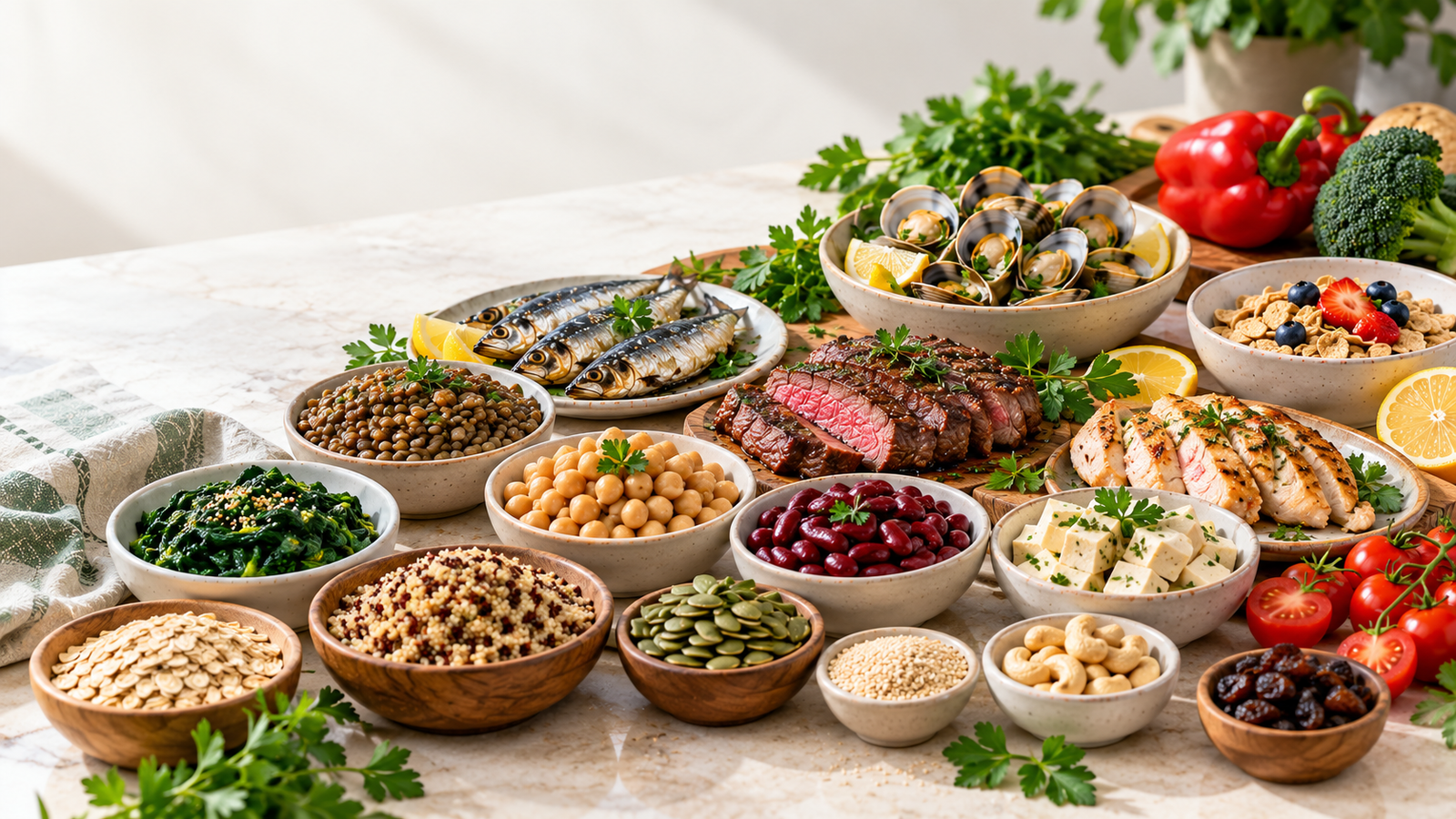
Iron is an essential mineral that helps your body produce hemoglobin, the protein in red blood cells responsible for carrying oxygen. It also supports normal energy metabolism, growth, and other important body functions.
Knowing which iron rich foods to eat can make it easier to build balanced meals and meet your nutritional needs. From meat and seafood to lentils, beans, seeds, and fortified cereals, there are plenty of options for different dietary preferences.
However, the amount of iron in a food is only part of the story. Your body absorbs iron differently depending on its form, the foods you eat alongside it, and your individual nutritional status.
This complete food guide explains the best dietary sources of iron, how much you may need, which foods help your body absorb it, and how to include iron-rich ingredients in everyday meals.
Key Takeaways
- Animal foods: Meat, shellfish, and some seafood provide heme iron, which is generally absorbed more efficiently.
- Plant foods: Lentils, beans, tofu, seeds, and some grains provide non-heme iron.
- Fortified foods: Certain breakfast cereals and other fortified products can supply substantial amounts of iron.
- Improve absorption: Pair plant-based iron foods with vitamin C-rich foods such as bell peppers, tomatoes, broccoli, kiwi, or citrus fruits.
- Daily needs vary: Age, sex, pregnancy, and dietary pattern affect iron requirements.
- Know when to seek help: Persistent fatigue or weakness can have many causes. Testing may be needed to identify iron deficiency.
What Are Iron-Rich Foods?
Iron-rich foods are foods that provide iron in meaningful amounts relative to the portion you eat. They come from animal and plant sources, as well as foods fortified during manufacturing.
Iron is found in two main dietary forms.
Heme Iron
Heme iron occurs in animal foods, including meat, poultry, and seafood. The body generally absorbs it more readily than non-heme iron.
Common sources include:
- Beef and other meats
- Clams and certain other shellfish
- Sardines and other seafood
- Chicken and turkey
Non-Heme Iron
Non-heme iron is found in plant foods, fortified products, and some animal foods. It is particularly important for people following vegetarian or vegan diets.
Sources include:
- Lentils, chickpeas, and beans
- Tofu and soybeans
- Pumpkin and sesame seeds
- Spinach and other vegetables
- Oats, quinoa, and some other grains
- Iron-fortified cereals
Both forms can contribute to your iron intake. A varied diet, appropriate portions, and helpful food combinations can make a difference.
Complete List of Iron-Rich Foods
The following table gives approximate iron values for commonly eaten foods. Actual amounts can vary by product, variety, serving size, and preparation.
| Food | Approximate iron | Typical serving |
|---|---|---|
| Cooked clams | 23 mg or more | 3 oz (85 g) |
| Iron-fortified cereal | 4–18 mg or more | 1 serving, brand-dependent |
| Cooked soybeans | 4.4 mg | ½ cup |
| Cooked white beans | 3–4 mg | ½ cup |
| Cooked lentils | 3.3 mg | ½ cup |
| Cooked spinach | 3.2 mg | ½ cup |
| Pumpkin seeds | 2.5 mg | 1 oz (28 g) |
| Cooked chickpeas | 2.4 mg | ½ cup |
| Cooked beef | 2–3 mg | 3 oz (85 g) |
| Sesame seeds | 2.1 mg | 1 oz (28 g) |
| Cooked kidney beans | About 2 mg | ½ cup |
| Cashews | About 1.9 mg | 1 oz (28 g) |
| Baked potato with skin | About 1.9 mg | 1 medium |
| Cooked oatmeal | About 1.5 mg | 1 cup |
| Cooked quinoa | About 1.4 mg | ½ cup |
| Raisins | About 1 mg | ¼ cup |
| Cooked chicken | About 1 mg | 3 oz (85 g) |
| Cooked broccoli | About 0.7 mg | ½ cup |
Values are approximate and intended for general guidance. Iron-fortified cereals vary substantially, while shellfish values depend on species and preparation. Consult product labels or a food-composition database for more precise estimates.
Best Animal-Based Sources of Iron
Animal foods can be useful sources of dietary iron, particularly because they contain heme iron. The amount varies by food, and you can choose options that fit your budget, culture, and preferences.
1. Clams and Other Shellfish
Clams can provide exceptionally high amounts of iron per serving. They also supply vitamin B12 and protein.
Ways to eat them: Add properly cooked clams to soups, pasta, or seafood dishes. If shellfish is not part of your diet, beans, lentils, tofu, and fortified cereals offer alternatives.
2. Beef
Beef provides heme iron, protein, zinc, and vitamin B12. Lean cuts can fit into a balanced eating pattern.
Ways to eat it: Serve lean beef with potatoes and vegetables, add it to a stir-fry, or use it in a homemade meat-and-bean dish.
3. Sardines
Sardines provide iron, protein, vitamin B12, and omega-3 fatty acids. Canned sardines can be convenient for quick meals.
Ways to eat them: Serve sardines on whole-grain toast, add them to salads, or combine them with tomatoes and lemon.
4. Chicken and Turkey
Poultry provides some iron alongside protein and other nutrients. Its iron content is generally lower than that of many concentrated shellfish or red-meat sources.
Ways to eat them: Combine cooked poultry with beans, leafy vegetables, or whole grains for a balanced meal.
5. Eggs
Eggs contain some iron, but they are not among the most concentrated sources. They can still contribute to a varied diet.
Ways to eat them: Serve eggs with whole-grain toast, tomatoes, or vegetables, and include other iron sources throughout the day.
Best Plant-Based Foods High in Iron
Plant-based iron foods can make a substantial contribution to your daily intake. They are especially important for vegetarians and vegans, who rely on non-heme iron.
6. Lentils
Lentils are affordable, versatile, and rich in fiber and plant protein. They work well in soups, curries, salads, and grain bowls.
7. Beans
White beans, kidney beans, and other varieties provide iron, fiber, and plant protein.
Meal idea: Make a bean curry with tomatoes, or add white beans to vegetable soup.
8. Chickpeas
Chickpeas provide iron and fiber and can be used in a wide range of dishes.
Meal idea: Prepare hummus, roast chickpeas for a snack, or toss them into a salad with red bell pepper and lemon dressing.
9. Tofu and Soybeans
Tofu and soybeans provide plant-based protein and iron. Their iron content varies by product and preparation.
Meal idea: Stir-fry tofu with broccoli and red bell pepper, or serve soybeans with quinoa and vegetables.
10. Pumpkin Seeds
Pumpkin seeds provide iron, magnesium, protein, and unsaturated fats.
Meal idea: Sprinkle them over oatmeal, salads, or roasted vegetables.
11. Sesame Seeds and Tahini
Sesame seeds contribute iron and healthy fats. Tahini, made from ground sesame seeds, is another easy option.
Meal idea: Add sesame seeds to a grain bowl or use tahini in a chickpea dip.
12. Cashews
Cashews provide a modest amount of iron along with magnesium and unsaturated fats.
Meal idea: Enjoy a small handful as a snack or add chopped cashews to oatmeal and stir-fries.
13. Spinach
Cooked spinach provides iron and folate. However, it contains compounds that can reduce absorption of some of its iron, so it should not be your only iron source.
Meal idea: Add cooked spinach to lentils or tofu, and serve with tomatoes or bell peppers.
14. Oats and Quinoa
Oats and quinoa provide non-heme iron and can be useful staples in a balanced diet. Some packaged products may also be fortified.
Meal idea: Prepare oatmeal with seeds and fruit, or serve quinoa with beans and vegetables.
15. Raisins
Raisins provide a modest amount of iron and are easy to add to meals. Because they are dried fruit, keep portions appropriate for your overall diet.
Meal idea: Mix raisins with nuts and seeds, or add them to oatmeal.
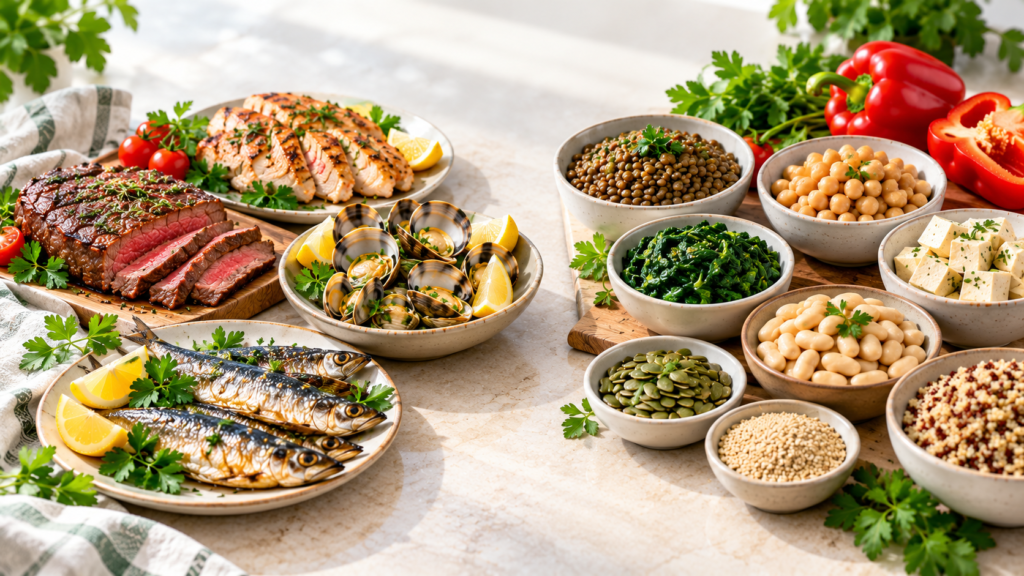
Animal-based and plant-based foods that provide dietary iron, including beef, clams, lentils, beans, tofu, and seeds.
Iron-Fortified Foods: An Important Source to Know
Some foods have iron added during manufacturing. Fortified foods can help people meet their requirements, especially when dietary intake is limited.
Common examples include:
- Iron-fortified breakfast cereals
- Some fortified breads and flour products
- Certain fortified meal replacement products
- Other packaged foods with added iron
How to Choose Fortified Foods
Check the nutrition label for the amount of iron per serving. Products in the same category can differ considerably, and serving sizes matter.
A cereal that provides a substantial amount of iron can be useful, but it is still best to build your diet around a variety of foods rather than relying on one product.
Practical tip: Pair iron-fortified cereal with strawberries, kiwi, or another vitamin C-rich fruit. This can support absorption of non-heme iron.
20 Iron Rich Foods to Add to Your Diet
How to Improve Iron Absorption Naturally
Eating iron-containing foods is important, but your body does not absorb all dietary iron equally. These practical habits can help you make the most of your meals.
Pair Plant-Based Iron With Vitamin C
Vitamin C helps improve the absorption of non-heme iron.
Try these combinations:
- Lentils with tomatoes and lemon
- Chickpeas with red bell peppers
- Tofu with broccoli
- Beans with fresh tomato salsa
- Iron-fortified cereal with strawberries or kiwi
- Spinach with bell peppers
Avoid Drinking Tea or Coffee With Every Iron-Rich Meal
Tea and coffee contain compounds that can reduce non-heme iron absorption when consumed with meals. If you are trying to improve your iron status, consider drinking them between meals instead.
Eat a Variety of Iron Sources
Combine legumes, seeds, whole grains, vegetables, and fortified foods. If you eat animal products, meat and seafood can contribute heme iron as well.
Follow a Food-First Approach, but Know Its Limits
A varied diet helps support normal iron intake. However, food changes alone may not correct a diagnosed deficiency, particularly when blood loss, impaired absorption, or increased needs are involved.
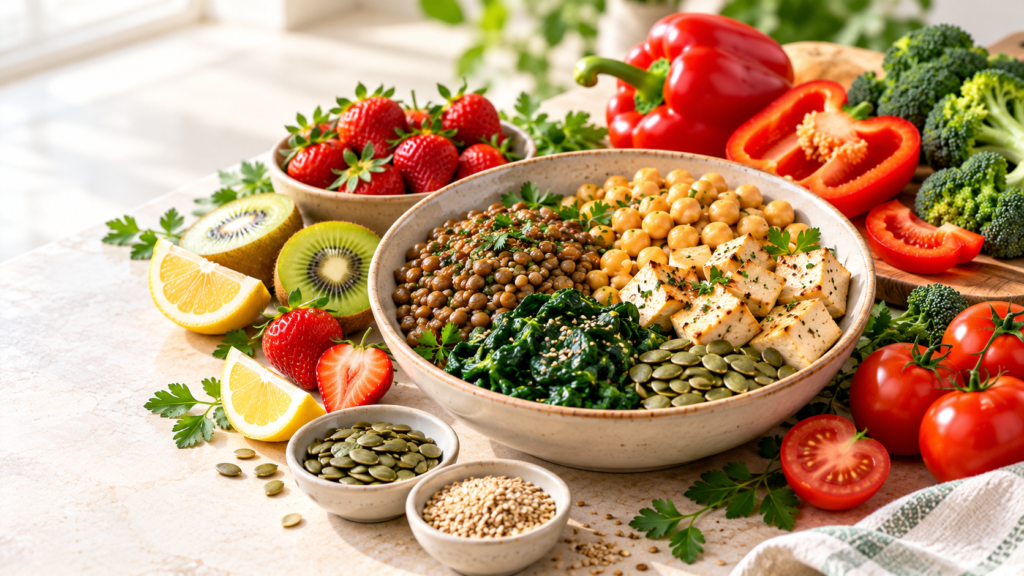
Iron-containing plant foods paired with vitamin C-rich produce such as red peppers, broccoli, kiwi, and strawberries.
How Much Iron Do You Need Every Day?
Iron requirements vary by age, sex, and life stage. The following figures are US Recommended Dietary Allowances (RDAs) for common age groups.
| Group | Recommended iron per day |
|---|---|
| Children ages 1–3 | 7 mg |
| Children ages 4–8 | 10 mg |
| Children ages 9–13 | 8 mg |
| Teen boys ages 14–18 | 11 mg |
| Teen girls ages 14–18 | 15 mg |
| Adult men ages 19–50 | 8 mg |
| Adult women ages 19–50 | 18 mg |
| Adults age 51 and older | 8 mg |
| Pregnant adults | 27 mg |
| Breastfeeding adults | 9 mg |
These are general reference values, not personalized medical advice. People following vegetarian diets may need to pay particular attention to iron intake because non-heme iron is less readily absorbed on average. Pregnancy, blood loss, medical conditions, and other factors may also affect individual needs.
For detailed recommendations and safety information, consult the NIH Office of Dietary Supplements iron fact sheet.
Signs You May Not Be Getting Enough Iron
Low iron intake can contribute to iron deficiency, but inadequate intake is not the only possible cause. Blood loss, pregnancy, certain digestive conditions, and impaired absorption can also play a role.
Possible symptoms include:
- Persistent fatigue or weakness
- Pale skin
- Shortness of breath during ordinary activity
- Headaches or dizziness
- Difficulty concentrating
- Reduced exercise tolerance
These symptoms can have many causes and cannot confirm iron deficiency by themselves. A healthcare professional may recommend blood tests, including a complete blood count and ferritin testing, to assess your iron status.
Important: Do not take high-dose iron supplements just because you feel tired. Too much iron can be harmful, and treatment should depend on your individual needs and the cause of any deficiency.
[External Link: Insert high-authority external URL here with anchor text “NIH Iron Fact Sheet: Food Sources, Deficiency, and Safety” — https://ods.od.nih.gov/factsheets/Iron-Consumer/]
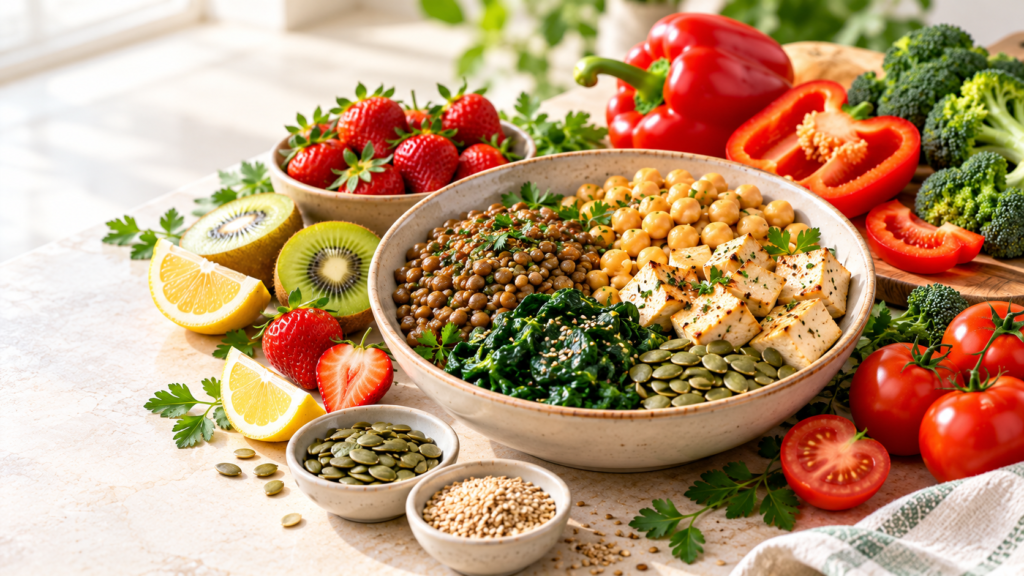
Balanced iron-rich meal with lentils, quinoa, pumpkin seeds, spinach, broccoli, bell pepper, and lean beef.
Easy Iron-Rich Meal Plan for One Day
Here is an example of how to incorporate different iron sources into a day of eating. Portions should be adjusted to suit individual energy and nutritional needs.
| Meal | Example | Iron-supporting feature |
|---|---|---|
| Breakfast | Iron-fortified cereal with strawberries | Fortified iron plus vitamin C |
| Morning snack | Pumpkin seeds and fruit | Seeds provide non-heme iron |
| Lunch | Lentil and tomato soup with bell pepper salad | Lentils plus vitamin C-rich vegetables |
| Afternoon snack | Hummus with red pepper strips | Chickpeas paired with vitamin C |
| Dinner | Tofu or lean beef with quinoa and broccoli | Iron source plus a varied meal |
This is an example, not a prescribed meal plan. Iron content depends on product labels, portions, and preparation.
Common Questions About Iron-Rich Foods
What foods are highest in iron?
Clams and certain iron-fortified cereals can provide substantial amounts of iron per serving. Lentils, soybeans, white beans, spinach, beef, and pumpkin seeds are other useful options.
What are the best iron-rich foods for vegetarians?
Lentils, chickpeas, beans, tofu, soybeans, seeds, oats, quinoa, and iron-fortified cereals are practical choices. Pair plant sources with vitamin C-rich foods to improve non-heme iron absorption.
Which fruits contain iron?
Most fresh fruits are not concentrated sources of iron. Raisins and other dried fruits contribute modest amounts, while fruits such as kiwi, oranges, and strawberries are useful sources of vitamin C.
Does spinach provide enough iron?
Spinach contributes iron, but absorption is limited by compounds naturally present in the plant. It is best used alongside other iron sources rather than as your only strategy.
Can I get enough iron without eating meat?
Many people can meet their iron needs through a well-planned diet containing legumes, tofu, seeds, grains, vegetables, and fortified foods. Individual needs and absorption vary, so some people may need professional dietary guidance.
Does vitamin C help the body absorb iron?
Yes. Vitamin C improves absorption of non-heme iron. Pair foods such as lentils, beans, and tofu with red peppers, tomatoes, broccoli, kiwi, or citrus fruit.
Should I take iron supplements if I feel tired?
Not without considering the cause. Fatigue has many possible explanations, and excessive iron can be harmful. A healthcare professional can assess whether testing or supplementation is appropriate.
Conclusion: Build a Balanced Diet With Iron-Rich Foods
A complete guide to iron rich foods starts with variety. Meat and seafood can supply readily absorbed heme iron, while lentils, beans, tofu, seeds, whole grains, vegetables, and fortified products offer valuable non-heme iron.
To make your meals more effective, combine plant-based iron sources with vitamin C-rich foods, check labels on fortified products, and include several iron-containing foods throughout the week.
Remember that iron requirements differ between individuals, and a healthy diet may not be enough to correct every case of iron deficiency. If you have persistent symptoms or concerns about your iron status, seek appropriate medical advice.
Start with one practical change today: add lentils to lunch, pumpkin seeds to breakfast, or bell peppers to a bean-based meal. Small, consistent choices can help you build a more varied and nutritious eating pattern.
Related reading: [Internal Link: Insert relevant internal URL here with anchor text “Foods High in Vitamin C: 20 Natural Sources”]
Trusted resource: NIH Office of Dietary Supplements — Iron Fact Sheet
2 thoughts on “Iron Rich Foods: Complete Food Guide”