

A vitamin B12 foods chart makes it easier to understand which foods provide this essential nutrient and how much they contribute to your daily needs. Vitamin B12, also called cobalamin, supports healthy red blood cell formation, normal nerve function, and DNA production.
The vitamin occurs naturally in many animal-derived foods, including fish, shellfish, meat, eggs, and dairy products. Some breakfast cereals, plant-based milks, nutritional yeast products, and other foods also provide vitamin B12 because manufacturers add it during production.
However, not every food in these categories contains the same amount. Serving size, preparation method, brand, and fortification all affect the total.
This guide includes an easy-to-use vitamin B12 food chart, practical meal ideas, daily intake recommendations, and helpful information for people following vegetarian or vegan diets. It also explains why certain popular plant foods should not be relied upon as natural sources of vitamin B12.
Key Takeaways
- Fish, shellfish, meat, and certain organ meats are among the richest natural sources of vitamin B12.
- Eggs, milk, yogurt, and cheese provide smaller amounts and can contribute to daily intake.
- Fortified cereals, plant-based drinks, and nutritional yeast can help people who eat little or no animal-derived food.
- Most adults need 2.4 micrograms (mcg) of vitamin B12 daily under US dietary recommendations.
- Ordinary unfortified plant foods are not reliable sources of vitamin B12.
- The amount shown on a food label is more useful than assuming every product in a category contains the same amount.
- People with a restricted diet or problems absorbing B12 may need a supplement or medical treatment.
Vitamin B12 Foods Chart: Food Sources and Amounts
The following chart provides approximate vitamin B12 amounts in common foods. Values can vary by food variety, brand, preparation, and serving size, so use them as a general guide rather than exact measurements for every product.
| Food | Typical serving | Approximate vitamin B12 |
|---|---|---|
| Beef liver, cooked | 3 ounces | 70.7 mcg |
| Clams, cooked | 3 ounces | 17.0 mcg |
| Oysters, cooked | 3 ounces | 14.9 mcg |
| Salmon, cooked | 3 ounces | 2.6 mcg |
| Canned light tuna | 3 ounces | 2.5 mcg |
| Ground beef, cooked | 3 ounces | 2.4 mcg |
| Cow’s milk | 1 cup | 1.3 mcg |
| Plain yogurt | 6 ounces | 1.0 mcg |
| Large egg, cooked | 1 egg | 0.5 mcg |
| Cheddar cheese | 1.5 ounces | 0.5 mcg |
| Fortified breakfast cereal | 1 serving | Varies by brand |
| Fortified plant-based milk | 1 cup | Varies by brand |
| Fortified nutritional yeast | Labeled serving | Varies by brand |
Food values are approximate and based on reference information from the NIH Office of Dietary Supplements. Fortified food amounts vary substantially, so check the product label.
Important: Beef liver, shellfish, fish, and meat are not suitable for everyone. Vegetarians can use eggs and dairy if their diet permits them, while vegans need dependable vitamin B12 sources from fortified foods or supplements.
NIH Office of Dietary Supplements — Vitamin B12 Consumer Fact Sheet.

Vitamin B12 foods chart featuring seafood, meat, eggs, milk, yogurt, and cheese.
Best Natural Sources of Vitamin B12
Vitamin B12 occurs naturally in a range of animal-derived foods. Including suitable sources in your meals can help you meet your daily requirement.
1. Beef Liver
Beef liver is exceptionally rich in vitamin B12. A 3-ounce serving of cooked beef liver can provide substantially more than the daily requirement for most adults.
However, liver is not suitable for everyone, and its high vitamin A content means it should not be eaten frequently in large amounts. People who are pregnant or may become pregnant should seek specific advice about liver because of its high preformed vitamin A content.
2. Clams and Oysters
Clams and oysters are among the richest seafood sources of vitamin B12. A 3-ounce serving of cooked clams can supply many times the daily requirement.
They can be included in soups, seafood dishes, or other meals if you eat shellfish. Cooking and portion sizes affect the final nutrient content.
3. Salmon
Salmon provides vitamin B12 as well as protein and omega-3 fatty acids. A typical 3-ounce serving of cooked salmon provides around 2.6 mcg.
You can prepare salmon by baking, grilling, or roasting it and serve it with vegetables and whole grains for a balanced meal.
4. Tuna
Tuna contains vitamin B12, although the amount varies with species and whether it is fresh or canned.
Canned light tuna can be a convenient pantry option. Pay attention to portion size and local guidance on fish consumption, particularly for children and during pregnancy, because mercury levels vary between species.
5. Beef
Beef provides vitamin B12 along with protein, zinc, and iron. A 3-ounce serving of cooked ground beef contains approximately 2.4 mcg in commonly cited reference data.
If you eat beef, choose portions that fit your overall dietary needs and balance meals with vegetables, whole grains, and other nutritious foods.
6. Milk
Milk is a practical source of vitamin B12 for people who consume dairy. One cup of cow’s milk provides approximately 1.3 mcg.
You can add milk to oatmeal, drink it with breakfast, or use it in soups and other recipes.
7. Yogurt
Plain yogurt provides vitamin B12 and can also supply protein and calcium. A 6-ounce serving contains approximately 1.0 mcg in commonly cited food reference data, although products vary.
Enjoy yogurt with fruit, add it to smoothies, or serve it as part of a balanced meal.
8. Eggs
Eggs provide vitamin B12 in a convenient and versatile form. One large egg contains approximately 0.5 mcg.
Try boiled eggs, vegetable omelets, or scrambled eggs. Remember that eggs alone usually will not provide the entire daily requirement.
9. Cheese
Cheese contains vitamin B12, although amounts differ by variety. Cheddar provides approximately 0.5 mcg per 1.5-ounce serving in commonly cited reference data.
Cheese can be added to sandwiches, salads, and cooked vegetables. Consider its sodium and saturated fat content when planning your overall diet.
Which Vitamin B12 Foods Are Best for Vegetarians?
Vegetarians who consume eggs and dairy have several natural food sources available. Their choices depend on whether they eat eggs, dairy, or both.
Vegetarian-friendly B12 sources
- Milk
- Plain yogurt
- Cheese
- Eggs
- Fortified breakfast cereal
- Fortified plant-based milk
- Fortified nutritional yeast
The vitamin B12 content of eggs and dairy is generally lower than that of some seafood and organ meats. Combining several suitable sources throughout the day can help increase intake.
A practical vegetarian meal example
- Breakfast: Fortified cereal with milk or fortified plant milk.
- Lunch: A vegetable sandwich with cheese and yogurt on the side.
- Snack: Plain yogurt with fruit.
- Dinner: A balanced vegetarian meal, with an appropriate B12 source included elsewhere in the day’s meals.
The exact vitamin B12 total depends on the products and portions you choose. Check labels on fortified foods to estimate your intake accurately.
Vitamin B12 Rich Foods for Vegetarians
Vitamin B12 Foods for Vegans: Fortified Options
People following a vegan diet avoid meat, fish, eggs, and dairy. Because ordinary unfortified plant foods do not provide dependable vitamin B12, vegans need a reliable source from fortified foods or supplements.
Fortified breakfast cereal
Some breakfast cereals contain added vitamin B12. Check the nutrition label because the amount varies by product, and some cereals are not fortified.
Fortified plant-based milk
Soy, oat, almond, and other plant-based drinks may contain added vitamin B12. Check the label rather than assuming all plant milks provide it.
Fortified nutritional yeast
Nutritional yeast can add a savory flavor to pasta, vegetables, sauces, and soups. Only count it as a B12 source if the product is fortified and the label lists the amount.
Fortified vegan yogurt and other foods
Some plant-based yogurts, meat alternatives, and nutrition drinks contain added B12. Their vitamin content varies, so review the nutrition information.
What about mushrooms, seaweed, and spirulina?
Ordinary mushrooms, legumes, vegetables, seaweed, and spirulina should not be relied upon as dependable sources of active vitamin B12. Some algae or fermented foods may contain B12-like compounds, but their content and availability can be inconsistent.
NIH Vitamin B12 Consumer Fact Sheet.
Vitamin B12 Rich Foods for Vegans: Fortified Food Sources
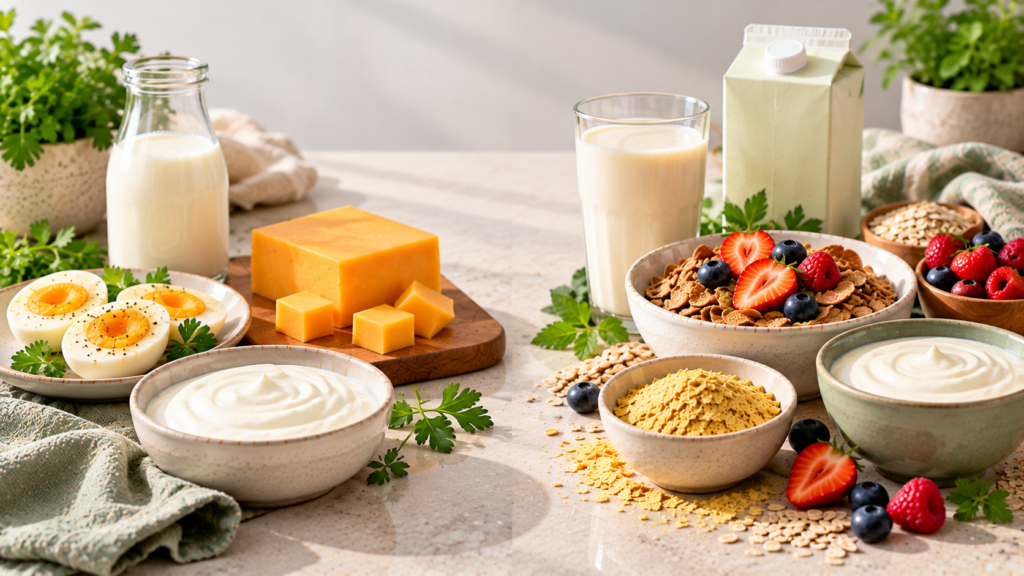
Vegetarian and vegan vitamin B12 food options, including eggs and dairy alongside fortified plant-based products.
How Much Vitamin B12 Do You Need Per Day?
The recommended daily intake depends on age and life stage. According to US dietary recommendations, the following amounts apply:
| Life stage | Recommended daily intake |
|---|---|
| Children aged 1–3 | 0.9 mcg |
| Children aged 4–8 | 1.2 mcg |
| Children aged 9–13 | 1.8 mcg |
| Teenagers aged 14–18 | 2.4 mcg |
| Adults aged 19 and older | 2.4 mcg |
| Pregnant adults | 2.6 mcg |
| Breastfeeding adults | 2.8 mcg |
NIH Vitamin B12 Consumer Fact Sheet.
These are US recommendations; other countries may use different reference values.
Can you get enough vitamin B12 from food alone?
Many people can meet their requirements through a suitable diet that regularly includes adequate B12 sources. However, individual needs and absorption differ.
People who eat animal-derived foods may obtain B12 from fish, meat, eggs, and dairy. Vegetarians may rely on eggs, dairy, and fortified foods, while vegans need dependable fortified products or supplements.
A food chart can help estimate intake, but it cannot diagnose a deficiency or determine whether your body absorbs the vitamin effectively.
How to Use a Vitamin B12 Foods Chart to Plan Meals
A chart is most helpful when you turn it into a realistic daily eating plan.
Step 1: Identify the foods you regularly eat
Start by listing your usual sources, such as milk, yogurt, eggs, fish, meat, or fortified plant milk. Focus on foods that fit your dietary preferences and budget.
Step 2: Check serving sizes
A chart might show nutrient content for 3 ounces of fish or one cup of milk. If your portion is smaller or larger, the amount of vitamin B12 will change.
Step 3: Check fortified food labels
For cereals, plant-based drinks, nutritional yeast, and other fortified foods, use the product’s actual label. Do not rely on a generic estimate for all brands.
Step 4: Spread suitable sources across your meals
You can include B12 sources at breakfast, lunch, or dinner. A consistent routine can make it easier to monitor your intake.
Step 5: Consider your dietary pattern
If you avoid all animal-derived foods or eat very little of them, make a specific plan for fortified foods or supplements. If you have a diagnosed deficiency, seek medical advice about treatment rather than relying on food changes alone.

Meal planning with vitamin B12 foods, including eggs, dairy, salmon, and fortified cereal.
Can Vitamin B12 Supplements Help?
Vitamin B12 supplements can be useful when a person cannot obtain enough from food or has a condition that affects absorption.
When a supplement may be needed
- You follow a vegan diet and cannot reliably obtain enough B12 from fortified foods.
- You eat very few B12-containing foods.
- A healthcare professional has diagnosed a deficiency.
- You have a condition or take medication that may affect B12 absorption.
- Your clinician recommends supplementation based on your individual needs.
Choosing and using supplements
Vitamin B12 supplements are available in different forms and strengths. Follow the product instructions and ask a healthcare professional or pharmacist if you are unsure which option is appropriate.
If you have a diagnosed deficiency, the dose and treatment schedule may differ from those used to maintain adequate intake. Do not rely on a general food chart to treat a deficiency, and do not stop prescribed medication without medical advice.
NIH Vitamin B12 Health Professional Fact Sheet
Signs of Vitamin B12 Deficiency to Recognize
Vitamin B12 deficiency may develop when intake is inadequate or the body cannot absorb the vitamin properly.
Possible symptoms include:
- Persistent tiredness or weakness
- Pale skin
- Numbness or tingling in the hands or feet
- Balance difficulties
- A sore or smooth tongue
- Changes in concentration or memory
- Shortness of breath associated with anemia
These symptoms can have many causes and do not confirm a B12 deficiency. A healthcare professional may recommend blood tests and additional assessment based on your symptoms and medical history.
Seek medical advice if symptoms persist, especially if you experience tingling, numbness, or changes in balance. Untreated deficiency can cause neurological complications, and some damage may not fully resolve.
NHS guide to vitamin B12 and folate deficiency anemia
Replace these placeholders with the actual published URLs before publishing.
Frequently Asked Questions
1. What foods are highest in vitamin B12?
Beef liver, clams, and oysters are among the richest natural sources. Salmon, tuna, beef, milk, yogurt, eggs, and cheese also provide vitamin B12 in varying amounts.
2. Is there a vitamin B12 foods chart for vegetarians?
Yes. Vegetarian-friendly sources include milk, yogurt, cheese, eggs, and verified fortified products such as certain breakfast cereals and plant-based drinks. The best options depend on whether you consume eggs and dairy.
3. Which foods contain vitamin B12 for vegans?
Vegans can obtain vitamin B12 from fortified breakfast cereals, fortified plant-based milks, fortified nutritional yeast, and other products that list B12 on the label. A suitable supplement may also be necessary.
4. How much vitamin B12 does one egg contain?
One large egg provides approximately 0.5 mcg of vitamin B12. The exact amount can vary, and an egg alone does not meet the daily requirement for most adults.
5. Does milk contain more vitamin B12 than eggs?
One cup of cow’s milk provides approximately 1.3 mcg, while one large egg contains around 0.5 mcg. These are approximate values, and actual amounts can vary.
6. Can fruits and vegetables provide vitamin B12?
Ordinary unfortified fruits and vegetables are not reliable sources of vitamin B12. People who avoid animal foods should choose verified fortified products or an appropriate supplement.
7. How can I tell whether a food is fortified with vitamin B12?
Read the nutrition label and look for vitamin B12 in the nutrient list. Check the amount per serving and confirm that the product is suitable for your dietary requirements.
8. Is 2.4 mcg of vitamin B12 enough per day?
The US recommended daily intake for most adults is 2.4 mcg. Individual circumstances, pregnancy, breastfeeding, absorption problems, and national guidance may affect what is appropriate.
9. Can a vitamin B12 foods chart prevent deficiency?
A chart can help you identify sources and estimate dietary intake, but it cannot guarantee that you absorb enough vitamin B12. People with absorption problems or diagnosed deficiency may need medical evaluation and treatment.
Conclusion
This vitamin B12 foods chart provides a simple way to compare common food sources, understand approximate amounts per serving, and plan meals around your nutritional needs.
Fish, shellfish, meat, dairy products, and eggs can provide naturally occurring vitamin B12. For vegetarians and vegans, fortified foods can be particularly important, and people who cannot consistently obtain enough B12 from their diet may need a suitable supplement.
Use serving sizes and product labels to estimate your intake instead of relying on assumptions. If you follow a restricted diet, have concerns about absorption, or experience symptoms that may indicate deficiency, seek advice from a qualified healthcare professional.
With reliable food choices and a consistent plan, you can make vitamin B12 an informed part of a balanced diet.