Vitamin B12 is an essential nutrient that helps your body produce healthy red blood cells, maintain normal nerve function, and make DNA. Getting enough vitamin B12 is important at every stage of life, but choosing suitable food sources can be confusing if you follow a vegetarian or vegan diet or eat only small amounts of animal products.
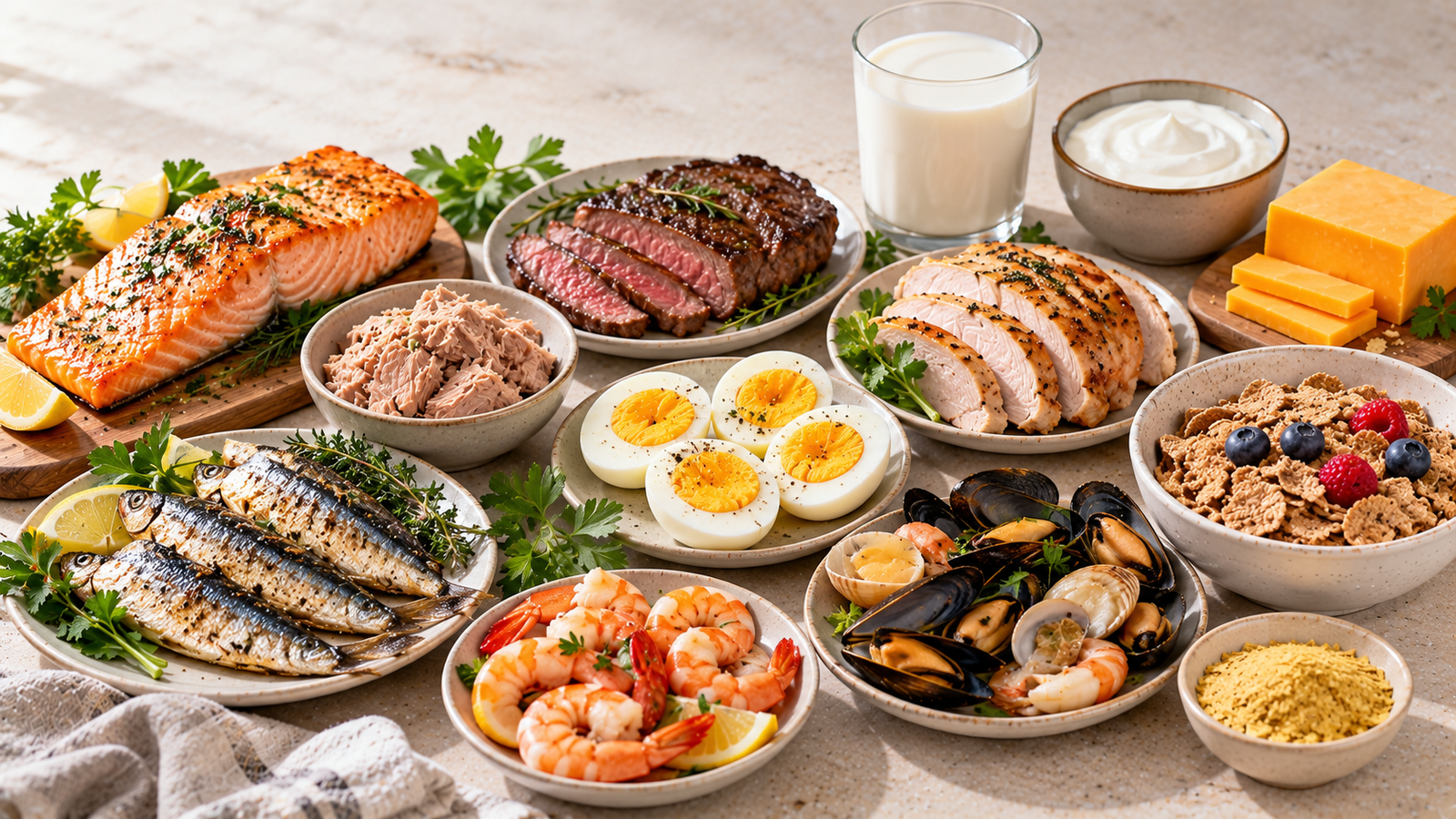
The good news is that many everyday foods contain vitamin B12. Fish, shellfish, meat, eggs, milk, and dairy products are natural sources, while certain breakfast cereals, plant-based drinks, and nutritional yeast products are fortified with added vitamin B12.
This guide to vitamin B12 rich foods highlights 20 options, explains their approximate vitamin B12 content, and shows you how to include them in practical meals. It also covers daily requirements, fortified foods, and situations in which food alone may not provide enough.
Key Takeaways
- Shellfish and beef liver are among the richest food sources of vitamin B12.
- Fish, meat, eggs, milk, yogurt, and cheese can contribute to daily intake.
- Most adults need 2.4 micrograms (mcg) of vitamin B12 per day.
- Unfortified plant foods are not reliable sources of vitamin B12.
- Vegans can obtain vitamin B12 from appropriately fortified foods and, when needed, supplements.
- Older adults and people with certain digestive conditions may have difficulty absorbing vitamin B12.
- Persistent fatigue, numbness, balance problems, or other possible deficiency symptoms deserve medical assessment rather than self-treatment.
What Are the Best Vitamin B12 Rich Foods?
Vitamin B12 is found naturally in foods of animal origin, including fish, shellfish, meat, poultry, eggs, and dairy products. Some foods made for plant-based diets are fortified with the vitamin.
The best source for you depends on your dietary preferences, availability, budget, serving size, and ability to absorb vitamin B12.
Vitamin B12 Foods Chart
The table below provides approximate amounts per typical serving, using the NIH Office of Dietary Supplements food-source data where available. Fortified products vary considerably, so check their labels. <Cite refs={[“turn123931search0″,”turn123931search1”]} />
| Food | Typical serving | Approx. vitamin B12 |
|---|---|---|
| Beef liver, cooked | 3 oz (85 g) | 70.7 mcg |
| Clams, cooked | 3 oz (85 g) | 17 mcg |
| Oysters, cooked | 3 oz (85 g) | 14.9 mcg |
| Fortified nutritional yeast | ¼ cup | 8.3–24 mcg, depending on brand |
| Salmon, cooked | 3 oz (85 g) | 2.6 mcg |
| Light tuna, canned in water | 3 oz (85 g) | 2.5 mcg |
| Ground beef, cooked | 3 oz (85 g) | 2.4 mcg |
| Milk | 1 cup | 1.3 mcg |
| Plain yogurt | 6 oz (170 g) | 1.0 mcg |
| Fortified breakfast cereal | 1 serving | 0.6 mcg in the cited example |
| Cheddar cheese | 1½ oz (42 g) | 0.5 mcg |
| Egg, cooked | 1 large | 0.5 mcg |
| Roasted turkey breast | 3 oz (85 g) | 0.3 mcg |
Values are approximate. Food varieties, processing, preparation, and serving sizes affect nutrient content. The fortified nutritional yeast and cereal values are examples from the NIH reference, not universal values for every product.
The next sections cover these and other useful options, including sardines, trout, chicken, fortified plant-based milk, and fortified meat alternatives.
20 Vitamin B12 Rich Foods to Add to Your Diet
1. Beef Liver
Beef liver is one of the most concentrated sources of vitamin B12. A 3-ounce cooked serving provides approximately 70.7 mcg, far above the daily requirement for most adults.
Liver also supplies protein, iron, and vitamin A. However, it contains very high amounts of preformed vitamin A, so it should not be eaten frequently or in large quantities without considering your overall diet.
How to eat it: Serve a modest portion with vegetables and a whole-grain side, or use a traditional liver recipe if it suits your preferences.
Important: People who are pregnant or planning pregnancy should follow their healthcare professional’s advice about liver because its high vitamin A content can be harmful during pregnancy.
2. Clams
Clams are another exceptionally rich source of vitamin B12. Three ounces of cooked clams provide approximately 17 mcg.
They also provide protein and other minerals. As with other shellfish, buy them from reliable sources and cook them safely.
How to eat them: Add cooked clams to soup, pasta, or a seafood dish.
3. Oysters
Cooked oysters provide approximately 14.9 mcg of vitamin B12 per 3-ounce serving.
They can be a concentrated source, but they are not essential to a healthy diet. People who do not eat shellfish can obtain vitamin B12 from other seafood, meat, eggs, dairy, or fortified products.
How to eat them: Choose properly handled and thoroughly cooked oysters, especially if you are at increased risk of foodborne illness.
4. Fortified Nutritional Yeast
Nutritional yeast is a useful option for people who prefer plant-based meals, provided the product has vitamin B12 added.
Some fortified products provide approximately 8.3–24 mcg per quarter cup, but unfortified nutritional yeast may contain little or no vitamin B12.
How to eat it: Sprinkle it over popcorn, pasta, roasted vegetables, or soups. Always check the nutrition label for the vitamin B12 amount.
5. Salmon
Cooked Atlantic salmon provides approximately 2.6 mcg of vitamin B12 per 3-ounce serving.
Salmon also supplies protein and omega-3 fatty acids, making it a versatile addition to a balanced diet.
How to eat it: Bake, grill, or pan-cook salmon and serve it with vegetables and grains.
6. Sardines
Sardines are a convenient seafood option that supplies vitamin B12. The exact amount varies by species, serving size, and whether the fish is fresh or canned.
They can also provide protein, omega-3 fats, and calcium when the edible bones are included.
How to eat them: Add sardines to toast, salads, or a whole-grain sandwich. Compare labels when buying canned varieties.
7. Tuna
Canned light tuna in water provides approximately 2.5 mcg of vitamin B12 per 3-ounce serving in the NIH reference table.
Tuna is convenient for quick meals, but different tuna species have different mercury levels. Follow local public-health guidance, especially for children and people who are pregnant or breastfeeding.
How to eat it: Mix tuna with vegetables and serve it in a sandwich, wrap, or salad.
8. Trout
Trout provides vitamin B12 along with protein and other nutrients. The exact amount depends on the species and serving size.
How to eat it: Bake or grill trout with lemon, herbs, and vegetables for a balanced meal.
9. Ground Beef
A 3-ounce cooked serving of ground beef containing about 85% lean meat provides approximately 2.4 mcg of vitamin B12.
Beef can be a useful source, although it is not necessary to eat red meat to meet your vitamin B12 needs. Choose portions and preparation methods that fit your overall dietary pattern.
How to eat it: Use cooked beef in a vegetable stir-fry, homemade meatballs, or a grain bowl.
10. Chicken
Chicken contains vitamin B12, although its content varies by cut and serving size and is generally lower than that of some seafood and organ meats.
It also supplies protein and can fit into many eating patterns.
How to eat it: Roast, grill, or cook chicken thoroughly, and pair it with vegetables, beans, or whole grains.
11. Turkey Breast
Roasted turkey breast provides approximately 0.3 mcg of vitamin B12 per 3-ounce serving in the NIH reference table.
Although this is a smaller amount than the vitamin B12 in fish or beef, turkey can contribute to your total daily intake.
How to eat it: Add cooked turkey to a sandwich, salad, or balanced dinner.
12. Milk
One cup of 2% milk provides approximately 1.3 mcg of vitamin B12.
Milk also contains protein and calcium. If you avoid dairy, some fortified plant-based drinks can provide vitamin B12, but their nutrient content depends on the product.
How to use it: Drink milk, add it to oatmeal, or use it in cooking.
13. Plain Yogurt
A 6-ounce serving of plain, fat-free yogurt provides approximately 1.0 mcg of vitamin B12 in the NIH reference table.
Yogurt is also a source of protein and calcium, although amounts vary by type and brand.
How to eat it: Enjoy plain yogurt with breakfast, fruit, or oats. Check the label if you need to monitor added sugar or specific nutrients.
14. Cheddar Cheese
Cheddar cheese provides approximately 0.5 mcg of vitamin B12 per 1½-ounce serving.
Cheese can contribute to daily intake, but its saturated fat and sodium content are worth considering when choosing portions.
How to eat it: Add a small serving to whole-grain toast, sandwiches, or vegetable dishes.
15. Eggs
One large cooked egg contains approximately 0.5 mcg of vitamin B12. Eggs are easy to prepare and can contribute to a varied diet.
Eggs provide less vitamin B12 per serving than many types of shellfish, liver, or fish, so people who rely on eggs as their main source should consider their total intake.
How to eat them: Boil, scramble, or cook eggs thoroughly and serve them with vegetables or whole-grain toast.
16. Fortified Breakfast Cereal
Some breakfast cereals contain added vitamin B12. In the NIH example, one serving of cereal fortified to provide 25% of the Daily Value supplies approximately 0.6 mcg.
The amount varies by product, so look at the nutrition facts panel rather than assuming every cereal contains vitamin B12.
How to eat it: Serve fortified cereal with milk or a fortified plant-based drink. Check the label for added sugar and serving size.
17. Fortified Soy Milk
Some soy milk products contain added vitamin B12. The amount varies by brand, and not every soy drink is fortified.
Soy milk may also provide protein, depending on the formulation.
How to use it: Add fortified soy milk to cereal, smoothies, or oatmeal. Check the package for vitamin B12 per serving.
18. Fortified Almond Milk
Fortified almond milk can help people who avoid dairy obtain vitamin B12. However, unfortified versions may provide little or none, and protein content is usually lower than that of soy milk.
How to use it: Add a fortified product to cereal or coffee, or use it in a smoothie. Read the nutrition label to confirm the vitamin B12 amount.
19. Fortified Plant-Based Meat Alternatives
Some plant-based burgers, sausages, and other meat alternatives contain added vitamin B12. Others do not.
Because formulations vary, do not assume a product is a reliable source without checking its label.
How to use it: Choose products that list vitamin B12 in the nutrition information and compare sodium and saturated fat as part of your overall food choices.
20. Fortified Nutritional Drinks
Some meal-replacement drinks and other nutritional beverages contain added vitamin B12. Their amounts vary by formulation, and some are intended for specific dietary or medical purposes.
How to use them: Check the label and use these products according to your dietary needs. If you need a nutritional drink because of illness, poor appetite, or weight loss, ask a healthcare professional which product is appropriate.
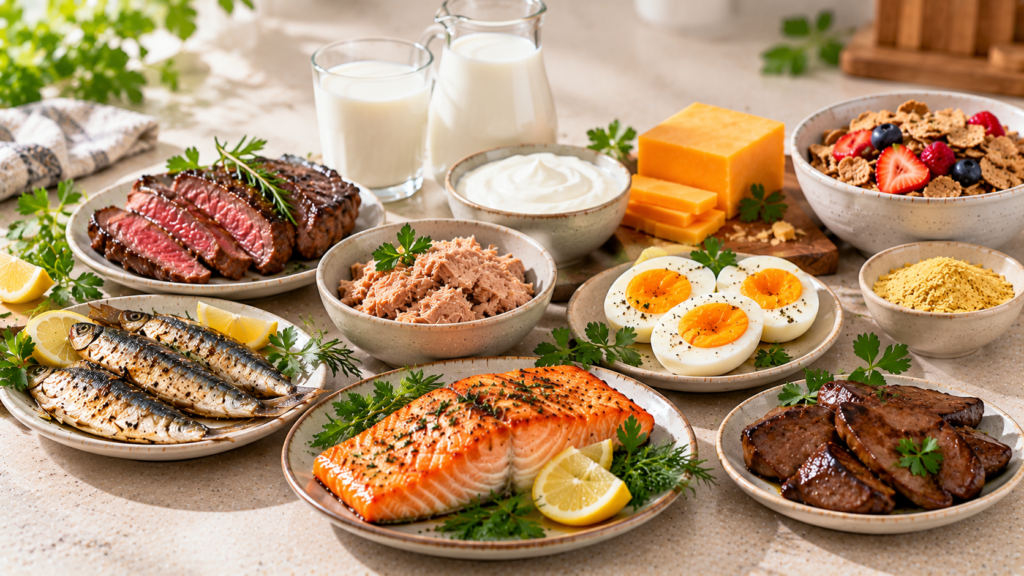
Vitamin B12 rich foods including fish, beef, liver, eggs, dairy products, fortified cereal, and nutritional yeast.
Are Vitamin B12 Rich Foods Enough to Meet Your Daily Needs?
Many people can meet their vitamin B12 requirements through a varied diet that includes reliable sources of the vitamin. However, the best approach depends on the foods you eat and how well your body absorbs vitamin B12.
How Much Vitamin B12 Do You Need Per Day?
The following recommended daily amounts are based on the US National Institutes of Health Office of Dietary Supplements. <Cite refs={[“turn123931search1″,”turn123931search3”]} />
| Life stage | Recommended amount per day |
|---|---|
| Infants, birth to 6 months | 0.4 mcg |
| Infants, 7–12 months | 0.5 mcg |
| Children, 1–3 years | 0.9 mcg |
| Children, 4–8 years | 1.2 mcg |
| Children, 9–13 years | 1.8 mcg |
| Teens, 14–18 years | 2.4 mcg |
| Adults, 19 years and older | 2.4 mcg |
| Pregnant teens and adults | 2.6 mcg |
| Breastfeeding teens and adults | 2.8 mcg |
These are general recommendations, not personalized treatment doses.
Can One Food Provide Enough Vitamin B12?
Some foods, such as cooked beef liver and shellfish, contain far more than the daily requirement in a typical serving. However, you do not need to consume these foods to meet your needs.
A combination of fish, dairy, eggs, meat, or reliably fortified foods may provide sufficient vitamin B12 for many people.
Remember that the body absorbs vitamin B12 through a complex process involving stomach acid and a protein called intrinsic factor. Certain health conditions and medications can interfere with absorption, so eating foods containing vitamin B12 does not always guarantee adequate vitamin status.
Vitamin B12 Foods for Vegetarians and Vegans
Vitamin B12 deserves special attention if you follow a vegetarian or vegan diet.
Vegetarian Sources of Vitamin B12
Depending on what you eat, vegetarian sources can include:
- Milk and yogurt
- Cheese
- Eggs
- Fortified breakfast cereal
- Fortified nutritional yeast
- Fortified plant-based milk
The amount provided by eggs and dairy varies, so people who consume only small quantities may need additional planning.
Vegan Sources of Vitamin B12
Unfortified plant foods are not reliable sources of vitamin B12. Foods such as beans, lentils, fruit, vegetables, nuts, and seeds can be part of a healthy vegan diet, but they should not be counted on to supply vitamin B12 unless they are fortified.
Useful options include:
- Breakfast cereals fortified with vitamin B12
- Soy, almond, or other plant-based drinks fortified with vitamin B12
- Fortified nutritional yeast
- Other clearly labelled fortified foods
- Vitamin B12 supplements when appropriate
Not every plant-based product contains vitamin B12. Check the label for the amount per serving and how much of the daily value it provides.
Do Vegans Need a Vitamin B12 Supplement?
People following a vegan diet generally need a dependable vitamin B12 source from fortified foods, supplements, or both. The right plan depends on the products consumed and individual circumstances.
Pregnant or breastfeeding people following a vegan diet should pay particular attention to vitamin B12 and seek qualified nutritional advice, because inadequate intake can also affect the infant.
Vitamin B12 Deficiency: Signs, Causes and Food Sources
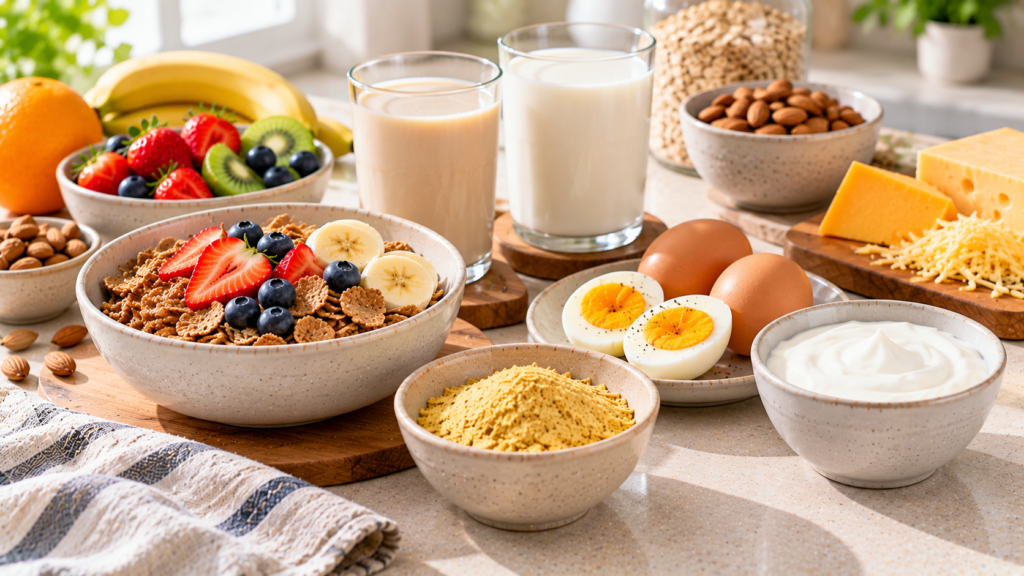
Vitamin B12 food options for vegetarian and vegan diets, including fortified plant milk, cereal, nutritional yeast, eggs, yogurt, and cheese.
t do not imply that unfortified fruits, grains, or vegetables are reliable sources of vitamin B12. Use soft daylight, realistic textures, a clean editorial composition, neutral ceramic dishes, and an inviting health-magazine aesthetic. Landscape 16:9, high resolution, no text overlays, medical symbols, or supplement bottles.
What Does Vitamin B12 Do in the Body?
Vitamin B12 supports several essential functions. Getting enough is important for normal health, but it should not be viewed as a quick fix for fatigue or other symptoms that may have many causes.
1. Helps Produce Red Blood Cells
Vitamin B12 is necessary for normal red blood cell formation. A deficiency can lead to megaloblastic anemia, which may cause tiredness, weakness, or other symptoms.
2. Supports the Nervous System
Vitamin B12 helps maintain normal nerve function. Prolonged deficiency can cause neurological problems, including tingling or numbness, and some effects may become irreversible if treatment is delayed.
3. Helps Make DNA
Your body uses vitamin B12 in DNA synthesis, which is essential for normal cell function and development.
4. Supports Normal Metabolism
Vitamin B12 helps the body process certain nutrients, including fats and proteins. It is not, however, a proven weight-loss treatment, and taking extra B12 does not reliably increase energy in people who already have adequate levels.
Vitamin B12 Consumer Fact Sheet
Vitamin B12 Deficiency: Who May Be at Risk?
Vitamin B12 deficiency can occur when a person does not consume enough vitamin B12 or cannot absorb it properly.
People Following Vegan or Highly Restricted Diets
Those who avoid animal products and do not use reliable fortified foods or supplements are at greater risk of inadequate intake.
Older Adults
Some older adults have reduced stomach acid or other age-related changes that make it harder to release vitamin B12 from food. Fortified foods or supplements may be helpful for some people, depending on their needs.
People With Digestive Conditions
Conditions affecting the stomach or small intestine, including pernicious anemia, celiac disease, and Crohn’s disease, can interfere with vitamin B12 absorption.
People Who Have Had Certain Surgeries
Some stomach or intestinal surgeries can affect vitamin B12 absorption. People who have undergone such procedures may require monitoring or long-term supplementation.
People Taking Certain Medications
Long-term use of some medicines, including metformin and acid-reducing medications, may be associated with lower vitamin B12 levels. Do not stop prescribed medication on your own; discuss possible monitoring with your healthcare professional.
What Are the Possible Symptoms?
Symptoms of vitamin B12 deficiency may include:
- Fatigue or weakness
- Pale skin
- Tingling or numbness in the hands and feet
- Balance or walking difficulties
- Memory or concentration changes
- A sore or smooth tongue
These symptoms are not specific to vitamin B12 deficiency. A healthcare professional may recommend blood tests and further evaluation to identify the cause.
Important: If you suspect a deficiency, do not rely on food changes alone to treat it. Established deficiency may require a specific treatment plan, and neurological symptoms need prompt medical assessment.
How to Add Vitamin B12 Rich Foods to Your Daily Meals
A practical meal plan can help you include reliable sources of vitamin B12 without making every meal complicated.
Breakfast
Choose one option:
- Eggs with whole-grain toast and vegetables.
- Fortified cereal with milk or fortified plant-based milk.
- Plain yogurt with oats and fruit.
Lunch
Try:
- Tuna with salad and whole-grain bread.
- Chicken or turkey with rice and vegetables.
- A vegetarian meal with a clearly labelled fortified food.
Dinner
Consider:
- Baked salmon with broccoli and potatoes.
- Lean beef with vegetables and whole grains.
- A fortified plant-based alternative with beans and vegetables.
Snacks
Useful options include:
- Yogurt
- A small serving of cheese
- A glass of milk or fortified plant-based milk
- Fortified cereal, depending on its ingredients and serving size
These are examples, not a personalized diet plan. Choose foods that suit your dietary pattern, budget, and medical needs.
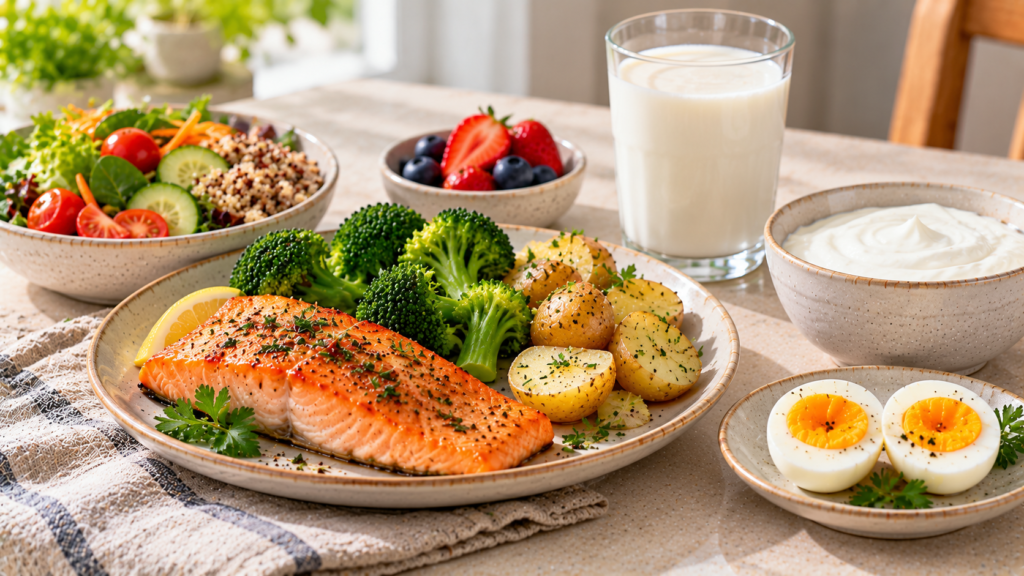
Balanced meal with salmon, egg, milk, yogurt, broccoli, and other foods containing vitamin B12.
How to Choose Fortified Vitamin B12 Foods
Fortified foods can be especially helpful if you avoid meat, fish, eggs, or dairy products.
Read the Nutrition Label
Look for “vitamin B12” in the nutrition information or ingredient details. Check the amount per serving and the percentage of the daily value.
Check the Serving Size
A product may list a vitamin B12 amount for a serving smaller than the portion you normally eat. Compare the serving size with how much you actually consume.
Do Not Assume All Similar Products Are Fortified
Some plant-based milks, cereals, nutritional yeast products, and meat alternatives contain added vitamin B12, while others do not.
Choose Products That Fit Your Overall Diet
Fortification does not automatically make a food the best choice for everyone. Consider added sugars, sodium, protein, and other ingredients according to your dietary needs.
Frequently Asked Questions About Vitamin B12 Rich Foods
What food has the highest amount of vitamin B12?
Beef liver is among the richest sources, providing approximately 70.7 mcg per 3-ounce cooked serving in the NIH reference table. Clams and oysters are also exceptionally rich sources. Liver should be eaten cautiously because of its very high vitamin A content, especially during pregnancy.
Which fruits are rich in vitamin B12?
Ordinary fruits do not naturally provide reliable amounts of vitamin B12. If you follow a plant-based diet, use clearly labelled fortified foods or a suitable supplement when needed.
Which vegetables contain vitamin B12?
Unfortified vegetables are not reliable sources of vitamin B12. Some processed foods made with plant ingredients may have vitamin B12 added, so check the label.
What are the best vitamin B12 foods for vegetarians?
Depending on the diet, milk, yogurt, cheese, and eggs can contribute vitamin B12. Fortified breakfast cereals, plant-based drinks, and nutritional yeast can also help if they contain added vitamin B12.
How can vegans get enough vitamin B12?
Vegans should rely on reliably fortified foods, vitamin B12 supplements, or a suitable combination of both. Unfortified plant foods are not dependable sources.
How much vitamin B12 do adults need daily?
Most adults need 2.4 mcg per day. The recommendation increases to 2.6 mcg during pregnancy and 2.8 mcg while breastfeeding.
Can eating vitamin B12 rich foods improve energy?
Adequate vitamin B12 is important for normal red blood cell and nerve function. Correcting a deficiency may improve related symptoms, but taking extra vitamin B12 does not reliably increase energy if your levels are already adequate. Persistent fatigue deserves medical assessment.
Can vitamin B12 deficiency be treated with food alone?
It depends on the cause and severity. Improving food intake may help when dietary intake is inadequate, but people with absorption problems or established deficiency may need supplements or medical treatment.
Conclusion: Choose Vitamin B12 Rich Foods That Fit Your Diet
Adding vitamin B12 rich foods to your diet can help support normal red blood cell formation, nerve function, and DNA production. Fish, shellfish, meat, eggs, milk, and dairy products are natural sources, while fortified cereals, plant-based drinks, and nutritional yeast can provide useful alternatives.
The most important step is to choose reliable sources that fit your dietary preferences and nutritional needs. If you follow a vegan diet, carefully check fortified food labels and consider professional advice about supplementation. If you have digestive conditions, take medicines associated with low B12 levels, or experience symptoms of deficiency, consult a healthcare professional.
Use the food chart and meal ideas in this guide to plan practical, varied meals—and remember that meeting your vitamin B12 needs is about consistent intake and adequate absorption, not simply choosing the food with the biggest number.