
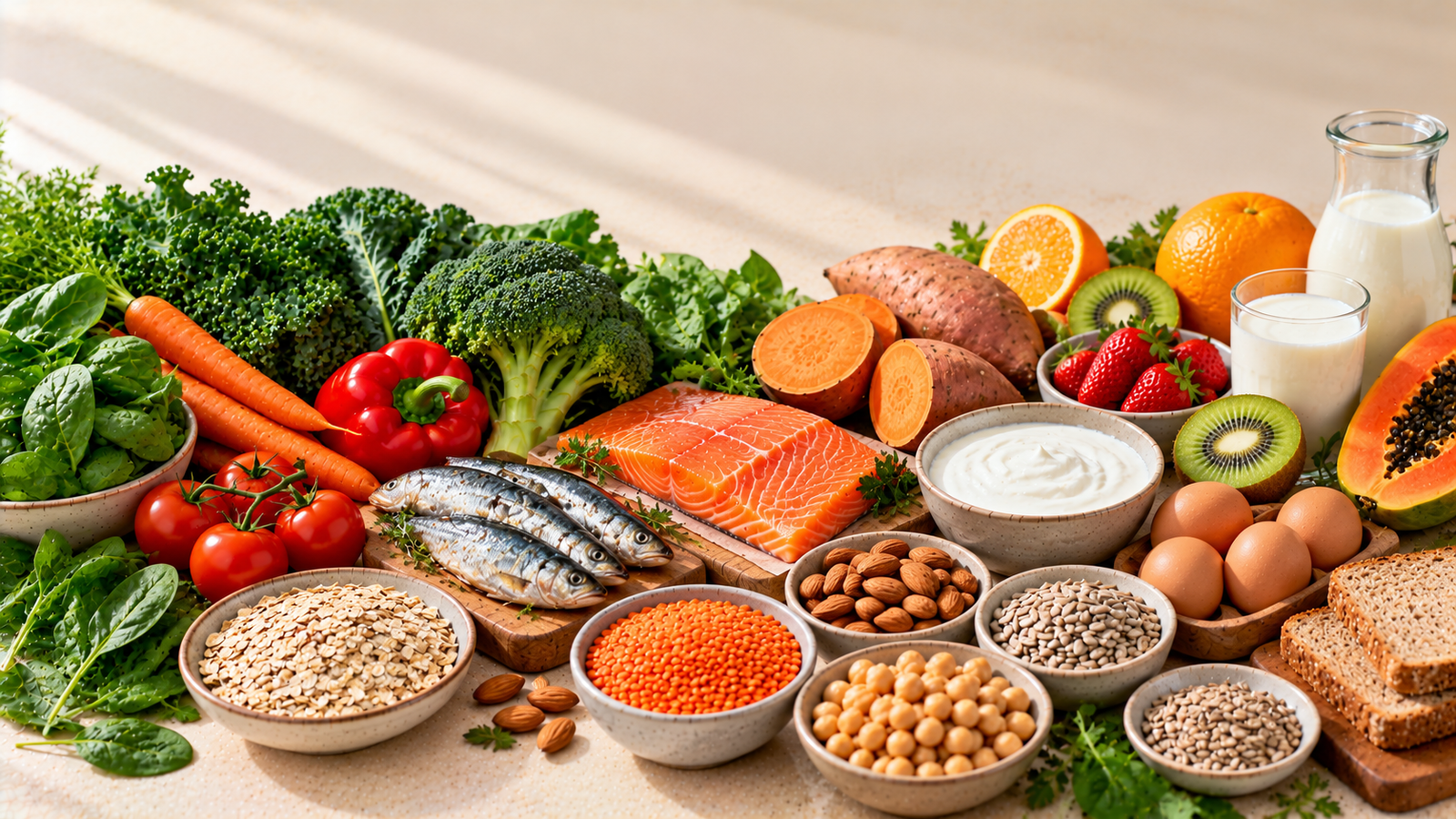
A vitamin rich foods chart makes it easier to understand which foods supply essential vitamins and how to build a varied diet. Different foods contain different combinations of nutrients: leafy greens provide vitamin K and folate, citrus fruits are known for vitamin C, eggs contribute vitamin B12, and oily fish can supply vitamins D and B12.
You do not need expensive superfoods or a complicated meal plan to improve your vitamin intake. Everyday foods—including vegetables, fruits, eggs, legumes, dairy products, nuts, seeds, fish, and whole grains—can contribute to a balanced diet.
This guide includes a practical vitamin chart, food sources for each major vitamin, easy meal combinations, and tips for choosing foods that fit your budget.
Key Takeaways
- Use a vitamin foods chart to identify natural sources of different vitamins.
- Eat a variety of vegetables, fruits, protein foods, whole grains, nuts, and seeds.
- Vitamins A, D, E, and K are fat-soluble; vitamin C and the B vitamins are water-soluble.
- Fortified foods can help provide nutrients that may be difficult to obtain from unfortified foods alone.
- No single food supplies every essential vitamin in adequate amounts.
- Food choices, portion sizes, preparation, and fortification all affect nutrient intake.
1. Complete Vitamin Rich Foods Chart: Quick Reference
Use this chart to find common food sources of each vitamin. The foods listed are examples, not an exhaustive ranking of the richest sources.
| Vitamin | Main role in the body | Food sources |
|---|---|---|
| Vitamin A | Normal vision, immune function, and cell growth | Carrots, sweet potatoes, spinach, pumpkin, eggs |
| Vitamin B1 (Thiamin) | Energy metabolism and nervous system function | Whole grains, legumes, pork, seeds |
| Vitamin B2 (Riboflavin) | Energy metabolism and normal cell function | Milk, yogurt, eggs, almonds, fortified grains |
| Vitamin B3 (Niacin) | Energy metabolism and cellular function | Poultry, fish, peanuts, whole grains |
| Vitamin B5 (Pantothenic acid) | Energy metabolism and synthesis of certain compounds | Eggs, chicken, mushrooms, legumes |
| Vitamin B6 | Protein metabolism and normal nervous system function | Chickpeas, potatoes, bananas, poultry, fish |
| Vitamin B7 (Biotin) | Metabolism of fats, carbohydrates, and proteins | Eggs, nuts, seeds, legumes |
| Vitamin B9 (Folate) | DNA synthesis and cell division | Lentils, beans, spinach, asparagus, fortified grains |
| Vitamin B12 | Nerve function and red blood cell formation | Fish, meat, eggs, dairy, fortified foods |
| Vitamin C | Collagen formation, wound healing, and iron absorption | Guava, oranges, kiwi, bell peppers, broccoli |
| Vitamin D | Calcium absorption and bone health | Oily fish, egg yolks, fortified milk or alternatives |
| Vitamin E | Antioxidant protection of cells | Sunflower seeds, almonds, vegetable oils |
| Vitamin K | Normal blood clotting and bone metabolism | Kale, spinach, broccoli, cabbage |
Important: Vitamin A from animal foods is preformed vitamin A, while many colorful plant foods contain carotenoids that the body can convert into vitamin A. Conversion varies between people and foods. Vitamin D content is limited in many unfortified foods, and reliable natural sources of vitamin B12 are primarily animal-derived foods; fortified products can also provide B12.
2. Foods Rich in Vitamin A
Vitamin A supports normal vision, immune function, and the maintenance of healthy tissues. It comes from two main dietary sources: preformed vitamin A in some animal foods and provitamin A carotenoids in certain plant foods.
Best food sources of vitamin A
- Sweet potatoes: Rich in beta-carotene, which the body can convert into vitamin A.
- Carrots: Provide beta-carotene.
- Spinach: Supplies provitamin A carotenoids along with folate and vitamin K.
- Pumpkin: Provides carotenoids that can be converted into vitamin A.
- Eggs: Supply preformed vitamin A in varying amounts.
How to add vitamin A foods to meals
Serve carrots or sweet potatoes with lunch or dinner, add spinach to an omelet, or include pumpkin in soups and curries. Eating carotenoid-rich vegetables with a little fat, such as oil used in cooking, can improve carotenoid absorption.
Avoid taking high-dose vitamin A supplements without professional advice, especially during pregnancy, because excessive preformed vitamin A can be harmful.
3. Foods Rich in B Vitamins
The B vitamins support several essential processes, including energy metabolism, normal nervous system function, red blood cell formation, and DNA synthesis. They are a group of eight distinct vitamins, so their food sources are not identical.
B-vitamin food chart
| B vitamin | Food sources | Practical meal idea |
|---|---|---|
| B1 (Thiamin) | Whole grains, legumes, seeds, pork | Oats or whole-wheat roti with a balanced meal |
| B2 (Riboflavin) | Milk, yogurt, eggs, almonds | Yogurt with breakfast |
| B3 (Niacin) | Poultry, fish, peanuts, grains | Chicken or fish with whole grains |
| B5 (Pantothenic acid) | Eggs, chicken, mushrooms, legumes | Vegetable omelet |
| B6 | Chickpeas, potatoes, bananas, poultry | Chickpea curry or baked potato |
| B7 (Biotin) | Eggs, nuts, seeds, legumes | Eggs with nuts or seeds across the day |
| B9 (Folate) | Lentils, beans, spinach, asparagus | Lentil dal with leafy greens |
| B12 | Fish, meat, eggs, dairy, fortified foods | Fish with vegetables or fortified foods |
Why folate and vitamin B12 deserve special attention
Folate is found in legumes and green vegetables. Vitamin B12 is naturally found mainly in animal-derived foods and is also available in certain fortified products.
People following a vegan diet need a reliable source of B12, typically fortified foods or a supplement. People who are pregnant or could become pregnant should follow local medical guidance about folic acid supplementation.
4. Foods Rich in Vitamin C
Vitamin C supports collagen formation, wound healing, and normal immune function. It also improves the absorption of non-heme iron from plant foods.
Best vitamin C food sources
- Guava
- Red and green bell peppers
- Oranges and other citrus fruits
- Kiwi
- Strawberries
- Broccoli
- Tomatoes
- Papaya
Vitamin C content varies with the variety, ripeness, storage, and cooking method. Raw or lightly cooked vegetables can preserve more vitamin C than prolonged boiling.
Practical tip: Add bell peppers or tomatoes to lentils, beans, or chickpeas. The vitamin C can help your body absorb iron from these plant foods.
5. Foods Rich in Vitamin D
Vitamin D helps the body absorb calcium and supports bone health. Compared with many other vitamins, it occurs naturally in a relatively limited range of foods.
Vitamin D food sources
- Salmon and trout: Oily fish that can provide vitamin D.
- Sardines: Supply vitamin D along with vitamin B12.
- Egg yolks: Provide small, variable amounts.
- UV-exposed mushrooms: Certain mushrooms contain vitamin D2 after exposure to ultraviolet light.
- Fortified milk and plant-based alternatives: Can be useful sources when vitamin D is added.
- Fortified breakfast cereals: Some products contain added vitamin D.
Check product labels because fortification varies by brand and country. Food sources alone may not meet everyone’s vitamin D needs. Age, sun exposure, health conditions, and other factors can affect requirements.
6. Foods Rich in Vitamin E
Vitamin E acts as an antioxidant and helps protect cells from oxidative damage. Nuts, seeds, and certain vegetable oils are among its useful dietary sources.
Best vitamin E foods
- Sunflower seeds
- Almonds
- Hazelnuts
- Sunflower oil
- Wheat germ oil
- Spinach
- Avocado
Easy ways to eat more vitamin E
Sprinkle sunflower seeds over salads, add almonds to a snack, or use a suitable vegetable oil in everyday cooking. Nuts and seeds also provide unsaturated fats and minerals, although portion sizes should reflect your energy needs.
7. Foods Rich in Vitamin K
Vitamin K is important for normal blood clotting and contributes to bone metabolism. Leafy green vegetables are particularly useful sources of vitamin K1.
Best vitamin K food sources
- Kale
- Spinach
- Swiss chard
- Broccoli
- Green cabbage
- Brussels sprouts
- Lettuce
Add leafy greens to soups, curries, salads, or egg dishes. Cooking can reduce the volume of leafy vegetables, making it easier to eat a larger portion.
Medication note: If you take warfarin, do not suddenly increase or eliminate vitamin K-rich foods. Keep your intake consistent and follow your healthcare professional’s advice.
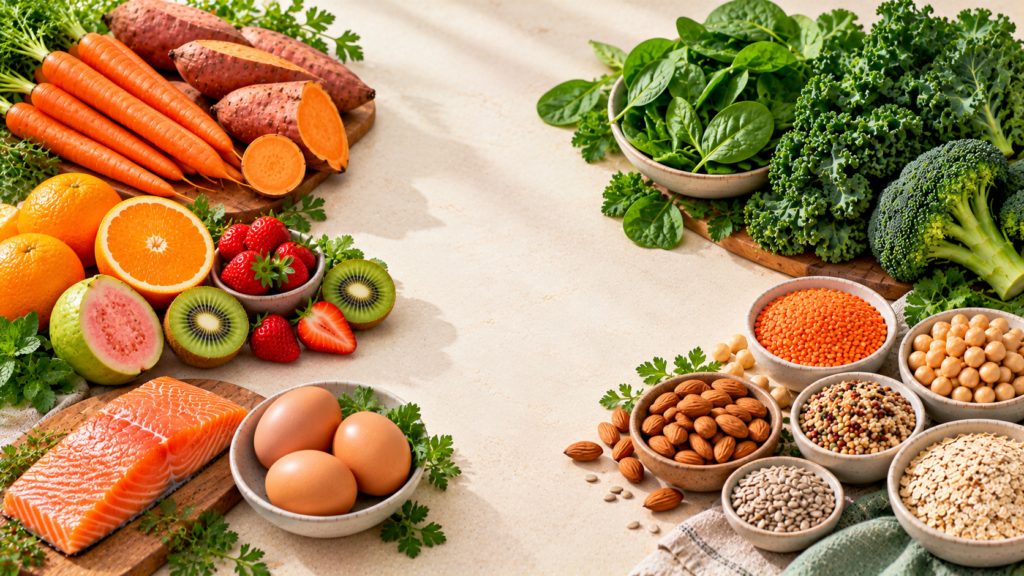
8. A Simple Daily Meal Plan Using Vitamin-Rich Foods
You can use the vitamin rich foods chart to plan meals without trying to eat every food listed. The goal is to combine different food groups and rotate ingredients over the week.
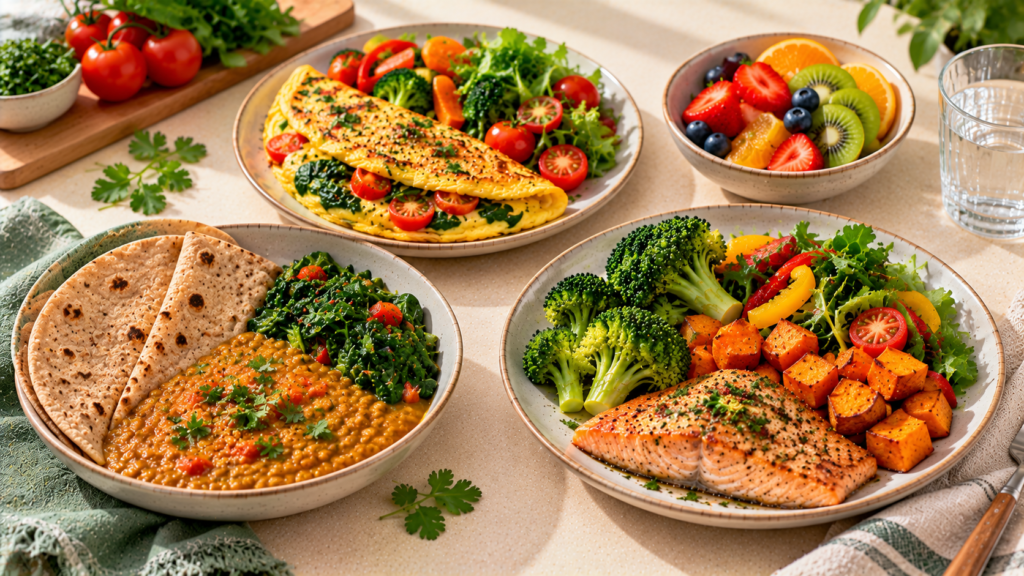
| Meal | Example | Nutrients contributed |
|---|---|---|
| Breakfast | Eggs with spinach and whole-wheat roti | B12, B2, vitamin A, and vitamin K |
| Morning snack | Guava, orange, or kiwi | Vitamin C and other nutrients |
| Lunch | Lentil dal, leafy greens, and whole-grain roti | Folate, B vitamins, and vitamin K |
| Afternoon snack | Plain yogurt with fruit and a few almonds | B2, B12, vitamin E, and fruit vitamins |
| Dinner | Fish or chickpeas with broccoli and sweet potato | A mix of B vitamins, vitamin C, and provitamin A carotenoids |
Detailed Vitamin Rich Foods Chart: Food Sources and Nutritional Benefits
This detailed vitamin rich foods chart helps you compare common food sources and understand how to include them in everyday meals. Choose a range of foods rather than relying on a single ingredient to meet all your nutritional needs.
| Vitamin | Particularly useful food sources | Practical serving idea | Helpful tip |
|---|---|---|---|
| Vitamin A | Sweet potatoes, carrots, spinach, pumpkin | ½ cup cooked sweet potato | Eat carotenoid-rich vegetables with a little fat to support absorption |
| Vitamin B1 | Whole grains, legumes, seeds, pork | Oats or whole-wheat roti | Choose whole grains regularly |
| Vitamin B2 | Milk, yogurt, eggs, almonds | 1 cup milk or a serving of yogurt | Fortified products may provide additional nutrients |
| Vitamin B3 | Poultry, fish, peanuts | A serving of chicken or fish | Plant and animal foods both contribute |
| Vitamin B5 | Eggs, mushrooms, chicken, legumes | Add mushrooms to an omelet | A varied diet usually supplies several sources |
| Vitamin B6 | Chickpeas, potatoes, bananas, fish | Chickpea curry or a baked potato | Rotate different sources across the week |
| Vitamin B7 | Eggs, nuts, seeds, legumes | Add nuts or seeds to breakfast | Avoid unnecessary high-dose biotin supplements |
| Vitamin B9 | Lentils, beans, spinach, asparagus | Lentil dal with leafy greens | Folate is especially important during early pregnancy |
| Vitamin B12 | Fish, meat, eggs, dairy, fortified foods | Fish or fortified foods | Unfortified plant foods are not reliable B12 sources |
| Vitamin C | Guava, oranges, kiwi, bell peppers, broccoli | One serving of fresh fruit | Vitamin C helps the body absorb iron from plant foods |
| Vitamin D | Oily fish, egg yolks, fortified milk | Fish or a fortified product | Check labels because vitamin D content varies |
| Vitamin E | Sunflower seeds, almonds, vegetable oils | A small handful of seeds or nuts | Nuts and seeds also provide unsaturated fats |
| Vitamin K | Kale, spinach, broccoli, cabbage | A serving of leafy greens | Keep intake consistent if taking warfarin |
Note: Serving sizes above are practical examples, not guarantees that a serving meets the daily requirement. Nutrient levels vary by food, variety, preparation, and fortification.
2. Add a Table of Daily Vitamin Requirements
Place this section after the detailed food chart. It adds useful information for readers comparing food sources with their nutritional needs.
How Much of Each Vitamin Do Adults Need Daily?
The amount of each vitamin a person needs depends on age, sex, pregnancy, breastfeeding, and other individual factors. The table below gives general U.S. recommended dietary allowances (RDAs) or adequate intakes (AIs) for healthy adults ages 19–50. These are reference values, not personalized medical recommendations.
| Vitamin | Adult men | Adult women | Main food sources |
|---|---|---|---|
| Vitamin A | 900 mcg RAE | 700 mcg RAE | Carrots, sweet potatoes, spinach, eggs |
| Vitamin C | 90 mg | 75 mg | Guava, citrus fruits, bell peppers, broccoli |
| Vitamin D | 15 mcg (600 IU) | 15 mcg (600 IU) | Oily fish, fortified foods, egg yolks |
| Vitamin E | 15 mg | 15 mg | Sunflower seeds, almonds, vegetable oils |
| Vitamin K | 120 mcg (AI) | 90 mcg (AI) | Kale, spinach, broccoli |
| Vitamin B1 | 1.2 mg | 1.1 mg | Whole grains, legumes, seeds |
| Vitamin B2 | 1.3 mg | 1.1 mg | Milk, yogurt, eggs |
| Vitamin B3 | 16 mg NE | 14 mg NE | Poultry, fish, peanuts |
| Vitamin B5 | 5 mg (AI) | 5 mg (AI) | Eggs, mushrooms, chicken |
| Vitamin B6 | 1.3 mg | 1.3 mg | Chickpeas, potatoes, fish |
| Vitamin B7 | 30 mcg (AI) | 30 mcg (AI) | Eggs, nuts, seeds |
| Folate (B9) | 400 mcg DFE | 400 mcg DFE | Lentils, beans, leafy greens |
| Vitamin B12 | 2.4 mcg | 2.4 mcg | Fish, meat, eggs, dairy, fortified foods |
Understanding the units: mcg means micrograms, mg means milligrams, IU means international units, RAE means retinol activity equivalents, NE means niacin equivalents, and DFE means dietary folate equivalents. AI means adequate intake, used when there is insufficient evidence to establish an RDA.
These reference values are based on U.S. National Institutes of Health guidance. Needs can differ for older adults, pregnancy, breastfeeding, and certain medical conditions.
External Link: NIH Office of Dietary Supplements — Vitamin and Mineral Fact Sheets
3. Which Foods Provide Several Vitamins at Once?
One useful way to use a vitamin rich foods chart is to identify foods that contribute multiple nutrients. These foods can make meal planning easier because a single ingredient may provide several vitamins along with protein, fiber, or minerals.
| Food | Vitamins it can provide | Other nutritional benefits |
|---|---|---|
| Spinach | K, folate, provitamin A, some C | Fiber, folate, and minerals |
| Broccoli | C, K, folate | Fiber and other plant compounds |
| Sweet potatoes | Provitamin A, B6, some C | Carbohydrates and fiber |
| Eggs | B12, B2, A, small amounts of D | Protein and choline |
| Salmon | D, B12, B3, B6 | Protein and omega-3 fats |
| Plain yogurt | B2, B12 | Protein and calcium |
| Lentils | Folate, B1, B6 | Protein, fiber, and iron |
| Chickpeas | Folate, B6 | Protein, fiber, and minerals |
| Almonds | E, B2 | Unsaturated fats and magnesium |
| Sunflower seeds | E, B1, B6 | Unsaturated fats and minerals |
| Oranges | C, folate, some B1 | Fiber when eaten whole |
| Avocado | E, K, folate, B5, B6 | Fiber and unsaturated fats |
The exact amount of each vitamin depends on serving size and preparation. Some foods contain a nutrient only in modest amounts, so this table should be used as a guide to food variety rather than as a precise nutrient calculation.
4. Best Vitamin-Rich Food Combinations for Everyday Meals
Eating a combination of foods can help you obtain a broader range of nutrients. You do not need to combine every vitamin source in one meal; variety across the day and week is a practical goal.
Breakfast combinations
- Eggs, spinach, and whole-wheat roti: Provides protein, vitamin B12, riboflavin, and vitamins from the vegetables.
- Oats, milk, and fruit: Provides B vitamins from oats, protein and B vitamins from milk, and vitamin C if you choose fruit such as kiwi or oranges.
- Plain yogurt, strawberries, and almonds: Combines dairy nutrients, vitamin C, and vitamin E.
Lunch combinations
- Lentil dal, spinach, and roti: Provides folate, B vitamins, vitamin K, and plant protein.
- Chickpea salad with red bell peppers: Provides folate and plant protein, while bell peppers contribute vitamin C.
- Chicken with broccoli and whole grains: Provides protein and a mixture of B vitamins, plus vitamins from the vegetables.
Dinner combinations
- Fish with sweet potato and broccoli: Combines protein and potentially vitamin D from fish with provitamin A carotenoids and other vitamins from vegetables.
- Tofu with mixed vegetables and brown rice: Provides plant protein and a variety of vitamins and minerals.
- Bean curry with tomatoes and leafy greens: Combines plant protein and folate with vitamins from vegetables.
5. Vitamin-Rich Foods Chart for Vegetarians and Vegans
People who follow vegetarian or vegan diets can obtain many vitamins from plant foods, but some nutrients require special attention.
| Nutrient | Vegetarian food sources | Vegan food sources |
|---|---|---|
| Vitamin A | Eggs, dairy, carrots, sweet potatoes, spinach | Carrots, sweet potatoes, spinach, pumpkin |
| Vitamin B1 | Whole grains, legumes, seeds, dairy | Whole grains, legumes, seeds |
| Vitamin B2 | Milk, yogurt, eggs, almonds | Fortified plant milk, almonds, mushrooms |
| Vitamin B6 | Chickpeas, potatoes, bananas, eggs | Chickpeas, potatoes, bananas |
| Folate | Lentils, beans, spinach, asparagus | Lentils, beans, spinach, asparagus |
| Vitamin B12 | Eggs, dairy, fortified foods | Reliably fortified foods or an appropriate supplement |
| Vitamin C | Fruit, bell peppers, broccoli | Fruit, bell peppers, broccoli |
| Vitamin D | Fortified dairy, eggs, some fish if included | Fortified plant milk and other fortified products; UV-exposed mushrooms may supply D2 |
| Vitamin E | Almonds, sunflower seeds, vegetable oils | Almonds, sunflower seeds, vegetable oils |
| Vitamin K | Leafy greens, broccoli, dairy in smaller amounts | Leafy greens, broccoli, cabbage |
Important nutrients for plant-based diets
Vitamin B12: Unfortified plant foods are not reliable sources of vitamin B12. Vegans need a dependable source, typically fortified foods or a suitable supplement.
Vitamin D: Naturally occurring food sources are limited. Fortified products may help, but they do not necessarily meet everyone’s needs.
Folate and vitamin C: Beans, lentils, leafy greens, fruit, and vegetables are useful plant-based sources.
If your diet excludes entire food groups, plan carefully and consult a qualified healthcare professional or registered dietitian if you are uncertain about nutrient adequacy.
6. Foods to Eat More Often for Better Vitamin Variety
Rather than focusing on a single “best” food, build your weekly shopping list around several food groups.
Vegetables
Choose leafy greens, broccoli, carrots, tomatoes, bell peppers, pumpkin, and sweet potatoes. Fresh, frozen, and appropriately stored vegetables can all contribute to a nutritious diet.
Fruits
Rotate oranges, guava, kiwi, papaya, strawberries, and other seasonal fruits. Whole fruit generally provides more fiber than juice.
Protein foods
Include eggs, fish, yogurt, beans, lentils, chickpeas, tofu, and other suitable protein foods. These supply different combinations of vitamins and minerals.
Nuts, seeds, and whole grains
Oats, whole-wheat products, almonds, peanuts, and sunflower seeds can contribute B vitamins, vitamin E, and other nutrients. Choose portions appropriate to your needs.
Fortified foods
Check labels on milk alternatives, breakfast cereals, and other fortified products. Fortification levels differ, so the label is the best guide to what a specific product provides.
This is an example rather than a prescribed diet. Adjust the foods to your preferences, budget, allergies, and nutritional needs. For plant-based diets, include reliable fortified sources of vitamin B12.
How to Build a Balanced Plate for Healthy Eating
9. How to Get More Vitamins From Everyday Foods
Eat a variety of colors
Different fruits and vegetables provide different combinations of vitamins and plant compounds. Include leafy greens, orange vegetables, red produce, and seasonal fruits throughout the week.
Choose whole foods regularly
Whole fruits, vegetables, legumes, nuts, seeds, and whole grains provide more than isolated vitamins. Depending on the food, they also supply fiber, protein, healthy fats, and minerals.
Use suitable cooking methods
- Steam or briefly cook vegetables when practical.
- Avoid unnecessarily prolonged boiling of vegetables.
- Use the cooking liquid from soups and curries when appropriate.
- Store and prepare produce properly to maintain quality and reduce food waste.
Cooking does not always reduce nutritional value. For some foods, heat can improve the availability of certain carotenoids, while other vitamins may be lost. A mixture of raw and cooked foods is a practical approach.
Make fortified foods part of your plan when needed
Fortified milk, plant-based alternatives, cereals, and other products can provide added vitamins. Check labels to see which nutrients are added and how much a serving contains.
Plan around affordable ingredients
Lentils, chickpeas, eggs, seasonal vegetables, oranges, leafy greens, oats, and seeds can all contribute to a varied diet. Frozen vegetables can also be convenient and nutritious.
10. Common Mistakes When Using a Vitamin Foods Chart
Expecting one food to provide every vitamin
No single food supplies all essential vitamins in adequate amounts. A varied diet is more reliable than depending on one ingredient.
Assuming all foods provide the same amount of a vitamin
Nutrient content can vary with the food variety, portion size, growing conditions, storage, cooking, and fortification. Treat a food chart as a guide rather than an exact nutrient calculation.
Confusing provitamin A with preformed vitamin A
Carrots and sweet potatoes contain carotenoids that the body can convert into vitamin A. Animal foods such as eggs contain preformed vitamin A. These forms differ in how the body processes them.
Ignoring vitamin B12 on a vegan diet
Unfortified plant foods are not reliable sources of vitamin B12. People following a vegan diet should use fortified foods or an appropriate supplement to meet their needs.
Taking high-dose supplements without advice
More is not always better. Excessive intake of certain vitamins can cause harm or interact with medication. Seek professional guidance if you suspect a deficiency or are considering high-dose supplements.
11. Trusted Resources for Vitamin and Nutrition Information
Use reliable sources to verify nutrient requirements, food sources, and supplement guidance:
- NIH Office of Dietary Supplements — Vitamin and Mineral Fact Sheets — evidence-based information on individual vitamins, recommended intakes, food sources, and supplements.
- Harvard T.H. Chan School of Public Health — Healthy Eating Plate — a practical framework for building balanced meals.
- USDA FoodData Central — a searchable database for nutrient information on foods.
Best Foods for Getting Multiple Vitamins Naturally.
12. Frequently Asked Questions About Vitamin-Rich Foods
Which foods contain the most vitamins?
There is no single food that contains the most of every vitamin. Leafy greens, bell peppers, citrus fruits, eggs, oily fish, legumes, nuts, and seeds each provide different combinations of nutrients.
What is the best vitamin-rich foods chart for daily use?
A useful chart lists each vitamin, its main function, and common food sources. The table near the beginning of this article provides a quick reference for vitamins A, B1–B12, C, D, E, and K.
Which foods provide several vitamins at once?
Spinach, broccoli, eggs, salmon, yogurt, papaya, avocado, and fortified foods can provide multiple vitamins. The amounts differ by food and serving size, so combining several foods is more effective than relying on just one.
Which fruits are rich in vitamins?
Guava, oranges, kiwi, strawberries, papaya, and mango provide various combinations of vitamin C, folate, and provitamin A carotenoids. Whole fruit also supplies fiber.
Which vegetables contain vitamins A, C, and K?
Different vegetables provide different combinations. Carrots and sweet potatoes are sources of provitamin A carotenoids, bell peppers and broccoli provide vitamin C, and leafy greens such as kale and spinach are rich in vitamin K.
Can I meet my vitamin needs naturally without supplements?
A varied diet can meet many vitamin needs, but not everyone obtains enough of every vitamin from food alone. Vitamin B12 deserves particular attention in vegan diets, and vitamin D intake may need individual assessment. Supplements should be based on your needs and appropriate professional guidance.
Are frozen vegetables as nutritious as fresh vegetables?
Frozen vegetables can be nutritious alternatives to fresh produce. Their nutrient content depends on the food, processing, storage, and cooking method. Choose whichever option makes it easier to eat a variety of vegetables regularly.
13. Conclusion: Use This Vitamin Rich Foods Chart to Build a Balanced Diet
A complete vitamin rich foods chart helps you identify the foods that contribute essential vitamins and turn that information into practical meals. Leafy greens, colorful vegetables, fruits, eggs, fish, legumes, dairy products, nuts, seeds, and whole grains each play a different role in a balanced diet.
Start with simple changes: add leafy greens to lunch, include a vitamin C-rich fruit as a snack, choose a variety of vegetables at dinner, and rotate your protein sources throughout the week. Use fortified foods when they help meet specific nutritional needs, and seek professional guidance if you suspect a deficiency.
Remember, the goal is not to eat every food on the chart every day. Build variety into your meals consistently, choose foods that fit your budget, and focus on meeting your nutritional needs rather than chasing individual vitamins.