
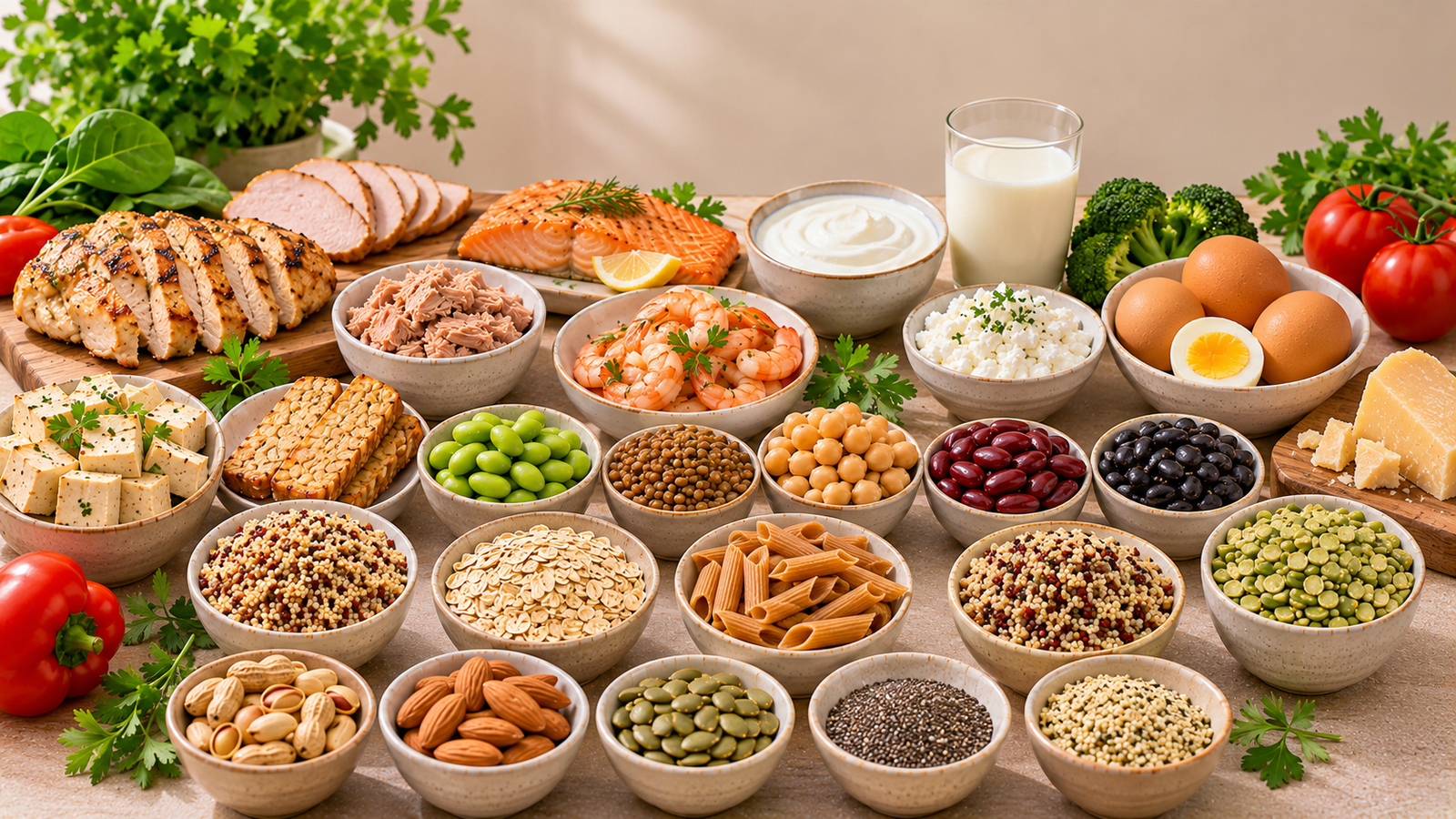
A high protein foods chart makes it easier to compare everyday foods and understand which ones can help you meet your protein needs. Whether you eat meat, follow a vegetarian diet, or prefer a combination of plant and animal foods, knowing the protein content of common ingredients can make meal planning simpler.
Protein is an essential nutrient that helps maintain muscles, repair body tissues, and support the production of enzymes and hormones. It is found in a wide range of foods, including chicken, fish, eggs, dairy products, beans, lentils, soy foods, nuts, seeds, and whole grains.
However, not all protein foods provide the same amount per serving. Some are concentrated sources, while others contribute smaller amounts alongside fiber, healthy fats, vitamins, and minerals.
This guide includes a practical chart of 30 high protein foods, approximate protein amounts, serving-size comparisons, and simple ways to include these foods in breakfast, lunch, dinner, and snacks.
Key Takeaways
- Chicken, turkey, fish, seitan, tempeh, and some dairy products are concentrated protein sources.
- Lentils, chickpeas, beans, tofu, and edamame are useful plant-based options.
- Nuts and seeds contribute protein alongside healthy fats and minerals.
- Protein amounts depend on food variety, serving size, preparation, and brand.
- A balanced diet can include both animal and plant protein sources.
- You can use the high protein foods chart to compare foods and build meals that suit your needs.
What Is a High Protein Foods Chart?
A high protein foods chart is a reference guide that lists foods alongside their approximate protein content. It helps readers compare different protein sources and understand how much protein common portions may provide.
A chart is useful because protein amounts can differ considerably between foods. For example, cooked chicken breast provides around 31 grams of protein per 100 grams, while cooked lentils provide approximately 9 grams per 100 grams.
That does not mean chicken is automatically the better choice. Lentils also provide dietary fiber and other nutrients, while chicken provides a concentrated source of protein. Both can contribute to a healthy eating pattern.
The most useful way to read a protein chart is to consider:
- Protein per 100 grams.
- Protein per realistic serving.
- Whether the food is measured cooked, raw, drained, or dry.
- Other nutrients the food provides.
- How easily the food fits into your usual meals.
High Protein Foods Chart: 30 Foods and Their Protein Content
The following chart compares 30 commonly available protein-rich foods. Most values are approximate and refer to cooked or ready-to-eat foods unless the serving column specifies otherwise.
Complete Protein Content Chart
| No. | Food | Approximate protein | Serving size |
|---|---|---|---|
| 1 | Chicken breast, cooked | 31 g | 100 g |
| 2 | Turkey breast, cooked | 29 g | 100 g |
| 3 | Lean beef, cooked | 26 g | 100 g |
| 4 | Tuna, cooked | 25–29 g | 100 g |
| 5 | Salmon, cooked | 22–25 g | 100 g |
| 6 | Shrimp, cooked | 24 g | 100 g |
| 7 | Sardines | 20–25 g | 100 g |
| 8 | Eggs | 6–7 g | 1 large egg |
| 9 | Greek yogurt | 15–20 g | 170 g |
| 10 | Cottage cheese | 11–13 g | 100 g |
| 11 | Parmesan cheese | 9–10 g | 28 g |
| 12 | Milk | 8 g | 240 ml |
| 13 | Tempeh | 18–20 g | 100 g |
| 14 | Firm tofu | 10–17 g | 100 g |
| 15 | Edamame, cooked | 11–12 g | 100 g |
| 16 | Seitan | 20–25 g | 100 g |
| 17 | Lentils, cooked | About 9 g | 100 g |
| 18 | Chickpeas, cooked | 8–9 g | 100 g |
| 19 | Kidney beans, cooked | 8–9 g | 100 g |
| 20 | Black beans, cooked | 8–9 g | 100 g |
| 21 | Split peas, cooked | About 8 g | 100 g |
| 22 | Green peas, cooked | About 5 g | 100 g |
| 23 | Quinoa, cooked | 4–5 g | 100 g |
| 24 | Oats, dry | About 5 g | 40 g |
| 25 | Whole-wheat pasta, cooked | 5–7 g | 100 g |
| 26 | Peanuts | About 7 g | 28 g |
| 27 | Almonds | About 6 g | 28 g |
| 28 | Pumpkin seeds | 8–9 g | 28 g |
| 29 | Hemp seeds | 9–10 g | 30 g |
| 30 | Peanut butter | 7–8 g | 2 tablespoons |
How to interpret the chart: These figures are estimates, not guaranteed values for every food product. Cooking changes food weight through water loss or absorption, so raw and cooked measurements are not directly interchangeable. Packaged foods can also differ by brand. Check nutrition labels when you need precise figures.
1. Animal-Based Foods High in Protein
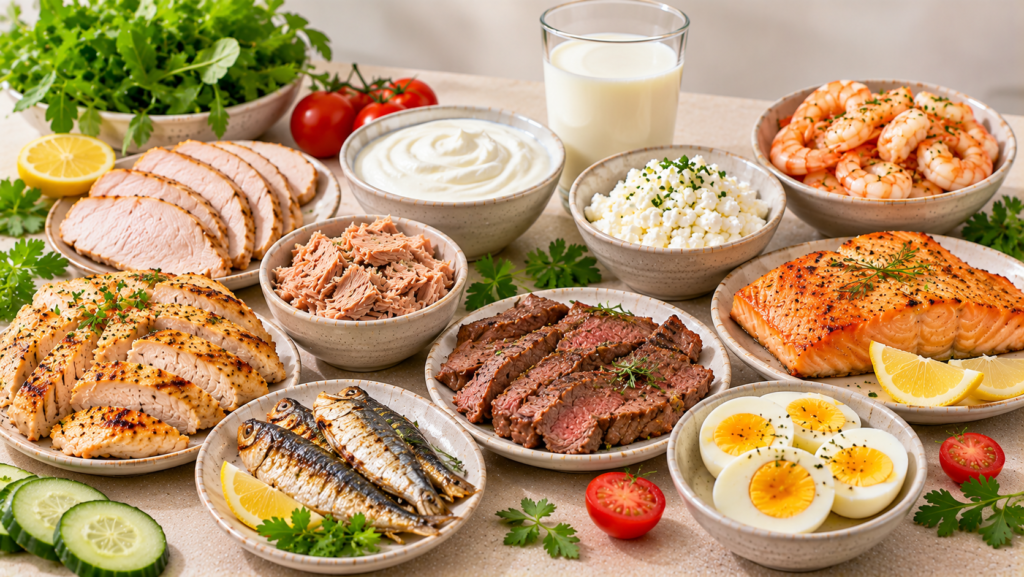
Animal-based foods can provide concentrated amounts of protein in relatively small servings. Meat, fish, eggs, and dairy products are useful choices for people who include them in their diets.
Chicken Breast
Cooked chicken breast provides approximately 31 grams of protein per 100 grams. It is a versatile option for meals because it can be grilled, baked, shredded, or added to soups and salads.
Easy meal ideas:
- Grilled chicken with brown rice and vegetables.
- Shredded chicken in whole-wheat wraps.
- Chicken and vegetable soup.
- Chicken salad with beans and leafy greens.
Choose cooking methods that do not rely heavily on added fats, and season with herbs, spices, lemon, and garlic for flavor.
Turkey Breast
Turkey breast provides around 29 grams of protein per 100 grams when cooked. It can be used in sandwiches, salads, rice bowls, and homemade wraps.
Packaged turkey slices can be convenient, but compare labels because processed varieties may contain more sodium.
Lean Beef
Lean cooked beef provides approximately 26 grams of protein per 100 grams. It also supplies nutrients such as iron, zinc, and vitamin B12.
Use lean cuts in vegetable stir-fries, homemade meatballs, or balanced rice dishes. Consider portion size and vary protein sources throughout the week rather than relying on red meat every day.
Fish and Seafood
Fish and seafood can provide substantial protein, and some varieties also supply omega-3 fatty acids.
- Tuna: A convenient protein source for sandwiches, salads, and pasta.
- Salmon: Provides protein and omega-3 fats; bake or grill it with vegetables.
- Shrimp: Cooks quickly and works well in stir-fries and soups.
- Sardines: Provide protein and, when eaten with their soft bones, can also supply calcium.
Choose a variety of seafood and follow local advice about fish species, mercury exposure, and safe consumption, particularly during pregnancy.
Eggs
A large egg provides approximately 6–7 grams of protein. Eggs are easy to prepare and can be used at breakfast, lunch, or dinner.
Try boiled eggs in salads, vegetable omelets, egg sandwiches, or scrambled eggs with whole-grain toast. Eggs also provide vitamin B12 and choline.
Greek Yogurt and Cottage Cheese
Greek yogurt and cottage cheese are useful dairy-based protein sources.
- Greek yogurt can provide approximately 15–20 grams per 170-gram serving.
- Cottage cheese often provides around 11–13 grams per 100 grams.
Use plain Greek yogurt with fruit and oats, or add cottage cheese to toast, salads, and savory bowls. Check product labels because protein and sodium levels vary.
2. Plant-Based Foods High in Protein
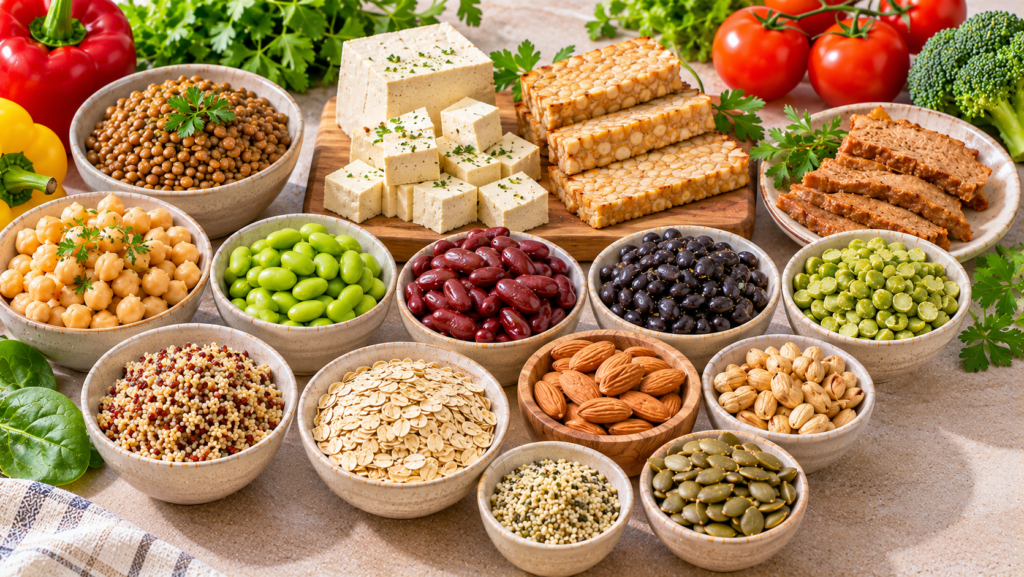
Plant-based protein sources can contribute significantly to daily protein intake. They are especially valuable because many also provide fiber, minerals, and other beneficial nutrients.
Tempeh
Tempeh is made from fermented soybeans and generally contains around 18–20 grams of protein per 100 grams.
Its firm texture makes it suitable for grilling, baking, or stir-frying. Add it to vegetable bowls, wraps, or rice dishes for a substantial plant-based meal.
Tofu
Firm tofu provides approximately 10–17 grams of protein per 100 grams, depending on its water content and brand.
Tofu absorbs flavors from marinades and sauces, making it easy to include in different cuisines. Try it in vegetable curry, noodle dishes, scrambled tofu, or baked tofu bowls.
Edamame
Edamame are young soybeans that provide around 11–12 grams of protein per 100 grams when cooked.
Use frozen edamame for convenience. Add it to salads, rice bowls, pasta, or vegetable soups.
Lentils
Cooked lentils provide approximately 9 grams of protein per 100 grams. They are also rich in dietary fiber and can be an economical everyday food.
Lentils work well in:
- Daal and vegetable curry.
- Lentil soup.
- Rice and lentil bowls.
- Lentil patties.
- Tomato-based pasta sauces.
Chickpeas and Beans
Chickpeas, kidney beans, and black beans generally provide around 8–9 grams of protein per 100 grams when cooked.
These foods are particularly versatile. Add them to salads, soups, wraps, curries, or homemade bean burgers.
If you use canned beans, drain and rinse them to remove some of the added sodium. If cooking dried kidney beans, follow reliable food-safety instructions and cook them thoroughly; raw or undercooked kidney beans can cause illness.
Split Peas and Green Peas
Split peas provide approximately 8 grams of protein per 100 grams when cooked, while green peas provide around 5 grams.
Use split peas in thick soups and stews. Add green peas to rice, pasta, vegetable curries, and mixed salads.
Seitan
Seitan is made primarily from wheat gluten and can contain approximately 20–25 grams of protein per 100 grams.
It can be grilled, pan-fried, or added to wraps and stir-fries. It is not suitable for people with celiac disease or those who need to avoid gluten.
3. Nuts, Seeds, and Whole Grains That Provide Protein
Nuts, seeds, and grains usually provide less protein per typical serving than concentrated foods such as chicken, tempeh, or Greek yogurt. However, they can make useful contributions to meals while supplying fiber, unsaturated fats, and minerals.
Peanuts and Peanut Butter
Peanuts provide approximately 7 grams of protein per 28 grams, while two tablespoons of peanut butter typically provide around 7–8 grams.
Add peanut butter to oatmeal, whole-grain toast, or smoothies. Chopped peanuts can be used in salads, sauces, and stir-fries.
Almonds
A 28-gram serving of almonds provides approximately 6 grams of protein. Almonds also contain vitamin E and unsaturated fats.
Enjoy them as a snack or add chopped almonds to yogurt, breakfast bowls, and salads.
Pumpkin Seeds and Hemp Seeds
Pumpkin seeds provide approximately 8–9 grams of protein per 28 grams. Hemp seeds can provide around 9–10 grams per 30 grams.
Sprinkle them over:
- Oatmeal and yogurt.
- Vegetable soups.
- Salads and grain bowls.
- Homemade snack mixes.
Quinoa
Cooked quinoa provides approximately 4–5 grams of protein per 100 grams. It is also notable for supplying all nine essential amino acids.
Use it as a base for grain bowls, salads, or stuffed vegetables. It can replace some of the rice in familiar meals.
Oats and Whole-Wheat Pasta
Oats and whole-wheat pasta contribute protein along with carbohydrates and other nutrients.
Increase their protein content by adding milk, soy milk, Greek yogurt, beans, lentils, tofu, or seeds. For example, prepare oatmeal with milk and top it with peanut butter and hemp seeds.
How to Choose the Best Protein Foods for Your Needs
The best protein food is not necessarily the one with the highest number in the chart. Your choice should depend on your dietary preferences, budget, nutritional needs, and the foods you enjoy eating.
For People Who Eat Meat and Fish
Chicken, turkey, fish, eggs, and dairy products can provide concentrated protein. Rotate different sources throughout the week and include vegetables, fruit, and whole grains.
For Vegetarians
Useful options include:
- Greek yogurt and cottage cheese.
- Eggs and milk, if included in your diet.
- Tofu, tempeh, and edamame.
- Lentils, chickpeas, and beans.
- Nuts, seeds, and quinoa.
For Vegans
A varied vegan diet can provide protein through:
- Tofu and tempeh.
- Lentils and split peas.
- Chickpeas and beans.
- Edamame.
- Seitan, if gluten is suitable.
- Nuts, seeds, and whole grains.
Vegans should also plan for nutrients that may be difficult to obtain from unfortified plant foods, especially vitamin B12. Use a reliable source such as appropriately fortified foods or a suitable supplement.
For People on a Budget
Some of the most practical affordable protein sources include dried lentils, beans, chickpeas, split peas, eggs, peanuts, oats, and canned fish.
Buying dried legumes in larger quantities, cooking them at home, and freezing meal-sized portions can reduce costs and food waste.
How Much Protein Do You Need Each Day?
Protein needs differ depending on body weight, age, activity level, health, and life stage.
For many healthy adults, the general recommended dietary allowance is approximately 0.8 grams of protein per kilogram of body weight per day. This is a baseline guideline, not a personalized target for every person.
Daily Protein Reference Chart
| Body weight | Approximate baseline protein |
|---|---|
| 50 kg | 40 g per day |
| 55 kg | 44 g per day |
| 60 kg | 48 g per day |
| 65 kg | 52 g per day |
| 70 kg | 56 g per day |
| 75 kg | 60 g per day |
| 80 kg | 64 g per day |
| 85 kg | 68 g per day |
| 90 kg | 72 g per day |
| 100 kg | 80 g per day |
These estimates use the 0.8 g/kg guideline. Individual requirements may differ, particularly for athletes, older adults, pregnant or breastfeeding people, and those recovering from illness.
People with kidney disease or other conditions that affect protein metabolism should seek individualized advice from a qualified healthcare professional or registered dietitian before changing their protein intake.
Harvard T.H. Chan School of Public Health — Protein
How to Use the High Protein Foods Chart for Meal Planning
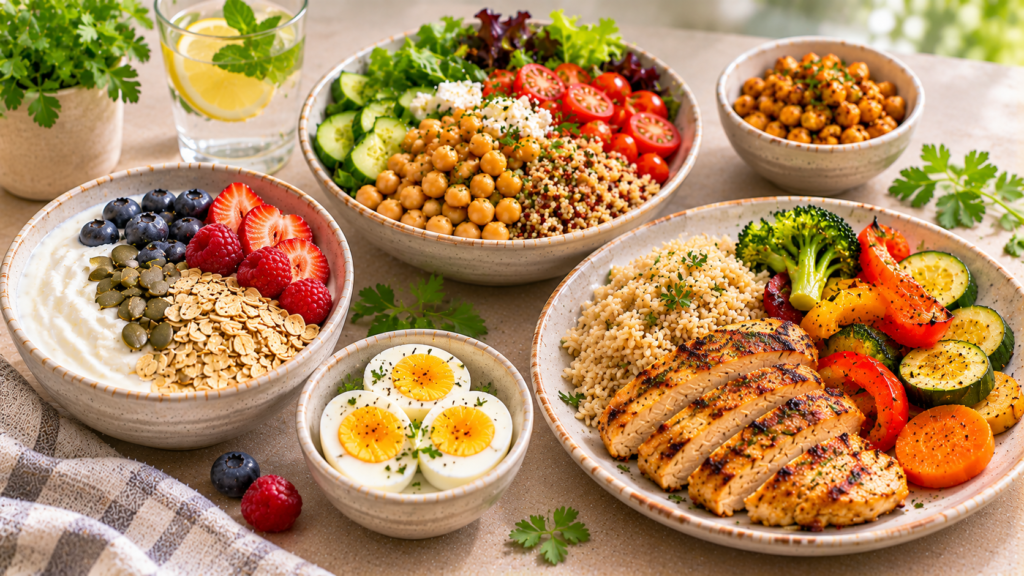
A food chart becomes more useful when you turn it into practical meals. Instead of focusing only on individual foods, combine protein sources with vegetables, whole grains, and suitable fats.
High Protein Breakfast Combinations
| Breakfast | Protein sources |
|---|---|
| Eggs with whole-grain toast | Eggs and bread |
| Greek yogurt with oats | Yogurt and oats |
| Peanut butter oatmeal | Peanut butter, oats, and milk |
| Cottage cheese toast | Cottage cheese and bread |
| Soy milk smoothie | Soy milk, yogurt alternative, and seeds |
High Protein Lunch Combinations
| Lunch | Protein sources |
|---|---|
| Chicken and vegetable wrap | Chicken |
| Lentil daal with roti | Lentils and wheat |
| Chickpea quinoa salad | Chickpeas and quinoa |
| Tuna sandwich | Tuna |
| Tofu rice bowl | Tofu |
High Protein Dinner Combinations
| Dinner | Protein sources |
|---|---|
| Grilled salmon with vegetables | Salmon |
| Chicken and brown rice | Chicken |
| Kidney bean curry | Kidney beans |
| Tempeh stir-fry | Tempeh |
| Shrimp with whole-wheat pasta | Shrimp and pasta |
High Protein Snack Combinations
- Greek yogurt with almonds.
- Boiled eggs.
- Roasted chickpeas.
- Cottage cheese with fruit.
- Edamame.
- Peanut butter on whole-grain toast.
- A small serving of pumpkin seeds.
Actual protein totals depend on portions. Add the values from the ingredients you use rather than assuming every meal combination provides a particular amount.
Tips for Getting More Protein From Everyday Foods
You do not need complicated recipes or expensive products to increase protein intake. A few consistent habits can make meal planning easier.
1. Include a Protein Source in Main Meals
Choose one main protein food for breakfast, lunch, and dinner. Examples include eggs at breakfast, lentils at lunch, and tofu or chicken at dinner.
2. Prepare Protein Foods Ahead of Time
Cook lentils, beans, chicken, or tofu in batches. Divide them into portions and refrigerate or freeze them safely so they are ready for quick meals.
3. Add Small Protein Boosters
Use seeds, nuts, yogurt, milk, or peanut butter to increase the protein content of meals you already enjoy.
4. Choose Convenient Pantry Foods
Keep oats, canned beans, peanut butter, canned fish, and nuts available. Frozen edamame and vegetables can also be useful for quick meals.
5. Read Nutrition Labels
Compare protein amounts per serving, not just per package. Also check sodium, added sugar, and saturated fat, especially in processed meats, flavored yogurts, cheeses, and ready-made meals.
6. Eat a Variety of Protein Sources
Different foods provide different combinations of amino acids and other nutrients. Include a mixture of legumes, soy foods, grains, nuts, seeds, dairy, eggs, meat, or fish according to your dietary pattern.
30 High Protein Foods to Add to Your Diet
High Protein Foods for Breakfast
High Protein Foods for Lunch and Dinner
Common Mistakes When Using a Protein Foods Chart
A chart is a helpful reference, but it can be misleading if serving sizes and food preparation are ignored.
- Comparing raw and cooked weights: Cooking changes water content and therefore protein per 100 grams. Compare like with like.
- Ignoring serving sizes: A food may look high in protein per 100 grams but be eaten in much smaller portions.
- Choosing food based only on protein: Fiber, vitamins, minerals, sodium, saturated fat, and overall dietary balance matter too.
- Relying on one protein source: Eating a variety of foods makes it easier to obtain a broad range of nutrients.
- Assuming all plant-based products are equally high in protein: Almond milk, oat milk, and some meat alternatives may contain much less protein than expected. Read the label.
- Treating the chart as a personalized diet plan: Protein requirements vary. A general chart cannot account for every individual’s health or nutritional needs.
Frequently Asked Questions About the High Protein Foods Chart
Which food has the highest protein in the high protein foods chart?
Seitan, cooked chicken breast, turkey breast, and some fish are among the most concentrated sources in this chart. Seitan can provide around 20–25 grams per 100 grams, while cooked chicken breast provides approximately 31 grams per 100 grams.
What are the best high protein foods for everyday meals?
Chicken, eggs, Greek yogurt, lentils, chickpeas, beans, tofu, tempeh, fish, and cottage cheese are practical options. The best choices depend on your dietary preferences, budget, and nutritional needs.
Which vegetarian foods are highest in protein?
Tempeh, seitan, tofu, edamame, lentils, chickpeas, beans, Greek yogurt, cottage cheese, and eggs are useful vegetarian protein sources. Seitan is unsuitable for people who must avoid gluten.
Which foods contain 20 grams of protein or more?
Depending on the serving and product, cooked chicken, turkey, lean beef, tuna, salmon, shrimp, seitan, and some servings of tempeh can provide approximately 20 grams or more of protein.
How can I get 100 grams of protein a day?
A 100-gram target may suit some people but is not necessary for everyone. If it is appropriate for your needs, you can distribute protein across meals using foods such as eggs, yogurt, chicken, fish, tofu, lentils, and beans. Seek personalized advice if you are unsure of your target.
Are plant-based proteins as useful as animal proteins?
Plant-based foods can provide the protein needed for a healthy diet. Some, such as soy foods, provide all nine essential amino acids. Eating a variety of plant protein sources across the day can help meet amino acid requirements.
Is protein per 100 grams better than protein per serving?
Both measurements are useful. Protein per 100 grams helps compare foods on a standardized basis, while protein per serving gives a more practical picture of how much you are likely to eat.
Can I use this high protein foods chart for weight management?
Yes, it can help you compare protein sources and plan balanced meals. However, weight management also depends on overall energy intake, food quality, physical activity, sleep, and individual circumstances. No single high-protein food guarantees weight loss.
Conclusion: Use This High Protein Foods Chart to Build Better Meals
A high protein foods chart is a practical tool for understanding how much protein different foods provide and making more informed meal choices. Chicken, fish, eggs, dairy products, lentils, chickpeas, beans, tofu, tempeh, nuts, and seeds can all contribute to daily protein intake.
The most useful approach is to choose foods you enjoy, consider realistic serving sizes, and include a variety of protein sources throughout the week. Pair them with vegetables, fruit, and fiber-rich carbohydrates to create balanced meals.
Save this chart as a reference when planning your grocery list or preparing breakfast, lunch, dinner, and snacks. Small, consistent choices can make a nutritious eating routine easier to maintain.