
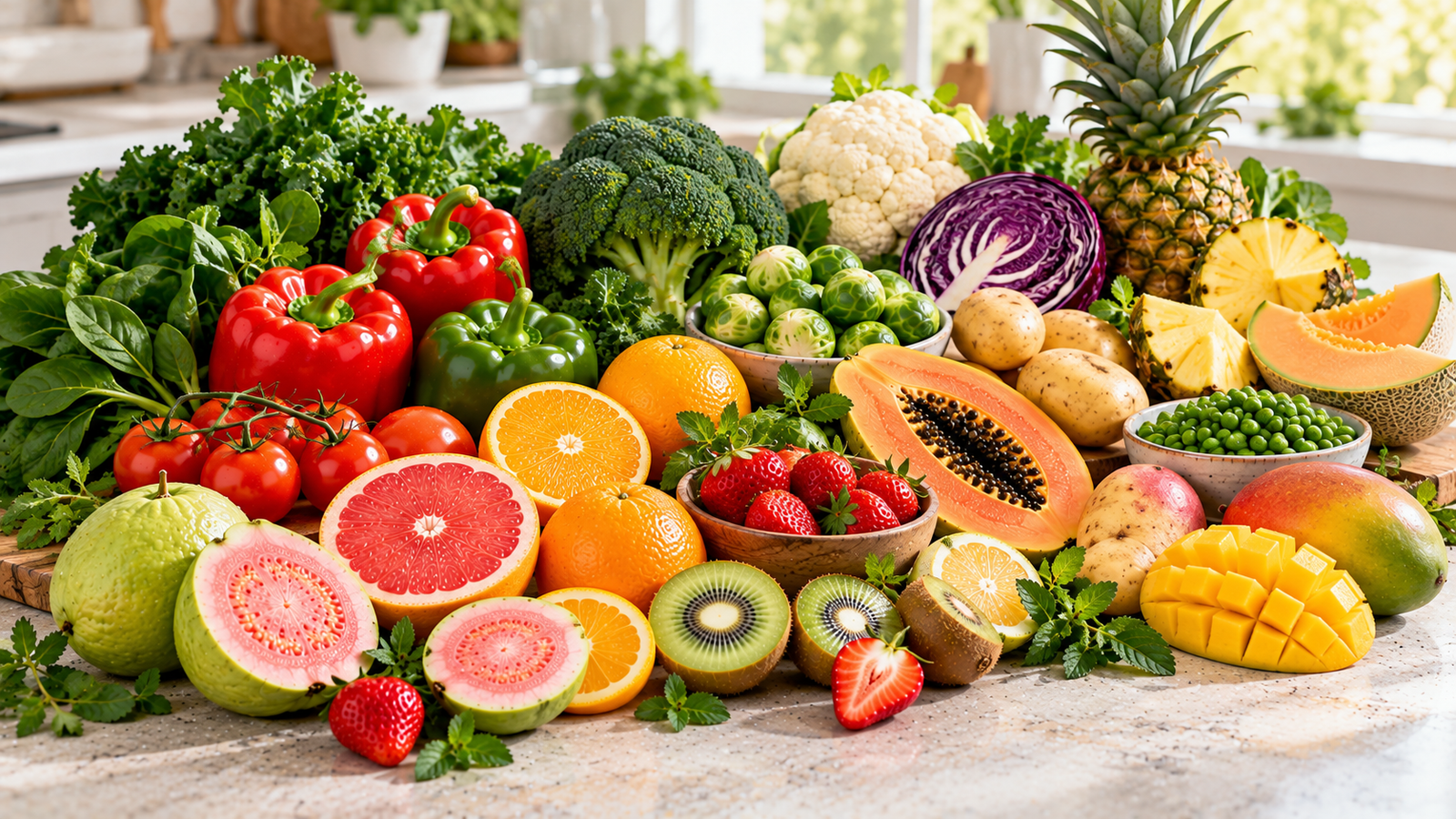
If you’re looking for simple ways to improve your diet, adding more foods high in vitamin C is an excellent place to start.
Vitamin C, also known as ascorbic acid, is a water-soluble vitamin found naturally in many fruits and vegetables. Your body needs it to make collagen, support wound healing, improve the absorption of iron from plant foods, and help the immune system function normally. Vitamin C also acts as an antioxidant.
And you don’t have to rely only on oranges.
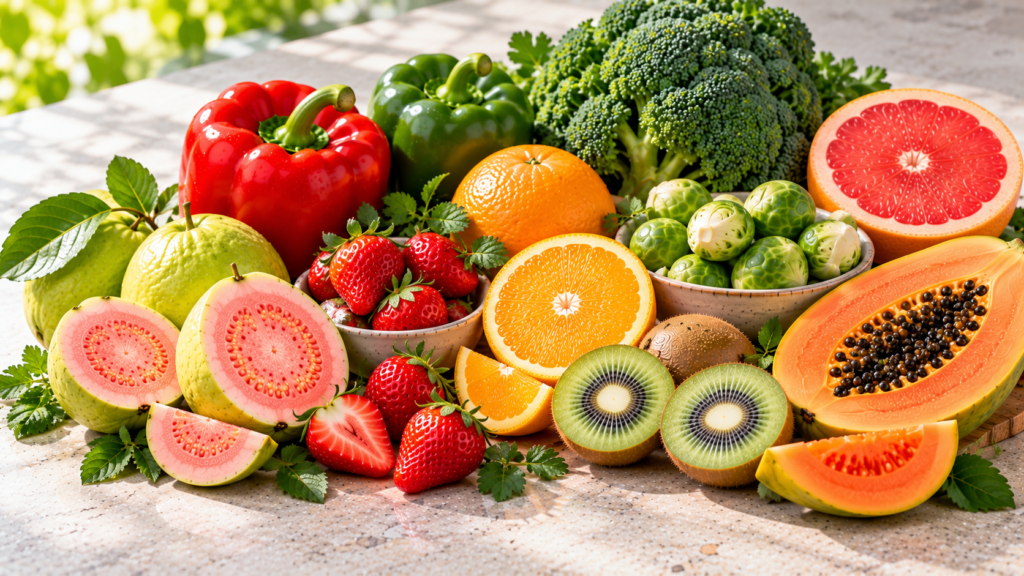
Guava, sweet peppers, kiwi, strawberries, broccoli, Brussels sprouts, tomatoes, citrus fruits, and several other plant foods can contribute significant amounts of vitamin C. In fact, the NIH identifies fruits and vegetables as the best food sources of this nutrient.
This guide covers 20 natural sources of vitamin C, how to use them in everyday meals, how cooking affects vitamin C, and simple food combinations that can make a vitamin C-rich diet easier.
Key Takeaways
- Fruits and vegetables are the primary natural sources of vitamin C.
- Guava, red peppers, kiwi, oranges, broccoli, strawberries, and Brussels sprouts are particularly useful choices.
- Vitamin C helps the body produce collagen and improves absorption of non-heme iron from plant foods.
- Cooking and prolonged storage can reduce vitamin C, so fresh and lightly cooked foods can be useful.
- You can get vitamin C from many different foods rather than relying on a single “superfood.”
- Most adults need about 75–90 mg of vitamin C per day, depending on sex; people who smoke need an additional 35 mg daily.
What Foods Are High in Vitamin C?
The best natural sources of vitamin C are primarily fruits and vegetables.
Some foods stand out because relatively small servings provide substantial amounts. For example, according to the NIH Office of Dietary Supplements, half a cup of raw red sweet pepper provides about 95 mg of vitamin C, one medium orange provides about 70 mg, one medium kiwi about 64 mg, and half a cup of cooked broccoli about 51 mg.
That means you can often get a meaningful amount of vitamin C without eating unusually large portions.
The four main categories
When planning a vitamin C-rich diet, focus on:
- Fruits — guava, kiwi, oranges, strawberries, grapefruit, papaya, and more.
- Vegetables — peppers, broccoli, Brussels sprouts, cabbage, cauliflower, and tomatoes.
- Other plant foods — potatoes and green peas can contribute vitamin C.
- Fortified foods — some products, such as certain breakfast cereals, may have vitamin C added.
This article focuses primarily on natural food sources, rather than fortified products or supplements.
20 Foods High in Vitamin C
1. Guava
Guava is one of the standout choices when you’re looking for foods high in vitamin C.
Its sweet, fragrant flesh can be eaten on its own or added to fruit bowls, smoothies, yogurt, and salads.
Easy ways to eat guava
- Slice it for a snack.
- Add it to a tropical fruit bowl.
- Blend it into a smoothie.
- Pair it with plain yogurt.
- Add diced guava to overnight oats.
Because guava is naturally sweet and fiber-rich, it can be an easy alternative to highly processed sweet snacks.
2. Red Bell Peppers
Red bell peppers are among the most concentrated vegetable sources of vitamin C.
The NIH lists approximately 95 mg of vitamin C in half a cup of raw red sweet pepper, making it a particularly convenient food for increasing dietary vitamin C.
They’re also incredibly versatile.
Add red peppers to:
- Salads
- Omelets
- Wraps
- Sandwiches
- Stir-fries
- Grain bowls
- Homemade salsa
For maximum convenience, slice several peppers at once and store them in the refrigerator for quick snacks.
3. Kiwi
Kiwi is a small fruit with a surprisingly strong vitamin C profile.
One medium kiwifruit provides approximately 64 mg of vitamin C, according to NIH data.
Try kiwi with:
- Greek yogurt
- Oatmeal
- Chia pudding
- Smoothies
- Fresh fruit salads
Kiwi’s tart flavor also works well with sweeter fruits such as mango and strawberries.
4. Oranges
Oranges remain one of the most practical vitamin C rich foods.
One medium orange provides approximately 70 mg of vitamin C.
That’s why an orange can make a simple addition to breakfast or an afternoon snack.
Whole orange or juice?
Both can contain vitamin C, but whole fruit also provides dietary fiber. For everyday eating, whole oranges are an easy choice.
5. Strawberries
Strawberries combine vitamin C with natural sweetness, making them an easy food to include regularly.
Half a cup of sliced fresh strawberries provides approximately 49 mg of vitamin C.
Simple serving ideas
Add strawberries to:
- Oatmeal
- Yogurt
- Whole-grain cereal
- Smoothies
- Cottage cheese
- Fruit salads
You can also freeze fresh strawberries for smoothies or a cold snack.
6. Broccoli
Broccoli is one of the most useful vegetables high in vitamin C.
Half a cup of cooked broccoli provides approximately 51 mg of vitamin C, according to the NIH.
It works well as a side dish or as part of a larger meal.
Quick idea
Steam broccoli until just tender, then add olive oil, lemon juice, garlic, and black pepper.
This creates a flavorful side without requiring a heavy sauce.
7. Brussels Sprouts
Brussels sprouts are another excellent vegetable to rotate into your diet.
Half a cup of cooked Brussels sprouts provides approximately 48 mg of vitamin C.
Best preparation ideas
- Roast until lightly browned.
- Steam and season with herbs.
- Shred into a warm salad.
- Add to a vegetable grain bowl.
Avoid unnecessarily long cooking times when possible because vitamin C is sensitive to heat.
8. Green Bell Peppers
Green peppers may not be as sweet as red peppers, but they can still provide substantial vitamin C.
Half a cup of raw green sweet pepper contains approximately 60 mg of vitamin C.
Use them in:
- Salads
- Fajitas
- Omelets
- Stir-fries
- Sandwiches
- Bean dishes
They’re especially useful for adding crunch and color to savory meals.
9. Grapefruit
Grapefruit provides vitamin C along with a distinctive sweet-tart flavor.
Half a medium grapefruit contains approximately 39 mg of vitamin C.
You can eat it fresh at breakfast or add grapefruit segments to salads.
Important: Grapefruit can interact with certain medications. If you take prescription medicines, ask your pharmacist or healthcare professional whether grapefruit is appropriate for you.
10. Papaya
Papaya is another tropical fruit that can contribute to your daily vitamin C intake.
Its soft texture makes it especially convenient for:
- Smoothies
- Breakfast bowls
- Fruit salads
- Yogurt
- Fresh salsa
For a tropical snack, combine papaya with kiwi, strawberries, and a little lime juice.
11. Cantaloupe
Cantaloupe is a refreshing fruit that contributes vitamin C while adding natural sweetness and hydration to meals.
The NIH lists about 29 mg of vitamin C per half cup.
Easy uses
- Breakfast fruit bowl
- Smoothie ingredient
- Chilled afternoon snack
- Yogurt topping
- Fresh fruit salad
Pair cantaloupe with strawberries or kiwi for a colorful vitamin C-rich snack.
12. Cabbage
Cabbage is an inexpensive and versatile vegetable that can contribute vitamin C.
Half a cup of cooked cabbage provides approximately 28 mg according to the NIH’s selected-food table.
Use cabbage in:
- Coleslaw
- Stir-fries
- Soups
- Vegetable wraps
- Salads
- Curries
Raw cabbage can be especially convenient when you want to avoid unnecessary heat exposure.
13. Cauliflower
Cauliflower is another vegetable that deserves a place on your list of foods high in vitamin C.
Half a cup of raw cauliflower provides approximately 26 mg.
Roast it with herbs and spices, add it to curries, or use it in a vegetable-rich grain bowl.
14. Tomatoes
Tomatoes are easy to eat regularly, which makes them valuable even though they don’t provide as much vitamin C per serving as peppers or citrus fruits.
One medium raw tomato provides approximately 17 mg of vitamin C.
Simple ideas
- Add tomatoes to breakfast eggs.
- Use them in salads.
- Make fresh salsa.
- Add them to sandwiches.
- Mix chopped tomatoes into bean or lentil dishes.
Small amounts eaten regularly can contribute to overall intake.
15. Potatoes
Potatoes are an often-overlooked source of vitamin C.
A medium baked potato provides approximately 17 mg of vitamin C.
The nutritional value of the overall meal depends on how the potato is prepared and what accompanies it.
Try a baked potato with:
- Beans
- Plain yogurt
- Broccoli
- Chopped tomatoes
- Herbs
This creates a more nutrient-dense meal than relying on heavily fried potato products.
16. Spinach
Spinach contains vitamin C along with several other nutrients.
Half a cup of cooked spinach provides approximately 9 mg of vitamin C.
While spinach isn’t as concentrated in vitamin C as red peppers or citrus, it can still contribute as part of a varied diet.
Use it in:
- Omelets
- Soups
- Lentil dishes
- Curries
- Smoothies
- Grain bowls
17. Green Peas
Green peas provide a modest amount of vitamin C.
Half a cup of cooked frozen green peas provides approximately 8 mg according to the NIH’s selected-food table.
They’re particularly easy to add to:
- Rice
- Pasta
- Soups
- Curries
- Vegetable mixes
- Grain bowls
They may not be the most concentrated source, but small contributions from several foods add up.
18. Kale
Kale can contribute vitamin C while also bringing fiber and other micronutrients to meals.
Add raw kale to salads or gently cook it into soups and stir-fries.
Make kale easier to enjoy
Massage raw kale leaves with a small amount of olive oil and lemon juice. This softens the leaves and creates a flavorful base for salads.
19. Pineapple
Pineapple is a naturally sweet tropical fruit that can contribute vitamin C.
Use fresh pineapple in:
- Smoothies
- Fruit bowls
- Salsa
- Yogurt
- Oatmeal
For a balanced snack, combine pineapple with plain yogurt or a handful of nuts rather than relying on fruit alone.
20. Mango
Mango rounds out this list with a flavorful, versatile fruit that can contribute vitamin C.
Use fresh mango in:
- Smoothies
- Fruit salads
- Yogurt bowls
- Salsa
- Overnight oats
Mango pairs particularly well with strawberries, kiwi, lime, and plain yogurt.
Vitamin C Content of Common Foods
The following examples show why variety matters. The amounts are approximate and can vary based on serving size, variety, preparation, and food source.
| Food | Example serving | Approx. vitamin C |
|---|---|---|
| Red sweet pepper | ½ cup raw | 95 mg |
| Orange juice | ¾ cup | 93 mg |
| Orange | 1 medium | 70 mg |
| Kiwi | 1 medium | 64 mg |
| Green sweet pepper | ½ cup raw | 60 mg |
| Broccoli | ½ cup cooked | 51 mg |
| Strawberries | ½ cup sliced | 49 mg |
| Brussels sprouts | ½ cup cooked | 48 mg |
| Grapefruit | ½ medium | 39 mg |
| Broccoli | ½ cup raw | 39 mg |
| Cantaloupe | ½ cup | 29 mg |
| Cabbage | ½ cup cooked | 28 mg |
| Cauliflower | ½ cup raw | 26 mg |
| Potato | 1 medium baked | 17 mg |
| Tomato | 1 medium raw | 17 mg |
| Spinach | ½ cup cooked | 9 mg |
| Green peas | ½ cup cooked | 8 mg |
These figures come from the NIH Office of Dietary Supplements’ selected vitamin C food table.
For a broader database of nutrient values, you can also use the USDA’s FoodData Central.
USDA FoodData Central vitamin C food database
How Much Vitamin C Do You Need?
Vitamin C requirements vary by age, sex, pregnancy, breastfeeding status, and smoking status.
For adults:
| Group | Recommended amount per day |
|---|---|
| Adult men | 90 mg |
| Adult women | 75 mg |
| Pregnant women | 85 mg |
| Breastfeeding women | 120 mg |
| People who smoke | Add 35 mg |
These are current NIH-listed recommendations.
The important point is that you don’t have to consume one huge serving of a single food.
A combination such as an orange at breakfast, peppers at lunch, and broccoli at dinner can make reaching your daily target much easier.
Why Is Vitamin C Important?
Choosing foods high in vitamin C is about more than meeting a number on a nutrition label.
Vitamin C Helps Make Collagen
Your body needs vitamin C to produce collagen, a protein involved in skin, connective tissue, blood vessels, cartilage, and wound healing.
Vitamin C Helps Absorb Plant-Based Iron
Vitamin C improves the absorption of non-heme iron, the form of iron found in plant foods.
This makes vitamin C particularly useful when building plant-forward meals.
For example:
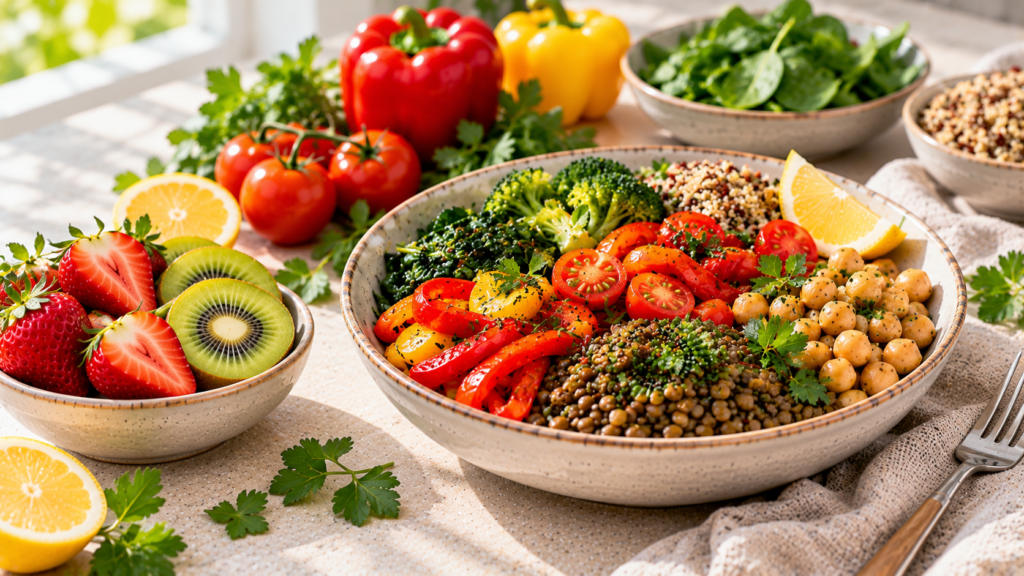
Lentils + tomatoes + red bell pepper
or
Chickpeas + spinach + lemon
or
Beans + cabbage + tomato
Vitamin C Acts as an Antioxidant
Vitamin C functions as an antioxidant and helps protect cells from free-radical damage.
Vitamin C Supports Normal Immune Function
Vitamin C is involved in normal immune function. Adequate nutrition is important for maintaining normal physiological processes, but consuming very large amounts of vitamin C is not a substitute for medical treatment or a balanced diet.
How Cooking Affects Vitamin C
Vitamin C is water-soluble and sensitive to heat. Prolonged storage and cooking can reduce the amount present in food.
That doesn’t mean you should avoid cooked vegetables.
Instead, use a mixture of preparation methods.
Eat Some Foods Fresh
Foods such as:
- Oranges
- Kiwi
- Strawberries
- Guava
- Papaya
- Bell peppers
can easily be eaten without cooking.
Steam Vegetables
Steaming can be a practical way to cook broccoli and Brussels sprouts while limiting some nutrient losses. The NIH notes that steaming or microwaving may lessen vitamin C losses.
Avoid Unnecessarily Long Cooking
If a vegetable only needs a few minutes to become tender, there is usually no reason to cook it for much longer.
Store Produce Properly
Long storage can reduce vitamin C content. Buying fresh produce regularly and using it relatively soon can help preserve its nutritional value.
Best Ways to Add More Vitamin C to Your Diet
You don’t need to completely change your eating habits.
Small additions can make a big difference.
At Breakfast
Choose:
- Kiwi with yogurt
- Strawberries with oatmeal
- Orange with eggs
- Guava smoothie
- Papaya fruit bowl
At Lunch
Add:
- Red peppers to a salad
- Tomatoes to a sandwich
- Cabbage to a wrap
- Lemon juice to lentils
- Broccoli to a grain bowl
At Dinner
Try:
- Steamed broccoli
- Roasted Brussels sprouts
- Bell pepper stir-fry
- Tomato and vegetable curry
- Baked potato with broccoli
For Snacks
Keep easy options available:
- Orange
- Kiwi
- Strawberries
- Guava
- Bell pepper strips
- Fresh papaya
Easy Vitamin C and Iron Food Pairings
One particularly useful strategy is to pair foods high in vitamin C with plant-based iron sources.
Vitamin C can increase the absorption of non-heme iron.
Try these combinations:
| Vitamin C food | Plant-based iron food |
|---|---|
| Red bell pepper | Chickpeas |
| Tomato | Lentils |
| Broccoli | Beans |
| Lemon | Leafy greens |
| Strawberries | Oatmeal |
| Kiwi | Seeds |
| Cabbage | Beans |
These combinations don’t require complicated recipes.
For example, squeeze fresh lemon over a lentil salad or add chopped red pepper to a chickpea bowl.
Are Fresh or Frozen Foods Better?
Both fresh and frozen fruits and vegetables can have a place in a healthy diet.
The actual vitamin C content depends on the specific food, storage conditions, processing, and preparation.
The most important thing is to eat a variety of fruits and vegetables consistently.
If frozen vegetables make it easier to keep broccoli, peas, or other produce available, they can be a practical choice.
Can You Get Enough Vitamin C From Food?
For most healthy people, a varied diet can provide adequate vitamin C.
The NIH recommends obtaining most nutrients from food and beverages, while fortified foods and dietary supplements can be useful in certain situations.
A food-first approach also gives you other nutrients and dietary components that a vitamin C supplement doesn’t provide.
For example, eating an orange gives you vitamin C along with the rest of the fruit’s nutritional profile.
Eating broccoli provides more than vitamin C alone.
That’s one reason variety matters.
What About Vitamin C Supplements?
Vitamin C supplements are widely available, but more isn’t necessarily better.
For adults, the tolerable upper intake level is 2,000 mg per day from all sources. Excessive intake can cause diarrhea, nausea, and stomach cramps.
For most people, the first step should be to build a diet containing plenty of fruits and vegetables.
If you are considering high-dose vitamin C supplements, especially if you have a medical condition or take medications, talk with a healthcare professional.
Common Mistakes When Eating Foods High in Vitamin C
Mistake 1: Eating Only Oranges
Oranges are excellent, but they aren’t your only option.
Try rotating citrus with guava, kiwi, strawberries, peppers, broccoli, and other vegetables.
Mistake 2: Overcooking Vegetables
Long cooking can reduce vitamin C.
Try steaming, quick sautéing, or shorter cooking times where appropriate.
Mistake 3: Ignoring Vegetables
Many people associate vitamin C almost exclusively with fruit.
In reality, vegetables such as red peppers, green peppers, broccoli, and Brussels sprouts can provide substantial amounts.
Mistake 4: Relying Entirely on Supplements
A supplement provides vitamin C but doesn’t replace the fiber and variety found in whole foods.
Mistake 5: Chasing Extremely High Intake
Meeting your body’s nutritional needs is the goal—not consuming the largest possible dose.
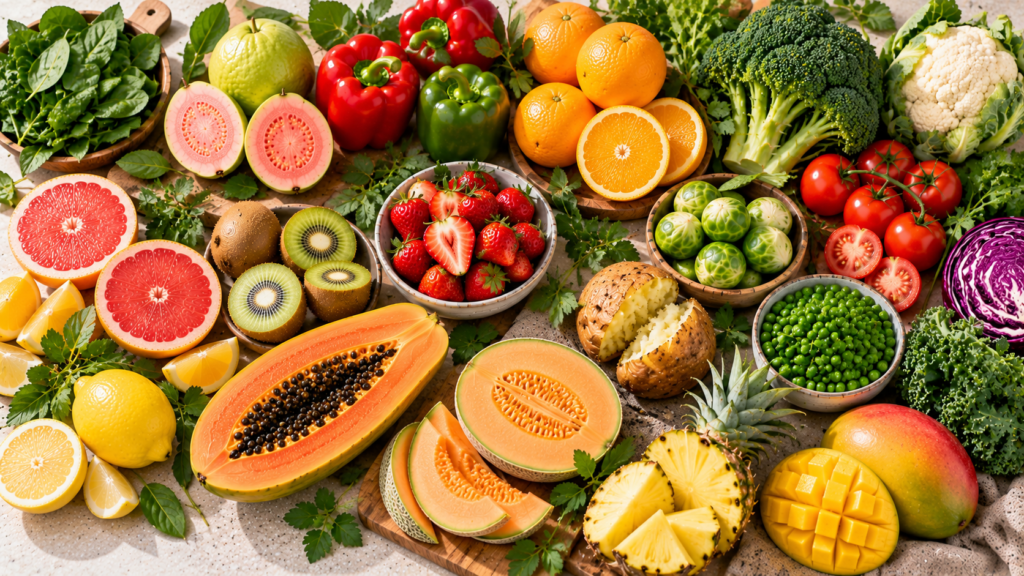
A Simple One-Day Vitamin C Food Plan
You don’t need to eat all 20 foods in one day.
Here’s an easy example of how several sources can fit into a normal routine.
Breakfast
Kiwi + strawberries + plain yogurt + oats
Lunch
Chickpea salad + red bell peppers + tomatoes + lemon
Snack
One orange or guava
Dinner
Baked potato + steamed broccoli + protein-rich main dish
Optional evening snack
Fresh papaya or a small fruit bowl
This approach spreads vitamin C sources throughout the day rather than concentrating everything into one meal.
Frequently Asked Questions
What are the best foods high in vitamin C?
Some of the strongest natural sources include red bell peppers, oranges, kiwi, broccoli, strawberries, Brussels sprouts, and other fruits and vegetables.
Which fruit is highest in vitamin C?
Guava is widely recognized as a particularly rich natural source, while kiwi, oranges, strawberries, papaya, and several other fruits also provide meaningful amounts.
What vegetables are high in vitamin C?
Red and green bell peppers, broccoli, Brussels sprouts, cabbage, cauliflower, tomatoes, and leafy greens can contribute vitamin C.
What foods are high in vitamin C and iron?
Plant-based combinations such as lentils with tomatoes, chickpeas with bell peppers, beans with broccoli, and leafy greens with lemon can pair vitamin C with plant-based iron.
How much vitamin C should an adult get daily?
The recommended amount is 90 mg per day for adult men and 75 mg for adult women. Pregnant and breastfeeding women have higher recommendations, while people who smoke need an additional 35 mg daily.
Does cooking reduce vitamin C?
Yes. Vitamin C is sensitive to heat and can be reduced by prolonged cooking and storage. Steaming or microwaving may help limit some cooking losses.
Can I get enough vitamin C from fruits and vegetables?
Yes. For most healthy people, eating a varied diet containing fruits and vegetables can provide adequate vitamin C.
Are foods high in vitamin C better than supplements?
Whole foods provide vitamin C along with other nutrients and dietary components. Supplements can be useful in some circumstances, but they aren’t automatically better than getting vitamin C from a varied diet.
Conclusion
Eating more foods high in vitamin C doesn’t have to mean drinking orange juice every morning or taking a supplement.
There are plenty of natural choices.
Guava, red bell peppers, kiwi, oranges, strawberries, broccoli, Brussels sprouts, grapefruit, papaya, tomatoes, cabbage, cauliflower, potatoes, leafy greens, pineapple, and other fruits and vegetables can all contribute to your daily vitamin C intake.
The best approach is variety. Include fruit at breakfast, colorful vegetables at lunch and dinner, and vitamin C-rich snacks when convenient. When eating plant-based sources of iron, adding a vitamin C food can also help your body absorb more of that iron.
You don’t need a perfect diet or a complicated meal plan. A few simple choices repeated consistently can make vitamin C a natural part of your everyday eating pattern.
5 thoughts on “Foods High in Vitamin C: 20 Natural Sources”