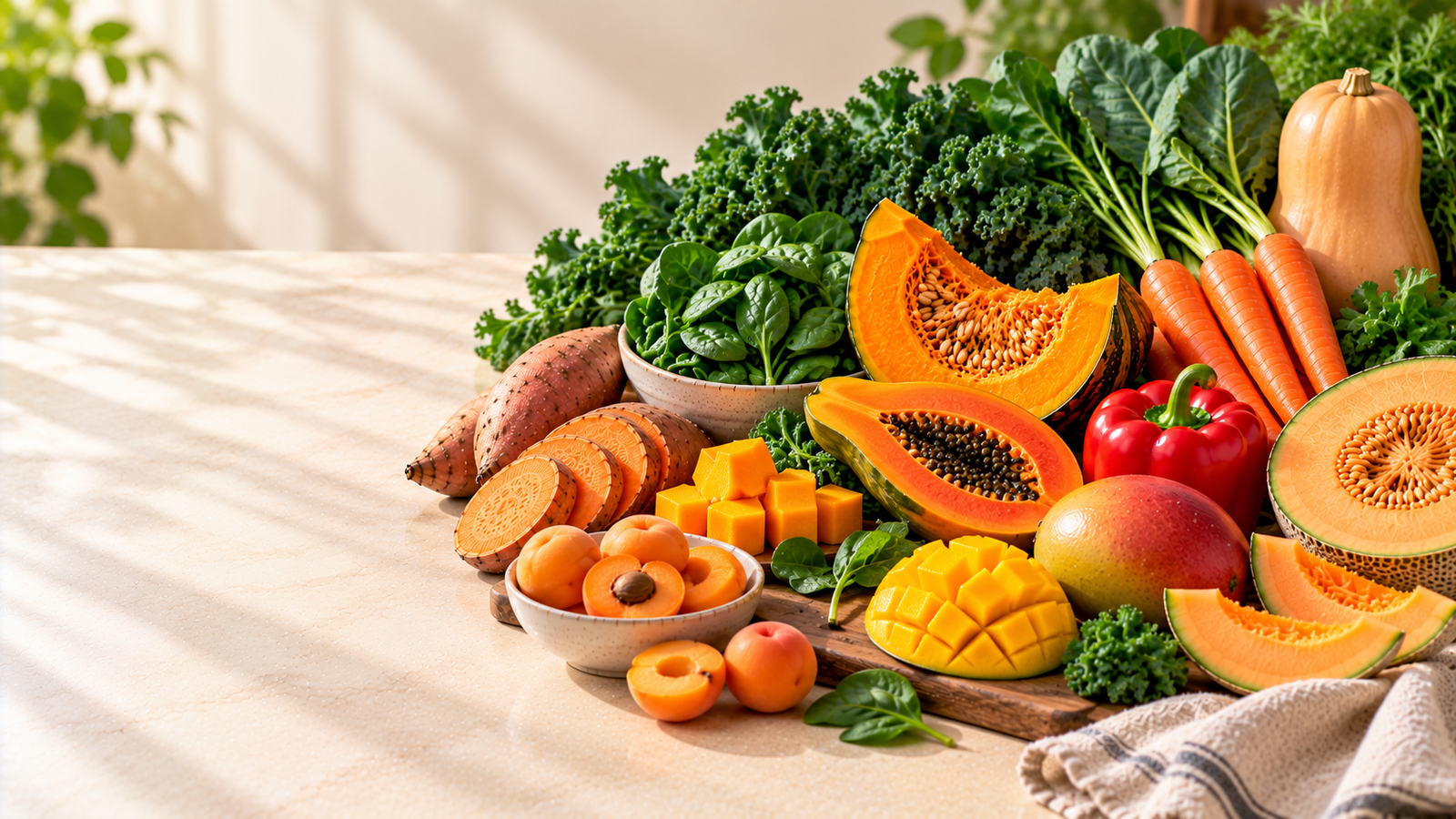
Fruits and vegetables high in vitamin A are an excellent way to add essential nutrients to your everyday diet. Many colorful plant foods contain beta-carotene and other carotenoids that the body can convert into vitamin A, which supports normal vision, immune function, healthy skin, and cell growth.
Carrots, sweet potatoes, spinach, pumpkin, mangoes, and cantaloupe are among the best choices for increasing your intake of vitamin A precursors. The good news is that you do not need an expensive diet or complicated recipes to enjoy these foods. A combination of colorful vegetables, leafy greens, and vitamin A-rich fruits can help you build nutritious, satisfying meals.
In this guide, you will discover the best fruits and vegetables high in vitamin A, how they contribute to your nutritional needs, and simple ways to include them in breakfast, lunch, dinner, and snacks.
Most Important Points
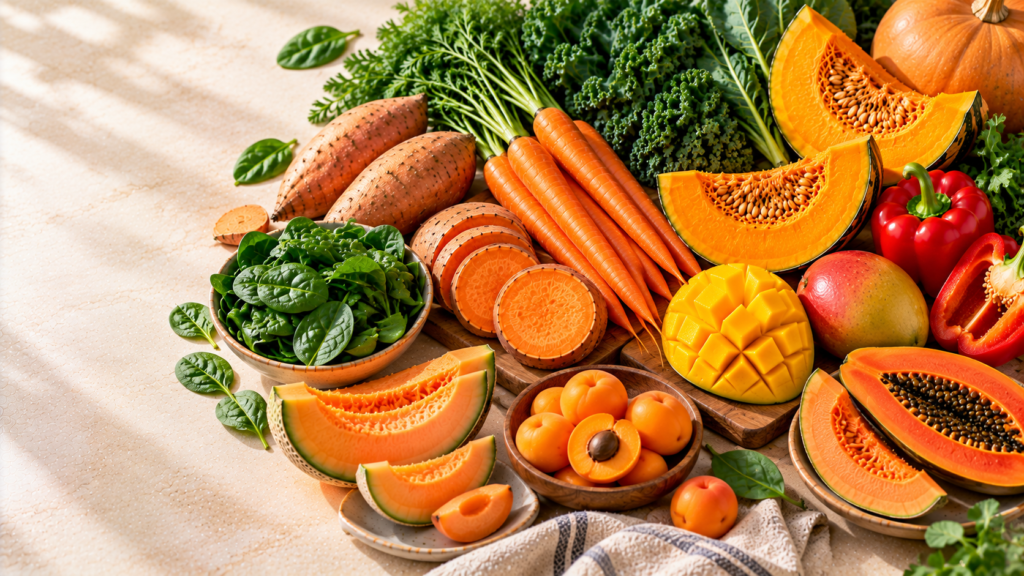
- Orange vegetables such as sweet potatoes, carrots, and pumpkin are excellent sources of beta-carotene.
- Dark leafy greens, including spinach and kale, also provide substantial amounts of provitamin A carotenoids.
- Fruits such as mangoes, cantaloupe, papaya, and apricots can contribute to your daily vitamin A intake.
- Vitamin A supports normal vision, immune defenses, skin health, and cell development.
- A little dietary fat, such as olive oil, nuts, or avocado, can help your body absorb fat-soluble carotenoids.
- Plant foods supply provitamin A rather than preformed vitamin A, and conversion varies between individuals.
- Eating a variety of colorful produce is generally more useful than relying on one food alone.
What Is Vitamin A, and Why Does Your Body Need It?
Vitamin A is an essential fat-soluble nutrient involved in several important body functions. It occurs naturally in animal foods as preformed vitamin A, including retinol, and in many colorful plant foods as provitamin A carotenoids, especially beta-carotene.
Your body converts some of these plant carotenoids into active vitamin A as needed. The amount converted depends on factors such as the specific food, food preparation, overall diet, and individual differences.
Key benefits of vitamin A
- Normal vision: Vitamin A is needed to produce rhodopsin, a pigment that helps the eyes see in low-light conditions.
- Immune function: It helps maintain normal immune responses and healthy protective tissues.
- Skin and tissue health: Vitamin A supports normal cell growth and the maintenance of epithelial tissues.
- Growth and development: It plays a role in normal cellular development and reproduction.
- Healthy mucous membranes: It helps maintain the tissues lining areas such as the respiratory and digestive tracts.
Eating vitamin A-rich produce supports a balanced diet, but no single fruit or vegetable can guarantee healthy eyesight or prevent every vitamin deficiency.
20 Best Fruits and Vegetables High in Vitamin A
The following foods are practical choices for increasing your intake of provitamin A carotenoids. Their exact vitamin A contribution depends on variety, ripeness, serving size, preparation, and nutrient-conversion estimates.
1. Sweet Potatoes

Sweet potatoes are one of the standout plant sources of beta-carotene. Their naturally sweet flavor makes them easy to incorporate into both savory dishes and simple snacks.
Why they are nutritious: Orange-fleshed sweet potatoes can provide substantial amounts of provitamin A carotenoids, alongside fiber and other nutrients.
How to eat them:
- Roast wedges with olive oil and herbs.
- Bake and serve with beans or lentils.
- Mash them as a side dish.
- Add cooked cubes to soups and grain bowls.
Choose orange-fleshed varieties when your main goal is to increase beta-carotene intake.
2. Carrots

Carrots are widely recognized for their beta-carotene content. Your body can convert beta-carotene into vitamin A, making carrots a practical addition to a nutrient-rich diet.
Benefits: Carrots provide carotenoids, fiber, and a naturally sweet flavor without requiring added sugar.
How to eat them:
- Grate carrots into salads.
- Add them to vegetable soups.
- Roast them with a little olive oil.
- Blend them into homemade vegetable soups or sauces.
Cooked carrots can be a useful option because cooking softens their structure and can improve carotenoid bioaccessibility.
3. Spinach
Spinach is a nutrient-dense leafy green that provides provitamin A carotenoids alongside vitamin K, folate, and other nutrients.
Benefits: It contributes to normal vision and general nutritional health as part of a balanced diet.
How to eat it:
- Add fresh spinach to omelets.
- Stir it into lentil curry.
- Mix it into soups and pasta.
- Sauté it briefly with olive oil and garlic.
Frozen spinach is also a convenient option, particularly for cooked meals.
4. Pumpkin
Pumpkin’s orange flesh indicates the presence of carotenoid pigments, including beta-carotene in many varieties.
Benefits: Pumpkin can provide provitamin A carotenoids and fiber while adding natural sweetness to savory recipes.
How to eat it:
- Roast pumpkin wedges.
- Make pumpkin soup.
- Add pumpkin puree to savory sauces.
- Combine it with beans or whole grains.
Fresh and unsweetened canned pumpkin can both be useful choices.
5. Kale
Kale is a dark leafy vegetable that supplies beta-carotene and other carotenoids. It also contributes vitamin C, vitamin K, and fiber.
How to eat it:
- Add chopped kale to soups.
- Massage raw kale with a little olive oil for salads.
- Sauté it as a side dish.
- Mix it with spinach in vegetable dishes.
Rotate kale with other leafy greens to enjoy a wider range of nutrients.
6. Mangoes
Mangoes are a delicious fruit source of beta-carotene. Their sweet, tropical flavor makes them easy to enjoy without added sugar.
Benefits: Mangoes contribute carotenoids, vitamin C, and fiber.
How to eat them:
- Enjoy fresh mango slices.
- Add diced mango to plain yogurt.
- Blend mango into a smoothie.
- Combine it with cucumber and lime for a fresh salsa.
A serving of mango can contribute to vitamin A intake, although its concentration is generally lower than that of especially rich orange vegetables.
7. Cantaloupe
Cantaloupe, also known as muskmelon in some regions, contains beta-carotene and provides water and vitamin C.
How to eat it:
- Serve chilled melon at breakfast.
- Add cubes to a fresh fruit bowl.
- Pair it with plain yogurt.
- Enjoy it as a refreshing afternoon snack.
Its naturally sweet flavor makes cantaloupe an easy way to add variety to a fruit-rich diet.
8. Red Bell Peppers
Red bell peppers provide carotenoids, including beta-carotene, along with a notable amount of vitamin C.
How to eat them:
- Slice them for snacks.
- Add them to stir-fries.
- Roast them with other vegetables.
- Use them in salads, wraps, and omelets.
Their bright color also makes meals more visually appealing.
9. Papaya
Papaya is a tropical fruit that supplies beta-carotene and vitamin C. The ripe orange flesh is soft, sweet, and easy to serve.
How to eat it:
- Enjoy ripe papaya on its own.
- Add cubes to a fruit salad.
- Combine it with lime juice.
- Serve it with unsweetened yogurt.
Papaya is particularly useful when you want to include more colorful fruit in breakfast or snacks.
10. Apricots
Apricots contain carotenoids that contribute to their yellow-orange color. Fresh and dried apricots can both fit into a balanced diet.
How to eat them:
- Snack on fresh apricots when in season.
- Add chopped apricots to oatmeal.
- Mix a few dried apricots with nuts.
- Include them in homemade trail mix.
Remember that dried fruit is more concentrated in calories and natural sugars per gram because much of its water has been removed. Check labels for added sugar where relevant.
11. Collard Greens
Collard greens are leafy vegetables that contain beta-carotene, vitamin K, and fiber.
How to eat them:
- Simmer them in vegetable or bean stews.
- Cook them with garlic and a small amount of olive oil.
- Add finely chopped leaves to soups.
- Serve them alongside whole grains and legumes.
Collard greens are a useful alternative when you want to vary the leafy vegetables in your diet.
12. Swiss Chard
Swiss chard has broad green leaves and colorful stems. Its leaves contain provitamin A carotenoids and other micronutrients.
How to eat it:
- Sauté the leaves with garlic.
- Add chopped chard to soups.
- Stir it into cooked lentils.
- Use tender leaves in mixed-green salads.
Cooking can reduce the volume of leafy vegetables considerably, making it easier to eat a larger portion.
13. Mustard Greens
Mustard greens are particularly useful in South Asian cooking and provide carotenoids along with other vitamins and minerals.
How to eat them:
- Prepare sarson ka saag.
- Combine them with spinach or other greens.
- Add chopped leaves to lentil dishes.
- Serve cooked greens with whole-wheat roti.
Traditional vegetable dishes can make nutrient-rich leafy greens a regular part of everyday meals.
14. Turnip Greens
The leaves of turnips are nutritious and should not be confused with the white turnip root. The greens contain beta-carotene and other important nutrients.
How to eat them:
- Cook them with onions and spices.
- Add them to soups.
- Mix them with other leafy vegetables.
- Sauté them as a side dish.
If available fresh, turnip greens offer another way to diversify your vegetable intake.
15. Butternut Squash
Butternut squash has a deep orange flesh that provides beta-carotene.
How to eat it:
- Roast cubes with herbs.
- Make a smooth squash soup.
- Add it to vegetable curries.
- Mash cooked squash as a side dish.
It can often be used in recipes that call for pumpkin or sweet potato.
16. Romaine Lettuce
Romaine lettuce provides some provitamin A carotenoids while adding crunch and water to meals.
How to eat it:
- Use it as a salad base.
- Add it to sandwiches and wraps.
- Combine it with carrots and red peppers.
- Serve it with beans, eggs, or grilled fish for a more substantial meal.
Although romaine is less concentrated in beta-carotene than some orange vegetables and dark leafy greens, it still contributes to dietary variety.
17. Dried Apricots
Dried apricots are a convenient source of carotenoids and can be stored longer than fresh fruit.
How to eat them:
- Add chopped pieces to oatmeal.
- Pair a small portion with unsalted nuts.
- Mix them into whole-grain cereal.
- Chop them into homemade energy bites.
Choose unsweetened varieties when possible, and remember that dried fruit portions are smaller than fresh-fruit portions because of the reduced water content.
18. Grapefruit
Pink and red grapefruit contain carotenoids, including beta-carotene in varying amounts. Their contribution to vitamin A depends on the variety and portion.
How to eat it:
- Enjoy fresh segments at breakfast.
- Add small pieces to a fruit salad.
- Pair it with plain yogurt.
Important: Grapefruit and grapefruit juice can interact with several medicines. If you take prescription medication, check with a pharmacist or healthcare professional before consuming it regularly.
19. Watermelon
Watermelon contains lycopene and other carotenoids. Its beta-carotene and vitamin A contribution varies by variety, so it is not as concentrated a source as carrots or sweet potatoes.
How to eat it:
- Serve chilled slices.
- Combine it with mint and lime.
- Add cubes to a fresh fruit salad.
- Blend it into a drink without added sugar.
Watermelon is best included as part of a varied fruit selection rather than relied on as a primary vitamin A source.
20. Broccoli
Broccoli is not as rich in beta-carotene as many orange vegetables or dark leafy greens, but it contributes a variety of nutrients, including vitamin C, folate, and fiber, as well as some carotenoids.
How to eat it:
- Steam until tender.
- Roast with olive oil.
- Add it to stir-fries.
- Combine it with carrots, spinach, or sweet potato.
Broccoli rounds out a balanced vegetable list, even though it is not among the most concentrated sources of provitamin A.
4. Vitamin A-Rich Fruits and Vegetables Chart
The chart below provides a practical comparison of the foods discussed above. It ranks foods by usefulness as dietary choices rather than assigning exact vitamin A amounts, which vary with serving size, variety, and preparation.
| Food | Main nutritional contribution | Easy serving idea |
|---|---|---|
| Sweet potato | Beta-carotene | Baked or roasted |
| Carrots | Beta-carotene | Raw sticks or cooked |
| Spinach | Beta-carotene | Curry or omelet |
| Pumpkin | Beta-carotene | Soup or roasted wedges |
| Kale | Beta-carotene | Sautéed greens |
| Mango | Beta-carotene | Fresh fruit or smoothie |
| Cantaloupe | Beta-carotene | Breakfast fruit |
| Red bell pepper | Carotenoids and vitamin C | Salad or stir-fry |
| Papaya | Beta-carotene | Fresh fruit bowl |
| Apricots | Carotenoids | Fresh or dried snack |
| Collard greens | Beta-carotene | Cooked greens |
| Swiss chard | Beta-carotene | Sautéed side dish |
| Mustard greens | Beta-carotene | Sarson ka saag |
| Turnip greens | Beta-carotene | Stew or soup |
| Butternut squash | Beta-carotene | Roasted squash |
| Romaine lettuce | Provitamin A carotenoids | Fresh salad |
| Grapefruit | Variety-dependent carotenoids | Fruit segments |
| Watermelon | Lycopene and other carotenoids | Fresh slices |
| Broccoli | Various vitamins and carotenoids | Steamed florets |
| Dried apricots | Concentrated carotenoids | Small snack portion |
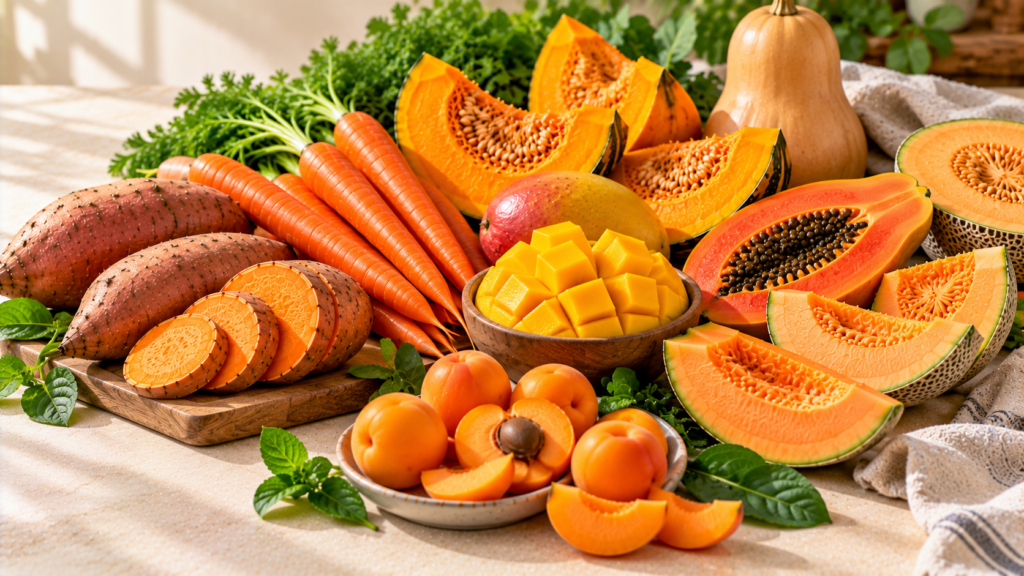
Practical takeaway: Prioritize sweet potatoes, carrots, pumpkin, and dark leafy greens when you want particularly useful plant sources of provitamin A. Fruits add variety and can help you build a more balanced overall diet.
How Much Vitamin A Do You Need Per Day?
Vitamin A requirements depend on age, sex, and life stage. The following are the U.S. National Institutes of Health’s recommended dietary allowances (RDAs), expressed in micrograms of retinol activity equivalents (mcg RAE).
| Age or life stage | Recommended daily intake |
|---|---|
| Adults assigned male at birth, 19+ | 900 mcg RAE |
| Adults assigned female at birth, 19+ | 700 mcg RAE |
| Pregnancy, adults | 770 mcg RAE |
| Breastfeeding, adults | 1,300 mcg RAE |
| Children, ages 1–3 | 300 mcg RAE |
| Children, ages 4–8 | 400 mcg RAE |
| Children, ages 9–13 | 600 mcg RAE |
| Teens assigned male at birth, ages 14–18 | 900 mcg RAE |
| Teens assigned female at birth, ages 14–18 | 700 mcg RAE |
These are general U.S. reference values, not individualized prescriptions. Requirements may differ under other national guidelines.
NIH Office of Dietary Supplements — Vitamin A and Carotenoids Fact Sheet
How to Improve Vitamin A Absorption From Fruits and Vegetables
Eating carotenoid-rich foods is a great start, but the way you prepare and combine them can also affect how much your body absorbs.
1. Pair colorful vegetables with healthy fats
Vitamin A is fat-soluble, and dietary fat helps your body absorb carotenoids. You do not need a large amount.
Try these combinations:
- Carrots with hummus made with tahini.
- Spinach sautéed in a little olive oil.
- Roasted sweet potato with a small amount of olive oil.
- Mango with plain yogurt containing some fat.
- Leafy-green salad with an olive-oil-based dressing.
2. Cook some vegetables
Cooking can soften plant cell walls and increase the amount of beta-carotene available for absorption. Steaming, roasting, and lightly sautéing are practical methods.
However, prolonged cooking can reduce some heat-sensitive nutrients. A mix of raw and cooked vegetables is a sensible approach.
3. Eat a variety of colors
Orange, yellow, red, and dark green produce offers different combinations of carotenoids, vitamins, minerals, and fiber.
Rather than eating carrots every day as your only source, rotate carrots, sweet potatoes, spinach, pumpkin, mangoes, and other colorful foods.
4. Choose whole fruit most often
Whole fruit provides water and fiber along with its vitamins and carotenoids. Smoothies can also be nutritious, but large portions of juice may deliver less fiber and make it easier to consume more sugar quickly.
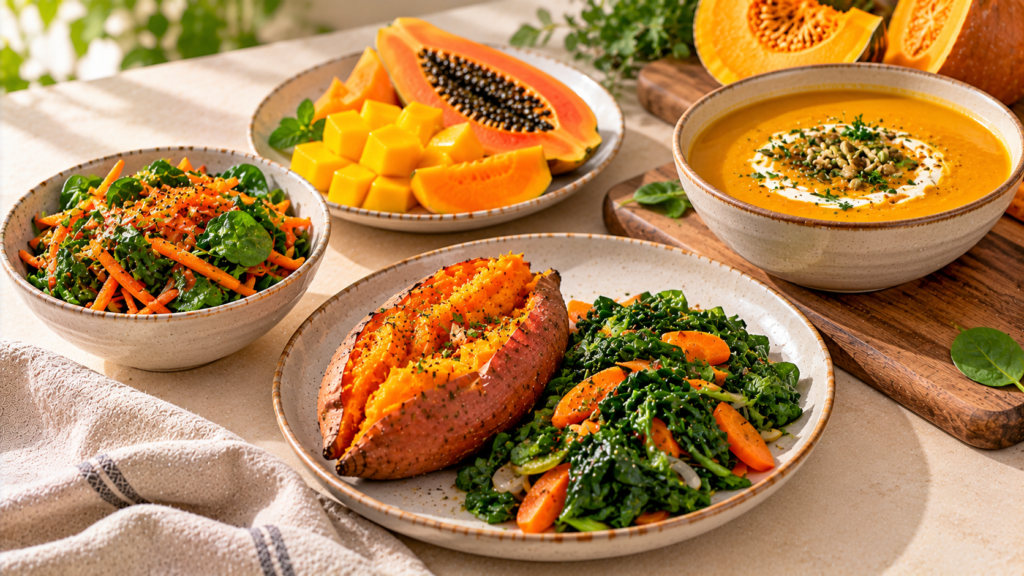
Easy Ways to Add Vitamin A-Rich Foods to Your Daily Diet
You can enjoy a variety of fruits and vegetables high in vitamin A without following a complicated meal plan.

Breakfast
Add mango or apricot to oatmeal, or serve cantaloupe alongside eggs and whole-grain toast.

Lunch
Prepare a bowl with roasted sweet potato, chickpeas, spinach, carrots, and an olive-oil dressing.

Dinner
Serve pumpkin soup or roasted vegetables alongside beans, lentils, eggs, fish, or another protein source.

Snacks
Enjoy fresh papaya, mango, cantaloupe, or apricots between meals.
Can You Get Enough Vitamin A From Plant Foods?
Many people can meet their vitamin A needs through a varied diet that includes carotenoid-rich vegetables and fruits. However, the amount of vitamin A your body produces from beta-carotene varies from person to person.
People who eat few vegetables, have certain digestive or absorption disorders, or have increased nutritional needs may need individualized advice from a qualified healthcare professional.
Plant foods provide provitamin A carotenoids, whereas animal foods such as eggs, dairy products, and liver provide preformed vitamin A in varying amounts. A balanced diet can include either or both types, depending on individual needs and preferences.
Can eating too many carrots cause vitamin A toxicity?
Eating large amounts of beta-carotene-rich produce can sometimes cause carotenemia, a harmless yellow-orange tint to the skin, particularly on the palms and soles. This is different from vitamin A toxicity because the body regulates the conversion of beta-carotene to vitamin A.
Preformed vitamin A from supplements or certain animal foods can accumulate in the body. Excessive intake, especially from high-dose supplements, can be harmful. Follow professional guidance when using vitamin A supplements, particularly during pregnancy.
Frequently Asked Questions
1. What fruits are highest in vitamin A?
Mangoes, cantaloupe, papaya, and apricots are useful fruit sources of provitamin A carotenoids. The amounts vary by variety and serving size. Orange vegetables such as sweet potatoes and carrots generally provide more concentrated amounts.
2. Which vegetables are highest in vitamin A?
Orange-fleshed sweet potatoes, carrots, pumpkin, and dark leafy greens such as spinach and kale are excellent plant sources of provitamin A carotenoids.
3. Are bananas high in vitamin A?
Bananas contain some carotenoids, but they are not considered a particularly rich source of vitamin A. Mango, cantaloupe, and papaya are generally more useful fruit choices for increasing provitamin A intake.
4. Which vitamin A-rich foods are best for eye health?
Sweet potatoes, carrots, pumpkin, spinach, and kale provide carotenoids that contribute to vitamin A intake. Vitamin A supports normal vision, but good eye health also depends on overall nutrition, regular eye care, and other health factors.
5. Can I get vitamin A from vegetables without eating meat?
Yes. Your body can convert beta-carotene from foods such as carrots, sweet potatoes, spinach, and pumpkin into vitamin A. Including a variety of these foods can help you meet your nutritional needs.
6. Are raw or cooked vegetables better for vitamin A?
Both can contribute to a healthy diet. Cooking can improve carotenoid availability in certain vegetables, while raw vegetables offer other benefits. Lightly steaming, roasting, or sautéing and including a little dietary fat are practical strategies.
7. Do vitamin A-rich fruits improve skin health?
Fruits containing provitamin A carotenoids contribute to vitamin A nutrition, which supports normal skin and cell function. However, no individual fruit can guarantee clearer skin or treat a skin condition.
8. Should I take vitamin A supplements if I eat these foods?
Not necessarily. Many people can meet their needs through food. Supplements may be appropriate in certain circumstances, but high doses of preformed vitamin A can be harmful. Consult a healthcare professional before taking high-dose supplements.
Conclusion: Add More Vitamin A-Rich Produce to Your Diet
The best fruits and vegetables high in vitamin A include sweet potatoes, carrots, spinach, pumpkin, kale, mangoes, papaya, and cantaloupe. These colorful foods provide beta-carotene and other nutrients that help support normal vision, immune function, and healthy tissues.
The easiest way to benefit is to eat a variety of produce throughout the week. Roast sweet potatoes, add leafy greens to everyday meals, enjoy fresh fruit as a snack, and pair carotenoid-rich vegetables with a little healthy fat to support absorption.
You do not need to depend on one superfood. A colorful, balanced diet built around different fruits and vegetables is a practical way to support your nutritional needs.
1 thought on “Best Fruits and Vegetables High in Vitamin A”