
How much vitamin C do you need per day? The answer depends on several factors, including your age, sex, pregnancy or breastfeeding status, and whether you smoke.
For most adults, the recommended dietary allowance is 75 mg per day for women and 90 mg per day for men. People who smoke need an additional 35 mg per day because smoking increases the body’s need for vitamin C.
Vitamin C is an essential water-soluble vitamin. Your body needs it to make collagen, support wound healing, improve absorption of iron from plant foods, and help the immune system function normally. It also functions as an antioxidant.
The good news is that meeting your vitamin C requirement usually doesn’t require complicated calculations. A varied diet containing fruits and vegetables can provide substantial amounts of this nutrient.
This guide explains exactly how much vitamin C you need per day, how requirements change throughout life, what foods provide it, how much is too much, and when supplements may be worth discussing with a healthcare professional.
Key Takeaways
- Adult men generally need 90 mg of vitamin C per day.
- Adult women generally need 75 mg per day.
- Pregnancy increases the recommendation to 85 mg per day for adult women.
- Breastfeeding increases it to 120 mg per day for adult women.
- People who smoke should add 35 mg per day to their recommended amount.
- Children and teenagers need different amounts depending on age and sex.
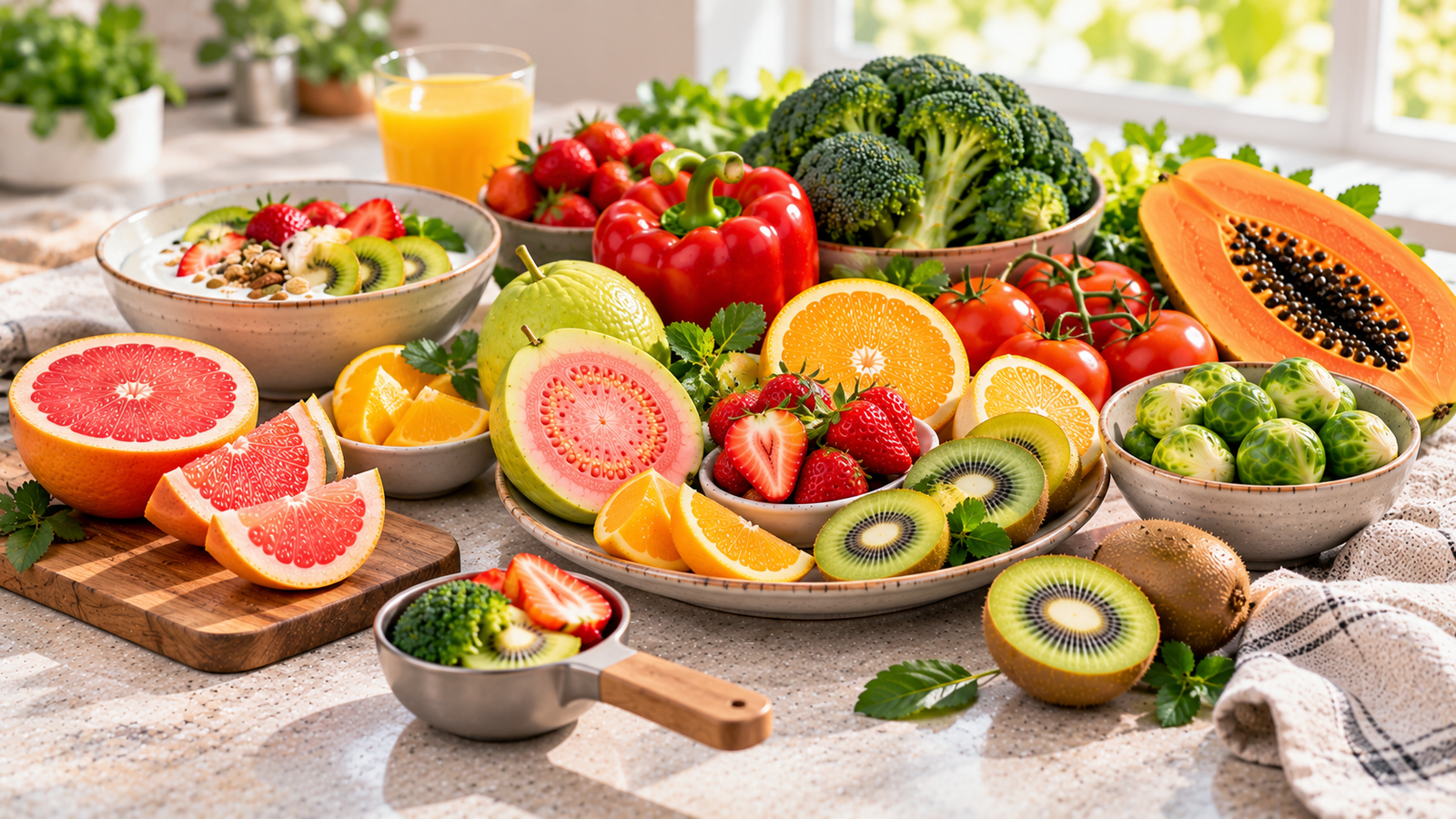
- Fruits and vegetables are the best natural sources of vitamin C.
- The adult upper limit is 2,000 mg per day from all sources.
- More vitamin C isn’t automatically better; very high supplemental intakes can cause digestive problems.
How Much Vitamin C Do You Need Per Day?
The recommended amount of vitamin C changes throughout life.
For healthy adults, the general recommendation is:
- Men age 19+: 90 mg/day
- Women age 19+: 75 mg/day
- Pregnant women: 85 mg/day
- Breastfeeding women: 120 mg/day
These values are Recommended Dietary Allowances (RDAs), designed to meet the needs of nearly all healthy people in the relevant life-stage group.
Why Are Men’s and Women’s Recommendations Different?
The recommended amount is somewhat higher for adult men than adult women.
This doesn’t mean women need dramatically less vitamin C. The difference reflects the dietary reference values established for different population groups.
For everyday eating, both men and women can usually meet their needs by regularly consuming fruits and vegetables.
Vitamin C Recommended Daily Intake by Age
Here’s a complete overview of recommended vitamin C intake.
| Age or life stage | Recommended vitamin C per day |
|---|---|
| Birth–6 months | 40 mg* |
| 7–12 months | 50 mg* |
| Children 1–3 years | 15 mg |
| Children 4–8 years | 25 mg |
| Children 9–13 years | 45 mg |
| Teen boys 14–18 years | 75 mg |
| Teen girls 14–18 years | 65 mg |
| Adult men 19+ | 90 mg |
| Adult women 19+ | 75 mg |
| Pregnant teens | 80 mg |
| Pregnant women | 85 mg |
| Breastfeeding teens | 115 mg |
| Breastfeeding women | 120 mg |
*For infants, these values are Adequate Intakes (AIs) rather than RDAs.
These numbers are useful reference points, but individual nutritional needs can vary. People with specific medical conditions or unusual dietary circumstances should discuss their nutritional needs with a qualified healthcare professional.

How Much Vitamin C Do Adults Need?
For most adults, the daily vitamin C recommendation is straightforward:
Adult men
90 mg per day
Adult women
75 mg per day
The recommendation increases during pregnancy and breastfeeding.
If you eat several servings of fruits and vegetables throughout the day, reaching these amounts is generaFor example, foods such as oranges, kiwi, red peppers, strawberries, broccoli, and tomatoes can all contribute to daily vitamin C intake.
How Much Vitamin C Do Smokers Need?
Smoking changes the calculation.
People who smoke should consume 35 mg more vitamin C per day than nonsmokers. The NIH explains that smoking increases the body’s need for vitamin C, partly because cigarette smoke increases exposure to free radicals.
For example:
- Adult nonsmoking man: 90 mg/day
- Adult man who smokes: 125 mg/day
- Adult nonsmoking woman: 75 mg/day
- Adult woman who smokes: 110 mg/day
The additional recommendation also applies to people exposed to secondhand smoke according to NIH consumer guidance.
However, increasing vitamin C intake does not eliminate the health risks associated with smoking. Quitting smoking remains the most important health step.
How Much Vitamin C Do Children Need?
Children need less vitamin C than adults, but their requirements increase as they grow.
Ages 1–3
15 mg per day
Ages 4–8
25 mg per day
Ages 9–13
45 mg per day
Teenage requirements then increase:
- Boys 14–18: 75 mg/day
- Girls 14–18: 65 mg/day
A child’s vitamin C intake doesn’t have to come from supplements.
Fruits such as oranges, strawberries, kiwi, papaya, and guava can be easy choices, while vegetables such as broccoli, tomatoes, and sweet peppers can contribute to meals.
How Much Vitamin C During Pregnancy?
Pregnancy increases vitamin C requirements.
Pregnant teenagers
80 mg per day
Pregnant women age 19+
85 mg per day
Vitamin C is involved in collagen production, iron absorption, and normal physiological functions, making adequate intake important during pregnancy.
However, pregnancy is also a time when supplement decisions should be individualized. If you’re pregnant, don’t assume that a high-dose vitamin C supplement is necessary simply because your needs are higher.
A prenatal supplement may already contain vitamin C, so consider the total amount from food and supplements.
How Much Vitamin C While Breastfeeding?
Breastfeeding increases vitamin C requirements even further.
Breastfeeding teenagers
115 mg per day
Breastfeeding women age 19+
120 mg per day
A balanced diet containing plenty of fruits and vegetables can help breastfeeding women reach this target.
Good options include:
- Kiwi
- Guava
- Oranges
- Strawberries
- Bell peppers
- Broccoli
- Tomatoes
- Papaya
Why Does Your Body Need Vitamin C?
Knowing how much vitamin C you need per day is useful, but understanding why you need it makes the recommendation more meaningful.
Vitamin C Helps Produce Collagen
Vitamin C is required for collagen production.
Collagen is a structural protein involved in skin, connective tissue, blood vessels, cartilage, and wound healing.
Vitamin C Improves Plant-Based Iron Absorption
Vitamin C improves the absorption of non-heme iron, the type of iron found primarily in plant foods.
This makes food pairing useful.
For example:
Lentils + tomatoes
Chickpeas + bell peppers
Beans + lemon
Tofu + broccoli
Spinach + strawberries
Vitamin C Acts as an Antioxidant
Vitamin C acts as an antioxidant, helping protect cells from damage caused by free radicals.
Vitamin C Supports Normal Immune Function
Vitamin C helps the immune system work properly. However, adequate intake should not be confused with the idea that taking large doses automatically prevents illness.
The goal is to meet your nutritional requirement consistently.
Best Foods to Meet Your Daily Vitamin C Needs
One of the easiest ways to meet your vitamin C requirement is to focus on whole foods.
The NIH identifies fruits and vegetables as the best sources of vitamin C. Examples include citrus fruits, peppers, kiwi, broccoli, strawberries, cantaloupe, baked potatoes, and tomatoes.
Vitamin C-rich fruits
Good choices include:
- Guava
- Kiwi
- Oranges
- Grapefruit
- Strawberries
- Papaya
- Cantaloupe
- Mango
- Pineapple
Vitamin C-rich vegetables
Useful choices include:
- Red bell peppers
- Green bell peppers
- Broccoli
- Brussels sprouts
- Tomatoes
- Cabbage
- Cauliflower
- Leafy greens
- Potatoes
You don’t need to eat every food on the list.
Instead, create variety across your meals.
How Much Vitamin C Is in Common Foods?
You don’t need to memorize exact numbers for every food, but understanding approximate amounts can make meal planning easier.
The NIH provides examples showing that half a cup of raw red sweet pepper contains about 95 mg, one medium orange about 70 mg, one medium kiwi about 64 mg, and half a cup of cooked broccoli about 51 mg of vitamin C.
| Food | Approximate vitamin C |
|---|---|
| ½ cup raw red sweet pepper | 95 mg |
| 1 medium orange | 70 mg |
| 1 medium kiwi | 64 mg |
| ½ cup raw green sweet pepper | 60 mg |
| ½ cup cooked broccoli | 51 mg |
| ½ cup sliced strawberries | 49 mg |
| ½ cup cooked Brussels sprouts | 48 mg |
| ½ medium grapefruit | 39 mg |
| ½ cup raw broccoli | 39 mg |
| ½ cup cantaloupe | 29 mg |
| ½ cup cooked cabbage | 28 mg |
| ½ cup raw cauliflower | 26 mg |
| 1 medium baked potato | 17 mg |
| 1 medium raw tomato | 17 mg |
These are examples rather than universal values. Actual amounts can vary depending on the variety, serving size, storage, and preparation method.
Vitamin C Daily Intake: A Quick Reference Chart
If you’re searching for how much vitamin C you need per day, this quick reference makes the recommendations easier to understand:
| Person | Vitamin C needed daily |
|---|---|
| Infants 0–6 months | 40 mg* |
| Infants 7–12 months | 50 mg* |
| Children 1–3 years | 15 mg |
| Children 4–8 years | 25 mg |
| Children 9–13 years | 45 mg |
| Teen girls 14–18 | 65 mg |
| Teen boys 14–18 | 75 mg |
| Adult women 19+ | 75 mg |
| Adult men 19+ | 90 mg |
| Pregnant teens | 80 mg |
| Pregnant women 19+ | 85 mg |
| Breastfeeding teens | 115 mg |
| Breastfeeding women 19+ | 120 mg |
| Smokers | Add 35 mg |
*Infant values are Adequate Intakes rather than Recommended Dietary Allowances.
These recommendations come from the NIH Office of Dietary Supplements. Individual needs can vary based on health conditions, dietary patterns, and other factors.
What Is the Best Time to Take Vitamin C?
There is no special time of day that everyone needs to take vitamin C.
If you obtain vitamin C from food, simply include vitamin C-rich fruits and vegetables as part of your normal meals and snacks.
If you take a vitamin C supplement, follow the product directions or your healthcare professional’s advice.
For many people, getting vitamin C from food is the simplest approach because fruits and vegetables provide other nutrients and beneficial dietary components as well.
Should You Take Vitamin C Every Day?
Vitamin C is an essential nutrient, so getting enough regularly is important.
However, that does not mean everyone needs a high-dose vitamin C supplement every day.
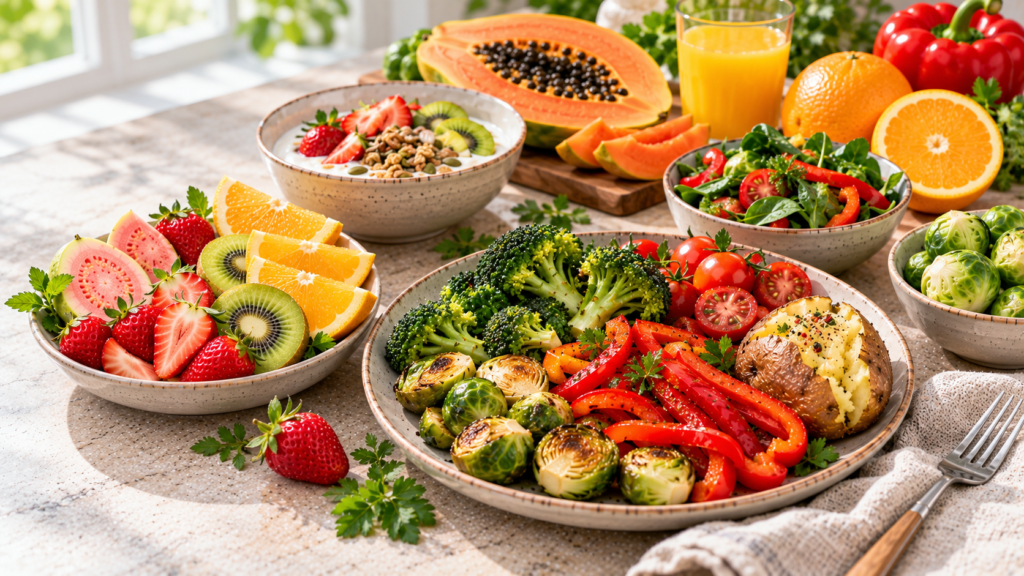
A better strategy is to make vitamin C-rich foods a regular part of your eating pattern. Oranges, kiwi, guava, strawberries, bell peppers, broccoli, Brussels sprouts, tomatoes, and other fruits and vegetables can all contribute to your daily intake.
If your diet is varied, you can often obtain vitamin C naturally without carefully tracking every milligram.
What Foods Can Help You Reach Your Daily Vitamin C Goal?
Some foods make reaching your daily target particularly easy.
High-Vitamin-C Food Combinations
Orange + strawberries
A simple breakfast or snack combination.
Kiwi + yogurt
An easy breakfast or afternoon snack.
Red bell pepper + chickpeas
A useful combination of vitamin C and plant-based protein.
Tomatoes + lentils
A practical way to combine vitamin C with a plant-based source of iron.
Broccoli + baked potato
An easy vitamin C-containing side combination for dinner.
Guava + papaya
A tropical fruit combination that can contribute significant vitamin C.
The goal isn’t to find one perfect food. It’s to build a varied diet containing multiple vitamin C sources.
Vitamin C Needs vs. Vitamin C Upper Limit
It’s important to distinguish between the amount of vitamin C you need and the amount considered the upper limit.
For example, an adult woman needs 75 mg per day, while the adult upper limit is 2,000 mg per day.
That does not mean 2,000 mg is a recommended target.
The upper limit is the highest average daily intake unlikely to cause adverse effects for most people. It is not a goal for daily consumption.
Very high supplemental intakes can cause digestive symptoms such as diarrhea, nausea, and stomach cramps.
This is why meeting your vitamin C requirement through a varied diet is generally preferable to deliberately consuming extremely high doses.
Does More Vitamin C Give You More Benefits?
Not necessarily.
Once you are meeting your body’s nutritional requirements, consuming dramatically more vitamin C does not automatically produce proportionally greater benefits.
For most people, the practical goal should be adequate vitamin C intake, not maximum vitamin C intake.
Focus on:
- Fruits and vegetables
- Dietary variety
- Appropriate portions
- Balanced meals
- Regular intake
- Sensible cooking methods
This food-first approach is more sustainable than chasing very high doses.
How to Check Whether Your Diet Provides Enough Vitamin C
You don’t need to track every meal forever.
Instead, ask yourself a few simple questions:
Do I eat fruit regularly?
Try including oranges, kiwi, strawberries, guava, papaya, or another vitamin C-containing fruit.
Do I eat colorful vegetables?
Red peppers, broccoli, tomatoes, Brussels sprouts, and cabbage are useful choices.
Do I eat plant-based sources of iron?
If you eat beans, lentils, chickpeas, tofu, or leafy greens, pairing them with vitamin C foods can improve non-heme iron absorption.
Is my diet extremely limited?
If you rarely eat fruits and vegetables, it may be worth discussing your diet with a healthcare professional.
Do I take multiple supplements?
Check labels to make sure you’re not unintentionally consuming very high amounts of vitamin C from several products.
Frequently Searched Questions About Daily Vitamin C
How much vitamin C should I take per day?
Most adult men need 90 mg per day and most adult women need 75 mg per day. Pregnancy and breastfeeding increase the recommendation, while smokers need an additional 35 mg daily.
Is 500 mg of vitamin C a day necessary?
For most healthy adults, 500 mg is substantially above the recommended daily amount. More is not automatically better, and high supplemental doses can cause gastrointestinal side effects.
Is 1,000 mg of vitamin C too much?
It is above the recommended daily amount but below the adult upper limit of 2,000 mg. However, there is generally no need to aim for such a high intake unless advised by a healthcare professional.
Can I get 100 mg of vitamin C from food?
Yes. A combination of vitamin C-rich fruits and vegetables can provide 100 mg or more without requiring a supplement.
What is the best natural source of vitamin C?
Several fruits and vegetables are excellent sources. Guava, sweet peppers, kiwi, citrus fruits, strawberries, broccoli, and Brussels sprouts are among the useful choices.
How much vitamin C do smokers need?
Smokers need an additional 35 mg of vitamin C per day compared with nonsmokers.
Can children take adult vitamin C supplements?
Children have different vitamin C requirements and upper limits than adults. Adult high-dose supplements should not automatically be given to children. Discuss supplementation with a pediatrician or other qualified healthcare professional.
Final Takeaway: How Much Vitamin C Do You Need Per Day?
For most adults, the answer is straightforward:
Women: 75 mg per day
Men: 90 mg per day
Pregnancy, breastfeeding, age, and smoking status can change these recommendations.
The easiest way to meet your daily vitamin C requirement is to regularly eat a variety of fruits and vegetables rather than relying on one food or very high-dose supplements.
If you include foods such as oranges, kiwi, guava, strawberries, bell peppers, broccoli, tomatoes, and Brussels sprouts throughout your week, getting enough vitamin C can become a natural part of your normal eating pattern.
Foods High in Vitamin C: 20 Natural Sources
Can You Get Enough Vitamin C From Food?
For most healthy people, yes.
A varied diet containing fruits and vegetables can provide the recommended amount of vitamin C without requiring a supplement.
For example, an adult woman who needs 75 mg per day could potentially reach that target through a combination such as:
- Kiwi at breakfast
- Strawberries as a snack
- Broccoli at dinner
An adult man needing 90 mg could use a similar pattern with slightly larger portions or an additional fruit or vegetable.
The point isn’t to hit the exact number every day with mathematical precision. Nutrient requirements are reference values used for planning healthy diets.
A varied eating pattern makes adequate intake easier.
How to Build a Vitamin C-Rich Day
Here’s a simple example.
Breakfast
Oatmeal + kiwi + strawberries
This provides vitamin C along with fiber and other nutrients.
Lunch
Chickpea salad + tomatoes + red bell peppers + lemon
This combination pairs vitamin C-rich foods with plant-based iron.
Snack
One orange
A simple, portable source of vitamin C.
Dinner
Grilled protein + steamed broccoli + baked potato
Broccoli and potato contribute vitamin C while the overall meal provides a variety of nutrients.
Dessert or evening snack
Fresh papaya
This gives you another opportunity to include fruit.
The exact portions should reflect your energy needs and overall eating pattern.
Does Vitamin C Need to Be Spread Throughout the Day?
You don’t have to consume a specific amount of vitamin C at every meal.
However, spreading fruits and vegetables across meals can make it easier to build a nutritionally varied diet.
It can also be practical for pairing vitamin C with plant-based iron-containing foods.
For example:
Breakfast: kiwi + oatmeal
Lunch: lentils + tomatoes + peppers
Dinner: broccoli + potatoes
This is a more sustainable approach than trying to consume a huge amount of vitamin C at once.
What Happens If You Don’t Get Enough Vitamin C?
Severe vitamin C deficiency can cause scurvy.
Symptoms of vitamin C deficiency can include fatigue, connective-tissue weakness, and problems related to impaired collagen formation.
Severe deficiency is uncommon among people who regularly consume a varied diet, but inadequate intake can occur in people with very limited diets or certain circumstances.
If you have persistent symptoms or concerns about nutritional deficiency, don’t self-diagnose based on an internet article. A healthcare professional can assess your diet, symptoms, medications, and other relevant factors.
What Happens If You Take Too Much Vitamin C?
Vitamin C is water-soluble, but that doesn’t mean unlimited amounts are harmless.
The adult tolerable upper intake level is 2,000 mg per day from all sources, including food, beverages, and supplements.
High doses can cause:
- Diarrhea
- Nausea
- Stomach cramps
- Other gastrointestinal discomfort
These problems are much more relevant to very high supplemental intakes than to eating normal amounts of fruits and vegetables.
What Is the Upper Limit for Children?
The upper limits are lower for children:
| Age | Upper limit per day |
|---|---|
| 1–3 years | 400 mg |
| 4–8 years | 650 mg |
| 9–13 years | 1,200 mg |
| 14–18 years | 1,800 mg |
| Adults | 2,000 mg |
These limits include vitamin C from food, beverages, and supplements.
Is More Vitamin C Better?
Not necessarily.
The recommended daily intake is designed to provide enough vitamin C for healthy people—not to encourage the highest possible intake.
Eating plenty of vitamin C-rich fruits and vegetables is generally a better strategy than automatically taking large supplement doses.
High-dose supplementation can cause digestive side effects, and people with certain conditions may need additional caution. For example, the NIH notes that high doses can worsen iron overload in people with hemochromatosis.
Vitamin C From Food vs. Supplements
Supplements can provide vitamin C, but they don’t replace the broader nutritional value of whole foods.
A vitamin C-rich orange provides more than vitamin C alone. Likewise, broccoli, peppers, strawberries, and kiwi contain other nutrients and beneficial food components.
The NIH notes that vitamin C supplements are available in several forms, but research has not shown one supplemental form to be clearly better than another.
When might a supplement be useful?
A healthcare professional may recommend supplementation depending on:
- Dietary restrictions
- Nutritional deficiencies
- Certain medical circumstances
- Pregnancy or breastfeeding needs
- Individual dietary patterns
If you’re already taking a multivitamin or prenatal supplement, check its label before adding a separate high-dose vitamin C product.
Does Cooking Reduce Vitamin C?
Yes. Vitamin C can be reduced by prolonged storage and cooking.
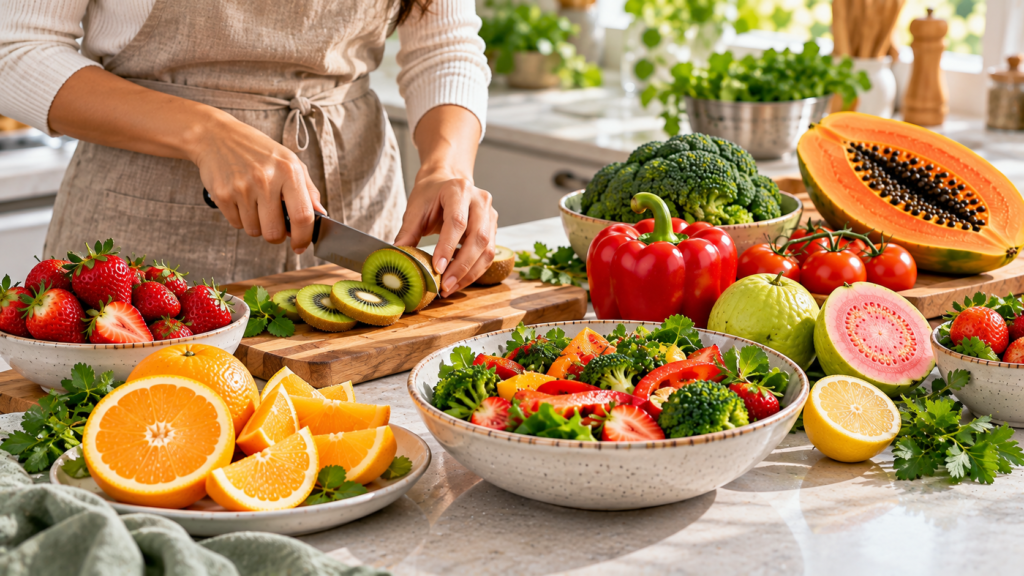
Because vitamin C is water-soluble and sensitive to heat, certain cooking methods can result in nutrient losses. The NIH notes that steaming or microwaving may lessen some cooking losses.
Practical ways to preserve vitamin C
- Eat some fruits raw.
- Avoid unnecessarily long cooking times.
- Steam vegetables when appropriate.
- Use fresh produce regularly.
- Avoid storing cut fruits and vegetables for unnecessarily long periods.
- Include a mixture of raw and cooked produce.
You don’t need to avoid cooked vegetables. The goal is simply to use sensible preparation methods.
Vitamin C and the Common Cold
Vitamin C is often marketed as a way to prevent or treat colds, but the evidence is more nuanced.
Regular vitamin C supplementation does not appear to reduce the risk of getting a common cold for most people, although regular supplementation may slightly shorten colds or reduce symptom severity in some circumstances. Taking vitamin C after cold symptoms begin does not appear to provide the same benefit.
This is another reason to focus on adequate everyday nutrition rather than megadosing when you become sick.
Who May Need Extra Attention to Vitamin C Intake?
Certain groups may be more likely to have difficulty getting enough vitamin C.
These can include:
- People who smoke
- People exposed to secondhand smoke
- People with very limited diets
- People who consume very few fruits and vegetables
- People with certain medical or nutritional circumstances
Smokers specifically have a higher recommended intake because they need an additional 35 mg per day.
If you think your diet may not provide enough vitamin C, consider discussing your dietary pattern with a healthcare professional rather than automatically choosing a high-dose supplement.
A Simple Rule for Meeting Your Vitamin C Needs
You don’t need to calculate every milligram.
A practical strategy is to include one or more vitamin C-rich foods at several meals throughout the day.
For example:
Breakfast: fruit
Lunch: colorful vegetables
Snack: citrus or berries
Dinner: broccoli, peppers, tomatoes, or another vegetable
This naturally creates multiple opportunities to meet your daily vitamin C needs.
Frequently Asked Questions
How much vitamin C do adults need per day?
Adult men need 90 mg per day, while adult women need 75 mg per day. Pregnant women need 85 mg and breastfeeding women need 120 mg.
How much vitamin C does a woman need per day?
Most adult women need 75 mg of vitamin C per day. Pregnancy increases the recommendation to 85 mg, while breastfeeding increases it to 120 mg.
How much vitamin C does a man need per day?
Adult men generally need 90 mg of vitamin C per day. Men who smoke should add 35 mg, bringing the recommended amount to 125 mg per day.
How much vitamin C should a smoker get per day?
People who smoke need 35 mg more vitamin C per day than nonsmokers. For example, an adult male smoker needs 125 mg per day and an adult female smoker needs 110 mg per day.
How much vitamin C do children need?
Children need different amounts depending on age: 15 mg for ages 1–3, 25 mg for ages 4–8, and 45 mg for ages 9–13. Teen boys need 75 mg and teen girls need 65 mg daily.
How much vitamin C should you take when pregnant?
Pregnant teenagers need 80 mg per day, while pregnant women age 19 and older need 85 mg per day.
Is 1,000 mg of vitamin C a day too much?
1,000 mg is above the RDA for adults but below the adult upper limit of 2,000 mg. However, more than the recommended amount is not necessarily more beneficial, and high supplemental doses can cause digestive side effects.
Can you get enough vitamin C from food?
Yes. Fruits and vegetables are the best natural sources of vitamin C, and a varied diet can provide adequate amounts for most healthy people.
Conclusion
So, how much vitamin C do you need per day?
For most adults, the answer is 75 mg for women and 90 mg for men. Pregnancy and breastfeeding increase those requirements, while people who smoke need an additional 35 mg each day. Children and teenagers have their own age-specific recommendations.
The easiest way to meet these needs is usually through food.
Oranges, kiwi, guava, strawberries, peppers, broccoli, tomatoes, Brussels sprouts, papaya, and other fruits and vegetables can all contribute to your daily vitamin C intake.
Rather than focusing on a single “superfood” or taking unnecessarily high doses of supplements, build variety into your meals. Include colorful fruits and vegetables throughout the day, pair vitamin C foods with plant-based iron sources, and use sensible cooking methods.
The goal isn’t to consume the most vitamin C possible. It’s to consistently get enough to support normal health—and a varied, nutrient-rich diet makes that goal much easier.
2 thoughts on “How Much Vitamin C Do You Need Per Day?”