
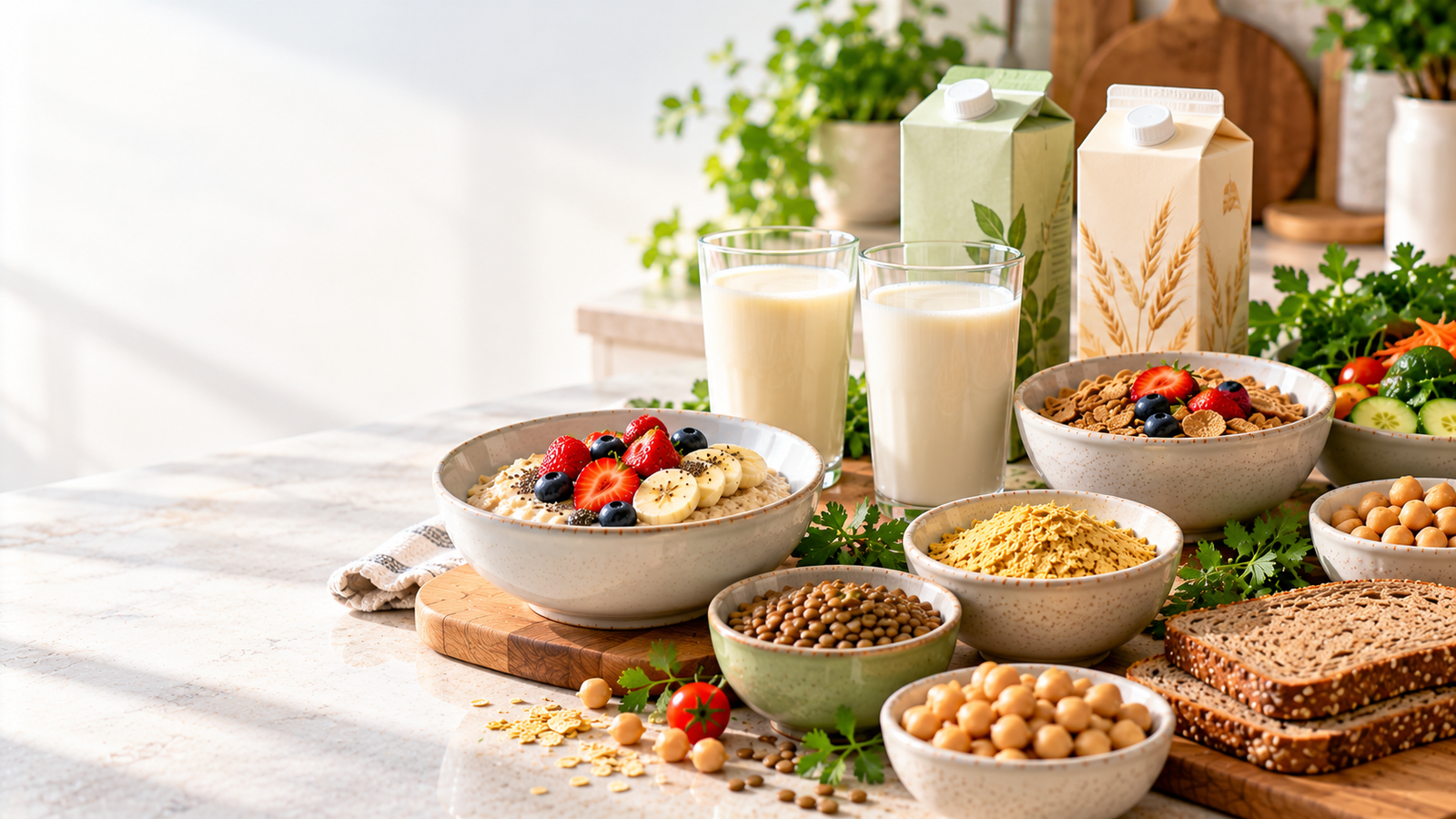
Finding vitamin B12 rich foods for vegans requires a slightly different approach from planning other parts of a plant-based diet. Vitamin B12 is essential for healthy red blood cells, normal nerve function, and DNA production, but it is not naturally present in most ordinary plant foods.
For people following a vegan diet, fortified foods are important sources of this nutrient. Some breakfast cereals, plant-based milk alternatives, nutritional yeast products, and other specially fortified foods contain added vitamin B12. However, not every product in these categories is fortified, and the amount can differ considerably between brands. [External Link: Read the NIH Vitamin B12 Consumer Fact Sheet for trusted information about food sources and daily requirements.]
The good news is that you can build a practical vegan eating routine around verified fortified products. You can also use a suitable vitamin B12 supplement when needed to ensure a reliable intake.
This guide explains the best fortified food sources, how to compare nutrition labels, how much vitamin B12 adults need, and how to create a balanced vegan meal plan without relying on unproven plant-based sources.
Key Takeaways
- Fortified foods are essential options for vegans because ordinary plant foods are not reliable natural sources of vitamin B12.
- Fortified breakfast cereals, soy milk, certain other plant-based drinks, and fortified nutritional yeast can contribute vitamin B12.
- Always check the nutrition label; products with similar names may have different vitamin content.
- Most adults need 2.4 micrograms (mcg) of vitamin B12 daily under US dietary recommendations.
- Vegans who cannot consistently obtain enough B12 from fortified foods should consider a reliable supplement strategy with professional guidance when appropriate.
- Seaweed, spirulina, and fermented foods should not be relied upon as dependable vitamin B12 sources.
- A balanced vegan diet still needs a variety of protein sources, whole grains, vegetables, fruits, and healthy fats.
Why Is Vitamin B12 Important on a Vegan Diet?
Vitamin B12, also called cobalamin, supports several essential processes in the body. It is especially important to plan for this nutrient when you avoid all animal-derived foods.
1. Supports healthy red blood cells
Vitamin B12 helps the body produce normal red blood cells. Inadequate intake or absorption can contribute to megaloblastic anemia, which may cause tiredness, weakness, and shortness of breath.
2. Helps maintain normal nerve function
Vitamin B12 is essential for the nervous system. A prolonged deficiency can cause numbness, tingling, balance difficulties, and other neurological symptoms.
3. Supports DNA production
The body uses vitamin B12 in DNA synthesis, a process required for normal cell growth and function.
4. Contributes to normal metabolism
Vitamin B12 participates in metabolic reactions that help the body process nutrients. It does not act as a general energy booster when a person already gets enough vitamin B12.
Because a vegan diet excludes meat, fish, eggs, and dairy, people following this eating pattern need a dependable source from fortified foods or supplements.
NIH Office of Dietary Supplements
Best Vitamin B12 Rich Foods for Vegans
The most useful vegan vitamin B12 sources are foods that have been specifically fortified with the vitamin. The following options can fit into different meals and budgets.
1. Fortified Breakfast Cereals
Fortified breakfast cereal is one of the most convenient ways to add vitamin B12 to a vegan diet. Manufacturers add vitamins and minerals to certain cereals, but the amount depends on the product.
Some fortified cereals provide a meaningful proportion of an adult’s daily requirement in one serving.
How to choose a suitable cereal:
- Check the nutrition information for vitamin B12.
- Compare the amount per serving, not just per 100 grams.
- Confirm that the cereal is suitable for a vegan diet.
- Review the added sugar and fiber content.
- Measure your usual portion because it may differ from the serving size printed on the package.
Easy ways to eat fortified cereal:
- Serve it with fortified soy milk.
- Mix it with oatmeal for added texture.
- Add berries or sliced banana.
- Keep a suitable cereal available for a quick breakfast.
Combining a fortified cereal with a fortified plant-based drink can help you build a convenient breakfast, although you should calculate the actual B12 content from both labels.
2. Fortified Soy Milk
Fortified soy milk is a useful option for vegans who want a plant-based drink that may also provide protein, calcium, and other added nutrients.
Not every soy milk product contains vitamin B12. Look for a product that explicitly lists it in the nutrition information.
Ways to use fortified soy milk:
- Pour it over breakfast cereal.
- Add it to oatmeal or porridge.
- Blend it into fruit smoothies.
- Use it in suitable baking recipes.
- Add it to tea or coffee if desired.
Unsweetened varieties can be useful if you prefer to limit added sugar. Compare the labels because nutrient levels differ by brand and formulation.
3. Fortified Oat Milk
Some oat milk products contain added vitamin B12, making them a convenient choice for people who prefer oat-based drinks.
However, oat milk is not automatically a source of B12. Some versions are fortified, while others contain no added vitamin B12.
Before buying, check:
- Whether vitamin B12 is listed.
- How much is provided per serving.
- Whether the product also contains calcium and vitamin D, if those nutrients matter to your diet.
- The amount of added sugar.
- Whether the product meets your other nutritional preferences.
Oat milk can be used in cereal, coffee, smoothies, and cooking. Remember that its protein content is generally lower than that of soy milk.
4. Fortified Almond Milk
Fortified almond milk can be another source of vitamin B12, depending on the brand. It is often used in smoothies, breakfast bowls, and drinks.
Its vitamin content is not universal, so do not assume that a carton provides B12 simply because it is a plant-based milk.
Practical tip: Compare fortified almond milk with soy or oat milk based on the nutrients you need, including B12, protein, calcium, and added sugar.
5. Fortified Nutritional Yeast
Nutritional yeast is a savory, flaky ingredient popular in vegan cooking. It can add a cheesy, nutty flavor to dishes and is available in both fortified and unfortified forms.
Fortified nutritional yeast can be a valuable vitamin B12 source when the label confirms the added vitamin and its amount.
Ways to use it include:
- Sprinkling it over popcorn.
- Adding it to pasta or roasted vegetables.
- Mixing it into soups and sauces.
- Stirring it into mashed potatoes.
- Using it in vegan cheese-style sauces.
Do not assume all nutritional yeast contains B12. Some products contain substantial amounts, while others provide none. The brand’s nutrition label is the deciding factor.
6. Fortified Plant-Based Yogurt
Some vegan yogurts made from soy, oats, coconut, or other plant ingredients are fortified with vitamin B12.
These products can add variety to breakfast and snacks, but their nutritional profiles vary considerably.
When choosing one, check for:
- Vitamin B12 per serving.
- Protein content.
- Calcium and vitamin D, if added.
- Added sugars.
- Ingredients suitable for your dietary preferences.
A fortified plant-based yogurt may help contribute B12, but it should be included in your intake calculation rather than assumed to meet your entire daily requirement.
7. Fortified Vegan Meal Replacement Products
Some plant-based nutrition drinks and meal replacement products contain vitamin B12. They may be convenient for people who need a quick meal or have difficulty preparing food.
However, these products differ in calories, protein, added sugar, and micronutrient content. Not every vegan nutrition drink contains B12.
Read the label carefully and use these products as part of an overall balanced eating pattern rather than automatically treating them as complete replacements for a varied diet.
8. Fortified Vegan Spreads and Yeast Extracts
Certain yeast extracts and savory spreads contain added vitamin B12. Their nutrient content varies by product and country.
They can be used on toast or incorporated into sauces and other savory recipes. Before counting them as a B12 source, verify that the product is fortified and check the amount per serving.
9. Other Fortified Plant-Based Foods
Some vegan meat alternatives, fortified snack products, and ready-to-eat foods contain added vitamin B12.
These products may offer another way to increase intake, but fortification is not universal. Check the nutrition panel and consider the overall nutritional quality of the product, including sodium and saturated fat.
10. Vitamin B12 Supplements for Vegans
Supplements are not food sources, but they are an important option for people who cannot consistently meet their needs through fortified foods.
A vegan-friendly B12 supplement can provide a predictable amount of the vitamin. Product formulations and dosing instructions vary, so follow the label and seek professional guidance if you have a deficiency, an absorption problem, or specific medical needs.
The NHS also identifies fortified cereals, fortified soy drinks, and fortified yeast extracts as vegan B12 options and notes that supplementation may be needed. [External Link: Read the NHS vegan diet guide.]
Vitamin B12 Fortified Foods Chart for Vegans
The chart below summarizes common options. Because fortified products vary by manufacturer, it is not possible to give one reliable vitamin B12 amount for every food category.
| Fortified food | Typical use | What to check |
|---|---|---|
| Breakfast cereal | Breakfast with plant milk | B12 per serving |
| Soy milk | Drinks, cereal, cooking | B12 per cup |
| Oat milk | Drinks, oatmeal, recipes | B12 per cup |
| Almond milk | Smoothies and drinks | B12 per cup |
| Nutritional yeast | Sauces, pasta, vegetables | B12 per labeled portion |
| Vegan yogurt | Breakfast and snacks | B12 per container |
| Yeast extract or spread | Toast and savory recipes | Whether B12 is added |
| Vegan meal replacement drink | Convenient meal option | B12 per bottle or serving |
| Fortified vegan meat alternatives | Lunch and dinner | B12 per portion |
Important: A product’s name does not prove that it contains vitamin B12. The label is the most practical way to identify fortified foods and estimate how much they contribute.
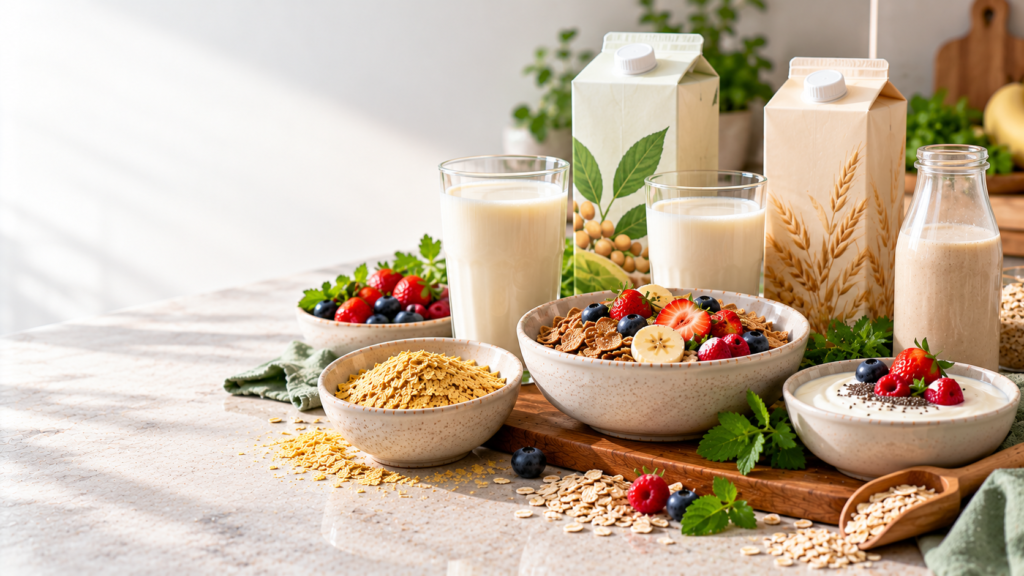
Vitamin B12 fortified foods for vegans, including plant-based milk, breakfast cereal, nutritional yeast, and vegan yogurt.
How Much Vitamin B12 Do Vegans Need Daily?
The recommended intake depends on age and life stage. According to US dietary recommendations, the daily amounts are:
| Life stage | Recommended daily intake |
|---|---|
| Children aged 1–3 | 0.9 mcg |
| Children aged 4–8 | 1.2 mcg |
| Children aged 9–13 | 1.8 mcg |
| Teenagers aged 14–18 | 2.4 mcg |
| Adults aged 19 and older | 2.4 mcg |
| Pregnant adults | 2.6 mcg |
| Breastfeeding adults | 2.8 mcg |
NIH Vitamin B12 Consumer Fact Sheet.
These are US recommendations. Official recommendations may differ by country.
How can vegans meet their daily vitamin B12 requirement?
Start by checking the vitamin B12 content of the fortified foods you already consume. Record the amount per serving and compare it with your daily needs.
For example, a vegan breakfast may include fortified cereal and fortified soy milk. A snack might include a fortified plant-based yogurt, provided its label lists B12.
However, you should not assume that eating one fortified food every day guarantees sufficient intake. The quantity, frequency, product formulation, and individual absorption all matter.
If you find it difficult to consistently obtain an adequate amount from fortified foods, consider discussing a dependable supplement routine with a healthcare professional.
A Simple One-Day Vegan Meal Plan With Fortified Vitamin B12 Foods
This example shows how fortified foods can fit naturally into a vegan routine.
| Meal | Example | Vitamin B12 strategy |
|---|---|---|
| Breakfast | Fortified cereal with fortified soy milk and berries | Check both labels |
| Morning snack | Fortified vegan yogurt with fruit | Confirm B12 per serving |
| Lunch | Chickpea and vegetable wrap with whole-grain bread | Add a verified fortified food elsewhere in the day |
| Afternoon snack | Toast with a suitable fortified yeast extract | Check the product label |
| Dinner | Lentil curry, brown rice, and mixed vegetables | Include a reliable fortified source in the overall daily routine |
This is an illustrative meal plan, not a guarantee that your vitamin B12 needs will be met. The total depends on the products, serving sizes, and how often you consume them.
Lentils, chickpeas, rice, and vegetables are valuable components of a balanced vegan diet, but they should not be counted as dependable vitamin B12 sources unless specifically fortified.
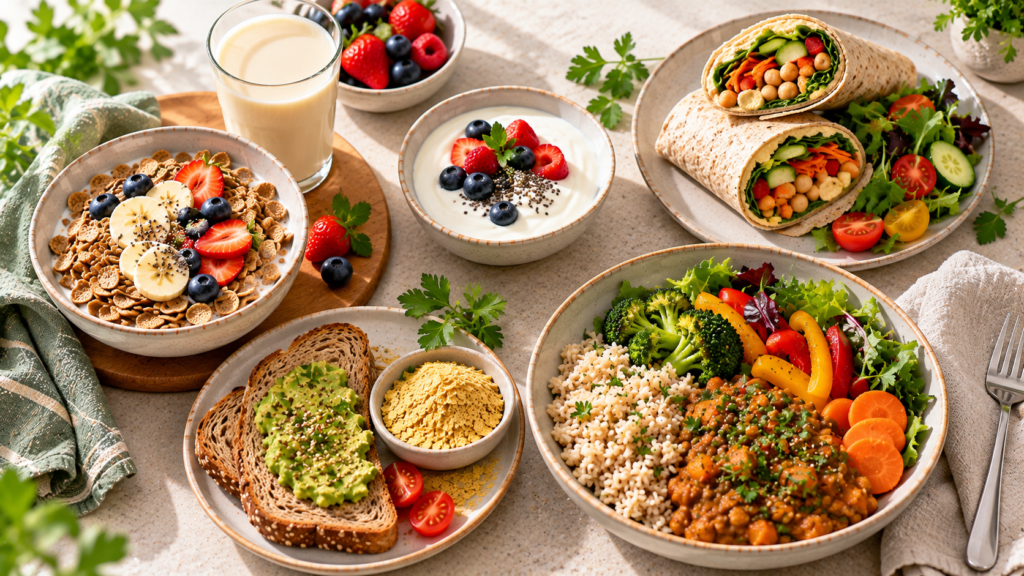
Vegan meal plan featuring fortified cereal, plant-based milk, vegan yogurt, and balanced plant-based meals.
How to Read Labels on Vitamin B12 Fortified Foods
Reading nutrition labels is one of the most useful habits for anyone looking for vitamin B12 rich foods for vegans.
Step 1: Find vitamin B12 in the nutrition information
Look for “vitamin B12,” “B12,” or the corresponding nutrient entry in the product’s nutrition panel.
If the vitamin is not listed, do not assume that the food contains it. Check the manufacturer’s website or contact the company if you need more information.
Step 2: Check the amount per serving
Compare the listed amount with your intended serving size. A product may display values per 100 ml, per 100 g, or per serving.
For example, if a plant-based drink provides a stated amount of B12 per 100 ml, you will need to account for how much you actually drink.
Step 3: Look for added vitamin B12
Plant-based milk and nutritional yeast are not automatically fortified. Confirm that the product includes added vitamin B12.
Step 4: Compare products from different brands
Two cartons of soy milk may look similar but provide different amounts of B12. Compare the nutrient information rather than relying on the product category.
Step 5: Check storage and preparation instructions
Follow the manufacturer’s storage instructions. Do not assume that every fortified food retains the same vitamin content under every storage or cooking condition.
Step 6: Create a consistent routine
A dependable routine is easier to maintain than occasionally eating a fortified food and hoping it meets your needs. Keep track of your regular sources and seek advice if you are uncertain about your total intake.
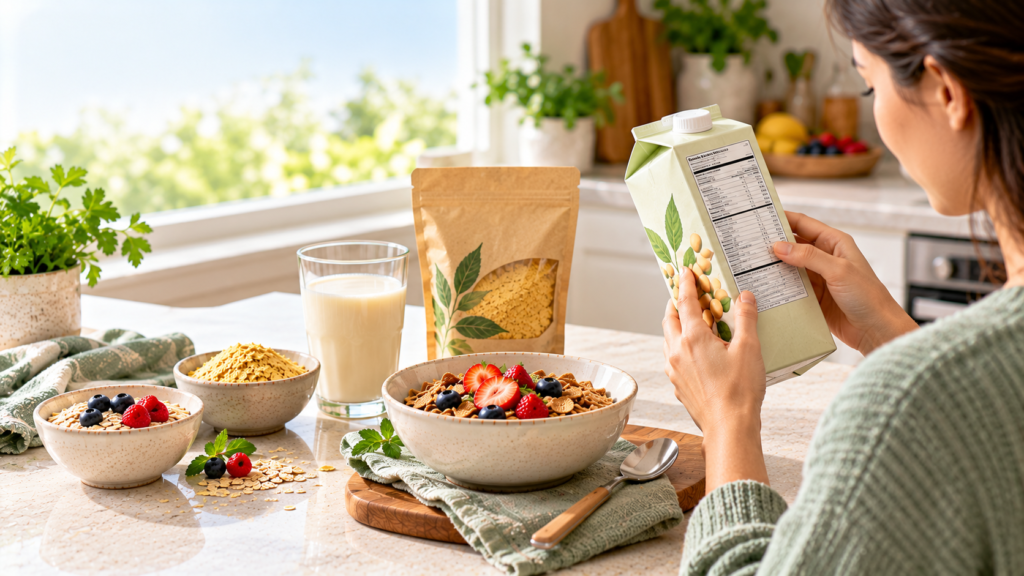
A person checking the vitamin B12 nutrition label on fortified soy milk alongside vegan breakfast foods.
Are Seaweed, Spirulina, and Fermented Foods Good Sources of B12?
Some foods are frequently promoted online as natural vegan vitamin B12 sources. However, the evidence does not support relying on many of these products to meet your needs.
Seaweed and algae
Certain algae products may contain compounds identified as vitamin B12, but the amount and biological availability can vary. Some products may contain inactive B12-like compounds that do not meet the body’s needs.
Spirulina
Spirulina is often marketed as a nutrient-rich supplement, but it should not be relied upon as a dependable source of active vitamin B12.
Fermented foods
Certain fermented foods may contain small or inconsistent amounts of B12, depending on how they are made. They are not reliable substitutes for verified fortified foods or an appropriate supplement.
Ordinary mushrooms and vegetables
Mushrooms, leafy greens, legumes, and other vegetables provide useful nutrients, but ordinary unfortified plant foods are not dependable vitamin B12 sources.
For a vegan diet, the safer strategy is to use products that explicitly provide vitamin B12 through fortification or to use a suitable supplement.
Do Vegans Need a Vitamin B12 Supplement?
Many vegans benefit from a reliable supplement strategy because unfortified plant foods do not naturally provide dependable amounts of vitamin B12.
Whether you need a supplement depends on your regular intake from fortified foods, your health, and your ability to absorb the vitamin.
When a supplement may be useful
- You rarely eat foods fortified with vitamin B12.
- You cannot confirm how much B12 your regular foods provide.
- You have a diagnosed B12 deficiency.
- You have a condition that affects absorption.
- A healthcare professional recommends supplementation based on your circumstances.
Choosing a supplement
Look for a product that clearly lists its vitamin B12 content and provides instructions for use. Vitamin B12 supplements come in several forms, including cyanocobalamin and methylcobalamin. According to the NIH, research has not shown that one commonly used supplemental form is generally superior to the others.
The appropriate dose and schedule can depend on whether you are maintaining adequate intake or treating an existing deficiency. If you have symptoms or a diagnosed deficiency, seek professional advice rather than relying solely on a general dietary recommendation.
NIH information about vitamin B12 supplements
Signs of Vitamin B12 Deficiency to Know
Low vitamin B12 can develop gradually, and symptoms may not appear immediately. A deficiency may be caused by inadequate intake, impaired absorption, or a combination of factors.
Possible symptoms include:
- Persistent fatigue or weakness
- Pale skin
- Numbness or tingling in the hands and feet
- Balance or walking difficulties
- A sore or smooth tongue
- Changes in concentration or memory
- Shortness of breath associated with anemia
These symptoms can have many causes and do not confirm a B12 deficiency. A healthcare professional can assess your symptoms and arrange appropriate testing.
Seek medical advice if symptoms persist, particularly if you experience tingling, numbness, or changes in balance. Untreated deficiency can cause neurological problems, some of which may not fully resolve.
NHS guide to vitamin B12 and folate deficiency anemia
Internal Linking Opportunities
Add relevant links to other articles on your website to help readers explore related topics.
- Vitamin B12 Deficiency: Signs, Causes and Food Sources
- How Much Vitamin B12 Do You Need Per Day?
- Best Sources of Vitamin B12: Natural and Fortified Options
- Vitamin B12 Rich Foods for Vegetarians
Use the final published URLs and make sure each link points to an existing, relevant page.
Frequently Asked Questions
1. What are the best vitamin B12 rich foods for vegans?
The best options include fortified breakfast cereals, fortified soy and other plant-based milks, fortified nutritional yeast, certain vegan yogurts, and other verified fortified products. The actual amount depends on the brand and serving size.
2. Which vegan food contains the most vitamin B12?
There is no single answer because fortified products vary widely. Some fortified nutritional yeast products and cereals provide substantial amounts, while others contain little or none. Compare the vitamin B12 content on the nutrition label.
3. Can vegans get vitamin B12 from natural plant foods?
Ordinary unfortified plant foods are not reliable natural sources of vitamin B12. Vegans should obtain it from verified fortified foods or suitable supplements.
4. Does soy milk contain vitamin B12?
Some soy milk products are fortified with vitamin B12, while others are not. Check the nutrition panel to confirm the amount per serving.
5. Is nutritional yeast a reliable source of vitamin B12?
Fortified nutritional yeast can be a useful source. Unfortified nutritional yeast should not be assumed to contain meaningful amounts of B12. Always read the label.
6. How much vitamin B12 does a vegan need daily?
For most adults, the US recommended daily intake is 2.4 mcg. Requirements differ by age and life stage, and recommendations may vary by country.
7. Can fortified cereal alone meet a vegan’s B12 needs?
It depends on the cereal’s vitamin content, serving size, and how often it is eaten. Check the label and consider your total intake from all reliable sources. Do not assume every cereal is fortified.
8. Should vegans take vitamin B12 supplements every day?
Some vegans use a daily supplement, while others follow a different evidence-based schedule or obtain sufficient amounts through fortified foods. The appropriate approach depends on the product, dose, dietary routine, and individual circumstances. A healthcare professional can help determine a suitable plan.
9. Are spirulina and seaweed enough to prevent B12 deficiency?
They should not be relied upon as dependable sources of active vitamin B12. Choose verified fortified foods or an appropriate supplement instead.
10. How can I add vitamin B12 to a vegan diet on a budget?
Compare fortified products by their B12 content per serving and cost. A suitable fortified cereal, plant-based drink, or nutritional yeast may fit your routine, depending on local availability. If fortified foods are expensive or inconsistent, ask a healthcare professional about an affordable supplement option.
Conclusion
Choosing vitamin B12 rich foods for vegans is about more than eating a wide variety of vegetables, fruits, grains, and legumes. These foods are essential parts of a healthy plant-based diet, but they do not reliably supply vitamin B12 unless they are specifically fortified.
Fortified breakfast cereals, plant-based milks, nutritional yeast, vegan yogurts, and certain other products can help you obtain B12. The most important habit is to check labels and calculate your intake from the products you actually consume.
If you cannot consistently meet your needs through fortified foods, a suitable vitamin B12 supplement can provide a dependable alternative. Seek professional guidance if you have symptoms of deficiency, an absorption problem, or specific medical needs.
With informed choices and a consistent plan, you can maintain a balanced vegan diet while making vitamin B12 a priority.
2 thoughts on “Vitamin B12 Rich Foods for Vegans: Fortified Food Sources”