
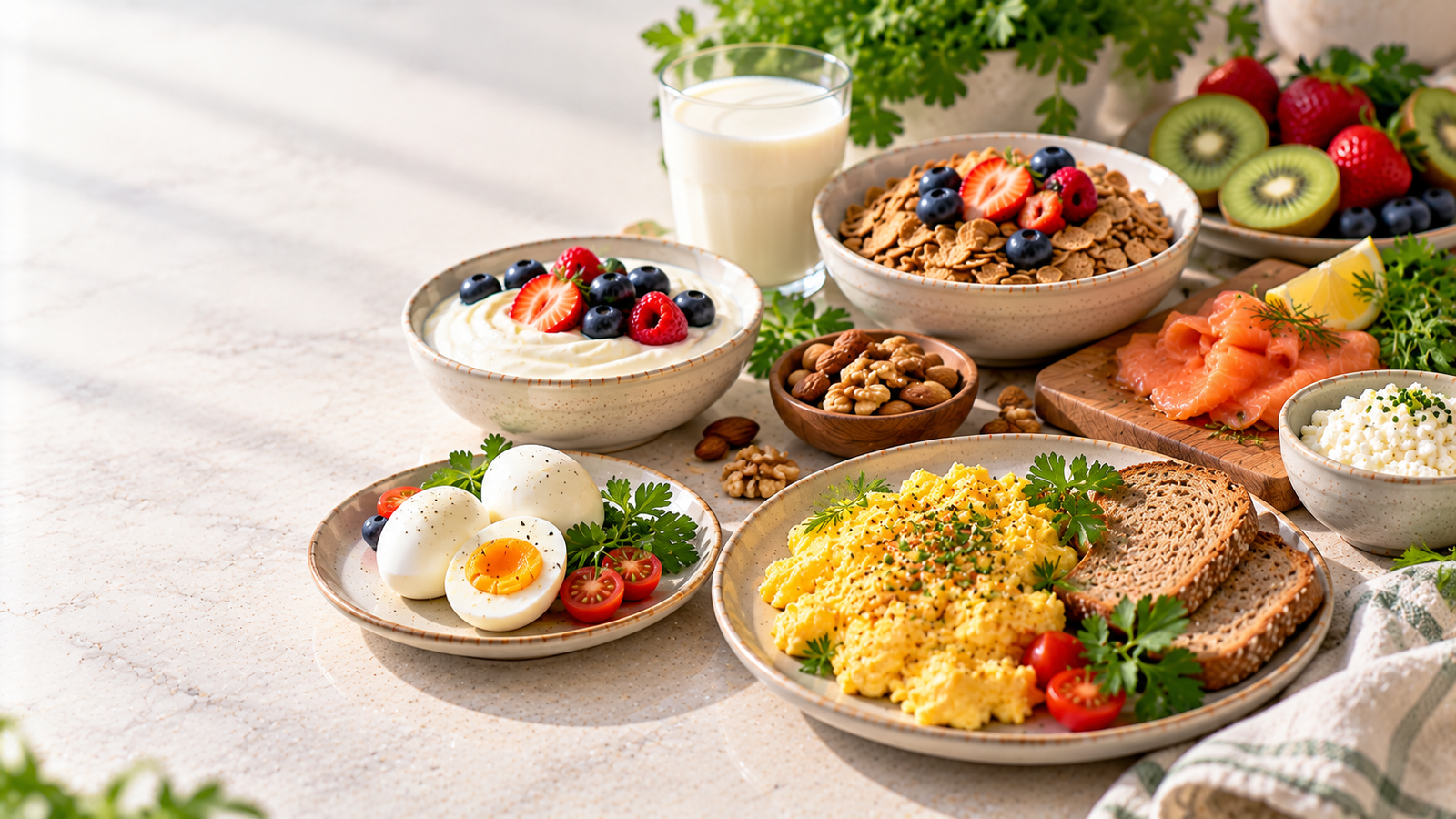
Breakfast is an excellent opportunity to include important nutrients in your daily diet. If you want to support normal nerve function, healthy red blood cell formation, and DNA production, choosing the best breakfast foods high in vitamin B12 can help you build a more nutrient-rich morning routine.
Vitamin B12 is found naturally in many animal-derived foods, including eggs, milk, yogurt, fish, and certain cheeses. Some breakfast cereals and plant-based milk alternatives also contain vitamin B12 because manufacturers add it during fortification. However, not every cereal or plant-based drink provides this nutrient, so checking the nutrition label is essential.
The good news is that you do not need an elaborate breakfast to include vitamin B12. Simple combinations such as eggs with whole-grain toast, yogurt with fruit, or fortified cereal with milk can contribute to your daily intake.
This guide covers 10 of the best breakfast foods high in vitamin B12, approximate amounts, easy meal ideas, and practical options for vegetarians and vegans.
Key Takeaways
- Eggs, milk, yogurt, fish, and certain cheeses are useful natural breakfast sources of vitamin B12.
- Fortified breakfast cereals and fortified plant-based milk can provide B12, but amounts vary by brand.
- Most adults need 2.4 micrograms (mcg) of vitamin B12 daily under US dietary recommendations.
- Combining several B12-containing foods can help you build a varied breakfast.
- Ordinary fruits, vegetables, oats, nuts, and seeds are nutritious but are not reliable natural sources of vitamin B12.
- Vegans need a dependable source from verified fortified foods, supplements, or both.
- Vitamin B12 supports normal body functions, but consuming extra B12 does not automatically provide more energy if you already get enough.
Why Is Vitamin B12 Important at Breakfast?
Vitamin B12, also called cobalamin, is an essential nutrient that your body needs throughout life. Your body cannot produce enough of it on its own, so you must obtain it through food or supplements.
Eating B12-containing foods at breakfast is one practical way to make the nutrient part of your regular eating pattern.
1. Supports normal red blood cell formation
Vitamin B12 helps the body produce healthy red blood cells. Inadequate B12 can contribute to megaloblastic anemia, which may cause fatigue, weakness, and shortness of breath.
2. Helps maintain normal nerve function
Vitamin B12 is essential for the nervous system. Prolonged deficiency can cause symptoms such as numbness, tingling, balance difficulties, and changes in memory or concentration.
3. Helps with DNA production
Your body uses vitamin B12 in DNA synthesis, a process needed for normal cell growth and function.
4. Supports normal energy metabolism
Vitamin B12 participates in processes that help the body use nutrients. However, it is not a stimulant, and extra B12 does not reliably increase energy in people who already have adequate levels.
Including vitamin B12 in a balanced breakfast can help you work toward your daily nutrient requirements while also providing protein, carbohydrates, fats, and other vitamins and minerals.
10 Best Breakfast Foods High in Vitamin B12
The following foods can help you include vitamin B12 in your morning meals. The amounts are approximate and can change with serving size, food variety, preparation method, and fortification.
1. Eggs
Eggs are a convenient breakfast staple and provide vitamin B12 along with protein, choline, and other nutrients.
One large cooked egg contains approximately 0.5 mcg of vitamin B12, although the amount varies.
Easy breakfast ideas:
- Scrambled eggs with whole-grain toast.
- Boiled eggs with tomatoes and cucumber.
- A vegetable omelet with mushrooms and spinach.
- Eggs served with avocado and whole-grain bread.
Eggs can contribute to your daily B12 intake, but a single egg does not provide the full recommended amount for most adults. Pairing eggs with other B12 sources, such as milk or yogurt, can increase the amount in your meal.
Who may benefit? Eggs are particularly practical for people who eat vegetarian diets that include eggs.
2. Milk
Cow’s milk naturally contains vitamin B12 and is easy to add to many breakfasts.
One cup of milk provides approximately 1.3 mcg of vitamin B12, depending on the product and serving size.
Ways to include milk at breakfast:
- Drink a glass alongside eggs or toast.
- Add it to oatmeal.
- Pour it over fortified breakfast cereal.
- Blend it into a fruit smoothie.
- Use it in homemade porridge.
Milk also provides protein and calcium. If you avoid dairy, look for a plant-based alternative that is specifically fortified with vitamin B12.
3. Plain Yogurt and Greek Yogurt
Yogurt is another convenient option for a vitamin B12-containing breakfast. Its nutrient content depends on the type, serving size, and manufacturing process.
A serving of plain yogurt, around 6 ounces (170 grams), may provide approximately 0.7–1.0 mcg of vitamin B12, though values vary.
Greek yogurt is also useful because many varieties provide substantial protein. Its vitamin B12 content is not necessarily higher than that of ordinary yogurt, so check product-specific information when exact amounts matter.
Healthy breakfast combinations:
- Plain yogurt with berries and oats.
- Greek yogurt with banana and nuts.
- Yogurt with sliced fruit and seeds.
- A savory yogurt bowl with cucumber and herbs alongside eggs.
Choose plain or lower-added-sugar varieties if that suits your preferences. Fruit can add flavor, fiber, and other nutrients without relying on heavily sweetened yogurt.
4. Fortified Breakfast Cereal
Fortified breakfast cereal can be one of the easiest ways to add vitamin B12 to a morning meal, particularly for people who eat little or no animal-derived food.
Manufacturers add vitamins and minerals to some cereals. Depending on the product, one serving may provide a meaningful portion of the daily B12 requirement.
However, not all breakfast cereals contain vitamin B12.
Before buying, check:
- Whether vitamin B12 appears in the nutrition information.
- How much B12 is provided per serving.
- Whether the cereal is suitable for your dietary pattern.
- The amount of added sugar.
- The fiber content and realistic serving size.
Breakfast idea: Serve fortified cereal with milk or a verified B12-fortified plant-based drink and fresh berries.
This combination can provide vitamin B12 alongside protein, carbohydrates, and other nutrients. Calculate the total using the labels of the actual products you use.
5. Salmon
Salmon is a nutritious fish that supplies vitamin B12, protein, and omega-3 fatty acids.
A 3-ounce (85-gram) serving of cooked salmon may provide approximately 2.5–3 mcg of vitamin B12, depending on the species and preparation.
Salmon may not be part of everyone’s usual breakfast, but it can be a satisfying option for people who prefer savory morning meals.
Breakfast ideas:
- Smoked salmon with whole-grain toast and cucumber.
- Cooked salmon with scrambled eggs.
- Salmon served with an egg and vegetable breakfast bowl.
- Salmon on toast with a little plain yogurt and fresh herbs.
Smoked salmon can be relatively high in sodium, so consider portion size and your individual dietary needs. Cooked salmon is another option if you prefer to avoid smoked products.
6. Cheese
Certain cheeses provide vitamin B12, although the amount depends on the variety and portion.
Cheddar cheese, for example, contains vitamin B12 and can be added to eggs, toast, or breakfast sandwiches. A 1.5-ounce serving may provide approximately 0.5–0.6 mcg, depending on the cheese.
Ways to use cheese at breakfast:
- Add a small portion to a vegetable omelet.
- Make a cheese and tomato whole-grain sandwich.
- Serve cottage cheese with whole-grain toast.
- Add cheese to scrambled eggs.
Cheese also provides protein and calcium, but some varieties contain substantial saturated fat and sodium. Choose portions that fit your overall dietary pattern.
7. Cottage Cheese
Cottage cheese is a convenient protein-rich breakfast food that may also contribute vitamin B12.
The exact amount varies by brand and serving size, so consult the product label or a reliable food-composition database if you need a precise estimate.
Simple cottage cheese breakfast ideas:
- Cottage cheese with sliced tomatoes and whole-grain toast.
- Cottage cheese with berries and a small portion of oats.
- Cottage cheese alongside boiled eggs.
- A savory bowl with cucumber, herbs, and black pepper.
Cottage cheese can be especially useful when you want a quick breakfast that requires little preparation. If you monitor sodium, compare labels because sodium content varies between products.
8. Fortified Plant-Based Milk
Soy, oat, and almond drinks may contain added vitamin B12. These products can be useful for people who avoid dairy, including vegans, but fortification is not universal.
A cup of fortified plant-based milk may provide a meaningful amount of B12, depending on the brand and formulation. The only dependable way to know is to check the label.
How to use fortified plant-based milk:
- Add it to breakfast cereal.
- Use it in oatmeal or porridge.
- Blend it into a smoothie.
- Pour it into coffee or tea.
- Use it in suitable pancake recipes.
Soy milk often provides more protein than almond or oat drinks, although products vary. Compare vitamin B12, protein, calcium, added sugar, and other nutrients that matter to you.
Important: An unfortified plant-based drink should not be counted as a dependable vitamin B12 source.
9. Fortified Nutritional Yeast
Nutritional yeast is a savory ingredient used in many vegetarian and vegan dishes. Some products contain added vitamin B12, while others do not.
When fortified, nutritional yeast can be a useful addition to a breakfast routine. Its B12 content varies considerably, so there is no single amount that applies to every product.
Ways to use fortified nutritional yeast:
- Sprinkle it over scrambled eggs.
- Add it to a tofu scramble.
- Mix it into a savory breakfast bowl.
- Stir it into a breakfast sauce.
- Sprinkle it over toast with avocado and tomatoes.
For vegans, fortified nutritional yeast can provide an additional source of B12. Check the product label to confirm the amount and whether the serving size fits your routine.
10. Fortified Breakfast Drinks and Nutrition Beverages
Some ready-to-drink nutrition beverages contain added vitamin B12. They may be convenient when you have limited time to prepare breakfast, but their nutritional composition differs widely.
Check the label for:
- Vitamin B12 per bottle or serving.
- Protein and calorie content.
- Added sugar.
- Other added vitamins and minerals.
- Ingredients that fit your dietary needs.
A fortified drink can contribute to your intake, but it does not automatically replace a balanced breakfast. Whenever possible, combine convenient options with foods such as fruit, whole grains, eggs, yogurt, or other protein sources appropriate to your diet.
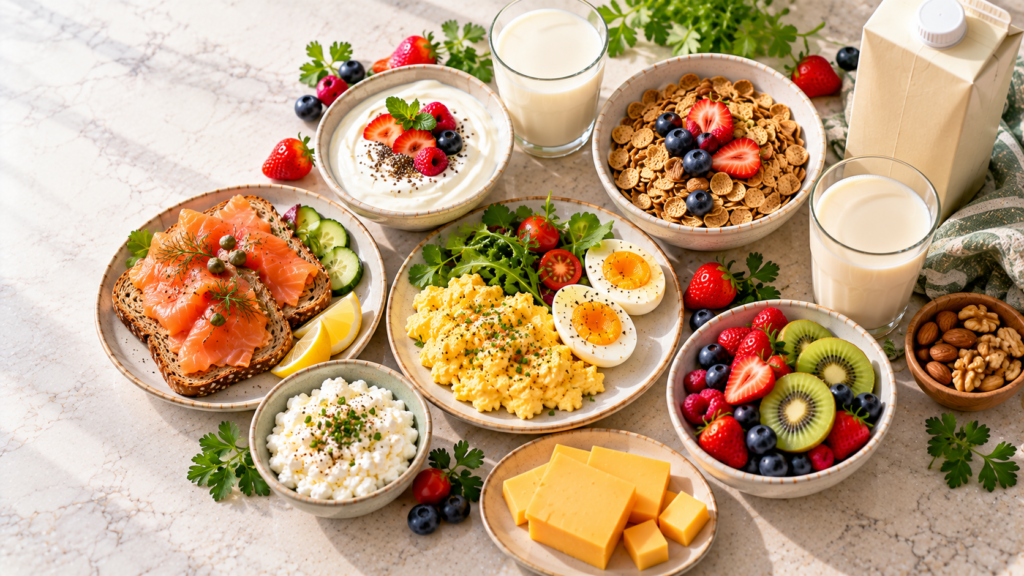
Best breakfast foods high in vitamin B12, including eggs, milk, yogurt, salmon, cheese, and fortified cereal.
Vitamin B12 in Breakfast Foods: A Quick Comparison Chart
Use this chart as a general guide to the vitamin B12 content of common breakfast foods.
| Breakfast food | Example serving | Approximate vitamin B12 |
|---|---|---|
| Cooked egg | 1 large egg | 0.5 mcg |
| Cow’s milk | 1 cup | 1.3 mcg |
| Plain yogurt | 6 oz (170 g) | 0.7–1.0 mcg |
| Cooked salmon | 3 oz (85 g) | 2.5–3 mcg |
| Cheddar cheese | 1.5 oz (42 g) | 0.5–0.6 mcg |
| Fortified breakfast cereal | 1 labeled serving | Varies by product |
| Fortified soy milk | 1 cup | Varies by product |
| Fortified oat milk | 1 cup | Varies by product |
| Fortified almond milk | 1 cup | Varies by product |
| Fortified nutritional yeast | 1 labeled serving | Varies by product |
Please note: Values are approximate, not laboratory measurements for every product. Actual amounts depend on the food, brand, serving size, and preparation. Fortified foods must be checked individually because products in the same category can contain different amounts—or none at all.
For reliable nutrient information, consult the USDA FoodData Central database and the NIH Vitamin B12 Fact Sheet.
How Much Vitamin B12 Do You Need Per Day?
The amount of vitamin B12 you need depends on your age and life stage. The following are US recommended dietary allowances.
| Age or life stage | Recommended daily intake |
|---|---|
| Children aged 1–3 | 0.9 mcg |
| Children aged 4–8 | 1.2 mcg |
| Children aged 9–13 | 1.8 mcg |
| Teenagers aged 14–18 | 2.4 mcg |
| Adults aged 19 and older | 2.4 mcg |
| Pregnant teenagers | 2.6 mcg |
| Pregnant adults | 2.6 mcg |
| Breastfeeding teenagers | 2.8 mcg |
| Breastfeeding adults | 2.8 mcg |
These are US recommendations; official guidance can differ by country. The values above do not cover infants under 12 months, whose needs are specified separately.
Can breakfast provide your entire daily vitamin B12 requirement?
It can, depending on the foods and portions you choose.
For example, a breakfast containing a serving of cooked salmon and a glass of milk may provide around 3.8–4.3 mcg of B12 based on the approximate values in the chart. That would exceed the standard adult recommendation of 2.4 mcg.
However, you do not need to obtain all your vitamin B12 at breakfast. It is fine to distribute your intake across meals and snacks.
If you mainly eat plant-based foods, check the B12 content of fortified products and consider how frequently you consume them. A dependable intake plan matters more than choosing one particular meal.
5 Easy Breakfast Ideas Rich in Vitamin B12
You can use the following ideas to make your morning routine more varied. Each combines at least one potential B12 source with other foods that contribute to a balanced meal.
1. Eggs, Whole-Grain Toast, and Milk
Ingredients:
- Two cooked eggs
- One or two slices of whole-grain toast
- One cup of milk
- Tomato or cucumber on the side
Eggs and milk provide vitamin B12, while whole-grain bread supplies carbohydrates and fiber. Vegetables add color and other nutrients.
2. Fortified Cereal With Milk and Fruit
Ingredients:
- One serving of fortified breakfast cereal
- One cup of milk or verified fortified plant-based milk
- Fresh berries or sliced banana
Check the cereal and drink labels to calculate their combined B12 content. Choose a cereal with a suitable amount of added sugar and a useful amount of fiber.
3. Greek Yogurt Breakfast Bowl
Ingredients:
- Plain Greek yogurt
- Fresh berries or kiwi
- A small portion of oats
- Nuts or seeds
Yogurt contributes vitamin B12 and protein. Fruit, oats, nuts, and seeds add variety, fiber, and other nutrients, although they should not be counted as reliable sources of B12 unless specifically fortified.
4. Salmon and Egg Toast
Ingredients:
- Cooked salmon or a portion of smoked salmon
- One cooked egg
- Whole-grain toast
- Cucumber and fresh herbs
This savory breakfast combines two B12-containing foods with protein. If you use smoked salmon, keep its sodium content in mind.
5. Vegan Fortified Breakfast Bowl
Ingredients:
- Fortified breakfast cereal or oatmeal served with a fortified product
- Fortified soy milk
- Fresh berries or banana
- Fortified nutritional yeast in a separate savory meal, if desired
Oats and fruit provide useful nutrients, but they are not dependable natural sources of vitamin B12. For a vegan breakfast, make sure the products you count toward your B12 intake are explicitly fortified.
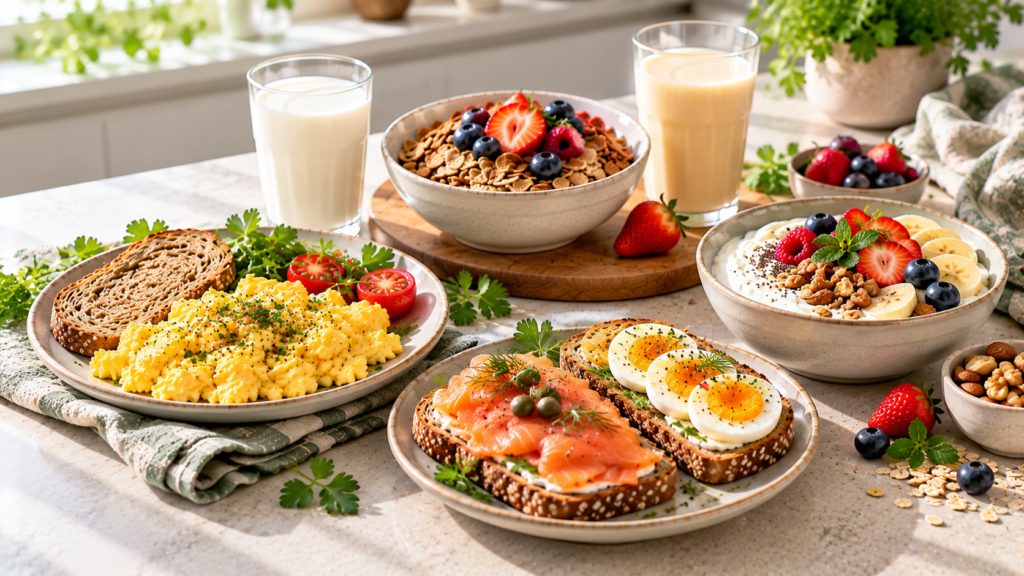
Easy breakfast ideas with vitamin B12, including eggs and toast, fortified cereal, yogurt, and salmon.
Best Breakfast Foods High in Vitamin B12 for Vegetarians
Vegetarians who eat eggs and dairy have several practical ways to obtain vitamin B12 at breakfast.
Include eggs
Eggs contribute B12 and can be prepared in different ways. Try boiled eggs, omelets, scrambled eggs, or egg sandwiches.
Choose milk and yogurt
Dairy milk and yogurt provide vitamin B12 along with other nutrients. Greek yogurt can also be a useful protein source.
Add cheese when appropriate
Cheese can contribute B12, but the amount depends on the type and portion. Pair it with eggs, whole-grain toast, or vegetables.
Consider fortified foods
Vegetarians who eat few eggs or dairy products can use verified fortified cereals and other fortified foods to increase their intake.
A varied vegetarian breakfast can help, but the amount of B12 depends on the foods you choose and how often you eat them.
Vitamin B12 Rich Foods for Vegetarians
Best Breakfast Foods High in Vitamin B12 for Vegans
Because a vegan diet excludes eggs, dairy, fish, and other animal-derived foods, choosing reliable vitamin B12 sources requires extra attention.
Look for fortified cereal
Some cereals contain added B12. Confirm the nutrient amount on the packaging before counting them as a source.
Choose fortified plant-based milk
Fortified soy, oat, and almond drinks may contribute vitamin B12. Unfortified versions do not provide the same benefit.
Use fortified nutritional yeast
Some nutritional yeast products are enriched with vitamin B12. The amount differs by product, so read the label.
Check other fortified foods
Some plant-based yogurts, nutrition beverages, and meat alternatives contain added B12. Not every product in these categories is fortified.
Consider a dependable supplement strategy
If you cannot consistently obtain enough B12 from fortified foods, a suitable supplement may be necessary. Ask a qualified healthcare professional for guidance if you have a diagnosed deficiency, a condition affecting absorption, or specific medical needs.
Seaweed, spirulina, and ordinary fermented foods should not be relied upon as dependable sources of active vitamin B12.
Vitamin B12 Rich Foods for Vegans: Fortified Food Sources
Can You Get Enough Vitamin B12 From Breakfast Alone?
Yes, some people can obtain their recommended daily amount from breakfast, but it depends on the foods, serving sizes, and their B12 content.
A breakfast containing a substantial serving of fish, dairy, or several B12-containing foods may provide enough for the day. A breakfast of plain oatmeal, fruit, and nuts may be nutritious but is unlikely to provide much vitamin B12 unless a product is fortified.
For practical planning:
- Identify the foods you regularly eat at breakfast.
- Check their vitamin B12 content using nutrition labels or a reliable food database.
- Estimate the amount in your usual portions.
- Consider your intake from lunch, dinner, and snacks as well.
- If you follow a vegan diet, verify that you have a reliable source every day or according to an appropriate supplement schedule.
You do not need to track every nutrient indefinitely. However, reviewing your routine can be useful if you eat a restricted diet or are unsure whether you get enough B12.
Does Vitamin B12 at Breakfast Give You More Energy?
Vitamin B12 is involved in normal energy metabolism, which is one reason it is often associated with energy and tiredness.
However, vitamin B12 is not an instant energy booster. If you already get enough B12, consuming extra amounts does not generally make you feel more energetic.
If you have a vitamin B12 deficiency, correcting it may improve deficiency-related symptoms, although the outcome and recovery time depend on the cause and severity.
A balanced breakfast can support your overall nutritional intake. Protein-containing foods, whole grains, fruit, and other nutrient-rich ingredients may help make a meal satisfying, but persistent fatigue should not automatically be attributed to low B12.
If you experience ongoing tiredness, weakness, numbness, tingling, or balance problems, consult a healthcare professional rather than relying on breakfast changes alone.
Common Breakfast Foods That Are Not Reliable Sources of Vitamin B12
Many foods associated with a healthy breakfast provide important nutrients but contain little or no naturally occurring vitamin B12.
Examples include:
- Plain oatmeal
- Fresh berries
- Bananas
- Apples
- Nuts and seeds
- Most fresh vegetables
- Ordinary whole-grain bread
- Unfortified plant-based milk
These foods can still be part of an excellent breakfast. The important distinction is that they should not be counted as dependable B12 sources unless they have been specifically fortified.
For example, oatmeal served with fortified soy milk may provide B12 from the drink, but not necessarily from the oats themselves.
How to Choose the Best Vitamin B12 Breakfast Foods
When comparing breakfast options, look beyond the food’s name or health claims.
Check the nutrition label
Find the vitamin B12 entry and check the amount per serving. If the nutrient is not listed, do not assume the product contains a meaningful amount.
Compare serving sizes
A label may provide values per 100 grams, per 100 milliliters, or per serving. Compare products using equivalent portions.
Consider other nutrients
Choose foods that fit your broader dietary needs. Protein, fiber, calcium, and added sugar may be relevant when comparing cereals, dairy products, and plant-based drinks.
Account for dietary restrictions
Vegetarians may use eggs and dairy, while vegans need verified fortified foods or a suitable supplement strategy.
Focus on consistency
Eating B12-containing foods regularly is more useful than occasionally choosing one high-B12 breakfast and ignoring the rest of your routine.
Frequently Asked Questions
1. What is the best breakfast food high in vitamin B12?
Salmon is a particularly rich breakfast option, while milk, yogurt, eggs, and some cheeses provide smaller amounts. Fortified cereals can also be useful, depending on the product.
2. Are eggs high in vitamin B12?
Eggs contain vitamin B12, with one large egg providing approximately 0.5 mcg. They contribute to your daily intake but generally do not provide the full adult requirement on their own.
3. Which breakfast cereal has the most vitamin B12?
There is no single answer because fortification varies by brand and product. Compare the vitamin B12 amount per serving on the nutrition label rather than assuming all cereals provide the same amount.
4. Does oatmeal contain vitamin B12?
Plain oats are not a reliable natural source of vitamin B12. Oatmeal can contribute B12 when prepared with milk or a plant-based drink that is specifically fortified with the vitamin.
5. What can I eat for breakfast to get 100% of my daily vitamin B12?
Depending on the amounts and products, a breakfast containing cooked salmon and milk may exceed the standard adult recommendation of 2.4 mcg. Check actual food values and serving sizes because amounts vary.
6. What are the best vegetarian breakfast foods high in vitamin B12?
Eggs, milk, yogurt, and certain cheeses are useful vegetarian options. Fortified breakfast cereals and fortified plant-based drinks can also contribute, depending on their labels.
7. What are the best vegan breakfast foods high in vitamin B12?
Verified fortified breakfast cereal, fortified plant-based milk, and fortified nutritional yeast can contribute vitamin B12. Vegans who cannot reliably meet their needs through fortified foods should consider an appropriate supplement strategy.
8. Can I get enough vitamin B12 without eating meat?
Yes. Eggs, dairy products, fish for people who eat it, and verified fortified foods can provide B12. Vegans need reliable fortified sources or a suitable supplement.
9. Is it better to eat vitamin B12 in the morning?
There is no established requirement to consume vitamin B12 at a particular time of day. Eating B12-containing foods at breakfast is simply a convenient way to include them in your routine.
10. Can low vitamin B12 make me feel tired in the morning?
Vitamin B12 deficiency can contribute to fatigue, but tiredness has many possible causes. If fatigue persists or occurs with symptoms such as numbness, tingling, or balance difficulties, seek medical advice.
Conclusion: Build a Better Morning With Vitamin B12
Choosing the best breakfast foods high in vitamin B12 does not have to be complicated. Eggs, milk, yogurt, salmon, cheese, and certain fortified cereals can all help you include this essential nutrient in your morning routine.
The best choice depends on your dietary preferences, budget, and nutritional needs. If you eat animal-derived foods, eggs and dairy can be convenient options. If you follow a vegetarian or vegan diet, check fortified products carefully and make sure your overall eating pattern provides a reliable source of B12.
Remember that a healthy breakfast is about more than one vitamin. Combine B12-containing foods with fruit, whole grains, vegetables, and suitable protein sources for a varied and satisfying meal.
Start with one simple change: add a reliable vitamin B12 source to a breakfast you already enjoy, and make it part of a consistent routine.
Related reading:
- Foods High in Vitamin B12: Natural and Fortified Sources
- How Much Vitamin B12 Do You Need Per Day?
- Read the NIH Vitamin B12 Consumer Fact Sheet for daily requirements and reliable food-source information
1 thought on “Best Breakfast Foods High in Vitamin B12”