

Nuts and seeds high in magnesium are an easy way to add essential minerals, healthy fats, fiber, and plant-based protein to your everyday diet. Whether you sprinkle chia seeds over oatmeal, enjoy almonds as a snack, or add pumpkin seeds to a salad, these small foods can make a meaningful contribution to your daily magnesium intake.
Magnesium supports normal muscle and nerve function, energy production, bone health, and many other processes in the body. Because the body cannot produce this mineral on its own, getting enough from food is important.
In this guide, you’ll discover 15 magnesium-rich nuts and seeds, their approximate magnesium content, practical serving suggestions, and simple ways to include them in balanced meals.
Key Takeaways
- Pumpkin seeds are among the richest commonly eaten seeds in magnesium.
- Chia seeds, sesame seeds, almonds, cashews, and sunflower seeds are also valuable sources.
- A small serving of nuts or seeds can contribute meaningfully to your daily magnesium intake.
- Whole nuts and seeds provide additional nutrients, including unsaturated fats, fiber, and protein.
- Choose unsalted or lightly salted varieties when possible, and pay attention to portion sizes.
- Nuts and seeds work best as part of a varied diet rather than as the only source of magnesium.
Why Are Magnesium-Rich Nuts and Seeds Good for You?
Magnesium is an essential mineral involved in hundreds of enzyme systems in the human body. It helps support several important functions.
1. Supports muscle and nerve function
Magnesium helps muscles contract and relax normally and supports the transmission of nerve signals. It works alongside other electrolytes, including calcium and potassium.
2. Helps produce energy
Your body needs magnesium for processes involved in converting food into usable energy. Nuts and seeds also supply fats, protein, and other nutrients that contribute to a balanced diet.
3. Contributes to bone health
A substantial portion of the body’s magnesium is stored in bones. Magnesium supports normal bone structure and is involved in processes that regulate calcium and vitamin D.
4. Supports normal body functions
Magnesium is involved in protein synthesis, blood glucose regulation, and normal blood pressure regulation. Getting adequate magnesium is important, although eating one particular nut or seed is not a treatment for a medical condition.
15 Nuts and Seeds High in Magnesium
The following table compares approximate magnesium amounts in common nuts and seeds. Values are rounded estimates based on typical food-composition data; actual amounts vary by variety, preparation, and serving weight.
| Nut or seed | Serving size | Approx. magnesium |
|---|---|---|
| Pumpkin seeds, hulled | 1 oz (28 g) | 156 mg |
| Chia seeds | 1 oz (28 g) | 95 mg |
| Hemp seeds, hulled | 1 oz (28 g) | 197 mg |
| Sesame seeds | 1 oz (28 g) | 101 mg |
| Brazil nuts | 1 oz (28 g) | 107 mg |
| Sunflower seed kernels | 1 oz (28 g) | 37 mg |
| Almonds | 1 oz (28 g) | 77 mg |
| Cashews | 1 oz (28 g) | 74 mg |
| Flaxseeds | 1 oz (28 g) | 110 mg |
| Peanuts | 1 oz (28 g) | 48 mg |
| Pine nuts | 1 oz (28 g) | 71 mg |
| Walnuts | 1 oz (28 g) | 45 mg |
| Pistachios | 1 oz (28 g) | 34 mg |
| Pecans | 1 oz (28 g) | 34 mg |
| Hazelnuts | 1 oz (28 g) | 46 mg |
Important: Hemp seeds, pumpkin seeds, flaxseeds, and some other options are especially magnesium-rich by weight. Rankings can vary between food databases and varieties, so use the numbers as practical estimates rather than exact guarantees.
1. Pumpkin Seeds
Pumpkin seeds are one of the best-known natural sources of magnesium. A one-ounce serving of hulled pumpkin seeds provides approximately 156 mg, making them a convenient option for people looking to increase their intake.
They also supply protein, unsaturated fats, zinc, and other minerals.
Easy ways to eat pumpkin seeds:
- Sprinkle them over salads and roasted vegetables.
- Mix them into oatmeal or homemade granola.
- Add them to yogurt or trail mix.
- Use them as a crunchy topping for soups.
Choose unsalted pumpkin seed kernels for a versatile everyday option.
2. Chia Seeds
Chia seeds provide approximately 95 mg of magnesium per ounce, along with fiber, plant-based omega-3 fatty acids, and some protein.
Their ability to absorb liquid makes them particularly useful in breakfasts and snacks.
How to use chia seeds:
- Prepare overnight oats.
- Make chia pudding with milk or a fortified plant-based alternative.
- Stir a small amount into yogurt.
- Add them to smoothies.
For chia pudding, allow the seeds to absorb enough liquid before eating. Avoid swallowing large amounts of dry chia seeds, especially if you have difficulty swallowing.
3. Hemp Seeds
Hulled hemp seeds, sometimes called hemp hearts, are rich in magnesium and also contain protein and unsaturated fats. A one-ounce serving can provide approximately 197 mg of magnesium.
Their mild, nutty taste makes them easy to add to many dishes without substantially changing the flavor.
Try hemp seeds in:
- Smoothies and breakfast bowls.
- Salads and grain bowls.
- Homemade dressings and dips.
- Oatmeal or savory soups.
Hemp seeds are particularly useful for people who want to add magnesium and plant protein to vegetarian meals.
4. Sesame Seeds
Sesame seeds provide approximately 101 mg of magnesium per ounce. They also contain fats, protein, and other minerals.
Sesame seeds are widely used in many cuisines and can be incorporated into both sweet and savory meals.
Ways to enjoy sesame seeds:
- Sprinkle them over stir-fries.
- Add them to whole-grain bread or crackers.
- Use tahini, a sesame seed paste, in sauces and dressings.
- Mix toasted sesame seeds into salads.
The magnesium content of tahini varies with the product and serving size, so check the nutrition information when comparing brands.
5. Brazil Nuts
Brazil nuts supply magnesium and other nutrients, but they are especially known for their high selenium content.
A one-ounce serving may provide around 107 mg of magnesium. However, Brazil nuts should be eaten in moderation because their selenium content can be exceptionally high and varies considerably.
Practical tip: Enjoy an occasional Brazil nut as part of a varied diet rather than eating large handfuls every day. More is not always better when it comes to selenium.
6. Sunflower Seeds
Sunflower seeds contain magnesium, vitamin E, unsaturated fats, and other nutrients. One ounce of kernels provides roughly 37 mg of magnesium.
Although their magnesium content is lower than that of pumpkin seeds, sunflower seeds are still a useful addition to a balanced diet.
Add them to:
- Homemade trail mix.
- Green salads.
- Oatmeal and cereal.
- Whole-grain bread.
- Yogurt or roasted vegetables.
Unsalted kernels are a good choice if you are watching your sodium intake.
7. Almonds
Almonds provide approximately 77 mg of magnesium per ounce. They are also a source of vitamin E, fiber, protein, and unsaturated fats.
Their convenience makes them one of the easiest magnesium-rich snacks to keep on hand.
Simple ways to eat almonds:
- Enjoy a small handful between meals.
- Add sliced almonds to oatmeal.
- Combine them with fruit for a snack.
- Use almond butter on whole-grain toast.
Choose plain or lightly salted almonds when possible. Almond butter can also contribute magnesium, although the amount depends on the product and portion.
8. Cashews
Cashews provide approximately 74 mg of magnesium per ounce. They also contain copper, protein, and unsaturated fats.
Their creamy texture makes them suitable for both snacks and recipes.
Try cashews in:
- Vegetable stir-fries.
- Homemade nut mixes.
- Oatmeal or yogurt.
- Smoothies.
- Creamy sauces made from blended soaked cashews.
If you have a tree-nut allergy, avoid cashews and follow medical advice about safe alternatives.
9. Flaxseeds
Flaxseeds provide approximately 110 mg of magnesium per ounce and are well known for their fiber and plant-based omega-3 fatty acid, alpha-linolenic acid (ALA).
Ground flaxseeds are generally easier for the body to digest than whole flaxseeds, which may pass through the digestive tract largely intact.
How to use ground flaxseeds:
- Stir them into oatmeal.
- Blend them into smoothies.
- Add them to whole-grain muffin recipes.
- Mix them into yogurt or breakfast bowls.
Increase fiber-rich foods gradually and drink enough fluid to help your digestive system adjust.
10. Peanuts
Peanuts are technically legumes, not botanical nuts, but they are commonly grouped with nuts in everyday diets. They provide approximately 48 mg of magnesium per ounce.
Peanuts also offer protein, unsaturated fats, and other nutrients.
Easy serving ideas:
- Eat a small portion of plain roasted peanuts.
- Spread peanut butter on whole-grain toast.
- Add chopped peanuts to a vegetable dish.
- Blend peanut butter into a smoothie.
Check labels for added salt, sugar, or oils, and avoid peanuts if you have a peanut allergy.
11. Pine Nuts
Pine nuts contribute magnesium, unsaturated fats, and other minerals. They have a mild, buttery flavor that works well in many dishes.
Use them in pesto, salads, whole-grain pasta, or roasted vegetables. Because they can be expensive, a small sprinkle can add flavor and nutrients without requiring a large portion.
12. Walnuts
Walnuts contain magnesium and are a source of plant-based omega-3 ALA. Although they contain less magnesium per ounce than pumpkin seeds or hemp seeds, they are still a nutritious choice.
Add walnuts to oatmeal, salads, whole-grain cereal, or homemade trail mix. They also pair well with apples, pears, and plain yogurt.
13. Pistachios
Pistachios provide magnesium alongside protein, fiber, and unsaturated fats. Their individual shells can also make portion awareness easier when you choose in-shell pistachios.
Enjoy them as a snack or add chopped pistachios to salads, grain bowls, and yogurt. Unsalted varieties are helpful if you are trying to reduce sodium.
14. Pecans
Pecans provide magnesium and are rich in unsaturated fats. They work well in oatmeal, salads, and homemade snack mixes.
Because pecans are energy-dense, a small handful is usually a practical serving. Choose plain pecans more often than heavily salted or sugar-coated varieties.
15. Hazelnuts
Hazelnuts provide magnesium, vitamin E, and unsaturated fats. Their flavor pairs well with oats, fruit, and whole grains.
Enjoy them whole, chopped over yogurt, or blended into a homemade nut spread. For everyday nutrition, choose varieties with minimal added sugar and salt.
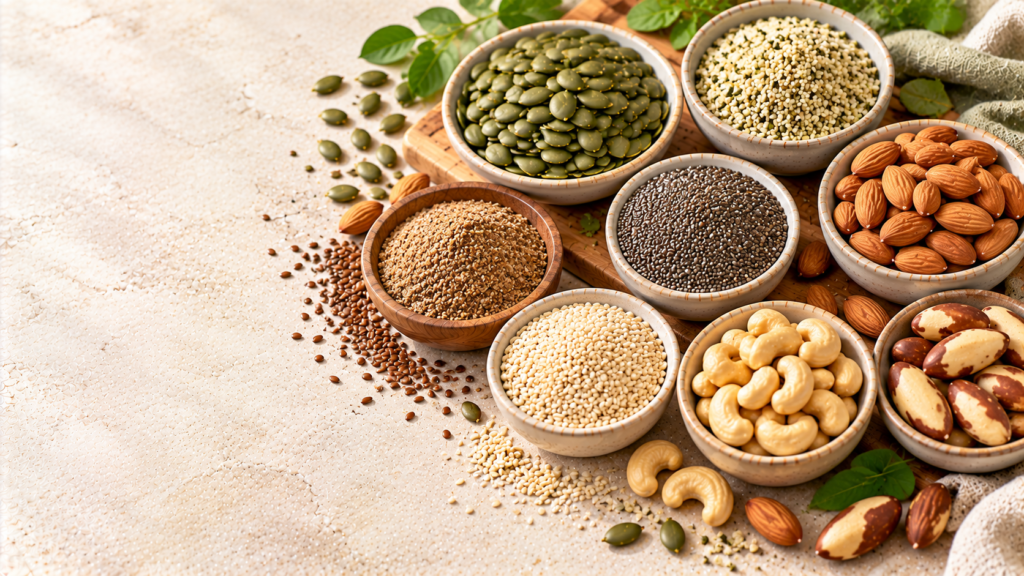
Suggested alt text: Nuts and seeds high in magnesium, including pumpkin seeds, hemp seeds, chia seeds, almonds, and cashews.
Which Nuts and Seeds Have the Most Magnesium?
If your main goal is to increase magnesium intake, prioritize foods that provide substantial amounts in a typical serving.
Best choices for magnesium
Based on approximate values per one-ounce serving:
- Hemp seeds: around 197 mg.
- Pumpkin seeds: around 156 mg.
- Flaxseeds: around 110 mg.
- Brazil nuts: around 107 mg.
- Sesame seeds: around 101 mg.
- Chia seeds: around 95 mg.
- Almonds: around 77 mg.
- Cashews: around 74 mg.
These amounts can make a meaningful contribution to daily magnesium needs. However, the best option is the one that fits your dietary preferences, budget, allergies, and normal eating habits.
Are seeds better than nuts for magnesium?
Some seeds, particularly hemp and pumpkin seeds, contain more magnesium per ounce than many common nuts. However, several nuts—including almonds, cashews, and Brazil nuts—are also valuable sources.
Rather than choosing only one, rotate different nuts and seeds throughout the week to obtain a broader range of nutrients.
20 magnesium-rich foods to add to your diet
How Much Magnesium Do You Need Each Day?
Magnesium requirements depend on age, sex, and life stage. The following table shows U.S. recommended dietary allowances (RDAs).
| Age or life stage | Recommended daily magnesium |
|---|---|
| Children, 1–3 years | 80 mg |
| Children, 4–8 years | 130 mg |
| Children, 9–13 years | 240 mg |
| Boys, 14–18 years | 410 mg |
| Girls, 14–18 years | 360 mg |
| Men, 19–30 years | 400 mg |
| Men, 31 years and older | 420 mg |
| Women, 19–30 years | 310 mg |
| Women, 31 years and older | 320 mg |
| Pregnancy, ages 19–30 | 350 mg |
| Pregnancy, ages 31–50 | 360 mg |
| Breastfeeding, ages 19–30 | 310 mg |
| Breastfeeding, ages 31–50 | 320 mg |
These recommendations are based on U.S. guidance; individual requirements can vary with medical circumstances.
For example, one ounce of pumpkin seeds containing approximately 156 mg of magnesium provides about 39% of the 400 mg RDA for men ages 19–30 and about 50% of the 310 mg RDA for women in that age group.
Magnesium from food is generally safe for healthy people when consumed as part of a balanced diet.
NIH Office of Dietary Supplements: Magnesium — recommended intakes and food sources
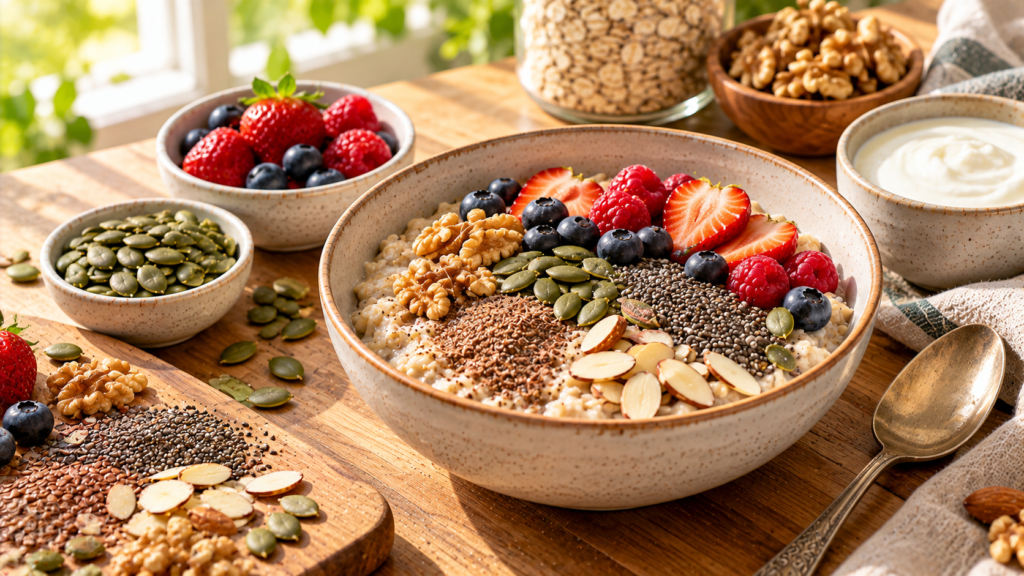
Suggested alt text: Oatmeal topped with pumpkin seeds, chia seeds, flaxseeds, almonds, and walnuts for a magnesium-rich breakfast.
Easy Ways to Add Magnesium-Rich Nuts and Seeds to Your Diet
You do not need to eat large quantities of nuts and seeds to benefit from their nutrients. Small, consistent additions can help increase your overall magnesium intake.
1. Upgrade your breakfast
Add pumpkin seeds, chia seeds, or ground flaxseeds to oatmeal, whole-grain cereal, or yogurt.
2. Choose a nutrient-rich snack
Combine a small handful of almonds or cashews with a piece of fruit. You can also prepare a homemade trail mix with unsalted nuts and seeds.
3. Add seeds to lunch and dinner
Sprinkle pumpkin or sunflower seeds over salads, soups, roasted vegetables, and grain bowls.
4. Use nut and seed butters
Peanut butter, almond butter, and tahini can add flavor and nutrients to toast, smoothies, sauces, and dressings. Check the label for added salt and sugar.
5. Rotate your choices
Try pumpkin seeds one day, almonds the next, and chia or flaxseeds later in the week. Variety makes meals more interesting and helps you obtain different nutrients.

Suggested alt text: Easy meal ideas with magnesium-rich nuts and seeds, including overnight oats, a seeded salad, and mixed nuts.
Can Nuts and Seeds Help Prevent Magnesium Deficiency?
Eating nuts and seeds high in magnesium can help you meet your daily needs, but they cannot guarantee that you will avoid magnesium deficiency.
Low magnesium levels may be associated with factors such as certain gastrointestinal conditions, prolonged inadequate intake, alcohol dependence, and some medications. Early symptoms can be vague, while severe deficiency can cause more serious problems.
If you experience persistent symptoms or believe you may have a deficiency, speak with a qualified healthcare professional rather than relying on food changes alone.
signs and causes of magnesium deficiency
Are Magnesium Supplements Necessary?
Many people can get adequate magnesium through a varied diet containing whole grains, legumes, leafy green vegetables, nuts, and seeds. Supplements may be appropriate in some situations, but they are not necessary for everyone.
For adults in the United States, the upper limit for magnesium from supplements and magnesium-containing medications is generally 350 mg per day unless a healthcare professional recommends otherwise. This limit does not include magnesium naturally present in food.
High supplemental doses can cause diarrhea, nausea, and abdominal cramping. Magnesium can also interact with certain medications, and people with impaired kidney function may be at greater risk of magnesium accumulation.
Ask a healthcare professional or pharmacist before using magnesium supplements, especially if you take medication or have a medical condition.
Tips for Choosing and Storing Nuts and Seeds
- Choose minimally processed options: Plain, unsalted varieties make it easier to manage sodium intake.
- Check freshness: Avoid products that smell rancid or taste bitter in an unusual way.
- Store them properly: Keep nuts and seeds in airtight containers away from heat and direct sunlight. Refrigeration or freezing can help preserve freshness, especially for ground flaxseeds and larger quantities.
- Watch portions: Nuts and seeds are nutrient-dense and relatively high in calories. A small handful or a measured serving is often practical.
- Consider allergies: Nuts and seeds can cause allergic reactions. Follow medical advice and food-label precautions if you have an allergy.
Frequently Asked Questions
1. Which nuts and seeds are highest in magnesium?
Hemp seeds and pumpkin seeds are particularly rich sources. Flaxseeds, sesame seeds, chia seeds, almonds, and cashews are also useful options.
2. Are pumpkin seeds better than almonds for magnesium?
Per one-ounce serving, pumpkin seeds generally provide substantially more magnesium than almonds—approximately 156 mg compared with 77 mg. Both can be part of a balanced diet.
3. How many nuts and seeds should I eat daily for magnesium?
There is no single required amount. A small handful of nuts or a measured serving of seeds can contribute to your intake, but your total magnesium needs should be met through your overall diet.
4. Can I get enough magnesium from nuts and seeds alone?
Nuts and seeds can contribute significantly, but relying exclusively on them is unnecessary and may make your diet less varied. Include legumes, whole grains, leafy greens, and other magnesium-containing foods as well.
5. Are nuts and seeds high in magnesium suitable for vegetarians?
Yes. Nuts and seeds are plant-based sources of magnesium and can fit into vegetarian and vegan diets. They also provide useful fats, fiber, and varying amounts of protein.
6. Do roasted nuts and seeds still contain magnesium?
Yes. Roasted nuts and seeds generally retain much of their magnesium, although nutrient values can vary with processing and moisture loss. Dry-roasted, unsalted options are convenient choices.
7. What is the best time to eat magnesium-rich nuts and seeds?
There is no specific time that is required for magnesium absorption. Eat them at breakfast, as a snack, or with lunch or dinner according to your preferences.
8. Can eating magnesium-rich foods cure a deficiency?
Food can help improve magnesium intake, but a diagnosed deficiency may require medical evaluation and individualized treatment. Do not rely on nuts and seeds alone if you have symptoms or a diagnosed condition.
Conclusion
Nuts and seeds high in magnesium are practical, nutrient-dense additions to a balanced diet. Hemp seeds, pumpkin seeds, flaxseeds, sesame seeds, and chia seeds are especially useful options, while almonds, cashews, peanuts, walnuts, and other nuts offer variety and additional nutrients.
Start with simple changes: sprinkle pumpkin seeds over a salad, add chia seeds to oatmeal, or enjoy a small handful of almonds as a snack. Combine these foods with legumes, whole grains, and leafy green vegetables to build a varied diet that helps meet your daily magnesium needs.
The best approach is consistency, variety, and sensible portions—not relying on one food to supply every nutrient.
1 thought on “Best Nuts and Seeds High in Magnesium”