
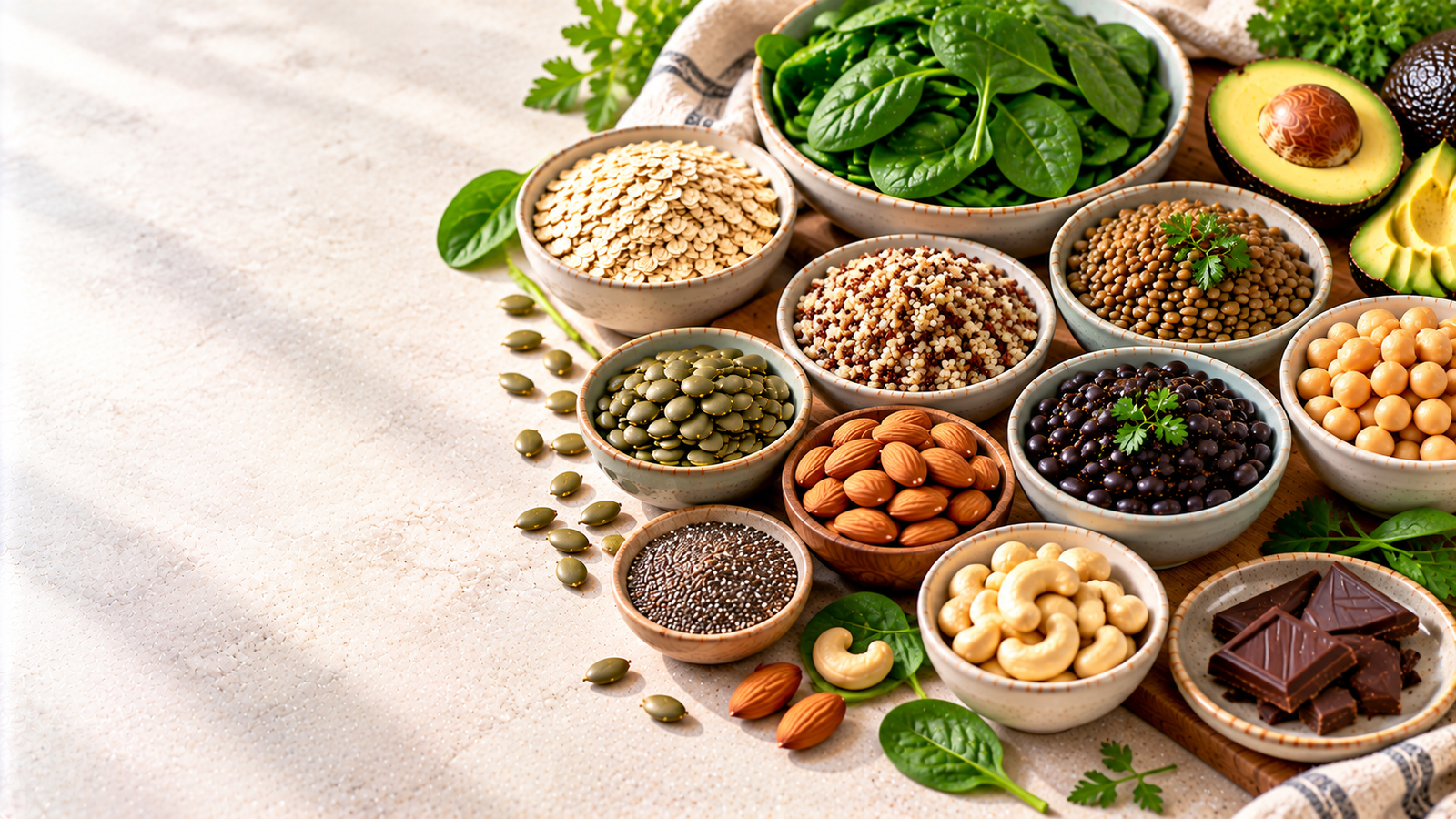
A vegetarian diet can provide plenty of magnesium when it includes a variety of whole grains, legumes, nuts, seeds, and vegetables. Magnesium is an essential mineral that supports normal muscle and nerve function, energy production, bone health, and many other processes in the body.
Knowing which magnesium rich foods for vegetarians provide the most magnesium can help you plan balanced meals without relying on supplements unnecessarily. Whether you eat dairy and eggs or follow a completely plant-based vegan diet, there are plenty of accessible options to include in your daily routine.
In this guide, you will discover 20 vegetarian magnesium sources, their approximate magnesium content, recommended daily intake, practical meal combinations, and ways to improve your overall magnesium intake.
Key Takeaways
- Pumpkin seeds, chia seeds, almonds, cashews, and spinach are useful magnesium sources for vegetarians.
- Beans, lentils, chickpeas, oats, quinoa, and whole grains help provide magnesium alongside fiber and other nutrients.
- A varied vegetarian diet can meet magnesium requirements without supplements for many people.
- Adult men generally need 400–420 mg of magnesium daily, while adult women generally need 310–320 mg under U.S. recommendations.
- Magnesium content varies by serving size, preparation method, and food variety.
- People with digestive disorders, certain medical conditions, or medication-related magnesium losses may need individualized advice.
Why Is Magnesium Important for Vegetarians?
Magnesium participates in hundreds of enzyme reactions and supports several essential functions.
Supports Muscle and Nerve Function
Magnesium helps regulate normal muscle contraction, relaxation, and nerve signaling. Adequate intake supports healthy neuromuscular function.
Helps Produce Energy
The body needs magnesium for processes involved in energy metabolism. Getting enough magnesium supports normal cellular function, although consuming extra magnesium does not automatically increase energy in people who already get enough.
Supports Bone Health
Magnesium contributes to bone structure and works alongside nutrients such as calcium and vitamin D in maintaining healthy bones.
Contributes to Normal Heart Function
Magnesium helps maintain normal electrical activity in the heart and supports normal blood pressure regulation.
Helps Maintain Nutritional Balance
Many vegetarian staples, including beans, nuts, seeds, and whole grains, contain magnesium alongside fiber, protein, iron, or other nutrients. Eating a variety of these foods can improve overall diet quality.
For more information, read the NIH Office of Dietary Supplements magnesium fact sheet.
20 Best Magnesium Rich Foods for Vegetarians
The following foods can help vegetarians increase magnesium intake naturally. The amounts are estimates for typical servings and may vary with preparation, variety, and brand.
| No. | Vegetarian food | Typical serving | Approx. magnesium |
|---|---|---|---|
| 1 | Pumpkin seeds | 1 oz (28 g) | 156 mg |
| 2 | Chia seeds | 1 oz (28 g) | 111 mg |
| 3 | Almonds | 1 oz (28 g) | 80 mg |
| 4 | Cooked spinach | ½ cup | 78 mg |
| 5 | Cashews | 1 oz (28 g) | 74 mg |
| 6 | Peanuts | 1 oz (28 g) | 48–50 mg |
| 7 | Cooked black beans | ½ cup | 60 mg |
| 8 | Cooked edamame | ½ cup | 50 mg |
| 9 | Peanut butter | 2 tablespoons | 49 mg |
| 10 | Cooked quinoa | 1 cup | 115–120 mg |
| 11 | Cooked brown rice | 1 cup | 80–85 mg |
| 12 | Cooked lentils | ½ cup | 35–40 mg |
| 13 | Cooked chickpeas | ½ cup | 35–40 mg |
| 14 | Cooked oatmeal | 1 cup | 35–60 mg |
| 15 | Dark chocolate | 1 oz (28 g) | 50–65 mg |
| 16 | Avocado | 1 medium | 50–60 mg |
| 17 | Cooked kidney beans | ½ cup | 30–40 mg |
| 18 | Whole-wheat bread | 2 slices | 40–50 mg |
| 19 | Firm tofu | ½ cup | 30–60 mg |
| 20 | Banana | 1 medium | 32 mg |
These are approximate reference values, not laboratory measurements of every product. Tofu values vary considerably with the coagulant used. Check package labels or USDA FoodData Central for specific foods and serving sizes.
1. Nuts and Seeds: Concentrated Vegetarian Magnesium Sources
Nuts and seeds are among the most convenient magnesium-rich foods for vegetarians. Small portions can contribute meaningful amounts of magnesium without requiring complicated meal preparation.
Pumpkin Seeds
Pumpkin seeds provide approximately 156 mg of magnesium per ounce. Sprinkle them over oatmeal, salads, soups, or roasted vegetables, or enjoy a small handful as a snack.
Chia Seeds
Chia seeds supply magnesium and fiber. Stir them into oatmeal, yogurt, overnight oats, or smoothies. They absorb liquid and form a gel, making them useful in chia pudding.
Almonds
Almonds provide magnesium, unsaturated fats, and vitamin E. Enjoy a measured handful or add chopped almonds to cereal, yogurt, and homemade trail mix.
Cashews
Cashews contribute magnesium and can be eaten as a snack or blended into creamy sauces. They also work well in vegetable curries and stir-fries.
Peanuts and Peanut Butter
Peanuts and peanut butter are convenient, affordable options. Choose peanut butter with little or no added sugar and pair it with whole-grain bread, fruit, or oatmeal.
Practical tip: Nuts and seeds are calorie-dense, so ordinary portions are generally more useful than eating large quantities to reach a magnesium target.
2. Beans and Lentils: Everyday Plant-Based Magnesium
Legumes are especially useful for vegetarians because they provide magnesium, plant protein, and dietary fiber.
Lentils
Lentils can be used in soups, curries, stews, and salads. They are easy to cook in batches and pair well with brown rice or whole-wheat bread.
Black Beans
Black beans provide magnesium and fiber. Add them to grain bowls, wraps, soups, or vegetable-based meals.
Chickpeas
Chickpeas are versatile and can be used in hummus, roasted snacks, curries, and salads. Combine them with leafy greens and whole grains for a nutrient-rich meal.
Kidney Beans
Kidney beans contribute magnesium and plant protein. They work well in chili, bean curry, and mixed vegetable dishes. Dried kidney beans must be soaked and thoroughly boiled before eating; do not cook dried kidney beans only in a slow cooker.
Edamame
Edamame, or immature soybeans, provides magnesium and protein. Add cooked edamame to salads, noodle bowls, or vegetable stir-fries.
3. Whole Grains for Daily Magnesium Intake
Whole grains contribute magnesium as well as carbohydrates, fiber, and other minerals.
Quinoa
Quinoa provides magnesium and plant protein. Use it as a base for grain bowls or as an alternative to rice.
Brown Rice
Brown rice is a simple staple that contributes magnesium. Serve it with lentils, beans, tofu, or vegetable curry.
Oatmeal
Oats provide magnesium and soluble fiber. Prepare oatmeal with milk or fortified plant milk, then add chia seeds, nuts, or fruit for a more substantial breakfast.
Whole-Wheat Bread
Whole-wheat bread can contribute magnesium while making it easy to build quick meals. Pair it with hummus, peanut butter, beans, or eggs if you eat them.
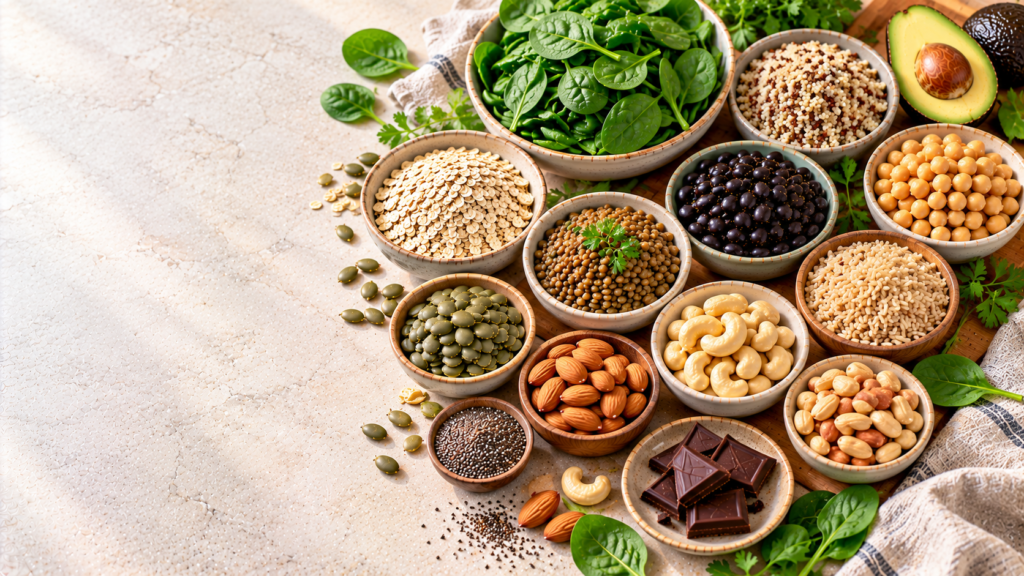
Suggested alt text: Magnesium-rich vegetarian foods including pumpkin seeds, nuts, spinach, beans, lentils, and whole grains.
4. Vegetables, Soy Foods, and Other Vegetarian Options
Spinach and Leafy Greens
Spinach is a useful magnesium source because magnesium is part of chlorophyll. Add cooked spinach to lentils, vegetable curries, omelets, soups, or pasta dishes.
Other leafy green vegetables can contribute magnesium too, although the amounts vary by type and serving size.
Tofu
Tofu provides plant protein and can contribute magnesium. Its mineral content varies with processing, so check the nutrition information when available.
Use tofu in stir-fries, curries, sandwiches, or roasted vegetable bowls.
Avocado
Avocado supplies magnesium along with fiber and unsaturated fats. Add it to toast, salads, wraps, or grain bowls.
Dark Chocolate
Dark chocolate contains magnesium, with amounts depending on the cocoa content and product. A small portion can fit into a balanced diet, but it should not replace more nutrient-dense staples such as legumes, seeds, and whole grains.
Bananas
Bananas provide a modest amount of magnesium and are easy to add to breakfast or snacks. Pair one with yogurt, oats, or nut butter for a more substantial combination.
How to Build a Magnesium-Rich Vegetarian Meal
You do not need to eat every food on the list each day. Focus on combining a few different sources throughout the day.
Example One-Day Vegetarian Meal Plan
| Meal | Example | Main magnesium sources |
|---|---|---|
| Breakfast | Oatmeal with chia seeds and almonds | Oats, chia seeds, almonds |
| Morning snack | Banana with peanut butter | Banana, peanut butter |
| Lunch | Lentil curry, brown rice, and spinach | Lentils, brown rice, spinach |
| Afternoon snack | A small handful of pumpkin seeds | Pumpkin seeds |
| Dinner | Tofu and black bean vegetable bowl with quinoa | Tofu, black beans, quinoa |
This is a sample meal pattern rather than a prescribed diet. Portions, brands, and cooking methods affect the total magnesium content. People with different energy needs or medical conditions may need different portions.
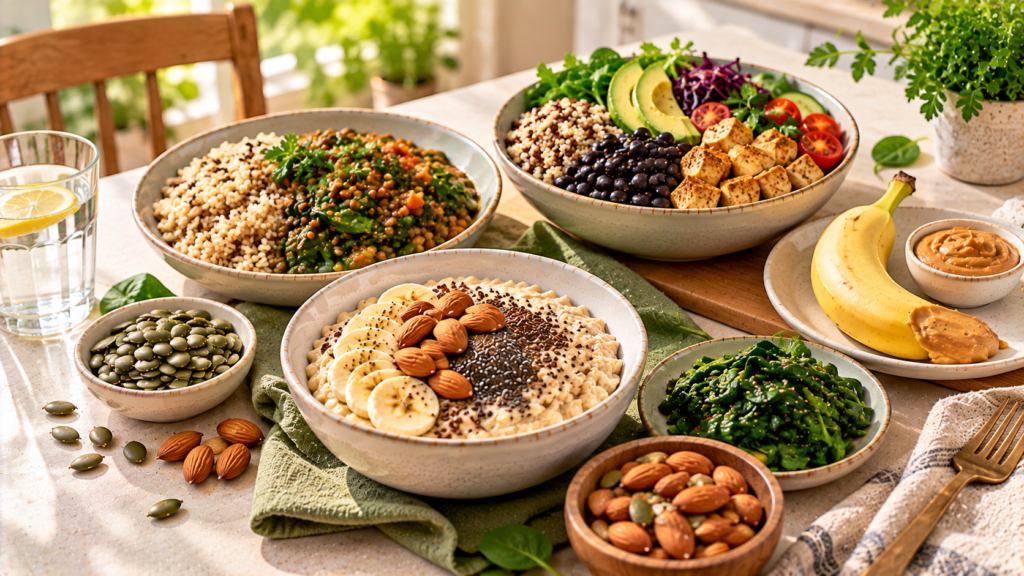
Suggested alt text: Balanced vegetarian meals featuring oats, chia seeds, lentils, spinach, brown rice, tofu, and beans.
How Much Magnesium Do Vegetarians Need Per Day?
Vegetarians generally use the same recommended magnesium intake guidelines as other adults. Requirements are based mainly on age, sex, and life stage, not simply on whether someone eats meat.
The following are U.S. recommended dietary allowances.
| Age or life stage | Recommended daily magnesium |
|---|---|
| Children 1–3 years | 80 mg |
| Children 4–8 years | 130 mg |
| Children 9–13 years | 240 mg |
| Teen boys 14–18 years | 410 mg |
| Teen girls 14–18 years | 360 mg |
| Men 19–30 years | 400 mg |
| Men 31 years and older | 420 mg |
| Women 19–30 years | 310 mg |
| Women 31 years and older | 320 mg |
| Pregnancy, ages 19–30 | 350 mg |
| Pregnancy, ages 31–50 | 360 mg |
| Breastfeeding, ages 19–30 | 310 mg |
| Breastfeeding, ages 31–50 | 320 mg |
These figures are U.S. recommendations; guidance can differ by country. Children under one year have separate adequate intake values. Consult a qualified healthcare professional for individualized guidance during pregnancy, breastfeeding, or childhood.
NIH daily magnesium requirements and food sources
How Can Vegetarians Improve Magnesium Absorption and Intake?
The best approach is to eat a varied diet consistently rather than relying on one “superfood.”
Eat a Variety of Plant Foods
Rotate beans, lentils, whole grains, nuts, seeds, and leafy greens throughout the week. Variety helps provide magnesium alongside other essential nutrients.
Prepare Legumes Properly
Soaking and cooking beans and legumes appropriately can improve texture and digestibility. Some plant foods contain phytates, which can reduce the absorption of certain minerals, but whole grains, legumes, nuts, and seeds remain valuable parts of a balanced diet.
Choose Whole Grains More Often
Swap some refined grains for oatmeal, brown rice, quinoa, or whole-wheat bread. These changes can improve overall dietary fiber and mineral intake.
Make Snacks Count
Use measured portions of nuts and seeds, or combine fruit with nut butter. These options can help add magnesium without requiring a separate meal.
Check Fortified Plant Milk Labels
Fortification varies between products. Some plant-based milks contain added calcium, vitamin D, vitamin B12, or other nutrients, but magnesium content is not guaranteed. Compare nutrition labels rather than assuming every product is equivalent.
Foods High in Magnesium: 20 Natural Sources
Do Vegetarians Need Magnesium Supplements?
Not necessarily. Many vegetarians can meet their magnesium requirements through a varied diet. Supplements may be appropriate for people with a diagnosed deficiency, certain medical conditions, or inadequate intake that cannot easily be corrected through food.
Symptoms such as muscle cramps and fatigue do not automatically mean you need magnesium supplements. These symptoms can have many causes and may require clinical assessment.
Magnesium Supplement Safety
In U.S. guidance, the adult tolerable upper intake level for magnesium from supplements and medications is 350 mg per day. Magnesium naturally present in food is excluded from this limit. It is a safety limit, not a recommended daily supplement dose; medically supervised treatment may differ.
Excessive supplemental magnesium can cause diarrhea, nausea, and abdominal cramps. High levels can be dangerous, particularly in people with impaired kidney function.
Magnesium can also interact with some medicines, including certain antibiotics and oral bisphosphonates. Ask a healthcare professional or pharmacist about safe use and timing.
Frequently Asked Questions
What are the best magnesium-rich foods for vegetarians?
Pumpkin seeds, chia seeds, almonds, cashews, spinach, black beans, quinoa, and brown rice are useful choices. Eating a variety of these foods can help you meet your daily magnesium needs.
Can vegetarians get enough magnesium without supplements?
Yes. Many vegetarians can meet their magnesium requirements through nuts, seeds, legumes, whole grains, and leafy green vegetables. Supplements are not automatically necessary.
Which vegetarian food has the most magnesium?
Among common foods, pumpkin seeds are especially concentrated in magnesium per serving. Chia seeds, almonds, cashews, and several legumes and whole grains are also useful sources.
Are magnesium-rich foods suitable for vegans?
Many of the best sources, including seeds, nuts, beans, lentils, spinach, oats, quinoa, and brown rice, are naturally vegan. Check processed products and fortified foods for ingredients that may not be vegan.
Is spinach a good source of magnesium?
Yes. Cooked spinach provides approximately 78 mg of magnesium per half-cup serving, although the actual amount varies. It also supplies other nutrients that support a balanced diet.
How can I increase magnesium intake on a vegetarian diet?
Add seeds or nuts to breakfast, eat legumes regularly, choose whole grains, and include leafy green vegetables in meals. These small changes can increase dietary magnesium over time.
Are magnesium supplements better than magnesium-rich foods?
Not for everyone. Food provides magnesium alongside fiber and other nutrients, while supplements can be helpful in specific circumstances. The right choice depends on your dietary intake, health, medications, and individual needs.
Magnesium Rich Foods for Vegetarians: Shopping List and Easy Food Combinations
Choosing magnesium rich foods for vegetarians becomes easier when you plan your grocery shopping around a few everyday staples. You do not need expensive specialty products or complicated recipes to build magnesium-rich meals.
Vegetarian Magnesium Shopping List
Use this practical checklist when planning your weekly meals:
- Nuts: Almonds, cashews, peanuts, and peanut butter.
- Seeds: Pumpkin seeds, chia seeds, and sunflower seeds.
- Legumes: Lentils, chickpeas, black beans, kidney beans, and edamame.
- Whole grains: Oats, quinoa, brown rice, and whole-wheat bread.
- Vegetables: Spinach and other leafy green vegetables.
- Other foods: Avocado, dark chocolate, tofu, and bananas.
Choose foods that fit your budget, preferences, and dietary requirements. Dried beans and lentils can be particularly economical, while oats, seeds, and nuts are convenient additions to breakfast and snacks.
Five Easy Ways to Combine Magnesium-Rich Foods
| Meal idea | Ingredients | Why it works |
|---|---|---|
| Breakfast bowl | Oats, chia seeds, almonds, and banana | Combines whole grains, seeds, and nuts |
| Seed snack | Pumpkin seeds and fresh fruit | Adds a concentrated source of magnesium |
| Lentil lunch | Lentils, spinach, and brown rice | Combines legumes, leafy greens, and whole grains |
| Vegetarian dinner | Tofu, black beans, and quinoa | Provides plant protein and several magnesium sources |
| Quick sandwich | Whole-wheat bread with peanut butter | An easy option for a busy day |
The magnesium content of each meal depends on portion sizes and the ingredients used. These combinations are examples, not a prescribed diet.
How Can You Get More Magnesium on a Budget?
You can increase magnesium intake without buying every food on the list.
- Purchase dried lentils and beans when practical, and cook batches for several meals.
- Use oats and whole-wheat bread as affordable everyday staples.
- Buy nuts and seeds in manageable quantities and store them properly.
- Add spinach to curries, soups, lentils, or rice dishes.
- Prepare meals at home so you can control ingredients and serving sizes.
Are Plant-Based Magnesium Sources Enough?
Many vegetarians can meet their magnesium requirements through a varied diet containing legumes, whole grains, nuts, seeds, and vegetables. However, individual needs vary, and certain digestive conditions, medications, or other medical issues can affect magnesium status.
If you experience persistent weakness, unexplained fatigue, or recurring muscle cramps, do not assume that magnesium deficiency is the cause. Consult a healthcare professional if symptoms continue or concern you.
For nutrient values and serving-size comparisons, use USDA FoodData Central. For recommended daily intake and supplement safety, consult the NIH magnesium fact sheet.
Conclusion
Choosing magnesium rich foods for vegetarians is a practical way to support muscle function, energy metabolism, nerve signaling, and bone health. Pumpkin seeds, chia seeds, nuts, beans, lentils, spinach, quinoa, and whole grains offer a wide range of plant-based options.
Instead of depending on one food or automatically taking supplements, build variety into your everyday meals. Combine different magnesium sources, use sensible portions, and consult a healthcare professional if you have persistent symptoms or a condition that may affect magnesium levels.
A balanced vegetarian diet can be both enjoyable and nutrient-rich when you plan meals around a variety of whole plant foods.
NIH Office of Dietary Supplements — Magnesium
3 thoughts on “Magnesium Rich Foods for Vegetarians”