

A magnesium foods chart makes it easier to identify foods that provide this essential mineral and understand how much they contribute to your daily needs. From pumpkin seeds and almonds to beans, whole grains, and leafy green vegetables, many everyday foods can help you get more magnesium naturally.
Magnesium supports normal muscle and nerve function, energy production, bone health, and numerous other processes in the body. Because the body cannot make magnesium, it must come from food or, when appropriate, supplements.
This guide includes a practical magnesium-rich foods chart, approximate amounts per serving, recommended daily intake, and simple meal ideas to help you build a balanced diet.
Key Takeaways
- Pumpkin seeds, hemp seeds, chia seeds, almonds, and cashews are useful magnesium-rich choices.
- Beans, whole grains, leafy greens, and soy foods also contribute magnesium.
- Magnesium amounts vary according to serving size, food variety, and preparation.
- Most adults need approximately 310–420 mg of magnesium daily, depending on age and sex.
- Eating a variety of magnesium-rich foods is usually a practical first step toward meeting your needs.
- A magnesium foods chart is a guide, not a substitute for individualized medical advice.
What Is Magnesium and Why Does Your Body Need It?
Magnesium is an essential mineral involved in more than 300 enzyme systems in the body. It contributes to several important functions.
Supports muscle and nerve function
Magnesium helps regulate normal muscle contraction and relaxation and supports nerve signaling. It works alongside other electrolytes, including calcium and potassium.
Helps with energy production
Your body uses magnesium in processes that convert food into energy. It also participates in protein synthesis and other reactions necessary for normal cell function.
Contributes to bone health
Much of the body’s magnesium is stored in bones. It supports normal bone structure and plays a role in processes involving calcium and vitamin D.
Supports normal blood glucose and blood pressure regulation
Magnesium is involved in processes that regulate blood glucose and blood pressure. However, eating a particular magnesium-rich food should not be considered a treatment for diabetes, high blood pressure, or another medical condition.
Magnesium Foods Chart: 25 Best Natural Sources
The following chart compares approximate magnesium amounts in commonly available foods. Values are rounded estimates based on typical food-composition data and can vary by brand, variety, preparation, and serving weight.
Magnesium-rich foods chart by serving
| Food | Typical serving | Approx. magnesium |
|---|---|---|
| Hemp seeds, hulled | 1 oz (28 g) | 197 mg |
| Pumpkin seeds, hulled | 1 oz (28 g) | 156 mg |
| Chia seeds | 1 oz (28 g) | 95 mg |
| Sesame seeds | 1 oz (28 g) | 101 mg |
| Flaxseeds | 1 oz (28 g) | 110 mg |
| Brazil nuts | 1 oz (28 g) | 107 mg |
| Almonds | 1 oz (28 g) | 77 mg |
| Cashews | 1 oz (28 g) | 74 mg |
| Peanuts | 1 oz (28 g) | 48 mg |
| Cooked spinach | ½ cup | 78 mg |
| Cooked Swiss chard | ½ cup | 75 mg |
| Cooked black beans | ½ cup | 60 mg |
| Cooked edamame | ½ cup | 50 mg |
| Cooked lima beans | ½ cup | 40 mg |
| Cooked chickpeas | ½ cup | 39 mg |
| Cooked quinoa | 1 cup | 118 mg |
| Cooked brown rice | 1 cup | 84 mg |
| Oatmeal, cooked | 1 cup | 63 mg |
| Baked potato with skin | 1 medium | 48 mg |
| Avocado | 1 medium | 58 mg |
| Banana | 1 medium | 32 mg |
| Plain low-fat yogurt | 1 cup | 42 mg |
| Milk | 1 cup | 24–27 mg |
| Firm tofu | ½ cup | 35–60 mg |
| Dark chocolate, 70–85% cocoa | 1 oz (28 g) | 64 mg |
Note: These figures are approximate, not laboratory measurements of the exact food in your kitchen. For precise nutrient tracking, consult a food database and check product labels. Tofu values vary considerably depending on the product and coagulant used.
How to read the magnesium foods chart
- For more magnesium in a small serving: Consider hemp seeds, pumpkin seeds, flaxseeds, and other nutrient-dense seeds.
- For plant-based meals: Beans, edamame, quinoa, and leafy greens provide useful amounts.
- For everyday convenience: Oats, almonds, bananas, and yogurt are easy to incorporate into meals.
- For variety: Rotate several foods instead of relying on one source.
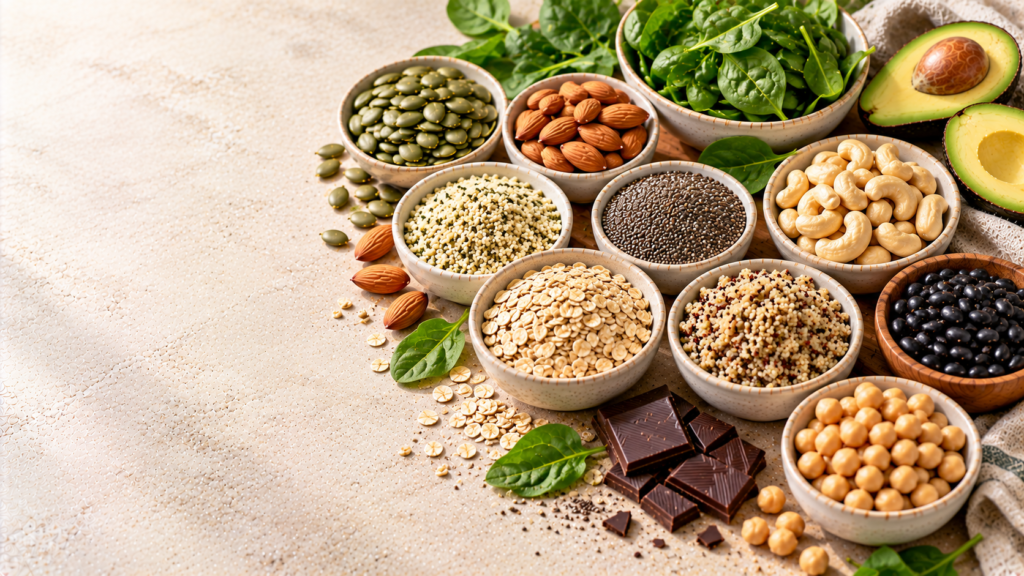
Top Foods High in Magnesium Explained
The magnesium foods chart shows that both plant and animal foods can contribute to your daily intake. Here are some of the most practical choices and ways to eat them.
1. Pumpkin seeds
Pumpkin seeds are one of the richest commonly eaten sources of magnesium. A one-ounce serving of hulled pumpkin seeds provides approximately 156 mg.
They also contain protein, unsaturated fats, and other minerals.
Easy ways to eat them:
- Sprinkle them over salads or roasted vegetables.
- Add them to oatmeal or homemade granola.
- Mix them into yogurt.
- Use them as a crunchy topping for soups.
2. Hemp seeds
Hulled hemp seeds provide approximately 197 mg of magnesium per ounce. They also contain plant-based protein and unsaturated fats.
Their mild, nutty flavor works well in smoothies, grain bowls, oatmeal, and salads.
3. Chia seeds
Chia seeds provide approximately 95 mg of magnesium per ounce. They also supply fiber and plant-based omega-3 fatty acids.
Stir chia seeds into overnight oats or yogurt, or use them to make chia pudding. Allow them to absorb sufficient liquid before eating, particularly if you have difficulty swallowing.
4. Almonds and cashews
Almonds provide around 77 mg of magnesium per ounce, while cashews provide about 74 mg.
Both are convenient snacks and supply protein, unsaturated fats, and other nutrients. Choose plain or lightly salted varieties more often than heavily salted or sugar-coated products.
5. Leafy green vegetables
Spinach and Swiss chard are valuable magnesium sources. Their magnesium content is partly related to chlorophyll, the green pigment found in plants.
Add cooked spinach to omelets, soups, curries, pasta, or lentil dishes. Cooking reduces the volume of leafy greens, so a cooked serving can provide more magnesium than the same volume of raw leaves.
6. Beans and legumes
Black beans, chickpeas, lima beans, and edamame contribute magnesium along with fiber and plant protein.
Include them in soups, salads, wraps, grain bowls, and curries. Canned beans are convenient; rinsing and draining them can reduce some of their sodium content.
7. Whole grains
Oats, quinoa, and brown rice provide magnesium and can serve as the foundation for satisfying meals.
Replacing some refined grains with whole grains is one practical way to improve the overall nutritional quality of your diet.
best magnesium-rich foods for vegetarians
8. Avocado and bananas
Avocado provides approximately 58 mg of magnesium per medium fruit, while a medium banana provides around 32 mg.
Neither is among the highest sources by serving, but both are easy to combine with other magnesium-containing foods. Add banana to oatmeal or serve avocado with beans and whole-grain toast.
9. Dark chocolate
Dark chocolate can contribute magnesium, although the amount depends on the cocoa content and product. A one-ounce serving of dark chocolate with 70–85% cocoa may provide around 64 mg.
Enjoy it in moderate portions as one component of a balanced diet, rather than treating it as a primary source of magnesium.
Which Foods Have the Most Magnesium Per Serving?
If you want to increase magnesium intake efficiently, prioritize foods that supply relatively large amounts in the portions you normally eat.
Some strong options include:
- Hemp seeds
- Pumpkin seeds
- Quinoa
- Flaxseeds
- Brazil nuts
- Sesame seeds
- Chia seeds
- Almonds and cashews
The highest value per ounce does not automatically make a food the best choice for everyone. Allergies, cost, taste, availability, and serving size all matter.
For example, seeds can be added in small quantities to many meals, while beans and whole grains can contribute magnesium as part of a more substantial dish.
nuts and seeds high in magnesium
How Much Magnesium Do You Need Daily?
Daily magnesium requirements depend on age, sex, and life stage. The following table lists U.S. recommended dietary allowances (RDAs).
| Age or life stage | Recommended daily intake |
|---|---|
| Children, 1–3 years | 80 mg |
| Children, 4–8 years | 130 mg |
| Children, 9–13 years | 240 mg |
| Boys, 14–18 years | 410 mg |
| Girls, 14–18 years | 360 mg |
| Men, 19–30 years | 400 mg |
| Men, 31 years and older | 420 mg |
| Women, 19–30 years | 310 mg |
| Women, 31 years and older | 320 mg |
| Pregnancy, ages 19–30 | 350 mg |
| Pregnancy, ages 31–50 | 360 mg |
| Breastfeeding, ages 19–30 | 310 mg |
| Breastfeeding, ages 31–50 | 320 mg |
These are U.S. recommendations; requirements and official guidance may differ in other countries.
Example: Getting magnesium throughout the day
A day of meals could include:
- Breakfast: Oatmeal with chia seeds and almonds.
- Lunch: Black bean and quinoa bowl with spinach.
- Snack: A small handful of pumpkin seeds.
- Dinner: Brown rice with vegetables and a protein source.
The total magnesium depends on the actual portion sizes and ingredients. The example illustrates how combining foods throughout the day can help you approach your needs without relying on one unusually large serving.
NIH Office of Dietary Supplements — Magnesium: recommended intakes and food sources
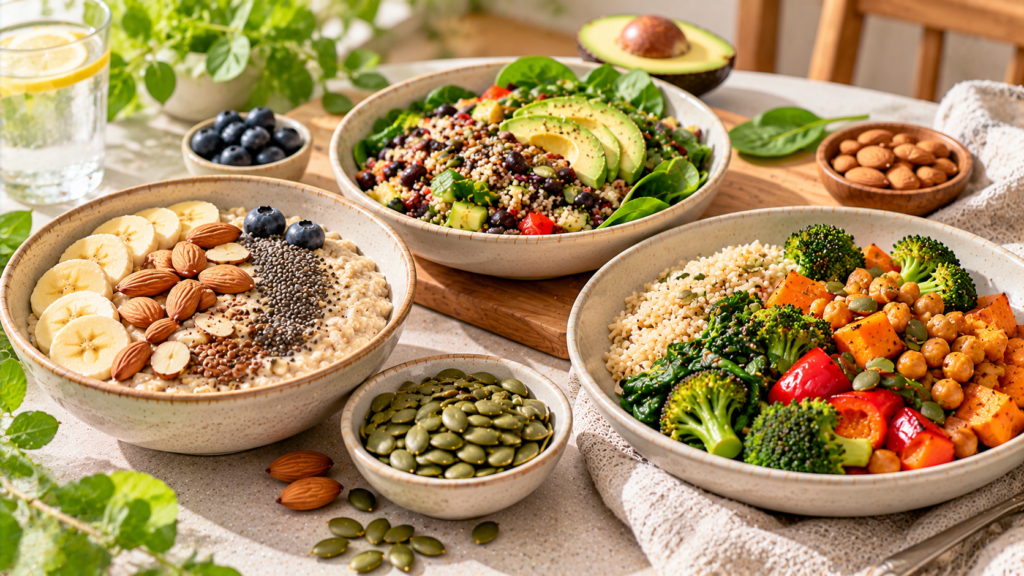
Suggested alt text: Balanced meals featuring oatmeal, chia seeds, almonds, black beans, quinoa, spinach, and pumpkin seeds.
Easy Ways to Increase Magnesium Intake Naturally
You do not need to completely change your diet to eat more magnesium-rich foods. Small, repeatable habits can make a difference.
Start with breakfast
Add pumpkin seeds, chia seeds, or ground flaxseeds to oatmeal, yogurt, or whole-grain cereal.
Add beans to your meals
Include chickpeas, black beans, or edamame in salads, soups, wraps, and grain bowls.
Choose whole grains more often
Try oats for breakfast, quinoa in a salad, or brown rice alongside dinner.
Keep simple snacks available
A measured portion of almonds, cashews, or pumpkin seeds is easy to prepare and carry.
Eat a variety of vegetables
Include spinach, Swiss chard, and other vegetables in meals throughout the week. Variety helps provide magnesium alongside other important nutrients.
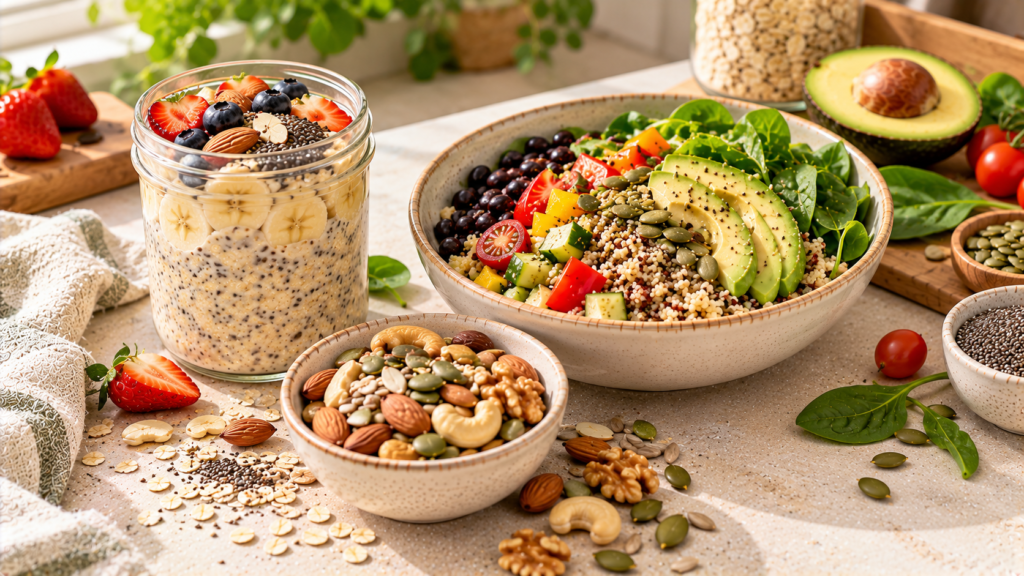
Suggested alt text: Easy meal-prep ideas using oats, chia seeds, almonds, pumpkin seeds, quinoa, beans, and avocado.
Can Food Alone Provide Enough Magnesium?
Many people can meet their magnesium needs through a varied diet that includes nuts, seeds, legumes, whole grains, leafy green vegetables, and other magnesium-containing foods.
However, some medical conditions and medications can affect magnesium levels. People with gastrointestinal disorders, certain kidney conditions, or prolonged inadequate intake may need individualized advice.
If you suspect a deficiency or have persistent symptoms, consult a qualified healthcare professional. A food chart can help you plan meals, but it cannot diagnose a deficiency.
Are Magnesium Supplements Necessary?
Not everyone needs a magnesium supplement. Food is generally the preferred starting point for meeting nutritional needs when possible.
In U.S. guidance, the upper limit for magnesium from supplements and magnesium-containing medications for adults is generally 350 mg per day, unless a healthcare professional recommends otherwise. This limit does not include magnesium naturally present in food.
Taking too much supplemental magnesium can cause diarrhea, nausea, and abdominal cramping. It can also interact with certain medications, and people with impaired kidney function may be at increased risk of magnesium accumulation.
Discuss supplements with a healthcare professional or pharmacist if you take medication or have a medical condition.
Frequently Asked Questions
1. What is the best magnesium foods chart for daily use?
A useful magnesium foods chart lists common foods, typical serving sizes, and approximate magnesium amounts. Seeds, nuts, legumes, whole grains, and leafy greens are especially useful categories to include.
2. Which food is highest in magnesium?
Among the foods in this chart, hulled hemp seeds provide approximately 197 mg per ounce, followed by pumpkin seeds at around 156 mg. Values vary by product and food-composition source.
3. What fruits are high in magnesium?
Avocado and bananas provide magnesium, although they generally contain less per serving than many seeds, nuts, and legumes. Other fruits can contribute smaller amounts as part of a varied diet.
4. Which vegetables contain magnesium?
Spinach and Swiss chard are useful sources, especially when cooked. Other vegetables contribute varying amounts, so eating a range of vegetables is a practical approach.
5. Can I use a magnesium foods chart to plan vegetarian meals?
Yes. Include beans, edamame, quinoa, oats, leafy greens, nuts, and seeds. Combining several plant-based sources throughout the day can help you meet your magnesium needs.
6. Does cooking reduce magnesium in food?
Magnesium is not destroyed by normal cooking heat, but some can leach into cooking water. Cooking also changes food volume, which affects how much magnesium is present in a measured cup. Eating the cooking liquid in soups or stews can help retain minerals that leach into it.
7. How can I get more magnesium without supplements?
Add nuts or seeds to breakfast, eat beans and whole grains regularly, and include leafy greens in your meals. The best plan is one that fits your food preferences and can be maintained over time.
8. Are magnesium-rich foods safe to eat every day?
For most healthy people, magnesium-containing foods are safe as part of a balanced diet. Portion sizes, food allergies, and individual medical conditions still matter.
Magnesium Rich Foods for Vegetarians: Shopping List and Easy Food Combinations
Choosing magnesium rich foods for vegetarians becomes easier when you plan your grocery shopping around a few everyday staples. You do not need expensive specialty products or complicated recipes to build magnesium-rich meals.
Vegetarian Magnesium Shopping List
Use this practical checklist when planning your weekly meals:
- Nuts: Almonds, cashews, peanuts, and peanut butter.
- Seeds: Pumpkin seeds, chia seeds, and sunflower seeds.
- Legumes: Lentils, chickpeas, black beans, kidney beans, and edamame.
- Whole grains: Oats, quinoa, brown rice, and whole-wheat bread.
- Vegetables: Spinach and other leafy green vegetables.
- Other foods: Avocado, dark chocolate, tofu, and bananas.
Choose foods that fit your budget, preferences, and dietary requirements. Dried beans and lentils can be particularly economical, while oats, seeds, and nuts are convenient additions to breakfast and snacks.
Five Easy Ways to Combine Magnesium-Rich Foods
| Meal idea | Ingredients | Why it works |
|---|---|---|
| Breakfast bowl | Oats, chia seeds, almonds, and banana | Combines whole grains, seeds, and nuts |
| Seed snack | Pumpkin seeds and fresh fruit | Adds a concentrated source of magnesium |
| Lentil lunch | Lentils, spinach, and brown rice | Combines legumes, leafy greens, and whole grains |
| Vegetarian dinner | Tofu, black beans, and quinoa | Provides plant protein and several magnesium sources |
| Quick sandwich | Whole-wheat bread with peanut butter | An easy option for a busy day |
The magnesium content of each meal depends on portion sizes and the ingredients used. These combinations are examples, not a prescribed diet.
How Can You Get More Magnesium on a Budget?
You can increase magnesium intake without buying every food on the list.
- Purchase dried lentils and beans when practical, and cook batches for several meals.
- Use oats and whole-wheat bread as affordable everyday staples.
- Buy nuts and seeds in manageable quantities and store them properly.
- Add spinach to curries, soups, lentils, or rice dishes.
- Prepare meals at home so you can control ingredients and serving sizes.
Are Plant-Based Magnesium Sources Enough?
Many vegetarians can meet their magnesium requirements through a varied diet containing legumes, whole grains, nuts, seeds, and vegetables. However, individual needs vary, and certain digestive conditions, medications, or other medical issues can affect magnesium status.
If you experience persistent weakness, unexplained fatigue, or recurring muscle cramps, do not assume that magnesium deficiency is the cause. Consult a healthcare professional if symptoms continue or concern you.
For nutrient values and serving-size comparisons, use USDA FoodData Central. For recommended daily intake and supplement safety, consult the NIH magnesium fact sheet.
Conclusion
A magnesium foods chart is a simple way to identify natural sources of magnesium and make more informed food choices. Pumpkin seeds, hemp seeds, almonds, beans, quinoa, oats, and leafy green vegetables can all contribute to your daily intake.
Start with one or two realistic changes, such as adding seeds to breakfast or choosing beans and whole grains more often. Then build variety across meals to obtain magnesium alongside protein, fiber, healthy fats, and other essential nutrients.
Consistency matters more than relying on a single “superfood.” Use this chart as a practical guide, check serving sizes, and consult a healthcare professional if you have concerns about magnesium deficiency or supplementation.
1 thought on “Magnesium Foods Chart: Easy Guide”