Breakfast is an opportunity to start your day with essential nutrients, including zinc. This trace mineral supports normal immune function, wound healing, protein synthesis, cell growth, and taste and smell. Because the body needs a regular supply of zinc, choosing nutrient-rich foods throughout the day is important.
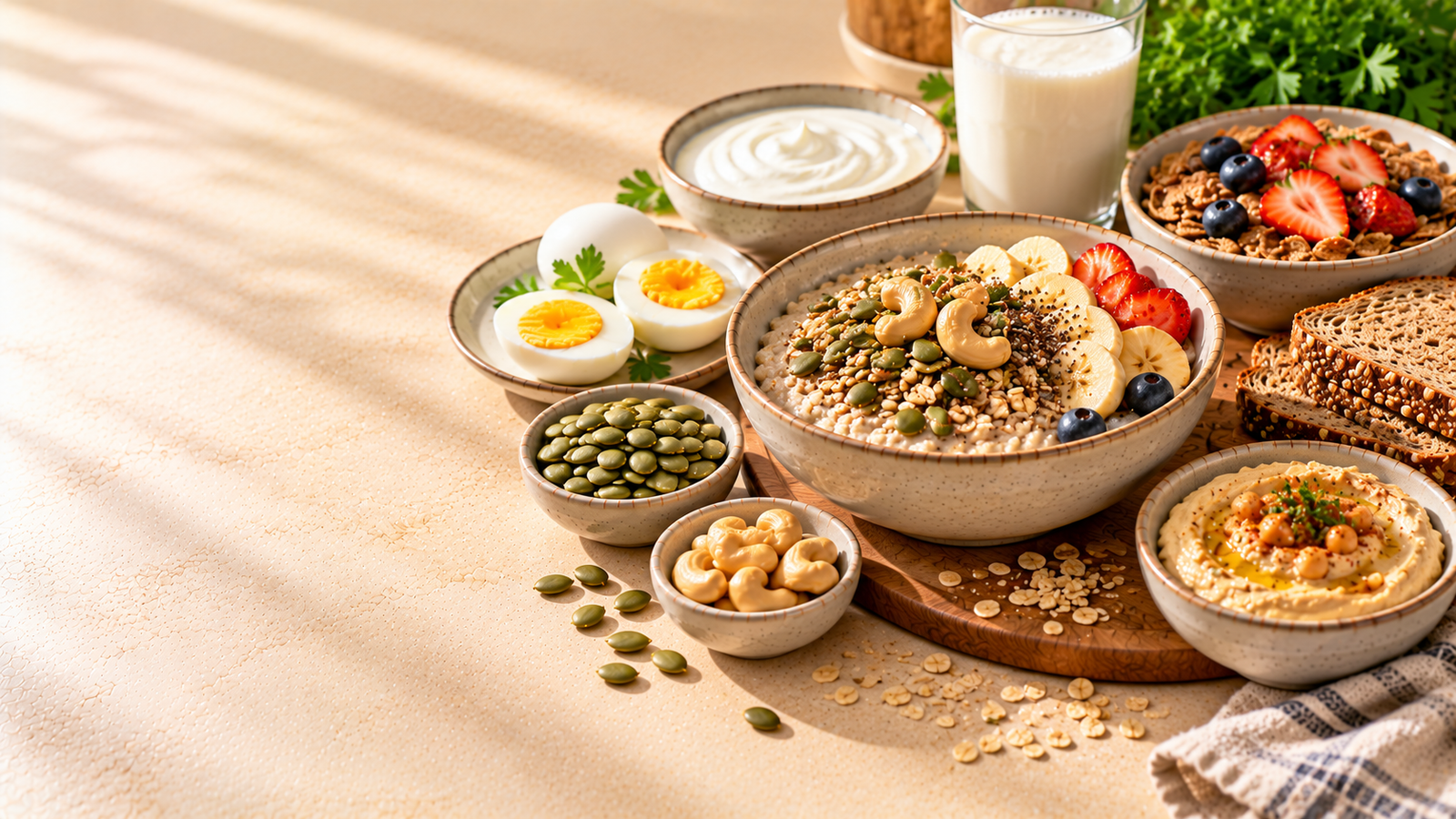
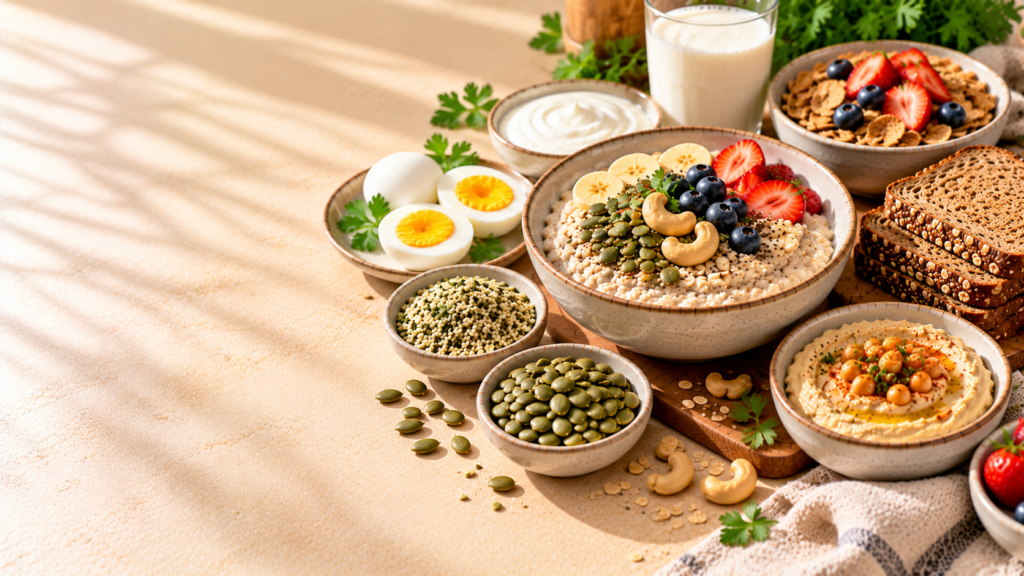
The best breakfast foods high in zinc include eggs, oatmeal, pumpkin seeds, cashews, yogurt, milk, whole-grain bread, and fortified breakfast cereals. For people who prefer plant-based meals, oats, nuts, seeds, chickpeas, and fortified alternatives can help contribute to daily zinc intake.
However, not every healthy breakfast is especially rich in zinc. The amount you obtain depends on the ingredients, portion sizes, and whether a product is fortified. Building a varied breakfast with several zinc-containing foods can help you meet your nutritional needs without relying on supplements.
Most Important Points
- Eggs, oats, pumpkin seeds, cashews, dairy products, and fortified cereals can contribute zinc at breakfast.
- Pumpkin seeds and hemp seeds are useful plant-based sources.
- Fortified breakfast cereals vary considerably in zinc content, so check the nutrition label.
- Adult men generally need 11 mg of zinc daily, while adult women generally need 8 mg.
- Plant foods containing phytates may provide zinc that is less readily absorbed.
- A balanced breakfast can support daily zinc intake, but no single meal guarantees that you meet all your nutritional needs.
Why Is Zinc Important in Your Morning Diet?
Zinc is involved in many essential processes, including normal immune responses, DNA synthesis, protein production, cell division, and tissue repair. It is also important for growth and development.
Eating zinc-containing foods at breakfast can help distribute your nutrient intake throughout the day. You do not need to obtain all your zinc in the morning; lunch, dinner, and snacks can contribute too.
A useful breakfast combines zinc-containing foods with sources of protein, fiber, and other essential nutrients. For example, oatmeal topped with seeds and nuts provides a different nutritional combination from eggs with whole-grain toast. Both can fit into a balanced eating pattern.
Who May Benefit From Planning Zinc-Rich Breakfasts?
People who eat limited diets, regularly skip nutrient-rich foods, or follow vegetarian or vegan diets may benefit from paying closer attention to zinc intake. Some digestive conditions can also interfere with nutrient absorption.
Breakfast is not a treatment for zinc deficiency. If you have persistent symptoms such as unexplained hair loss, changes in taste or smell, or slow wound healing, consult a healthcare professional rather than assuming that low zinc is the cause.
1. The 15 Best Breakfast Foods High in Zinc
You can build a zinc-containing breakfast using everyday foods. The following table provides approximate zinc amounts per typical serving. Values vary by variety, preparation method, brand, and fortification.
| Breakfast food | Typical serving | Approximate zinc |
|---|---|---|
| Fortified breakfast cereal | 1 serving | 2–5 mg or more, depending on brand |
| Pumpkin seeds | 1 oz (28 g) | 2–3 mg |
| Hemp seeds | 1 oz (28 g) | 2–3 mg |
| Oatmeal, cooked | 1 cup | 1–2 mg |
| Cashews | 1 oz (28 g) | 1.5–2 mg |
| Plain Greek yogurt | 1 cup | 1–2 mg |
| Milk | 1 cup (240 ml) | About 1 mg |
| Two large eggs | 2 eggs | About 1–1.5 mg |
| Whole-wheat bread | 2 slices | 1–2 mg |
| Cooked chickpeas | ½ cup | 1–1.5 mg |
| Cooked lentils | ½ cup | 1–1.5 mg |
| Peanut butter | 2 tablespoons | About 0.5–1 mg |
| Chia seeds | 1 oz (28 g) | About 1.3 mg |
| Cooked quinoa | 1 cup | About 2 mg |
| Firm tofu | ½ cup | Approximately 1–2 mg, depending on product |
These figures are general estimates, not exact values for every product. Fortified cereal can contain considerably more or less zinc depending on its formulation. Check the package label for the actual serving and nutrient amount.
1. Eggs
Eggs are a convenient breakfast food that provides protein, vitamin B12, and a modest amount of zinc. They are not the richest source of zinc on this list, but they can contribute to a balanced meal.
Easy breakfast ideas:
- Scrambled eggs with whole-grain toast.
- Boiled eggs with oatmeal and fruit.
- Vegetable omelet served with whole-wheat roti.
- Eggs with chickpea hummus and sliced vegetables.
Pairing eggs with seeds, whole grains, or dairy products can increase the overall zinc contribution of your breakfast.
2. Oatmeal
Oats provide zinc, fiber, and other nutrients. They are an affordable and versatile breakfast choice that can be adapted to different tastes.
Prepare oatmeal with milk or a suitable fortified plant-based beverage. Add pumpkin seeds, cashews, or hemp seeds for extra zinc and texture.
Plain oats are not necessarily high in zinc compared with more concentrated sources, so toppings can make a meaningful difference to the overall nutrient content of the meal.
3. Pumpkin Seeds
Pumpkin seeds are among the most convenient plant-based zinc sources. A small handful can add zinc, protein, healthy fats, and magnesium to your breakfast.
Sprinkle them over oatmeal, yogurt, or whole-grain cereal. You can also blend them into homemade seed butter or add them to a breakfast smoothie.
4. Hemp Seeds
Hemp seeds provide zinc, protein, and unsaturated fats. Their mild flavor makes them easy to incorporate into both sweet and savory breakfast dishes.
Add hemp seeds to overnight oats, smoothies, yogurt bowls, or homemade breakfast bars. Use the serving size on the package to estimate their contribution to your daily zinc intake.
5. Cashews
Cashews supply zinc along with copper, magnesium, and unsaturated fats. Their creamy texture makes them suitable for a variety of breakfast recipes.
Try a small portion of cashews with oatmeal, blend them into a smoothie, or sprinkle chopped cashews over plain yogurt. Since nuts are energy-dense, a modest serving is generally sufficient.
6. Yogurt
Plain yogurt provides protein, calcium, and varying amounts of zinc. Greek yogurt can be particularly useful when you want a protein-rich breakfast, although its zinc content depends on the product.
Build a yogurt bowl with oats, pumpkin seeds, cashews, and fruit. Choose unsweetened varieties more often if you want to limit added sugar.
7. Fortified Breakfast Cereals
Some breakfast cereals contain added zinc and can provide a substantial portion of daily requirements in one serving. However, not all cereals are fortified, and the amounts vary considerably.
Check the nutrition label for zinc per serving and compare it with the serving size you actually eat. Also consider fiber, added sugar, and other nutrients when choosing a cereal.
8. Milk and Fortified Plant-Based Beverages
Milk contains zinc and provides protein and calcium. Fortified plant-based beverages can be useful alternatives, but their zinc content varies; some contain added zinc, while others do not.
Check the product label rather than assuming that every plant-based beverage provides the same nutrients as dairy milk.
9. Whole-Grain Bread
Whole-grain bread contributes zinc along with fiber and other nutrients. It can be part of a practical breakfast when served with eggs, hummus, nut butter, or cheese.
Whole grains also contain phytates, which can reduce zinc absorption. This does not mean you should avoid whole grains; they provide valuable nutrients and can fit into a well-planned diet.
10. Chickpeas and Hummus
Chickpeas provide plant-based protein, fiber, and zinc. Hummus makes it easy to include them in a quick breakfast.
Spread hummus on whole-grain toast or serve it with eggs and vegetables. You can also prepare a savory chickpea breakfast bowl with herbs and spices.
2. How Much Zinc Do You Need Per Day?
Your daily zinc requirement depends on your age, sex, and stage of life. The following US Recommended Dietary Allowances are useful reference values.
| Age or life stage | Recommended daily zinc |
|---|---|
| Children 1–3 years | 3 mg |
| Children 4–8 years | 5 mg |
| Children 9–13 years | 8 mg |
| Males 14 years and older | 11 mg |
| Females 14–18 years | 9 mg |
| Females 19 years and older | 8 mg |
| Pregnancy, ages 19 and older | 11 mg |
| Breastfeeding, ages 19 and older | 12 mg |
Pregnancy and breastfeeding recommendations also vary for younger age groups. Infants have separate age-specific requirements. These values represent total daily intake from food and supplements, not a recommendation to take a supplement.
Can Breakfast Provide Enough Zinc for the Whole Day?
Breakfast can make a useful contribution, but you do not need to obtain your entire daily requirement in one meal.
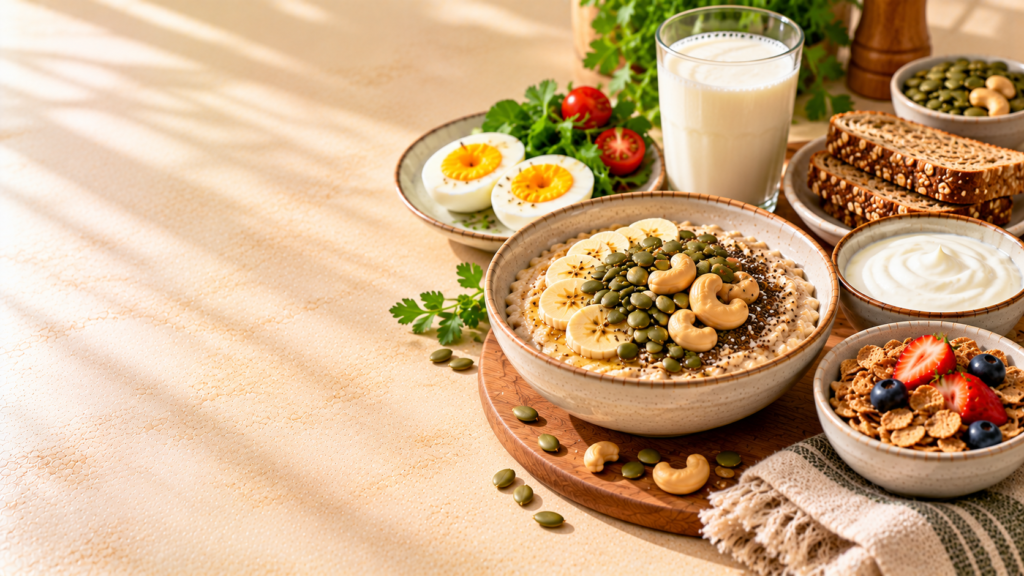
For example, oatmeal with pumpkin seeds, yogurt, and cashews can supply zinc from several sources. The actual amount depends on the portion sizes and the products you use.
A balanced approach is to spread zinc-containing foods across breakfast, lunch, dinner, and snacks. This also helps provide protein, fiber, vitamins, and other minerals.
3. Easy Zinc-Rich Breakfast Combinations
Combining several ingredients can make it easier to include zinc in your morning routine.
| Breakfast combination | Why it works |
|---|---|
| Oatmeal + pumpkin seeds + cashews | Combines oats with concentrated plant-based zinc sources |
| Eggs + whole-grain toast + yogurt | Offers protein and zinc from several food groups |
| Fortified cereal + milk | Convenient way to obtain zinc, depending on fortification |
| Yogurt + oats + hemp seeds | Combines dairy protein with zinc-containing seeds |
| Chickpea hummus + whole-grain toast | Provides plant protein, fiber, and zinc |
| Tofu scramble + whole-grain bread | A plant-based breakfast with protein and zinc |
| Overnight oats + chia and pumpkin seeds | Easy to prepare ahead and customize |
4. Vegetarian and Vegan Breakfast Foods High in Zinc
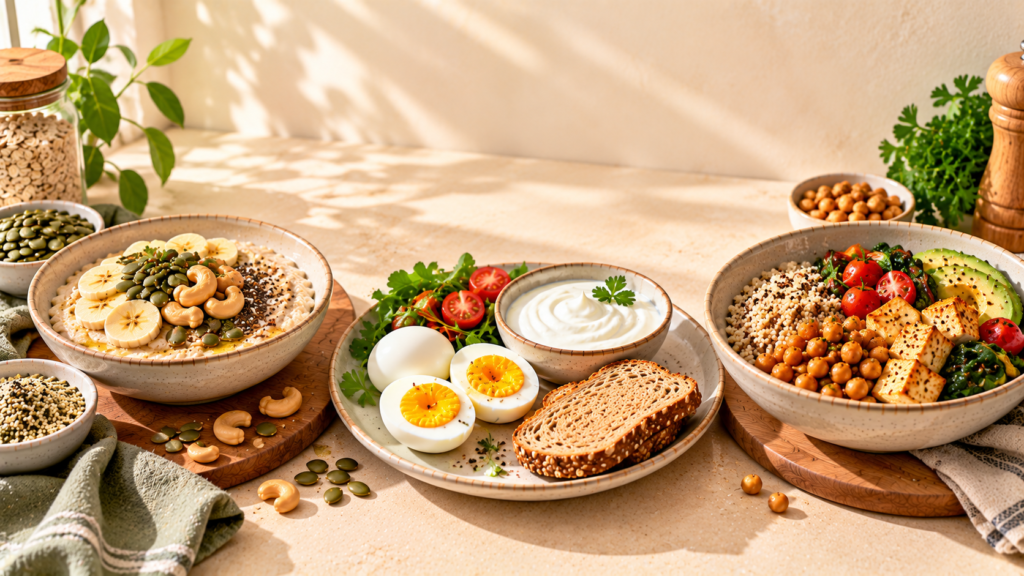
You do not need to eat meat or seafood to include zinc in breakfast. A carefully planned vegetarian or vegan diet can provide zinc through seeds, nuts, legumes, whole grains, tofu, and suitable fortified foods.
Best Plant-Based Breakfast Choices
- Pumpkin and hemp seeds: Concentrated sources that are easy to sprinkle over meals.
- Cashews and peanut butter: Convenient additions to oats or whole-grain toast.
- Oatmeal and whole-grain bread: Provide zinc alongside fiber and other nutrients.
- Chickpeas and hummus: Useful for savory breakfast dishes.
- Tofu: A versatile source of plant protein with a product-dependent zinc content.
- Fortified cereals and plant beverages: May provide added zinc; check their labels.
Do Plant-Based Breakfasts Provide Less Absorbable Zinc?
Plant foods often contain phytates, natural compounds that can reduce zinc absorption. The effect depends on the food, preparation method, and overall diet.
Soaking legumes, sprouting suitable grains or beans, and using fermented grain products can reduce phytate levels in some foods. These methods may improve zinc availability, but they do not remove all phytates or guarantee that a person’s zinc requirements will be met.
Zinc Rich Foods for Vegetarians
5. How to Make Your Breakfast More Nutritious
A zinc-rich breakfast is most useful when it fits into a balanced eating pattern. Rather than focusing on zinc alone, combine foods that contribute protein, fiber, vitamins, and minerals.
Add Seeds to Everyday Foods
Keep pumpkin seeds or hemp seeds available to sprinkle over oatmeal, yogurt, or whole-grain cereal. Small additions can increase the variety of nutrients in your meal.
Choose Fortified Foods Carefully
Read cereal and plant beverage labels to see whether zinc has been added. Compare the zinc content per serving, added sugar, fiber, and serving size.
Include a Protein Source
Eggs, yogurt, milk, tofu, chickpeas, and nut butters can help make breakfast more satisfying while contributing different nutrients.
Prepare Breakfast in Advance
Overnight oats, boiled eggs, hummus, and portioned nuts or seeds can make nutritious breakfast choices easier on busy mornings.
Avoid Relying on Supplements Instead of Food
Most people should aim to meet their nutritional requirements through a balanced diet. Supplements may be appropriate in certain situations, but unnecessary high-dose zinc can cause nausea and interfere with copper absorption.
6. Can Zinc Deficiency Affect Your Morning Energy?
Zinc is essential for normal bodily functions, but feeling tired in the morning does not necessarily mean you have a zinc deficiency.
Fatigue can be associated with insufficient sleep, iron deficiency, vitamin B12 deficiency, thyroid conditions, and many other factors. Zinc deficiency can cause several symptoms, but fatigue alone is not a reliable diagnostic sign.
Possible signs of zinc deficiency include changes in taste or smell, reduced appetite, hair loss, slow wound healing, and certain skin problems. These symptoms are not specific to zinc deficiency.
If you experience persistent fatigue or other unexplained symptoms, consult a healthcare professional. They can assess your symptoms, diet, medical history, and whether any testing is appropriate.
Read the NIH Office of Dietary Supplements’ Zinc Fact Sheet for information on dietary requirements, food sources, deficiency, absorption, and supplement safety.
7. Common Mistakes to Avoid With Zinc-Rich Breakfasts
Avoid these common mistakes when planning breakfast foods high in zinc:
- Assuming all cereals contain zinc: Only products with naturally occurring or added zinc provide meaningful amounts. Check the label.
- Relying on eggs alone: Eggs provide some zinc, but combining different food sources improves dietary variety.
- Ignoring portion sizes: A food’s zinc content depends on how much you actually eat.
- Avoiding all phytate-containing foods: Whole grains, nuts, seeds, and legumes provide valuable nutrients despite their phytate content.
- Taking high-dose zinc supplements without guidance: Excess zinc can cause adverse effects and copper deficiency.
- Expecting breakfast to meet every nutritional need: Lunch, dinner, and snacks also contribute to your total daily intake.
Conclusion: Choose the Best Breakfast Foods High in Zinc
The best breakfast foods high in zinc include pumpkin seeds, hemp seeds, cashews, oatmeal, eggs, yogurt, milk, whole-grain bread, and fortified breakfast cereals. Combining several of these ingredients can help you increase your zinc intake while enjoying a varied and satisfying breakfast.
You do not need an expensive meal plan. Simple combinations such as oatmeal with pumpkin seeds, eggs with whole-grain toast, or yogurt with nuts can fit into everyday routines. Vegetarians and vegans can also obtain zinc from legumes, tofu, seeds, nuts, and suitable fortified foods.
Remember that your daily zinc needs depend on your age and stage of life, and plant-based zinc absorption can be affected by phytates. Focus on dietary variety, check food labels, and consult a healthcare professional if you suspect a deficiency rather than automatically taking supplements.
Frequently Asked Questions
1. What are the best breakfast foods high in zinc?
Pumpkin seeds, hemp seeds, cashews, oatmeal, eggs, yogurt, milk, and fortified breakfast cereals are useful choices. Their zinc content varies by serving size and product.
2. Are eggs a good source of zinc for breakfast?
Eggs provide a modest amount of zinc as well as protein and vitamin B12. Pairing eggs with whole-grain toast, yogurt, or seeds can increase the overall zinc contribution of your breakfast.
3. Which breakfast cereal has the most zinc?
The amount depends on the brand and formulation. Compare the zinc amount per serving on nutrition labels, and also consider fiber and added sugar.
4. What is the best vegetarian breakfast for zinc?
Oatmeal topped with pumpkin seeds and cashews, yogurt with hemp seeds, or chickpea hummus on whole-grain toast are practical options. Fortified cereals can also help.
5. Can I get enough zinc from breakfast alone?
Breakfast can contribute substantially to your daily intake, but most people obtain zinc from meals and snacks throughout the day. Your total intake depends on portions and food choices.
6. Do pumpkin seeds help prevent zinc deficiency?
Pumpkin seeds provide zinc and can help meet dietary requirements. However, no single food guarantees prevention or treatment of zinc deficiency.
7. Is it safe to take zinc supplements every morning?
Not everyone needs a zinc supplement. Excessive intake can cause nausea and interfere with copper absorption. Ask a healthcare professional whether supplementation is appropriate for you.