

Calcium and Vitamin D: How They Work Together
Calcium and vitamin D are two essential nutrients that work together to support strong bones, healthy teeth, and normal muscle function. Although they have different roles in the body, getting enough of both is important for maintaining bone health throughout life.
Calcium provides the mineral structure that helps keep bones strong. Vitamin D helps your body absorb calcium from the digestive tract so it can be used effectively. If you consume enough calcium but have inadequate vitamin D, your body may struggle to absorb and use that calcium efficiently.
Understanding calcium and vitamin D can help you make better food choices, recognize common nutritional gaps, and decide when professional advice about supplements may be useful.
Key Takeaways
- Calcium is a major mineral component of bones and teeth.
- Vitamin D helps the body absorb calcium from food and supports normal calcium levels in the blood.
- Both nutrients are important for bone mineralization, but neither replaces the other.
- Adults generally need 1,000–1,200 mg of calcium daily, depending on age and sex.
- Most adults need 600 IU (15 mcg) of vitamin D daily until age 70 and 800 IU (20 mcg) after age 70 under US recommendations.
- Food, fortified products, and supplements when needed can help meet nutritional requirements.
- Taking extra calcium or vitamin D does not automatically improve bone health and may be harmful in excessive amounts.
What Is Calcium?
Calcium is an essential mineral best known for its role in building and maintaining bones and teeth. Approximately 99% of the body’s calcium is stored in these structures. The remaining amount circulates in the blood and is present in other tissues, where it supports vital functions.
Your body cannot produce calcium, so you must obtain it through food or, when appropriate, supplements.
What does calcium do in the body?
Calcium supports several important processes:
- Bone strength: Helps maintain bone structure and mineral density.
- Dental health: Contributes to the mineral structure of teeth.
- Muscle contraction: Allows muscles to contract normally.
- Nerve signaling: Helps transmit signals between nerves and other cells.
- Blood clotting: Participates in the normal clotting process.
Your body carefully regulates calcium in the blood. If dietary intake is insufficient over time, it can draw calcium from bones to maintain normal blood calcium levels. This is one reason consistent calcium intake matters.
What Is Vitamin D?
Vitamin D is a fat-soluble vitamin that helps regulate calcium and phosphate levels in the body. These minerals are necessary for normal bone mineralization.
Your skin can produce vitamin D when exposed to ultraviolet B (UVB) radiation from sunlight. You can also obtain it from selected foods, fortified products, and supplements.
What does vitamin D do?
Vitamin D helps your body:
- Absorb calcium from the intestines.
- Maintain appropriate calcium and phosphate levels.
- Support normal bone mineralization.
- Maintain normal muscle function.
- Prevent nutritional rickets in children and osteomalacia in adults when adequate vitamin D status is maintained.
Vitamin D deficiency can contribute to weak or poorly mineralized bones. Severe, prolonged deficiency can cause significant health problems.
How Calcium and Vitamin D Work Together
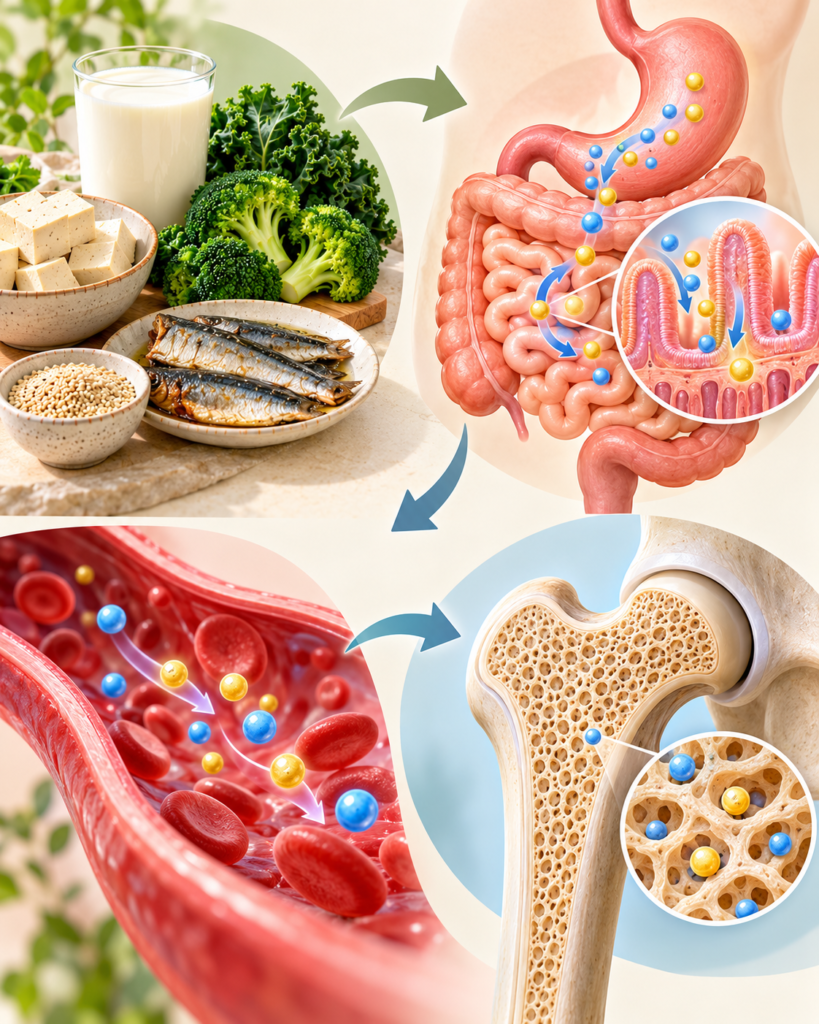
Calcium and vitamin D have complementary roles. Calcium supplies the mineral your body needs, while vitamin D helps your digestive system absorb calcium and supports the regulation of calcium in your blood.
Here is how the process works.
Step 1: Eat calcium-rich foods
Calcium enters your digestive system through foods and beverages.
Step 2: Vitamin D supports absorption
Vitamin D helps the intestines absorb dietary calcium.
Step 3: The body regulates calcium
Absorbed calcium enters circulation and is regulated to meet the body’s needs.
Step 4: Maintain healthy bones
Adequate calcium and vitamin D help support normal bone mineralization.
This relationship explains why consuming calcium alone may not be enough if your vitamin D status is inadequate. It also explains why taking vitamin D without enough calcium cannot supply the mineral your bones need.
Vitamin D is important, but bone health also depends on physical activity, adequate protein, age, hormonal health, and other factors.
Benefits of Getting Enough Calcium and Vitamin D
Getting adequate amounts of both nutrients supports several important aspects of health.
1. Supports bone strength
Calcium contributes to the structure and mineral content of bones. Vitamin D supports calcium absorption and helps maintain the mineral balance needed for normal bone development and maintenance.
During childhood and adolescence, these nutrients support the development of the skeleton. In adulthood, they help maintain bone health.
2. Helps prevent nutritional bone disorders
Severe vitamin D deficiency can cause rickets in children and osteomalacia in adults. Insufficient calcium intake can also contribute to poor bone mineralization, particularly when vitamin D status is inadequate.
Adequate nutrition helps prevent these nutritional problems, although not all bone disorders are caused by vitamin or mineral deficiencies.
3. Supports normal muscle function
Calcium is required for muscle contraction, while vitamin D contributes to normal muscle function. Severe vitamin D deficiency can be associated with muscle weakness.
However, taking extra calcium and vitamin D does not automatically improve strength or prevent falls in everyone. Benefits depend on the person’s nutritional status, age, and health circumstances.
4. Helps maintain bone health with aging
As people age, changes in bone metabolism, hormonal levels, physical activity, and nutrient absorption can affect bone strength.
Adequate calcium and vitamin D are particularly important for older adults, who may be at increased risk of osteoporosis or vitamin D deficiency.
These nutrients are part of a broader bone-health strategy that may also include strength and balance exercises, appropriate medical assessment, and treatment when necessary.
Best Foods That Provide Calcium and Vitamin D
Not every calcium-rich food contains vitamin D, and not every vitamin D source supplies substantial calcium. Choosing foods from both groups makes it easier to meet your needs.
| Food | Main nutrient contribution | Practical tip |
|---|---|---|
| Fortified milk | Calcium and often vitamin D | Check the label for both nutrients. |
| Fortified plant milk | Calcium and sometimes vitamin D | Choose a product fortified with both. |
| Fortified yogurt | Calcium; vitamin D varies | Check the nutrition panel. |
| Calcium-set tofu | Calcium | Check the ingredients and calcium content. |
| Salmon | Vitamin D and protein | Serve with a calcium-rich vegetable. |
| Sardines with edible bones | Calcium and vitamin D | Check the product label for amounts. |
| Egg yolks | Vitamin D in modest amounts | Combine with other vitamin D sources. |
| UV-exposed mushrooms | Vitamin D, depending on exposure | Look for products identified as vitamin D-rich. |
| Kale and bok choy | Calcium | Include regularly in meals. |
| Fortified breakfast cereal | Calcium and/or vitamin D | Fortification varies by brand. |
Many fortified products contain only one of these nutrients, so it is important to check both values on the label. Oily fish is among the more useful natural dietary sources of vitamin D, while fortified foods can help fill gaps.
Which foods are best for both nutrients?
If you want to obtain calcium and vitamin D in the same meal, consider:
- Fortified milk or a plant-based beverage fortified with both nutrients.
- Fortified yogurt, where both nutrients are listed.
- Sardines with edible bones, which supply calcium and some vitamin D.
- A meal combining salmon with calcium-rich greens.
- Fortified breakfast cereal served with a beverage fortified with both nutrients.
The most reliable strategy is to check nutrient labels and combine several food sources instead of relying on a single ingredient.

How Much Calcium and Vitamin D Do You Need Daily?
Daily requirements depend on your age and life stage. The following values are US National Institutes of Health recommendations for generally healthy people, not individualized medical prescriptions. Other countries may use different guidelines.
Recommended daily calcium intake
| Age group | Calcium per day |
|---|---|
| Children 1–3 years | 700 mg |
| Children 4–8 years | 1,000 mg |
| Children 9–18 years | 1,300 mg |
| Adults 19–50 years | 1,000 mg |
| Men 51–70 years | 1,000 mg |
| Women 51–70 years | 1,200 mg |
| Adults 71 years and older | 1,200 mg |
Recommended daily vitamin D intake
| Age group | Vitamin D per day |
|---|---|
| Infants 0–12 months | 400 IU (10 mcg) |
| People 1–70 years, including pregnancy and breastfeeding | 600 IU (15 mcg) |
| Adults over 70 years | 800 IU (20 mcg) |
These are recommended total daily intakes from food, beverages, and supplements combined. Individual needs can differ based on medical conditions, medications, and clinical circumstances.
What do these amounts mean in everyday life?
For calcium, a fortified beverage, tofu, leafy greens, beans, and other calcium-containing foods can contribute throughout the day.
For vitamin D, oily fish, eggs, certain mushrooms, and fortified products can help. However, vitamin D is naturally present in relatively few foods, so some people may need additional guidance about meeting their requirements.
If you avoid dairy, read labels carefully and select fortified alternatives that provide calcium. If you follow a vegan diet, also check whether the beverage or yogurt is fortified with vitamin D and whether the source is suitable for your dietary preferences.
Signs You May Not Be Getting Enough Calcium or Vitamin D
Low intake does not always produce obvious symptoms immediately. Your body regulates blood calcium tightly, so a normal blood calcium result does not necessarily mean that your dietary calcium intake is adequate.
Possible signs of inadequate calcium intake or related bone problems
- Muscle cramps or spasms in some circumstances.
- Weak bones or fractures associated with long-term bone loss.
- Poor bone mineralization when deficiencies are severe.
- Dental or skeletal problems in children when nutrition is inadequate.
These symptoms are not specific to calcium deficiency and can have many other causes.
Possible signs of vitamin D deficiency
- Bone pain.
- Muscle weakness.
- In children, impaired bone development in severe cases.
- In adults, bone softening from prolonged, significant deficiency.
Some people with low vitamin D have no obvious symptoms. Symptoms alone cannot reliably diagnose a deficiency.
Who may be at higher risk?
People who may have a higher risk of inadequate vitamin D include older adults, people with limited sun exposure, people with certain absorption disorders, and people whose diets contain few vitamin D sources.
People who avoid dairy, eat a very restricted diet, or have conditions affecting nutrient absorption may also need to pay particular attention to calcium intake.
If you are concerned about a deficiency, consult a healthcare professional. A vitamin D blood test may be appropriate in selected circumstances, but routine testing is not necessary for everyone.
Do You Need Calcium and Vitamin D Supplements?
Not everyone needs supplements. Many people can obtain adequate calcium and vitamin D through food and fortified products, while others may benefit from supplementation based on their diet, health, or clinician’s advice.
When might supplements be useful?
A healthcare professional may recommend supplements if you:
- Consistently consume too little calcium.
- Have a diagnosed vitamin D deficiency.
- Have a medical condition that affects nutrient absorption.
- Have increased nutritional needs or specific bone-health concerns.
- Take medicines or have a condition that affects calcium or vitamin D metabolism.
Supplements can help fill nutritional gaps, but they do not replace a balanced diet or appropriate treatment for osteoporosis and other bone disorders.
Can you take calcium and vitamin D together?
Yes. Many supplements combine calcium and vitamin D because they support related functions in the body. For most people who have been advised to take both, taking them together is a convenient option.
However, the right dose depends on how much you already get from food, other supplements, and medicines.
What is the best time to take calcium and vitamin D?
There is no single best time for everyone.
- Calcium carbonate: Generally take it with food for better absorption.
- Calcium citrate: Can be taken with or without food.
- Vitamin D: Because it is fat-soluble, taking it with a meal containing some fat may help absorption.
If you use a combined supplement, follow its product instructions. If you take prescription medicines, ask a pharmacist whether calcium supplements need to be separated from them.
Calcium supplements can interfere with the absorption of certain medicines, including levothyroxine and some antibiotics. Do not change prescribed medication timing without professional guidance.
Can too much calcium or vitamin D be harmful?
Yes. More is not always better.
Excessive calcium intake from supplements can cause constipation and, in some circumstances, increase the risk of kidney stones. Excessive vitamin D can cause dangerously high blood calcium levels, potentially leading to kidney problems and other complications.
For adults, the US tolerable upper intake level for vitamin D is generally 4,000 IU (100 mcg) per day from all sources unless higher doses are prescribed and monitored by a clinician. This is a safety limit, not a recommended target.
Calcium upper limits vary by age. Avoid taking high-dose supplements without professional advice, particularly if you have kidney disease, a history of kidney stones, or conditions that affect calcium regulation.
Simple Meal Plan to Get Calcium and Vitamin D Together
Here is an example of how you can combine sources of these nutrients throughout the day.

BREAKFAST
Oatmeal with fortified plant milk
Choose a beverage that lists calcium and vitamin D on the nutrition label. Add chia seeds and fruit.

SNACK
Egg and almonds
Adds protein and some vitamin D from the egg, plus a modest amount of calcium from almonds.

LUNCH
Salmon with bok choy and broccoli
Combines a useful vitamin D source with vegetables that contribute calcium.

DINNER OR EVENING SNACK
Fortified yogurt with figs
Choose a dairy or plant-based yogurt that provides calcium; check whether vitamin D is also added.
This is a flexible example, not a guarantee that your daily requirements are met. Actual nutrient intake depends on portion sizes and the products you choose. You can adapt the plan for dairy-free, vegetarian, or vegan diets.
Calcium-Rich Foods for People Who Avoid Dairy
This related guide can help readers identify practical calcium sources if they do not consume milk, cheese, or conventional yogurt.
Lifestyle Habits That Support Bone Health
Calcium and vitamin D are important, but they work best as part of a broader approach to maintaining healthy bones.
- Stay physically active: Walking, resistance training, and other appropriate weight-bearing activities help support bone health.
- Eat enough protein: Include suitable sources such as beans, lentils, eggs, fish, tofu, or other preferred protein foods.
- Avoid smoking: Smoking is associated with poorer bone health.
- Limit excessive alcohol intake: Excessive alcohol can increase health risks, including risks associated with bone health.
- Discuss risk factors with your clinician: Menopause, certain medications, previous fractures, and some medical conditions may influence your bone-health needs.
If you have osteoporosis or a high fracture risk, nutrition is only one part of management. A clinician can assess whether bone-density testing, medication, or other interventions are appropriate.

Conclusion
Calcium and vitamin D work together to help maintain strong bones, normal muscle function, and healthy mineral balance. Calcium supplies an essential building block for bones, while vitamin D helps the body absorb and use that calcium effectively.
The most practical way to support bone health is to include calcium-rich foods, obtain vitamin D from suitable foods and fortified products, and consider supplements only when needed. Your requirements depend on your age, diet, health conditions, and other individual factors.
You do not need to rely on supplements automatically, and taking more than you need is not necessarily beneficial. Focus on a varied diet, regular physical activity, and professional guidance when you have concerns about deficiency or bone health.
For further guidance, consult the NIH Calcium Fact Sheet and the NIH Vitamin D Fact Sheet.
Frequently Asked Questions
1. Why do calcium and vitamin D need to work together?
Calcium helps build and maintain bone structure, while vitamin D helps the body absorb calcium from the digestive tract. Adequate amounts of both support normal bone mineralization.
2. Can I take calcium without vitamin D?
Yes, but your vitamin D status still matters because vitamin D supports calcium absorption. Whether you need a separate vitamin D supplement depends on your diet, health, and existing intake.
3. What foods contain both calcium and vitamin D?
Some fortified milk, plant beverages, and yogurt products contain both. Sardines with edible bones can also provide both nutrients. Check food labels because amounts vary.
4. What is the best time to take calcium and vitamin D?
Calcium carbonate is generally taken with food, while calcium citrate can be taken with or without food. Vitamin D may be taken with a meal containing some fat. Follow the instructions for your specific product.
5. Does vitamin D help calcium absorption?
Yes. Vitamin D supports calcium absorption in the intestines and helps regulate calcium and phosphate levels needed for normal bone health.
6. What happens if you do not get enough calcium and vitamin D?
Inadequate intake or vitamin D deficiency can contribute to poor bone mineralization. Severe vitamin D deficiency can cause rickets in children or osteomalacia in adults. Long-term bone health also depends on age, activity, hormones, and other nutrients.
7. Can I get enough calcium and vitamin D without dairy?
Yes. Calcium-fortified plant milk, calcium-set tofu, leafy greens, and other calcium-containing foods can help meet calcium needs. Vitamin D sources include oily fish, eggs, selected mushrooms, and fortified foods. Vegans can choose appropriately fortified plant products.
8. Do calcium and vitamin D supplements prevent osteoporosis?
They help meet nutritional needs, but supplements alone cannot guarantee osteoporosis prevention. Their usefulness depends on your current intake, deficiency risk, bone health, and overall medical situation.