
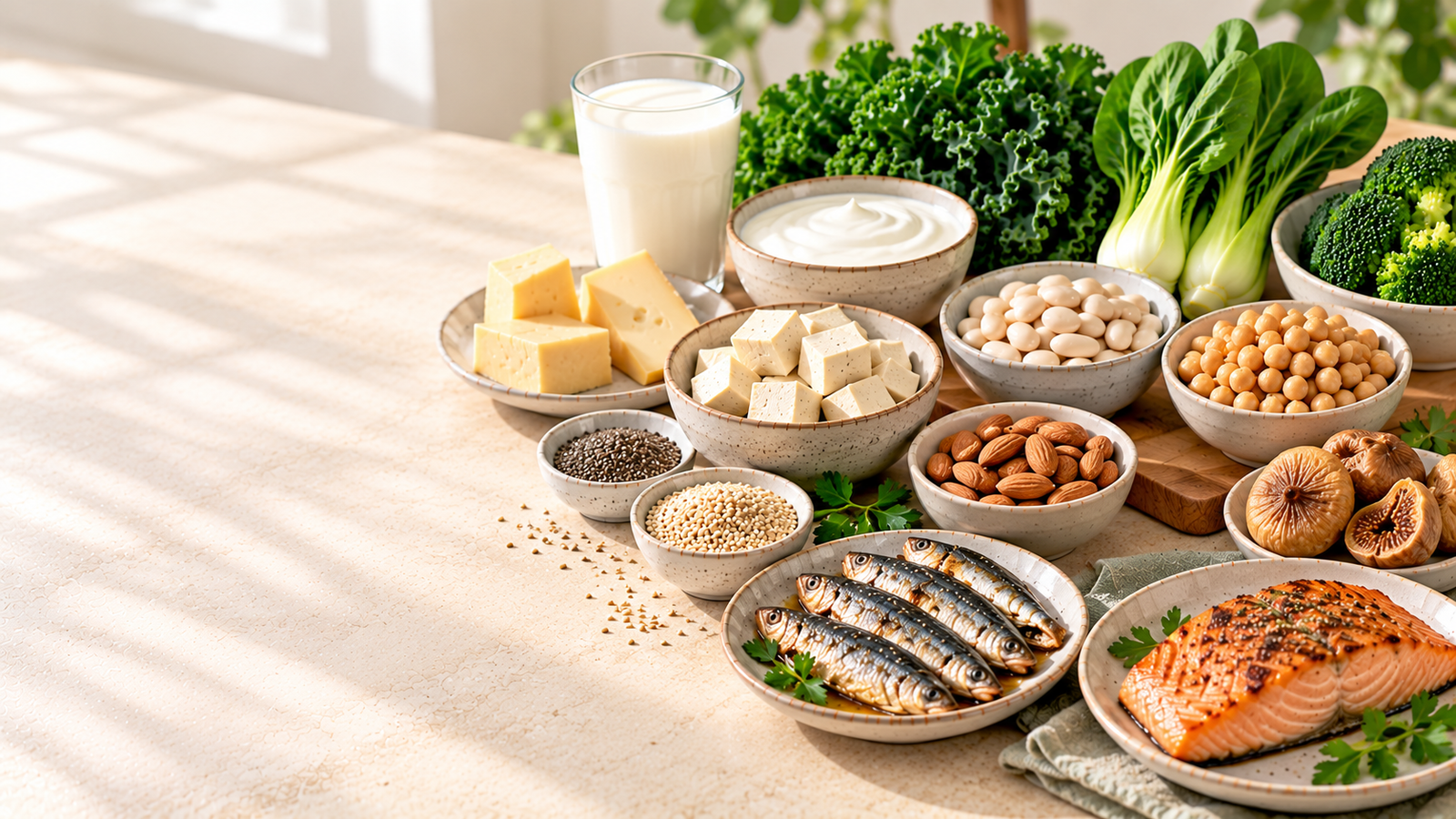
Calcium is an essential mineral that helps maintain strong bones and teeth, supports normal muscle contraction, and plays a role in nerve signaling and blood clotting. Because your body cannot produce calcium, you need to obtain it regularly from food or, when necessary, supplements.
A calcium foods chart makes it easier to compare common foods, understand how much calcium they provide, and choose options that fit your diet. Dairy products are familiar sources, but calcium is also available from fortified plant beverages, calcium-set tofu, selected vegetables, beans, seeds, and fish with edible bones.
In this guide, you will find a practical calcium content chart, daily intake recommendations, dairy-free alternatives, and meal-planning tips to help you make informed food choices.
Key Takeaways
- Calcium is essential for healthy bones and teeth, muscle function, nerve signaling, and blood clotting.
- Milk, yogurt, and cheese provide calcium, but they are not the only dietary sources.
- Fortified plant milk, calcium-set tofu, bok choy, kale, and canned fish with edible bones can contribute substantial amounts.
- Calcium content varies by serving size, brand, preparation method, and fortification.
- Most adults need 1,000 mg of calcium daily; women over 50 and adults over 70 generally need 1,200 mg under US recommendations.
- Vitamin D helps your body absorb calcium.
- A varied diet is usually the best starting point for meeting your calcium needs.
Calcium Foods Chart: 25 Foods and Their Calcium Content
The following calcium foods chart compares common foods by serving size and approximate calcium content. Use it to identify practical sources for breakfast, lunch, dinner, and snacks.
Values are rounded reference estimates based on the NIH Office of Dietary Supplements. Actual amounts vary by product, brand, preparation, and serving size.
Health Professional Fact Sheet
| Food | Typical serving | Calcium (mg) |
|---|---|---|
| Plain low-fat yogurt | 8 oz (227 g) | 415 |
| Calcium-fortified orange juice | 1 cup (240 ml) | 349 |
| Part-skim mozzarella | 1.5 oz (42 g) | 333 |
| Canned sardines with bones | 3 oz (85 g) | 325 |
| Nonfat milk | 1 cup (240 ml) | 299 |
| Calcium-fortified soy milk | 1 cup (240 ml) | 299 |
| Whole milk | 1 cup (240 ml) | 276 |
| Firm tofu made with calcium sulfate | ½ cup | 253 |
| Canned salmon with bones | 3 oz (85 g) | 181 |
| Cottage cheese | 1 cup | 138 |
| Soft tofu made with calcium sulfate | ½ cup | 138 |
| Cooked soybeans | ½ cup | 131 |
| Calcium-fortified breakfast cereal | 1 serving | 130* |
| Cooked spinach | ½ cup | 123 |
| Vanilla frozen yogurt | ½ cup | 103 |
| Cooked turnip greens | ½ cup | 99 |
| Cooked kale | 1 cup | 94 |
| Chia seeds | 1 tablespoon | 76 |
| Raw bok choy | 1 cup, shredded | 74 |
| Canned pinto beans, drained | ½ cup | 54 |
| Corn tortilla | 1 small, 6-inch | 46 |
| Reduced-fat sour cream | 2 tablespoons | 31 |
| Whole-wheat bread | 1 slice | 30 |
| Raw chopped kale | 1 cup | 24 |
| Raw broccoli | ½ cup | 21 |
*Fortified cereal varies widely by brand. The 130 mg value represents a particular fortification level, not all cereals. Reference values are illustrative rather than laboratory measurements of your specific products. Source: NIH Office of Dietary Supplements, Calcium Health Professional Fact Sheet.
How to read this calcium chart
- Check the serving size: The calcium amount is for the stated portion, not necessarily the amount you usually eat.
- Look for fortification: Plant milk, orange juice, and cereal may contain added calcium, but unfortified products can contain much less.
- Check the tofu ingredients: Tofu made with calcium sulfate can contain considerably more calcium than tofu made with other coagulants.
- Consider absorption: The amount listed is the calcium present in the food, not the amount your body absorbs. For example, spinach contains calcium, but its oxalate content substantially reduces absorption.
- Use several sources: Combining different foods throughout the day is often more practical than relying on one high-calcium food.
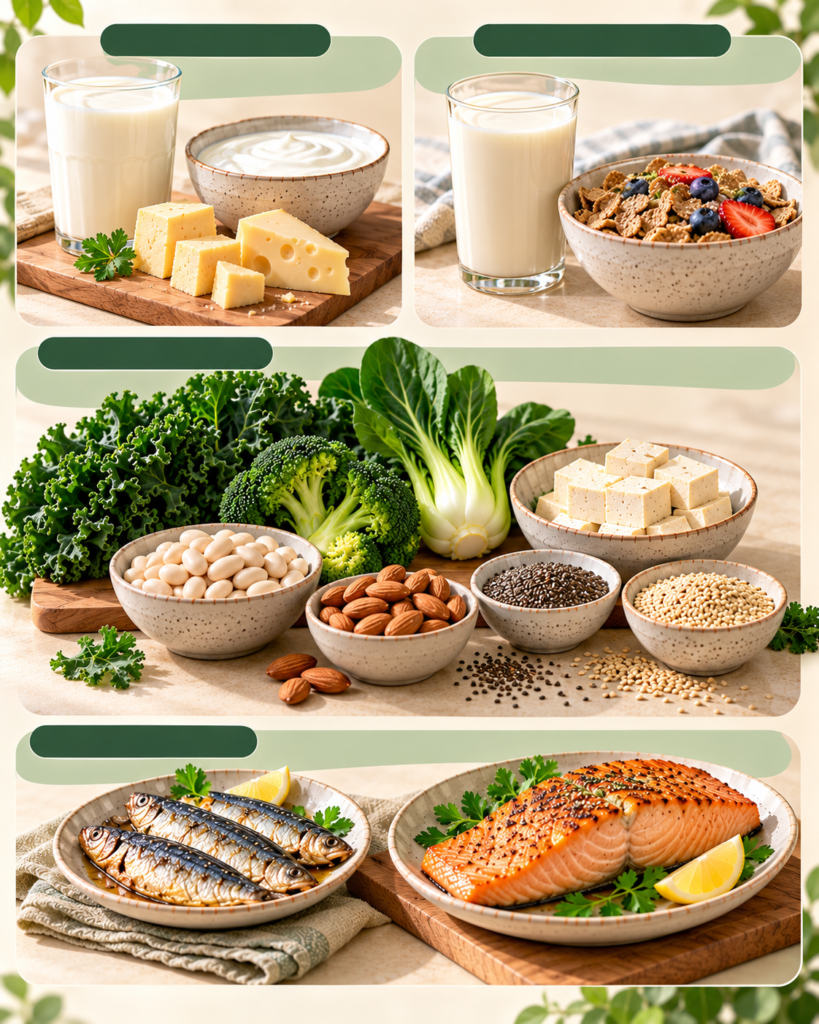
Which Foods Have the Most Calcium?
The highest-calcium choice depends on the serving size and whether the product is fortified.
Best high-calcium foods per serving
Among the foods in the chart, plain yogurt, fortified orange juice, mozzarella, sardines with bones, fortified soy milk, and calcium-set tofu are particularly useful sources.
For people who consume dairy, yogurt and cheese can contribute substantial calcium. For those who avoid dairy, fortified soy milk, calcium-fortified juice, and tofu prepared with calcium sulfate are useful alternatives.
Canned sardines and salmon with edible bones offer another option for people who eat fish.
Best plant-based calcium sources
Plant-based options include:
- Calcium-fortified soy milk and other fortified plant beverages.
- Calcium-set tofu.
- Kale, bok choy, and broccoli.
- Cooked soybeans and certain beans.
- Chia seeds and sesame seeds.
- Fortified breakfast cereals.
Not all plant foods provide equal amounts of calcium, and not all calcium is absorbed equally well. Kale and bok choy are particularly useful leafy vegetables because their calcium is generally more bioavailable than calcium from spinach.
Calcium Foods Chart for Dairy-Free Diets
If you avoid milk, yogurt, and cheese because of lactose intolerance, a milk allergy, or personal preference, you can still obtain calcium from a range of foods.
| Dairy-free food | Serving | Approximate calcium |
|---|---|---|
| Calcium-fortified soy milk | 1 cup | 299 mg |
| Calcium-set firm tofu | ½ cup | 253 mg |
| Canned salmon with edible bones | 3 oz | 181 mg |
| Cooked soybeans | ½ cup | 131 mg |
| Calcium-fortified cereal | 1 serving | 130 mg* |
| Cooked turnip greens | ½ cup | 99 mg |
| Cooked kale | 1 cup | 94 mg |
| Chia seeds | 1 tablespoon | 76 mg |
| Raw bok choy | 1 cup | 74 mg |
| Canned pinto beans | ½ cup | 54 mg |
Values are approximate; fortified products and tofu can vary substantially. Fish is not suitable for vegan diets.
Tips for choosing dairy-free calcium foods
- Read plant milk labels. Choose products that list calcium in the nutrition information. Shake them before serving if the packaging recommends it.
- Compare tofu varieties. Check whether calcium sulfate is used and compare the actual calcium per serving.
- Include leafy greens regularly. Kale and bok choy can complement fortified foods.
- Combine sources. Use fortified plant milk at breakfast, tofu at lunch, and beans or greens at dinner.
- Consider vitamin D too. Calcium and vitamin D have different roles, and adequate vitamin D helps your body absorb calcium.
Calcium Rich Foods for People Who Avoid Dairy
This related guide can help readers who want more detail on choosing calcium-rich foods without dairy products.
How Much Calcium Do You Need Per Day?
Your daily calcium requirement depends on your age and life stage. The following recommendations are from the US National Institutes of Health Office of Dietary Supplements. Your country’s guidelines may differ.
| Age group | Recommended calcium per day |
|---|---|
| Infants 0–6 months | 200 mg |
| Infants 7–12 months | 260 mg |
| Children 1–3 years | 700 mg |
| Children 4–8 years | 1,000 mg |
| Children 9–18 years | 1,300 mg |
| Adults 19–50 years | 1,000 mg |
| Men 51–70 years | 1,000 mg |
| Women 51–70 years | 1,200 mg |
| Adults 71 years and older | 1,200 mg |
Pregnant and breastfeeding adults generally need 1,000 mg daily, while pregnant or breastfeeding teenagers generally need 1,300 mg. Individual requirements can vary with age and health circumstance
What does 1,000 mg of calcium look like in food?
You do not have to eat 1,000 mg of calcium in one sitting. You can spread your intake across meals and snacks.
For example, a day might include:
- One cup of calcium-fortified soy milk: approximately 299 mg.
- Half a cup of calcium-set tofu: approximately 253 mg.
- One serving of plain yogurt: approximately 300–415 mg, depending on the product.
- Additional calcium from vegetables, beans, seeds, and other foods.
This combination illustrates how different foods can add up. The exact total depends on your products and portion sizes. If you avoid dairy, use another calcium source instead of yogurt.
Interactive calcium needs calculator
Use this simple reference tool to estimate a daily calcium target based on the age groups in the chart.
Daily calcium estimate
Choose an age group and enter the approximate calcium you get from food and drinks.Age group
Adult, 19–50 yearsEstimated calcium intake
700 mg
0 mg
800 mg
1,600 mg
Reference target
1000 mg
per day
Difference from target
300 mg
Potential amount to make up
Educational estimate only. It does not diagnose deficiency or account for every individual circumstance. For infants, children, pregnancy, kidney disease, or other medical concerns, seek appropriate professional guidance.
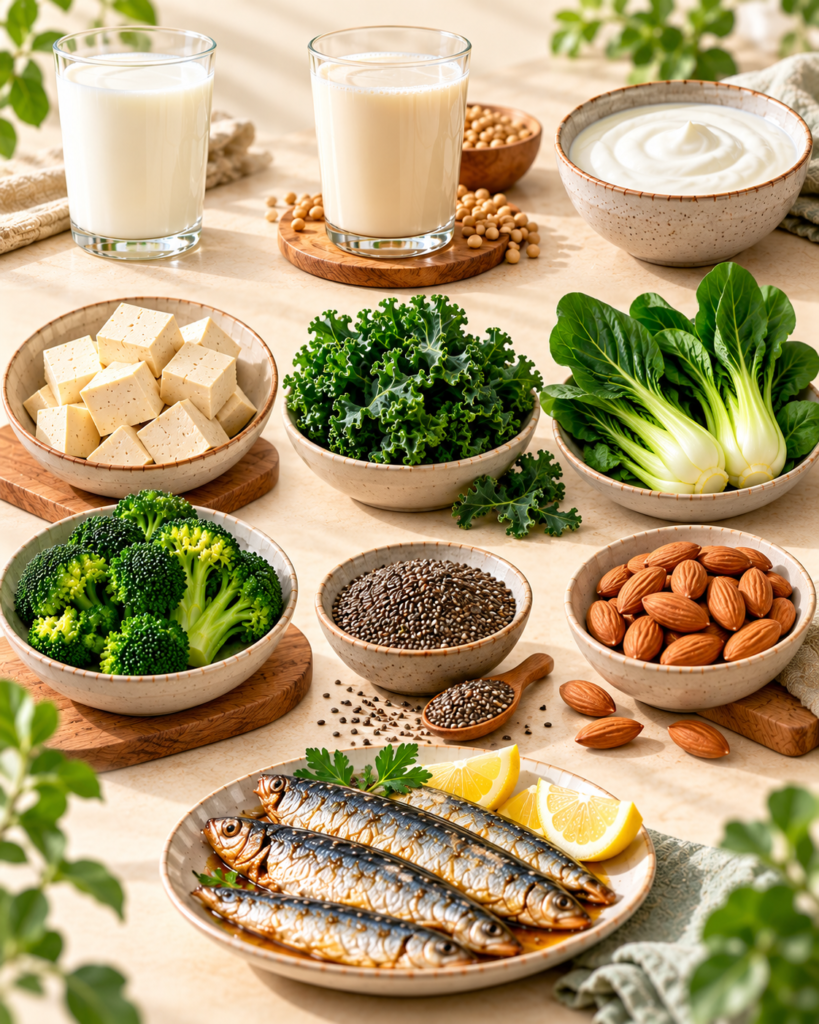
How to Use a Calcium Foods Chart for Meal Planning
A calcium chart is most useful when you turn the numbers into meals you can actually prepare. Start by identifying foods you enjoy, checking their calcium content, and spreading sources across the day.
Example of a calcium-rich daily menu

BREAKFAST
Yogurt, oats, and chia seeds
Provides calcium from yogurt, with additional nutrients and fiber from the oats and seeds.

SNACK
Almonds and dried figs
A convenient combination that contributes some calcium, fiber, and other nutrients.

LUNCH
Tofu, bok choy, and brown rice
Combines a plant-based protein with vegetables that provide calcium.

DINNER
Sardines with greens
Provides calcium from edible fish bones and additional nutrients from vegetables.
This is an example rather than a calculated diet plan. The actual calcium total depends on portions, product labels, and food preparation. You can adapt the menu for dairy-free, vegetarian, or vegan preferences.
Practical ways to increase calcium intake
- Add a calcium-rich food to breakfast.
- Keep fortified plant milk available if you avoid dairy.
- Use calcium-set tofu in stir-fries and curries.
- Include bok choy, kale, or broccoli with main meals.
- Choose snacks that contribute nutrients, such as almonds or dried figs.
- Review labels regularly because recipes and fortification levels can change.
Calcium Absorption: What You Should Know
The calcium listed in a food chart represents its total calcium content, not necessarily the amount absorbed by your body.
Foods differ in calcium bioavailability
Calcium from dairy products and fortified foods is generally well absorbed. Some vegetables also provide relatively available calcium, while oxalates in foods such as spinach can substantially reduce absorption.
This does not mean spinach is unhealthy. It simply means that if your main goal is calcium intake, you should include other sources such as kale, bok choy, fortified foods, or calcium-set tofu.
Vitamin D helps calcium absorption
Vitamin D supports the absorption of calcium in the intestine. If your vitamin D status is low, calcium absorption may be reduced.
Foods containing vitamin D include oily fish, egg yolks, and some fortified products. If you are concerned about vitamin D deficiency, a healthcare professional can advise you about appropriate assessment and treatment.
Do not rely on supplements without checking your intake
Food is generally a good starting point for meeting nutritional needs. Supplements may be appropriate when dietary calcium is insufficient or a clinician identifies a need, but excessive intake can be harmful.
Calcium supplements can also interact with certain medications. Ask a healthcare professional or pharmacist for advice if you take regular medicines or have kidney disease or a history of kidney stones.
the NIH’s authoritative guide to Calcium Food Sources, Daily Requirements, and Supplements
This resource provides further information about calcium recommendations, food sources, and supplement safety.
Common Mistakes When Using a Calcium Foods Chart
A food chart is a useful reference, but a few mistakes can lead to inaccurate estimates or poor food choices.
- Confusing total calcium with absorbed calcium. The amount listed in a chart is not the amount your body ultimately absorbs.
- Ignoring serving sizes. A value for one cup cannot be applied to half a cup without adjusting the amount.
- Assuming all plant milks are fortified. Always read the nutrition label.
- Treating all tofu as equal. Calcium content varies according to the coagulant and product formulation.
- Relying on one food alone. Variety makes it easier to obtain calcium alongside protein, vitamins, fiber, and other nutrients.
- Taking unnecessary high-dose supplements. More calcium is not automatically better, and excess intake may cause problems.
- Forgetting vitamin D. Adequate vitamin D supports calcium absorption and normal bone health.
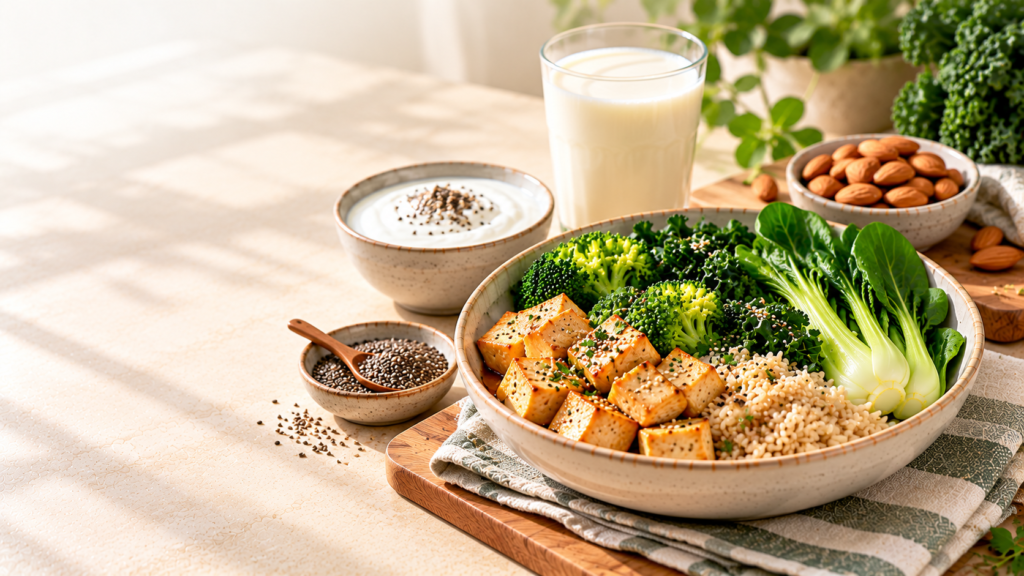
Potassium Rich Foods Chart by Serving Size
If you are looking for foods high in potassium, comparing realistic serving sizes is one of the easiest ways to plan your meals. Some foods provide moderate amounts of potassium in a regular portion, while others offer substantially more.
The following chart expands the original potassium food list with additional options and approximate values.
| Food | Serving size | Approximate potassium |
|---|---|---|
| Baked potato with skin | 1 medium | 600–950 mg |
| Cooked white beans | 1 cup | 800–1,000 mg |
| Cooked lentils | 1 cup | 700–750 mg |
| Cooked spinach | ½ cup | 400–450 mg |
| Cooked Swiss chard | ½ cup | 450–500 mg |
| Cooked beet greens | ½ cup | 600–650 mg |
| Cooked edamame | 1 cup | 650–700 mg |
| Cooked lima beans | 1 cup | 700–950 mg |
| Cooked kidney beans | 1 cup | 500–700 mg |
| Cooked chickpeas | 1 cup | 450–500 mg |
| Cooked black beans | 1 cup | 600–650 mg |
| Cooked butternut squash | 1 cup | 550–600 mg |
| Cooked broccoli | 1 cup | 450–500 mg |
| Cooked beetroot | 1 cup | 500–520 mg |
| Avocado | ½ medium | 350–500 mg |
| Banana | 1 medium | About 420 mg |
| Cantaloupe | 1 cup | 400–430 mg |
| Dried apricots | ½ cup | About 750 mg |
| Plain yogurt | 1 cup | 350–600 mg |
| Cow’s milk | 1 cup | 350–380 mg |
Values are estimates and vary by food variety, preparation, serving size, and product. The figures are intended for general meal planning, not medical potassium calculations. For precise values, check USDA FoodData Central.
10 More Foods High in Potassium to Expand Your Choices
Your daily potassium intake does not have to depend on bananas and potatoes. Several other foods provide potassium while adding variety, fiber, protein, and other essential nutrients to your diet.
1. Edamame
Edamame are young soybeans that provide potassium, plant protein, and fiber. One cup of cooked edamame may supply approximately 650–700 mg of potassium.
How to eat it: Add cooked edamame to salads, grain bowls, soups, or vegetable stir-fries.
2. Lima Beans
Lima beans are a useful source of potassium and plant-based protein. One cup of cooked lima beans can provide approximately 700–950 mg, depending on the variety and preparation.
How to eat them: Add lima beans to vegetable stews, soups, or mixed-bean dishes.
3. Black Beans
Black beans provide potassium, fiber, and plant protein. One cup of cooked black beans typically contains approximately 600–650 mg of potassium.
How to eat them: Use black beans in salads, wraps, soups, or rice dishes.
4. Beet Greens
Beet greens are the leafy tops of beetroot plants. Cooked beet greens are rich in potassium and also supply vitamin K and other nutrients.
How to eat them: Wash thoroughly and sauté or steam the leaves. Add them to lentils, vegetable curries, or omelets.
5. Swiss Chard
Swiss chard is a leafy green that provides potassium, magnesium, and vitamins. Half a cup of cooked Swiss chard may supply approximately 450–500 mg of potassium.
How to eat it: Add chopped leaves to soups, curries, or sautéed vegetable dishes.
6. Butternut Squash
Butternut squash provides potassium, fiber, and carotenoids. One cup of cooked squash may contain approximately 550–600 mg.
How to eat it: Roast it with herbs, mash it, or add it to soups.
7. Broccoli
Broccoli provides potassium, vitamin C, folate, and fiber. One cup of cooked broccoli can supply approximately 450–500 mg of potassium.
How to eat it: Steam, roast, or stir-fry broccoli and serve it alongside beans, chicken, fish, or whole grains.
8. Beetroot
Beetroot contains potassium, folate, and naturally occurring plant compounds. One cup of cooked beetroot may provide approximately 500–520 mg.
How to eat it: Roast beetroot, add it to salads, or serve it as a side dish.
9. Chickpeas
Chickpeas are versatile legumes that provide potassium, protein, and fiber. One cup of cooked chickpeas generally supplies approximately 450–500 mg.
How to eat them: Prepare chickpea curry, hummus, roasted chickpeas, or chickpea salad.
10. Coconut Water
Coconut water contains potassium, but its content varies substantially by brand and serving size. A cup may provide roughly 400–600 mg.
How to drink it: Enjoy a suitable portion if you like its taste, but remember that plain water is adequate for everyday hydration for most people. Coconut water may not be suitable for people who need to restrict potassium.
Which Potassium-Rich Foods Are Best for Everyday Meals?
The best potassium-rich foods are those you can eat regularly in portions that suit your health needs, budget, and preferences.
| Your goal | Foods to consider | Practical meal idea |
|---|---|---|
| Affordable plant-based meals | Lentils, chickpeas, beans | Dal with whole-wheat roti |
| More vegetables | Potatoes, spinach, broccoli | Baked potato with cooked greens |
| Convenient snacks | Banana, orange, cantaloupe | Whole fruit with plain yogurt |
| More plant protein | White beans, black beans, edamame | Bean and vegetable bowl |
| More calcium and potassium | Milk, plain yogurt | Yogurt with fruit and oats |
| More protein from animal foods | Salmon, chicken, yogurt | Fish or chicken with potatoes and vegetables |
| More variety at breakfast | Banana, yogurt, milk | Oatmeal with fruit and milk |
You do not need to eat every food listed. Choose a variety of options across the week to build a balanced dietary pattern.
Potassium-Rich Foods for Vegetarians and Vegans
People following vegetarian or vegan diets can obtain potassium from many plant-based foods. Beans, lentils, potatoes, sweet potatoes, leafy greens, dried fruit, avocados, and bananas are useful choices.
Best plant-based potassium sources
- Legumes: White beans, lentils, black beans, kidney beans, and chickpeas.
- Vegetables: Potatoes, sweet potatoes, spinach, beet greens, broccoli, and squash.
- Fruits: Bananas, cantaloupe, oranges, dried apricots, and prunes.
- Soy foods: Edamame and some soy-based products.
- Dried fruit: Raisins and dried apricots in moderate portions.
Sample vegetarian potassium-rich menu
Breakfast: Oatmeal with banana and milk or a suitable fortified plant-based drink.
Lunch: Lentil curry with whole-wheat roti and cooked spinach.
Snack: Plain yogurt or a portion of fruit, depending on your dietary pattern.
Dinner: Baked potato with chickpeas and roasted vegetables.
This menu illustrates a way to include several potassium-containing foods. It does not guarantee a particular potassium total; portions and ingredients determine the actual amount.
Potassium-Rich Foods for Healthy Blood Pressure
Potassium helps balance the effects of sodium and supports normal blood pressure regulation. Eating a varied diet rich in vegetables, fruits, legumes, and other nutrient-dense foods can contribute to a heart-healthy eating pattern.
Useful options include potatoes, beans, lentils, leafy greens, bananas, yogurt, and avocados.
However, potassium is only one part of blood pressure management. Sodium intake, physical activity, body weight, sleep, medication, and underlying health conditions can also influence blood pressure.
If you have high blood pressure, do not stop prescribed medication because you have increased your intake of potassium-rich foods.
Related reading: [Internal Link: Insert relevant internal URL here with anchor text “Foods High in Magnesium: Natural Sources”]
Potassium From Food vs. Supplements
For most healthy people, getting potassium from a varied diet is the preferred approach. Foods provide potassium alongside other nutrients, while supplements deliver a more concentrated amount and may not be appropriate for everyone.
| Factor | Potassium-rich foods | Potassium supplements |
|---|---|---|
| Everyday nutrition | Useful for meeting dietary needs | Not routinely needed by everyone |
| Other nutrients | Often provide fiber, vitamins, or protein | Depends on the product |
| Amount consumed | Depends on portions and food choice | Depends on the prescribed or labeled dose |
| Safety considerations | May require restriction in some kidney conditions | Can cause dangerous potassium elevations in susceptible people |
| Best use | Part of a varied eating pattern | When recommended for a specific medical reason |
Do not start potassium supplements or potassium-based salt substitutes without medical advice if you have kidney disease or take medicines that affect potassium levels.
How Cooking Affects Potassium Content
Food preparation can change the amount of potassium in the food you eat. Some potassium can move into cooking water, especially when vegetables are boiled and the water is discarded.
Boiling vegetables
Boiling can reduce potassium in some vegetables because potassium dissolves into the water. The amount lost depends on the vegetable, how it is cut, the volume of water, and the cooking time.
Steaming and roasting
Steaming and roasting generally use less water than boiling. These methods can help preserve food texture and may reduce potassium losses into discarded cooking water.
Canned beans
Canned beans are convenient and provide potassium, but the sodium content varies by product. Draining and rinsing canned beans can reduce some sodium. Their potassium content will still vary with the product and preparation.
Dried fruits
Dried apricots, prunes, and raisins provide concentrated potassium because they contain less water than fresh fruit. They are also more concentrated in natural sugars and calories by weight, so portion size matters.
No cooking method is universally best. Choose preparation methods that suit your recipe, taste, and health needs.
Potassium Deficiency: What Should You Know?
Low blood potassium is called hypokalemia. It can occur because of certain illnesses, fluid losses, medications, or other medical factors. Simply eating fewer potassium-rich foods does not necessarily mean you have hypokalemia.
Possible symptoms of low blood potassium include muscle weakness, cramps, fatigue, constipation, or abnormal heart rhythms. Severe hypokalemia can be dangerous.
These symptoms can have many causes and cannot confirm a potassium deficiency on their own. Diagnosis requires medical assessment and often a blood test.
Seek urgent medical care for severe weakness, fainting, chest symptoms, or an abnormal heartbeat, particularly if you may have an electrolyte problem.
Do not self-treat suspected low potassium with high-dose supplements. Both low and high potassium levels can be harmful.
Who Should Be Careful With High-Potassium Foods?
Although potassium-rich foods are part of a healthy diet for many people, some individuals need to manage their potassium intake more carefully.
People with kidney disease
Healthy kidneys regulate potassium levels. When kidney function is reduced, potassium may accumulate in the blood. Some people with kidney disease need to limit potassium, while others may not.
People taking certain medicines
Some medicines, including potassium-sparing diuretics and certain blood pressure medications, can increase potassium levels. Ask your healthcare professional or pharmacist whether your diet or medication requires monitoring.
People advised to follow a potassium-restricted diet
If a clinician has recommended limiting potassium, follow an individualized food plan. Do not automatically eliminate all fruits and vegetables or use a generic high-potassium food chart as a medical prescription.
External Link: External Link: Insert high-authority external URL here with anchor text “NIH guidance on potassium intake, food sources, and safety”
Frequently Asked Questions About Potassium-Rich Foods
What are the top 10 potassium-rich foods?
White beans, lentils, potatoes, dried apricots, lima beans, beet greens, edamame, prunes, spinach, and squash are examples of foods that can provide substantial potassium per serving. Their exact rankings depend on serving size and preparation.
Which food has more potassium than a banana?
Many foods can provide more potassium per serving than a medium banana, including white beans, lentils, baked potatoes, dried apricots, and some cooked leafy greens.
Are potatoes high in potassium?
Yes. Potatoes are useful sources of potassium. A medium baked potato can provide roughly 600 mg or more, depending on its size and preparation.
Are beans good sources of potassium?
Yes. White beans, lima beans, black beans, kidney beans, and lentils can provide substantial potassium along with fiber and plant protein.
Can I increase potassium naturally?
You can increase dietary potassium by including more legumes, vegetables, fruits, and other potassium-containing foods. If you have kidney disease or take medicines that affect potassium, check with a healthcare professional before making major changes.
Is coconut water high in potassium?
Coconut water contains potassium, but the amount varies by product and serving size. It is not necessary for everyday hydration, and it may be unsuitable for people who need to restrict potassium.
Does boiling reduce potassium in vegetables?
Boiling can reduce potassium in some vegetables because potassium can leach into the cooking water. The amount lost depends on the vegetable and cooking method.
Are dried fruits high in potassium?
Yes. Dried apricots, prunes, and raisins can provide substantial potassium in relatively small portions. Because dried fruit is concentrated, pay attention to serving size.
How can I get more potassium without supplements?
Include foods such as beans, lentils, potatoes, leafy greens, bananas, yogurt, and other fruits and vegetables in meals and snacks. A varied diet is a practical starting point for most healthy people.
Should people with kidney disease eat potassium-rich foods?
Not everyone with kidney disease needs the same potassium restriction. The appropriate intake depends on kidney function, blood test results, medicines, and medical advice. Follow an individualized plan.
Conclusion: Build a Potassium-Rich Diet With Everyday Foods
Potassium-rich foods include much more than bananas. Beans, lentils, potatoes, leafy greens, squash, dried fruit, yogurt, milk, and fish all offer ways to increase dietary variety and obtain this essential mineral.
Start by adding one or two potassium-containing foods to meals you already enjoy. Compare serving sizes, choose a range of fruits and vegetables, and use reliable food-composition information when you need more precise values.
Most importantly, remember that more potassium is not always better for everyone. If you have kidney disease or take medication that affects potassium levels, seek personalized advice before significantly increasing your intake.
Conclusion
A calcium foods chart helps you compare everyday foods, understand serving sizes, and make practical choices to meet your daily calcium needs. Dairy products, fortified beverages, calcium-set tofu, leafy vegetables, beans, seeds, and fish with edible bones can all contribute to your intake.
The best approach is to choose a variety of foods that fit your dietary preferences, check nutrition labels, and spread calcium sources across the day. Remember that age and life stage influence how much calcium you need, and vitamin D helps your body absorb it.
Use the chart as a starting point for meal planning rather than a rigid diet prescription. If you consistently struggle to meet your calcium needs or have concerns about bone health, consult a registered dietitian or other qualified healthcare professional.
Frequently Asked Questions
1. What foods are highest in calcium?
Plain yogurt, certain cheeses, calcium-fortified orange juice, sardines with edible bones, fortified soy milk, and calcium-set tofu are among the higher-calcium options in common food charts. Exact amounts depend on the product and serving size.
2. Which fruits contain calcium?
Some fruits provide modest amounts of calcium. Dried figs are a useful example, while oranges and other fresh fruits usually provide less per serving than fortified beverages or dairy products. Fortified orange juice can contain substantially more calcium than ordinary orange juice.
3. How can I get 1,000 mg of calcium daily from food?
Combine several sources, such as fortified milk or soy milk, calcium-set tofu, yogurt if you consume dairy, leafy greens, beans, and seeds. Calculate the total from the actual serving sizes and product labels you use.
4. What are the best calcium-rich foods for people who avoid dairy?
Calcium-fortified soy milk, calcium-set tofu, bok choy, kale, broccoli, beans, chia seeds, and fortified cereals are useful options. Canned sardines or salmon with edible bones are alternatives for people who eat fish.
5. Is spinach a good source of calcium?
Spinach contains calcium, but oxalates limit how much your body absorbs. Kale and bok choy are generally more useful choices when you want to obtain calcium from leafy vegetables.
6. Which vegetables have the most calcium?
Kale, bok choy, turnip greens, and certain other leafy vegetables can contribute calcium. The amount varies according to the vegetable, serving size, and preparation method.
7. Does cooking affect calcium content?
Cooking can change a food’s weight and water content, which affects the calcium amount per cup or serving. Boiling can also cause some minerals to move into cooking water. Values in a food chart should match the stated preparation method whenever possible.
8. Should I take a calcium supplement if my diet is low in calcium?
A supplement may be appropriate if you cannot meet your needs through food, but it is best to assess your total intake first. Ask a healthcare professional about the appropriate dose, particularly if you take medicines or have kidney problems.