
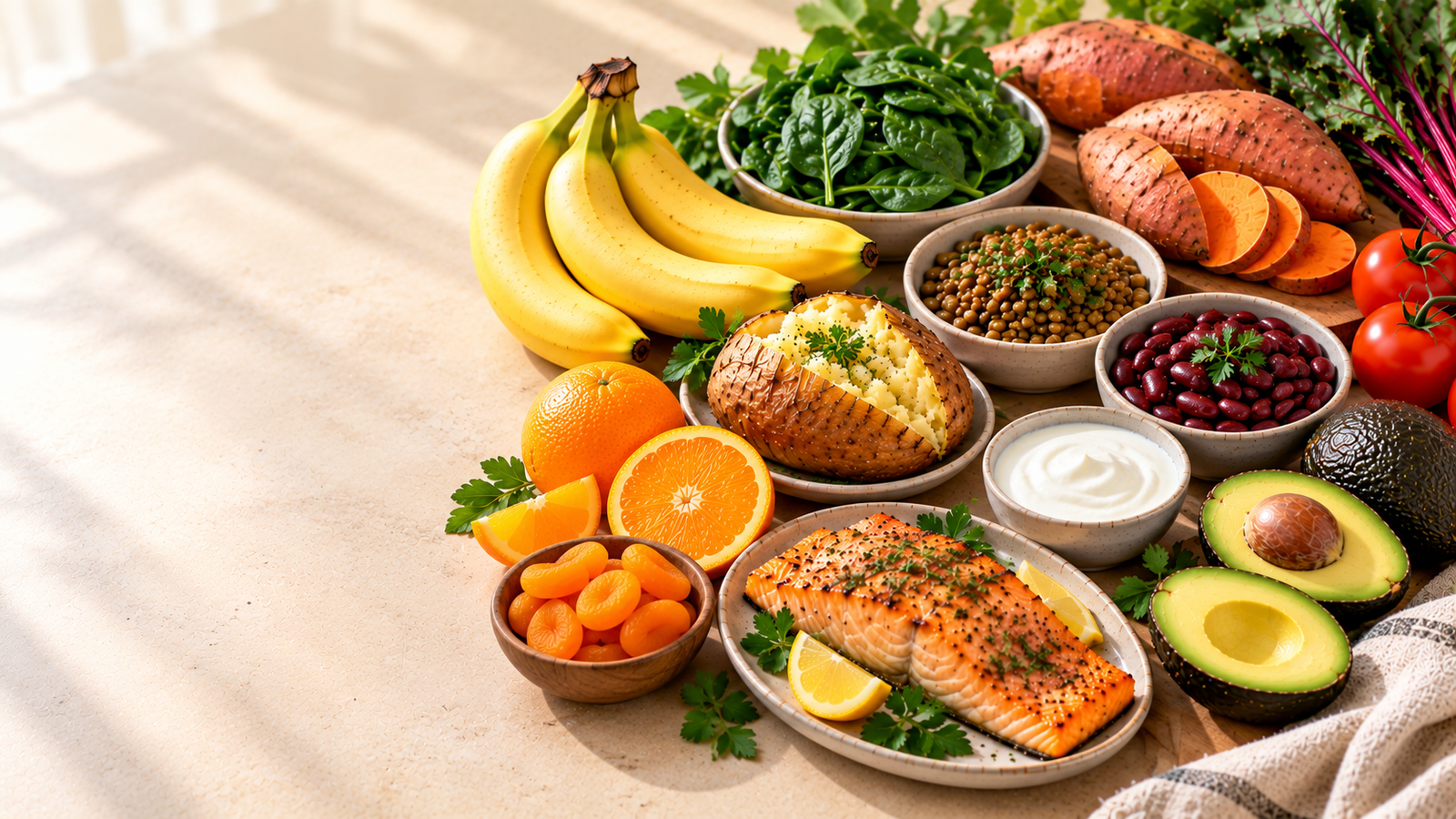
Foods high in potassium are an important part of a balanced diet because potassium supports normal muscle contraction, nerve signaling, fluid balance, and healthy heart function. Fortunately, you do not need expensive supplements or complicated meal plans to increase your intake. Many everyday foods, including potatoes, beans, leafy greens, fruit, yogurt, and fish, naturally provide this essential mineral.
Although bananas are among the best-known potassium-rich foods, they are far from the only option. Some beans, dried fruits, potatoes, and cooked vegetables can provide even more potassium per serving.
In this guide, you will discover the best natural sources of potassium, approximate potassium amounts in common foods, their health benefits, and practical ways to include them in your daily meals. You will also learn when increasing potassium intake may require medical guidance.
Most Important Points
- Potassium is an essential mineral and electrolyte that supports nerve function, muscle contraction, and fluid balance.
- Potatoes, lentils, beans, dried apricots, spinach, yogurt, bananas, and fish are useful natural sources.
- Eating a variety of fruits, vegetables, legumes, dairy products, and protein foods can help you obtain potassium.
- Adult adequate intake levels differ by sex and life stage. Current U.S. recommendations are 3,400 mg daily for adult men and 2,600 mg for adult women.
- People with chronic kidney disease or those taking certain medications may need to limit potassium rather than increase it.
- Whole foods are generally the best starting point for meeting everyday nutrient needs.
What Is Potassium?
Potassium is an essential mineral that also functions as an electrolyte. Electrolytes help regulate the movement of fluids and electrical signals throughout the body.
Your body relies on potassium for several important processes, including:
- Maintaining normal fluid balance inside cells.
- Supporting nerve transmission.
- Helping muscles contract and relax.
- Supporting normal heart rhythm.
- Working alongside sodium to regulate blood pressure.
Because the body cannot produce potassium, you must obtain it from food and beverages. Fortunately, it is naturally present in many plant-based and animal-based foods.
The National Institutes of Health Office of Dietary Supplements provides additional information about potassium’s functions, food sources, recommended intake, and safety considerations.
20 Foods High in Potassium: Natural Sources
The following foods are practical choices for people who want to include more potassium in a balanced diet. The amounts listed are approximate and depend on serving size, preparation, variety, and product type.
1. Potatoes
Potatoes are one of the most versatile natural sources of potassium. A medium baked potato can provide approximately 600–900 mg, depending on its size and whether you eat the skin.
Potatoes also supply carbohydrates, vitamin C, and other nutrients. Their nutritional value depends partly on how they are prepared.
How to eat them:
- Bake a potato and serve it with beans or plain yogurt.
- Add boiled potatoes to vegetable salads.
- Roast potato wedges with herbs and a small amount of olive oil.
- Include potatoes in homemade soups.
For a healthier option, choose baked, boiled, or roasted potatoes more often than deep-fried versions.
2. Sweet Potatoes
Sweet potatoes provide potassium along with fiber and beta-carotene, which the body can convert into vitamin A.
One medium sweet potato may provide roughly 400–550 mg of potassium, depending on its size and preparation.
How to eat them:
- Roast sweet potato cubes with herbs.
- Mash them as a side dish.
- Add cooked sweet potato to grain bowls.
- Serve them with lentils or grilled fish.
Sweet potatoes are a convenient choice for adding variety to meals while providing several nutrients.
3. White Beans
White beans are among the most potassium-rich legumes. One cup of cooked white beans can provide around 800–1,200 mg, depending on the variety.
They also contain plant protein, dietary fiber, folate, and other minerals.
How to eat them:
- Add cooked white beans to soups and stews.
- Mix them with tomatoes, onions, and herbs.
- Serve them with whole-grain bread.
- Add them to vegetable salads.
Beans are especially useful for people following vegetarian or plant-forward eating patterns.
4. Lentils
Lentils are affordable, nutritious, and widely used in South Asian cooking. One cup of cooked lentils provides approximately 700 mg of potassium.
They also supply plant protein, fiber, folate, and iron.
How to eat them:
- Prepare homemade daal with moderate amounts of salt.
- Add lentils to vegetable soup.
- Combine them with brown rice or whole-wheat roti.
- Use cooked lentils in salads and grain bowls.
Lentils are a practical everyday choice because they can contribute potassium and other nutrients without requiring expensive ingredients.
5. Kidney Beans
Kidney beans are another useful source of potassium. One cup of cooked or drained canned kidney beans may provide around 600–700 mg, although values vary by preparation.
They also provide fiber and plant protein, making them a filling addition to meals.
How to eat them:
- Prepare a homemade bean curry.
- Add them to vegetable chili.
- Mix them into rice dishes.
- Include them in salads with tomatoes and onions.
If you use canned beans, draining and rinsing them can help reduce sodium.
6. Spinach
Spinach contains potassium, folate, vitamin K, and other nutrients. Its potassium content depends on whether it is raw or cooked.
Two cups of raw spinach provide approximately 300–350 mg of potassium. A cooked serving can contain substantially more because cooking reduces the vegetable’s volume.
How to eat it:
- Add fresh spinach to salads.
- Stir it into omelets.
- Cook it with lentils or beans.
- Add it to soups and vegetable curries.
Including leafy greens regularly helps diversify your intake of vitamins, minerals, and fiber.
7. Beet Greens
Beet greens are the leafy tops of beetroot plants and can be an excellent source of potassium. One cup of cooked beet greens may provide around 1,000 mg or more, depending on preparation and serving size.
They also provide folate, vitamin K, and other micronutrients.
How to eat them:
- Sauté the leaves with garlic.
- Add chopped greens to vegetable soups.
- Mix them with lentils.
- Serve them as a cooked side dish.
If you have been advised to restrict potassium, ask your healthcare professional whether beet greens fit your dietary plan.
8. Avocados
Avocados provide potassium, fiber, and mostly unsaturated fats. Half a medium avocado can provide approximately 350–500 mg, depending on size.
Their creamy texture makes them easy to include in meals without relying on heavily processed spreads.
How to eat them:
- Spread mashed avocado on whole-grain toast.
- Add avocado slices to salads.
- Serve it with eggs.
- Mix it with tomatoes and lemon juice for a simple dip.
Avocados are nutrient-dense, so serving size can be adjusted to suit your energy needs.
9. Bananas
Bananas are a convenient and familiar source of potassium. One medium banana provides approximately 420 mg.
They also contain carbohydrates, fiber, and vitamin B6, making them an easy snack before or after physical activity.
How to eat them:
- Eat a banana as a snack.
- Slice it over oatmeal.
- Add it to a smoothie.
- Combine it with plain yogurt and nuts.
Although bananas are nutritious, you do not need to eat them every day to obtain potassium. Other fruits and vegetables can contribute just as effectively.
10. Dried Apricots
Dried apricots are concentrated sources of potassium because much of their water has been removed. Half a cup can provide approximately 700–800 mg.
They also supply fiber and carotenoids. However, dried fruit contains more calories per serving than fresh fruit and may contain added sugar.
How to eat them:
- Add a small portion to oatmeal.
- Mix chopped apricots into homemade trail mix.
- Combine them with unsalted nuts.
- Chop them into whole-grain cereal.
Check ingredient labels when purchasing dried fruit, especially if you want to avoid added sugar.
11. Raisins
Raisins are another convenient dried-fruit source of potassium. Half a cup may provide approximately 600 mg.
They are easy to store and can add natural sweetness to meals, but portion size matters because dried fruit is concentrated in calories and natural sugars.
How to eat them:
- Sprinkle raisins over oatmeal.
- Add them to homemade rice dishes.
- Mix them into yogurt.
- Combine a small serving with nuts.
Choose unsweetened raisins when possible.
12. Oranges and Orange Juice
Oranges contribute potassium, vitamin C, water, and other beneficial nutrients.
One medium orange provides approximately 200–250 mg of potassium, while one cup of orange juice may provide close to 500 mg.
How to eat them:
- Eat a whole orange as a snack.
- Add orange segments to fruit salad.
- Use orange pieces in a fresh salad.
- Choose a modest serving of 100% orange juice when appropriate.
Whole oranges provide fiber and are often more filling than juice, so whole fruit is generally a useful everyday choice.
13. Tomatoes
Tomatoes provide potassium, vitamin C, and lycopene, a naturally occurring plant compound.
One medium raw tomato contains approximately 250–300 mg of potassium. Tomato paste and some concentrated tomato products can contain substantially more potassium per serving.
How to eat them:
- Add fresh tomatoes to salads.
- Prepare homemade tomato curry.
- Include tomatoes in lentil soup.
- Use tomato sauce in homemade meals.
Packaged sauces can be high in sodium, so check labels if you are watching your salt intake.
14. Pumpkin
Pumpkin and certain winter squashes provide potassium, fiber, and carotenoids.
A cooked serving can contribute several hundred milligrams of potassium, depending on the variety and portion size.
How to eat it:
- Roast pumpkin with herbs.
- Make homemade pumpkin soup.
- Add cooked pumpkin to lentil dishes.
- Serve it as a vegetable side dish.
Pumpkin is an easy way to add variety to meals during its growing season.
15. Plain Yogurt
Yogurt provides potassium alongside protein and calcium. One cup can supply approximately 350–600 mg, depending on the variety and serving size.
Plain yogurt is especially versatile because it can be used in both sweet and savory dishes.
How to eat it:
- Combine yogurt with banana and oats.
- Serve plain yogurt alongside meals.
- Use it as a base for homemade dips.
- Add it to smoothies.
Choose plain yogurt with little or no added sugar if you want to keep added sugars low.
16. Milk
Milk is a useful source of potassium, calcium, protein, and vitamin B12. One cup of cow’s milk generally provides around 350–400 mg of potassium.
Fortified plant-based drinks can also provide potassium, but amounts vary widely between brands.
How to use it:
- Add milk to oatmeal.
- Drink it alongside a meal.
- Blend it into a smoothie.
- Use it in homemade porridge.
If you use a plant-based alternative, check the nutrition label rather than assuming its potassium content matches cow’s milk.
17. Salmon
Salmon provides potassium as well as protein and omega-3 fatty acids. A cooked 3-ounce serving generally provides around 300–400 mg, depending on the type and preparation.
How to eat it:
- Bake salmon with lemon and herbs.
- Serve it with potatoes and vegetables.
- Add cooked salmon to a grain bowl.
- Pair it with a leafy green salad.
Fish can contribute to a varied diet that includes several different sources of potassium.
18. Chicken
Chicken contains potassium and high-quality protein. A cooked 3-ounce serving of chicken breast provides approximately 300–350 mg.
How to eat it:
- Grill chicken with herbs.
- Add it to vegetable soup.
- Serve it with baked potatoes.
- Combine it with beans and vegetables.
Choose a variety of protein sources throughout the week rather than relying on one food alone.
19. Soybeans and Edamame
Soybeans and edamame provide potassium, plant protein, and other nutrients. Half a cup of cooked mature soybeans may supply around 400–450 mg.
Edamame can be a convenient snack or addition to a balanced meal.
How to eat them:
- Add edamame to salads.
- Serve cooked soybeans with vegetables.
- Blend soybeans into suitable dips.
- Include tofu or other soy foods in balanced meals.
Potassium amounts vary by soy product, so use the serving size on the nutrition label for packaged foods.
20. Fish Such as Tuna
Tuna is another source of potassium and protein. A 3-ounce serving of canned light tuna in water provides approximately 150 mg, while other fish varieties may provide more.
How to eat it:
- Mix tuna with vegetables for a salad.
- Serve it with whole-grain bread.
- Add it to a homemade sandwich.
- Pair it with cooked vegetables and a grain.
Choose fish according to your dietary needs and follow current guidance on fish consumption, especially during pregnancy.
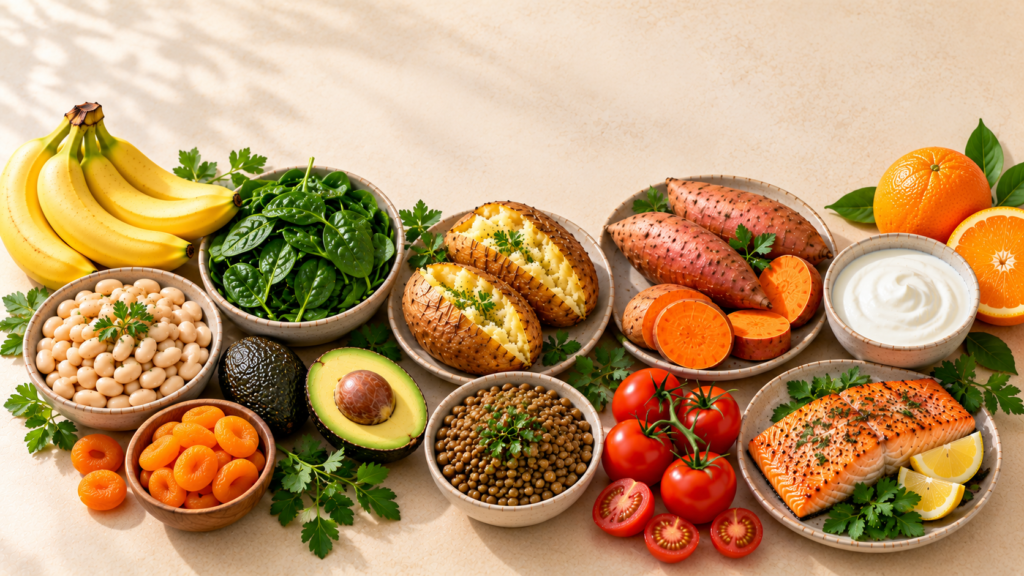
Potassium Foods Chart: Natural Sources at a Glance
Use this quick chart to compare common foods high in potassium. Amounts are approximate and refer to the listed serving sizes.
| Food | Serving size | Approximate potassium |
|---|---|---|
| White beans, cooked | 1 cup | 800–1,200 mg |
| Beet greens, cooked | 1 cup | Around 1,000 mg or more |
| Baked potato | 1 medium | 600–900 mg |
| Dried apricots | ½ cup | 700–800 mg |
| Lentils, cooked | 1 cup | Around 700 mg |
| Kidney beans, cooked | 1 cup | 600–700 mg |
| Raisins | ½ cup | Around 600 mg |
| Sweet potato | 1 medium | 400–550 mg |
| Avocado | ½ medium | 350–500 mg |
| Banana | 1 medium | Around 420 mg |
| Plain yogurt | 1 cup | 350–600 mg |
| Milk | 1 cup | 350–400 mg |
| Salmon, cooked | 3 oz | 300–400 mg |
| Chicken breast, cooked | 3 oz | 300–350 mg |
| Spinach, raw | 2 cups | 300–350 mg |
| Tomato | 1 medium | 250–300 mg |
| Orange | 1 medium | 200–250 mg |
Important: These figures are estimates rather than laboratory values for every product. Actual potassium content can change with food variety, serving size, cooking method, and whether the food is canned, fresh, or frozen.
For more precise nutrient values, consult USDA FoodData Central.
How Much Potassium Do You Need Per Day?
Your daily potassium needs depend on your age, sex, pregnancy status, and other individual factors.
The U.S. National Institutes of Health lists the following adequate intake levels for potassium.
| Age or life stage | Daily adequate intake |
|---|---|
| Children 1–3 years | 2,000 mg |
| Children 4–8 years | 2,300 mg |
| Boys 9–13 years | 2,500 mg |
| Girls 9–13 years | 2,300 mg |
| Boys 14–18 years | 3,000 mg |
| Girls 14–18 years | 2,300 mg |
| Adult men 19 years and older | 3,400 mg |
| Adult women 19 years and older | 2,600 mg |
| Pregnant adults | 2,900 mg |
| Breastfeeding adults | 2,800 mg |
These are U.S. adequate intake values, not universal prescriptions. Requirements may differ under local dietary guidelines and individual medical circumstances.
Adequate intake is a reference level for generally healthy people; it does not mean that everyone must track every milligram of potassium.
The goal for most healthy adults is to build a varied eating pattern with fruits, vegetables, legumes, whole grains, and suitable protein foods.
Health Benefits of Eating Foods High in Potassium
Potassium supports several essential functions. Eating a balanced diet that supplies enough potassium can help maintain normal body function.
1. Supports Healthy Blood Pressure
Potassium helps balance the effects of sodium in the body. Adequate intake may support healthy blood pressure, particularly when it is part of an overall eating pattern that emphasizes fruits, vegetables, legumes, and lower-sodium foods.
However, potassium-rich foods are not a substitute for prescribed blood pressure medication or professional medical advice.
2. Supports Normal Muscle Function
Muscles depend on potassium and other electrolytes to contract and relax properly.
A healthy intake helps maintain normal muscle function. Severe potassium disturbances can cause muscle weakness, cramps, and other symptoms, but muscle cramps alone do not prove that you have a potassium deficiency.
3. Helps Maintain Fluid Balance
Potassium plays an important role in regulating fluid balance inside cells. It works with sodium and other electrolytes to help the body maintain its normal internal environment.
Adequate intake supports these processes, but simply eating more potassium does not automatically correct dehydration or electrolyte disturbances.
4. Supports Nerve Signaling
Nerves rely on electrical signals to communicate with the brain, muscles, and other parts of the body. Potassium is essential to the electrical gradients that make these signals possible.
Getting enough potassium from food helps support normal nerve function.
5. Contributes to a Heart-Healthy Eating Pattern
Potassium is necessary for normal heart muscle activity and electrical signaling.
Including a variety of potassium-containing foods in a balanced diet can support overall cardiovascular health. Extremely high or low blood potassium levels, however, can be dangerous and may affect heart rhythm.
6. Supports Overall Nutrient Intake
Many foods high in potassium also supply other important nutrients.
For example:
- Beans provide fiber, protein, and folate.
- Potatoes provide carbohydrates and vitamin C.
- Leafy greens supply folate and vitamin K.
- Yogurt provides protein and calcium.
- Fruit contributes fiber, vitamins, and plant compounds.
Eating a variety of these foods supports a more complete dietary pattern than focusing on a single mineral.

How to Add More Potassium to Your Daily Diet
You do not need to eat all 20 foods in this guide. Choose a few that fit your taste, budget, cooking habits, and dietary needs.
Eat Fruit With Breakfast
Add a banana to oatmeal, serve an orange alongside breakfast, or mix a small portion of dried apricots into unsweetened cereal.
Pairing fruit with yogurt or another suitable protein source can make breakfast more satisfying.
Include Beans or Lentils at Lunch
Beans and lentils are affordable sources of potassium, fiber, and plant protein.
Try lentil soup, homemade daal, kidney bean salad, or white beans with vegetables. These foods are easy to incorporate into meals made with familiar ingredients.
Add Vegetables to Main Meals
Include spinach, tomatoes, potatoes, pumpkin, or other vegetables at lunch and dinner.
A simple approach is to add one vegetable to a meal you already enjoy instead of changing your entire diet at once.
Choose Nutritious Snacks
Depending on your individual needs, fruit, plain yogurt, or a small serving of dried fruit can be convenient snack options.
If you have been prescribed a potassium-restricted diet, follow your clinician’s portion and food recommendations instead.
Vary Your Protein Sources
Beans, lentils, yogurt, chicken, and fish can all contribute potassium. Rotate different sources through the week to obtain a broader range of nutrients.
Prepare More Meals at Home
Home cooking makes it easier to control salt, sauces, and portion sizes. Use herbs, spices, garlic, lemon, and other flavorings to create tasty meals without depending on large amounts of salt.
Remember that potassium-containing salt substitutes are not suitable for everyone.
Sample One-Day Meal Plan Featuring Natural Potassium Sources
This sample meal plan demonstrates how potassium-rich foods can fit into an ordinary day. It is not a medically prescribed high-potassium diet, and the potassium total will depend on portions and ingredients.
| Meal | Example | Potassium sources |
|---|---|---|
| Breakfast | Oatmeal with banana and plain yogurt | Banana, yogurt |
| Morning snack | One orange | Orange |
| Lunch | Lentil daal, whole-wheat roti, and cooked spinach | Lentils, spinach |
| Afternoon snack | A small serving of dried apricots | Dried apricots |
| Dinner | Baked potato with salmon or beans and vegetables | Potato, salmon or beans, vegetables |
You can adapt the meal plan to your cultural preferences, budget, allergies, and energy needs. For example, a homemade bean curry with vegetables can replace salmon, and sweet potato can replace a baked white potato.
People with kidney disease or a medically prescribed potassium restriction should not follow this example without checking whether the foods and portions are appropriate for them.

Natural Sources of Potassium vs. Supplements
For most healthy people, food is the preferred starting point for meeting potassium needs.
| Natural food sources | Potassium supplements |
|---|---|
| Provide potassium alongside other nutrients | Primarily intended to provide supplemental potassium |
| Include fruits, vegetables, legumes, dairy, and protein foods | Available in different formulations and doses |
| Can support a varied, balanced eating pattern | May be appropriate in specific medical circumstances |
| Allow potassium intake to be spread across meals | Can cause problems if used inappropriately |
| Generally suitable for healthy people with normal kidney function | Require particular care in people at risk of high potassium levels |
Potassium supplements may be prescribed or recommended for particular medical reasons. Do not start high-dose supplements or use potassium-based salt substitutes to treat suspected deficiency without professional guidance.
Food alone may not correct a clinically significant deficiency, which requires appropriate assessment and treatment.
Who Should Be Careful With High-Potassium Foods?
Although potassium is essential, increasing potassium intake is not safe for everyone.
People With Chronic Kidney Disease
Healthy kidneys help remove excess potassium through urine. When kidney function is impaired, potassium can build up in the blood.
Depending on kidney function and laboratory results, some people with chronic kidney disease may need to limit certain foods or adjust portion sizes. Others may have different nutritional needs. Do not assume that everyone with kidney disease needs the same potassium restriction.
The National Institute of Diabetes and Digestive and Kidney Diseases explains how dietary choices can help people with chronic kidney disease manage potassium levels.
People Taking Certain Medications
Some medications can reduce the amount of potassium removed by the kidneys. Examples include ACE inhibitors, angiotensin receptor blockers, and potassium-sparing diuretics.
People taking these medicines may need blood tests or individualized dietary advice, particularly if they also have kidney disease.
Do not stop or change a prescribed medicine without speaking to your healthcare professional.
People Using Potassium-Based Salt Substitutes
Some salt substitutes replace sodium chloride with potassium chloride. Although these products may be useful for certain people, they can provide substantial amounts of potassium.
If you have kidney disease or take medicines that increase potassium levels, consult your clinician before using these products.
People With a History of Abnormal Potassium Levels
Both low and high blood potassium can be medically important. If you have been diagnosed with an electrolyte disorder, follow your clinician’s recommendations rather than trying to correct the problem by changing foods on your own.
Severe weakness, palpitations, fainting, or other concerning symptoms warrant prompt medical assessment.
Frequently Asked Questions About Foods High in Potassium
1. What foods are highest in potassium?
White beans, certain cooked leafy greens, potatoes, dried apricots, lentils, and other legumes can provide substantial amounts of potassium. The exact amount depends on the food variety and serving size.
2. Is a banana the best source of potassium?
No. A medium banana provides approximately 420 mg of potassium, but a serving of white beans, lentils, dried apricots, or a baked potato may provide more. Eating a variety of foods is generally better than relying on a single source.
3. Which vegetables are high in potassium?
Potatoes, sweet potatoes, spinach, beet greens, tomatoes, and certain winter squashes are useful vegetable sources. Cooked and raw serving sizes differ, so compare foods using equivalent portions.
4. Which fruits contain potassium?
Bananas, oranges, avocados, dried apricots, raisins, and prunes all provide potassium. Other fruits also contribute, even when their amounts are lower.
5. Are beans and lentils good sources of potassium?
Yes. Lentils, white beans, kidney beans, and soybeans can provide substantial amounts of potassium. They also supply fiber and plant protein, making them useful components of many balanced meals.
6. How can I increase potassium naturally?
Include suitable portions of fruits, vegetables, legumes, potatoes, dairy products, and other potassium-containing foods throughout the day. Choose foods you enjoy and can afford, and gradually introduce more variety.
If a clinician has told you to restrict potassium, follow that advice instead of trying to increase your intake.
7. Can eating potassium-rich foods lower blood pressure?
Adequate potassium intake may help support healthy blood pressure, especially when combined with an overall eating pattern rich in fruits and vegetables and lower in sodium. It does not replace prescribed treatment or regular blood pressure monitoring.
8. Can I get enough potassium without supplements?
Many healthy people can obtain potassium from a varied diet that includes vegetables, fruits, legumes, dairy products, and other suitable foods. Whether you need supplementation depends on your individual circumstances and medical assessment.
9. What are the signs of low potassium?
Low blood potassium can cause weakness, fatigue, constipation, and muscle symptoms. More severe deficiency can affect heart rhythm and other body functions. These symptoms are not specific to potassium deficiency, so diagnosis requires appropriate medical evaluation.
10. Can too much potassium be harmful?
Yes. High blood potassium, known as hyperkalemia, can be dangerous and may affect heart rhythm. The risk is greater in people with impaired kidney function or certain medication use. Seek medical advice before using potassium supplements or potassium-based salt substitutes if you may be at risk.
11. Are potassium-rich foods safe for people with kidney disease?
Not always. Some people with kidney disease need to limit potassium, while others may have different requirements. Food choices should be based on kidney function, blood potassium levels, medications, and advice from the healthcare team.
12. What is the easiest way to add potassium to breakfast?
A banana with oatmeal, plain yogurt with fruit, or a breakfast that includes suitable vegetables can add potassium. Choose portions that fit your nutritional needs and any medical restrictions.
Conclusion
Foods high in potassium are easy to find in everyday meals. Potatoes, lentils, white beans, spinach, dried apricots, bananas, yogurt, and several other foods provide this essential mineral alongside valuable nutrients.
The best approach is to eat a varied, balanced diet rather than relying on one food or taking supplements unnecessarily. Include suitable fruits, vegetables, legumes, and protein foods across your meals, and use portion sizes that match your individual needs.
Remember that potassium is not something everyone should increase indiscriminately. If you have kidney disease, abnormal potassium levels, or take medicines that affect potassium, seek personalized medical advice before making major dietary changes.
Start with one practical change today, such as adding lentils to lunch, including a suitable vegetable at dinner, or choosing fruit as a snack. Small, consistent choices can help you build a more nutritious eating pattern.
3 thoughts on “Foods High in Potassium: Natural Sources”