

Potassium is an essential mineral and electrolyte that helps your body maintain fluid balance, support normal muscle contraction, and transmit nerve signals. It also plays an important role in maintaining a normal heartbeat and healthy blood pressure.
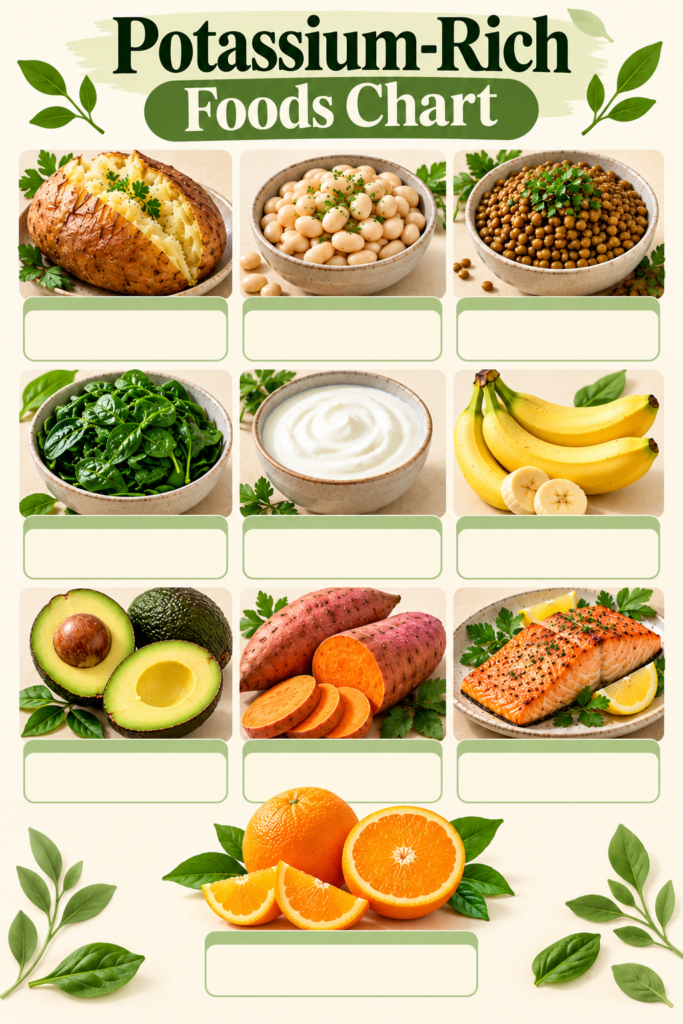
Fortunately, you can obtain potassium from many everyday foods. Potatoes, beans, lentils, leafy greens, yogurt, fruit, fish, and several other foods can help you meet your needs without relying on supplements.
This potassium rich foods guide explains the best dietary sources, compares approximate potassium amounts, and offers practical ways to include more potassium in balanced meals.
Key Takeaways
- Potatoes, beans, lentils, leafy greens, yogurt, and some fish are useful potassium sources.
- A varied diet is generally more practical than relying on one food.
- Potassium content depends on serving size, variety, preparation, and cooking method.
- Potassium supports fluid balance, nerve signaling, muscle function, and normal blood pressure regulation.
- People with kidney disease or those taking certain medicines may need individualized potassium guidance.
What Is Potassium, and Why Does Your Body Need It?
Potassium is an electrolyte found in body fluids and cells. It helps regulate the movement of fluid across cell membranes and supports normal electrical activity in nerves and muscles.
1. Supports normal muscle function
Your muscles need potassium, along with other electrolytes, to contract and relax normally. A balanced intake helps maintain the processes involved in muscle function.
2. Helps regulate blood pressure
Potassium helps counter some of the effects of sodium on blood pressure. Eating more potassium-rich whole foods as part of a balanced diet may support healthy blood pressure, although it does not replace prescribed treatment.
3. Maintains fluid and electrolyte balance
Potassium works with sodium and other electrolytes to maintain normal fluid distribution inside and outside cells.
4. Supports nerve signaling
Nerves rely on carefully regulated electrolyte concentrations to send electrical signals throughout the body.
Learn more about potassium and its role in health from the NIH Office of Dietary Supplements.
20 Potassium-Rich Foods to Add to Your Diet
The following values are approximate and are intended for general food planning. Actual amounts vary by food variety, brand, serving size, and preparation. For packaged foods, check the nutrition label; for precise values, consult a food composition database.
| Food | Example serving | Approximate potassium |
|---|---|---|
| 1. Baked potato with skin | 1 medium | 900 mg |
| 2. Cooked white beans | 1/2 cup | 500–600 mg |
| 3. Cooked lentils | 1/2 cup | 350–400 mg |
| 4. Cooked spinach | 1/2 cup | 400 mg |
| 5. Plain yogurt | 1 cup | 350–600 mg |
| 6. Banana | 1 medium | 400–450 mg |
| 7. Avocado | 1/2 medium | 350–500 mg |
| 8. Cooked sweet potato | 1 medium | 400–550 mg |
| 9. Cooked salmon | 3 oz (85 g) | 350–450 mg |
| 10. Cooked kidney beans | 1/2 cup | 300–400 mg |
| 11. Cooked chickpeas | 1/2 cup | 200–300 mg |
| 12. Cooked broccoli | 1/2 cup | 200–250 mg |
| 13. Orange | 1 medium | 200–250 mg |
| 14. Orange juice | 1/2 cup | 200–250 mg |
| 15. Cooked tomatoes | 1/2 cup | 200–300 mg |
| 16. Milk | 1 cup | 300–400 mg |
| 17. Cooked mushrooms | 1/2 cup | 200–300 mg |
| 18. Cooked beet greens | 1/2 cup | 600–700 mg |
| 19. Dried apricots | 1/4 cup | 300–400 mg |
| 20. Coconut water | 1 cup | 400–600 mg |
These are rounded estimates, not laboratory measurements or universal values. Serving sizes and products differ, and cooking can change the amount retained in a serving.
1. Potatoes
Potatoes are among the most practical potassium-rich foods. A medium baked potato with its skin can provide a substantial amount of potassium.
How to eat them: Bake or roast potatoes, add herbs and a little olive oil, or serve them with beans and vegetables. For a more balanced meal, include a protein source as well.
2. Beans
White beans, kidney beans, and other varieties provide potassium, fiber, and plant protein. They are affordable ingredients for soups, salads, curries, and stews.
How to eat them: Add beans to vegetable soup, prepare a bean salad, or combine them with whole grains.
3. Lentils
Lentils provide potassium along with fiber, protein, folate, and iron. They are particularly useful in vegetarian and vegan eating patterns.
How to eat them: Make lentil soup, dal, or a lentil-and-vegetable bowl.
4. Spinach and Other Leafy Greens
Cooked spinach is a useful source of potassium. Beet greens and Swiss chard can also contribute meaningful amounts.
How to eat them: Stir leafy greens into omelets, soups, curries, or grain bowls. Cooking reduces their volume, making it easier to eat a larger amount.
5. Yogurt and Milk
Dairy foods provide potassium along with protein and calcium. Plain yogurt is versatile for breakfast, snacks, and sauces.
How to eat them: Pair plain yogurt with fruit and oats, or use it in a savory dressing. Choose unsweetened options when appropriate.
6. Bananas
Bananas are convenient and contain potassium, but they are not the only or necessarily the richest source. Potatoes, beans, and some leafy vegetables can provide more potassium per serving.
How to eat them: Add sliced banana to oatmeal, yogurt, or a smoothie.
7. Avocados
Avocados provide potassium, fiber, and unsaturated fats.
How to eat them: Spread avocado on whole-grain toast, add it to salads, or serve it with eggs and vegetables.
8. Sweet Potatoes
Sweet potatoes provide potassium and beta-carotene, which the body can convert into vitamin A.
How to eat them: Roast sweet-potato wedges or bake one and serve it with beans or fish.
9. Fish
Salmon and several other fish provide potassium alongside protein. Some types of fish also supply omega-3 fatty acids.
How to eat them: Bake or grill fish and serve it with potatoes and vegetables.
10. Fruit, Tomatoes, and Dried Apricots
Oranges, dried apricots, and tomatoes can contribute potassium. Dried fruit is more concentrated than fresh fruit by weight, so portion size matters.
How to eat them: Add fruit to breakfast, use tomatoes in soups and sauces, or include a small portion of dried apricots as a snack.

Potassium-Rich Foods Chart: Which Foods Are Most Useful?
The best choices depend on your dietary preferences, budget, cooking habits, and health needs.
| Your goal | Foods to consider | Easy meal idea |
|---|---|---|
| Affordable everyday meals | Potatoes, lentils, beans | Lentil curry with potato |
| More plant-based protein | Lentils, white beans, chickpeas | Bean and vegetable bowl |
| Convenient breakfast | Yogurt, banana, milk, oats | Yogurt with banana and oats |
| More leafy greens | Spinach, beet greens, Swiss chard | Greens stirred into dal |
| Protein-rich main meals | Salmon, yogurt, beans | Salmon with baked potato |
| Quick snacks | Banana, orange, yogurt | Fruit with plain yogurt |
No single food is required to meet potassium needs. Variety across the week is more useful than trying to eat one “superfood” every day.
How Much Potassium Do You Need Per Day?
Potassium needs vary by age, sex, pregnancy status, and the dietary reference system being used. The US National Academies’ adult adequate intake values are commonly listed as follows:
| Group | Adequate intake per day |
|---|---|
| Adult men | 3,400 mg |
| Adult women | 2,600 mg |
| Pregnancy, adults | 2,900 mg |
| Lactation, adults | 2,800 mg |
These are adequate intake (AI) values, not individualized prescriptions. Other countries may use different reference values. Children and teenagers have age-specific recommendations.
Review potassium intake guidance from the NIH Office of Dietary Supplements.
How to Build a Potassium-Rich Plate
A simple meal-building approach can help you include more potassium without counting every milligram:
- Half the plate: Vegetables, such as spinach, broccoli, or tomatoes.
- One quarter: Protein, such as fish, eggs, beans, lentils, or another suitable choice.
- One quarter: A grain or starchy food, such as rice, whole-grain bread, or potato.
- Optional side: Fruit, milk, or yogurt, depending on your needs and preferences.
This is a flexible guide, not a strict formula. Adapt portions to your appetite, cultural food preferences, and medical needs.
Easy Ways to Eat More Potassium-Rich Foods
Breakfast
- Eat plain yogurt with banana and oats.
- Have eggs with spinach and whole-grain toast.
- Pair a balanced breakfast with milk if dairy fits your diet.
Lunch
- Make a lentil or bean soup with tomatoes and vegetables.
- Add spinach, beans, or avocado to a grain bowl.
- Serve a baked potato with a protein-rich filling.
Dinner
- Serve fish with sweet potato and cooked greens.
- Prepare lentil curry with vegetables.
- Add white beans to a tomato-based stew.
Snacks
- Choose a banana or orange.
- Have plain yogurt.
- Combine fruit with a suitable portion of unsalted nuts if desired.
magnesium-rich foods, healthy meal planning
Does Cooking Affect Potassium Content?
Yes. Potassium can move into cooking water, particularly when vegetables are boiled. If the cooking liquid is discarded, some potassium may be lost.
To retain more of it when appropriate:
- Steam or roast vegetables instead of boiling them in excess water.
- Use vegetable cooking liquid in soups or stews.
- Avoid overcooking vegetables.
- Drain and rinse canned beans when you want to reduce sodium; remember that preparation may also affect nutrient content.
People following a medically prescribed low-potassium diet may receive different advice, including specific soaking or boiling methods. Follow your clinician’s or dietitian’s instructions rather than general food-retention tips.
Potassium From Food vs. Supplements
For most people, food is the practical starting point for meeting nutrient needs. Supplements and potassium-based salt substitutes are not automatically safe for everyone.
| Feature | Potassium-rich foods | Potassium supplements |
|---|---|---|
| Additional nutrients | Often provide fiber, protein, vitamins, or other minerals | Usually provide potassium in a concentrated form |
| Typical use | Everyday balanced eating | Used when medically indicated or advised |
| Safety considerations | Still require individual planning for certain kidney conditions | Can raise blood potassium, especially with certain conditions or medicines |
| Best approach | Include varied foods as appropriate | Use under qualified medical guidance when needed |
Potassium supplements are not a universal solution for fatigue, cramps, or blood pressure. These symptoms can have many causes, and unnecessary supplementation can be harmful.
Who Should Be Careful With High-Potassium Foods?
Potassium-rich foods are beneficial for many people, but some people need individualized guidance.
Consult a qualified healthcare professional if you have:
- Chronic kidney disease or reduced kidney function.
- A history of high blood potassium (hyperkalemia).
- A condition that affects potassium regulation.
- Medicines that can raise potassium, including some ACE inhibitors, ARBs, or potassium-sparing diuretics.
- A prescribed potassium restriction.
Do not stop prescribed medicines or begin potassium supplements without medical advice. If you have a medical condition, your personal potassium target may differ from general recommendations.

Frequently Asked Questions
1. What are the best potassium-rich foods?
Potatoes, beans, lentils, cooked leafy greens, yogurt, sweet potatoes, and some fish are useful potassium sources. The best choices depend on portion size, preferences, and individual health needs.
2. Which fruit is high in potassium?
Bananas, oranges, and dried apricots contain potassium. Avocado is also a useful source, although botanically it is a fruit commonly used in savory meals.
3. Are bananas the richest source of potassium?
No. Bananas are convenient, but baked potatoes, certain beans, and some cooked leafy greens can provide more potassium per serving.
4. What vegetables are high in potassium?
Potatoes, sweet potatoes, spinach, beet greens, Swiss chard, tomatoes, and broccoli can contribute potassium.
5. Can potassium-rich foods help with blood pressure?
A diet that includes potassium-rich foods may support healthy blood pressure, especially when it also emphasizes vegetables, fruit, legumes, and lower-sodium choices. It does not replace medication or professional care.
6. Can I get enough potassium without supplements?
Many people can meet their needs through a varied diet. Whether you need a supplement depends on your health, diet, medicines, and clinician’s assessment.
7. Are beans good sources of potassium?
Yes. White beans, kidney beans, lentils, and chickpeas provide potassium along with fiber and plant protein.
8. Is coconut water high in potassium?
Coconut water can provide potassium, but its amount varies by product and serving. Check the nutrition label, especially if you need to limit potassium or sugars.
Conclusion
Adding potassium rich foods to your diet does not require an expensive meal plan or a single “perfect” food. Potatoes, beans, lentils, leafy greens, yogurt, fruit, and fish offer practical options for a wide range of meals.
Start with small changes: add beans to lunch, include leafy greens at dinner, or pair fruit with yogurt at breakfast. Choose a varied diet that fits your preferences and health needs. If you have kidney disease or take medicines that affect potassium, ask your healthcare professional which foods and portions are appropriate for you.
2 thoughts on “Potassium Rich Foods: Complete Food Guide”