
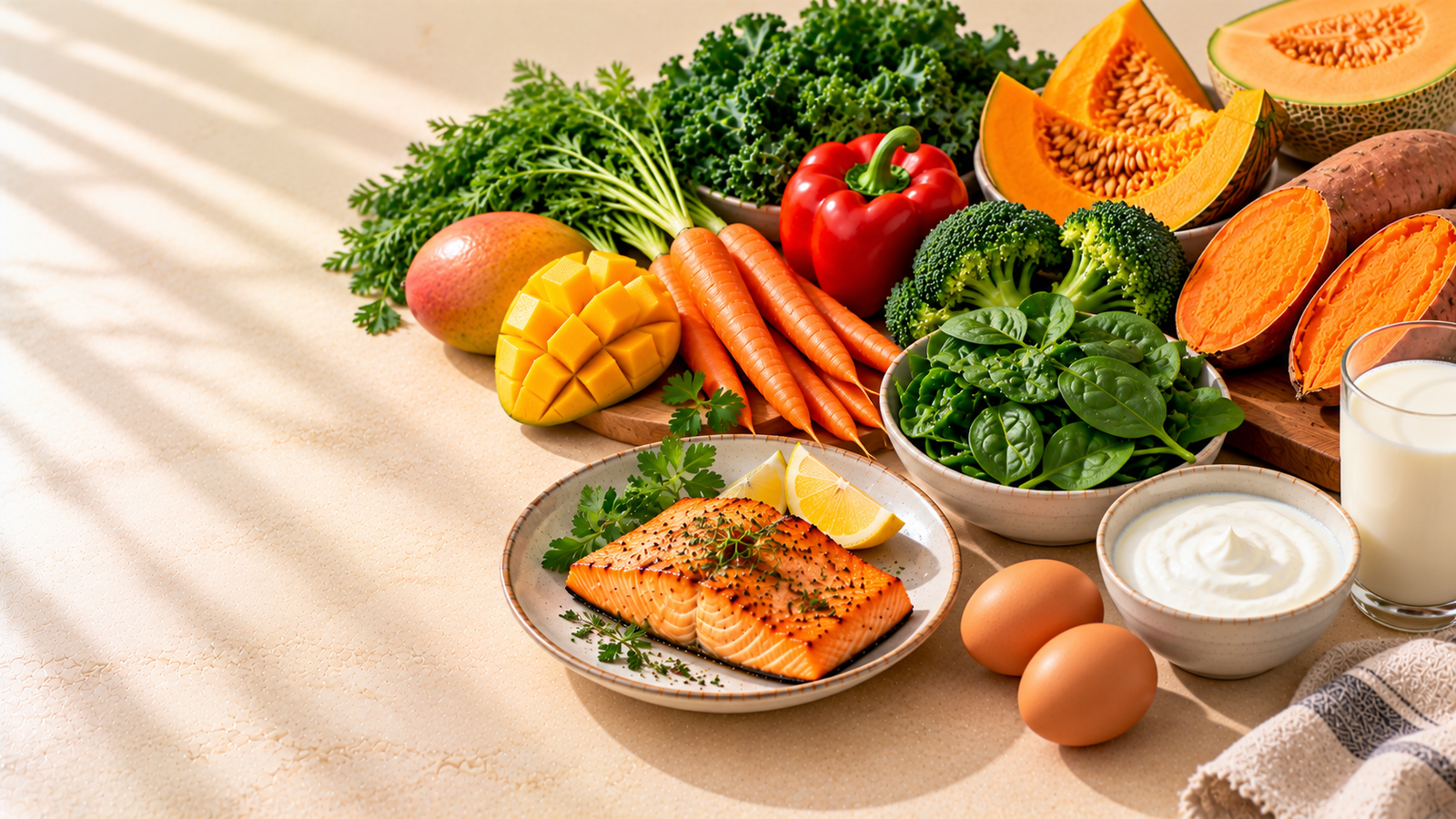
Vitamin A rich foods include colorful vegetables, certain fruits, eggs, dairy products, fish, and organ meats. Vitamin A is an essential nutrient that supports normal vision, immune function, growth, and the maintenance of healthy tissues.
Some foods provide preformed vitamin A, which the body can use directly. Others contain carotenoids, such as beta-carotene, that the body can convert into vitamin A. Understanding these sources can help you make balanced food choices without relying on supplements or a single “superfood.”
Key Takeaways
- Sweet potatoes, carrots, pumpkin, and dark leafy greens are excellent plant sources of provitamin A carotenoids.
- Eggs, dairy products, and some fish provide preformed vitamin A.
- Liver contains exceptionally high amounts of vitamin A and should not be eaten frequently or during pregnancy.
- Eating some dietary fat with vegetables can help your body absorb carotenoids.
- Vitamin A supports normal vision, immunity, growth, and tissue maintenance.
- A varied diet is generally the best starting point for meeting your vitamin A needs.
What Is Vitamin A?
Vitamin A is a fat-soluble vitamin involved in several essential processes in the body. It occurs in two main dietary forms.
Preformed Vitamin A
Preformed vitamin A, including retinol and retinyl esters, is found in animal-derived foods such as liver, eggs, fish, and dairy products. The body can use it without first converting it from a carotenoid.
Provitamin A Carotenoids
Provitamin A carotenoids occur in plant foods. Beta-carotene is a familiar example found in carrots, sweet potatoes, pumpkin, and dark leafy vegetables. The body converts some of these carotenoids into vitamin A, although the amount converted varies among people and foods.
Both forms can contribute to vitamin A intake. Including a range of plant and animal foods—or appropriate fortified alternatives—makes it easier to build a varied diet.
20 Best Vitamin A Rich Foods
The following vitamin A food list includes vegetables, fruits, animal foods, and fortified products. The amounts are approximate values from the U.S. National Institutes of Health (NIH) food-source table; actual amounts can vary by preparation and product.
Health Professional Fact Sheet
| # | Food | Serving size | Vitamin A (mcg RAE) |
|---|---|---|---|
| 1 | Beef liver, pan-fried | 3 oz | 6,582 |
| 2 | Sweet potato, baked with skin | 1 whole | 1,403 |
| 3 | Spinach, boiled | ½ cup | 573 |
| 4 | Pumpkin pie | 1 piece | 488 |
| 5 | Carrots, raw | ½ cup | 459 |
| 6 | Pickled Atlantic herring | 3 oz | 219 |
| 7 | Fortified skim milk | 1 cup | 149 |
| 8 | Cantaloupe | ½ cup | 135 |
| 9 | Part-skim ricotta cheese | ½ cup | 133 |
| 10 | Red sweet pepper | ½ cup | 117 |
| 11 | Mango | 1 whole | 112 |
| 12 | Fortified breakfast cereal | 1 serving | 90 |
| 13 | Hard-boiled egg | 1 large | 75 |
| 14 | Black-eyed peas, boiled | 1 cup | 66 |
| 15 | Dried apricots | 5 pieces | 63 |
| 16 | Broccoli, boiled | ½ cup | 60 |
| 17 | Sockeye salmon, cooked | 3 oz | 59 |
| 18 | Canned tomato juice | ¾ cup | 42 |
| 19 | Plain low-fat yogurt | 1 cup | 32 |
| 20 | Light tuna, canned in oil and drained | 3 oz | 20 |
Important: Beef liver contains an exceptionally high amount of preformed vitamin A. People who are pregnant or might become pregnant should avoid liver and liver products. Pumpkin pie is included in the source data, but plain pumpkin is also a useful choice without the added sugar typical of many desserts.
1. Sweet Potatoes
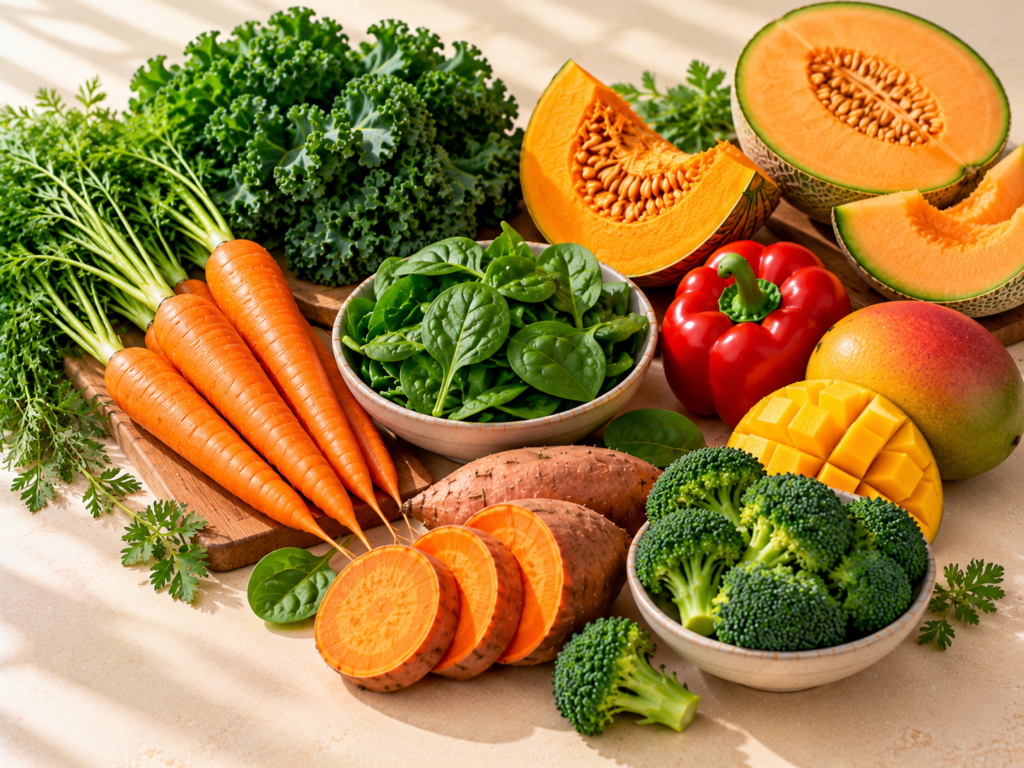
Sweet potatoes are one of the most practical plant-based sources of vitamin A. Their orange flesh contains beta-carotene, which the body converts into vitamin A.
How to eat them: Bake, steam, or roast sweet potatoes. Serve them with lentils, beans, eggs, fish, or another protein source for a balanced meal.
2. Carrots
Carrots are rich in beta-carotene and easy to include in everyday meals. Both raw and cooked carrots contribute to vitamin A intake.
How to eat them: Add grated carrots to salads, roast them with herbs, or include them in soups, curries, and vegetable dishes.
3. Spinach
Spinach supplies provitamin A carotenoids alongside folate, vitamin K, and other nutrients. Cooking reduces its volume, making a substantial serving easier to eat.
How to eat it: Add cooked spinach to omelets, lentil dishes, soups, or vegetable curries.
4. Pumpkin
Pumpkin contains carotenoids that the body can convert into vitamin A. Plain cooked pumpkin can be a versatile addition to both savory and sweet recipes.
How to eat it: Roast pumpkin cubes, blend them into soup, or add cooked pumpkin to stews.
5. Dark Leafy Greens
Kale, collard greens, and similar vegetables contain carotenoids even though their green color masks the orange pigments.
How to eat them: Steam or sauté greens and serve them with beans, whole grains, or a source of protein.
6. Red Bell Peppers
Red bell peppers contain provitamin A carotenoids and vitamin C. Their bright color and mild sweetness make them an easy addition to a varied diet.
How to eat them: Add sliced peppers to salads, omelets, stir-fries, or roasted vegetable trays.
7. Mangoes
Mangoes provide carotenoids, including beta-carotene. They offer a naturally sweet way to add fruit to your daily meals.
How to eat them: Add fresh mango to oatmeal, plain yogurt, or fruit bowls. Whole fruit is usually more filling than juice.
8. Cantaloupe
Cantaloupe contains provitamin A carotenoids and provides water and other nutrients.
How to eat it: Serve chilled melon at breakfast or combine it with other fresh fruit for a simple snack.
9. Apricots
Fresh and dried apricots can contribute carotenoids to your diet. Dried apricots are convenient, but they are more concentrated in calories and natural sugars by weight.
How to eat them: Add a small portion of dried apricots to oatmeal or choose fresh apricots when available.
10. Broccoli
Broccoli contributes some vitamin A, along with fiber, vitamin C, and other nutrients. It is not as concentrated a source as sweet potatoes or carrots, but it adds variety to meals.
How to eat it: Steam, roast, or stir-fry broccoli and serve it with beans, fish, chicken, or tofu.
Animal Foods and Fortified Products That Contain Vitamin A
Animal foods supply preformed vitamin A, while fortified foods have vitamin A added during manufacturing. Amounts vary, so nutrition labels are useful when comparing products.
11. Beef Liver
Beef liver is exceptionally rich in preformed vitamin A. A small serving can provide far more than an adult needs for a day.
Do not treat liver as an everyday food. Excessive preformed vitamin A can be harmful, and liver and liver products should be avoided during pregnancy or when pregnancy is possible.
12. Eggs
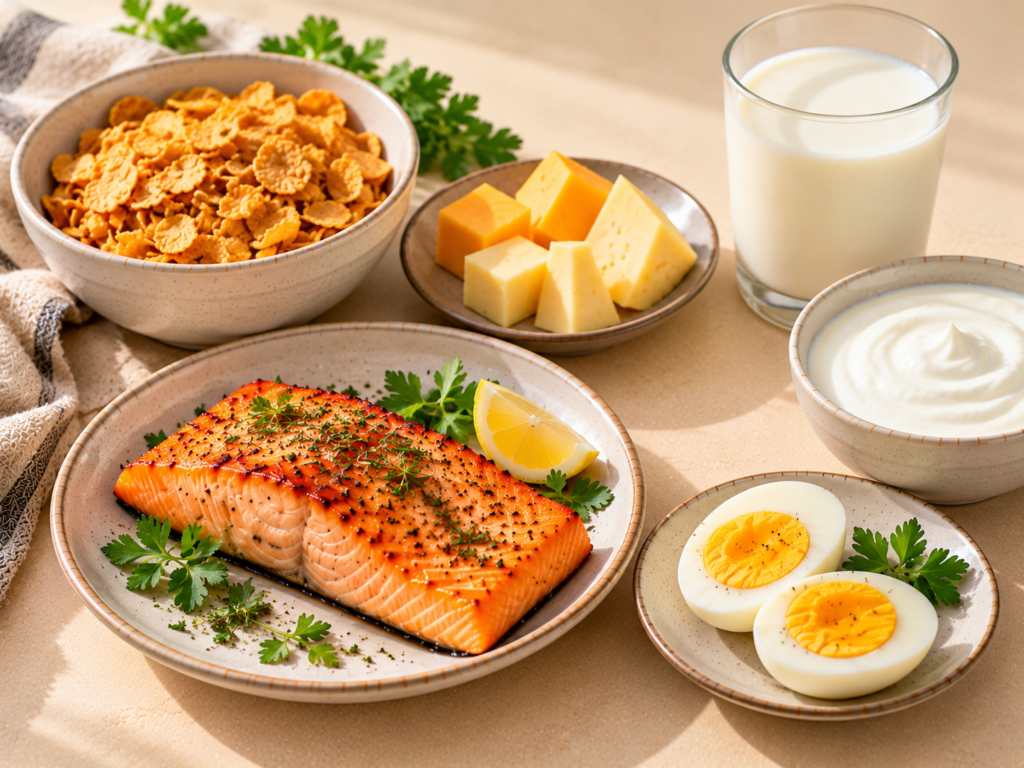
Eggs contain vitamin A in the yolk and also provide protein and other nutrients.
How to eat them: Boil, poach, or scramble eggs and pair them with vegetables or whole-grain toast.
13. Milk and Dairy Products
Milk, cheese, and some other dairy products provide vitamin A. Certain products are fortified, while others contain naturally occurring amounts.
How to choose: Check the label because vitamin A content differs by product and country.
14. Salmon and Herring
Some fish provide vitamin A, as well as protein. Salmon also supplies omega-3 fatty acids, although its vitamin A content varies by species.
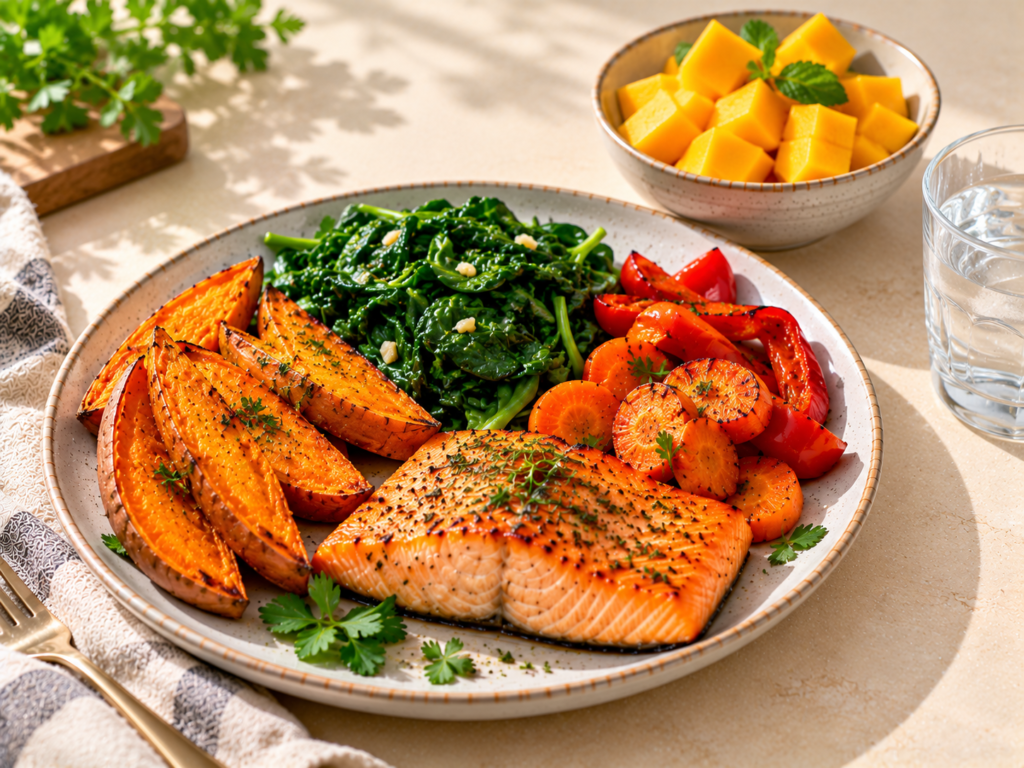
How to eat them: Bake or grill fish and serve it with leafy greens, sweet potatoes, or other vegetables.
15. Fortified Breakfast Cereals
Some cereals have vitamin A added. The amount can differ substantially between brands and serving sizes.
How to choose: Compare labels, check the serving size, and consider the cereal’s fiber and added-sugar content as well.
16. Fortified Plant-Based Drinks
Some soy, oat, and almond drinks contain added vitamin A, but not all products are fortified.
How to choose: Read the nutrition label and compare vitamin A, protein, calcium, vitamin D, and added sugar according to your needs.
Which Vitamin A Rich Foods Are Best for Vegetarians?
Vegetarians can obtain vitamin A from plant foods rich in carotenoids. People who also eat eggs and dairy have additional sources of preformed vitamin A.
Good options include:
- Sweet potatoes, carrots, and pumpkin
- Spinach, kale, and other dark leafy greens
- Red bell peppers
- Mangoes, cantaloupe, and apricots
- Eggs, milk, yogurt, and cheese, if included in the diet
- Fortified cereals and plant-based drinks
Practical tip: Rotate orange vegetables and dark leafy greens throughout the week instead of relying on a single food. This also helps you obtain a broader range of nutrients.
Which Fruits Are Rich in Vitamin A?
Fruits generally provide provitamin A carotenoids rather than preformed vitamin A. Options include:
- Mango
- Cantaloupe
- Apricots
- Other orange or yellow fruits containing carotenoids
Fruits can contribute to your intake, but vegetables such as sweet potatoes, carrots, and spinach are often more concentrated sources. Include both fruit and vegetables for variety.
How Much Vitamin A Do You Need Per Day?
Your recommended intake depends on age, sex, and life stage. The following values are U.S. recommended dietary allowances for selected groups.
| Group | Recommended daily intake |
|---|---|
| Children ages 1–3 | 300 mcg RAE |
| Children ages 4–8 | 400 mcg RAE |
| Children ages 9–13 | 600 mcg RAE |
| Teen boys ages 14–18 | 900 mcg RAE |
| Teen girls ages 14–18 | 700 mcg RAE |
| Adult men | 900 mcg RAE |
| Adult women | 700 mcg RAE |
| Pregnant adults | 770 mcg RAE |
| Breastfeeding adults | 1,300 mcg RAE |
These are general reference values, not individualized medical advice.
What Does mcg RAE Mean?
RAE stands for retinol activity equivalents. This unit accounts for differences in how the body uses preformed vitamin A and converts carotenoids from plant foods.
When comparing foods, use values in mcg RAE where available. This makes different vitamin A sources easier to compare.
What Are the Benefits of Vitamin A Rich Foods?
Vitamin A supports several essential body functions. Getting enough is important, but consuming more than you need does not automatically provide extra benefits.
Supports Normal Vision
Vitamin A helps maintain normal vision, including the ability to see in low light. Severe deficiency can cause night blindness and other eye problems.
Supports Immune Function
Vitamin A helps the immune system function normally and maintains the health of tissues that act as protective barriers, including the lining of the respiratory and digestive tracts.
Helps Maintain Skin and Other Tissues
Vitamin A contributes to cell growth and differentiation. Adequate intake helps maintain normal skin and organ function.
Supports Growth and Development
Vitamin A is necessary for normal growth, reproduction, and development. Children need an adequate supply as part of a varied diet.
How to Improve Vitamin A Absorption
Vitamin A is fat-soluble, so the body absorbs it along with dietary fat. These practical habits can help you get more from your meals:
- Add a little healthy fat. Serve carrots or spinach with a small amount of oil, nuts, or seeds.
- Cook some vegetables. Cooking can soften plant cell walls and improve the availability of certain carotenoids.
- Eat different colors. Orange, red, yellow, and dark-green produce can provide a range of carotenoids.
- Build balanced meals. Combine vegetables with protein sources such as beans, lentils, eggs, dairy, or fish.
- Check fortified food labels. Not every cereal or plant-based drink contains added vitamin A.
Your body’s conversion of beta-carotene varies, so a varied diet is more useful than trying to optimize every meal around a single nutrient.
Can You Get Too Much Vitamin A?
Yes. Too much preformed vitamin A from supplements or certain animal foods can be harmful. For adults, the tolerable upper intake level is 3,000 mcg RAE per day for preformed vitamin A. This is a safety limit, not a daily target, and it does not apply in the same way to beta-carotene naturally present in foods.
Keep these precautions in mind:
- Avoid high-dose vitamin A supplements unless a qualified healthcare professional recommends them.
- Avoid liver and liver products during pregnancy or if you might be pregnant.
- Check multivitamin labels to avoid unnecessarily high intake from multiple products.
- Smokers, former smokers, and people exposed to asbestos should avoid high-dose beta-carotene supplements unless specifically advised by a healthcare professional. Beta-carotene from ordinary foods is different.
- If you have a condition that affects nutrient absorption or are concerned about deficiency, seek individualized medical advice.
For more information, read the NIH Office of Dietary Supplements’ vitamin A and carotenoids fact sheet.
Frequently Asked Questions About Vitamin A Rich Foods
What are the top five vitamin A rich foods?
Beef liver, sweet potatoes, cooked spinach, pumpkin, and carrots are notable sources. Liver is exceptionally high in preformed vitamin A and requires more caution than plant-based foods.
Which vegetables are highest in vitamin A?
Sweet potatoes, carrots, pumpkin, spinach, and other dark leafy greens are useful choices. Their vitamin A contribution comes largely from carotenoids that the body can convert into vitamin A.
Which fruits contain vitamin A?
Mangoes, cantaloupe, and apricots are examples of fruits that supply provitamin A carotenoids. Amounts vary by variety and serving size.
Are vitamin A rich foods good for eye health?
Adequate vitamin A is essential for normal vision. Foods such as sweet potatoes, carrots, spinach, eggs, and some fish can help you obtain it. However, eating extra vitamin A does not guarantee better eyesight if you already meet your needs.
Can vegetarians get enough vitamin A from food?
Yes. Vegetarians can eat carotenoid-rich foods such as sweet potatoes, carrots, spinach, pumpkin, and mangoes. Those who consume eggs and dairy can obtain preformed vitamin A from these foods as well.
Is it better to get vitamin A from food or supplements?
For most people, a varied diet is the preferred starting point because foods provide vitamin A alongside other nutrients. Supplements may be useful in certain circumstances, but high doses can be harmful. Discuss supplementation with a healthcare professional if you are concerned about your intake.
Can I eat carrots every day for vitamin A?
Carrots can be part of a daily balanced diet, but variety matters. Rotate carrots with sweet potatoes, leafy greens, pumpkin, and other nutrient-rich foods.
What is the difference between beta-carotene and vitamin A?
Beta-carotene is a provitamin A carotenoid found in plant foods. The body converts some of it into vitamin A. Preformed vitamin A, found in animal foods such as eggs, dairy, fish, and liver, can be used directly.
Conclusion
The best vitamin A rich foods include sweet potatoes, carrots, spinach, pumpkin, mangoes, eggs, dairy products, and selected fish. Including a variety of these foods can help support normal vision, immune function, growth, and tissue maintenance.
For everyday meals, prioritize colorful vegetables and fruits, and include suitable animal or fortified foods according to your dietary preferences. Remember that more vitamin A is not always better: high-dose supplements and foods exceptionally rich in preformed vitamin A require caution.
Start with simple changes, such as adding spinach to breakfast, roasting sweet potatoes for lunch, or including carrots and pumpkin at dinner. Consistency and variety are more useful than relying on a single “superfood.”
Vitamin A Benefits: Why Your Body Needs This Essential Nutrient
3 thoughts on “Vitamin A Rich Foods: Complete Food Guide”