
Vitamin A benefits go far beyond supporting eyesight. This essential fat-soluble vitamin helps maintain normal vision, supports immune function, contributes to healthy skin and other tissues, and plays an important role in growth and development.
Your body cannot make enough vitamin A from scratch, so you need to obtain it through food. Sources include colorful vegetables and fruits containing beta-carotene, as well as animal foods such as eggs, dairy products, fish, and liver. Eating a varied diet can help you meet your needs without automatically relying on supplements.
Understanding what vitamin A does, which foods provide it, and how much you need can help you make informed choices for your everyday health.
Key Takeaways
- Vitamin A supports normal vision, including the ability to see in dim light.
- It helps the immune system function normally and maintains protective tissues in the body.
- Vitamin A contributes to cell growth, development, and reproductive function.
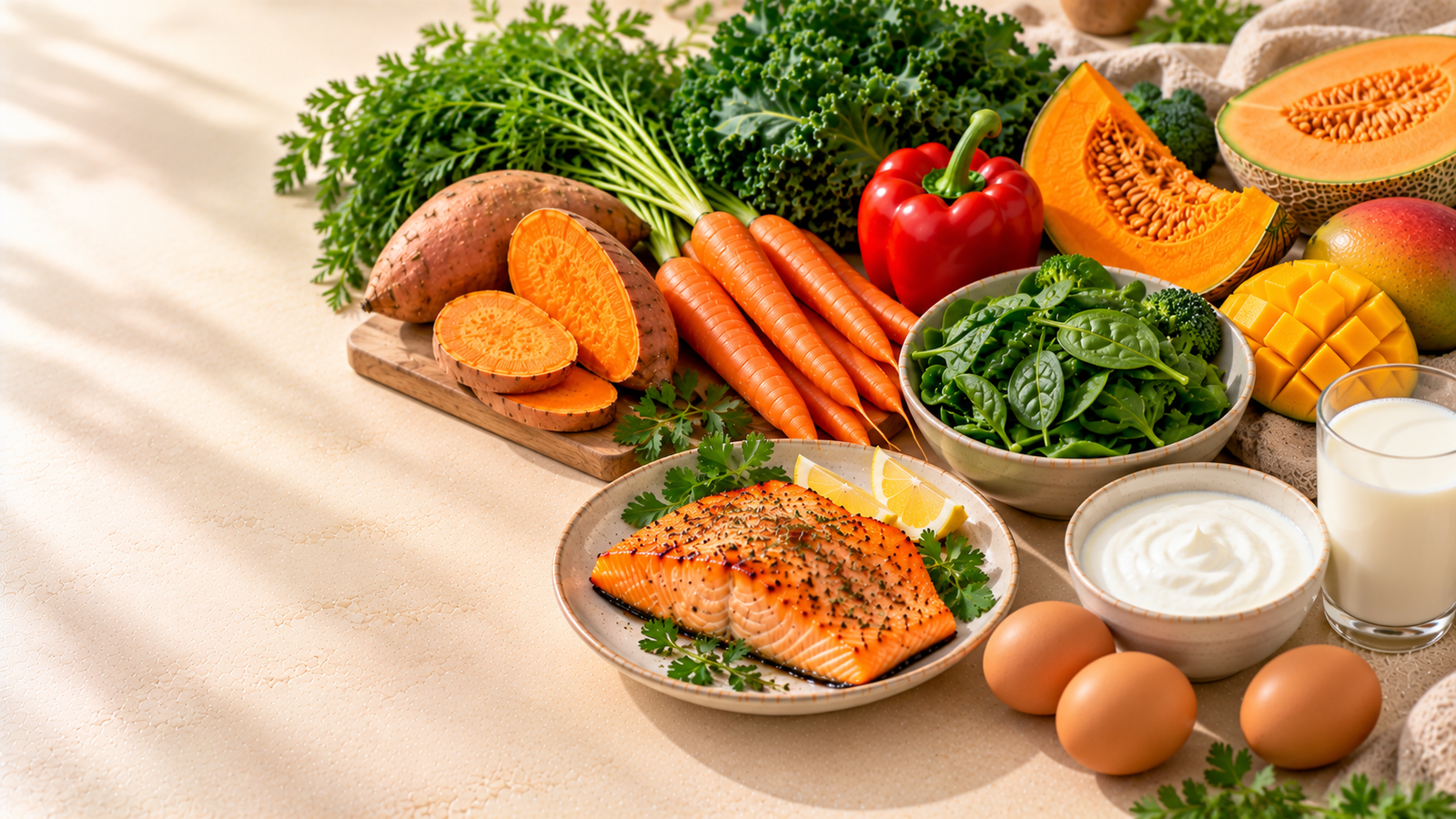
- Carrots, sweet potatoes, spinach, pumpkin, eggs, and some fish can help supply vitamin A.
- Vitamin A deficiency can affect eyesight and other body functions.
- Too much preformed vitamin A from supplements or certain animal foods can be harmful.
- A balanced diet is generally the best starting point for meeting vitamin A needs.
What Is Vitamin A?
Vitamin A is a fat-soluble nutrient involved in several essential body processes. It occurs in two main dietary forms.
1. Preformed Vitamin A
Preformed vitamin A, including retinol and retinyl esters, occurs in animal-derived foods such as liver, eggs, fish, and dairy products. The body can use it without first converting it from a carotenoid.
2. Provitamin A Carotenoids
Provitamin A carotenoids occur in plant foods. Beta-carotene is a familiar example found in carrots, sweet potatoes, pumpkin, and dark leafy vegetables. The body converts some of these carotenoids into vitamin A, although conversion varies among people and foods.
Both forms contribute to vitamin A intake. Eating a variety of plant foods and suitable animal or fortified foods can help you obtain this nutrient as part of a balanced diet.
7 Important Vitamin A Benefits
Vitamin A is essential for normal body function, but it is important to distinguish established nutritional roles from claims that a nutrient can prevent or treat a disease. The benefits below describe what adequate vitamin A intake supports.
1. Supports Healthy Vision
One of the best-known vitamin A benefits is its role in normal vision. Vitamin A is needed to make rhodopsin, a light-sensitive pigment in the retina that helps your eyes respond to low light.
Getting enough vitamin A helps maintain normal eyesight. Severe deficiency can lead to night blindness and, in advanced cases, serious eye damage.
How to support eye health: Include foods such as carrots, sweet potatoes, spinach, eggs, and other vitamin A sources in a varied diet. These foods support nutrition, but they do not replace an eye examination or treatment for vision problems.
2. Helps the Immune System Function Normally
Vitamin A plays a role in the development and function of immune cells. It also helps maintain the lining of the respiratory and digestive tracts, which act as protective barriers against harmful organisms.
Adequate intake supports normal immune function, but taking extra vitamin A when you already get enough does not necessarily make your immune system stronger.
Practical tip: Pair vitamin A rich foods with a varied diet that includes protein, vegetables, fruits, whole grains, and other essential nutrients.
3. Helps Maintain Healthy Skin and Tissues
Vitamin A contributes to cell growth and differentiation, processes that help the body maintain normal skin and other tissues.
This is one reason vitamin A compounds are used in certain dermatological products and prescription treatments. However, topical retinoids and dietary vitamin A are not interchangeable, and high-dose oral supplements are not a safe shortcut to better skin.
Practical tip: Eat a balanced diet containing colorful vegetables, fruit, and suitable protein sources. If you have a persistent skin condition, seek advice from a qualified healthcare professional rather than self-treating with high-dose supplements.
4. Supports Normal Growth and Development
Vitamin A is important for normal growth, cell specialization, and development. Children need sufficient vitamin A as part of a balanced diet, and requirements change as they grow.
Vitamin A is also important during pregnancy, but excess preformed vitamin A can harm a developing baby. Anyone who is pregnant or might become pregnant should avoid liver and liver products and seek professional advice before taking vitamin A supplements.
5. Contributes to Reproductive Health
Vitamin A is involved in normal reproductive processes in both males and females. It also supports the development and maintenance of tissues involved in reproduction.
More is not better: high doses of preformed vitamin A can be harmful. Most people should focus on meeting their needs through an appropriate diet rather than taking high-dose supplements without medical guidance.
6. Helps Maintain the Health of Protective Barriers
Vitamin A supports the normal maintenance of epithelial tissues, including the surfaces that line parts of the respiratory, digestive, and urinary systems.
These tissues help form protective barriers. Adequate vitamin A is therefore important for normal body function, but it should not be considered a stand-alone treatment or guarantee against infection.
7. Supports Normal Cell Function
Vitamin A helps regulate cell growth and differentiation. These processes allow cells to develop and perform their specialized roles in different parts of the body.
Because vitamin A has several roles in normal physiology, prolonged deficiency can affect more than one body system. The goal is to meet your recommended intake, not to consume excessive amounts in the hope of gaining additional benefits.
Best Food Sources of Vitamin A
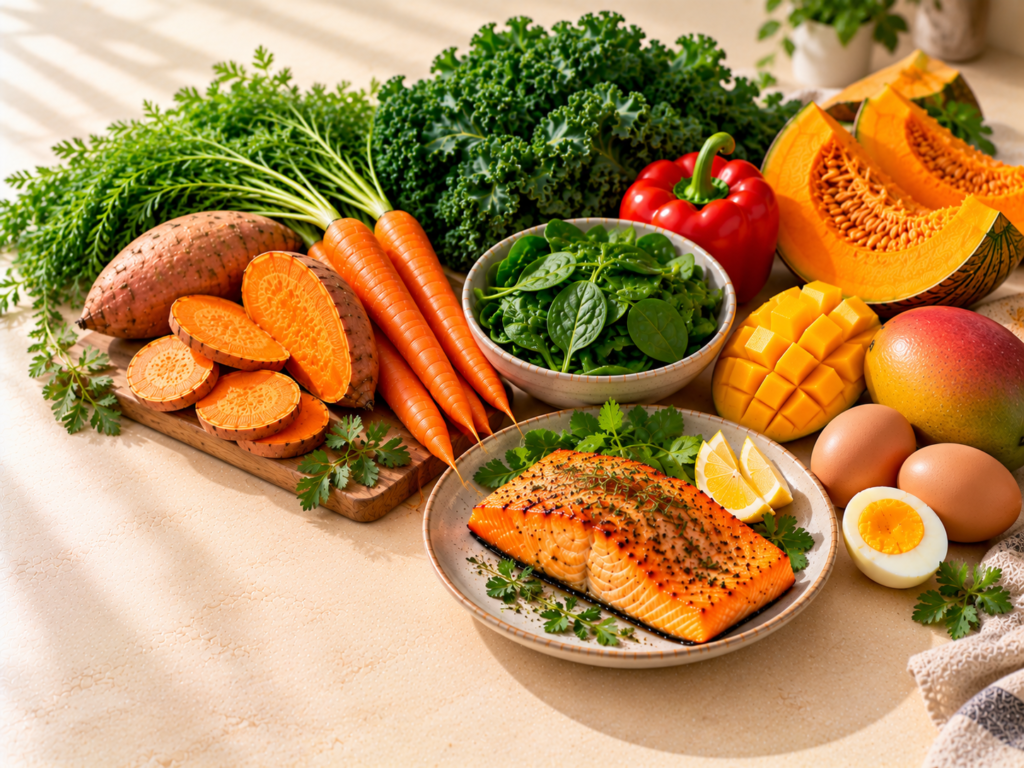
You can get vitamin A from both plant and animal foods. Plant foods commonly provide carotenoids that your body can convert into vitamin A, while animal foods provide preformed vitamin A.
| Food | Typical serving | Approximate vitamin A |
|---|---|---|
| Beef liver, pan-fried | 3 oz (85 g) | 6,582 mcg RAE |
| Sweet potato, baked | 1 whole | 1,403 mcg RAE |
| Spinach, boiled | ½ cup | 573 mcg RAE |
| Carrots, raw | ½ cup | 459 mcg RAE |
| Pickled herring | 3 oz (85 g) | 219 mcg RAE |
| Fortified skim milk | 1 cup | 149 mcg RAE |
| Cantaloupe | ½ cup | 135 mcg RAE |
| Red sweet pepper | ½ cup | 117 mcg RAE |
| Mango | 1 whole | 112 mcg RAE |
| Hard-boiled egg | 1 large | 75 mcg RAE |
Values are approximate and can vary with preparation, serving size, and fortification. RAE means retinol activity equivalents, a unit used to compare vitamin A activity from different dietary sources.
Plant-Based Vitamin A Sources
Plant foods are especially useful for people who prefer vegetarian meals. Good choices include:
- Sweet potatoes
- Carrots
- Pumpkin and other orange-fleshed squash
- Spinach, kale, and other dark leafy greens
- Red bell peppers
- Mangoes and cantaloupe
Eating these foods alongside a little dietary fat, such as olive oil, nuts, or seeds, can help your body absorb carotenoids.
Animal-Based Vitamin A Sources
Animal foods supply preformed vitamin A. Sources include:
- Eggs
- Milk, yogurt, and some cheeses
- Certain fish, including herring
- Liver, which contains exceptionally high amounts
Liver deserves special caution because a single serving can contain far more vitamin A than the daily requirement. Avoid liver and liver products during pregnancy or if you might become pregnant.
Vitamin A Rich Foods: Complete Food Guide
How Much Vitamin A Do You Need Daily?
Vitamin A requirements vary with age, sex, and life stage. The following are U.S. recommended dietary allowances for selected groups.
| Group | Recommended daily intake |
|---|---|
| Children ages 1–3 | 300 mcg RAE |
| Children ages 4–8 | 400 mcg RAE |
| Children ages 9–13 | 600 mcg RAE |
| Teen boys ages 14–18 | 900 mcg RAE |
| Teen girls ages 14–18 | 700 mcg RAE |
| Adult men | 900 mcg RAE |
| Adult women | 700 mcg RAE |
| Pregnant adults | 770 mcg RAE |
| Breastfeeding adults | 1,300 mcg RAE |
These are general reference values, not personalized medical recommendations. Individual advice may differ depending on a person’s health and circumstances.
What Does mcg RAE Mean?
RAE stands for retinol activity equivalents. This measurement accounts for the differences between preformed vitamin A and carotenoids that must be converted into vitamin A by the body.
When comparing food labels or nutrition tables, use mcg RAE values when available.
What Happens When You Don’t Get Enough Vitamin A?
Vitamin A deficiency can affect vision, immune function, and normal tissue maintenance. Risk is higher in some settings, including certain conditions that impair fat absorption and places where diets are limited in vitamin A sources.
Potential signs and effects include:
- Difficulty seeing in dim light, sometimes called night blindness
- Dry eyes and, in severe cases, damage to the surface of the eye
- Greater susceptibility to some infections
- Changes in the health of skin and other tissues
These signs can have other causes, so they do not prove that someone has vitamin A deficiency. A healthcare professional can assess symptoms, dietary patterns, medical history, and appropriate tests.
Important: Do not try to treat suspected deficiency with high-dose vitamin A supplements on your own. Excessive intake can be toxic.
How to Get More Vitamin A From Your Diet
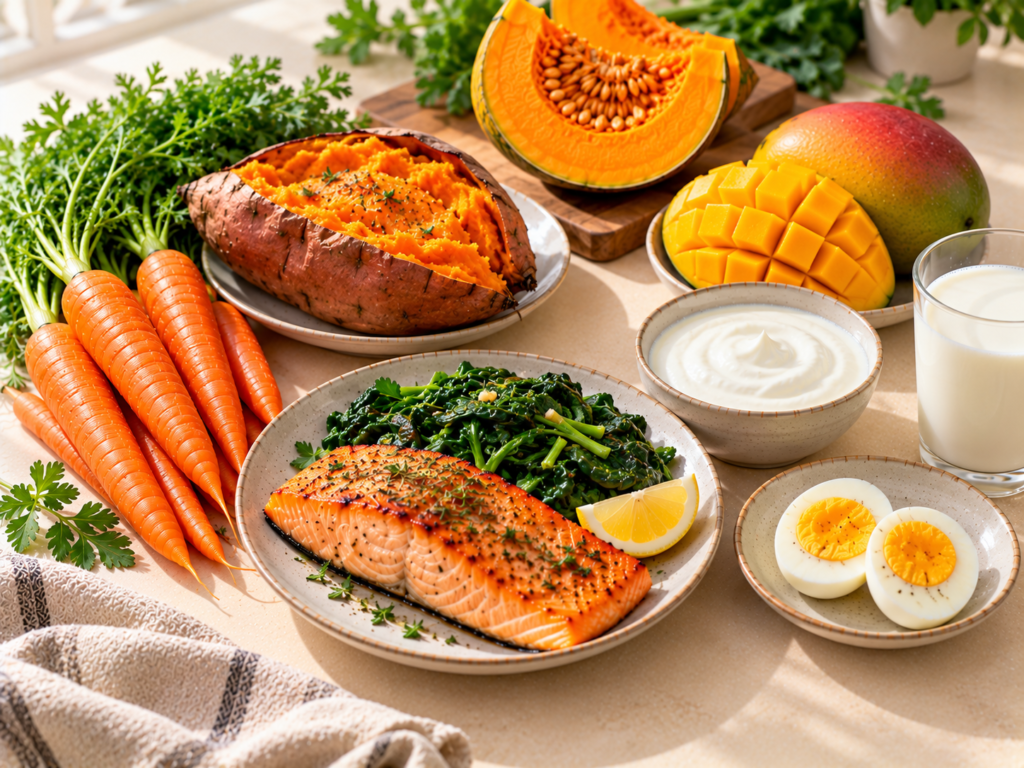
You do not need complicated recipes to include vitamin A rich foods in your routine. Simple combinations can help you build balanced meals.
Easy Meal Ideas
- Breakfast: Eggs with sautéed spinach and whole-grain toast.
- Lunch: Lentil curry with carrots and a side of leafy greens.
- Snack: Mango, cantaloupe, or plain yogurt with fruit.
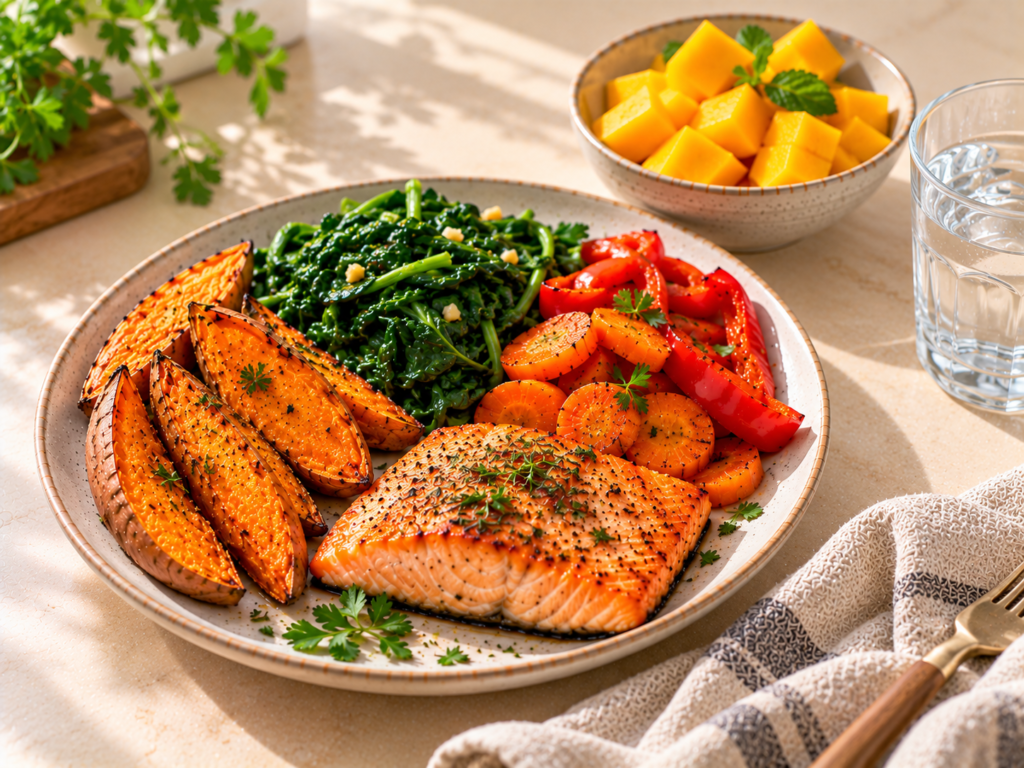
- Dinner: Baked sweet potato with roasted vegetables and fish, tofu, or beans.
- Vegetarian dinner: Pumpkin and chickpea curry with spinach and whole grains.
Tips for Better Absorption
Vitamin A is fat-soluble, and the body absorbs carotenoids from plant foods more effectively when the meal includes some fat.
- Add a small amount of oil when roasting carrots or sweet potatoes.
- Serve spinach with nuts, seeds, or a little olive oil.
- Cook some vegetables to soften their structure and make carotenoids easier to access.
- Eat a variety of orange, red, and dark-green produce.
- Check labels on fortified cereals and plant-based drinks rather than assuming all products contain vitamin A..
Can You Take Too Much Vitamin A?
Yes. Although vitamin A is essential, excessive amounts of preformed vitamin A from supplements and certain animal foods can be harmful. For adults, the tolerable upper intake level for preformed vitamin A is 3,000 mcg RAE per day. This is a safety limit, not a recommended target.
Keep these precautions in mind:
- Avoid unnecessary high-dose supplements. More vitamin A does not automatically mean greater health benefits.
- Avoid liver during pregnancy or when pregnancy is possible. Liver and liver products can contain very high amounts of preformed vitamin A.
- Check multivitamin labels. Taking multiple products can unintentionally increase your total intake.
- Be cautious with high-dose beta-carotene supplements. Smokers, former smokers, and people exposed to asbestos should avoid these supplements unless a qualified healthcare professional specifically recommends them.
- Ask for personalized advice if you have a condition that affects fat absorption or suspect a nutritional deficiency.
Beta-carotene from ordinary foods is not equivalent to taking high-dose beta-carotene supplements.
For detailed guidance, consult the NIH Office of Dietary Supplements’ Vitamin A and Carotenoids Fact Sheet.
Frequently Asked Questions About Vitamin A Benefits
What are the main benefits of vitamin A?
Vitamin A supports normal vision, immune function, cell growth, reproductive function, and the maintenance of healthy tissues. Adequate intake is important for normal body function.
Does vitamin A improve eyesight?
Vitamin A is essential for normal vision, particularly in low light. Correcting a deficiency can help prevent deficiency-related eye problems, but taking extra vitamin A does not guarantee sharper eyesight in someone who already gets enough.
Is vitamin A good for skin?
Vitamin A supports normal skin maintenance and cell differentiation. Some topical vitamin A derivatives are used for specific skin concerns, but these products differ from dietary vitamin A and should be used according to appropriate professional guidance.
Which foods are highest in vitamin A?
Beef liver is exceptionally high in preformed vitamin A. Sweet potatoes, spinach, and carrots are useful plant sources of provitamin A carotenoids. Liver requires special caution, particularly during pregnancy.
Can I get enough vitamin A from vegetables?
Vegetables such as sweet potatoes, carrots, pumpkin, and spinach can make substantial contributions to vitamin A intake. The body converts some of their carotenoids into vitamin A. A varied diet is the best approach.
What are the symptoms of vitamin A deficiency?
Possible signs include difficulty seeing in dim light and dry eyes. Deficiency can also affect immune function. These symptoms have other possible causes, so a healthcare professional should assess suspected deficiency.
Should I take a vitamin A supplement every day?
Not everyone needs a vitamin A supplement. Many people can meet their needs through food, and high doses can be harmful. Ask a healthcare professional whether a supplement is appropriate for your circumstances.
Is beta-carotene the same as vitamin A?
No. Beta-carotene is a plant carotenoid that the body can convert into vitamin A. Preformed vitamin A is found in animal foods and can be used directly.
Conclusion
The key vitamin A benefits include supporting normal vision, immune function, growth, reproductive health, and the maintenance of healthy tissues. Because this nutrient is essential to several body processes, getting enough through a varied diet matters.
Include foods such as sweet potatoes, carrots, spinach, pumpkin, mangoes, eggs, dairy products, and suitable fish in your regular meals. Pair plant sources with a little dietary fat to help absorb carotenoids, and avoid excessive use of supplements or frequent consumption of foods extremely high in preformed vitamin A.
The best strategy is simple: eat a variety of nutrient-rich foods, pay attention to your needs, and seek professional advice if you suspect a deficiency or are considering high-dose supplements.
NIH Office of Dietary Supplements — Vitamin A and Carotenoids Fact Sheet
2 thoughts on “Vitamin A Benefits: Why Your Body Needs It”